Transcript
Speaker: Hey, real quick before we get started, if you would like to find your own theme for your pottery so your voice really stands out and you're not getting bored with making the same thing over and over again,
Speaker: I put together 53 themes for you guys and it's completely free. All you have to do to get it is just go to shapingyourpottery .com forward slash 53 themes. That's shapingyourpottery .com forward slash 53 themes. What is up Shaping Nation? This is Nick Torres here and on this episode of Shaping Your Pottery, I got to interview Maria D. Domenico.
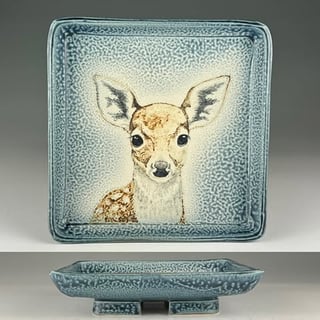
Speaker: Maria makes some really incredible animal themed pottery that she uses pinch pots technique, she wheel throws and she slip casts. In this episode, you will learn how to make Maria's animal themed pottery.
Speaker: You also learn about her journey of going full time with her pottery. And finally, you also learn about not taking yourself so seriously and making what is fun for you. I hope you guys enjoy this episode and I'll see you guys in there. If you love pottery and want to take your skills to the next level, you're in the right place. Find your own pottery style right here on Shaping Your Pottery with Nick Torres. Let's get started.
Speaker: Maria, welcome to Shaping Your Pottery and share with me what is something people might not know about you? Something people might not know is that I moved around a lot as a kid. I moved around every like one to four years with my family. And so there wasn't a lot of stability and there wasn't a lot of long term friend groups. So I kind of took a lot of my passion to art and I would stay in my room a lot and I would draw or I would animate or
Speaker: just any kind of art form I could get my hands on. And so that's kind of what led me into this field originally, is that stability that I had with my own art. I love that. So tell me the story, how you got started in ceramics. I started in ceramics about a year and a half ago. It was in the middle of the pandemic, like a lot of people. And I wanted a hobby and I wanted something to do after I got home from like work or school or something. And I had seen like pottery was getting more popular with like
Speaker: other hobbyists, other people on social media. And I wanted to just try it out. I knew I liked art. I knew I had like ceramics in middle school. And so I thought that would be like a good outlet for me. So tell me about the moment when you decided to go full time with your pottery. I think it was a lot of moments because it was a long, a decision that I made over a long period of time. But I think the moment was when I was getting a lot more
Speaker: demand than I could ever supply. And it was becoming almost a stressor. I was like, I wish I could make as many pieces as people want me to make. And so then I was starting to realize, I was like, oh, I could make a full -time job out of this. And that was a really exciting moment because that's something that I'd never thought
Speaker: would happen for me. And so I think it was, it was a bunch of little realizations of like, I could do this. And like, I see other people do it and that like, this could sustain me and support me. And so that was kind of the decision there. What were you feeling the moment up to going full time, like the emotions you were feeling? Stressed, stressed, nervous, excited, thrilled, a lot of different emotions. I think it started to dawn on me just like,
Speaker: It was like a double -edged sword. In one hand, I was going to be like my own boss and free and like I could decide how I wanted to do my time and everything. But on the other hand, it's like I'm my own boss and I get to decide like how much work I put in is how much I get back. And so it's kind of a lot more weight on my shoulders of like, I need to be working and I need to be producing as well as I can in order to like sustain myself and sustain my business and continue to have it continue to grow.
Speaker: So it's a lot. I was excited. I was excited to be my own boss. I was excited to be my own boss when I was younger as I am. And so it was it was a bunch of emotions all at once. So how would you say you dealt with those emotions of being stressed and having to put in the work in order to make this work? I think I remembered something
Speaker: My like drama and choir teacher said when I was in high school and it's that if you ever have like nervous emotions, just imagine that it's excitement because it comes from like the same place in your body.
Speaker: And so while I was having those nervous emotions and simultaneously already being able to recognize the excited one, I was kind of just like telling myself, like, you're really excited. And this is an amazing opportunity. And I think I talked with my family and friends a lot about it and they were all super excited for me. And so I think it was nice to have myself supporting myself, but also my support system supporting me as well. Yeah. So what advice would you give to someone that wants to go full time with a pottery as well?
Speaker: I would say do it part -time for a while and just kind of, yeah, do it part -time for a while, grow your business, grow your pottery skills, and then maybe take, this is what I did, I took like two to three days off of work and I just like acted like I was a full -time potter and I was like, I'm gonna have a schedule and I'm gonna get up and do like an eight -hour day and see how that feels and kind of just like be really honest with yourself
Speaker: tell be able to like tell if this is going to cause you to have burnout really quickly or if this is something that you're very excited to do and just to realize those emotions because in those three days i was like i felt like i was on vacation i was like this is great i don't have to go and like commute and i don't have to go and like list like have like a regular office nine to five i can kind of have a very fluid workflow compared to like what a traditional job would be and so i think trying things one step at a time not just jumping straight into it i feel
Speaker: will help you like later down the road. I love that. Shaping Nation, if you're thinking about maybe going full time with your pottery, take it one step at a time and go slowly at first. Because if you jump head in right away, you're going to be way overwhelmed and you're probably going to end up quitting and not doing it for the rest of your life. So you have to go slow with it and build up over time. I love that so much. So let's talk about your pottery. In one sentence, can you tell me what you make? I make
Speaker: Cute functional pottery. I make pottery that I like to, that I would want to kind of brighten your day. You use it and it makes you happy. I love that. So tell me the story, how you started making this type of pottery. I think I was taking myself really seriously at the time when I was starting to make my pottery. I just graduated college. I was working a nine to five in the degree that I had majored in.
Speaker: Sorry, in the field that I had majored in. And I was just like, I'm a business person now. I was an architect and it has an art side to it, but it is a lot of techno, like there's a big technical field and technical aspect to architecture. And so I was like, I'm graduated. I am serious. I am like an adult now. So I need to take myself really seriously.
Speaker: And so I think what shaped my pottery was kind of the adverse of that. I wanted to make something that I could have fun with and I could like make just cute stuff that doesn't mean like a ton. And I just wanted something that was just like fun and cute and you see it and you're like, oh, that's nice. And like it's not something that takes itself too seriously. Like it can be humorous. It can be cute. And it's not like a I don't know. It's not it's not so serious.
Speaker: which I think kind of reflects what I was feeling at that time. I love that. Shaping Nation, the most important thing with your pottery is whether or not you are having fun making it, because that is the most important thing at the end of the day. If you're having fun making your potter you're making, you're going to go a lot further and your style is going to show up a lot more. I love that so much. Sorry.
Speaker: You are inspired by animals and the various ways to depict them. How does this impact the way you make your pottery?
Speaker: I get a lot of comments of like animals that I should try and it was actually tried next. And I find it, it's like a fun challenge of how can I make this in something that's in my style? Like I think recently I got a comment asking for me to make a snake. And just by like the form of the yarn bowls that I make in the forms of the mug mugs at first, I was like, I don't really know how I could make a snake like that's in that form. And then I thought a little bit more and I was like, Oh, I could make a snake that's like coiled around the bowl. And then the yarn comes out of its mouth.
Speaker: I haven't made it yet, but it's in my head. And I feel, and that's like the, the very fun aspect to my style is that I can make a bunch of animals, but like make it them all kind of cohesive in a way. And it's a challenge and it like, it keeps me like active and the keeps my brain at it. So I'm not just like producing the same thing every single day. So when you are coming up with a new design for your animals, what does that process look like? I.
Speaker: sit down and I just think mostly and I'll like I'll usually sketch out what I want and I'll go through like a lot of sketches of things that just don't look very cute or like don't look very good until finally like one day I'll be making and I'll be like oh that's how I could do it and sometimes the animals like come very really quickly sometimes I'll just do it like in a similar to my own style and then sometimes I'll make something and it'll look like a completely different animal like I was meaning to make a duck the other day and it everyone sit with like a manatee and so now I have I make made a manatee and so
Speaker: it's kind of a it's it's a fluid process for sure. So can you explain to me how you create the pottery itself? Yeah, I use three forms of
Speaker: like pottery creation, I do pinch potting, I wheel throw and I slip cast. And so for me, it's, I take my idea either from drawing or just from something in my head and I will just make the bowl and then I'll add any kind of, usually I'll look at the bowl shape, especially with pinch potting, sometimes they don't all come out perfectly and I'll look at the bowl shape and I'll be like, what kind of animal would this fit? If it's like tall and it has like kind of like a rounder shape to it, maybe it'll be like a penguin because penguins tend to be more like oblong.
Speaker: or if it's like wider and shallower, like it'll be an axolotl because that's like the head shape of that. And so I kind of don't really know what I'm making that day until I make it because I'll just look at the bowl that I made and then I'll decide what animal fits that bowl. So you mentioned that you have three different techniques that you use, pinch potting, wheel throwing, and slip casting. Why do you do those three? I think because I just wanted to learn.
Speaker: I wanted to just see all the forms that I could make pottery and see which one fit me best. And I learned I kind of like all of them. I like the slip casting lens because it produces a very uniform product, but I also really like that handmade feel sometimes. And then wheel throwing, I'm not amazing at it, but I just got inspired by a lot of people wheel wearing online and
Speaker: My friends wheel throwing and so, it just looked really fun and really like technical. And I feel like the shapes that you can make are really great. And so I do that for a lot of my own personal pieces. I think I just wanted just multiple outlets and pottery. And I wanted a bunch of different ways to create something. And I didn't want to be limited by one technique. So if I have an idea that's very tall and like has a lot of like different kinds of shapes in it, and it needs to be very uniform, then like I know how to wheel fit or I know how to slip cast.
Speaker: And so that's the main reason of why I decided to do all three. I love that so much. Shaping Nation, you don't have to be limited by just one technique. If you want to go make some coil built pottery or pinch pots, you can go do that. If you want to go wheel throw, you can go do that. If you want to slip cast, you can go do that. You're not limited by anything. I love that you do that so much. Thank you.
Speaker: Let's talk about discovering your voice. You contribute your growth as an artist to architecture school and being bored from after your nine to five job. How does these things help with your growth?
Speaker: I think it was a big motivator for doing pottery because I love architecture school and I love the long nights in studio. And it was very artistic with like model making and doing things with my hands. And I just really, that's kind of when I really realized that I just loved creating and I liked making people happy and like in any of my designs that I made.
Speaker: I think that's kind of what really fueled my love for creation. And then when I got into the career field, it was great. I did love architecture. I loved the technical aspects. I loved the artistic aspects, the design, but I just didn't feel like I was ready or like I wanted to have a nine to five job yet or something that I feel like I was being, I think I was being dishonest with myself of how serious I was being, like I said earlier. And so I think that kind of pushed me
Speaker: to do something that I felt was more uniquely me, something that was more catered to what I wanted at the time. And maybe later I'll go back to a nine to five because that'll provide more stability. But I think for right now, I'm really just enjoying the journey of it, the journey of doing something a little different. I love that a lot. So what is something that helped you with discovering your own style with your potter? I think
Speaker: I think it was similar to what I said earlier about just wanting something that makes people happy. Like I wanted something that when I was making it would make me happy because I'm like oh that's so cute or like that looks like really good and that's kind of funny the way that like the face turned out and so I think that was a big
Speaker: help in finding my style. And it always has been in my design and my art is just to make people laugh or smile or myself laugh or smile. Yeah, just to not take myself too seriously, just to do things for the joy of it and do things for others joy of it. Definitely agree. Shaping Nation, if you can make somebody else be happy with your pottery, you're going in a really good direction because at the end of the day, the people that are holding your pots, they want to be happy. They want to be drinking out of it. They want to use it.
Speaker: make the best part of you can. I love that. So what are you doing to evolve your voice even further? I think challenging myself, making myself uncomfortable, whether that be just trying different animals, trying different forms and shapes, trying different techniques. I think I'm a whole believer of the statement, which I'm forgetting right now, the statement of like, you'll never improve if you're not uncomfortable.
Speaker: You have to be comfortable with being uncomfortable. And if you just stay in the same place, then you won't move anywhere. It sounds kind of obvious, but I think that is really what's pushing my, pushing my like evolution of my voice is to just try new things, get out of my comfort zone, see, see what feels unnatural and then trying it out.
Speaker: So outside of going full time with pottery, what is something you have done with your pottery to get uncomfortable? I think trying new techniques, trying new animals, trying just like listening to what other people, what other ideas, because I think we're all kind of a collective. And that's the fun aspect of social media and putting your art out there is that
Speaker: people have a say kind of and people can, they can put their opinion on things. And so maybe we'll say something that I hadn't thought of and then I'll be like, oh, that's interesting. I'll write that down and then I'll like try it later. And so I think not just listening to myself, but listening to like the collective as a whole and seeing what other ideas other people have and trying them out.
Speaker: I love that. Shaping Nation, a lot of your ideas aren't probably going to come from yourself, but they're probably going to come from someone else. And if you take those ideas, you can apply that to your pottery and your pottery will grow and grow. I love that so much. What are your plans for the future with your pottery and your business? I think I just, I want to continue growing, obviously.
Speaker: I think I'd like to branch out into different kinds of pottery. I'd want to try something a little bit more modern. That's more for myself rather than for Cotta ceramics. But I think I just want to keep growing, keep experimenting. And as for my business, I am just here for the journey. I will continue to produce and continue to create as long as it seems feasible and fun for me.
Speaker: So you mentioned you like maybe down the road, you want to make something a little bit more modern for yourself. What is that? What would you think that would look like? I think I want to play with different clay types and different clay textures, something that has either like more grog in it or has a different color. I think that could, could change and like evolve my style a lot more. I've always just had this idea of like making lamps. I just really love the idea.
Speaker: of creating lamps and how people will like create the forms for it and how it plays with the light and everything like that. It's almost architectural, which is I think what's what, what is the draw for me there. I definitely agree with you on the lamps. I like the way lamps look. And I think that's a really good idea. Something about them. So as we are coming to a close here, what is one thing you want to hammer home with my audience today?
Speaker: Just don't take yourself too seriously. If you want to do something because it's fun or you want to do something just for the joy of it, you don't need to be amazing. You don't need to be the best at it because not everyone who is the best was the best back then. And I think it's just important to just do things because it makes you happy rather than doing things for like an aesthetic or doing things because someone told you to or something that you think someone else would think is right.
Speaker: just enjoying creating art because you like creating art. Definitely agree. Maria, it was so great chatting today. Where can my audience go and learn more about you? I have an Instagram, it's at kata .ceramics and then I have a website kataceramics .com and I'm pretty active on both and that's where I post most of my updates and most of my art.