Become a Creator today!Start creating today - Share your story with the world!
Start for free
00:00:00
00:00:01
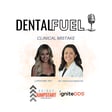
Dr. Tony Mennito: Clinical Mistake image

Dr. Tony Mennito: Clinical Mistake

S1 E2 · Dental Fuel
Avatar
183 Plays3 years ago

On our first episodes of Dental Fuel we have Dr. Tony Mennito. Dr. Anthony Mennito (Tony) is a private practice dentist as well as an adjunct faculty member at the MUSC College of Dental Medicine in Charleston, South Carolina.  His dental practice, Expertise Dental, focuses on using technology to comprehensively care for his patients while helping to enhance the esthetics of their smile.  He is an experienced user on digital systems made by Planmeca, Dentsply Sirona, 3Shape, and iTero and is heavily reliant on digital design and 3D printing for treatment planning complex cases.  He lectures nationally and internationally and currently has 21 published papers on the topics of digital dentistry and dental materials.

In this episode, Dr. Mennito talks about a clinical mistake he made, how he grew from that mistake and how communication is key.

Connect with Ignitedds: @ignitedds

Ignitedds.com

Connect with Dr. Tony Mennito: @smileprofessor

Connect with Tanya Sue Maestas: @tsmaestas.dds
Transcript

Introduction to Dental Fuel podcast

00:00:00
Speaker
Dental Fuel, the podcast that focuses on what no one else is talking about. Mistakes. The dental world is full of before and afters, and no one is talking about the middle. Dental Fuel brings you the unspoken in-between. Dental Fuel is brought to you by Doctors Disability Specialists, a team dedicated to helping dentists and physicians with disability insurance, life insurance, and comprehensive business planning.
00:00:23
Speaker
On our first episode of Dental Fuel, we have Dr. Tony Menido. Dr. Tony Menido is a private practice dentist as well as an adjunct faculty member at the MUSC College of Dental Medicine in Charleston, South Carolina.

Meet Dr. Tony Menido

00:00:36
Speaker
His dental practice, Expertise Dental, focuses on using technology to comprehensively care for his patients.
00:00:42
Speaker
while helping to enhance the aesthetics of their smile. He is an experienced user on digital systems made by PlanMecha, Dents by Serona, 3shape, and iTero, and is heavily reliant on digital design and 3D printing for treatment planning complex cases. He lectures nationally and internationally, and currently has 21 published papers on the topics of digital dentistry and dental materials.
00:01:06
Speaker
In this episode, Dr. Minito talks about a clinical mistake he made and how he grew from that mistake and how communication is key.

Dr. Menido's Career Journey

00:01:14
Speaker
Let's tune in. Dr. Minito, welcome to Dental Duel. How you doing? Doing great. Happy to be here. Excited for this. Me too. I'm excited for this. Can you tell us a little bit about your background and how you came to be the Dr. Minito?
00:01:34
Speaker
Uh, sure. I, um, I actually have had a lot of kind of a weird career. I started out, uh, in private practice, uh, right out of dental school and the Medicaid practice actually doing kind of a lot of high, high volume. Saw a lot of kids, which I never thought I would do. And, um, from there transitioned into academics and was a full-time academician for 12 years.
00:02:03
Speaker
and then transitioned out of academics back into private practice and practice now three days a week in a relatively high-end cosmetic practice.

Learning from Mistakes

00:02:14
Speaker
And I'm also doing some consulting for some technology companies as well. So it's a nice mix of different things to break up the week, which I love.
00:02:26
Speaker
I love that. Can you tell us a little bit about a clinical mistake that you can remember making in your career so far and how you handled it and how it's helped you grow? Yeah, of course. I mean, you know, the reality is I've been practicing for 20 years. So the number of clinical mistakes I've made is beyond my ability to recall.
00:02:51
Speaker
But I will tell you about the first set of implants that I have replaced on a patient. And it was really actually well done the day of. And I left the procedure feeling really, really good about it. But for whatever reason, two of the three implants failed.
00:03:12
Speaker
And, you know, when anytime you place, you know, if you're replacing a single tooth, you have options, right? You can do an implant, the implant fails. You can always fall back on a bridge. Well, this is a situation where the implants, and I really needed all three of those implants to work. If the implants didn't work, we were falling back to a partial venture, which, you know, let's face it, is not, never really a great option for our patients. So to say the least, when the first implant failed,
00:03:42
Speaker
It was really disappointing. I still held out a little bit of hope for the other two, but then the second one failed. And then it's really hard at that point because as a practitioner, you're disappointed, the patient's disappointed. And the one thing that I've learned over the course of my career is that you cannot communicate enough with your patients.

Communication with Patients

00:04:06
Speaker
And luckily I had, we had talked about this quite a bit before the procedure, the potential for complications. And in her case, she's a little bit medically compromised and we knew the bone in the area we were placing these implants was a little bit sketchy. It was very soft bone, even though it was in the mandible. So luckily we had talked about this as a possibility
00:04:35
Speaker
But nevertheless, it's still, you know, I honestly lose sleep over situations like this. Still 20 years into practice when I have something that I think should have gone differently based off of my education. Everything, you know, like I said, the day of everything, we did a guided implants went exactly where they should have. Everything looked great on the day of surgery.

Handling Failed Procedures

00:04:59
Speaker
And then, you know, it's up to biology at that point.
00:05:03
Speaker
biology wasn't on our side. So very disappointing, but I think the fact that I communicated with the patient a lot prior to that appointment really, it didn't make it more palatable, but the patient is more understanding knowing that that was a possibility going in.
00:05:25
Speaker
How did you get past that not being able to sleep? I think, you know, one of my favorite things that I've heard you say is they're just teeth. But in this instance, I feel like the situation maybe was a little bit bigger than that. And to process that and be ready to come back the next day to work and do it all over again, how do you get past that?
00:05:54
Speaker
I think the way you get past it is the opportunity to do it again the next day. And that's maybe the best part of our profession is that we don't have time necessarily to dwell on those outcomes that don't go our way. And to be honest, this is not a strength for me.
00:06:19
Speaker
not perfection for myself, but I expect a very high level of dentistry for myself. And when I fall short of that, it's very difficult. And so this is, you've hit a bit of a sore spot here because this is definitely not a strength. And I may not be the one to ask about this, but I've been working on it a lot over the years and I try
00:06:40
Speaker
I try to give myself some grace knowing that not everything is always in my control for one. And knowing that quite honestly, I've trained my butt off. My attention to detail is always there for every patient. So I know I'm doing my part to make sure that the outcome is going to be successful. And sometimes, you know, dentistry is hard.
00:07:08
Speaker
And if you're a new dentist who's just starting out, I'm sorry to tell you that dentistry is hard and you're going to have some instances where it's going to kick your butt. Quite honestly, you're not going to be happy with the result you get for any number of reasons. We just, we work in a tough profession and attention to detail. Details that we have to hit, the marks we have to hit are so fine that you're not going to get there every time. But, you know, as long as you are
00:07:37
Speaker
confident that you did your best and willing to make it right.

Reflections on Dentistry

00:07:42
Speaker
If you have an outcome that doesn't work out for a patient, say you cemented a crown that's got an open margin, you have to be okay with cutting that crown off and redoing it.
00:07:51
Speaker
at no charge for the patient. I mean, that's how I sleep at night, quite honestly, is standing behind my work. But it doesn't get... I'd say it doesn't get easier as you get older, but you have less of those instances because you're able to avoid those pitfalls maybe a little bit better. Dentistry is hard, and I think that we all fall into trouble
00:08:14
Speaker
And, you know, everyone's experiences and how they manage difficulty, I think is very valuable. So I appreciate you sharing that.

Teaser for Next Episode

00:08:25
Speaker
Join us for our next episode where Dr. Menido will talk about a financial mistake he's made. Be sure to connect with Tony Menido on Instagram at smileprofessor and with IgniteDDS at IgniteDDS.