Transcript
Speaker: If you love pottery and want to take your skills to the next level, you're in the right place. Find your own pottery style right here on Shaping Your Pottery with Nick Torres. Let's get started. What is up, Shaping Nation? This is Nick Torres here. And on this episode of Shaping Your Pottery, I'm going to be talking about letting your pottery evolve on its own.
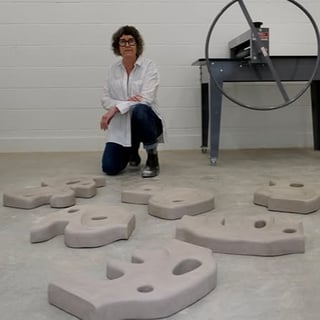
Speaker: You see, I just had a really great conversation with Deanna Svensk and in this conversation that I had with her, one of the things that she does and she still does and she will probably always do is that she likes to let her pottery and her sculptures evolve on its own.
Speaker: And the way she does that is that she doesn't really have a map out into her mind. She doesn't really draw anything out. She just kind of gets started and she just starts doing things. And as she's making her sculptures, she just starts adding a little more details and she just does whatever kind of comes into her mind to try to make it come to life. And I think this is really, really powerful to help you discover your voice because we don't always need a plan with our podcast.
Speaker: You know, if we always had a plan with our pottery, then we won't be able to pivot our pottery, right? We won't be able to do things when something comes wrong with our pottery. We won't be able to pivot the right way to make it look better or to make it have kind of your own vision that you're trying to achieve. But if you're always doing a plan where you're doing it, step on whatever, you do this, this, this, this, that, and you do that every single time,
Speaker: One, you're gonna get bored of it because you're doing the same thing over and over again. But two, but when something goes wrong, you're not gonna be able to pivot as well. So that's why I think it's important to let your pottery evolve by itself pretty much, right? Like when you're making, if you have an idea, put that into your pottery. Now don't get me wrong here. I do think that it's really, really important to have an action plan for your pottery.
Speaker: but don't be so controlled by that action plan where you aren't able to pivot your pottery if something goes wrong. Pivoting is really the crucial thing right here. If something goes wrong, you have to have the ability to pivot yourself. You have the ability to try something different so that it can come out and look good or look even better true itself, right? That's why it's really important to just kind of
Speaker: Let your pottery evolve. Let your pottery evolve by itself. Don't force it. The more you force it, then the more it's gonna not happen. Have you ever been thinking about something really, really hard? You're trying to do something and the more you think about it, the more it's just not happening, right? You just keep on thinking about it and it's just not happening. Nothing is going right. Nothing is going right. And then you finally just say, fuck it. And you just stop whatever years that you're doing and then
Speaker: you end up resting for a while, you go to sleep and you're still kind of thinking about it, but then right before you go to sleep.
Speaker: an idea pops into your mind and you're like, oh, I should do that. And then you end up doing that thing and it ends up working, right? It's the same thing with your pottery. You don't have to force it to make your pottery evolve. You don't have to force it to try to find your voice. If you just let it happen naturally, then you're gonna be able to find your voice eventually. And who knows what you thought you were gonna like.
Speaker: could have been something completely different because you were letting it evolve naturally rather than just having it be so one -sided where you're only doing that one thing. If you let it evolve naturally, your voice is actually going to look a lot better and your part is going to look a lot better too because you have the ability to pivot. With that ability to pivot, you can try so many different things. If you have an idea in your head, go try it.
Speaker: And again, I said, it's important to have that action step so that you know what you are working on, but don't let it control you. Be flexible so that you can have the ability to pivot your pottery and make it look even better.
Speaker: Thanks for listening to this episode of Shaping Your Pottery with Nick Torres. If you want to start discovering your own unique voice, you must first start with the right questions. That's why I put together a free 15 question booklet for you to start discovering your own unique pottery voice. All you have to do is go to shapingyourpottery .com forward slash questions to get this free booklet.