Transcript
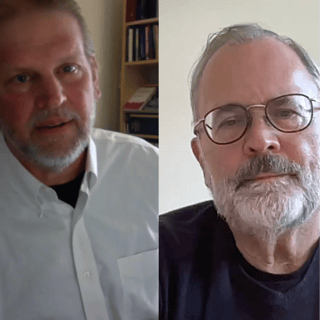
William Roberts: Hi, and welcome to Truth to Power. I'm William Roberts. I'm here with James Henson. director of the Texas Politics Project. de Dr. Henson directs the Texas Politics Project is part of the University of Texas at Austin. It is a hub of research and public affairs work.
William Roberts: focused on providing nonpartisan resources. for Understanding Texas Government and Politics. He founded Co -founded the longest running academic survey of public opinion in Texas.
William Roberts: And. Dr. Henson and I have been talking for years about... the polling trends in Texas and US elections. We are talking today, two days after the US midterms.
William Roberts: Welcome Jim.
James Henson: It's great to be with you and to to see what you look like Bill.
William Roberts: yeah we've always talked before on the phone
James Henson: Yeah, that's it.
William Roberts: Well, things have changed since the pandemic, right? And everybody's just doing Substack and Zoom. Thanks for jumping on with us.
William Roberts: So. Democrats won. the midterms. They've won control of the House and the Senate. There are still a few a couple of Senate seats. being counted, Mississippi and Alaska, kind of shocking that Mississippi would even be in play. But there you go. I think that's a measure of.
William Roberts: how much of a blue wave it turned out to be, much more really than the polls anticipated. but what What is your take? what what are we What are we looking at here?
James Henson: Well, I mean... i I think what we're looking at is you know, the beginning of the end of the Trump era, frankly. you know One of the interesting dynamics about what we're calling this blue wave. is that Where it was really pronounced was in states that we have thought of as red. You know, you mentioned Mississippi.
James Henson: Texas, you know the epicenter of that, which we'll get to. But I think there was a real... I think slightly on. unanticipated problem that Republican candidates had.
James Henson: both congressional candidates and candidates at the state level. in which This dynamic that everybody talked about going into the election in which you know.
James Henson: if You heard it once, you heard it a thousand times. that the party of the president you know loses seats in midterm elections and it's just the way things are. And it was probably going to be.
James Henson: you know a little worse this time because of trump's historically low approval numbers and the the dissatisfaction over the economy and prices. That all came true, but I think...
James Henson: what's really most notable about this is just how powerful a negative effect Donald Trump has had on the Republican brand, I think. Going into this, many of us thought that.
James Henson: one of the constraints on democrats was going to be How bad the democratic brand is because democratic approval ratings as a party are very low.
James Henson: But there is something else going on here that I think just had a huge effect here. And that is that if you were. a Republican candidate in Texas.
James Henson: or in Kansas or... in ohio you had nowhere to go to get away from the extreme sort of negative reaction to Trump. among outside of your base.
James Henson: And. the carryover lack of enthusiasm among republicans that also you know that hurt republicans and so ironically The blue wave did the most damage in red states.
William Roberts: So. Help me understand here. the Uh, What is it about Trump? that turn people off? I mean, were there are there in the in the polling that you did, are there specific issues that...
William Roberts: that people cited. So... turned them away.
James Henson: Well, I think there's one that's specific and one that's almost like a a kind of vibe issue, if you will. And I'll explain that. I mean, clearly. you know I'm not telling anybody anything they don't know.
James Henson: Concerns about prices in the economy are just have just dominated polling. really reaching back into the Biden administration and and and the 2024 election. And I think.
James Henson: You know, that was the key thing to remember here is that you know Donald Trump. won in 2024 and Republicans did reasonably well.
James Henson: across the board in 2024. largely because of this pushback on prices and to some degree, the border and and immigration.
James Henson: so The border has just sort of gone away as an issue. Republicans would like to call that of them being. victims of their own success, which is fair enough, but...
James Henson: Whoever you give credit for that. the fact that the border the physical border with Mexico. has just become less of a less newsworthy and quieter.
James Henson: As a result of changes affected late in the Biden administration and then certainly. you know, by Donald Trump. you know, left Republicans without an issue. And to the extent that immigration...
James Henson: was left over. Much of the public, you know, certainly Democrats and independents have turned against. uh, the administration on an immigration because of the heavy -handed ICE enforcement.
James Henson: and the scope of that enforcement issue. But it's also... you know sort of dampened the issue is something that Republicans want to hear about. because Republicans as a group are also ambivalent about this enforcement. I don't want to overplay that.
James Henson: But I mean, if you compare numbers in Texas, for example. You know, if you ask. Texans. a very general statement that we've been asking in our polling for about a decade that gives them just a sort of a binary choice where you say, would you think? Anybody in the country illegally should be deported immediately.
James Henson: You know. More than 70 % of Texans, sometimes of of Republicans. will routinely tell you yes to that answer, and sometimes as high as the 80s or 90s.
James Henson: But when you ask them about their support for particular enforcement strategies.
James Henson: Like, do you support separating children from their families? Do you support enforcement at churches, schools? hospitals. That level of support goes down into the 40s and 50s.
James Henson: Right. So I'm not saying that Republicans have just had a change of heart because they'll. The scales have fallen from their eyes on these. Enforcement tactics. But it does reduce the intensity of support and it and it causes more discomfort. so that issue has been kind of moved off the table so you've got on one hand all of this concern about economy and prices and consistently in Texas.
James Henson: When you give people a list of a dozen or so economic issues and ask them, how concerned are you about this? the top four in rotation. have been...
James Henson: The price of everyday goods and services. cost of health care, price of housing. And then since February, the price of gasoline. Everything else falls below that. by you know a good bid in terms of other economic factors.
James Henson: And that includes, again, a good share of Republicans. who expressed concern and give Donald Trump. comparatively low ratings on his handling. of economic issues, and in particular, the handling of prices and inflation. and then The other issue.
James Henson: is this bucket of of things that we might call corruption. Now.
James Henson: you know new york times ran a front page story on this and in the last week about Corruption is at issue. and I think it's a little bit amorphous. And but I think it's amorphousness.
James Henson: has been helpful to Democrats. And what I mean by it's amorphous When you say corruption to some people, They mean the self dealing and the self enrichment. that has once since been such a central part of the Trump presidency.
James Henson: particularly the second term. But I think there's also a broader... application of that that is moving voters and that is the sense that you know, government you know particularly the federal government with Trump at at the head of it is too close to the donor class, is too close to billionaires. and and and So corruption.
James Henson: kind of bleeds over into responsiveness. And I think that that is was a big theme here. But it's a theme that touches on a lot of different sub issues.
James Henson: That we're out there. I mean, it's partially it partially tickles the economic anxiety. I mean, if people think that. you know, Republican government is about serving rich donors and not caring about prices. Well, all of a sudden you have a discussion. that starts by talking about these familiar issues of self -dealing and corruption.
James Henson: but very quickly and easily for Democratic candidates. pivots into talking about the economy and People sense that that they're struggling or that. you know, even if they're not struggling in a literal sense.
James Henson: that they're encountering. the impact of higher prices in a way that they're just not accustomed to i mean i don't I don't want to stipulate on your age, but I can tell you that. you know My sense is that people that are...
James Henson: You know. Under the age of 50, more or less. I've never really had any historical experience in the United States. with a period of sustained rising prices.
James Henson: And people are noticing and it's bothering them. And that's not just people that are living paycheck to paycheck. it's middle and upper middle class people. And I think that helped. the issue set for Democrats and all of that.
James Henson: folds back onto this alignment, why why Republicans had so much trouble in red states.
William Roberts: okay
James Henson: is that... This is not just the traditional... You know, the classic, you know. The aggravation within the class structure, I might say, of who's bothered by the economy and high prices and bothered by what is this perceived lack of responsiveness.
James Henson: is touching a lot of people. that you don't think of as being particularly sensitive, necessary to economic issues.
William Roberts: It seems to me that the price of gasoline and the price of diesel. jumping up so significantly.
James Henson: Yeah.
William Roberts: since the Iran war and the the blockade of the Strait of Hormuz. energy shock that followed. And that that really kind of crystallized this affordability.
William Roberts: set of concerns that that do go back to the the inflation that that came out of the pandemic under President Biden. This it really has been a carryover.
William Roberts: Uh, How much of that showed up in in the polling? and do Do you think pe voters connected the price of gasoline to the decision to go to war?
James Henson: Well, you know... I don't know, but I think so. I mean, I think Any voter that was paying attention at all certainly saw that connection made. frequently.
James Henson: And I think what that did, I mean, I think it's interesting to bring in that linkage is that. You know, you and I probably talked about this in past cycles as much as. you know, we might think about foreign policies important in governance and particularly in a presidential race. and in assessments of presidential of presidential performance.
James Henson: It's not generally something that is in the top tier of issues that people are paying attention to. And I think the read the way that this hurt Republicans is the linkage you're making. I think that.
James Henson: People are making the linkage between prices in Iran. And even if it's not an active part of how they're thinking about this.
James Henson: It makes intuitive sense and it opens up yet another front of. of criticism and blaming Republicans for high prices because they can...
James Henson: Link it they can link it to the Iran war And so there's this whole autonomous area where the issue of the Iran war. functions in its own kind of foreign policy bucket among voters who pay attention to that in terms of the you know trump promised no more foreign wars. and Seems like that has... not the case And because he's doing this.
James Henson: It's triggering inflation. And so I think they've become mutually reinforcing in a way that I think the Iran war might not have been as as front and center for cultural reasons. were it not for the economic consequences.
James Henson: and the general sense that they are linked.
William Roberts: hu The results in Texas are... where you're located or are pretty dramatic. You have a Democratic Senator James Tallarico. You have a Democratic governor, a Democratic state legislature, the House.
William Roberts: a Democratic state attorney general. How much of, and and and you and I have been talking actually for. uh probably a decade at this point, about watching Texas.
William Roberts: turn blue ever so slowly. there were previous
James Henson: Yeah.
William Roberts: elections where it looked like the Democrat might be competitive but ended up not being. Is there a longer... term trend afoot here.
James Henson: Well, you know, yes and no. i mean Yes in the sense that you know you and I have been talking about for a long time where you know my You know, there have been a lot of indications that on one hand prior to this election when every Somebody called me and said, hey, is Texas turning blue? It was easy for me to say, no, no, it's not.
James Henson: But... my qualification for that was always However... The state is more competitive below the surface than it looks. if you're just looking at election returns. and You know, what I would say, and the reason I say that is that, you know, there are a lot of Democrats here. It's just there were more Republicans.
James Henson: And once Republicans gained... leverage over over elections and then political institutions. They very effectively use the tools that are at their disposal.
James Henson: To like like any good incumbent does you could say this about Democrats in California? to keep themselves in power and to keep Democrats kind of on the ropes. and The tools for that are varied. you know but it's You know, they included redistricting, they included voting rules, all the things that Democrats complained about the whole time.
James Henson: But also... their ability to embrace developmental and growth policies that Democrats, by and large, benefited from As wages continue to go up and there was, you know.
James Henson: people weren't were generally not wanting for jobs here if they wanted to work and There were a lot of high -paying jobs here. even if taxes property taxes were high and services were low.
James Henson: there was a sense that that trade -off worked in maintaining republicans in power So that means, you know, so the other part of your question, when I said, you know, was this the culmination of a trend yes and no i mean i think it was the culmination of a trend in that these competitive forces that had always been if you will, successfully managed by incumbent Republicans in the Republican power structure.
James Henson: that weakened democratic resources. You know. Finally kind of gave way but they gave way in a much more dramatic and sudden fashion than anybody expected and frankly that we've seen in Texas history.
James Henson: so the obvious analogy here is that you know many of your listeners will know Texas was a democratic state for 100 years, a little more than that. after the end of the Civil War.
James Henson: And then Republicans. basically finished taking control of the state. In the early 2000s, in other words, they won. total control of the Texas legislature, all executive branch offices.
James Henson: in 2002 and have not looked back since then. Save as you said for about once a decade democrats because of usually national conditions are an unusually good candidate gave them a little bit of run for the month for their money, but were not able to break that monopoly.
James Henson: now It took Republicans. depending on where you want to start. three or four elections. to engineer. that turnover from total Democratic control to total Republican control.
James Henson: It took Democrats one election to do that. And that was this election. I mean, to elaborate on your account, I mean, the only thing that Democrats are missing right now, and it's an important piece, but.
James Henson: It matters. is they don't have a majority in the upper chamber of the legislature the state senate is still a Republican majority. But in the election this week, Republicans won. every statewide contest that was on the ballot.
James Henson: And in Texas, because of the... big reason specifics of the Texas Constitution That includes a bunch of elected judgeships. And it it includes a bunch of executive branch offices that people would.
James Henson: normally think of as appointed offices. So in Texas you know You have a lieutenant governor that is not like a vice president. It's an independent center of power. that is the presiding office in the tu in the Texas Senate. and We'll come back to that.
James Henson: but you know also what is essentially the combined. kind of chief fiscal officer of the state, the controller, the attorney general. the Ag Secretary. the land commissioner.
James Henson: and a seat on the Railroad Commission. and This is the Real Texas Trivia Test. The Railroad Commission in Texas is a very important commission. It's three members. It has nothing to do with railroads.
James Henson: It is the. state agency that oversees the oil and gas industry.
William Roberts: So how do you...
James Henson: Democrats won. all of those offices. And then. you know criminal courts of appeals supreme court for lawsuits everywhere you look Democrats were winning and it was it was stunning and very surprising and that's why I make a point of this while it's.
James Henson: it's been gradual but This has never really happened in one election. I think you'd have to go back to right after Reconstruction when... the big national deal you know ends national Republican supervision of Texas.
James Henson: And the Democrats have basically come back. the pre -Civil War elite. comes back and reasserts control over the state. That's the. You know, that's the last time you're going to see. a big election turnover like the one we saw this week so it's it's just stunning we're all i mean i you know it's it's 48 hours later as we're recording this And you know people are still walking around kind of in a state of shock.
William Roberts: The. I have two questions I want to ask you. one How much? impact did the gerrymandering have? that Governor Allen did on behalf of President Trump.
William Roberts: and
James Henson: Yeah.
William Roberts: Maybe more importantly. How do you see this new Democratic governing majority governing? What are they going to do in Texas?
James Henson: Yeah.
William Roberts: It's a different Democratic Party today than it was. after reconstruction.
James Henson: Sure. Well, first on the Democratic gerrymandering that I think is everybody people probably that just blew up in republican space i mean
James Henson: you know they had hoped to gain at least five seats they got nowhere near that they you know. There's still some votes being counted, but you know they didn't get you know they didn't turn any of the seats that they really thought they were going to be able to turn, in particular where...
James Henson: you know, you had Democrats that were well entrenched, but were moderate Democrats whose districts were curtailed. Vicente Gonzalez and Henry Cuellar. both of which are, you know, South Texas seats.
James Henson: They did not get those seats back. and in fact they lost the couple that they they should have won i think the or expected to win. because the Republican tide was so big and because They trimmed some of these districts thinking they would leave them still safe.
James Henson: And the Republicans. or the democratic surge was too big so you know most notable is kind of a You know, an interesting district is CD 23, which is.
James Henson: you know, kind of the largest non single state congressional district in the country, which stretches. from El Paso at the western edge of the state down to the outskirts. and picks up a little bit of San Antonio. it's If you look at the the congressional map, you can't miss it. It's just this huge district that runs across the border.
James Henson: but that incorporated a lot of rural Latinos and conservative voters. was supposed to be you know, something like an R plus 10 district. It's the state where... Congressman Tony Gonzales had to.
James Henson: sort of Exit the field amid. disgrace. And then. Republicans nominated a guy named Brandon Herrera, and he had beat Gonzalez in the primaries. Gonzalez had to withdraw.
James Henson: who is this kind of first amendment gun -toting kind of YouTube personality congressional candidate, he lost to a virtual unknown, Katie Stout Padilla. in a race that...
James Henson: you know even as all the handicapping was pushing. some all these redistricted districts in a Republican direction that was still thought of as a strong, lean Republican seat, and they lost that seat. so The redistricting play just...
James Henson: just Not only failed it turned out to be counterproductive
William Roberts: So you you now have a Democratic governor. She ran on a platform of. I think. Regulating? the The growth of...
William Roberts: data centers
James Henson: data centers
William Roberts: I'm i not entirely sure what her... agenda is there. what what that That, of course, is... i mean the market is down today uh chip stocks and the ai stocks are all down across the board quite dramatically.
James Henson: Yeah.
William Roberts: as Wall Street figures out, oh, wait a second, we've got some Democratic governors here, and Texas is one of the big ones.
James Henson: Yeah.
William Roberts: as I understand, has maybe a quarter. of the planned data centers in the country. And between Texas, Georgia, and and Michigan, it's it's like 65 % of the data centers.
James Henson: Yeah.
William Roberts: that are being constructed or planned. What? how do you how do you see That issue playing out. going into the election and the and and what what we might see from go Governor Hinojosa.
James Henson: Yeah, I mean, I think it's... it's you know. it's a big question being asked all over the place i mean i've done
James Henson: a couple of talks with business groups recently. and It's the first question they ask. Look, I mean, I think that
James Henson: I expect that Governor Hinojosa is, it's look, it's a big question. So I will tell you what my expectations are saying that I think. In part because of the dog catches car of.
James Henson: nature of the democratic victories here. that everybody, I think the Democrats themselves are trying to figure out what they're going to do. So we should stipulate that. you know Look, my expectation is that...
James Henson: You are going to see. more regulations along the lines of the friction points that we've seen in Texas of data centers. but that you are not going to see a big u -turn for one thing i think that the You know the role of technology in the Texas developmental model is too far along
James Henson: for it to be practical or even desirable, I think, for a Democratic governor like Gina Hosa. We'll talk a little bit more about how she's positioned herself in a minute. to really just affect a U -turn.
James Henson: But I do think that there is going to be. a slowdown while The governor. And then this divided legislature with Democrats in control of one chamber and Republicans in control of the other.
James Henson: figure out a new regulatory approach. And I think the specifics of that in Texas. that that that governor -elect, you know, Jose. as straightforwardly advertised as going to to revolve around.
James Henson: stronger vetting of of them at the state level. but probably more importantly. trying legislatively to create more local vetting and more local participation in planning of these data centers in a way that has not been present in Texas. today And you know, look, I think there is a lot of incentive.
James Henson: This is frankly, I think, an area where Republicans and and Democrats. are gonna have the opportunity to work together. frankly greased by all the very powerful interest groups.
James Henson: that are going to be engaged in this re -approach at the legislative level. And. Though it won't be billed this way, I think that you will not see.
James Henson: The regular... a degree of regulation that goes too much further Then governor Abbott probably would have had the status quo remained. And I'll tell you why that is. I mean, I think, look.
James Henson: you know, the legislature has passed you know, a very... Pro development approach to the but construction of these data centers Going back a decade ago. I mean you know, the tax breaks and and the structure of how the...
James Henson: how these how these the the companies building these data centers. got these tax breaks goes back. to legislation passed in 2015. And. there was already a clear signal that those subsidies were going to have to end.
James Henson: And that there was going to have to be more oversight. of energy use and water use. And. a bit more of a global look at how these how these regulations were implemented. I mean, they were implemented by a bunch of different agencies which tended to operate in silos for the last decade.
James Henson: And the pushback has come from. rural areas, of course, which I think probably hurt Republicans in this election. but also more significantly in suburban areas.
James Henson: where, you know, our polling is suggested on one hand. you know. urban and rural voters are those that are most opposed to the construction of data centers in their neighborhoods. On the other hand,
James Henson: We've done a lot of polling in the state where we give. people a bunch of different possible consequences or... areas of impact of data centers and say, hey, look, do you think constructing more data centers will be good or bad.
James Henson: in this area. And you know you won't hear me saying this a lot, but public opinion is pretty nuanced on this. I mean, it's not as if voters say, we don't want these at all. We think they're absolutely bad.
James Henson: You know, you get on balance positive expectations when you ask about. whether these data centers are going to be good for the state economy, good for the national economy.
James Henson: good for the development of new technologies. people understand what the upsides are. But when you ask them, but where you see the downsides are on areas that people are very sensitive to right now.
James Henson: The reliability of the grid, which is still a big issue here. the prices uh you know utility prices Water use. et cetera.
James Henson: And so I expect. Honestly, that the... the recalibration We'll probably settle not too far where... from where public opinion is that it's okay if you're going to build these things, but. The communities want to be consulted.
James Henson: And... you know, how much of the share of the pie and who's going to. who's going to bear these costs and how. you know the ability of these companies to externalize their costs. is going to be more regulated.
James Henson: I think for the investors and, you know, you're talking about the market. And, you know, we're reading this and I'm reading this and probably the same market reports. I think what the companies are telling investors is probably in the ballpark of right, which is.
James Henson: the timeline is going to have to be more is going to be slowed down while These pauses happen new regulatory measures are are implemented at the state level.
James Henson: And then. you know, we see what projects shake out of that that new regulatory structure.
William Roberts: Are there any other? major policy initiatives you would expect to come out of the Democratic governor's office?
James Henson: Well, look, I think that Gina Hinojosa has Her political career. has been rooted in public education. Now public education is an enormously difficult issue.
James Henson: But I think that we are going to see. you know, a lot of focus on public education on and on probably constraining.
James Henson: the the one of the crown achievements of both the the exiting lieutenant governor and governor, and that is the know what we would call broadly the school choice program.
James Henson: You know, the the the program that subsidizes parents for homeschooling and sending their kids to private schools was funded in the last legislature.
James Henson: to the tune of about a billion dollars. There was already... you know
James Henson: signals being sent by you know the well -funded advocates not all of whom are in texas of that program that it would be on their agenda to... you know provide more funding for that. program maybe another billion dollars going forward i think that's dead in the water and it's an it's going to be an interesting question to see how the negotiations go over. the future of that program.
James Henson: And. funding of public education in Texas. which is... tied into a key issue that Republicans were going to put at the front of their agenda.
James Henson: before they all got shoved out of office and that is property tax reduction and so i have a real you know curiosity about Whether the governor is going to try to.
James Henson: manage some kind of a compromise deal that would enable A Democratic governor. to deliver a degree of property tax reform.
James Henson: that. also increases funding for public education. and takes money from other places and I think one of those other places could very well be that voucher program.
James Henson: That's a very simplified. way of moving the pieces around but i think that those pieces are all going to be in play should this be something to pay attention to. people pay attention to and i think You know, Gina Hinojosa is going to be under.
James Henson: pressure from her constituents and from her allies in the legislature to revisit the issue of public public education funding because you know school districts around the state.
James Henson: have been experiencing budget shortfalls. In the interim since the last time the legislature was in town and remember our legislature only meets every other year so They'll be back in session in January. And you know the agenda is always packed.
James Henson: and And it's going to be packed at a time. where you're going to have a change in power, fundamentally changing the dynamics. between the branches and in the legislature. and a lot of pent -up demand among Democratic constituents.
James Henson: At the same time that. republican the Republican elected officials that are remaining and the ones that are now on the sidelines. and banking on the fact that you know democrats cannot maintain this level of success And they're going to be positioning themselves for that. next set of legislative elections.
James Henson: in 2028.
William Roberts: It's gonna be interesting to be in Austin. for the next couple of years. I want to zoom out a little bit. and and ask kind of a bigger picture question you know kind of related to How do Texas Republicans respond to this? I mean, they're going to have to do some soul searching, I imagine. and recalibrate their approach.
William Roberts: But you know one of the political realities we know at the national level is that the... the republicans cannot win the white house with certain without winning Certain states, Texas, Florida, Ohio,
William Roberts: are three that they absolutely have to have and then they've got to get several midwestern states Uh, it What does this do to the 2028 presidential outlook?
James Henson: No, I think it it fundamentally changes the ground of that. Because I think no matter how much. One might intellectually or based on the data be able to argue Look, this was probably a fluke.
James Henson: and you know we're not going to see Democrats. you know, run this strongly from here on out. But in the short term... We know that Democratic turnout in presidential election years is higher than it is in midterm election years. So Democrats are going to have a lot to build on. They're going to have a demonstration effect.
James Henson: And so I think it's going to be impossible. for Republicans to take. Texas for granted. in the way that they have in presidential elections for. you know virtually all of our adult lifetimes.
James Henson: And so it's going to change that dynamic. in a fundamental way at the national level. And I don't. I don't see any way around that
James Henson: You know, there's going to be a there will be a lot of Democrats in the state. that are connected with national politics particularly in the congressional delegation and now with talarico in washington dc talking to national Democrats and saying, look.
James Henson: you know this is now real And if you want to win the presidency. You know, you need to support the state level party and you need. you know, to consider Texas in play. And I think you know, it's gonna change.
James Henson: all of the candidates' strategies in terms of where they allocate resources and even who they consider. a good candidate and You know, as far as, you know, where Republicans go from that at the state level.
James Henson: I mean, that's still that's been. you know, pound it out as we speak. I mean, you know There are... you know the What I would say.
James Henson: you know the last remnants of the kind of more moderate business wing of the Republican party. standing up and saying, see, we told you not to dump nominate Ken Paxton. We told you that following these guys was going to lead to disaster and see it did now. I am not persuaded by that in terms of.
James Henson: the Cornyn you know, the alternate reality. the you know earth 237 in in in the marvel universe or something where you know John Cornyn is the candidate and everything comes up roses for. Republicans, I think that's.
James Henson: fundamentally wrong and there's not an ounce of data to support that. But nonetheless, there's going to be. a fight between you know, more moderate Republicans in the grassroots of the Republican Party who who are already blaming you know, not Ken Paxton, but are blaming.
James Henson: Greg Abbott for. moderating too much in the campaign. and you know giving up too much ground on data centers and trying to run too much of a of a measured campaign and so i think that's going to have to be all sorted out And a lot of that, that the the the ground, you know, the... The fundamental focus of that right now is. is the state legislature where You know, Republicans are trying to influence the selection of the speaker that will be chosen by the Democratic House.
James Henson: And. the republic there the remaining sort of beachhead for republicanism in the state in the state senate is trying to figure out how combative they're going to be and how they're going to position themselves in this new world.
James Henson: And I think all all of that is just in motion and will remain in motion. for the next couple of months and probably even into January. when the when the new legislature convenes.
William Roberts: I heard this. Tell me if it's true. George W. Bush announced that he was voting for Democrats in this election.
James Henson: Well, I don't know that he ultimately did.
James Henson: I think there was a lot of pressure on him to do so. i I don't think he ultimately did, but His brother did. It turned out one of his daughters.
William Roberts: Okay.
James Henson: showed up on the Tallarico Campaign Financial Report. you know. So all of that, you know, was a was a small subplot of what was going on here. I mean, to my mind.
James Henson: you know Honestly, Karl Rove, who is still a... you know, big presence in town and around the way and, you know, the National Pundit Circle, you know, Karl Rove announcing he couldn't vote for Ken Paxton or...
James Henson: you know the kind of racist the not kind of the racist railroad commissioner candidate You know, I've got a lot of national press, but...
James Henson: You know. That is not the wing of the party that is... in charge in Texas right now. I mean, those guys are kind of, you know, I don't know, you probably remember there's a... it's an odd application of this it's almost confusing but there's a scene in the war room where James Carville, it's not the one that everybody was quoting his speech, his tearful speech at the end.
James Henson: But there's a scene in the war room where Carville is... you know talking about the campaign messaging and he's saying look You know, when I look at George H .W. Bush in the 92 campaign, I'd...
James Henson: you know it's just It's old news. and it's It's like it's boring and it's not relevant. It's like looking at old calendars, you know. And I... think honestly That's kind of what the Bush dynasty and that wing of the party.
James Henson: is to the current Republican Party right now. it just They're just not very relevant.
William Roberts: So who who emerges as as leader of the Republicans in Texas?
James Henson: Well, you know, i I don't think anybody knows. I was just talking to my colleague Josh Blank about that after we had recorded our... our podcast which is called the second reading podcast if anybody really wants to go.
James Henson: even more in the weeds on Texas.
William Roberts: Yeah. Nice plug.
James Henson: But i don't i don't think that there is I don't think that there is a clear inheritor right now.
William Roberts: good
James Henson: And look. Republicans, I cannot. overstate the fact that Republicans today are just in shock. Right. And I don't think, you know. Anybody really knows who emerges from this? I mean, you've got some people that are trying to be contenders. Kind of an independent wealthy Guy who was the acting comptroller who had been in the state senate name? Don Huffines, who challenged Abbott unsuccessfully.
James Henson: in the democratic primary in 2022 and his concession speech he ran for state controller. In his concession speak, he was. blaming Abbott along the lines I was talking about.
James Henson: He's clearly positioning himself to continue to move forward. I don't buy it. I don't think he's I don't think he's got the juice for it, but he is independently wealthy so he can.
James Henson: assert himself as much as he would like. But I don't think there is anybody. who is clearly you know the person to emerge. The two most powerful figures in the state and state -level politics have been Greg Abbott,
James Henson: And Dan Patrick.
James Henson: They are both on the older side. They both just got defeated for a fourth term. And so I think. you know their presence in elected politics is done. And there is it is not clear.
William Roberts: wow
James Henson: who who's going to emerge to fill that gap but I can tell you there will be a lot of jockeying around.
William Roberts: Yeah, and this was a historic sweep. I mean, I think we're only a couple days past it at this point, and it and it does take... some time for these elections to the consequences of them to marinate.
William Roberts: if you will. And for all of us to. kind of grasp what what does this really mean. Maybe by way of last question here, any remaining thoughts for us? and what What do you think you'll be looking for and in... and asking about as you construct your next poll.
James Henson: Well, I think as we construct our next poll, we'll be looking to see how much the election agenda carries over into what at the state level, we will disappear from the national view for a while.
James Henson: and turn inward in the state legislative process. But I mean, I think we we're going to want to see what expectations are. among the Texas electorate.
James Henson: Does. this really kind of durable, economic focus. last into the new year i don't see any reason it wouldn't and we'll try to gauge how high expectations are of democrats and then look the other thing we have to watch is How? How prepared are Democrats to govern? i mean as I said earlier I think You know, there's a real dog catches car quality to the.
James Henson: breadth and depth of the Democratic win here. i mean there are absolutely democrats going into statewide office in January that did not expect to win.
James Henson: There's just no way about it. and i and i And I frankly don't think... that the legislative majority in the house was prepared. to win and to govern and to choose a speaker and and sort out.
James Henson: the internal conflicts in the party so you know We'll be watching. very closely to figure out how long it takes Democrats to get their footing.
James Henson: and how much... allowance the public is going to make and particularly democrats and independents are going to make. for Democrats being on a learning curve.
James Henson: My suspicion is they're not going to. Get a lot of slack. But we'll see.
William Roberts: Jim, thanks for joining us.
James Henson: I really appreciate the invitation. it's It's good to talk to you in person. and and You know, it's a it's a good conversation, as I remember.
William Roberts: Yeah. Well, hopefully we can talk again in. about a year when the when the presidential cycle starts to heat up.
James Henson: Yeah, let's do that.
William Roberts: Dr.
James Henson: Thank you.
William Roberts: Jim Henson, director of the Texas Politics Project at the University of Texas, Austin.