Transcript
William Roberts: Hi, and welcome to Truth to Power with William Roberts. I'm William Roberts. ah We're talking about international trade. ah In his second term, President Donald Trump has dismantled much of what remained of the post-war free trade order.
William Roberts: Since April, his administration has imposed sweeping tariffs on nearly every country in the world. a minimum of 10% on all imports, rising to as high as 20% for many countries and more than 50% for rivals like China and India.
William Roberts: um who The president insists the tariffs are about fair trade and rebuilding American manufacturing, but many trade lawyers and economists see something completely different.
William Roberts: ah chaotic new system where allies and adversaries alike must strike deals with Washington or face economic punishment. These so-called agreements are rarely written down, often announced by social media posts and frequently rewritten when new demands appear.
William Roberts: In Asia, Trump's recent trip produced a flurry of handshake deals with South Korea, Japan, Philippines, Cambodia, Thailand, but also a deep unease.
William Roberts: A raid on Hyundai plant in Georgia just days after a trade pact with Seoul showed how easily Trump's economic nationalism blends with his domestic mass deportation agenda.
William Roberts: And even partners, even foreign partners who have pledged to invest billions in the United States are discovering that tariff relief can come with political strings attached to Across the Atlantic, the European Union, the UK and others have accepted one-sided compromises to shield their industries from harsher penalties.
William Roberts: The result is a patchwork of exemptions, retaliations and confusion, what one European lawyer described as taming the tiger rather than following a rules-based international order.
William Roberts: Meanwhile, the World Trade Organization, once the guardian of global trade, is struggling to stay relevant. As unilateralism spreads, Brazil, India, and Canada are all caught in disputes that mix commerce with politics, and every country seems to be rethinking how to protect its own industries.
William Roberts: The old vision of a rules-based system is giving way to something more power-based, more As ah Chatham House analyst recently put it, Donald Trump has delivered the largest shock to international trading since the creation of of the WTO and the multilateral trading system after World War.
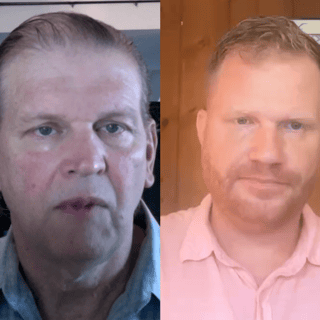
William Roberts: So what does this all look like in practice? How can it last? ah Joining me to discuss it is Keith Rockwell, senior research fellow with Heinrich Foundation.
William Roberts: And for more than 25 years, the public face of the World Trade Organization. ah Keith, welcome to the show.
Keith Rockwell: Bill, great talking to you.
William Roberts: all right All right. ah Keith is what was the director of the WTO Media and External Relations Division and the chief spokesman. He worked closely with the director generals of the WTO and his office to reflect the objectives and activities of the organization.
William Roberts: He was responsible for the overall coordination of the WTO's interaction with the media, civil society, parliamentarians, and the United Nations. He appeared regularly before media at press conferences, briefings, television, and radio appearances.
William Roberts: Keith Keith and I worked together in the mid-1990s at Knight Ritter, I should say. And Keith received his MBA from George Washington University in 1991 and his bachelor's in history from Tufts University in 1980.
Keith Rockwell: Thank you.
William Roberts: Keith, watching um the development of the global trading system from inside the WTO over a period of decades, really, It's incredible the amount of experience you have.
William Roberts: When you look at what's happening now, um Trump's tariffs and the nationalist rhetoric, a what do you feel we're witnessing
Keith Rockwell: Well, it's alarming, but not surprising. the The WTO is only as useful as its member governments wish it to be.
Keith Rockwell: and frankly even before Trump it was not being supported um not just by the US but many other countries um India, South Africa, Indonesia, China all played around with the rules um there were some very bad decisions taken there were some and And it all happened sort of at a time where the whole approach, the whole outlook on globalization started to turn.
William Roberts: Oh.
Keith Rockwell: And this confluence of events meant that even from the beginning, i mean, when when we had a ministerial meeting in Seattle in 1999, there was rioting in the street for four days.
Keith Rockwell: ah And you know this was this was something, this was under under a democratic president, Bill Clinton, the guy who had negotiated the final agreement that led to the WTO's creation.
Keith Rockwell: um and
William Roberts: you
Keith Rockwell: He, very smart guy, he's just been in ah interviewed in a book ah written by a good a good friend of mine, David Lynch, who writes for the Post, where he says we didn't count on the backlash coming against globalization.
Keith Rockwell: And we had this set of circumstances in which you had people saying the WTO is an agent of American imperialism. They said this in every country in the world except the United States, where they said we were this monolithic, all powerful entity that was out to crush freedoms, environment, labor standards, and all these other things. And of course,
Keith Rockwell: None of this was true, um but it was a very complicated, still is, complicated place, and trying to explain to people why you need to have a framework of rules agreed by all parties was very difficult to do. And it's not easy to negotiate these agreements.
Keith Rockwell: And one of the things we kept saying to people at that time was, look, you either have the rule of law or you have the law of the jungle And the law of the jungle is what we have right now.
William Roberts: Wow. Law of the jungle is what we have right now. um the ah You're talking about the Trump tariffs, which are unilaterally imposed by the president.
Keith Rockwell: Yeah.
William Roberts: um
Keith Rockwell: Might makes right.
William Roberts: The.
Keith Rockwell: The big, strong players can simply impose their will on the others. And that's what's happening.
William Roberts: The. um
William Roberts: The situation between the United States and China is kind of at the forefront right now.
Keith Rockwell: Mm-hmm.
William Roberts: Trump is expected to meet with China's president, Xi Jinping, in South Korea in a couple of days on the sidelines of the annual APEC summit.
William Roberts: um he had The U.S. president has threatened 100 percent tariffs on China. ah in retaliation for China's attempt to regulate export of rare earth minerals that are essential to industrial production, notably automobiles, electric vehicles, and ah smart weapons.
Keith Rockwell: Yeah.
William Roberts: um What to but I mean, it's not really, is it, what do we expect to come out of that? It's not really a trade deal if Trump gets an agreement with Xi to reduce the, you know, the tariffs that he's threatened, he himself is threatening to impose, right?
Keith Rockwell: yeah
William Roberts: I mean, that's just kind of solving a crisis of your own making.
Keith Rockwell: yeah
Keith Rockwell: Yeah. Well, this is the thing. i mean, when when we were working together um a million years ago, one of the things that I used to do when I was sent from New York to Washington was to cover the Trade Act of 1988.
Keith Rockwell: And you saw how Congress basically said, this is the way you are to negotiate trade agreements. And it was an incredibly complicated piece of legislation.
Keith Rockwell: And it sort of set the parameters for negotiating trade agreements, including including for in the inside the yeah the the multilateral arena of the WTO.
Keith Rockwell: um And that required endless congressional hearings, deliberations with the private sector, with other stakeholders. That doesn't happen now. These agreements are not legally binding and what happens to them after Trump goes is anybody's guess. So the agreement that they will they will come up with, and I'm sure they will, what does it mean?
Keith Rockwell: Remember there was an agreement in the first administration and now they're bringing a section 301 trade complaint against China for not implementing the agreement from the first trading amin from the first Trump administration.
Keith Rockwell: So to a certain extent, People are at sea in terms of trying to figure out what these agreements mean. ah We don't get a lot of information about them. There's not a lot of things published.
Keith Rockwell: um And in any event, what what legal binding status do they have? And the answer is not much. ah So whatever it is that they do, and it looks like they're going to forestall the 100% tariffs and that the Chinese will postpone the embargo on exports of of rare earths.
Keith Rockwell: um It's kind of a mutually assured commercial destruction was what they were what they were threatening. And that looks like that will be put on the back burner for now.
Keith Rockwell: But the problem is, is that if you're trying to, if you're a business person and you're trying to make decisions about investing and about where you're going to base your production and who you're going to export to, how your supply chains will be will be structured,
Keith Rockwell: If you don't have a degree of certainty, it takes years to set these things up, if you don't have a degree of certainty about what the the the the legal landscape is, it makes it very difficult for you to go ahead and invest the billions of dollars that are required to to compete commercially with other big exporting countries.
Keith Rockwell: and This is the situation now. And it doesn't really seem, if you look at the way the markets, and if you look at the way the the um the the the company reporting is coming out, insofar as we can tell with respect to official information because of the shutdown, we're not getting this.
Keith Rockwell: ah What you're able to see now is that people are so are so are throttling back on investments. We're not creating jobs in manufacturing. In fact, since the since the beginning of the year, we've lost 78,000 jobs.
Keith Rockwell: That's not a huge number, but it's not going in the right direction. So what is the objective? What is he trying to achieve? Deals, you know great, but what is the objective? Is it to reshore manufacturing?
Keith Rockwell: Is it to eliminate the trade deficit? Because if those were the objectives, that's not happening.
Keith Rockwell: We're not seeing that.
William Roberts: let talk about Let's talk some more about China, because you were at the WTO during Trump's first term as president, 2017 2021, when he imposed tariffs China. And the
William Roberts: um when he imposed tariffs on china and they and and the and they relationship really started to get rocky. um It's interesting because China, it looks to me like, is the one nation that has leverage against the administration in these in these tariff ah negotiations. A lot of countries just feel like they're being bullied.
William Roberts: They're going along with a compromise just to get a deal and and move sideways without a lot of damage. You see some countries pushing back rhetorically and getting into kind of a conflict with Trump.
William Roberts: Canada, for example, and others that are are going along to get along. Mexico. um Just two different approaches. But China's unique and different in the sense that they do have this rare earths card, which is kind of like an ace in the hole, is a poker metaphor.
Keith Rockwell: Yeah. Yep. Right.
William Roberts: ah the but At the same time, you see the Chinese ah moving to develop trade relations with other countries.
William Roberts: and And they're not buying American soybeans, ah which is what happened in the first term.
Keith Rockwell: Right. right
William Roberts: ah You see these sort of voluntary decisions outside the the scope of of of these trade deals, the so-called deals that Trump makes, where other countries, um notably China, but others as well, appear to be moving around the U.S. right now.
Keith Rockwell: yeah here Here are some some interesting numbers for you. Since Donald Trump became president of the United States the second time, since January, the US share of global imports has fallen from 17.3% 14.5%. Share of global exports fallen from nine to 8.6%.
Keith Rockwell: share of global exports fallen from nine eight point six Now, the the import side of this is important for a number of reasons. One of them is that your leverage over others, your power in the WTO and in other trade forum hinges on your import market because that's what you can leverage to get extractions.
Keith Rockwell: As the US imports shrink, as As China fills this void, as you very eloquently just explained, it makes the u it makes it harder and harder for the U.S. to throw its weight around in this way.
Keith Rockwell: And you're seeing this in a lot of different contexts. You're seeing it in Southeast Asia. You're also seeing it, the Canadians have made it ah a priority to shift their trading relations.
Keith Rockwell: The EU, I would say that they are also a an entity that does have leverage over the U.S. because the U.S.
William Roberts: Mm-hmm.
Keith Rockwell: exports hundreds of billions of dollars in goods. And we can talk about services as well as as investment and and intellectual property. ah licenses and royalties.
Keith Rockwell: but But they are in a different position because they are dependent on the U.S. s for their security. And Trump does not hesitate to play the defense card if he thinks it'll help him get a better trade deal.
Keith Rockwell: Harder to do that in Southeast Asia because they're doing a very delicate um a tightrope walk between the US and China. um they They want to be, this goes back to what Lee Kuan Yew said when he was the the Prime Minister of Singapore.
Keith Rockwell: You can be friends with both, but it ain't easy.
William Roberts: Mm-hmm. Mm-hmm.
Keith Rockwell: and And it's in the interests of all of those countries to try and strike this balance with China. But keep in mind, China is right there. i I mean, China is, you have very large ethnic Chinese populations in all of these countries.
Keith Rockwell: And while, and China is now the larger, largest trading partner for all of these countries, some of the countries have more, um export more to the US and to China.
Keith Rockwell: And the US does um invest more than anyone else. I think it's about 175 billion, which is far more than China. So they do have leverage, but these countries have other options.
William Roberts: the um You mentioned the the EU and the Europeans and the national security equation there. Of course, there's a hot war in Ukraine, um and there's fear among the NATO allies, particularly Poland and the Baltic states, that Russia could invade or try to invade parts of their countries.
Keith Rockwell: Right. Yes. Yeah.
Keith Rockwell: yes
Keith Rockwell: yeah
William Roberts: um And there's been a withdrawal by the Trump administration from weapons support for direct weapons support in exchange for weapons sales to Ukraine, in which the European nations are buying American weapons for Ukraine.
Keith Rockwell: Right.
Keith Rockwell: Right.
William Roberts: and ah And of course, there's been Trump's kind of equivocation in his diplomacy with Putin.
Keith Rockwell: Right.
William Roberts: And this has this has This appears to have triggered a response by the Europeans to begin to put themselves on a self-reliant trajectory for national security.
Keith Rockwell: Yes.
William Roberts: ah they are They are planning to supply their own of weapons going forward. um They understand that the United States can no longer be relied on.
William Roberts: um So I wonder how how does that affect what what the Europeans did with the what the EU did with the trade deal with the U.S.?
William Roberts: You mentioned it. um and and And what leverage do the Europeans have? I mean, they have they have a set of retaliatory measures that they call a bazooka.
Keith Rockwell: yeah
William Roberts: ah That they've they've shown it, but they they've withheld using it. um What what does all that look like to you?
Keith Rockwell: Well, yes. um it's it's there Before Trump took office the second time, there was quite a lot of brave talk in Brussels about, well, we're not going to kowtow to him, we're not going to capitulate.
William Roberts: Thank you.
Keith Rockwell: But many people believe that's what they did, in fact, do. Because at the end of the day, they fear the Russians more than they fear almost anything else, particularly the countries you mentioned.
Keith Rockwell: um they they are very much aware of the fact that Mr. Putin is keen to reclaim the past glory of the Soviet Union and that meant obviously incorporating the Baltics as well as as well as Ukraine, Georgia, Armenia, Azerbaijan, who knows.
Keith Rockwell: ah And then there was the whole Warsaw Pact. which would ah which would incorporate Poland and and and Hungary and and and and to ah the Czech Republic among others.
Keith Rockwell: So for them, this is not you know just some theoretical concern. It's an existential threat. and with it I mean, the distance from Berlin to the Polish border is 50 miles.
Keith Rockwell: ah and And Poland is right on the front lines with Ukraine. So this is something, you know, that they, I don't think people ever thought they would see again. And here it is.
Keith Rockwell: And Putin, what he's asking for is very difficult to to accept. He wants there to be the root causes of the problem, which essentially seems to mean an independent Ukraine.
Keith Rockwell: um and he quotes all of these you know ancient, very it's very complicated history, but Ukraine, it's true, is is closely linked to Russia in terms of their of their Slavic origins.
Keith Rockwell: And this is something which no one can accept because where does he then draw the line? There's a lot of Slavic countries in in Eastern and Central Europe, and this guy doesn't seem to have any real...
Keith Rockwell: qualms about throwing his weight around. And Trump doesn't seem to fully appreciate but the extent of the threat as it is felt by the by the Europeans.
Keith Rockwell: He's become friendly with the the Finnish um ah ah Prime Minister, Alexander Stubb, who used to be the trade minister, um very oppressive guy. ah And Stubb just told him, you can't trust you can't trust Putin.
Keith Rockwell: On the golf course, he told him this. And Stoob's a better golfer than Trump, so Trump was listening to him.
William Roberts: Right?
William Roberts: ah
Keith Rockwell: um
William Roberts: ah
Keith Rockwell: this is This is, you know, this is where we are. It's a guy who believes in personal relationships. he's ah He's a real estate developer, and he views the world through that prism.
William Roberts: Mm-hmm.
Keith Rockwell: And he doesn't think that having a lot of fancy contracts or contracts another term for trade agreements, um involving multiple partners, a multilateral system, is the way to go about it. When you can strong arm people into a deal um where they accept your terms.
Keith Rockwell: And that's what's happening.
William Roberts: a The tariffs, he's used the Emergency Powers Act um to impose these 10% across the board tariffs and some of the other tariffs.
William Roberts: He's also using Section 301, Section 232, think and
Keith Rockwell: Yep. Yep. Right.
William Roberts: of section two thirty two i think it is
Keith Rockwell: yeah
William Roberts: ah these investigative approaches to steel and aluminum and cars, ah electric vehicles, batteries, whole host of of commodities.
William Roberts: um The Supreme Court is going to take up argument in a couple of weeks on the emergency powers, tariffs, which are the 10% across the board, and they could well strike it down.
Keith Rockwell: right
Keith Rockwell: Right. Yeah.
William Roberts: A lot of people view it as as kind of a moot issue because the president can come back under other statutes, the investigative authorities, and impose similar tariffs.
William Roberts: But how much chaos does that throw into the system?
Keith Rockwell: Well, I mean, this is the thing. If you read the Constitution, Article 1.8 states very clearly that the power of of of dealings with foreign commerce rests with the Congress. they you know in order for these trade agreements to be legally binding, they have to be approved by the Congress. They're written into statute.
Keith Rockwell: These are taxes. And that's why every trade agreement which has ever been struck and agreed legally binding one begins in the Ways and Means Committee.
Keith Rockwell: So all of, I guess the way to answer your question is what they're talking about with section 232 or section 301 or section 201
Keith Rockwell: without getting overly geeky, these are in the statute. And in order for these instruments to be employed, you have to go through a process which requires, we'll come back to this again, congressional hearings, discussions with affected parties.
Keith Rockwell: What does this mean? How is it? And this is what they did. They did this much more in the first Trump administration. Bob Lighthizer, who was his USTR then, he knew how this game was played.
Keith Rockwell: He had been on Capitol Hill. He worked for Bob Dole, as you know, and he had been at USTR as a deputy. He'd been a trade lawyer. He understood the way to do this is to set up a system whereby, for example, the affected industries, those who need to have access to inputs that come from other countries in order to run their businesses, they need to be heard from.
Keith Rockwell: And right now that's really not happening. There is no process.
William Roberts: for our For our international ah audience, the Ways and Means Committee is the Ways and Means Committee of the House of Representatives, which is the lower chamber of the U.S.
Keith Rockwell: Yes.
William Roberts: Congress, 435 members in in the House, um narrowly divided between Republicans and Democrats right now. I think the Republican majority is five votes currently.
Keith Rockwell: I think that's right. Yeah.
William Roberts: um And the Constitution... provides authority for international trade to the Congress and the authority for taxes or tariffs to the House of Representatives, which by rule designates it to the Ways and Means Committee, ah which makes the chairmanship of that committee a very, very powerful position um in matters of international trade.
Keith Rockwell: Yes. Yes.
Keith Rockwell: Right.
William Roberts: But Trump has completely usurped that.
Keith Rockwell: Right. He has.
William Roberts: He just says, oh, I'm going to sign an executive order. I'm going to claim it's an emergency and we're just going to put tariffs on everybody. That's not how the system has worked.
Keith Rockwell: But...
Keith Rockwell: No, no. And it's and and the guy, I mean, he doesn't like an advertisement that the premier of Ontario puts on the on the radio in the US.
Keith Rockwell: And that's the emergency that leads him to terminate negotiations and slap another 10 percent duty.
William Roberts: Right.
Keith Rockwell: You know, because he's because he's quoting Ronald Reagan. and And by the way, Ronald Reagan did hate tariffs. He used a few protectionist maneuvers himself, but he is clearly on the record time and again is saying he thought tariffs were a bad deal.
Keith Rockwell: so
William Roberts: Yeah. oh wait and And Trump doesn't like the fact that Bolsonaro in Brazil is being prosecuted for an attempted coup.
Keith Rockwell: Yeah, that that's and and ah a national emergency. 50% tariffs on Brazil, who, by the way, have a trade deficit with the U.S.
William Roberts: And he doesn't like the fact that the president of Colombia criticized the extrajudicial killings of
Keith Rockwell: Yeah.
William Roberts: people riding on so speed boats in in the waters off of Venezuela.
Keith Rockwell: Yeah. but Well, this is the thing, you know, so there but in the very start of our conversation, i I tried to figure out what is the objective of this so-called trade policy?
William Roberts: Right.
Keith Rockwell: And there's, it seems to be a million. i mean, stopping fentanyl from coming in, um you know, taking advertisements off the air that you don't like, reinstating a guy who is in jail in Brazil. I mean, what exactly is it? With with India, it's they're buying oil from Russia.
William Roberts: Mm-hmm. Mm-hmm.
Keith Rockwell: Now, you know, you can argue ah certain... line in each of these instances, but can you really say in any of those instances that this is about international emergencies or the national security of the United States? I find that very hard to believe. i mean Slapping duties of 39% on a least developed country,
Keith Rockwell: And you know what they export to the US? Levi's jeans under the AGOA, African Growth and Opportunity Act.
William Roberts: Right.
Keith Rockwell: that's And they they employ, I think, 30,000 people down there. It's a big deal for them. This is the national security of the country? Really? How can you make, but you're absolutely right.
Keith Rockwell: If this is struck down because it does seem ludicrous, there are these other instruments that can be used. But if that's the way they're, which is what they did in the first administration. And they did not, for example, use the section 232, which is another national security element to the trade bill, to the trade law.
Keith Rockwell: um They did not use that for cars.
William Roberts: Mm-hmm.
Keith Rockwell: Remember, they were debating this. It was a big issue. For steel, they did. And for aluminum, they did. But not for cars. So, I mean, there was a process where people could, you know, interact and could deliberate.
Keith Rockwell: And that's ah way, way, way ahead of where we are right now. where the guy wakes up and he and he decides to send a message on his true social, which says, we're now putting tariffs of 50% on Brazil, 10% on Canada and whatever it is, 50% on India.
William Roberts: know
Keith Rockwell: It's not that, you know it's it's a and that is a very chaotic, you said in the beginning, it's a chaotic way of doing things and it really is.
William Roberts: It is chaotic. um Let's talk a bit a little bit about what what you see happening in the world trade system behind these headlines um at the WTO. o um The organization is still there in Geneva, where you're based.
William Roberts: um
Keith Rockwell: yep yep
William Roberts: It's still working.
Keith Rockwell: yep
William Roberts: Countries are filing complaints against some of these Trump tariffs.
Keith Rockwell: ye
William Roberts: um Business is still still being done. The U.S. is still a member.
Keith Rockwell: ye
William Roberts: what What is happening at the WTO right now, and how do we get to a place where it where where it becomes ah the central arbiter that it's intended to be?
Keith Rockwell: Well, that's a very good question. and And you need to look at it from a couple of different perspectives. One of the most important things about the WTO is that it is a repository for 80 years worth of trade rules.
Keith Rockwell: It is a place where
Keith Rockwell: tariffs but not just tariffs anti-dumping rules subsidies rules um aspects of development dispute settlement all of these things intellectual property protection and we haven't talked about that but but this is kind of an interesting thing who which country do you think is the largest exporter by far of commercial services
William Roberts: I'm guessing it's the United States.
Keith Rockwell: It certainly is. $1.1 trillion and the $300 billion dollars trade surplus in services, we don't hear about that.
William Roberts: no
Keith Rockwell: um But the rules for services, which are very complicated and for protection property, these are all held in the WTO and it provides a framework, which is why the United States is not going to quit because too many of US companies, including Silicon Valley companies, would be in big trouble because no one would have to respect them under the international framework.
Keith Rockwell: Now, Are things in dire need of reform at the WTO? Yes, they are. First and foremost is the dispute settlement system, which totally went off the rails.
Keith Rockwell: The US pointed out that this there was a case of judicial overreach there, which there was, that this was a case of activist dispute panels, well, not panels, it was the appellate body, which overturned US law or tried to.
Keith Rockwell: That needs to be reformed. And I don't think we're going back to anything resembling what we had in 1995 when the organization opened its doors. I think we need to change the way in which we look at developing countries ah China, it's a self-designation.
Keith Rockwell: China, India, Brazil call themselves developing countries. Now China has said it will no longer do that, which I think was a very positive development. um So you you still have meetings every day on a variety of issues where countries exchange information and say, look, we're going to be putting in place a new regulation in agriculture or in financial services or whatever it may be.
Keith Rockwell: And this is what it's going to be. And so you give your trading partners an opportunity to question you, to learn more. A lot of this stuff takes place. It's not a negotiation. It's simply exchanging information and to the benefit of everybody.
Keith Rockwell: and And no one, I mean, Bob Lighthizer, when he was the U.S. trade representative, said, look, this is a very valuable thing. If the WTO didn't exist, we'd have to invent it because you need a forum like this.
Keith Rockwell: That being said, are we going to be negotiating a lot of multilateral deals during the Trump second administration? I don't think so. Which then leads to, well, what comes next?
William Roberts: Yeah. The U.S.
William Roberts: has undertaken a new a kind of industrial policy with semiconductors and computer chips, starting under the Biden administration, imposing ah export restrictions on the most advanced chips to China and ah enacting through Congress a $50 billion dollars subsidy program to build ah chip fabricating plants here in the US.
William Roberts: A lot of deals were struck with Intel and and other companies.
Keith Rockwell: Yeah.
William Roberts: um
William Roberts: The Trump administration has more or less maintained that. They've they begun to modify how the incentives work.
Keith Rockwell: yeah
William Roberts: ah But it's triggered a ah fair amount of debate here in the U.S., which is how do we compete as a capitalist nation um with a a government um run system in China,
William Roberts: um You know, what does industrial policy look like? What should it look like? What can it what can work? And as you mentioned, um you know, how do we how do we, in fact, put together a policy that ah does bring back jobs to the U.S. or does, in fact, create new jobs um that um that Americans want?
Keith Rockwell: Well, I mean, i have to say that my view on this has definitely evolved. And I think a lot of people can say the same thing. And there's a one word answer for why that's the case. And that one word is China. um China has a system in place that is basically state run capitalism.
Keith Rockwell: it's even It's not even fair to say state-run. It's more like even the party, the Communist Party, runs the economy. They have members on the boards of any company with any significance that's operating there.
Keith Rockwell: And this creates a a system in which, well, there there are no political consequences for your actions. There are no midterm elections.
Keith Rockwell: ah They have a huge amount of money and they're funneling it into um production and development. It's not a perfect system by any stretch of the imagination. The overcapacity that we see in virtually every manufacturing sector in China now is a real problem.
Keith Rockwell: um And we can talk about this if you want, but the demographic situation there is going to be a nightmare for them down the line. So it's not a well-run system in terms of directing things in the most efficient way. Markets do that very well.
Keith Rockwell: um When you have governments picking winners and losers, you get results that can be sometimes, you know, you've got, mean, China produces more steel than the entire world consumes.
Keith Rockwell: ah That's Not really a great system, but how do how do they deal with that? Well, they just dump the steel on open markets. And with the U.S. market being closed, this steel is now going elsewhere. How do you combat this?
Keith Rockwell: Well, I think that there were some very interesting ideas that the Biden administration had. For one thing, U.S. infrastructure has been in a dilapidated condition for too long.
Keith Rockwell: There have been steps taken to try and fix this. um And I think that the Infrastructure Act, which was bipartisan, um was was an important step in that direction. If you're investing in productive capacity,
Keith Rockwell: You can call that industrial policy if you want, but you can also say that it's that it's sound fiscal management. ah You can also say these industries are of critical importance.
Keith Rockwell: and For example, shipbuilding. um you You're not going to get private capital without incentives to build a shipbuilding industry that can be in any way competitive with China, let alone Japan and Korea.
Keith Rockwell: So you need to think very carefully. The problem is is that once you go down that road, I mean, you know sugar, there's an industrial policy for sugar that's over 100 years old.
Keith Rockwell: And that hasn't really worked out that great. um Maritime, something we know well. Has that worked great? Is the US maritime industry thriving? Would you say that? I don't think I would say that.
Keith Rockwell: um You need to be very careful in the way you administer this. And you can use, I think it's better to use subsidies than to use tariffs.
Keith Rockwell: Because if they're intelligently constructed and you funnel people's private capital into into research, development, production of essential products and materials and services,
Keith Rockwell: I think that's something that would that that has merit. The problem is is, that it's extremely difficult to construct something like that that doesn't just become a huge boondoggle.
William Roberts: Mm-hmm.
Keith Rockwell: You know, a giant barrel of pork. um and And once you once you, well, it's true. And once you give someone this kind of access, whether it's subsidies or trade protection or tax breaks or whatever it is, once you give that to someone, just try taking it away.
William Roberts: ah
Keith Rockwell: And then this thing can spiral out of control. And we have a huge budget deficit and of and a debt problem that is, you know really a big deal.
William Roberts: Yeah. so what's next? where Where do you see things headed um with the Trump tariffs ah over the next three years?
William Roberts: And um you know what is the outlook for for global trade here?
Keith Rockwell: Global trade keeps taking over. And as you have pointed out, other countries countries are continuing to trade and they're trading with each other. They're just trading less with the US. I gave you those those figures earlier and they're quite startling.
Keith Rockwell: um And this is going to happen more and more. you know Don't forget, we talked a little bit about Trump's trip to Southeast Asia, the the overriding memory that the ASEAN countries and others in that region have of Donald Trump is him pulling the plug on the Trans-Pacific Partnership days after he became president in 2017.
William Roberts: Mm-hmm. Mm-hmm.
Keith Rockwell: And now you've got the comprehensive and progressive Trans-Pacific Partnership. You've got the United Kingdom part of it. China wants to join. You've got the RCEP, the Regional Comprehensive Economic Partnership, which include includes all of the ASEAN countries, China, Japan, Korea, Australia, New Zealand.
Keith Rockwell: um US is on the outside looking in. You're going to see the the the antics of the Trump administration are going to certainly push former trading partners in the direction of new partnerships.
Keith Rockwell: The thing I would watch most closely, whether or not the EU and the TPP link up. The EU already has numerous trade agreements, including on things like digital trade.
Keith Rockwell: with many, many countries from the TPP or the CPTPP as it's been called for the last decade or so. ah
William Roberts: Help us, help us, remind us what CPTPP means.
Keith Rockwell: Comprehensive and progressive Trans-Pacific Partnership.
William Roberts: And who are the members of that?
Keith Rockwell: So of this mean this was something that Obama negotiated. The deal was done very much on US terms. And the countries who were part of this, which include ASEAN and Australia and New Zealand, they said, we will go along with this, even though most of the rules and ah market access ah ah provisions suited the United States because they wanted to lock the US into the region.
Keith Rockwell: And in in fact, what the the the thing ran aground because of two things, tobacco. There were a couple of senators who thought that there should be tobacco provisions, which is illegal under current statute.
Keith Rockwell: um And they also wanted longer um ah patent protection for biologics, um for new drugs. And they couldn't negotiate this. They wanted, i think, eight years and the deal was five years.
Keith Rockwell: Well, now they have no years. That's how this turned out. ah And the thing foundered on this. And then Trump came in. they They couldn't get it through the Congress in 2016.
Keith Rockwell: And then the thing just fell apart. And immediately China stepped into that into that void and negotiated this regional comprehensive economic partnership, RCEP, which they now dominate.
William Roberts: oh
Keith Rockwell: so So you're going to start to see this. You know, Trump will never agree to any of these things because he thinks he can throw his weight around. But you know what? the The sand is going through the hourglass.
Keith Rockwell: And it's going to be the case that U.S. leverage is just going to diminish more and more. um And particularly in Asia.
Keith Rockwell: yeah You know, these guys are looking at him and saying, okay, we've done these handshake deals, these memoranda of understanding, but what does that actually mean? And I don't know anyone who can answer that question confidently.
William Roberts: Keith, thanks for joining me on the podcast and hashing through these very complex issues. You are a true expert. um ah Any final thoughts for our listeners? um what what What would it take for a ah next president to rebuild free trade consensus in the U.S.?
Keith Rockwell: A show of goodwill. A show of goodwill. um ah a
Keith Rockwell: An approach that is cooperative and which talks about partnerships. And there are ways this can be done. I think think the WTO will kind of limp along.
Keith Rockwell: No one's going to pull out of it. I don't think the next administration, whenever that comes about, is going to do that. I don't think anyone else will either. um
Keith Rockwell: So I think the future of trade in terms of market opening and rule setting is going to be in the in the plurilateral. And I just a question of does the US participate or do they continue to sit on the sidelines and watch their influence diminish?