Transcript
Speaker: Real quick before we get started, did you know that the questions that we asked are going to determine what our pottery is going to look like and it's going to determine what our voice is going to look like? That's why I created 15 questions that you can use right now to start discovering your own unique voice. Go to shapingyourpottery .com forward slash questions to get this free booklet.
Speaker: If you love pottery and want to take your skills to the next level, you're in the right place. Find your own pottery style right here on Shaping Your Pottery with Nick Torres. Let's get started. What is up, Shaping Nation? This is Nick Torres here. And in this episode of Shaping Your Pottery, I got to interview Naomi Peterson.
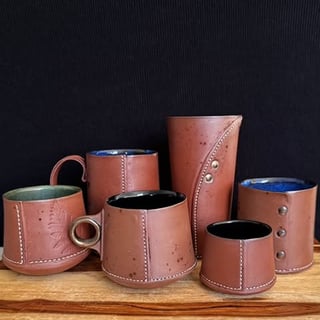
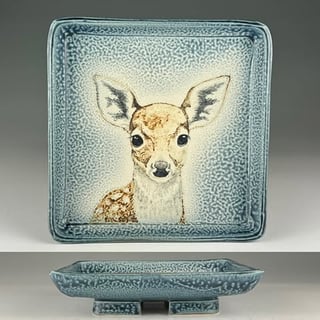
Speaker: Naomi makes some really incredible fun fluffy loving pottery that is really really amazing. In this episode you will learn how Naomi approaches making her pottery
Speaker: how you need to be able to put in the reps and keep on doing that repetition if you want to be able to find your voice and then also finding relationships with things outside of pottery and trying to apply them into your pottery as well. Naomi, welcome to Shaping Your Pottery and share with me what is something that people might not know about you. Hi, yeah, thanks for having me on. What I've kind of, I thought about
Speaker: what I have, what I make today and what I used to make. I started out as in painting and drawing primarily and I found ceramics in college. And I found that a lot of the decisions that I made in college were very sort of gut. They came from my gut where I was just like, this is what I like. I don't like that.
Speaker: And nowadays I've found a lot of the things that I like today are going back to the things that I disliked or that I thought I liked from my gut reaction. So for instance, I used to, I feel like dislike polka dots, but I use them pretty ubiquitously throughout my entire practice and, um, the color pink or coloring the entire
Speaker: surface of the clay. I used to never do that. I used to not like the color pink. And I think it goes back to what my grad school professor Brooks Oliver said, which was, notice what you notice. And don't just pay attention to the things that you like. Pay attention to things that you dislike. And why do you dislike them? Do you dislike them because you have this certain idea about like, oh, well,
Speaker: pink is just, I don't know, it's a color that's so widely used or it's too girly, quote unquote. I don't know, I feel like just confronting different notions about the things that you dislike might kind of open up some doors. And it has for me at least.
Speaker: I definitely agree. Shaping Nation, if you're listening right now, it's important to pay attention to what you notice, things that you like and also that you don't like. This is where you are going to start developing new ideas for your pottery. Now, Naomi, you have been an artist in residence at the Houston Center for Contemporary Craft. Can you tell me the story on why you decided to attend here? Yeah, yeah, there's a couple of different things, actually several different things.
Speaker: At the end of grad school, I've been in school, I had been in school for, oh, I think it was like maybe a total of like 10 years in my undergrad, graduate, post that, all of that. I've been in school for a long time. So figuring out what I was going to do in the real world was very daunting. And I knew that I didn't want to go into teaching right away. I love teaching and I teach a lot now.
Speaker: but I knew I didn't want to go straight into it. I wanted to kind of focus a little bit more on the things that I wanted to make rather than figuring out, okay, well, what do I need to make for this assignment? What do I need to make for this critique? How are the people going to respond to it? So I, I felt like a residency was a good sort of route for me to take and
Speaker: that just left, well, what kind of residency? There's a lot of residencies out there that are very traditionally focused, where they want you to make functional pottery, they want you to make, they want you to fire their atmospheric kilns or work with a certain amount. There's a lot of options out there, but what I was really looking for was a residency that was really, it was really supportive and encouraging to
Speaker: artists to not just work within their labeled medium so me as a clay person coming in I could feel comfortable working within fibers or I've been really drawn to after the pandemic happened we were kind of adrift without our grad studios for a while and I found digital fabrication to be really
Speaker: a nice escape and I could still create things without being in clay. So I had found all of these different mediums that I felt like I could look at within the lens of how I was looking at clay at the time. And I wanted to find a residency that would kind of help me further that kind of research. So the Houston Center for Contemporary Craft, it felt very
Speaker: very encouraging, but also very community oriented. I felt like another thing that the pandemic made me realize was if you're not around your people, you get very lonely. At least I definitely did. And I needed to be around other artists, other people who kind of maybe didn't, weren't in ceramics, like they didn't have to be in ceramics, but they were sort of creatively
Speaker: uh, oriented, motivated. They, they were, they didn't just dismiss the arts as like, oh, well, we're just, you know, that's just something, some kind of hobby or something to kind of pass the time. I wanted to have serious conversations with people about like what they wanted to do, not just what I wanted to do. And it seemed like the craft center, um, had all of those things that checked all the boxes and
Speaker: Yeah, I found that to be true when I spoke to the people before I came and my experience after as well.
Speaker: That was really, really great. Shaping Nation, if you're listening, it's important to surround yourself with kind of other artists. This is where your work is gonna be pushed to the limits and you're gonna get new ideas. It doesn't even have to be pottery that you're hanging out with. You could just be other artists and that's where your work is gonna start to grow. So you mentioned like where you were trying a lot of different other craft ideas. How does trying other craft ideas help you with your pottery and developing your voice?
Speaker: Yeah, that's a good question. I see myself as not just a ceramicist, but as like a hand builder. But in clay specifically, I build with coils. And so I think in layers. When I approach, say, 3D printing, you have to think in layers because it slices each layer, it prints each layer.
Speaker: And with, say, knitting, which I also do, or crocheting, you think layer by layer, stitch by stitch. And I feel like the way that I think about craft is not approaching things like, OK, I got to go for the most complex things right off the bat, even though I have kind of come to accept that I am a maximalist at heart.
Speaker: But I don't get there right away. I start with very, very simple shapes, simple concepts, and then I build and I layer on top of that and to create much more complex objects and things, not just within ceramics, but also within 3D printing, taking a cube and kind of slicing it into different quadrants and then
Speaker: um, making it, transforming it into its sort of wire frame and then applying maybe other shapes and then printing that out. And it looks completely different than this very simple, simple, um, cube that I started out with. So just making small changes here and there, just like foil building where you're like, um, you're trying to get very specific shapes or consistent walls as you build up.
Speaker: There's those small changes that you repeat over and over and over that make it a more complex object.
Speaker: I'm so glad you mentioned small changes, because I believe it's the small change that actually lead us to start making better work. Just by tweaking something a little bit, we can further our work even further. So can you tell me, what is something you learned from your residents that has helped you grow as an artist and as a potter? Yeah, I feel like it's
Speaker: kind of simple, but it was very profound for me. I realized I could make what I wanted to make. I had all these ideas coming in like, oh, I'm going to like, continue my research from grad school. I'm going to combine 3D printing and fibers and ceramics and I did for a little bit, but I feel like the biggest thing that I
Speaker: kind of came away with from that residency was the fact that it's OK to make functional cups. It's OK to make a cup. It's OK to make a very embellished functional object. And just because I have these ideas from grad school or these ideas from maybe other people that maybe I've projected onto them
Speaker: It's okay to spend the time on one object, two objects. You don't have to produce a lot just because in ceramics, a lot of potters make a lot. And looking at other people's production is not going to be productive for yourself. It's all about kind of figuring out how can you best grow your own work.
Speaker: rather than thinking, oh, well, I need to be at this point in my career. Just figuring out like, you know, yeah, what do you want to make and why do you want to make it and focusing on your own joy that you get from it.
Speaker: That was such a great answer. I love that because we are, we do have to focus on making our own joy first and then worry about like trying to production and sell it later. If we could figure out what we like to make first, then it's going to be a lot easier later. So can you tell me the story, how you started making the party that you make today? Oh gosh. Yeah. I, um, I'll, I'll try to keep it short.
Speaker: Um, so like I, like I mentioned before, I am coming from a drawing and painting background. I did that for many, many years because growing up in a small town, it's fairly easy to find drawing paper, maybe even canvas paint, uh, paints and pencils, but I didn't really kind of get into ceramics until I was pretty ready to graduate from my undergrad degree in painting.
Speaker: And so I had this understanding of line and texture and color. But 3D forms were another thing. I was completely scared of working in 3D because I had taken a sculpture class and it really wasn't my thing. I loved the wood shop. I enjoyed welding.
Speaker: couldn't get my ideas to match the material. Now in ceramics, I started out in hand building. I make this joke about, well, if I started out in throwing, which I did for many, many years after my first hand building class, if I started out in throwing, I wouldn't have stuck with ceramics because it was very hard for me. But hand building, on the other hand, I just, it kind of just clicked for me.
Speaker: I'm not saying that I was amazing at it. I'm saying I enjoyed it. I felt like what I was making was sort of painting in 3D. When I would spend eight hours in the studio, in the painting studio, I would be no progress. In eight hours in the studio, in the ceramic studio, I would feel so accomplished. I'd feel like I was having fun.
Speaker: like I could do, I had accomplished something with my time. So that was really, really awesome. And then after that, of course, I spent several years throwing, trying to master that because this medium that I had found, I'm like, I want to learn all about it. I want to learn glaze chemistry. I want to learn throwing. I want to learn how to hand build and make molds because
Speaker: There's so much to learn, and a lot of the times, even if I don't make molds now, or I do make small mold stamps, even if I don't flip pass, even if I don't primarily throw, those things do inform my work with the smallest sort of, the way that I kind of hold my hands, the kind of way that I steady my posture when I'm handling the clay.
Speaker: I think it all kind of comes into play for me and the fact that, I don't know, I was so interested in ceramics as a whole, not just, okay, I want to make that one thing. It, I think has really impacted my work now, even though it doesn't look, I think it doesn't look anything like what I used to make in the beginning. But, and then,
Speaker: Oh, and then in grad school. So that was all in Wyoming. So I grew up in Illinois, moved to Wyoming for undergrad. And then in grad school, that was it at UNT in the DFW area. I felt like in grad school, this was like my moment to get super conceptual. I had kind of explored all the technical aspects of ceramics, and it was really, really fun. But
Speaker: I had started to kind of, this had started in the end of my undergrad schooling, but I didn't really focus on it too, too much. But like what I wanted to say with the clay, what did I want to make specifically other than just functional pieces that functioned as canvases, which I'm not discounting that at all. But I wanted to do something more, you know, because
Speaker: I felt like a lot of the times I had made functional pieces that just had flat imagery on there. Well, in grad school, I had the kind of like, well, why do you want to make cups? Why do you want to make this object and that object? And I really love those conversations because it kind of pushes you out of that, like, well, I just want to make this because I'm good at it. Well, I want to make this because it looks pretty.
Speaker: And those are really good, those are really good reasons. But breaking out of that box of like, you know, I want to make this because I'm good at it, I think is really important, especially for me. So I started thinking conceptually as far as like, well, what objects do I really enjoy? What what objects
Speaker: or functions do I really need in my life? And so I started looking at well like tea was really important to me and like the memories of me and my mom and hanging out with my family and my little sister and having tea and that this sort of like intimate ritual but then also looking at the history of tea and then coffee and then conversely like I feel like
Speaker: the relationship to alcohol was really also really interesting because it felt like tea and alcohol were two totally opposite sides but they were also brought together by this like enjoyment of like experience and function and how objects kind of facilitated that. So that's kind of where I was before the pandemic. After the pandemic
Speaker: I wanted to kind of twist that, objects as facilitators of ritual and interaction, but instead of saying, okay, the objects themselves, the objects are used by people, twisting that after the pandemic when we couldn't interact with each other, and we were just interacting with our objects at home, thinking about the object having their own autonomy and their own presence,
Speaker: And looking at them as sort of anamorphized beings. I think that's the word that I'm looking for. Anamorphized being. So a cup next to another cup. And how that distance between could mean something. How if they're really, really close, maybe it's a close relationship, and it could speak to the relationship that
Speaker: one has with another person. And so that I feel like it still kind of is in my work today, but I more so kind of have been focused on the ceramic surface and the ceramic form pattern as surface, but also pattern as form and more formal aspects.
Speaker: that kind of bring me joy. But I think it kind of sneaks back into the work that conceptual aspect. So. I love that so much. That was really great. I love how you like you bring in like relationships and you think about things from like from tea to alcohol and you bring it and you try to really think about and bring it into your pottery and like little things like that. I love that. Would you mind giving me just a really quick rundown on how you actually make your pottery?
Speaker: Yeah, it happens not. Just like my kind of style, it's all over the place. I just do what feels natural to me. A lot of the times, I rely on foil building because I find that the slow buildup of layers is really nice for me to think through the form if I don't know exactly what I want it to look like.
Speaker: I do sketch. I think sketching is really, really important. So starting out with a nice sketch is good, but sometimes it's also really nice to like respond to the material and see, okay, even if you have an idea, see where it takes you. I think it's like a balance. On the other hand, working
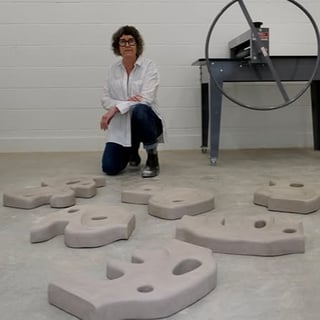
Speaker: solid to hollow so just like starting sculpting a solid object and then hollowing it out has been a new thing that I have that I've been trying out. I have been meaning to try out a bunch of different things in ceramics and you know there's too many things to count so I've been doing that mold making.
Speaker: But I think the trickiest thing for me is to figure out what colors I really, really want to use. And what I found that is really helpful to me is I have an iPad, but I think anyone could do this if they have some sort of picture taking device. And if they don't have an iPad, maybe have some tracing paper.
Speaker: at the very least a one drawing utensil, if not some colored pencils or markers. What I like to do is I like to take a picture with my iPad and figure out in Procreate what kind of colors and patterns I want in each area. And that way I'm able to play with the actual, the elements themselves and the transitions rather than
Speaker: thinking, OK, well, I need to see what this looks like on the form directly. And maybe I don't like it, but it's a lot harder to take it away. So working out those things in 3D rather than working them out directly on the form is, I think, one of the most important aspects of my process.
Speaker: Yeah, I mean, I think the rest of the shebang is pretty routine where, you know, coil building and drying and firing, but it's really just the planning of the surface is, I think, the key element in my work that's really important.
Speaker: I love that. Shaping Nation, if you're listening, it's important to kind of prepare your pottery beforehand a little bit. What colors are you going to use? What patterns are you going to add to your pottery? But also, if you have an idea why you're making your pottery, don't be afraid to go out and try that idea. That's where your pottery is going to start making more moves. So in the last two years, what new belief or behavior have you developed that has helped you improve your life or your pottery?
Speaker: Yeah, I've been thinking about this kind of recently and I mean it's several different things and I think a lot of people have probably have mentioned it to me and have mentioned it generally about their own lives, but I can't just I it's it's very simple but very true where it's you got to take care of yourself and you have to slow down and
Speaker: going along with that, adding something personal that has helped me is not feeling like, even though you're really excited about something, you don't necessarily have to share it right away. What I find the most important thing about making work, other than taking time for yourself to just rest and not make work, and also to just daydream and just kind of
Speaker: you know, meditate on ideas, is also spend time just doing and exploring things without the kind of idea, well, I'm going to post this later. Well, I want to share this later. If you decide later to, that's, you know, totally on you. But I feel like it's really important for me to just make and make and make and
Speaker: figure out, OK, if I plug this into that, what does it look like? If I make this form relationship, what does that look like? And just spending time without any kind of expectations is, I think, it's been harder to do because I feel like you want to share something that you're really excited about. You really want to talk to people about it. And I think that's important, too, at least
Speaker: for myself, but it's really important to just do something and really figure out what, where things are going. Because if you post it and you get this validation of like, Oh my gosh, this is amazing. Oh, I love it. You don't figure out the things that you do and don't like on your own and you don't figure out, well, maybe other people like this, but
Speaker: Maybe I wanted to take it in a different direction, but now I feel like I have to go this way. That was some really, really great advice. I love that. Shaping Nation, if you're listening, it's important to figure things out for yourself before you kind of really share it out to the world. I think if you are able to figure out things for yourself, what you like and what you don't like,
Speaker: you're going to take your pottery a lot further and you're going to make what you actually want to make instead of just listening to what your followers are liking or not. So now let's talk about discovering your voice. What is something you did that helped you with developing your voice? Well, I feel like it's an ongoing project. It's not something that I feel like has ever done. And I feel like one thing that I realized
Speaker: that made things a lot easier for me to like what I make is that I don't have to have a style and trying to come up with a style is a box that I don't want to fit in. It's okay if one moment I use polka dots and another time I use lines and another time I use kind of protruding elements
Speaker: And even though I make cups, I also make all these other things and making sculptures as well. So I feel like finding a voice is more about finding out what you want to make, not just what you're good at, but also what you really want to make. Why do you want to make it? Maybe you want to make a cup because you really want to figure out how to make the most comfortable cup.
Speaker: you're not gonna make it on the first try. You have to make so many. I subscribe to be the belief that you have to learn through repetition. You have to learn through copying. I think copying is really, really important. Now copying in terms of selling someone else's, a copy of someone else's work, that's a whole nother story. But I think in ceramics, you have to just do it.
Speaker: You can't just think about it. You can't just draw it. You can't just say, um, I'm going to watch a bunch of videos and I'm going to make the perfect cup. But if you're having fun and you're kind of like making the things that make you happy, I think even if it's not what you make later on in life, I think that voice is also valid.
Speaker: I couldn't agree more. There's this quote by Tony Robbins, and he says, repetition is the mother of skill, and that holds so true to pottery. You got to actually just put in the reps and actually do it. So now, can you tell me, what advice would you give to someone trying to find their own unique voice? Well, in the words of Nike, just do it. You just got to do it, because I feel like a lot of the times,
Speaker: what holds me back personally, what I find a lot of my students, a lot of other artists that I've talked to, what holds them back is there's so much that you can do, so much potential. And if you just do it, you might fail, but in ceramics, failing is important. One thing that has really stuck with, one of the many things that stuck with me from a grad professor, James Thurman, he
Speaker: I forget the exact quote of what he said, but one of the things that comes into play is a lot of times when you're starting out with a new skill, your taste is really excellent. It's very good. You know what is good, but your technical skill isn't quite there yet, and you need to improve that. And there comes a point where your technical skill and your taste, it meets in the middle, but it's not going to be at the start.
Speaker: you can improve that through practice. So just because you know that you're not quite there yet doesn't mean that you're bad. It just means that you need practice to improve. Your skills need to catch up to your idea. I love that. So as we're coming to a close here, do you have any parting words of advice for just people listening here?
Speaker: Yeah, I mean, I feel like I've said it before, but I think something that I have learned that I think is really important for other people is don't just stick to what you know and that you're good at and that you're expected to be good at. Don't be afraid to fail and just do what makes you happy without any expectation of being quote unquote good or being validated by someone else.
Speaker: Enjoy what you do. Excellent parting words of advice. Naomi, it was so great chatting today. Where can my audience go and check out your work? Well, a couple of different places. I have just updated my website, finally. Naomi Peterson dot com. But I'm also on Instagram at N as in Naomi. Period. Ceramic. Just how it's done.
Speaker: Thanks for listening to this episode of Shaping Your Pottery. If you have questions about developing your voice or just pottery questions in general, send them to me my way. Go to shapingyourpottery .com forward slash contact to send me your questions.