Transcript
Darin Tingey: All right, we're on with e another episode of the Islands Podcast, one that I'm really excited about. We have Reid Weiberg on the podcast today.
Darin Tingey: i found Reid through a ah web of Facebook. ah People that I found served in Kitabas in the Marshall Islands, and Reid was willing to come on the podcast. So Reid, give a ah quick background on who you are and how you know, where you live, what you do now.
Reid Wiberg: Okay, I'm Reed Weiberg. um I live in Roy, Utah. um Work as an engineer most of my career and have four kids and seven grandkids and a couple more on the way. So ah just life is good.
Darin Tingey: That's awesome. i And you served in the, so you served in Kittabas, but at the time that you got your mission call, it was the Micronesia-Guam mission, is that correct?
Reid Wiberg: Correct. Yes, I was called the Micronesia Guam.
Darin Tingey: And what year did you get your mission call?
Reid Wiberg: I got my mission call. That's kind of a funny or interesting story. I got my mission call in mid-February of 1982, and two and a half weeks later, I was in the MTC.
Darin Tingey: Oh my gosh, they just said, hey, get here as soon as you can.
Reid Wiberg: Get here as soon as you can. And so my passport had to catch up with me in the MTC. um They considered it an English speaking mission. So we were in the mp MTC at the time for about four weeks and then flew out to Guam.
Reid Wiberg: to guam
Darin Tingey: And how many missionaries were with you when, like going to Guam?
Reid Wiberg: there was one other missionary from Hawaii.
Darin Tingey: Okay.
Reid Wiberg: so The two of us went out together.
Darin Tingey: And when you got to Micronesia, Guam, the Guam mission, what, you know, what countries were, were underneath that mission?
Reid Wiberg: Well, they had Guam and the Northern Marianas, which was you know like Saipan. And then there was, starting from the west going east, they had Palau and Yap and Truc and Pontepe and then the Marshall Islands. And then below the Marshall Islands were the Gilbert Islands or Kiribati.
Darin Tingey: Yeah, okay. So that is quite a quite a big mission.
Reid Wiberg: It was pretty good size.
Darin Tingey: How many missionaries would you estimate were there at the time?
Reid Wiberg: I think when I got there, there was roughly 50 elders. There was a few older couples, um but there were 50 elders, give or take. I can't remember how many, but it wasn't a huge mission.
Reid Wiberg: And then the week that we got on Guam, the church announced that they were changing missions from 24 months to 18 months.
Darin Tingey: Okay.
Reid Wiberg: And I thought they were just messing with the greenie.
Darin Tingey: ah
Reid Wiberg: And then we got official notice that, no, your mission has been changed to 18 months.
Darin Tingey: How did you feel about that at the time?
Reid Wiberg: ah I was new enough. It's like, okay, know, what's a difference? 24 or 18? um But then it became a little bit more difficult because of the way the the rules were.
Reid Wiberg: Within a few months of getting there, ah probably half or over half the mission went home.
Darin Tingey: Okay, so people had already hit their 18 months and then they just got sent home.
Reid Wiberg: It did hit their 18 months and they had their choice and they're like, okay, I'm done. I'm going home or, you know, but had ah a point where, you know, there's a large group that went home, but um by about October, um a large, but probably half the mission had gone home or more.
Darin Tingey: Dang. So
Darin Tingey: Your mission president, and is where were they from, your mission presidents?
Reid Wiberg: um They were from Utah.
Darin Tingey: Okay.
Reid Wiberg: And
Reid Wiberg: He had about, when I got out, he had about it a little over a year until he was going to be finished, year and a half or whatever.
Darin Tingey: Okay.
Reid Wiberg: um So, yeah, they ended up having a lot of the missionaries going home. So then we were down probably under 25 missionaries in the covering all of that mission.
Darin Tingey: Yeah, it's like 25 missionaries to cover half the Pacific, feels like.
Reid Wiberg: Yeah.
Darin Tingey: Oh, man. So, and were most of the elders, with were there a lot of islanders? Were there many Americans?
Reid Wiberg: There were both. There were a fair amount of islanders, most of them from Tonga or Samoa. And then when I got out to Kiribati, we had, there was three Kiribati elders and three elders from Tuvalu.
Reid Wiberg: which is the Ellis Islands just below Kiribati.
Darin Tingey: Mm-hmm.
Reid Wiberg: And then there was one Tongan. And then when I went out, there was me and another white elder that went out. And then in October, we went out in about May.
Reid Wiberg: And then in October, out to Kiribati. And I think it was October, they had a mission conference and they brought all the missionaries in into Guam and had a big conference.
Reid Wiberg: And then there was a big chunk of missionaries that went home after that conference. And so after that conference, and I was the only white one that went back to Kiribati.
Darin Tingey: Wow. So the dynamics of the mission.
Reid Wiberg: So.
Darin Tingey: So, you know, you've got so many countries. did Did they kind of, it was like, hey, otherwise you're going to Kitabas and that's where you're going to spend most of your time? Or was it, or was it, hey, you might get transferred to another country?
Reid Wiberg: and
Darin Tingey: We don't know yet.
Reid Wiberg: For the most part, back then, what they did is if you got sent to an outer island, that's where you spent the majority of your mission. There were some that went to the outer islands and then they would bring some of us back to Guam.
Reid Wiberg: And so that's what happened with me. um About halfway through my mission, then they brought me back to Guam. And at that time, when I got back to Guam, there were three of us.
Reid Wiberg: There was three elders on Guam.
Reid Wiberg: And so, yeah, it like, ah yeah, now you you see or hear of how many are out there.
Darin Tingey: That's actually crazy.
Reid Wiberg: It's just, you know, there's a lot of missionaries. And so when I left Guam, or went back to Guam, then that left four missionaries on Tarawa.
Darin Tingey: Okay. So ah did you get to originally, did you get to Guam by a plane?
Reid Wiberg: Yeah.
Darin Tingey: Okay. And then did you take a plane? How did you get to Kiribati? Plane as well?
Reid Wiberg: Yeah, if we went by plane.
Darin Tingey: Okay.
Reid Wiberg: ah They flew Air Nauru. I don't know if they still fly or not, but...
Darin Tingey: They still They still do.
Reid Wiberg: Air Nauru, yeah. It was ah the taxi of the Pacific.
Darin Tingey: Yeah, okay. So what was kind of your initial reactions when you got to Kiribati, when you got to Tarawa?
Reid Wiberg: Well, I guess take it a step back. When I got to Guam and you come out and it's just an Americanized city almost. I mean, the island, everything was like at home.
Reid Wiberg: I really fell in love with Guam. And then when i they sent me out to Kiribati, and I remember flying in and the airplane landing and you're looking out the window. It's like, this is we're not in Kansas anymore.
Reid Wiberg: And so we... We landed and got off the plane, went through customs, and then you know there's the ah the little, I guess, building for arrivals and a building for departures.
Reid Wiberg: And so we're sitting in that arrival and nobody's there. And we knew about five or six words, you know, ah you know hello, goodbye, thank you, and what's your name?
Reid Wiberg: That's about it. And so we sit there and just kind of, well, what do we do? And then a lady comes up and says, Mormon? and like, yeah, we're Mormon.
Reid Wiberg: And then she leaves and goes over and talks to somebody else, and they come over and they're like, okay. So you guys are Mormons? She's like, yeah. She says, oh, well, we'll go let them know that you're here. And eventually somebody showed up with a truck and drove us up to up to Ada, up to the school. Yeah.
Reid Wiberg: So...
Darin Tingey: The high school.
Reid Wiberg: ah school
Darin Tingey: Yeah. ah so they and So they had Moroni High School there at the time. And is that kind of where like the center was for missionaries?
Darin Tingey: Okay.
Reid Wiberg: yeah so
Darin Tingey: Okay.
Reid Wiberg: our apartment or the building we lived in, the house, I guess, was on the edge of the compound.
Reid Wiberg: So the school, it was a junior high at the time, and it was not, I mean, they had a fair amount of students, but there was like the dorm and the oh cafeteria, and then you came a little bit further back, and then there was the church,
Reid Wiberg: And they had a large maniaba there fairly close to the school. And then back at the edge of the compound was the house where they put us up.
Reid Wiberg: And
Darin Tingey: Is that where you lived the whole time that you were on Kiribati?
Reid Wiberg: yeah, yeah.
Darin Tingey: darawa
Reid Wiberg: I mean, I spent like a week one time. We went over and stayed on Bay Show for like a week. you know, with some people and worked a little bit on Bay show. Um, but yeah, the majority of the time we just stayed right there at Ada there at the school.
Reid Wiberg: Um, and, uh,
Darin Tingey: And what would what was what was the church like at that time? you know Was it very big? Were there branches? Were there...
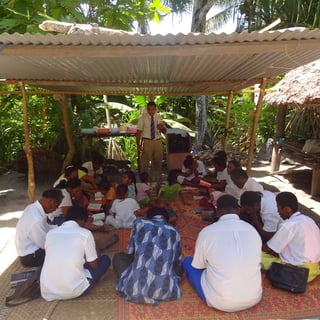
Reid Wiberg: there was one branch in all of Kiribati, the Ada branch. And, uh, It was mostly a lot of students because they would come to the school and then they would teach them the gospel in seminary or the religion class and then they would join the church.
Reid Wiberg: And so when you'd go in, you know, there'd be ah kind of the boys on one side and girls on the other and then the um adults or the families that had joined the church intermingled and around there. So.
Reid Wiberg: um But, yeah, there was just the one branch at the time.
Darin Tingey: Yeah. Does it blow your mind that there's, that Kitabas is getting a temple now? Yeah.
Reid Wiberg: Oh, yeah.
Reid Wiberg: I mean, I never thought it would happen.
Darin Tingey: Yeah.
Reid Wiberg: And when they got the first stake, it was like, wow, you know, this is amazing how how great it's taken off. And then they get a second stake in a district. and Then the temple, it just really humbling to me.
Reid Wiberg: You know, and all the work that all the missionaries that have come and gone out there over the years, what a blessing it's been for them.
Darin Tingey: Yeah, yet for you to be there in the 80s when it's just a small little branch and there's you know only a few missionaries out there and to see that
Darin Tingey: Here we are, you know, 40 years later. And yeah, like you said, multiple stakes. The church is just booming. They're getting a temple. Like just to see that, I'm sure like you got little emotional. It's like, it's just so powerful with all these seeds that you planted forever ago.
Darin Tingey: You probably taught someone in the 80s that got baptized couple years ago. you know, it's it's crazy how how the Lord's work continues to progress.
Reid Wiberg: Yeah. And when I was there, they had built the chapel and they were using it, but it had never been dedicated. And it was a few months after I left Kiribati and went back to Guam that they finally dedicated the chapel.
Darin Tingey: Okay.
Reid Wiberg: and
Darin Tingey: is and That was the chapel on at the high school in Ada.
Reid Wiberg: that ada Yeah, at the high school.
Darin Tingey: Yeah. That was the very first chapel that I went to. I landed on a Sunday and I went straight to that chapel and had church there and it was incredible.
Reid Wiberg: Yeah.
Darin Tingey: So give me a like kind of, you know, when you were there, what was a typical day look like? And, and were people receptive of, of missionaries at that time? Or was it very much like, Hey, we're Catholic, we're Protestant, don't talk to us.
Reid Wiberg: ah
Reid Wiberg: I mean, they a lot of them were kind of set in their ways. um When I first got there, my companion, he was echidibu and an excellent elder. We would go out and track and you know try to teach and um they would always have baptisms through the school.
Reid Wiberg: um But, you know as we'd get out and tracked and that that, we didn't get a whole lot of success. And then he finished up his mission.
Reid Wiberg: And so then he wasn't there anymore. And then there was just kind of a period, I would call it a dark period, where we just...
Reid Wiberg: A lot of work didn't get done, and some of the the missionaries, we just didn't do like we should. you know They had distractions, and you know they they were there, but and there were some things going on with the branch.
Darin Tingey: Yeah.
Reid Wiberg: that it was a struggle. There were some things with some of the leadership and that, that as many times happens when it's new and there's growth ah that hindered the work.
Reid Wiberg: And it, you know, I felt bad.
Darin Tingey: yeah
Reid Wiberg: You know, so, but a lot of days we'd get up, figure out what we're going to eat for breakfast, you know, get ready and go, go out.
Darin Tingey: Yeah.
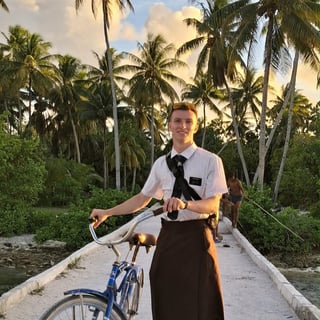
Reid Wiberg: And, you know, we didn't have a car, so we'd either walk or ride the bus or ride bikes and, you know, just go out and try to visit with people.
Reid Wiberg: And as you've been out there, it's, it's at a whole different pace than what you're used to.
Darin Tingey: yeah
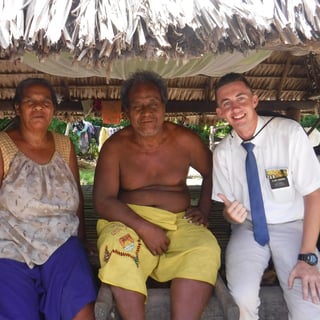
Reid Wiberg: And, yeah You'd ride the bike and somebody would say, hey, come here. And so you'd go over and you'd talk to them. And then they're like, hey, have some food. And then they'd bring out the pillows. Hey, take a nap. And it's like, hey, you know, our 15 20 minutes is up. they're like, no, just um just relax. And you'd take a nap for a half hour, 45 minutes and get up and everybody's happy and go on your way. And to me, that took some getting used to.
Darin Tingey: Yeah, did I would totally agree. The island pace is a lot slower, more relaxed. And hey, just enjoy, you know, just just take it easy and just enjoy the company that we have right now. and Eat some food. Like you said, it's every house you go to. It's sit up on the booyah, have a drink, you know, get some conversation.
Darin Tingey: and and and And like the kiddos people are just so friendly. They're so nice. And they just want to talk to you.
Reid Wiberg: Yeah.
Reid Wiberg: And when I got there, um the missionaries and with the school also, they played in the basketball league.
Reid Wiberg: And in a soccer league. And so then they're like, hey, you play basketball? It's like, yeah, play basketball. So then, all right, let's go. We got a game tonight, you know, and going. So you interact with a lot of the the community. They would recognize you from playing the basketball.
Darin Tingey: How awesome.
Reid Wiberg: they I played a few soccer games, but I wasn't good at soccer. So I just would get in the way and you try to slow people down. And after about, I don't know, a handful of games, they came and they said, no, you can't play anymore. you're you're You're too rough. We don't like your style of play. And it's like, that's fine.
Reid Wiberg: I'm better at basketball than soccer. So,
Darin Tingey: the Busboro, right? Soccer. and e
Reid Wiberg: yeah.
Darin Tingey: They're so impressive. They're all, you know, they're all barefoot and they're playing on the ah rough ground, but their feet are just so solid.
Reid Wiberg: Oh yeah.
Darin Tingey: You know, nothing, nothing hurts their feet. I don't know how.
Reid Wiberg: I don't know either. am Like you'd buy a soccer ball and roll it out there. And by the end of the day, it is destroyed. I mean, they've wore it all the way through the leather and, you know, but I, I enjoyed that. You know, the, the people would recognize this. Oh, you're, you we see you at basketball.
Reid Wiberg: And, uh,
Darin Tingey: Yeah.
Reid Wiberg: And then the English people or Australians, they were more down, i think at Bon Ricci was the this kind of the center where the bank and post office and whatnot. And, you know, there were a handful of them and we'd go down and talk to them once in a while, but they were not really receptive.
Darin Tingey: What are you doing here? Go, go leave. Go talk to your.
Reid Wiberg: Yeah. Yeah, go back to America. It's like, yeah, whatever. that
Darin Tingey: Did, did you, did you go to a lot of botakis, lot of parties as a missionary? Yeah.
Reid Wiberg: Yeah, we would. We'd get invited to to various events and birthday parties, weddings, those type of things. And I don't know how it was when you were out there, but it was a little unnerving for me, you know, cause once again, Hey, you know, you always supposed to be done by about nine or nine 30 and Hey, you know, it's nine 30.
Reid Wiberg: No, they they just tell me, be quiet, be quiet. We, we go when we're invited to go. And, you know, it might be midnight, one o'clock in the morning when they finally, when we've done our three numbers and they finally say, okay, you can, uh, you can go.
Darin Tingey: Yeah.
Reid Wiberg: And then I finally said, okay, I understand what's going on. And we, uh,
Reid Wiberg: relaxed and just say, okay, we're we'll leave when we are invited to to leave. And always felt like it was better to not offend.
Darin Tingey: Yeah, agreed. and And it's still that way. i you know i I served on Mayana, which was just the island south of Tarawa. And our r our little hut happened to be right next to the village Meneve.
Darin Tingey: And so every party they had we were at. And we had no excuse to leave because we didn't have to travel very far to go home. It was just right next to it.
Reid Wiberg: yeah
Darin Tingey: So like you said, you just just wait to until they say, okay, the elders, you know we know they have to leave. But like you it might be midnight, and I agree.
Reid Wiberg: Yeah.
Darin Tingey: this But people respect you for staying embracing their culture, and and they're much more receptive to you after you've embraced their culture, like you said.
Reid Wiberg: Yeah.
Reid Wiberg: And I always had a lot of respect for the Ikiribas I would get frustrated sometimes. It's Independence Day. We go down to the National Auditorium or whatever.
Reid Wiberg: you're good. And the the English see me and they're like, oh, well, you can come sit in the stands. And I said, well, what about the missionaries that are with me? And they're like, oh, no, they they they can't sit in the stands because they're they're Islanders. And I'm like, no, I go where they go.
Reid Wiberg: And at the ah parties and festivals, they would say, okay, you know, white elder, you can eat.
Darin Tingey: yeah
Reid Wiberg: And I'd say, well, what about the companions? And they would say, no, it's not their turn yet. And I'd say, I eat when they eat. And, uh, yeah, at the stadium, I'd,
Darin Tingey: yeah
Reid Wiberg: wanted to tell them a lot of times it's like, you know what? The kiddie bus should be sitting in the stands because we are the guests in their country. This is their country, their celebration.
Reid Wiberg: They should be the ones in the stands. I'm worried. We should be the ones standing on the sidelines. But.
Darin Tingey: yeah they but they Yeah, the they foreigners, they really just highly respect and they're first to eat, like you said. but you They sit in the front of all the parties. They're treated very well.
Darin Tingey: And i I talked to some sisters who served in Kitabas and I asked them if they... felt the same way and they said no you know we still sat in the back of the of the men in the menyebe and they still were kind of treated even though they were missionaries they were still treated as you know kind of how they treat women in Kiribati kind of you know second to the men in the society which I thought was so interesting
Reid Wiberg: Yeah. But, you know, one kind of neat experience I look back and wish I'd have maybe done a little bit more with while I was out there, the Queen of England visited.
Darin Tingey: No way, you were there when that happened? I've seen video clips of this.
Reid Wiberg: Yeah. And so she came to the to the mani little Monte Abba there by Ada.
Darin Tingey: Uh-huh.
Reid Wiberg: and I mean, just down from the church. And we went over, and so we're like 10 or 15 feet away from her, you know, and she's there. And, you know, it's like, but being an American, it didn't really dawn on me to take a few pictures.
Reid Wiberg: And, you know, but it was kind of neat to see her.
Darin Tingey: Yeah.
Reid Wiberg: um But even that was a funny story because we were coming back from –
Reid Wiberg: I think it it was when we came back from that big big mission conference. We flew into Nauru and I'm thinking, okay, our flight is in the morning so we can go and spend a night at the hotel and you know sleep on a bed and take a you know a full shower and stuff. and They come in and We land at the airport and they came in and said, oh, the Queen's coming. You guys got to go.
Reid Wiberg: said you You can't be here. And so they put us on a plane and flew us into Tarawa that night to get us off of Nauru before the Queen got there.
Darin Tingey: No way.
Darin Tingey: That is so funny. I still can't believe you were there when the queen was there. You probably never expected that Kitabas would be the place that you'd see the queen of England, right?
Reid Wiberg: Yeah.
Darin Tingey: ah Just so crazy that she that she came. and Obviously, they were a commonwealth, right? of or
Reid Wiberg: Right. Yeah, they were part of the Commonwealth.
Darin Tingey: Commonwealth. Yes, which is, it's just crazy that the Queen of England made it to Kitabas in the 80s. I just, it still blows my mind.
Reid Wiberg: Yeah.
Darin Tingey: ah so So you mentioned, you know, sleeping in a nice hotel in Nauru. What's your house in, on, you said your house house was on the campus.
Darin Tingey: was it a Was it a typical booyah, like a Kitabas house, or was it a little bit nicer?
Reid Wiberg: Well, it had a corrugated tin roof and it had cinder block walls that came up and then it had like the cinder blocks came up maybe three feet or so.
Reid Wiberg: And then there was louvers. And so they had these wooden louvers that pivoted in the middle. So the place was unlockable. You need to just crawl through or reach around and unlock the door.
Reid Wiberg: Um,
Darin Tingey: Yeah.
Reid Wiberg: And it was kind of an open room, but one end had a ah a wall that was about six foot tall or high that went across. And on the other side of that is where we had a refrigerator and a kerosene stove.
Reid Wiberg: And I found out pretty quick if I bought kerosene for the stove, word would get out that the Emotong bought kerosene And by the time we'd get back, it would all be gone.
Darin Tingey: yeah
Reid Wiberg: and And then the the refrigerator, know, you'd come home and it might be full of fish.
Darin Tingey: That's so funny.
Reid Wiberg: Somebody had been fishing and it filled the whole thing with fish and you come back a couple hours later and it's all gone. And then we got our water out of a well, uh, to drink.
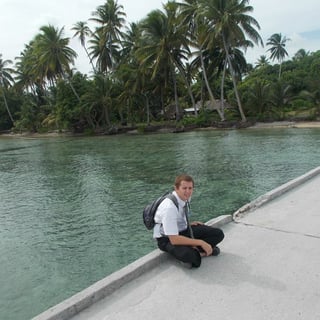
Reid Wiberg: And then there was an outhouse up on the the beach, kind of up on the berm is, uh, where we'd, uh, go to the bathroom.
Darin Tingey: Uh-huh.
Reid Wiberg: And then the shower was over close to the, uh, to the church building. There was just a cement slab and a well, and you'd dip the water and pour it over your head. And,
Reid Wiberg: If you were out there, you'd take a shower two, three, four times a day.
Darin Tingey: Yep.
Reid Wiberg: You know, you go out and you're hot and then you take a shower. And I don't know how many times you'd be out there showering and then the classes would let out and all that the students would come by.
Reid Wiberg: You know, you'd be out there in a swimming suit or a lava lava.
Darin Tingey: They laugh at you.
Reid Wiberg: And yeah, it was a ah unique experience.
Darin Tingey: Yeah. the The showering outside in the lava lava was something that was a little bit of like a shock to me when I got there. I remember, you know, the house that I stayed in on Tarawa, it was in Buotas, so on the other side of the the air airport, but...
Darin Tingey: There was a little shower in the house, but then another elder was like, I'm gonna go outside to shower. And I was like, what do you mean you're going outside to shower? Like, that doesn't make any sense. And then as I was in Kiribati for a while, I realized everybody showers outside.
Darin Tingey: They just wear their lava lava and they just blow the water up.
Reid Wiberg: Yep.
Darin Tingey: That's just very normal, very typical. ah
Reid Wiberg: yep Yeah.
Darin Tingey: But I'm sure they laughed at Oh, the white guy, oh, dee my tongue, tongue. You know?
Reid Wiberg: Yeah. even aon man
Darin Tingey: and
Reid Wiberg: He showers.
Darin Tingey: a
Reid Wiberg: Everybody come. Fantastic.
Darin Tingey: um And was ah was a was the outhouse part, did they actually make like a cement a toilet?
Reid Wiberg: ah that
Darin Tingey: like ah what What are they called? Or was it like it just a hole in the ground?
Reid Wiberg: Yeah, it was like a hole. it had a cement pad that had a hole. And then if you wanted, you'd take a bucket and go down to the ocean and get water and pour it down the hole and it would, ah had the gooseneck and it would flush down.
Reid Wiberg: You know when you first get there, they...
Darin Tingey: Yeah.
Reid Wiberg: they're like, oh, there's no door on it. So everyone walking down the trail can see. And they're like, oh, yeah, we'll put a mat over the door. And then after a month or two, the whole back end of the thing fell off, you know, so it's open to the beach. But by that time, you've been out there long enough that you're used to it and it didn't bother you. It's like, yeah, whatever.
Reid Wiberg: But...
Darin Tingey: yeah a
Reid Wiberg: that
Darin Tingey: Yeah, you used have one C and you do your business, but it's typical island life, so it's okay.
Reid Wiberg: and
Reid Wiberg: Yeah. Well, you learn fairly quick that on an island like that, that um I don't watch you, you don't watch me.
Reid Wiberg: You know, that's how you kind of got some privacy.
Darin Tingey: Yeah.
Darin Tingey: Yeah, I remember every morning, you know, like, Every morning, all the villagers would basically go out to the ocean and do their business. That was just very typical.
Darin Tingey: Every morning, you'd see everyone everyone out there and just kind of, nope, yep, that's what everyone's doing in the morning.
Reid Wiberg: Yeah.
Darin Tingey: So...
Reid Wiberg: Yep. And in the evening, you'd see them all go back out. And when the tide came in it's like, okay.
Darin Tingey: ah Don't go swimming in there.
Reid Wiberg: there
Darin Tingey: um did you...
Reid Wiberg: Yeah.
Darin Tingey: For the water, you know you said you well watered. Did you guys have any way to filter it or did you just boil it?
Reid Wiberg: Well, the first couple of weeks we were there, we just drank it. And then you ended up with the intestinal tract. issues and then finally finally somebody's like oh yeah maybe you ought to boil the water so then we started boiling it and then that helped but it was the same type of thing word would get out that hey they boiled water and you'd put it in the fridge so it would get cold and when you come back it would be gone it would uh and it uh
Reid Wiberg: After a while, i think you build up that immunity or whatever you get, the whatever it is, and then I could drink it out of the well and didn't have issues.
Darin Tingey: Was it not brown and smelly?
Reid Wiberg: But...
Darin Tingey: I remember when when I had it, when I pulled that water out of the well, it just smelled really bad and it was kind of brown.
Reid Wiberg: Well, they would pour... like cherry cordial or whatever it was in it, punch.
Darin Tingey: Sugar, right?
Reid Wiberg: And then, or the, I forget what the name of it was, but they would collect the, the coconut tree sap.
Reid Wiberg: And, you know, yeah.
Darin Tingey: Yeah,
Reid Wiberg: And then they would boil it and sometimes they would pour that in or they'd just pour the, the other in and, know,
Darin Tingey: I think, yeah, you weren't ever drinking straight water.
Reid Wiberg: You know, it changed the taste a little bit.
Reid Wiberg: But
Darin Tingey: Usually was flavored with the or like you said, mm-hmm.
Reid Wiberg: for the brown sugar and, you know, those type of things to kind of take the the flavor off.
Darin Tingey: set a
Reid Wiberg: I remember one time we were out and somebody gave us a glass of water and it's like, oh, this is good. And, you know, they sometimes they would heat it up or whatever. So you'd get little floaties in the water, ash or whatever.
Reid Wiberg: And I'm drinking this water and then I see something. I think, oh, is that a piece of ash? And then I just kind of keep my eye on Then it starts moving. And, you know, it's a worm.
Reid Wiberg: It's like, I think I'm done.
Darin Tingey: Yeah.
Reid Wiberg: I'm not drinking this.
Darin Tingey: Oh, wow.
Reid Wiberg: but
Reid Wiberg: But I ended up, I did get sick out there. I ended up with hepatitis. And so, but I knew I was sick, but I didn't know what.
Darin Tingey: ah wow
Reid Wiberg: and there was no way I was going down to their hospital. I'd gone down there and visited people and I was like, I'm not going down there. And then when they had me go back to Guam, um, I, uh, when I got back there, I said, yeah, I'm not feeling very good.
Reid Wiberg: So they took me down to the clinic and they're like, uh, they looked at me and tested me and they're like, yeah, you got hepatitis, but you're on the, the rebound. There's nothing you can do You're about over it.
Reid Wiberg: And that,
Darin Tingey: Wow.
Reid Wiberg: You the sanitation and that just wasn't always the best. that
Reid Wiberg: But I would have stuck out there if they hadn't to have had me go back to Guam anyway. Yeah.
Darin Tingey: Yeah, that's right. I mean, if if you call in sick, they pull you off. You never go back half the time. So i
Reid Wiberg: Yeah.
Darin Tingey: how was the language for you? How how was it? Like you probably didn't have very much study material, if any, at all.
Reid Wiberg: No, there wasn't a whole lot of study material. And, you know, some of the students and that, but they all wanted to practice English with us.
Reid Wiberg: And so in our house, all the elders spoke English because they'd all been to, you know, Liahona High School and stuff.
Reid Wiberg: But we had... like I say, the the three Tavaluans, they spoke Tavaluan, and then we had a Tongan, so most of them could speak some Tongan, and so in the house, there was English, Tavaluan, Gilbertese, and Tongan all spoke, and so you could tell what language they were speaking in, but It wasn't like we said, okay, we're going to concentrate on Gilberti's or whatever. And so, I mean, it was coming. It just takes a long time.
Reid Wiberg: And so, but yeah, there wasn't really the study materials and whatnot.
Darin Tingey: Yeah.
Reid Wiberg: The Book of Mormon had not been translated. um The discussions had not really been translated over yet. And so, you were just kind of on your own to try to figure it out.
Darin Tingey: yeah without Without the Book of Mormon being translated, how how was that like, you're like, hey, this book is is a true book.
Reid Wiberg: And so...
Darin Tingey: it's It's another testament of Jesus Christ. And you know you you'd want to say if you read it, you can get a testimony of it, but it wasn't in their language.
Reid Wiberg: Yeah. It wasn't in their language, so you'd give them one in... um English, an English Book of Mormon. And, you know, if they could do that, but some of them didn't read or write. And, you know, um remember being out teaching one day and one of the Islander missionaries, uh,
Reid Wiberg: teaching something that wasn't quite correct. And ah when we got out, I said, hey, you didn't, that's that's not right, what you taught. And they said, well, if it's not written in my language, I don't have to live it.
Reid Wiberg: And I said, oh, let lets let's go back and talk about this for a little bit. I don't care whether it's written in your language. You know what's right and wrong, and you don't go teaching the incorrect doctrine.
Darin Tingey: ah
Reid Wiberg: Oh, two nay? it
Darin Tingey: That's crazy.
Reid Wiberg: good
Darin Tingey: Did you um did ge ever serve with Yoso Atune? Was he and your mission at the time?
Reid Wiberg: o tu nay
Darin Tingey: Kid of a cell door. Yeah.
Reid Wiberg: Yeah. Yeah. i met him once or twice. He had already served as a missionary and he was either at BYU Hawaii or maybe at BYU Provo.
Reid Wiberg: Um, when I was out there, I heard the name and I think he came out to visit his family or something while I was there for a short period. But yeah, he was, uh, he was there.
Reid Wiberg: And, uh, So I was really pleased when he got called to be a 70. you know seventy It's like, yes, now yeah that's even.
Darin Tingey: Yeah.
Reid Wiberg: And the first stake president in Kiribati, I think his last name was Mote.
Reid Wiberg: He served. and The last couple months that I was on Guam, they brought him to Guam. And, you know, he served there.
Reid Wiberg: And then they ended up calling him to be the state president. And i think he passed away. So after he had served for a little while as the state president.
Reid Wiberg: But, yeah, it was...
Darin Tingey: Yeah, it's... Joshua, he was actually, my mission president called him to be one of his counselors at the time.
Reid Wiberg: Oh, OK.
Darin Tingey: So when I was out there, he came to Mayanna when I was there and visited with all the members.
Reid Wiberg: Yeah.
Darin Tingey: And everyone kind of saw him as like the, they called it like the Joseph Smith of Kitabas. you know like he was He was the force
Reid Wiberg: yeah
Darin Tingey: ah for a lot of
Reid Wiberg: i
Darin Tingey: the church growth and in in Kiribati at the time, or throughout the years. And like you said, now he's in area 70, which is, which is crazy. Just again, another testament of missionary work from from back in your day, till now, it's just incredible.
Reid Wiberg: Yeah, and I think he's one of them that helped translate the discussions and stuff, if I remember right, for him.
Darin Tingey: And then you you said on Tarawa, you went to Beso. So I'm guessing at this time, there was no road to Beso. Now there is.
Reid Wiberg: No, there was no causeway.
Darin Tingey: Yeah.
Reid Wiberg: You rode the ferry over and... like in an old landing craft type thing. And that was always always a fun ride.
Darin Tingey: Okay.
Darin Tingey: Did it go like multiple times a day, the ferry back and forth? Yeah.
Reid Wiberg: Yeah, it went a few times during the day. um I remember one time we were over there Bay Show, and I can't remember if they were playing soccer or whatever, but um the two or three of the missionaries were too late getting so to the launch, and they ended up, it was low tide, and they walked across and, you know, walked back across to Bairiki.
Reid Wiberg: It's like, oh, yeah. Glad I got there on time to catch the boat.
Darin Tingey: It's a hike.
Darin Tingey: Yeah, absolutely. Was Bezos crowded ah back then? I mean, it's probably more crowded now, but it's it's known to be the kind of the city center, very crowded. Was it that way when you were there?
Reid Wiberg: Yeah, it was, yeah, it was pretty crowded. There was a lot of people there. Um, and there was some and open spaces and, uh,
Darin Tingey: on.
Reid Wiberg: you Eventually, we started to go over and do like a Sunday service for the last month or two that I was there.
Reid Wiberg: Me and another elder would go over and hold a sacrament meeting and you know have some talks or whatever. and There'd 15, 20 people that would come and a attend.
Reid Wiberg: So that was always kind of nice.
Darin Tingey: Yeah, that's great.
Reid Wiberg: Yeah.
Darin Tingey: How was, um like you know, over your over the time of your mission in Kiribati, you know, did do you guys have a lot of success in Kiribati?
Reid Wiberg: Um, I don't think there was a, a whole lot. I mean, i think it was laying groundwork and a lot of the students would come to the school and then they would take the lessons or their parents would tell them, Hey, go there, join their church. And then your tuition will be less.
Reid Wiberg: And the kids would say, Hey, you know what? It's true. And the gospel is true. And so then they would go back and, uh, you know, we didn't really, there wasn't any missionaries on any of the outer islands in Kiribati.
Reid Wiberg: Um, when I first got there, there were two elders, um, one from Tavalu and one from Kiribati that was up on North Tarawa, up on the end.
Reid Wiberg: And, uh,
Darin Tingey: So our
Reid Wiberg: then they came back and never went back up there. um But the other outer islands like Maiana, Abayong,
Reid Wiberg: those islands, we didn't have missionaries going out there and there just wasn't enough members to justify it.
Darin Tingey: so
Reid Wiberg: And well, and then we didn't have enough elders either really to to go out there. And then as people started going home, kind of turned into a maintenance type thing. Let's maintain what we have. And, um, then eventually the growth, when will they start to fill the mission again, then we can have the growth to go out.
Darin Tingey: Yeah. Did your mission president ever visit Kitabas while you were there?
Reid Wiberg: He came overnight once and, uh, got in like in the afternoon and then left first thing in the morning.
Darin Tingey: was that you know Was that weird to to never really, you probably didn't see your mission president very often, and I don't know if you had any senior couples there, but it was very much probably just on your own, you know?
Reid Wiberg: you You were on your own. There was a like two missionary couples, but they were with the school, so they were education missionaries.
Reid Wiberg: And so like the headmaster and then The other one was the there. And so they really didn't, i mean, you'd associate with them, but they did their thing and we kind of did our thing.
Reid Wiberg: um But a funny story when the president did come out. yeah So he gets all of us over in the, I remember sitting in the chapel over there ah in Ada and He's going down the list and he's like, okay, I want to see who each of you are because some of them he'd never met before.
Reid Wiberg: And he goes down the line and then he looks at one guy and like, who are you? And he tells him, yeah, I'm elder so-and-so. And he's like, well, ah I don't have any record of you.
Reid Wiberg: And he says, well, I'm here. He says, how'd do you get here? And, uh, he said, oh, they just put me on a plane in Tonga and said, you're going to Kiribati and, uh, sent me over.
Reid Wiberg: And, uh, So then he's like, well, you don't even have a mission call or anything. So after the president got home or went back to Guam, then he sent us the packet and, uh, said, Hey, help this guy fill everything out and submit it.
Reid Wiberg: And he got a mission call retroactive to when he got there.
Darin Tingey: That's incredible. Who are you?
Reid Wiberg: And, uh,
Darin Tingey: you're not supposed to be here.
Reid Wiberg: Yeah, who are you?
Darin Tingey: that is
Reid Wiberg: And yeah, it was it was a little bit unique. You don't get that everywhere.
Darin Tingey: funny.
Reid Wiberg: and them They had an Equilibus branch president, and I think he meant well, but he there was some learning things there, and
Darin Tingey: that is so funny
Reid Wiberg: One day, one of the the members, I talked to him before and he comes to me and he said, oh, they put me in as branch president over in Bay Show.
Reid Wiberg: And I said, who did? And he said, oh, the branch president here. And I said, well, did he have a letter or anything from the from the mission president? I said, you know, these things, there's a way you do this. And he's like, no, he just decided we're going to have a branch. And he just called me to be branch president over there.
Reid Wiberg: It's like time out. This is not the way it works. yeah You know, you're some order.
Darin Tingey: We have some order and some processes.
Reid Wiberg: The mission president is the one that's authorized to come. he will determine who the branch president is. And, uh, it very well may be you. You're very capable in that, but, uh, no, you are not the branch president.
Reid Wiberg: Those are kind of some hard discussions to have as a 19 year old young elder at the time to know, uh, you're not what you think you are.
Darin Tingey: Yeah.
Reid Wiberg: And, uh,
Darin Tingey: I would know people, ah you know, when I was in the, I served in the Marsh Islands as well. And there was a, the stake patriarch and he was telling me, he's like, man, I really wanted to be the first stake president.
Darin Tingey: I really did. And I, when I wasn't called a stake president, I was pretty mad, but then they gave me stake patriarch. I'm pretty happy with that. I thought it so funny.
Reid Wiberg: yeah
Darin Tingey: Yeah.
Reid Wiberg: Yeah. but
Darin Tingey: It's a sense of pride you know to be a leader in the church for them.
Reid Wiberg: It is.
Darin Tingey: you know
Reid Wiberg: And, you know, another thing that I hate to say happened, but, you know, just, you know, the branch president, the he would marry people and tell them, yeah, you're married for time and all eternity. And, you know in our church, and it's like time out.
Reid Wiberg: No, that happens in the temple with proper authority. And, you know,
Darin Tingey: Yeah.
Reid Wiberg: I'm not trying to burst your bubble, but you you need to to go through the proper way, and then it will be. but But, yeah, there was a ah few things like that that just not normal missionaries encounter.
Darin Tingey: ah
Darin Tingey: Yeah. What do you mean, Elder? You taught me that in this church, we're married for time and all eternity.
Reid Wiberg: Yeah.
Reid Wiberg: Yeah. And that was it. And it's like, ah, there's a little bit more to it than, uh,
Darin Tingey: Did any of the members go to the temple at all while you were there? Or where what temple would they have gone to even?
Reid Wiberg: no, they'd probably gone to either New Zealand or Hawaii.
Darin Tingey: Yeah,
Reid Wiberg: When I was out, they had announced the temple in Tonga and the one in Samoa.
Darin Tingey: that makes sense.
Reid Wiberg: Um, So a lot of the Islander missionaries, I think most of them had not been to the temple, whether that was the ones in Kittibus or the other islands, even on Guam, they had not been, had that opportunity.
Darin Tingey: Interesting. Okay.
Reid Wiberg: Then, uh, So some of them, when they went home, that was about the time that they were dedicating those temples. So then they would get that opportunity when they when they got home.
Reid Wiberg: So, yeah.
Darin Tingey: That's pretty cool.
Darin Tingey: Did, um,
Reid Wiberg: So I'm really happy for the temple in Kiribati because that is close enough for the Marshall Islands, Tuvalu, Kiribati, all of those to attend.
Darin Tingey: Yeah. Yeah. The, um, I, I went back to the Marshall Islands, uh, a year ago and I was talking to one of the stake presidents in the Marshall Islands and he was like, Hey, I'm, you know, we're, we're really excited that Kitabas is getting a ah temple.
Darin Tingey: You know, it's, it's an hour flight for us in the Marshall Islands versus the five and a half hour flight to Hawaii. He said, but you know, Hawaii has accommodations to house us when we go through it.
Reid Wiberg: Yeah.
Darin Tingey: He said, if, you know, I was telling them when they're building this temple, they need to put so some sort of housing there because they don't have the accommodations for us to send a big group over there to go to the temple without housing. And so I think, um I'm really hoping that that they plan for that because that's a ah big ah big part of it.
Darin Tingey: And I really hope it happens.
Reid Wiberg: Well. And it may be easier to go to whole Hawaii anyway because of the money exchange.
Darin Tingey: That's true.
Reid Wiberg: Because American versus, you know, Australian.
Darin Tingey: Australian.
Darin Tingey: Yeah. Yeah, and there's a lot of marshes, people in Hawaii. it It kind of makes sense. But, you know, as far as frequent travel, if people can afford the trip to Kitabas, it's only an hour flight.
Darin Tingey: I'm sure the flight's a little bit cheaper than Hawaii, maybe.
Reid Wiberg: Yeah.
Darin Tingey: um Did you do a lot of, did you any fishing when you were in Kitabas? Did you, did you kind of, you know, embrace the culture in that sense?
Reid Wiberg: Uh, there was once or twice that like there would be a big low tide and we'd go out and fish a little on the, uh, the reef, um, with the couple of the Islanders. But for the most part, um, we didn't do a whole lot of fishing. know, I tried to stay off the water and out of the water.
Darin Tingey: Yeah.
Reid Wiberg: It, uh,
Darin Tingey: What about dancing?
Reid Wiberg: Oh, the what? The dancing?
Darin Tingey: What about dancing? Did you do a lot of dancing?
Reid Wiberg: Nope. Same thing. I tell them, hey, know, I'm not here to dance. thats They could they'd tell you, oh, man, you're white. You got to teach us how to dance. And they a lot of wanted to learn how to do the disco dancing.
Reid Wiberg: And I'm like, i I'm white. I don't have a whole lot of rhythm. And I said, I'm not a a big dancer.
Darin Tingey: Oh, it's so good.
Reid Wiberg: so But I enjoyed watching them dance, you know, their cultural dances.
Darin Tingey: a
Darin Tingey: Yeah. Yeah, they've got a lot and it's incredible. So going, you know, your last little bit in Guam, you know, what was that shift like for you going from – from Kiribati to you know back to Guam to finish your mission? was that Were you longing to be back in Kiribati? Were you like, oh, this is kind of nice to have a little bit more nicer accommodations?
Reid Wiberg: um There was both. There were things I missed about Kiribus. And then when I got back to Guam, I'd been there for like two weeks, maybe three weeks, and they started to refill the mission.
Reid Wiberg: And so... Every four weeks, I would get at least one sometimes two new missionaries that had come off, you know, just come out of the MTC.
Reid Wiberg: So the whole half, last half of my mission, I was training missionaries every week. every month. You'd get them, help them get their permits started so they could go off island and then they would leave and then you you kind of combine with other missionaries. Then about a week or two later, another batch would come in and it would just start over again. So I was pretty busy doing that, but I did. I missed the kiddie bus and
Reid Wiberg: One time we had a whole bunch of missionaries there and in our apartment and there wasn't enough sleeping beds or whatever. And I pulled out my old map from Kitty Bus and said, you know what, I've slept on you know a map before and I'll sleep on it again. So I'd just roll it out and sleep on the floor and said, you guys are young and soft. You guys can sleep in the bed. I don't care.
Reid Wiberg: So...
Darin Tingey: a That's awesome. so So were most of the missionaries just being sent to the outer islands, the different countries, and not really staying on Guam?
Reid Wiberg: there were some that stayed on Guam. Um, I don't know how many was there when I left. I think there probably was, Oh man, they probably had to have, you know, like 15, 20 missionaries on Guam by the time I left.
Reid Wiberg: Um, but you know, in Kitty bus, they were starting to, they'd sent some more elders out there.
Reid Wiberg: Um, a couple to help. And so it started to to re, I guess, fill the mission and that was nice.
Reid Wiberg: But, you know, ah another kind of funny story that, you know, kind of unique to our mission, like I said, the elder that I had come out with from the MTC,
Reid Wiberg: He was from Hawaii, and his girlfriend worked for the travel agency that did the travels stuff for when missionaries would come and go.
Reid Wiberg: And so he had been transferred out to Palau, and I was in Kiribati and then back on Guam, so we really hadn't seen each other for the majority of our mission.
Reid Wiberg: And so they they told me he's coming in but they you know they didn't tell you back then You didn't know when you were going home per se.
Reid Wiberg: They well you know would maybe tell you, but it it wasn't off the transfers like you have today.
Darin Tingey: Yeah.
Reid Wiberg: And i so I knew he was coming in on this Saturday and then leaving on Sunday to go home. And I figured I still had a couple more weeks to go.
Reid Wiberg: And so I got up that Saturday morning and I was excited to see him. And I get a phone call from the the mission president. And he's like, hey, can you come over to the mission office on Guam and um before you go out to Tracton? And I'm like, yeah, I can do that. So went over there, sat down, and he says, how long will it take you to pack your bags?
Reid Wiberg: And I said, ah probably an hour or two. And he said, you better do it tonight. Here's your ticket. You're going home tomorrow.
Reid Wiberg: I'm like, man, I thought I had a couple more weeks. And he's like, well, we can, I guess we could change the ticket. I said, nah, give it to me. I'm gone. And so then I get on the airplane flying from Guam to Honolulu and
Darin Tingey: Wow.
Reid Wiberg: The other elder, that's when he told me, he said, yeah, I told my girlfriend wants me home. And he said the very first flight that we're eligible to be on and come home honorably, he said, she got me on that flight.
Reid Wiberg: And then I told her, I want Weiberg with me.
Reid Wiberg: So it's like, yeah, so we had, you know, that eight hours or whatever to visit and reminisce on our
Darin Tingey: That's pretty cool.
Reid Wiberg: our missions together. And it was nice, but it's like life.
Darin Tingey: Yeah.
Reid Wiberg: You never know when it's going end.
Darin Tingey: Yeah, such an abrupt ending and one that you probably weren't expecting or or really ready for, ah you know, mentally and emotionally with the people that you probably made connections with, but how cool to finish with the person that you started with, you know,
Reid Wiberg: Yeah. And, uh,
Darin Tingey: just ah it almost feels like you know in the Book of Mormon, the the story of Ammon and his brothers, you know just really meeting back up after they've each gone their own way and served the Lamanites. and That's kind of what the story feels like right there.
Reid Wiberg: Yeah, it was. And another neat experience, one of the Tuvaluans, the church was not in Tuvalu at that point.
Reid Wiberg: They had gone, the the three of them had gone to Liahona High School in Tonga, joined the church, and then they'd come to Kiribati as missionaries.
Reid Wiberg: And when they went home, you
Reid Wiberg: you know, One of them, I found him on Facebook or whatever five or six years ago and made contact with him. And his son was had actually moved here, and he'd come over to visit, so I was able to go visit with him.
Reid Wiberg: And he said, yeah, when they went home, they he told the other two, he said, we need to marry women. convert them to the gospel and build the gospel here.
Reid Wiberg: And he is founder really of the church in Tuvalu. you know He said he'd had opportunities to go do other things and go to you know New Zealand or Hawaii. And he said, no, I just felt like I needed to stay here and build the kingdom. And they've got their branch.
Reid Wiberg: down there, which I don't think is part of the, I think it's part of the Fiji mission, but, um, but anyway, that was pretty cool, but, you know, to be able to, to talk with him for a few hours, and he even had some of that toddy or whatever, you know, the, uh,
Darin Tingey: Yeah. Yeah.
Darin Tingey: yeah
Reid Wiberg: the sap off the the coconut trees. I said, yeah, I kind of missed that. He said, oh, I brought some. So give me a glass and let me drink a glass for old time's sake.
Darin Tingey: Oh, that is so good. that is so good. Man, so many good memories when you when you bring up the food and the drink like that. did I guess my my last few questions here, and unless you've got some other things that you want to share.
Darin Tingey: um were you Were you writing letters home to your family? Were they were you able to send letters from Kiribati?
Reid Wiberg: Yeah, I was able to to send letters. It would take about a week or two for them to go back and forth. And then about the last month or six weeks that I was there, I don't know what happened. The planes didn't really fly, so then didn't get anything for a month or two. And it just happened that I was flying out in the morning and the plane with the letters flew in the night before. So then it took like another three or four months for them to finally make it to me. I got my Christmas in about March.
Darin Tingey: ha
Reid Wiberg: because it was on it was on the the plane. But, yeah, we, you know, would send letters and that back and forth, you know, home. and
Darin Tingey: Did you get to call home for Christmas?
Reid Wiberg: the
Reid Wiberg: No, I made two phone calls, and they were both back to Guam. Yeah. but it was like an all-day affair.
Reid Wiberg: So you'd end up riding the bus from Ada up to... Bayeriki or whatever, catch the ferry over to Basho. You'd go into the Ministry of Communication.
Reid Wiberg: You'd give them a $10 or $20 bill. They'd say, where do you want to call? And you'd tell them, I want to call Guam. And then everybody trying to make a phone call would go sit out on the corner.
Reid Wiberg: And there was like an old English red... ah telephone booth and then the phone would ring in there whatever and somebody get up and answer it and they'd say oh it's it's for so your thing and you get on you hear them bouncing all over the Pacific yeah this is the operator in Nauru where do you want I'm looking for Guam oh here's the operator in Fiji and then you get the operator on Guam well what number do you want to call you'd give them the number and that dial it and if somebody answered
Reid Wiberg: you made a phone call and if not, they're like, well, that doesn't work. Um, then, ah when you were done, you went back into the building and they would say, yeah, we've got enough money or you need to pay more money or refund you a little bit.
Darin Tingey: Thank you.
Reid Wiberg: And, um, So the president would either send us a letter or telegrams, would get a telegram. But it just went in the regular mail. They'd get the telegram, but then they would just take it and put it in yeah the the post office box.
Reid Wiberg: So it might take a couple days even to get a telegram. So, yeah, I never tried calling home.
Darin Tingey: Okay. No. ah Yeah, that would, I don't know how long or how expensive that would be, but I can imagine it would be ah nearly impossible to reach home and cost you an arm and a leg.
Reid Wiberg: Yeah.
Darin Tingey: So
Reid Wiberg: Yeah, and they couldn't contact you.
Darin Tingey: man. Yeah. but Well, um, Reid, always ask these three final questions in every podcast.
Darin Tingey: It's, what was your favorite area? it might be hard to say because you kind of served all over in Tarawa, but what was your favorite maybe area in Tarawa or if Guam was your favorite area?
Darin Tingey: ah What was your favorite food from Kiribati and Guam? And what's your favorite thing about Kiribati?
Reid Wiberg: Okay. Well, I think, I mean, on Tarawa, Ada, I mean, we, that's all the only place we were. So I guess that was my favorite place there. And then on Guam, I spent the vast majority of my time in, uh, to mooning.
Reid Wiberg: Um, that's, uh, that the central part, uh, a lot of Filipinos there.
Darin Tingey: Okay.
Reid Wiberg: Um, so work with them. Um, My favorite food, ah they they had like a like a pudding that they would get the pandanus and they would pound it and you know make like a pudding or something. That was always pretty good. And then...
Reid Wiberg: they would get the shellfish or like an oyster or something, clam, and they would they would gather all these things in and it'd boil them. And then they were about the size of a half dollar or something. And then they would put them on a skewer and sell them.
Reid Wiberg: And I enjoyed those. There'd be like 10 or 20 of them on the skewer and you could buy them for like 25 cents or something. And, um,
Darin Tingey: Yeah.
Reid Wiberg: I really enjoyed um those when they people were selling them. On Guam, I liked the fiesta food, the the Filipino. It was a little bit not hot spicy, but it was it had more flavor than the food on taro. Taro was kind of bland, you know the taro.
Reid Wiberg: We ate a lot of... fish, rice and coconut and corned beef.
Darin Tingey: Yeah. Yeah.
Reid Wiberg: yeah
Darin Tingey: They love the corned beef, man.
Reid Wiberg: Oh man. every Every time i see a can of corned beef i just think oh i just remember sitting in huts and somebody would have died you know and they there they are the body's laying there they got a sheet over the top of it and they're feeding you corned beef i always like that smell of corned beef and the smell of the dead body it's just like oh yeah
Darin Tingey: forever forever in your memory yeah
Reid Wiberg: Yeah, forever in my memory, but it's a good memory. Um, and then, what was the the last question?
Darin Tingey: the last question was um you know what was your favorite thing about kiribus and what was your favorite thing about guam
Reid Wiberg: Oh, I just really enjoyed the climate. I, the heat did not bother me. Um, I don't like cold weather.
Reid Wiberg: And so I just enjoyed, the climate. Um, but, you know, I just enjoyed the, the smile and the friendliness of the people in Kiribati. You know, they are just a loving people.
Reid Wiberg: And, uh, and, you know, Guam, um,
Darin Tingey: Yeah.
Reid Wiberg: You know, it's kind of the same thing, the climate. I just enjoyed being involved. and And they were two totally different experiences.
Reid Wiberg: But, you know, getting out and attracting and just being amongst the people. On Guam, sometimes you had a car. Or access to a car. But I preferred to ride a bike.
Reid Wiberg: Or walk. Because then you could interact with people. that Otherwise you just drive right by them. And I always liked to ride the bike.
Darin Tingey: Yeah.
Reid Wiberg: And you know stop and visit with them. and it was It was not an easy mission. But it was a good mission for me.
Reid Wiberg: it The growth and things I...
Darin Tingey: Yeah.
Reid Wiberg: just grateful that I've had that opportunity.
Darin Tingey: Yeah.
Reid Wiberg: and
Darin Tingey: yeah yeah and And just, I just want to ask them real quick with Guam, you know, did it did it rain a lot more in Guam than it did in Tarawa?
Reid Wiberg: Yeah, it rained a little bit more. um
Darin Tingey: Okay.
Reid Wiberg: But for the most part, when I was on tarawa that was the rainy season on guam so when i went back then the rainy season was kind of getting over and uh so then it wasn't too bad and then when the rainy season was starting to start up again that's when i went home but it rained a little bit more there it uh that
Darin Tingey: Okay.
Darin Tingey: Okay.
Darin Tingey: Yeah.
Darin Tingey: And have you have you been back to Kiribati or Guam ever since your mission?
Reid Wiberg: No, I haven't. And I have mixed feelings on that, to be honest with you. I i would love to go back and see their temples ah when they get those completed.
Reid Wiberg: But part of me, i will i want to remember Kiribati for what it was when I was there. And when I look at things on YouTube and those type of things, it's not...
Reid Wiberg: the same as when I was there.
Darin Tingey: Yeah.
Reid Wiberg: And I'm like, I say, I got mixed feelings because I just don't know that I want to see the modern version as much, you know,
Darin Tingey: Yeah, totally understandable. It's, you almost want it to be, you know, just preserved in the old, you know, island culture life that they lived back when you were there, you know, that that's just how you envision it. And that's how you, you know, your love for it is in that way. And it's changed so much since then.
Darin Tingey: So much.
Reid Wiberg: Yeah. It was a very simple lifestyle when I was there.
Darin Tingey: Yeah.
Reid Wiberg: Very laid back, very simple. And, uh...
Darin Tingey: I'd say the outer islands luckily still still have that in Kiribati.
Reid Wiberg: Yeah. Yeah.
Darin Tingey: But Tarawa is, yeah, Tarawa is totally different. So, um well, I hope you do get to go back and to see the temples, if you want.
Darin Tingey: um I think... i think it'll be mind blowing to you. Just again, how big the church is out there and just to see it for yourself. Um, the amount of missionaries that serve in Kitabas, it's, it's, you know, there's almost a hundred missionaries that are in Kitabas and almost every Island.
Darin Tingey: And the the work is, it's crazy how, how big the church is now.
Reid Wiberg: Yeah.
Darin Tingey: It's like, you know, it was, you know, Catholic and Protestant and, you know, everyone else was peanuts. And now it's really Catholic, Protestant and LDS. So those are the top three. And, And the LDS just keeps, the church just keeps growing and and it's crazy how much God is has blessed that island country.
Reid Wiberg: That's very true.
Darin Tingey: And to,
Reid Wiberg: you know From the humble beginnings of where it was to where it is, I mean, it's just phenomenal. And to feel like you had even just a small part or to experience a small part of that is just its humbling to me.
Reid Wiberg: it I'm extremely grateful that i was able to be out there.
Darin Tingey: you know
Darin Tingey: Well, Reed, your stories are incredible. i want to thank you for coming on the podcast. It was so fun to hear about and just... to just meet ah a pioneer, a true pioneer of bringing the gospel to Kiribati and growing it. It's just so fun. I was looking forward to our our podcast and this is definitely one of my favorites. So thank you so much for coming on and it's been another great episode.
Reid Wiberg: All right. Well, thank you have a good evening.