Transcript
Speaker: this is the problem with punishment podcasts boiler alert The problem with punishment is it doesn't work. But the bigger problem is that we turn to punishment in every aspect of our lives.
Speaker: From our families to our neighborhoods, our boroughs, our city, we keep expecting punishment to make things better, when for the most part, it makes whatever problem we're addressing worse. Every time punishment fails, it hurts.
Speaker: Some people have taken the pain of that failure and turned it into purpose. I'm your host, Kathleen Pequeño, and I'll be talking with a range of New Yorkers who've experienced firsthand the failure of punishment and who've found or created something better to do instead.
Speaker: From gun violence to child abuse to drug addiction, New York can lead the way in actually solving some of our most pressing problems. But first, we have to talk about the problem with punishment.
Speaker: Thanks for joining us for our episode of Problem with Punishing Homicide. My journey to this episode has been really long and complicated. The podcast has been long and complicated journey.
Speaker: But really getting to do this conversation for me was a journey I started back in 1999. So for listeners who haven't heard me talk about this on a different episode, when I was a teenager, I was 15 years old. My brother was 20 years old and he was murdered by a group of people far away from here.
Speaker: And his murder was actually also the facilitating event for the deaths of two other people. And we were largely not part of the prosecution process for various reasons.
Speaker: And there is a way in which then I got to kind of just observe the punishment system at work, but we were never really tapped to be a part of it the way that so often family members and murder victims are.
Speaker: And as a matter of fact, no one was convicted of the crime until well over a decade later. Someone was first arrested in 1996. One of the other people who was likely would have been implicated died in the same action that that person was arrested in.
Speaker: And that person, like my brother, died from a gunshot wound. And I went into a prison for the first time in 1999, about three years after someone was first arrested.
Speaker: And I went in in part to kind of ask an answer for myself. So if this is the place that people go when they have been convicted of a crime like this, like, do I actually feel the impact of it on me?
Speaker: I had already been questioning, like, what difference does it make to my family, the chaos, the pain that we were left with after my brother's death? So I had my doubts and I went in and and really the more I was inside and visiting with people inside, the more I became frustrated that in fact this voracious system was saying that it was doing things in the name of my brother and my family.
Speaker: But in fact, it was just kind of its own beast. I went in to support the Chicano Culture Club and Los Amanos and the work that they were doing to try and make their lives better while they were incarcerated, to really try and help communities outside as best they could from the inside.
Speaker: And I found myself really getting to know a number of people, mostly men, who had committed homicides and how they were grappling with it. and what they were trying to do, their sense that they had something to do, they had a debt to pay, and that it wasn't going to be paid for in time. Like, they could just endure the time, but that the real debt was one that they had determined for themselves, and they were determined to address on their own terms.
Speaker: And I have met since then any number of people who've been convicted of homicides who have taken on similar level of responsibility, and I really wish that more people could get to know these people. So here we are in the podcast.
Speaker: I've spent many years talking to family members and murder victims. I want to point out that many of the people I know who have been convicted of homicides have also lost loved ones to homicides or extreme violence.
Speaker: And so i just want to say I continue to learn more from this group of people. Now, this episode is about people talking about homicide and murder. i think if you're not used to these conversations as much as I am or they are, you know, it might be hard.
Speaker: Pause as you need to. Check out the transcript instead, if that's your jam. If you do listen or even if you're reading, I i really am going to ask you for some patience and to practice some patience in this and really kind of listen through because I think you will hear over the course of the episode how these folks talk about their convictions changes over the course of the episode. And that part of it is because we are in a setting where we are not focused on judging them again, on trying them again, on feeling like, well, I'm better than you because I have never done this when I know from talking to each of them that I have never been in the circumstances they have been in.
Speaker: So yeah, I'm going to ask for some grace and patience. I hope you make it all the way through. i hope you ask yourself when you say like lock them up and throw away the key, what that is actually talking about. Because ultimately homicide is an act of indifference to the suffering of others.
Speaker: In almost any homicide, there's a moment where if someone decides like, wait a second, yeah do I care about this human being like in the slightest that we could have a different outcome?
Speaker: And that every time someone does do that, we open up new possibilities. So I'm going to ask for grace and patience, and I invite you to listen to my conversation with three really amazing people, all of whom do deep work in the community and with incarcerated people around issues of violence and trauma.
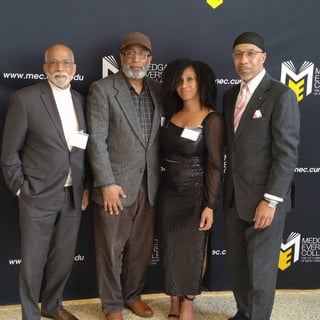
Speaker: I feel like it's a privilege to get to know them and get to see their work and support their work. So this is my conversation with Jamel Bellamy, Rosalind Smith, and Reverend Dr. Sharon White-Harrigan.
Speaker: My name is Stanley Bellamy. I'm formerly incarcerated. I served 37 and a half years of a 62, 62 and a half years of life sentence. And what brings me to this conversation is that I went to prison because of a homicide.
Speaker: My name is the Reverend Dr. Sharon White-Habrigan. I served 11 years collectively in the New York State of Maximum Prison for Women, and i too served time on a homicide.
Speaker: My name is Rosalyn Smith. I served 39 and a half years in the Bedford Hills Correctional Fertility for Women. I'm here because of a homicide.
Speaker: I'm Kathleen Pequeño. I'm the host. And i I really wanted to have this conversation. I'd say it is just such an honor for each of you to take time out. I know each of you does so much in your in your personal lives, for your families and communities.
Speaker: think it's helpful to ask, you know, if there's anything about language that you think is important for people to know or like words to use or words not to use and as we talk about this.
Speaker: There's a number words that I would not use when we speak about not just homicides, but but people. And one of the words is criminal, inmates, because if we want to humanize this whole situation and we want to make really change what's going on, we have to begin identifying people as human beings and people and not laden.
Speaker: Ross, assuming that some of our listeners don't know why we say criminal legal system instead of criminal justice system, can you say a couple words about that? As far as so I'm concerned, it's not a justice system because it really doesn't meet our justice. It's a legal system that more less caters to, that doesn't cater to the Black and brown community, that doesn't cater to marginalized people, that caters to the wealthy that caters to white people, and that is proven in, you know, the disparities in sentences between black and brown individuals and poor people, people that are poor.
Speaker: It more or less criminalizes poverty. If you don't have money, you they look at you, the system looks at you as less than, and it's just not of of a just system.
Speaker: Most individuals that you think are in prison, and that's why we call it the criminal legal system, there's a vast majority of people in prison that's in prison for what they would call felony murder.
Speaker: They have the label of being a murderer, but they are felony murder. They're not the actual person who committed the homicide, but they have that label on themselves. And so that means that me, all four of us go to a place and you decide that you want to shoot somebody,
Speaker: all four of us will be charged with homicide and all four of us can be convicted of homicide and all four of us can get a life sentence based on the act of one person. So let's be clear.
Speaker: We talk about homicide, murder, and you know, that's just one form of homicide. Now you have what we have, Robert Brooks situation, the young man that was killed in Marcy prison. There's some of the officers that are being charged with manslaughter, even though that's a murder,
Speaker: It's called manslaughter, and it carries them less weight than the actual murder. So there's different degrees of homicides inside of New York State. When people think of justice, you think of fairness.
Speaker: When you hear it, you think that, okay, this is something that should happen, but how do we explain how poorly this system is ran? How do we explain how how poorly from the moment of arrest to, you know, someone being detained, to someone being incarcerated, even to release?
Speaker: s So is there's nothing justice or justified about it. Punishing people for homicides, when we look at it from a critical, social, or restorative justice per perspective, um focuses on how um these measures often fail to address the root causes of violence.
Speaker: And it's like, you know, in a lot of the work that we do, it seems like we're always... saying over and over, you're not addressing the root causes of violence and how violence can perpetuate cycles of harm.
Speaker: that the If you don't address them, that you're perpetuating cycles of harm rather than creating safety or healing. It's proven, harsh punishment,
Speaker: does it and and giving people long prison sentences or even the death penalty, they don't reinforce healing. It reinforces a culture of violence.
Speaker: We as folks that have this personal experience definitely don't diminish the harm. When we look at things like this, when people are hurt and they, you know, that cliche, hurt people hurt people, but healed people can heal people.
Speaker: when we talk about just restoration and healing, ah we how we should put forgiveness at the table first.
Speaker: Right. Yeah. Not just, you know, an eye for a nine. You know, you hear people, oh, I want justice. I want them, you know. But the fact is, there is no justice because when you lose someone and another family lose that someone to their actions, nobody wins.
Speaker: Right. But we have an opportunity to restore, you know, what has been eaten. And so I think it's really how people come to the table. and sorry As clergy, it's hard.
Speaker: to forgive. I take responsibility for the role that I played in and my crime, but I came from an environment where my mother was a drug addict, where I was running the streets at 13 years old, running away, doing drugs, experimenting with drugs.
Speaker: I was sexually assaulted as a young girl when I ran away. And all of these things, the poverty, the trauma, all of these things had an effect on how I saw the world.
Speaker: And I didn't start seeing the world differently. until I got arrested and started college. And that is what changed my perspective because the message that I was getting from society was like, I didn't matter.
Speaker: Nobody cared. You know? And these are things that people in marginalized communities and and poverty and mental health struggles and domestic violence and lack of opportunities, these are the things that contribute to the violence.
Speaker: Each one of us responds totally different. And that's that needs to be clear. We're not making excuses for environment, but the environment also played a ah role in how we develop our thinking. and like There's a saying that information determines your philosophy, your philosophy determines your attitude, and your attitude determines your behavior.
Speaker: And based on how we educated, how we informed, and involvedd in the message that gets through all that other stuff that penetrates our brain, That's the message that developed our outlook on the world and how we know view the world.
Speaker: And from that view, it tells us how we're going to look at and treat people. And if we have a negative view of ourselves and that world, we're going to treat people negatively.
Speaker: So when you don't value your own self or you don't value your own life, there's no way you can value anybody else's. My victim's daughter wrote me a letter and conveyed to me through the DA that I tore her family apart.
Speaker: Like, my actions tore her family apart. But me being in prison for the rest of my life was not going to change that. And she had asked but the DA,
Speaker: for me to write a letter explaining because she, I guess she understood what was happening in my life. She wanted to know, like, what was your life? What have, what was your life before prison?
Speaker: What have you done in prison? And what will you do come home? She wanted to know the steps that I was going to take and how I would change my behaviors. And I wrote her, I wrote her like a four page letter.
Speaker: and sent it to her. And she came back and she wrote a letter. When I went to the parole board, she wrote a letter saying that she did not want me to stay in prison for the rest of my life, that she thought that I could do great things once I came home, even though I had did something to cause her so much harm.
Speaker: And it wasn't about forgiveness. It was about understanding the process of a human being My brother was actually killed by middle-class armed revolutionaries, people with great politics and, ah you know, supposedly.
Speaker: I used to go to a family member, a murder victim support group, and most of the folks there are actually domestic violence homicides. People act as if the difference between punishing and not punishing people is that it's going to bring back the dead, eh? Which it does. Like, none of these strategies bring back the dead.
Speaker: But I want to come back to, i think, a theme that I've heard each of you talk about in the past, and you're talking about a little Ross, which is also that people change. They're not the same people anymore. and they're more interested in doing good than many other people, actually.
Speaker: People act like punishment brings back the dead and doesn't. They also act like punishment is the thing that's going to prevent more violence. And we've been talking about that like it's not. Since I spent 37 years in prison, Catherine, the I came to learn is that when you give people the proper information, when you give people to value themselves, I have a bunch of sayings.
Speaker: And another saying is that history plus culture, gives you your values, your values plus your lifestyle gives you your behavior. yeah And so when you begin people to give, you know, understanding of their culture, their history, and they can get them to start feeling good about themselves and making them believe that they can actually do something to make that change.
Speaker: A lot of us, while we was incarcerated, lot of individuals of the programs that created while was in there, these men came home. And they came home with the commitment to come home to try to assist with the development and helping redeem themselves through their actions trying to, we we say, assist with the development of dysfunctional neighborhoods into productive and vibrant communities.
Speaker: And how do we do that? By coming out, going out into the street, talking to the youth, telling the true story about incarceration. Some of us that get involved in this lifestyle, that going to prison is a pass, is a right.
Speaker: We dispel that myth. We get rid of that myth. And it's important that we get rid of that myth out here because there's really no prison problem we say that doesn't have its origin in the community because I wasn't born in prison.
Speaker: So my attitudes, my belief system, and everything was created in the community that I was in. brought the leaders. And if I can change the leader's mind, he will change the minds of all the rest them.
Speaker: And we can do that in the community before they get to prison. We don't have to wait till they get to prison. We don't have to wait until they commit a crime or homicide or whatever. We can do that right here in the community if we was given the proper resources and the opportunity to do it instead of just, you know, lock them up and throw away the key because that doesn't solve anything.
Speaker: It doesn't solve anything. When I was incarcerated, I was in a writing group with Eve Ensler. And writing for me was a way to express myself, a way to get my hurts out. I started writing when I was very young.
Speaker: um And it's a way it was a way for me to heal. And um what I do now is I go into ah transitional housing and I teach women writing. We have writing groups and we heal through writing. and I talk to the law students.
Speaker: I tell them how, you know, if you become a lawyer, you become a DA, how you are impacting somebody's life. And not only their lives, the community that they come from, their kids and and everything. Because sometimes people don't realize how and mass incarceration just devastates a whole community.
Speaker: Living with knowing that I was part of a homicide has been very difficult for me. And I carry this with me on a, not every day, but it comes up.
Speaker: And people don't realize that. They think because I'm home and I'm out here and I'm doing the work that I don't think about it. I constantly think about it. And it's a weight on me. And um that's why I'm in therapy.
Speaker: What I do today has a lot to do with my time imp prison. You know, i i think for me, I'm not going to matter how you get there, but I think that, you know, for us as people, and yeah it's been mentioned, you know, looking at self-worth, looking at, yeah you know, your self-esteem, understanding where you've been in life.
Speaker: When I went to prison, i didn't realize how many people How many women had trauma, you know, had baseline of just harm and hurt in their life, you know, and there wasn't any social workers.
Speaker: There wasn't people to tap into. And I think Roz, you had, you know, said it as far as being able to deal with why you were there.
Speaker: right? All of the things that has happened in your life, having some understanding of it yourself, right? Before you can even convey it ah l to anybody else.
Speaker: And so coming out for me, it was important for me to become a social worker. It was important because that wasn't accessible to us.
Speaker: How do you have people, you call this Department of Corrections, nothing correctional about it. So now in my work, it is about understanding. It is about forgiveness. It is about how do we put a narrative of our own, not what the newspaper, not what the media, not what social media, not what the news, you know, they always paint us And when I say us people of color, as animals, as monsters, as deviants, we shouldn't, you know, be ever put back into society.
Speaker: I think that we work very hard, more so because of where we've been, because of why we were there. And so I'm big on the community.
Speaker: I'm big on people. I'm big on prevention. I'm big on intervention. On the fact that if we don't get a hold of the youngins, if we don't get a hold of our fellow people in the community, what will it look like even a year from now?
Speaker: What happened in our life, what happened in that instant, in that moment still carries with us that we do care. And that we don't want to be defined by that worst moment in that worst day in that worst time, because that's not who we are.
Speaker: And so everything that I do from teaching, from my ministry, to my clinical work, to my running an organization, every single thing I breathe is about healing.
Speaker: A lot of people don't realize that, you know, we do think about stuff like that. we do You know, we take in into account the harm we have caused and transform it into something powerful and something healing.
Speaker: When people really don't understand, Captain, about a lot of us that did time, that came out here and doing this work, it's that we carry that guilt because we understand we took the time to process the harm, pain, and suffering.
Speaker: that we caused the, and don't like using this term victim family, but we made them victims. That's the only way you can describe it. And our ah our own family and ourselves, we took the time to really do a lot of introspection while we were on so inside. And people don't understand this, that we did the introspection and we carry that guilt and we try to make amends the best way we can.
Speaker: And like Sharon said, we do not want to be defined by the worst decision of our life. And we understood, and this is the thing that we say when we look look at other things, we took accountability and responsibility for our actions.
Speaker: And because we took accountability and responsibility and we understood the harm, pain, and suffering that we caused others, when we came home, we decided that we was going to get in this type of field to try to do something about that pain, that harm, that suffering, know, to make sure other people don't have to experience that same pain.
Speaker: Eddie Ellis. He recruited me into an organization that he's a group he set up and going through that organization, he finally, I finally began to get the type of training that I'd never received while was home and the understanding my connection to the community.
Speaker: But it wasn't until I read, I don't know if I should say his name over the air, the young man that was killed in my case. It wasn't until I read my pre-sentence report and read his mother's statement that I really understood the harm and pain and suffering that I caused her.
Speaker: Because I never seen that statement until 1991. And when after I read that statement, I could never go back to being that knucklehead person that I was. and And reading that statement, in 1991, I made the decision that I would do everything my power to make sure no more mothers had to cry because their young son was murdered at the prime of their life because he was 19 years old.
Speaker: and that I would do everything I could in my power to make sure no more mothers had to cry because their young sons were sent to prison with sentences and seating they'd like prospecting The Department of Correctional Service doesn't do this for them.
Speaker: We do it for ourselves. We understand. We do that introspection. We understand it. We need to address some of that trauma because they have no program set up to address our trauma. Punishment is not the answer that we need to address.
Speaker: If we want to deal with prevention, not reacting to something. Let's start dealing with prevention. Let's put our focus in prevention. Before something happens, let's catch it immediately there and work on it because there's no prison problem.
Speaker: It starts in the community. I really feel like to ah break the cycles of violence. And I feel like society must really adopt a more compassionate approach while fostering communities of healing.
Speaker: i And this begins with asking individuals in crisis and especially children two fundamental questions. How can I help? And what do you need to succeed?
Speaker: And I think these questions will create a lot of space for empathy, validation, and connections. Like schools, social services, and community organizations can play vital roles in providing mentorship.
Speaker: things that we do, and by centering the needs and voices of those in crisis, I think um we can create environments of healing rather than punishment because punishment becomes the um foundation for everything in in society until we we have to change.
Speaker: The one thing like I would love people to know about punishment and homicide is that there is justice beyond punishment.
Speaker: And how we approach that matters the most. It's it's not this way, right? it It really isn't. um People can't say enough sorry. Sorry doesn't compensate, doesn't bring back, doesn't do anything, um but probably piss you off, right, even more.
Speaker: But what I can say is that the more we pour into one another, the more that we pour into the community, the less we would have of this. Harm plus harm equals more harm.
Speaker: The individual is this person. If we just correct this person right here, it'll solve everything. And that's what punishment is, saying we just correct this person and solve everything.
Speaker: And it's not just the individual. We have to look look at the structural to get the punishment. Let's get before we get to there ever being a homicide. When we're really solving these problems well, we're so far upstream that the problem is not even in sight. That really should be the goal.
Speaker: It's worth doing things to prevent homicide. and And the question is then, well, what are the things that we do and do they work? And what is the cost of them? And I don't mean money, I mean at the human cost. and And that's where I think that's where punishment comes up short compared to the things that the three of you do.
Speaker: And um you know i heal from my brother's murder a little bit more every time I talk with people who have made the journeys that you three have made.
Speaker: I don't know your burden specifically, but I do know that each of you proceeds with kind of the burden of having been connected to to the loss of someone's life. And I just want to say, i know that you fight really hard for yourselves in the face of that and appreciate it.
Speaker: And I think it's part of what makes each of you so extraordinary. it's It's really a privilege to get to talk to you about it Because i i mean and I also wake up every day being like, am I doing enough to prevent homicide?
Speaker: And I'm not sure that I do, in part because I measure myself against each of you. um Well, thank you to Jamel, Sharon, and Roz for that conversation.
Speaker: And thank you, listener, for making it this for the episode. I know conversations about homicide are heavy. This is not true crime. There is no deep satisfaction here. There is just the reality of the true story of homicide, which is lives ripped apart and really either...
Speaker: healing or despair so often. Those are the choices. Like healing or trauma, disruption, despair, and more trauma. i try as much as possible to always be calling for things that allow people to heal. And there's lots of different ways that can look, right? There's lots of different things that should be available to people. There are not a lot of choices, though, for family members and murder victims for anything other than participating in systems of punishment.
Speaker: I personally pretty much decided that I would design my own healing journey. i mean, ultimately, that's what everyone does. Mine involved traveling to where my brother's death occurred in Germany.
Speaker: And i had wanted to do what's called direct dialogue, which was sitting down with the people who had been convicted of the crime, possibly who were there when my my brother's life ended, right, in pain and terror.
Speaker: Turns out that was not an option. So I turned to something called surrogate dialogue. Perhaps I will do a different episode about that. If you want to learn more about my journey with surrogate dialogue, there's a documentary film called The Worst Thing that my friend Desirena Almirati made.
Speaker: But a small number of people in New York actually could choose direct dialogue. It's not widely available, and I really wish that it was. So it's not that widely available, but I was very fortunate to ask Erika Sasson, who is a restorative justice practitioner based here in New York City.
Speaker: And she agreed to meet with me also over the Internet, although our initial conversation was in person. to kind of talk about it. and And we had a conversation about both the potential and the limits of direct dialogue and why a person might choose that and how it fits into the really big puzzle of what is available to people after homicide.
Speaker: My name is Erica Sasson. I'm an attorney, and i'm also a practitioner of restorative justice processes, and I work especially in areas of complex harm. I work with victims of sexual violence, domestic violence, and I work in areas including homicide.
Speaker: How did you wind up working with people around serious violence and or homicides? I did my first homicide process when I was still at the Center for Justice Innovation, and it came to me very haphazardly. somebody There was somebody whose father had been killed, and she wanted a process.
Speaker: And I did the process. and I basically created a process for her because she really needed to speak to the person who had killed her father. After that process and the whole experience of it, um a couple of months later, I think i had I had left my job at the Center for Justice Innovation. And I went out on my own and I wanted to pursue the kinds of processes that you can't do if you're in an organization or you're running programming or you're fundraising or you're kind of doing all of that other work.
Speaker: I wanted to specialize in areas that the restorative justice movement wasn't doing. So people and organizations were doing assaults and they were dealing with conflict in the workplace or conflict in community, but we weren't pursuing some of the more difficult areas.
Speaker: And i kind of said, okay, this is an area for me to dig into. I think in in the legal system, ah what would happen is, um but let's say with an incident, like a homicide incident, is and arrest is and an arrest is made.
Speaker: So one of the kind of most important things that happens in New York is the clock stops. So the right to speedy trial, all other areas, there's a really kind of intense...
Speaker: focus on moving this through the the courts as fast as possible. But with a homicide, that doesn't actually happen. And so those cases take a much longer time. So sometimes it can be three and a half years before, you know, something has been finalized by the courts. And that's actually agonizingly long for a family of somebody who has been killed.
Speaker: Because this is just what I've observed, i'm just going to share something anecdotally, is until that case is closed, it's almost like the grieving process can't start. Everybody is holding their breath As from the from the families of victims, these families are really different. This is like the most important thing to say.
Speaker: Everyone comes at this in a really different way. There is just no homogenous version of losing a loved one to an act of violence, which is like a really horrific experience.
Speaker: But if This was to be the case for a lot of families. You're waiting for the legal system to finish in order to kind of return to your private life and deal with the aftermath of it, deal with your grief, begin the process of kind of sorting yourself out as to how you're going to integrate this news into your own life.
Speaker: While this is happening, there it's basically like the legal system's going in fits and starts. There are all kinds of hearings. There are all kinds of moments for a lot of families they don't exactly and understand. There is no explanation of what happened in a meaningful way. There is certainly no...
Speaker: um sense of the person taking responsibility. You don't hear from the person why they did it, what happened that day, what the victim's reaction was, what their last words might have been. i just want to describe this like long drawn out process of on the one hand denying and deflecting responsibility and outright, you know, completely minimizing what you did in order to prevent the worst kind of punishment from happening.
Speaker: And on the other end, a lack of an ah of understanding of what happened, a lack of knowing what happened in those very last moments, that's often very important for people whose um family members have passed. It's like, i just want to remember that day. I just need to.
Speaker: So, you know, you're not getting at some of the really core things. And for the person who caused the harm, i'm going to flip back and forth because I'm always carrying both in these processes. For the person who caused the harm, you're also not getting at the why and what happened that day What was going on for the person? What was the environment?
Speaker: And when we skip asking those why questions, we also lose any opportunity to prevent future harm because we're just not doing the introspection that we need to do to make meaningful shifts.
Speaker: Right. In either behavior, and environment, in behavior. other people's responsibility for whatever happened that day. So many ways people can harm each other, you know, to the point of homicide.
Speaker: But what the large, the vast majority of people agree about is it's worth some effort to try to prevent it. I think it's important to focus on how how much it drags out, how much, and unless you're important to the legal system or to its proving of it, it's possible that you will be sidelined entirely. and So we're we're dealing with somebody trying to defend themselves from this kind of over- disproportionately kind of aggressive punishment system and making decisions about their relationship to the punishment system and not their relationship to the harm that they caused and to the people who to whom they owe a responsibility, which includes their own family, their own community.
Speaker: Instead, they're really caught up with making decisions vis-a-vis the legal system. There's so many interesting questions that one would want to kind of pose if one was really interested in not replicating this kind of harm.
Speaker: Right. really not relevant to what's happening in the legal system and so if you flipped to what you would do in what i call a process it would really be about beginning and it takes a lot of time and a lot of trust um to work with both sides of this horrific harm and certainly It's a really complex process. It doesn't resolve every everybody's needs. I wouldn't say that it's certainly not a fix.
Speaker: No one can tell you how to heal, but the possibility of you healing is a priority. It's hard to tell people you have a responsibility to heal, right? But the the truth is that when we don't make it a part of public safety and a part of like our social investment, like as a community, we don't make these opportunities like so visible for people to be able to take them if they want them.
Speaker: But I do think there is a return to the present moment that can happen when you kind of touch a healing process. And I've had survivors say, like, I've been able to be with my kids in a real way, in a way that I was just, I was gone.
Speaker: I was, like, not present and accounted for. And that's just, like, something that we're really missing when we're not making healing opportunities available. The conviction does not release the grief of all of these kind of terrible feelings.
Speaker: The problem is we've equated taking seriously with absurd and disgusting and inhumane punishment. And so those two things don't have to be the same. Right, right. But non non-action is not also tenable. like The choice isn't between punishment and inaction.
Speaker: That it's never that. That's not what we're about. And I think that's at times what people are thinking. And that's actually what the punishment system says, right? If the if the only reason to not punish people usually presented by the system is if the people who are harmed have no value.
Speaker: That's not what I'm about. I'm like the choices between punishment and something that actually change creates the changes that we want. I think sometimes we think about restorative justice and we think about this kind of like touchy-feely, just say I'm sorry and everyone will get over it and people have really reductive views of this.
Speaker: think we need like, you know, if my loved one causes really serious harm because of behavior that they are not addressing, then I want some serious, loving consequences. Really, like I think about tough love.
Speaker: that's like And that's coming from a sense of like you belong to me and I belong to you and you can't operate this way. And that's really important to say. When we mess up, we all want mercy and understanding.
Speaker: doesn't have to be easy, but we need a path to return to those to whom we belong. We need more dialogue. you know what mean? Right. Yeah. Oh, yeah. Yeah. Understand our experience and who have, like, touched the same kind of backdrop that we've touched to begin to argue, like, we need to say things out loud.
Speaker: We need to grieve out loud. We need to be witnessed. So if you're doing that with somebody who shares an experience with you, but from a different perspective, that's brilliant. Like, why wouldn't, like, it to me, that i guess I guess that question of, like, it's either...
Speaker: restorative justice is like direct dialogue or you should go to the criminal punishment system. Like that can't be the binary that we live in. Like we need an ecosystem of healing opportunities. If I could say one thing, i would say this woman who who did my first ever process and that launched this whole part of my work.
Speaker: She said, every person who loses a person as I did should have the opportunity to speak to the person who hurt them. I can't tell you how well I've s slept starting that night. This process helped me to let my dad rest in peace.
Speaker: She also said to me in ah in a later time, you know, that her kids, like I said, or and you know, that she said that her kids felt her return to them.
Speaker: And so it is to me about getting into the present and being able to face the future and not being kind of held hostage, quite frankly, by What's happened and and ah the capacity to to look ahead and to have your your future open up for you in a way when when you're cycling through ah past act, it really keeps its hold on you.
Speaker: This the thing, you can't promise anything to anyone, but sometimes, and this is why it's worth trying, because if it works and you can start to look towards the future again, like what a blessing that is. The one thing that I would say to people is like, it's like really, really important for me to be nonjudgmental about how people react in these moments.
Speaker: And so we just need a lot of love to to be able to transform something. We need a lot of support and a lot of love and a little bit like less judgment.
Speaker: The month this episode comes out, August of 2025, is 40 years since my brother's homicide in August of 1985. And in that 40 years, I have talked to and listened to way more than 40 family members of murder victims.
Speaker: And some of those folks, by the way, have committed homicides. The two groups are not mutually exclusive. The reality of dealing with homicide has been kind of paved over by cop shows and the true crime genre.
Speaker: What I really want to bring us back to is each homicide is a loss. You don't need to decide if a homicide is horrible based on the character of the victim or what they were doing or the circumstances of the murder.
Speaker: Each one is lost potential. Each one is a loss to a family. And punishment isn't getting us a world without homicide.
Speaker: There is justice, I think, beyond punishment, but for me, I'm less concerned about justice and more focused on healing. I think as you've seen in any number of episodes of this podcast, healing and love and patience, an incredible amount of patience, are really the things that are going to help us solve our biggest problems, including the problem of homicide.
Speaker: And just remember The choice isn't between punishment and doing nothing. The choice is between punishment and doing things that work. This podcast was produced in Brooklyn, New York, the unceded ancestral lands of the Lenape and Canarsie people.
Speaker: We thank all the ancestors for caring for this land over the generations, and we're committed to the work of creating a shared future that includes the Native communities that are still here and all the people who call this land home.
Speaker: want to thank Jamel Bellamy, Rosalind Smith, and Reverend Dr. Sharon White-Harrigan for sitting with me and sharing themselves with me. And also thank them for the work they do in the community to prevent and repair violence every day.
Speaker: Thank you also to Erica Sasson for sitting down with me to talk about her experience. Podcast team for this episode was Dr. Candice King, Reverend Dr. Sharon White-Harrigan, who, as I mentioned, also joined us on mic for this episode, and Tess Weiner.
Speaker: Thank you to our production partner, Jewel Cave Studios, and our creative partner, Julius Shepard Morgan. I'm your host, Kathleen Pequeño. This podcast is a project of the Justice Beyond Punishment Collaborative at the Center for Justice at Columbia University, with support from Trinity Wall Street.
Speaker: You can learn more about the collaborative and our other creative projects at beyondpunishment.org. Thanks so much for listening.