Transcript
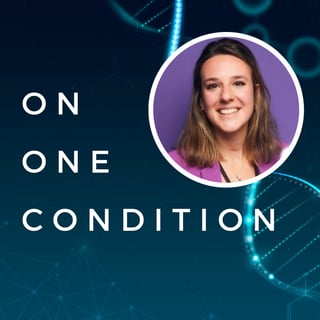
Speaker: Hi, I'm Sylvain Bertelot and you're listening to On One Condition, a podcast to raise ah awareness about health conditions by listening to people who leave them every day. Today my guest is Niamh Foster and we're going to talk about ischemic stroke.
Speaker: Hi Niamh, thanks for joining me. How are you? Thank you having me. I'm good, thanks. How are you doing? Yeah, I'm doing great. Thank you. Good. So we're going to talk about your stroke and most importantly, life as a stroke.
Speaker: But I love starting with a song. So which song did you choose and why? I chose I'm Still Standing by Elton John. It was quite significant for me throughout a period of time of my life. The lyrics were quite substantial to...
Speaker: the scenario I was in. And it's also just a brilliant song. It is. Yes, I agree. And i completely understand the feeling because I can imagine that having a stroke is something that is life threatening to some extent.
Speaker: Before we go into that feeling, would you just like to share with us how it happened? or how did you realize that you had a stroke? Well, I was just in bed with my boyfriend one night and it was in the middle of the night I had my stroke. So it was I woke up and felt as if I had sort of cramp on my right hand side. So I went back to sleep. i was very, very restless.
Speaker: And um it wasn't until the morning realised that I'd had ah stroke, but it wasn't until Rhys, my partner, he got me in the car On the way to hospital, we knew something was, you know, my face had dropped all the obvious signs now of stroke.
Speaker: but I just thought that they only happened to elderly people. We're rushed through to hospital and I had a CT scan, mr MRI scan, and the doctors confirmed stroke.
Speaker: I actually, on the lead up to it, I had my stroke on the 28th of August. Throughout the month of August, I think I might have had about 10 TIAs or something like that, which are mini strokes. And they're essentially a warning sign that you're going to have a major stroke.
Speaker: Okay. How old were you when you had your stroke? I was 26. Wow. Yeah. yeah When you hear stroke, you think later on in life, how did they manage to tell you that you had about 10 TIAs before that?
Speaker: Well, it was my stroke consultant. I sort of described what I was feeling throughout the month of August. I was very fatigued, very sleepy. I'd lose my words quite a bit. And I had my first migraine in that time.
Speaker: But I just thought it was, you know, my dad gets migraines. I just thought, oh, it's genetic. I'm, you know, I'm bound to get them too. And what described, she said,
Speaker: every single time they probably were TIAs. a mini Wow. And so when it happened, did you think straight away it's a stroke?
Speaker: No. Or did you not believe because of your age? No, yeah, I didn't believe I did not think stroke. It was the last possible thing I thought. I thought I was very stressed at the time.
Speaker: i used to work in fashion. i had a London Fashion Week show, my first ever show. Me and my partner, we were buying our flat. First time buyers. Like it was very, lots of different plates were spinning.
Speaker: Just thought, God, am I stressed? It didn't even enter my mind. Yeah. So how did you feel when the doctor confirmed that it was a stroke?
Speaker: Oh, God, it was just an overwhelming feeling. i remember him in hospital, it was just me and my boyfriend. And he'd rang my parents and they were already on their way down.
Speaker: Yeah, it was just very, very emotional for both me and my partner, Rhys. It was very overwhelming. And we were just like, what next? so I didn't know what a stroke meant.
Speaker: You know, I didn't know how the recovery period was going to look like. I thought I would be back to normal, like relatively quite soon. Like I had no idea what it entailed. Yeah.
Speaker: And did the doctors tell you at that time? I went into Chelsea and Westminster and then they transferred me in an ambulance to Charing Cross. So that's the acute stroke ward.
Speaker: I think they were more focused on me going there. and was very quick, very fast moving. There wasn't really enough time to fully tell me what that would mean. what yeah They were sending me to Charing Cross for thromboptomy. So it's essentially where they go into your brain and, you know, surgery. They remove the clot.
Speaker: But my stroke consultant told me that I'd come such a long way in that, I don't know, hour period. They were asking me questions about, you know, like, what's your name?
Speaker: Where are you? Why you here? Etc. Like all of them kind of questions. And I was responding sort of, ah you know, I knew where I was, I knew what was happening.
Speaker: So they decided to not actually go ahead with the thrombotomy surgery. Okay. Because I would have posed as too much of a risk, could have bled into my brain rather than just remove the clot. So yeah.
Speaker: Wow. So how did they get rid of the clot then? So the clot forms and it goes up to your brain and then it damages that part of your brain.
Speaker: So that part of my brain is still damaged, but that's why sort of the rehab is so important. It's about working around the area that's damaged of your brain and rebuilding new pathways around the area of your brain.
Speaker: brain. So ah in my case, it got my speech. So if I was having this conversation with you two years ago, i probably wouldn't be able to, but through my speech therapy and OT and all of the rest of it, I'm able to.
Speaker: Wow. And we'll come back to that because you told me when we were talking in preparation for for this, that what's very important in stroke is that recovery and everything you do afterwards.
Speaker: But as we said earlier, it sounds quite unusual at your age to have a stroke. So do you know what led to it? How did you end up with a blood clot in your brain?
Speaker: Well, I was originally told high blood pressure is a common reason, but my blood pressure was completely normal. Cholesterol was completely normal.
Speaker: You know, they were trying to figure out the reason. And the only reason that they could originally give me was because I was on the double hormone contraceptive pill.
Speaker: And that poses as a risk to clots in your blood. And I was like, no way. I've been on the pill for however long and just seems really unlucky.
Speaker: and my uncle He's a doctor and he texts my mum like, don't do not let Niamh leave the hospital without getting a bubble echo. And I was like, I don't know what a bubble echo is, but you know if uncle's telling that, then yeah. So lo and behold, my mum and my dad, my sisters and Rhys were quite persistent on the stroke nurses to give me a bubble echo. And that is essentially an ultrasound of your heart.
Speaker: Okay. and lo and behold, they found a two centimeter hole in my heart. So apparently we all have one when we're born, but it's meant to naturally close.
Speaker: But for one in four of us, it doesn't close. You're born with it and you usually die with it and it causes you no issues in between unless you have a stroke.
Speaker: So basically the clot formed in my blood vessels and it went up through my hole in my heart and then caused the stroke in my brain, the blood clot in my brain. okay So, and and lo and behold, I had a stroke, but that that was the main reason for it, which is crazy. i wasn't, you know, wasn't aware I had a hole in my heart.
Speaker: I've since had that closed in 2025, March Okay, so you had heart surgery then to close at home? Yeah. Okay. Yeah. It sounds scary, but it's really such a low-key procedure.
Speaker: I think I was under for 45 minutes, and they go through the groin. they don't you know I don't have a a scar in my heart area. it's They go through the groin, and they feed up basically. It's like an umbrella-type thing. Mm-hmm.
Speaker: to put in in the hole and then it just come out of your groin and but it's there. wow yeah surgeries and healthcare procedures are quite incredible sometimes. Honestly, they were amazing. i only had to stay one one night and they made it feel like it was just like, oh, just a normal procedure for the surgeon and just something he does every day, which I'm sure he probably does. And I can't knock the NHS for my
Speaker: experience in in my experiences. they They were incredible all throughout. That's that's good to hear. It sounds like they took charge of you straight away as well. So that's that's what you need really.
Speaker: So now that you've gone through that, do you know if that's common for people your age to have a stroke?
Speaker: Well, I'm quite vocal about it on my Instagram now. ah have been over since January and I've had so many other young stroke survivors reach out to me and their stroke is caused by the exact same thing, a PFO. so Wow.
Speaker: It's so much more common than you think. I think at the time i was the youngest person that Chelsea and Westminster had ever had for stroke.
Speaker: But since I'm in contact with my stroke consultant, I get on with her really well. She let me know since that there is actually a girl that had a stroke at and she was aged 18. So it's more common than you think, which is why I want to sort of raise a lot of awareness for it. yeah I would hate for someone to go through it and not know that they're having a stroke.
Speaker: Yeah. Yeah, because that's something that you need to sort straight away. But it's easy to dismiss at a young age. um And it's because it's, it is uncommon, but it's not as uncommon as you as you think. But, you know, I hear so many stories from other people now, and they did not have a lovely experience like me, like they had to push for the NHS to even go for CT scans, go for MRI scans,
Speaker: they get told that they're drunk and, or they get told that they're, they're too young to have a stroke and anyone can have a stroke, even children. oh Yeah.
Speaker: So what was the immediate impact for you then? And what was that recovery process afterwards?
Speaker: Well, well, well, I, I couldn't, I couldn't talk properly originally. i I had something called expressive aphasia.
Speaker: I still have it, very, very mild, but i still have it. And i had dysarthria, which is basically, it sounds like you're drunk when you're talking.
Speaker: It affected my speech. It got that area in my brain quite significantly. i had to learn to walk and run again and stuff, but I was very, very quick in I think on the third day, second day, I was walking around freely, you know, walking back to the toilet and back and forth to the toilet, back and forth to the the physio, did sort of jumping exercises, running exercises with me.
Speaker: And that was quite quick, but I don't know if that, I was quite physical anyway. I was, you know, I exercised, I did Pilates, I ran, I swam. So I don't know if that was sort of like muscle memory on my side.
Speaker: But yeah, i I was very fatigued. I couldn't stay awake longer than four hours. ah would have multiple naps a day And I've learned that that's just the brain recovering. It needs time to re-fix itself. And this wonderful word I've learned, which I feel like I'm seeing it from the rooftops, is neuroplasticity. So...
Speaker: rewiring the brain to to rework and yeah the effects were quite hardcore yeah it's incredible how the brain can adapt when you think that you've lost part of your brain essentially that you can't use it anymore but you look like nothing's happened how was regaining speech because you talked about physical activity but in terms of being able to speak again how was that Yeah, it was tedious. And it was very frustrating. phage is a funny thing, you know exactly what you want to say.
Speaker: But you cannot find the words, it doesn't infect your sort of intelligence. It was the most frustrating thing. It really, really was. i use this example all the time. But My sisters in hospital asked me what I'd had for dinner. And I went to say Mac and cheese and I thought Mac and cheese, like ah I thought them words, but I said, Mary Kate and Ashley, and it's bizarre because I meant to say Mac and cheese, but you know, just lots. And luckily i'm and my sisters, we all laughed about it and we still laugh about it now.
Speaker: But it was just, it did get ah frustrating. And it even now, you know, not so much in the daytime, but in the nighttime, when I'm just chatting, making dinner with Reese, I will say the wrong thing.
Speaker: But my speech therapy was amazing. it It was just like everything, like my OT, my arm exercises, breathing. with my physio, my leg exercises, running and stuff, it's very repetitive.
Speaker: yeah It's very, very repetitive. And, but that's, that's the way to do it. That's the way for your brain to relearn. the And was there any doubt that you wouldn't regain your speech fully or that you wouldn't be able to be as active as before? or no Yeah, definitely.
Speaker: You know, my family and my friends and my boyfriend are all very positive people. And if there was doubt, they didn't make me aware of it So I was just plodding along, taking each day as it comes.
Speaker: And I believe that that is why I'm here talking to you today like normal. I believe it's the positive people.
Speaker: that I have surrounding me. Positivity can get you a long way. And i didn't know if they, if they did doubt that. I think I doubted that, but I didn't verbalize it.
Speaker: Yeah. I just took each day as it comes, you know, I really just played it day by day. yeah I got out the hospital on the Friday and had the weekend at home and then rehab started on the Monday. So did my OT, my speech. so That's quick. That's very quick. It was quite quick and I'm so grateful for that.
Speaker: m i imagine you were not able to work. How long did it take you to be able to go back to work? Yeah, so I was out of work for around 14 months.
Speaker: Wow. And, you know, a girl in her mid twenty s it was hard because i was watching everyone else just carry on with their lives and, you know, get promotions and excel in their careers, excel in their social life, you know, just And I couldn't do any of that. It feels like it just sort of someone just hit pause for a while.
Speaker: So that was very that was very frustrating as well. And that's probably one of the hardest bits, actually, that of my recovery period. I get really bad FOMO anyway. So I felt like I was missing out and I was missing out.
Speaker: I'm happy that I took that time off work. You know, my straight consultant, once again, I feel like I'm speaking about her a lot, but she said to me, your rehab and your recovery is your work, but you need to put hundred percent of yourself into that.
Speaker: and And I've been quite grateful for that time that I had off. There was no way I could have gone back to work immediately. Yeah.
Speaker: And what was that point? on you Did you know that you would be able to go back to work after 14 months? Yeah. Well, actually I had a bit of a career change. So okay as I said, i I worked in the fashion industry before I was a designer, but I volunteered a little bit for the Stroke Association around sort of nine months post-stroke. So I was part of the like London Stroke Voices. And yeah, it was really, really great to like, I felt like I sort of had a bit of purpose, I guess, again.
Speaker: And then a job came up with the Stroke Association as well. the job came up and it was a support coordinator for people with communication difficulties. I was like, oh, this job is made for me. I i understand these people. ah That's what I suffered with, what I am suffering with, you know, at the time. And like, this is perfect. And i yeah, ah that's what I started now and I'm and i'm still doing.
Speaker: Amazing. yeah What do you do in that job then? So I support people that have had a stroke, so stroke survivors. I run a group for them all and I run a group every two weeks and I run Zoom groups for them all.
Speaker: We work through activities that I actually had with my OT and my speech therapist and I do home visits and I just support them really through what they're going through and connect them with other people and signpost them. And I love it. It's only part time. um I work 25 hours, but I literally love it. I always say to everyone, I don't know what I was doing beforehand. I love it.
Speaker: That's amazing. And i imagine that for the people you support, it must be very encouraging to see you because you completely can relate to what they're going through and they can see that it's not something that is necessarily long-term that they will be able to require. Yeah, definitely. Definitely. I think it's definitely taught me that every stroke is very different.
Speaker: I've reached out to this girl on Instagram and she had a stroke around the same age as me, around the same area of the brain of as me. And her recovery and her herself it's completely different to me but that doesn't make much sense because we we had a stroke at the same age same place in the brain and and through the stroke association I've definitely learned that every stroke is different yeah well you shared with me about the life after stroke group ah could you tell us a bit more about that
Speaker: Yeah. so it's something actually, that was a bit of a full circle moment for me. I, I attended it as a straight survivor. It's sort of about gathering lots of people that have had a stroke and have been at Chelsea and Westminster. And it's run by ah my stroke cons consultant again. And she'll put you in touch with OT or speech therapist or physio and neuropsychologist.
Speaker: It's a great place to meet other people because there is there is life after stroke. I actually attended it recently as a stroke association employee as well. as And I, you know, I spoke about what I do for the stroke association and how I support people. Yeah, it was such a full circle moment for me because I was there as a stroke survivor and I'm there now as a stroke association employee. So yeah it was really great. um I've actually got another group on Monday. It's a great group.
Speaker: And so when people attend that group, who is it to just to share stories or do they have access to resources? Yeah, they do. they do have access to of OT, speech therapy, any you know any questions they have for them, they can ask them there and then. And they really connect with with people, with stroke survivors. i ah What I found beneficial from that group was the connect, like seeing other people, you can relate to them and they know what, you know, they know what you're, you've been going through and you know what they've been going through. And it's just great to sort of connect in that way. yeah
Speaker: Being able to talk to people who've gone through the same thing as you have. Yeah, exactly. It's powerful. It's very, you leave sort of feeling great.
Speaker: yeah You leave feeling brilliant. What kind of support did you have from your, or did you need actually, from your family or your partner as you were going through this recovery process? And the reason I'm asking is that I can imagine that with aphasia, it's very unpredictable if you're going to be able to express yourself or not. So did you constantly have to have someone with you?
Speaker: Yeah, um you know what, I was very keen to get my independence back and i'm I'm quite stubborn in that way. There was many moments where I was really emotional at home and i was like frustrated with how i didn't feel as if I would have my independence.
Speaker: But I discussed that through with my family and they allowed it. But obviously I've been through a major life-changing event. event I understand why. but at the time I was like, I just, I want my independence.
Speaker: But I did have to have a chat with them not too long ago i feel as if sometimes with my mum and my sister's, We're all like chatterboxes and we're all chatting and chatting chatting. Whereas I feel as if now my brain can't keep up with it, with the pace.
Speaker: okay And I've had to have that conversation with a few of my friends as well. But they all just take their time now. And I feel as if everyone's really learned to just still deal with that element of it.
Speaker: Definitely my partner is literally, he's amazing. And I can just tell that he just gives me time to say what I need to say. He's been amazing throughout.
Speaker: I think it's only really made our relationship much stronger, you know, are having to go through all this and... His mum said to us, he's like, you two have been through something that's like many married couples of like 30 years haven't had to be, you know, haven't had to go through. It's really amazing. It's really admirable. And I was like, wow, that's, yeah, that ah I never looked at it like that.
Speaker: Yeah, imagine that it tests the relationship definitely. Definitely. No, he's he's he's been amazing. My whole family and friends and yeah, they're ah they're amazing. I'm very lucky.
Speaker: That's nice. So you're still recovering essentially. So it's two years on. Because you said that you still find it sometimes difficult to keep up with the conversation with your family.
Speaker: Do you know how long that's likely to take? I don't know. i i That's the golden question, isn't it? Yeah. i I still see my OT and she sort of works on my cognitive function, I guess, my problem solving in in my brain. And it' so it's it's a lot of the stuff that you can't see that I still have issues with. Yeah. Mainly mainly stuff that I can't see.
Speaker: Apart from my arm my my arm, my right hand side, I'm experiencing something called spasticity. And I think I'll have that for the rest of my life. So, okay.
Speaker: Spasticity is sort of like, um like for instance, like I have it in my bicep and my bicep feels like I'm constantly like tensing. okay And the same as my calf.
Speaker: I think I will have that ongoing, to be honest. I'm beginning to come to the realisation. Nobody's told me that because nobody doesn't want me to sort of give up.
Speaker: yeah hope And I understand that and I respect that. But I think that slowly I'm coming to the realisation that I probably will just have these invisible niggles for a while.
Speaker: Saying that, there is a lady at the Life After Stroke group and she's seven years post-stroke. And she says that she's still seeing improvements to this day. Wow. So, you know, you've got to sort of cling on to that hope. Yeah.
Speaker: It speaks to how long it takes the brain to fully recover. Yeah. Well, that's an absolutely amazing story. And thank you for sharing. And I find it incredible that that's led to career change as well, which I find very nice.
Speaker: I have one last question for you. What's your happy place, a place where you feel at peace? I think my happy place is Sun and Cove in Cornwall.
Speaker: Oh, nice. Yeah. We visited there as a family for years and now we bring our significant others and, you know, the family's sort of expanding. That's definitely my happy place.
Speaker: That's amazing. And for those of you who don't know Cornwall, it's ah an amazing, absolutely amazing part of England, which we're very lucky to have in the country.
Speaker: Well, thank you so much, Niamh. I love hearing, like you said, I think that you've gone full circle and and now helping people who are in the same situation you've been in the past.
Speaker: And also great to hear about how the healthcare system has been responding. We're quite lucky to have that in the UK.
Speaker: Well, thank you very much for having me. Well, it's been a pleasure and I wish you all the best for the future. Thank you, you too.