Transcript
Speaker: Hello and welcome to the third instalment of the Hunt Economics podcast.
Speaker: Joined as always by our regular co-host Ben Ashby of Henderson Row.
Speaker: I think one of the most knowledgeable people on how banks actually work.
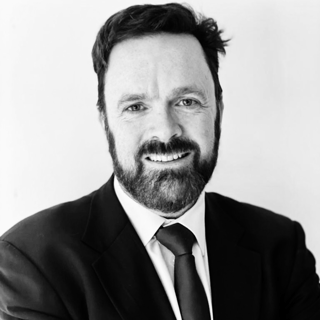
Speaker: Today we've got a special guest, Patrick Bloomfield, partner and senior actuary at Haymans Robertson.
Speaker: former chair of the British Society of Actuaries, and Patrick is here to educate us on pensions, LDI, and all that sort of fun stuff, particularly in the light of what happened just a few months ago in the UK.
Speaker: Now, I'm sure there's a perception that...
Speaker: The disaster that befell the Trust's administration was a one-off.
Speaker: I tend to be a little more generous to our former prime minister.
Speaker: The funding arithmetic in the gilt market was already looking stretched.
Speaker: I certainly think the budget pushed that over the edge and created the chaos we saw.
Speaker: But there's quite a high potential for that to happen in other jurisdictions.
Speaker: Remember, the Federal Reserve is just starting to ramp up its quantitative tightening, and we haven't seen any Treasury bond issuance yet this year.
Speaker: Once the debt ceiling is raised, the US will have a lot of debt to issue at a time when the Federal Reserve, in theory at least, will be pursuing a quantitative tightening.
Speaker: That could destabilise the US Treasury market.
Speaker: But it's in Europe that I think the real challenges perhaps lie.
Speaker: This year we can expect to see the equivalent of close to 9% of GDP in net debt issuance in Europe.
Speaker: This is, without precedent, much bigger than anything we saw, say during German reunification or even during the global financial crisis.
Speaker: And if the European Central Bank pushes ahead with quantitative tightening and we have this issuance that's very concentrated in Germany and to a lesser extent France,
Speaker: there is the potential for instability in the bond markets.
Speaker: And the purpose of this call today really is to discuss how that could affect the pension systems and the long-term savings industries in general, and what implications this could have for policy, both at a micro industry level and of course at a macro level.
Speaker: So Patrick, thank you very much for sparing the time.
Speaker: Pleasure to be with you.
Speaker: Thanks very much for having me on today.
Speaker: As a pension specialist and an actuary, we don't get invited out very often, so it's lovely to be spoken to.
Speaker: Albeit, I think the events of last year that have brought the spotlight our way aren't the ones that we would particularly have chosen.
Speaker: So whereabouts would you like to start today, Andrew?
Speaker: How should we start to pull this problem apart for everybody?
Speaker: I think perhaps a brief introduction on how pension systems work, obviously in the UK in light of recent events.
Speaker: But if you could give us some guidance on Europe and perhaps the United States as well.
Speaker: OK, right.
Speaker: So really, these are really pretty big questions and there's a lot of history in context.
Speaker: I'll just do a 60 second recap on the on the system and the pension system that we're talking about in the UK here as it relates to bond markets.
Speaker: In the UK, we have a moderately generous public sector pension, a state pension that's provided to everybody.
Speaker: That's not the bit we're talking about.
Speaker: That's paid out of current tax receipts.
Speaker: So it's not the state pension at all.
Speaker: What we're focusing on here is the private sector defined benefit pension schemes that have been set up by large companies.
Speaker: So we're also excluding teachers' pensions in the UK are unfunded.
Speaker: Police pensions in the UK are unfunded.
Speaker: It's none of that.
Speaker: This is your FTSE 100 and the like and the pensions that they provided to their older workers.
Speaker: These schemes have been set up under private trusts, typically been running somewhere between 30 and 70 years.
Speaker: And they were set up under private trusts because that was the UK system where you would get some pretty big tax incentives towards saving for later life.
Speaker: Over the last 20 years, with people living longer, this has pushed the cost of providing defined benefit pension schemes a lot higher.
Speaker: So these schemes over the last 20 years have tended to close to new entrants and then stop the members who are in the schemes building up new benefits as well.
Speaker: So we have a situation now where there's somewhere between two and three trillion sterling.
Speaker: in these private sector defined benefit trusts.
Speaker: And it's shaping up towards a great runoff, by which it means as the members get older, the store of capital that's been built up is gradually going to get crystallised and drawn down and used to pay out pensions.
Speaker: So that's our context that we have in the UK here.
Speaker: And that money, this two to three trillion that I mentioned in the past, back in the good old days, if I can call them that, the heyday of DB, that tended to be invested with long term growth in mind.
Speaker: So it will have been in your typical diversified growth portfolios, very equity heavy, probably with a global focus.
Speaker: Over the last 20 years, that has increasingly shifted to be bond invested.
Speaker: And again, in the UK here, that will be a bias towards government bonds and a bias towards sterling government bonds at that.
Speaker: The general logic behind that...
Speaker: really comes from two places.
Speaker: When you look at the physical operation of the assets within a scheme, as the members get older and as the capital needs to get drawn down to pay pensions, if you're invested in something that's volatile, say, do you invest in equities and there's a 10, 15, 20% market dive, you'd still be crystallising the assets to pay pensions.
Speaker: So you'd be crystallising the loss.
Speaker: That's inherently unappealing as a risk management framework.
Speaker: If you're investing in fixed interest, though, of course, you can just wait for it to pull to par, wait for the redemption monies to come in and line that up to pay beneficiaries.
Speaker: So there's been an inherent bias towards investing in bonds because they are deemed to be a closer match for benefit payments going out to beneficiaries.
Speaker: We then get into this second piece that's the funding legislation in the UK.
Speaker: And that's about how do you value a liability?
Speaker: Lots of different schools of thought around that.
Speaker: If you look at the IASB standard, the International Accounting Standards Board, they have pension liabilities valued using the yield on a AA bond.
Speaker: AA bond in the currency of issue of the liabilities.
Speaker: So,
Speaker: That's the accounting side.
Speaker: When we look at the cash funding side, it's a little bit different, but the predominance in the UK has been towards measurements that use a gilt yield plus some sort of risk margin on top, allowing for the extra return on other assets.
Speaker: So again, we've got a double A yield for pension accounting, predominantly a gilt yield plus a spread for cash funding.
Speaker: And that's quite different to what we see in some other jurisdictions.
Speaker: So if I make a comparison here in, say, Germany, you might see some private sector pension schemes provided for unfunded balance sheets.
Speaker: And in the States, if you look at how they're accounted for there, you might see pension liabilities valued using an expected return on the portfolio of assets that's held, which might still be quite growth oriented.
Speaker: So you might be seeing equity and property blended yields going in there and much higher discount rates
Speaker: which leads to lower levels of liabilities.
Speaker: So when we pull all
Speaker: It's been brutal.
Speaker: It's been a really tough last decade for pension schemes.
Speaker: The driver behind this changing direction of portfolios away from equities and growth towards bonds and runoff has really been driven by the structure of the membership.
Speaker: So the demographic shifts within the scheme and members getting older and new members stopping coming in.
Speaker: And once that die was cast, we're headed down a bonds track, by and large.
Speaker: And what we've seen in the UK in particular, although it's been mirrored with other central banks, the period of QE and ultra low interest rates, ultra loose monetary policy has been very hard for pension schemes because ordinarily they would just like to buy bonds.
Speaker: They want to buy bonds because they want to buy them for their income.
Speaker: And what we're seeing is the price of buying those bonds has gone through the roof.
Speaker: So your typical pension scheme balance sheet through the last decade has really swollen as QE has driven yields and real yields in particular, ultra low, and then has quite sharply through 2022 reversed out in the other direction.
Speaker: So we've seen two decades of yield contraction unwound in just a matter of months.
Speaker: Now, the unwinding itself has actually been quite positive for pension schemes because some are at their final destination of having all of the assets that they wanted.
Speaker: But lots are still on that journey and are planning their journey to essentially hold a full portfolio of bonds across the board.
Speaker: But on the way through, we saw the assets they were trying to buy becoming increasingly expensive.
Speaker: So they were having to work harder to generate returns to build up the pool.
Speaker: They were relying back on the businesses that sponsored them for additional contributions to start to fill the gap.
Speaker: And it was in part of the economic management that we saw in the UK in pension schemes to try and squeeze everything we could out of the assets that we saw the use of this leveraged LDI, which is essentially using guilt repos, swaps and total return swaps to gain additional interest rate exposure without soaking up all of the capital of a scheme so that they could do this dual strategy of covering interest rate risk
Speaker: as effectively or as fully as they were able to, whilst preserving some of the capital to continue to invest for growth.
Speaker: And all of that was predicated around shielding schemes against yields getting even worse still as we were going through the QE cycle.
Speaker: As we've seen that reverse out through 2022, the reversing out itself has not been the problem.
Speaker: That's absolutely fine.
Speaker: Pension schemes were relieved to see yields going up.
Speaker: The issue that we saw in late September last year was the speed of change.
Speaker: And the speed of change in the operational management around some of the assets is what caused a lot of the headlines.
Speaker: And I must say that the whole episode has been quite poorly reported in the press at large.
Speaker: So just following up on that, Patrick, talking about the headlines, there was a lot of discussion about schemes being bankrupt or bust or whatever.
Speaker: My understanding is that's obviously relatively hard to do as long as you've still got a solvent sponsor above it, which potentially can obviously inject the cash in.
Speaker: So first of all, how many schemes were genuinely impacted by this?
Speaker: My perception is it was a relatively small amount, but as we all know, markets are made on the margin, so it doesn't need too many in a, certainly a market is a liquid as gilts.
Speaker: Secondly, why are they now and what are they likely to be doing?
Speaker: Yeah, you're spot on with that, Ben.
Speaker: Schemes did not become insolvent.
Speaker: That was loose and lazy reporting and it's very misleading.
Speaker: What we have, certainly in the UK, similar in some other funded jurisdictions as well, is if there's an investment loss,
Speaker: Then you're then into the funding regime, which is with a company standing behind the scheme, do they need to pay some more money in to make that investment loss?
Speaker: And that's the beginning and the end of it.
Speaker: So what happened through the bond experience that we had in late September and October last year was some schemes weren't able to hold the hedging positions that they had and may have had to trim back their hedges.
Speaker: And that then is going to lead to a different financial profile going forward, depending on whether yield curves go up or down.
Speaker: It's as simple as that.
Speaker: So the worst of the situations here, we've seen investment losses.
Speaker: We have not seen scheme insolvencies.
Speaker: Scheme insolvencies only come about if the sponsor can't support them anymore.
Speaker: And in the UK, actually, we have a very protective regime here that whilst there's a sponsor that's still standing behind their scheme and is still solvent, they are fully liable to make sure that that scheme is secured with an insurance company providing all of members benefits.
Speaker: We have for businesses that go bust with pension schemes, we have something called the Pension Protection Fund.
Speaker: And that provides the vast majority of members benefits.
Speaker: And it's funded out of an industry, out of a levy on industry of other schemes that have, of other companies that have DB pension schemes.
Speaker: So scheme insolvency is barking entirely up the wrong tree.
Speaker: The issues that we did see, though, when we looked at this, when we look at this leveraged LDI was essentially margin calls.
Speaker: It was collateral margin calls to hold positions as yields were rising very quickly.
Speaker: And in some of those situations, we had a variety of fund structures in play in the industry.
Speaker: And some of those fund structures weren't able to liaise with their investee funds quickly enough to raise the capital and needed to trim some hedge positions.
Speaker: And some other pension schemes may have seen circumstances where because we'd had a profile of rising rates through the year already, a lot of readily available liquid assets would have already been drawn in and converted to cash and used as collateral against those positions to maintain the hedges as they were against interest rates.
Speaker: And then by the time we got to the quite extreme movements we saw in the end of September,
Speaker: there wasn't much liquid assets left available.
Speaker: So other liquid corporate bonds may have been liquidated to provide hedge collateral.
Speaker: And some schemes found themselves with the only assets they didn't have, or sorry, the only assets they had that were sitting outside of their LDI portfolios were illiquids, maybe infrastructure, private equity, other things like that, where they simply couldn't realize them on T plus two, T plus three timescales.
Speaker: And they were in that situation, they were needing to reduce their hedges.
Speaker: Because at that point in time, we're certainly seeing regulators becoming quite uncomfortable about levels of leverage that were available in products at the time and seeking to neutralise this.
Speaker: And that's the point at which the Bank of England stepped in through its financial stability arm, saying that we were getting to a pro-cyclical place where the further yields went up, the more collateral pension schemes were needing to post.
Speaker: And the more that pension schemes were unable to post that collateral, the more they were starting to sell out of their hedges, which was then starting to push yields even further still.
Speaker: So it was creating this negative spiral that was going to draw more and more into it.
Speaker: And it was simply a function of the time that was available operationally to be able to make collateral available to these LDI funds.
Speaker: So it wasn't insolvency of pension schemes.
Speaker: It almost sounds a bit like a moral hazard issue, isn't it?
Speaker: The schemes have got used to hyper liquidity and under QE and saw the risk to yields as being one way, i.e.
Speaker: downwards and sort of forgot the other half of potential market moves and illiquidity.
Speaker: I can understand why you say that, but I'd be very careful about characterizing it that way.
Speaker: What caused the challenges here was the speed and extent of changes, not the direction, and probably not even the quantum.
Speaker: It was just how quickly they happened.
Speaker: So,
Speaker: To put this into context for you, I mean, if we'd seen this in equity markets and if we took the FTSE 100 as our yardstick for it being a leading indicator for UK equities, at the start of 2022, the FTSE 100 was 7,500.
Speaker: And if we use that as our proxy for what happened to a 30-year gilt, on the 26th of September,
Speaker: That 7,500 would now be sitting at 5,500 if it had followed the price of a 30-year gilt.
Speaker: A day later, it would have been down at 3,500.
Speaker: And that's the point at which the bank intervened.
Speaker: Now, if we'd seen those sorts of movements in equity markets, it would have been all over the front pages of the papers.
Speaker: It would have dominated the news.
Speaker: We'd have been having conversations about economic Armageddon.
Speaker: But it was only in the extent of that quantum of movement in that shorter period of time that
Speaker: that the market practices that existed and the risk structures that existed weren't quite able to run the distance and needed some breathing space.
Speaker: A real-time resilience test, I think, was the great phrase.
Speaker: It was.
Speaker: It was a very uncomfortable live test of pension scheme resilience.
Speaker: And what we saw was that level of resilience was not there.
Speaker: If it was to happen again today with the way pension schemes have recalibrated their strategies, additional collateral waterfalls and headrooms,
Speaker: it could ride that out.
Speaker: The market could ride out those moves again were to happen today, which isn't to say that there's a purveying view that it will.
Speaker: It's more to talk about the, you mentioned moral hazard, but it's really about the risk aversion, I would say, of trustees and the degree of desire of risk protection that exists.
Speaker: So that degree of resilience is getting an awful lot of scrutiny at the moment.
Speaker: The couple of lessons I would say that are starting to come out of the LDI experience is about the speed of reporting, speed of information that's available should it be needed.
Speaker: And some of the product design features will undoubtedly move on to be more adaptable.
Speaker: I would say it was a black swan.
Speaker: And they do happen and we learn from them, undoubtedly.
Speaker: But...
Speaker: The issue we had in the UK was yields going up for pension schemes is generally a good thing.
Speaker: It's generally welcomed, but they moved so far so fast that the collateralisation arrangements weren't able to move in step with them across the board.
Speaker: That said, many schemes were fine.
Speaker: Many schemes were unaffected and rode it out.
Speaker: Some schemes even saw it as a fabulous bond and yield purchasing opportunity and were on the other side of the trades.
Speaker: But the weight of money was trying to sell out of those positions at the margin, just as you say, Ben, this wasn't a complete reversal out of the opportunity set.
Speaker: This was just at the margins to manage collateral positions.
Speaker: And that's where the squeeze was.
Speaker: So with the Bank of England stepping in to provide the liquidity, a fortnight was ample time.
Speaker: And schemes were able to re-collateralise, reorganise themselves, reset their strategies.
Speaker: And we've moved on from that.
Speaker: And
Speaker: There does need to be the time in the UK to kind of learn the lessons from it.
Speaker: We certainly don't want, we want some good quality black box thinking about this.
Speaker: Let's find out what happened in the flight recorder.
Speaker: Let's find out what we can do in the future to make things more resilient.
Speaker: But if it were to happen again today, we would see a very different outcome.
Speaker: Certainly from my side, I've seen a couple of the pension funds I'm involved with have cashed out of higher risk assets such as equities and taken advantage of the bond yields.
Speaker: Can I just ask two specific questions, though?
Speaker: One is one of the things that I've been concerned about over the last decade is all the new banking regulation has pushed a lot of the risk out of the banks and into financial markets.
Speaker: And
Speaker: for want of a better word, empowered, less capitalized, or possibly even less regulated players to step in and take advantage of that.
Speaker: So having priced some complicated, long-dated risk before, there's been a couple of institutions where I saw them win business, partly because they didn't have to take into account the fact that
Speaker: or let's put it another way around.
Speaker: The customers didn't appreciate that these firms don't deploy balance sheet.
Speaker: They do not have a lot of capital behind them.
Speaker: They effectively warehouse your thing.
Speaker: So exactly as you described, when they got a cash call, these guys couldn't provide any additional credit because they are not a banking institution.
Speaker: Do you think that is a fair categorization of a couple of the events that were involved, that we've had people that as the things moved, the funds couldn't be liquidated, the institutions who were acting as their kind of interface to the market
Speaker: couldn't give the balance sheet up or not?
Speaker: Ah, oh, that's a really good question, Ben.
Speaker: I don't think it quite tracks here, but it's close.
Speaker: I think it's right at a macro level, but in terms of the operational structures that exist under the bonnet, I don't think it quite tracks.
Speaker: And the reason that I say that is as follows.
Speaker: Um,
Speaker: 2022 is a year that the first half of the year, certainly through to August, September, we were seeing generally rising yields already.
Speaker: So these hedge positions in rates that the pension schemes had were already being capital consumptive.
Speaker: They were already hoovering up a lot of the liquidity that was available to hold those hedge positions.
Speaker: So yields were going up, hedges were being held, but liquid assets were being redeployed into cash to support those hedges.
Speaker: But overall,
Speaker: liabilities that are measured in a yield-based ways, they were getting cheaper.
Speaker: Yields were going up, liabilities were coming down.
Speaker: So everything was still working fine.
Speaker: It was when we got to September that this then became a liquidity squeeze.
Speaker: And pension schemes, they are purely capital pulls.
Speaker: Now, again, they have sponsors standing behind them.
Speaker: The issue had been that they'd used up a lot of their own available liquidity earlier in the year.
Speaker: And a lot of what was left was then the illiquid rump that they couldn't access quickly.
Speaker: And it was in that situation that they had a liquidity squeeze.
Speaker: And we saw probably a few different solutions deployed in that space.
Speaker: In some instances, we saw emergency finance and loan facilities made available from sponsors to schemes.
Speaker: We saw some make special contributions and we saw some where they said, do you know what?
Speaker: This is an investment position.
Speaker: We have the time available because our liabilities are paying members who are going to live for the next 60, 80, 100 years.
Speaker: We can afford to tune this hedge back and deal with it through investment channels and through funding and let this play through.
Speaker: This is a piece of market volatility for us to take in our stride.
Speaker: So it is not as cataclysmic as some of the reporting had it as.
Speaker: It was nothing like at all in those areas.
Speaker: So it was the liquidity squeeze that was put on schemes was what needed managing.
Speaker: nothing else.
Speaker: And the fortnight breathing space that was given by the Bank of England was ample for schemes to be able to work through their trading and get to the point of positions that they needed to be to be it for the long term.
Speaker: I think the...
Speaker: The real spectre that we experienced through October, early October especially, was a concern of not where are we today, but how much worse might yields get and how much more headroom do we need to have?
Speaker: That was the question.
Speaker: And when we were seeing...
Speaker: some trading at the fringes there and short selling around gilts.
Speaker: That was the concern about not just having the collateral to be able to hold a position with where the yield curve was on that day.
Speaker: It was with the speed of movement and the direction of movement, how much further might it get and what more do we need to have available?
Speaker: And that was why it was particularly important that the banks stepped in when they did to provide that stability that at least people knew what the ground rules were going to be.
Speaker: Thank you.
Speaker: Can I ask another question then?
Speaker: How long does a sponsor have to make good any kind of shortfall in the scheme?
Speaker: Is it a 12-month window?
Speaker: Is it a three-year window, five-year window?
Speaker: What kind of, because obviously there's a reasonable chance we're heading into an economic downturn.
Speaker: So what is the cash call effectively on the sponsor to make good any holds or shortfalls?
Speaker: Yeah, so really live discussion actually, Ben, because the UK is going through a revision of its funding regulations for DB pension schemes at the moment, and it will be going through Parliament later this year.
Speaker: So
Speaker: The practical status quo is going to carry on.
Speaker: And what we see is a regulatory norm at the moment of shortfalls in pension schemes made good over around six years.
Speaker: But what we have in the UK is a scheme-specific regime.
Speaker: So there is the latitude to cut whatever deal is appropriate to a scheme and its sponsor.
Speaker: And there's a pension regulator that intervenes in individual cases to make sure that trustees and their advisors and sponsors and their advisors are striking appropriate deals.
Speaker: So the norm is half a dozen years.
Speaker: In some cases, it's quicker.
Speaker: In some cases, it's a lot longer.
Speaker: But overall, this thought that schemes have to be liquid at all points or have to be fully funded at all points just simply doesn't hold.
Speaker: which makes the sensationalisation of the headlines that were put out there really inappropriate.
Speaker: And it was really unfortunately worrying for a lot of pension scheme members that were stressed over something that was an investment market phenomena that's been worked through.
Speaker: Can I just ask about where the funds are at the moment in terms of fixed income?
Speaker: So when I deal with the fixed sterling fixed income market, it is, to my mind, extremely expensive at the short end.
Speaker: And
Speaker: what I always hear is essentially despite the obviously very high levels of inflation we've still got in the UK and an economy to my mind that is structurally more likely to see inflation than some of its peers but one of the things I understand is effectively a lot of these schemes are hiding in the front end at the moment they've had to raise liquidity and that's what's caused the distortion of the pricing is that fair and the second thing is as they migrate into
Speaker: longer term fixed income positions, would it be right to assume that most of that will be UK government risk, as you pointed out earlier on, or will they blend it?
Speaker: And in which case, is it going to be the case that the UK curve is just going to be very, very odd and unusual looking as it has been in periods in the past, because you've got this huge artificial bid for various points of interest?
Speaker: 1988 being some wacky stuff going on the gilt market because of this sort of stuff.
Speaker: Yes.
Speaker: So there is certainly significant structural demand in the UK for for gilts and high quality debt from pension schemes and from insurance companies.
Speaker: So pension schemes, many of them will aim to settle themselves with insurance companies.
Speaker: But ultimately, you still have the same benefit paid to the same beneficiary.
Speaker: It's a question of which regulator or regime it's sitting in.
Speaker: Ultimately, it's still likely to be provided for with assets in bond-based investments, predominantly sterling denominated and with a bias towards gilt and high quality.
Speaker: So that will continue to be the case.
Speaker: We have already seen
Speaker: Really significant asset flows, probably somewhere in the region of a trillion sterling, maybe a trillion and a half sterling flowing into UK debt in different sorts.
Speaker: And I think the points you make, Ben, about will that structural demand continue to be there?
Speaker: Yes, it will.
Speaker: A lot of it's been satisfied, but there is still more money to come across.
Speaker: Will those investors start to look internationally in their quest for yield?
Speaker: Absolutely.
Speaker: Yeah, I think they will.
Speaker: They'll be really cognizant of exchange rate risk, but that's hedgeable as well.
Speaker: Although, as you'd imagine, people are looking very carefully at hedge programs and some of the other operational issues around them and making sure their liquidity and governance is all up to scratch, as you'd expect.
Speaker: We are seeing quite a few conversations about looking at
Speaker: International corporate debt as well, with the same provisos.
Speaker: One area that I have experienced through 2022 has been whereabouts on the credit spectrum schemes are looking.
Speaker: Now, when government bond yields were at their ultra lowest edges of the recent past, schemes were having to work their way a bit further up or a bit further down the credit quality spectrum in the search for yield.
Speaker: But with government bond yields sitting at much more comfortable levels, they're not under the same pressure to do so.
Speaker: So I think we're looking really at a question that's less around yield optimisation and more around the profile of defaults and the concentration and systemic risks that have been made all the more apparent over the last six months.
Speaker: And some very large schemes thinking quite carefully about
Speaker: Which ponds do they go and fish in?
Speaker: And what are their neighbours doing?
Speaker: And trying to make sure that they're less systemically aligned than the schemes around them.
Speaker: I totally understand.
Speaker: Certainly one of the things I saw a lot of over the last few years was that BBB US corporate debt trade where you saw large UK institutional investors, particularly one that comes to mind outside of the pension scheme, buying that and then obviously swapping back to sterling with all the joys that the FX risk brings and our superb stable currency.
Speaker: Can I just ask, is there anything else out there from where you sit that you would have concerns or is there any other countries that have this
Speaker: And a point you raised earlier, I just wanted to just confirm, having sat on a pension committee at a large institution elsewhere using US standards, I was always told that the scheme was heavily in surplus.
Speaker: So I asked, why do we have such a high equity component?
Speaker: Why don't we just close it out into US government debt?
Speaker: And the answer I got was because that would then put us into deficit.
Speaker: And of course, they'd use the higher discount rate, and that's how they calculate the surplus.
Speaker: That's not my understanding of how a surplus would normally work under the UK system.
Speaker: Yeah, that's right, Ben.
Speaker: So how you've just articulated the US there of an accounting standard being driven by whatever the scheme's investing in, and there's something self-perpetuating about that, that if you invest more aggressively, you get to assume a higher rate of return.
Speaker: So you get to assume a higher discount rate.
Speaker: So you place a lower value on £100 of future pension that's going to be paid.
Speaker: In the UK, there's already been that sea change towards anticipating moving into bond portfolios.
Speaker: And I mentioned earlier the current funding regulations that are being revisited.
Speaker: That is all about requiring UK schemes to look at their long-term runoff and think about the asset portfolio that they will hold in runoff and a predominance or a natural expectation that that's going to be a fixed interest portfolio.
Speaker: So the UK is moving that way.
Speaker: We have some, it's not a universal though.
Speaker: I mentioned it's a varied landscape and we still see some extremely large UK schemes that are still open to new members, still have high levels of growth investment over the long term and need the latitude to be able to do something else.
Speaker: So this is a really live issue right now for us.
Speaker: And we're seeing quite a bifurcation, I would say, in our industry of
Speaker: schemes that still need to be able to think in an open, no sunset date, long term future way.
Speaker: And then we see these other schemes that are very much shaping up for runoff, and they're positioning themselves to build out fixed interest portfolios.
Speaker: So there is that split in the UK and the funding regulations are coming through that they're in the pipe work already to come through to be exactly that by tail end of this year and enforced by next year.
Speaker: What sort of magnitudes are we talking about here for these funds, particularly as they look towards the sort of final moment, as it were?
Speaker: Magnitude in what sense, Andrew?
Speaker: Are you thinking about valuing of liabilities or amount of asset flows that are likely to go around?
Speaker: Mainly the asset flows.
Speaker: Obviously, we're losing the Bank of England's support for GILT funding.
Speaker: Is this...
Speaker: Does this have the potential to offset the Bank of England's withdrawal from funding the deficits?
Speaker: Oh, let me see now.
Speaker: I'm doing a few quick back of the envelope things in my head on this.
Speaker: My benchmark for this is somewhere between two to three trillion sterling.
Speaker: we'd have in this UK regime here.
Speaker: When you think of the size of gilt markets being probably somewhat less now, maybe one and a half to two trillion of which you're looking at two thirds of that being fixed, a third being inflation related bonds.
Speaker: We have already seen the predominance of exposure to hedge fixed interest liabilities already move.
Speaker: So if you were to look at industry norms across the scheme, across the industry from pension schemes, you would think somewhere around two thirds, three quarters of interest rate exposure has been hedged.
Speaker: And within that, some schemes will be fully hedged out.
Speaker: Some will still have a way to go.
Speaker: There'll be a variety under the bonnet.
Speaker: There is still a desire to close that remaining hedge gap.
Speaker: Pension schemes, ordinarily, they would like to deliver members beneficiaries with no risk at all.
Speaker: Lots of them are aiming to build up enough capital that they can pay it across to an insurance company that will run it on their behalf and wind up the scheme.
Speaker: Now, the gaps to buy out, which is what we call that in the UK, buying these insurance policies, those have shrunk tremendously as yields have gone up.
Speaker: which makes it all the more ironic where we saw the experience through late last year where the gap to putting schemes into the insurance regime got smaller.
Speaker: but the liquidity to be able to do them tightened up.
Speaker: So schemes might have nominally had enough money to go shopping for insurance policies, but they didn't have it in cash.
Speaker: So the insurance companies weren't able to accept the illiquid assets that they were left holding.
Speaker: So they could afford the price, but they didn't have the right assets to go and buy them with.
Speaker: And we're seeing that trade come through.
Speaker: And we think the acceleration of money out of the pensions regulators regime
Speaker: and into the PRA's insurance regime in the UK, likely to accelerate.
Speaker: So there will be a huge amount of pension scheme buyouts over the next decade.
Speaker: And that's been a trend that's been carrying on.
Speaker: We've seen typically 30, 40, 50, 60 billion pounds worth of UK pension assets switching from the pensions regulator regime
Speaker: to the insurance company, PRA regime.
Speaker: But the underlying assets are much the same.
Speaker: It's still invested in fixed interest.
Speaker: Probably a big difference between the two is a lot less leverage has been used in the PRA regime.
Speaker: So I think what we'll see is the level of total exposure will probably be, it'll tick up.
Speaker: but it won't move as much as it has done over the last 10 years, what we will see is a reduction in the levels of leverage that are used to get that exposure.
Speaker: So we'll start to see higher levels of capital committed to support those positions and leverage levels coming down.
Speaker: So I think in terms of trading at the margin, I don't see that having as significant an effect on yields coming from pension schemes, but it will have an effect on the asset classes that are being sold out of
Speaker: to provide that additional capital going into support.
Speaker: UK yield hedge positions with lower leverage.
Speaker: Can I ask a question?
Speaker: Obviously, we've seen most of the Western world starting to exit from some of these defined benefit pension schemes.
Speaker: And I know we're talking about a very large area and there's certain differences across geographies.
Speaker: But the one thing that is consistent is the aging of the West with obviously whether that's the general population, obviously the schemes as well.
Speaker: What do you think that's going to mean for the investment landscape more generally?
Speaker: Talking about our example from the US earlier on, I mean, there must be a point where they decide we have to start selling down the equities in this position.
Speaker: It's particularly volatile, the scheme's shut.
Speaker: Is that something that's consistent or will they run it and attempt to get the surplus at the last minute?
Speaker: Yes.
Speaker: So I'll build off the UK and then we'll jump the pond and have a look at the US.
Speaker: So in the UK, we have seen a rapidly aging population.
Speaker: When we look demographically, birth rates have reduced over the last 20 years per female.
Speaker: We see life expectancy in the UK has gone up by about two years every decade, if we look at the trend over the second half of the last century.
Speaker: The big question we've got right now is...
Speaker: COVID created a significant number of excess deaths.
Speaker: And myself as an actuary and others who specialize in modeling life expectancy are asking the question, was that a blip or are we seeing the beginnings of a trend here?
Speaker: And will we see life expectancy keep going up at the same rates we've seen in the last 50 years or is it going to start to tail off or not?
Speaker: So that's the UK picture.
Speaker: And we have in the UK in pensions funding taken the hit for longer life expectancy and allowed for it to keep going up in the future.
Speaker: And we're seeing if we do now allow for COVID slowing the pace of life expectancy improvements, actually it takes some pressure off pension scheme finances because they've reserved pretty heftily for future life expectancy improvements.
Speaker: The area that's least well provided for, though, or less well provided for is state benefits.
Speaker: When we look at state benefits and dependency ratios of beneficiaries from the state, whether they're pensioners or others who aren't able to work, compared to taxpayers.
Speaker: and where we see this transitioning from a working economy into a retired economy, that's a major change.
Speaker: And that does not feel like something that we are very well positioned for at a policy level in the UK.
Speaker: When we take it across into the American situation, we do see similar trends in the US.
Speaker: We see similar trends around health care and life expectancy.
Speaker: But there's a much more diverse population in the US.
Speaker: And certainly, you see a different profile with Medicare
Speaker: not providing universal healthcare in the US.
Speaker: So there is more of a haves and have nots difference there.
Speaker: When we think about pension scheme liabilities, those would tend to be aligned with those who have also got Medicare provision.
Speaker: So
Speaker: the position there tracks across quite similarly to the UK.
Speaker: The position on state provision is quite different though, where you tend to see the under-provided for being more reliant on benefits and you start to look at more macro taxation, I think would be the sorts of issues that you'd be thinking about there in the US.
Speaker: You also in the US have considerable net migration still coming into the economy and that being quite an interesting diluting effect on life expectancy and social demographics.
Speaker: Whereas in the UK, whilst we might talk about migration, we see nothing like the levels of immigration, net immigration coming into the UK that the US sees every year.
Speaker: It's been interesting in Western Europe to see the political dimension of this and that you're moving to countries in which the majority of the electorate
Speaker: doesn't work.
Speaker: Well, that's why pension policy in the UK at a state and government level is such a difficult nettle to grasp.
Speaker: Those who are the beneficiaries are the ones most likely to vote.
Speaker: So it makes it very hard to reduce state provision.
Speaker: It makes it very hard to increase retirement ages.
Speaker: We have something in the UK called the triple lock, which is this process by which state pension benefits are uprated by the greater of the increase in average earnings, the increase in inflation, or 2.5%.
Speaker: And that's very, very politically delicate to remove because it's a direct hit to the most likely to vote constituency.
Speaker: The problems that we have in the UK is there is a tremendous wall of money that's been saved up in pension schemes with a lot of tax relief that's gone in on the way in, tax relief on the way assets roll up, and it will be taxed as income when it's drawn out.
Speaker: So I think as we start to figure out the way of correcting public finances post-pandemic and post-Brexit here in the UK, pensions tax relief is inevitably going to come back up again.
Speaker: And it's been a very hard nut to crack.
Speaker: Yeah, as somebody who was present in an emerging market, albeit one that didn't have the greatest tradition of democracy, where they solve their pension funding problem by raising the retirement age above life expectancy.
Speaker: Yeah, I certainly don't think we'll get to that situation in the UK.
Speaker: But there have been some excellent government reports on this.
Speaker: So there have been excellent reports on social health care.
Speaker: There have been reports on pension scheme taxation.
Speaker: There have been reports on inheritance tax.
Speaker: But we continue to have a very fragmented system that isn't joined up.
Speaker: And part of the reason for that is these different voting bloc constituencies with different interests.
Speaker: And the fact that any of the real benefit to these changes will manifest long after a government has ceased to hold power.
Speaker: These need to be cross-party, cross-government, 20, 30-year strategies that are put in place.
Speaker: And they are likely to be unpalatable in the short term because it will mean people saving more and spending less in the short term so that they can enjoy more comfortable, more resilient retirements in the long term.
Speaker: My sense is, I mean, it's not a league table you particularly want to perform in, I guess, but perhaps some of the other European nations are, I think, probably further behind than we are, even in where they're kind of disjointed.
Speaker: Some, it seems, they've yet to even have the conversation.
Speaker: Yeah, I think one of the aspects that you'd see there, Andrew, is certainly across Europe, there is a much larger proportion of the retirement income that your average citizen gets being provided by the state.
Speaker: Whereas in the UK, we have a much larger proportion being provided by the individual or by the companies that have employed them.
Speaker: And that's been a big facet in the UK to try and move risk off the national balance sheet and onto institutions and then onto individuals.
Speaker: And it's certainly it's something that the UK's Institute and Faculty of Actuaries called the Great Risk Transfer that we've seen playing out since the GFC, where we've seen it increasingly pass through to individuals.
Speaker: And individuals now are under provisioned.
Speaker: They're under provisioned for later life.
Speaker: which is, this is a, it's never a good time to say that.
Speaker: But when we're in the grip of a cost of living crisis, really high rates of inflation, some very painful strikes going on in the UK and pressure on spending on national services, saying that you also need to save some more money for 20 years from now, it's about as hard a time as you could ever imagine to pitch that story, which is why it needs real proper long-term cross-party thinking, because otherwise it's politically untenable.
Speaker: No, definitely.
Speaker: I mean, there's that overused quote in the long run, we're all dead, but people do need to think about the long run.
Speaker: But I think many of them are worrying whether they get to the end of the month rather than the end of the decade, perhaps.
Speaker: Yeah, absolutely.
Speaker: Can I ask about the post-defined benefit pension world?
Speaker: Are we going to see more...
Speaker: growth of like the Canadian and the Australian super funds type schemes.
Speaker: I know the UK set up nest, but we're beginning to see some of these smaller sort of county, which would be for international listeners, kind of like state level funds beginning to merge themselves together into bigger blocks to try and reduce the costs.
Speaker: Are we going to see there's a lot of talk as well about money being recycled, perhaps into infrastructure or even venture capital from the new defined contribution type schemes?
Speaker: Is that reasonable to expect or do you think they'll play very close to normal assets, traditional assets?
Speaker: Yeah, those are some really live themes at the moment, actually, Ben.
Speaker: So the current landscape for workers in the UK breaks down roughly as follows.
Speaker: So we've got a, we still have defined benefit provision for people employed by the state.
Speaker: So whether that's nurses, police, civil servants, teachers, or if you work in local government, they still got defined benefits.
Speaker: The local governments are a bit quirky.
Speaker: Those are funded.
Speaker: So they have pools of assets and they're paying contributions in and they are still
Speaker: very growth oriented, very property equity, long term oriented.
Speaker: Actually, it's a sideline, but they're very active as well in the green future and the green revolution.
Speaker: We see them as a driving force in the industry there.
Speaker: In the private sector, you then have what's called defined contribution.
Speaker: So 401k for the state, it's an investment part, same as the Australian super.
Speaker: It's that style.
Speaker: And in terms of how that's provided,
Speaker: the market is being regulated towards there being a small number of very large, what we call master trusts in the UK, but I think what would internationally be seen as the Australian supermodel, where there's a few of them that are very large economies of scale being pushed through and getting really strong governance and oversight and investment economies of scale for retail investors.
Speaker: In terms of what they do with that money, at the moment, it's still quite a traditional long-term growth mindset tapering down into fixed income style investments when members get to retirement.
Speaker: One of the facets that we're seeing at the moment is a big push from government, UK government, to encourage infrastructure investment.
Speaker: And they keep talking about trying to mobilize pension scheme assets to do these infrastructure things.
Speaker: Um,
Speaker: Ultimately, the market will decide.
Speaker: If there's a good risk return trade there, then the money will move.
Speaker: It will get invested.
Speaker: But ultimately, this is money for the retirements of everyday people.
Speaker: It's not there to serve some of the political agenda.
Speaker: I think there's a sort of magic key to generating productivity growth.
Speaker: Whereas I think if you start generating the ideas that give you productivity, you'll attract attention to...
Speaker: Exactly right.
Speaker: The return speaks for itself.
Speaker: I mean, pension fund investors are not motivated by some greater societal benevolence.
Speaker: They're legally required to look at the best interest of the beneficiaries.
Speaker: So the return needs to be there and then the money will follow.
Speaker: So we've got some structural fund manufacturing and product manufacturing issues that are being resolved about how can that conduit be created?
Speaker: Beyond that, it's going to depend on the merits of the investment case like it would be for everything else.
Speaker: There is a theme in the UK about we've had something called automatic enrolment and lots more people participating in pension saving, but we need to up the rates of saving.
Speaker: So there's a lot of money yet to come in.
Speaker: And there will be more weight of money coming into UK pensions.
Speaker: But it's at the moment weighted towards retail investors increasingly over the next couple of years being gathered together in these defined contribution supers or master trusts, as we call them in the UK.
Speaker: A difficult one at the moment where it's almost perceived.
Speaker: I mean, I think thinking back to things like the Singaporean CPF, it's kind of perceived as a tax by many people.
Speaker: At a moment in history, that's probably not going to work.
Speaker: Yeah, we have seen some instances.
Speaker: So in Ireland, there was a change in the taxation structure on our tax levy put on pension fund assets.
Speaker: So there is history of major, major tax changes.
Speaker: We had one here in the UK back in 2015 called Freedom and Choice, which was removing the legal requirement to buy an annuity when you get to retirement age.
Speaker: So
Speaker: I mean, that's just buying an insurance product that pays you an income for life from a regulated insurance company.
Speaker: Now individuals have latitude over how and when they take their money.
Speaker: So we see this existence of investment pots continuing later into life.
Speaker: And there is still this underlying vision of,
Speaker: the UK populace becoming investors at large and thinking more about their assets.
Speaker: But the financial education and regulation around it has still got a very long way to go.
Speaker: One of the things to watch for... That's the investment we need first, really, isn't it, in the knowledge base?
Speaker: To be honest, we need the lot.
Speaker: We need the lot to happen.
Speaker: We will see something come through in the next couple of years in the UK called Pension Dashboards.
Speaker: which is a bit like open banking, but for your pension scheme.
Speaker: So imagine going onto your phone and seeing where all of your pension assets are readily invested across the board in all the different employers used to be with all being in one place.
Speaker: And that's considered to be a real key to get your man and woman in the street, more savvy about their investments and thinking about where their money goes.
Speaker: So Patrick, thanks so much for all of this.
Speaker: We're conscious of the time and the amount of time you've given us.
Speaker: But if you had one thing for investors, not just pension investors, but investors in general, one thing to take away, what would that be?
Speaker: I think that the point I would take away, being UK specific here, is there continues to be a wall of money that needs to be invested to provide for the later lives of the UK population.
Speaker: And the UK government is not going to take that challenge on itself.
Speaker: it's going to pass that across to the private sector.
Speaker: So we will continue to see significant amounts of saver demand in the UK for good quality investments.
Speaker: And those inherently will have a desire for stability of return.
Speaker: So the opportunity set for investment fund manufacturing, I think is significant.
Speaker: And the competition set for other people who like stable returning assets, pension funds are still there.
Speaker: Pension funds are still going to be trying to buy those same sorts of assets.
Speaker: So if you're trying to buy fixed interest in the UK, there will continue to be structural demand from pension funds.
Speaker: When it stops being defined benefit pension funds, it will then be individuals saving through these defined contribution master trusts or supers in the UK.
Speaker: So I wouldn't see that going away anytime soon.
Speaker: Okay.
Speaker: Well, great.
Speaker: And thanks again.
Speaker: Thanks so much for all the time you've given us.
Speaker: And thanks as always to Ben.
Speaker: Onwards and upwards.
Speaker: Thanks a lot, guys.
Speaker: Lovely to talk to you today.
Speaker: And thanks for letting me out of my actuarial cupboard.
Speaker: I hope it's been of interest.
Speaker: It has.
Speaker: Thank you very much.
Speaker: Thank you, Patrick.