Transcript
Speaker: Hello and welcome to another Conversation with Economists.
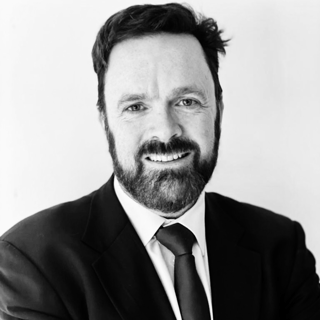
Speaker: This time we'd like to introduce Robert Brown from Ashridge Macro, a relatively new company.
Speaker: Before that, Robert was rate strategist at Morgan Stanley and subsequent to that took currency risk at a prominent macro fund.
Speaker: In August 2022, Robert founded Ashridge.
Speaker: So good luck with your new venture and thanks for spending time with us.
Speaker: Thank you, Andrew, and thanks very much for having me on.
Speaker: No, my pleasure.
Speaker: We'd like to talk about Sweden.
Speaker: In this world of potentially compromised banks, interrupted capital flows, I think covering Sweden could be quite topical.
Speaker: Clearly, people aren't focused on Sweden at the moment, but it is an economy that tends to attract a disproportionate amount of attention, disproportionate amount of capital flows,
Speaker: many of which traditionally recycled through the banking system, through the credit system into the property market.
Speaker: So we thought we'd find somebody that knew more about Sweden than I do to discuss how the Swedish financial system and its housing market functions and what the outlook is for it.
Speaker: So over to you, Robert.
Speaker: So, yes, it's certainly a very interesting economy.
Speaker: I think it's probably pretty close to an archetypal small, open, developed economy.
Speaker: And of course, the Swedish kronor tends to trade very heavily with global risk sentiment and speculator flow as well.
Speaker: So, you know, since the Riksbank started to really aggressively tighten, the interest rate sensitivity of the Swedish economy has been a major area of focus for speculators in both the rates and FX markets in Sweden.
Speaker: And there are a few factors around the Swedish mortgage market in particular, which make it very, very, very sensitive to policy rates.
Speaker: I would say there are maybe three distinguishing features of the Swedish mortgage market overall.
Speaker: The first one is that it tends to be a very concentrated market in terms of the mortgage providers.
Speaker: There are maybe seven or eight major providers and between them, they control around 90% of the overall mortgage base in Sweden.
Speaker: So the four firm concentration ratio is 70%.
Speaker: That's a very concentrated mortgage market.
Speaker: And the two largest mortgage providers,
Speaker: Each have around 20 to 25% of total mortgages outstanding individually.
Speaker: So it's a very concentrated market.
Speaker: The second thing that's distinctive about Sweden, and this generalizes to most Scandinavian economies, is that there's a relatively pronounced bias towards short fixation windows or fully floating mortgage rates.
Speaker: Now, mortgage terms in Sweden actually tend to be fairly long.
Speaker: 30 to 50 years is quite typical.
Speaker: And in fact, you can get mortgage terms that last for up to 105 years.
Speaker: But generally speaking, those mortgages, the fixed period for those mortgages is relatively short.
Speaker: Something like 70% of outstanding mortgages have residual fixation periods of less than a year.
Speaker: And in terms of the new mortgages which are being issued, so the marginal mortgage fixation period is even shorter still.
Speaker: About 70% of those new mortgages have fixation periods of less than three months.
Speaker: So there is this very pronounced skew.
Speaker: towards fully floating or very short fixed windows on mortgages.
Speaker: The third thing that I think makes Sweden really quite distinctive is the high level of reliance on mortgage borrowing across the Swedish economy.
Speaker: So around 43% of Swedish households own with a mortgage.
Speaker: That's very, very substantially above the OECD and developed market average.
Speaker: I think the eurozone average is something like 20%.
Speaker: So it's very heavily reliant on a very concentrated mortgage market and there's quite a lot of exposure to floating interest rates.
Speaker: In terms of how these things are priced, well, the funding of Swedish mortgages is also really quite concentrated.
Speaker: So there are three main ways in which Swedish banks can fund these mortgages.
Speaker: The first one is retail funding.
Speaker: So they fund it out of their depositor base.
Speaker: That tends to be comparatively inefficient, right?
Speaker: There's quite a pronounced deposit deficit in Swedish banks.
Speaker: So that channel for funding mortgages is quite constrained.
Speaker: The banks can also, of course, fund out of equity and they can issue unsecured loans.
Speaker: And they do do that, but not really in size.
Speaker: The majority of Swedish mortgage lending, about 70% of the total, is funded via covered bond issuance.
Speaker: So, you know, the covered bond market in Sweden is incredibly large.
Speaker: It's about 1.4 trillion, 1.33 trillion Swedish kronor, I think is the total size.
Speaker: And it's quite concentrated in terms of the stock of issuers.
Speaker: There are about eight major issuers.
Speaker: And those kind of correspond with the major mortgage issuers too.
Speaker: So who would be the major buyers of those?
Speaker: So the structure of the buyers have kind of changed through time.
Speaker: The Riksbank intervened in the aftermath of COVID.
Speaker: They own about 370 billion kroner worth of mortgage bonds, so about 20% of the stock.
Speaker: Swedish institutions tend to own around half of the remaining.
Speaker: Foreign investors participate quite heavily as well.
Speaker: Now, there was a bit of a change in the structure of the ownership in that when the Riksbank was buying post 2020, they were predominantly buying from foreign owners rather than domestic owners.
Speaker: So the share of covered bonds owned by Swedish pension funds, Swedish mutual funds, for example, has stayed more or less constant.
Speaker: But we've seen a lesser degree of foreign participation that's been basically taken over by the Riksbank.
Speaker: Okay.
Speaker: And in terms of the outlook for that, for the mortgage market, for the housing market in general, and by implication, the economy?
Speaker: So, you know, the house prices have weakened really very materially since the Rix Bank kind of begun to tighten in earnest.
Speaker: Depending on which measure of house prices you look at,
Speaker: they're down between kind of 11 and 15 percent, really very pronounced drop.
Speaker: And actually, between the three or four major housing market indices, there's quite a spread.
Speaker: You know, they all show declines.
Speaker: Some of them paint a much weaker picture, depending on whether they're geared towards apartments or houses.
Speaker: But the housing market, house prices at least, have dropped very substantially.
Speaker: One of the kind of key calls around the Swedish housing market that we're making is that we may well have seen the worst of the decline already and that further declines could be fairly minimal.
Speaker: The housing market could be close to bottoming out.
Speaker: And this is really based upon kind of two pillars.
Speaker: The first one is an econometric analysis, which essentially tries to map monetary policy tightening into a long run impulse response for house prices.
Speaker: what we get is that 100 basis points worth of monetary tightening roughly equates at a two year time horizon to around a 3.6% cumulative drop, peak to trough that is, in terms of house prices.
Speaker: Now, when you feed through the monetary tightening that we've already seen and when you plug in our terminal rate expectations for the Rix Bank,
Speaker: The declines that we've seen already in Swedish house prices are kind of more or less in line in terms of the rough orders of magnitude with what you'd expect just based upon those econometric results.
Speaker: So it looks indeed like a lot of the weakness in the housing price side of the data may have been kind of front loaded in this tightening cycle.
Speaker: There's also some evidence that there's an asymmetry in terms of the speed with which interest rate shocks pass through to the Swedish housing market.
Speaker: So papers that have looked at this in the past find that banks tend to pass on mortgage increases resulting from higher risk free rates much more rapidly than they do pass on cuts.
Speaker: I think that's quite kind of intuitive.
Speaker: But that kind of supports our hypothesis that the majority of the pain may have been front loaded in this tightening cycle.
Speaker: Is there any data to look at the effect of quantity shocks?
Speaker: I mean, I started talking in my own book here.
Speaker: I sort of noticed from your analysis, you're a very price-focused type of analysis.
Speaker: I have a little more sympathy with the quantity approach, and particularly in this period of global instability, could we have a degree of credit rationing or some form of quantity shock to the market?
Speaker: Is that something that there's historical data to analyze or...
Speaker: Are we, like in many cases, in sort of virgin ground, as it were?
Speaker: Well, I think in many cases, we are in virgin ground in the case that, you know, in the sense that this is a very, very rapid tightening cycle and the set of circumstances behind it are quite unique.
Speaker: When we look at, you know, the provision of new mortgages,
Speaker: There are a number of kind of changes there.
Speaker: Mortgage growth is still positive, but it's weakened really quite materially.
Speaker: It's kind of barely positive on a six month, six month basis.
Speaker: It is quite volatile, that data.
Speaker: So there's a very kind of poor signal to noise ratio in that data.
Speaker: But nevertheless, it is softening off.
Speaker: Credit data overall in Sweden has slowed quite materially.
Speaker: So provision of credit for consumption in particular is quite negative on a six-month, six-month basis.
Speaker: So that's kind of where the hit has been in terms of the supply of loans, right?
Speaker: The mortgage loan growth is barely positive and it's softening, probably will dip negative at some stage.
Speaker: Credit for consumption, though, is much, much weaker.
Speaker: Okay.
Speaker: And then on the subject of consumption, what's your sense for the outlook for the economy on the back of this weakness we've seen in the housing market that potentially, you say, could be quite front loaded?
Speaker: So, you know, from the perspective of a Swedish household facing this income shock,
Speaker: And it's worth caveating that debt service costs as a percentage of disposable income, according to the latest data which we have, are still quite low.
Speaker: It looks like it's about 3% to 4% of disposable income.
Speaker: So as a share, it's still much lower than it was in, say, the 90s, for example.
Speaker: Now, this data is quite slow moving.
Speaker: It's up to date as at the end of Q4.
Speaker: So it's going higher through the course of 2023.
Speaker: But so far, as a share of disposable income,
Speaker: The shock's been relatively modest.
Speaker: We are seeing the household reaction function play out in a couple of data points, though.
Speaker: Firstly, savings, you know, the marginal savings rate.
Speaker: So the kind of flow into into household savings has tapered off from its highs in both nominal terms.
Speaker: And of course, it's quite dramatically down in real terms.
Speaker: And that suggests that households are funding increased debt service costs by saving less.
Speaker: We've also seen quite weak consumption data.
Speaker: So monthly retail sales figures and monthly household consumption figures have dropped quite a bit.
Speaker: And that kind of suggests as well that households are cutting back on discretionary spending as well as cutting back on saving in order to fund those increased mortgage costs.
Speaker: Now, in terms of the outlook,
Speaker: It depends, I think, quite critically on our assessment that the majority of the house price paying having passed through kind of being accurate.
Speaker: The consensus is quite bearish on Sweden this year.
Speaker: We're also bearish, but we think the consensus could potentially be too negative.
Speaker: Our housing view, of course, plays into that.
Speaker: If we think that the worst of the pain is essentially behind us and we buy into the couple of house price indices that are starting to show a positive inflection, that suggests that there's some scope for data upside surprises.
Speaker: Also, we back tested the forecasting performance of quite a large number of macro leading indicators.
Speaker: A lot of these are survey based, sentiment based indicators.
Speaker: We found a handful that consistently add forecasting power to models for Swedish monthly GDP growth out of sample over a period of around 10 years.
Speaker: And many of the most potent indicators that we look at are starting to bottom, or they're suggesting that a bottoming may be coming through in the coming months.
Speaker: This was quite nicely corroborated, I think, by the monthly GDP number for January, which we got last week.
Speaker: which showed quite a healthy month over month bounce in seasonally adjusted terms.
Speaker: So the economy is not out of the woods, but the way that we see it, it's very much a question of is the degree of negativity which the consensus expects justified?
Speaker: And we think there's scope for upside surprises there.
Speaker: Okay, that itself is interesting.
Speaker: I mean, I've in other economies noticed that countries that have a sensitivity to global credit flows through their balance of payments, particularly through foreign funding or domestic credit, generally had a good start to the year, but perhaps it's tailing off a bit now.
Speaker: So, it'd be interesting to see if Sweden falls into that model as well.
Speaker: Thank you for that.
Speaker: And in terms of outlook for policy in Sweden on the basis of your model?
Speaker: Well, the outlook for policy would kind of suggest that the Riksbank is still very much in hiking mode.
Speaker: In the February Riksbank meeting, we obviously got a 50 basis point hike.
Speaker: We also got a very explicit focus on the Swedish kronor.
Speaker: And the messaging which came through, and I think, you know, something like 80% of the individual commentators in the Riksbank minutes highlighted the kroner.
Speaker: They all flagged the same message, which was that a weaker kroner is essentially unhelpful.
Speaker: The Riksbank is not a currency targeting central bank, but in the context of very elevated Swedish inflation, the Riksbank feels that further kroner weakness is unhelpful to its policy objectives.
Speaker: That could be an interesting view in the current environment.
Speaker: It could.
Speaker: We're coming up to time here.
Speaker: So very briefly then, we think further hikes ahead.
Speaker: We take a probabilistic view to monetary policy paths, and we think a terminal rate somewhere between 3.5, 3.75 is quite feasible for the Rix Bank.
Speaker: Yeah, I can conclude.
Speaker: concur with that.
Speaker: I think possibly I have a few more downside risks to growth than perhaps you do, but I think that's probably a global position and I say perhaps a more quantity rather than price-based model.
Speaker: But then that's a market.
Speaker: And thank you very much for your time.
Speaker: Clearly, this is just scratching the surface.
Speaker: And if you'd like to know more about Sweden, then please do contact Robert directly at astridgemacro.com.
Speaker: or via me.
Speaker: There will be more of these conversations.
Speaker: In fact, Robert and I are already talking about a very bespoke project that we'd like to embark on over the next few months that we think might stir up a bit of commentary if we're lucky.
Speaker: But that's as much of a hint as I'm giving on that.
Speaker: So thank you very much for your time, Robert, and catch up soon, I hope.
Speaker: Thank you, Andrew.
Speaker: Nice to talk to you.