Transcript
Speaker: If you love pottery and want to take your skills to the next level, you're in the right place. Find your own pottery style right here on Shaping Your Pottery with Nick Torres. Let's get started.
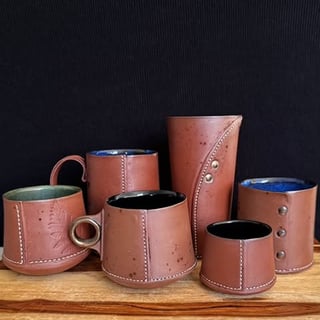
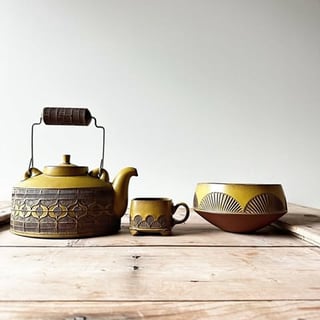
Speaker: What is up, Shaping Nation? This is Nick Torres here, and on this episode of Shaping Your Pottery, I got to interview Kristen Kiefer. Kristen makes some really incredible Victorian mod pottery, and she just makes some really incredible designs. It's really incredible. In this episode, you will learn how Kristen makes her Victorian mod pottery. You will learn the importance of just playing in your studio and just making time to play.
Speaker: You'll also learn about getting over fear and anxiety with your pottery so that you can grow as a potter and find your boys. Finally, one of the last things you'll learn is that you'll be learning about how style should be the result, not the goal. I'll see you guys in there. Kristen, welcome to Shaping Your Pottery and share with me what is something you believe potters should be doing to have success in pottery.
Speaker: I guess it depends on what you mean by success. So your, this podcast is kind of about style. So if that's the question or financial success, like what kinds of things are you thinking with that question? Well, how would you just like in your own words, determine success in pottery? Well, if somebody like for me who wants to make a living from what I'm doing, I guess success would be
Speaker: I annually define success as am I making a living and doing what I want to make. So that's kind of how I think of success. I'm lucky enough that I can, I have, you know, other kinds of incomes with workshops and things like that, that I can focus on making predominantly, but I guess success for me would be continuing to make what I want to make and making a living at that.
Speaker: Absolutely love it. So tell me the story on why you decided to become a resident at John Glick's plum tree studio pottery. Tree pottery studio. Yeah, yeah, yeah. So John Glick was a studio potter outside of Detroit, Michigan. And I was working at the Henry Ford Museum Greenfield Village throwing historical pots for a year prior to that after undergraduate school. And so I was in Michigan already. And so I got to meet him and over 40 years he took on assistance.
Speaker: And so I kind of just made it known that I would like to work there and work with him. And this is in the mid -90s, so I worked with him from 96 to 97. And back then, there weren't very many opportunities to work with studio potters. So it was an exceptional opportunity. I applied and was accepted and so worked with him for a year. And knowing that I wanted to be a studio potter, working with somebody who was doing that is the best way to learn more about it.
Speaker: excellent opportunity. And I, every time I teach workshops or every day that I'm in my studio, there's some something that I'm connected with with John. So it was an amazing opportunity. That is really amazing. I love hearing that. So how did this experience help you grow as an artist? He taught me how to play. I mean, I had gone to, I had already had an assistant degree and a bachelor's degree at that point.
Speaker: and had worked with, again, worked at that historical pottery, throwing production pots. But John really helped me understand that play was an important part of studio practice. So taking the time to develop ideas, that's kind of the paramount thing that I learned from him, but everything from how to pack pots to there's decoration techniques that I continue to use now that I learned from him. So yeah, amazing.
Speaker: If somebody can work with another artist, I highly recommend doing that. It's a great way of learning from somebody who's experienced probably something you'd like to do. Not everybody, like I would love to return that opportunity. I don't have a big enough studio and probably the temperament to take on an assistant, but I mostly don't have the space. And I, but I just greatly admire that John took, I mean, there's.
Speaker: dozens of us that worked with him over the years. That's pretty amazing family of people that he taught. Absolutely. Shaping Nation, how can you just be around other potters, whether you're taking workshops or you're just connecting with other potters, so that you can help grow yourself as an artist as a potter? I absolutely love that. Yeah. So let's talk about your pottery. In one sentence, can you tell me what you make?
Speaker: I'd like to think I make a pattern joyful of a pottery for everyday use. So tell me the story, how you started making this type of pottery. Well, definitely an evolution. When I teach workshops, I like to talk about how we have fear and anxiety in the studio and that's something we all need to overcome. And I think ceramics has an inherent fear factor to it because the processes are so drawn out. It's easy to have anxiety about glazing is one of the biggest ones.
Speaker: And I think in some ways those fears helped me figure out ways of working that would overcome those fears. So in undergrad, you know, I would do like the one dip in one glaze thing because I was scared of other types of glazing. And I think that led to doing more things on the leather hard pot that would give me information on choosing glazes later. So I think that's part of why my work became more patterned in some ways because it just gave me information for the next stages.
Speaker: And it helped free up that fear and anxiety in some ways. And then in addition to that, you know, like after in graduate school, I would say my work was ornate. And then that I moved to Massachusetts where I live now to become an artist in residence and reflecting on how I wanted to change my work next. And this is one of the things that I wanted to express in this interview is that I think choosing words for your work is a great way of helping you figure out
Speaker: what you want to make. So I was reflecting on having been in graduate school making ornate work and I wanted the work to be more elegant. So, you know, choosing that word to help me define what that meant. And so then the next few years, this is in the early 2000s,
Speaker: paying attention to the lines and silhouettes that made up the form. I was still doing a lot of the same surface decoration, but it's really paying attention to those formal elements of design, the silhouettes, contours, and things like that. And then my work became more, what I thought was more elegant. And then around 2005, 2006, we bought a home where I moved to my studio now. And I moved away from soda firing. So I did high fire content. I did content soda firing for,
Speaker: like 15 years and so moved to electric firing. And so that was a big change. But around that time, I was reflecting on the colors I was using and that my work felt more serious than I felt. And so wanting to bring a more playful, joyful, again, you know, choosing some words to define what I wanted to make. And that's when the stripes and polka dots came into my work. And that was a formal choice too, because it helped kind of pronounce or accentuate the slip trailing I was doing, but
Speaker: bringing those elements of color brought in that playful joy quality that I was looking for. So those are, that's kind of without any visuals, just using adjectives. Some of how I feel like my work has evolved over the years. I absolutely love that you said to choose a word for that. But now can you explain to me how do you go about choosing a word or like maybe a sentence to describe your pottery? Well, that's when I think, you know, artist statements can be intimidating. I think they can be,
Speaker: to art speak, but I think if you use them, and my artist statement has become more like a blurb for my online shop. If you have to articulate either what you're looking at your work, what you think your work is about, or perhaps having to articulate it makes you reflect on is that what I'm actually making that might channel some of what you'd like to do with your work. So, you know, again,
Speaker: when I wanted the work, the work just felt too serious to me, you know, what kinds of things could I bring into that and having to write that down and articulate that really made a difference. And I used to keep up with the stories in my studio, you know, to really, you know, flip through and think about those words, you know, you know, those are things I learned in graduate school too, you know, just kind of self -reflection, self -critique. If I want to bring those qualities, if people are expressing a certain thing about my work,
Speaker: that I didn't intend, what can I do to put in what I want people to observe? So kind of help focusing what I want people to see in there. It's kind of an interesting way of approaching that, I think. I think that is an excellent way to kind of give you a direction for your powder. I think that is really amazing, especially the way you explained it. So you are inspired by vintage things like clothing and vintage ads and illustration. How does this come back into your work? Well, I think
Speaker: I think I feel a kinship with those things and that objects from different eras and different cultures used to be more ornamented and that's just what I'm inherently drawn to as a maker. I used to go antiquing with my parents and grandparents when I was a kid and just what was around family households. I think I'm just drawn to ornamentation.
Speaker: There's something about objects from the past, whether it be 18th century silver tea services or purses from handbags from the 20s that were made out of bacalite. There's just something about those things that are beautiful objects that were meant to be used that have ornamentation. And so that's kind of how I feel I approach my work. I want there to be a level of ornamentation there, but I want it to be used too. And so that tends to go back to the past where I feel like
Speaker: contemporary culture has kind of designed out the elements of things that I love where when these things aren't used they still look beautiful and have these little components of things that don't need to be there but might add to the utilitarian aspects of them and so I kind of feel attention to those things. I think for a long time I love ceramic history and I wish I, you know, I always feel like any maker should know about the history of the material that they're working in
Speaker: But I think it can be limiting and to, you know, you start being influenced by there's appropriation issues with all that kind of stuff. But I think I've always looked at other objects because it wasn't ceramic. So there was inherently, I have to do something different because I'm looking at a different material and trying to make it fit how I'm work or the material I'm working in and how I want to work. So that's, that's something that's been there for me for a long time. And I actually started an Instagram feed called non clay pots.
Speaker: A few years ago, in part because of that, like everybody's on Instagram looking at other people's pots. And so I spent so much time looking at pots.
Speaker: in other materials that I thought I'd give people something else to look at than ceramic pottery. So yeah, so I like old stuff basically. Absolutely love it. Shaping Nation, you don't have to just specifically look at just pottery for inspiration. You can take inspiration from literally anything. And it's probably more important to look at other things besides products. That's where most ideas are going to come from. Really, really good tip right there.
Speaker: Yeah, I think I started, I mean, I, I've been doing pottery longer than social media, you know, has been around. So I think, I think starting now or, or having started since social media, I think it would be a lot harder to figure out where to find influences. I mean, I had opportunities to go to great, you know, book libraries when I was a resident Eremont in graduate school. And now we tend to look for everything online, which is fine, but
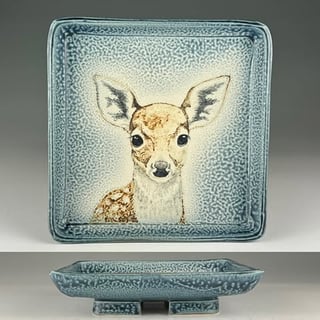
Speaker: I think we'd need to look elsewhere sometimes than just at ceramic stuff. Absolutely agree. So can you give me a simplified explanation on how you create your pottery? Most things are thrown on the potter's wheel. I'm working on some pieces right now that are made from drape mold. So either thrown or, you know, probably 80 % is thrown on the potter's wheel. And then I spend most of my time sitting here decorating.
Speaker: with stamps that I design and make, with flip -flop trail patterns, underglaze, paper resist, but I spend most of my time decorating. What do you use to make your stamps? I carve plaster and then press clay into that and then disk that, and so my stamp is disk clay. Mm, very interesting. That is very interesting. I might have to try that one day. Yeah, yeah, yeah. So what advice would you give to someone trying to add their own personality into their pottery?
Speaker: Right. So when I teach workshops, I, you know, that's a question that comes up a lot. And I shared with you that blog post that I wrote a long time ago about something I thought in CECO where instead of looking at, like we were just talking about other people's pots, looking at what they're influenced by. And so that's part of why I, in my statement, talk about what influences my work. Sometimes in on Instagram or something, I'll post influence images, that kind of thing. But I think, you know, style should be,
Speaker: the results not the goal and I think if we think about you know just who style to me is the culmination of who we are as people how we like to work and what we're inspired or influenced by and that's what would that's to me those three things are always going to make something unique because we're all different people we bring baggage love joy and then how we like to work is is all going to be different and then what we
Speaker: What we like to look at, there might be overlap, but because of the other two components of that, my style philosophy, it's going to be different. And, you know, that's something I learned. After working with John Glipp, and I think this is true for a lot of people, your work does start to emulate who you spend a lot of time with. And so I was reflecting on, okay, my, you know, John was a very gestural maker and I loved McJurling's work, for example, at the time.
Speaker: I was trying to be a gestural maker, but I'm really a precise person. I'm a very precise maker. And so when I recognized that would be a little bit of understanding how I like to work, like I couldn't do gesture, but it didn't feel natural to me. And I think that comes across in the final result of the POPS, where when I, and for many years I made very precise sculptural work simultaneously to gestural POPS. And so when I understood I'm really the precise person,
Speaker: I could figure out how to bring softness into the work in a precise way. So instead of trying to be something I wasn't, I understood what part of my personality I could bring to the work that would really make it kind of more me. And so I also talk about how we should just buy pots that we love instead of trying to emulate those pots that we love. Make you and then support other makers that way.
Speaker: I love the part when you talk about style should be the result, not the goal. And I completely agree with that. Focus on getting better and making your party better. Absolutely agree with that. Yeah. So let's talk about finding your voice. What would you say was your biggest struggle when it came to discovering your own voice? I think what I just said, I think, you know, trying, you know, try not to just look at other people's work, allowing myself to
Speaker: pursue a way of working that felt like it was really my personality. I think comparison, I think is one of the hardest things, and especially with social media that can be problematic in bringing into the studio, leaving fear and anxiety at the door. I think if you're starting to make a living, it's really hard to not bring in, is this going to sell? Am I going to make money off of this? And trying to make the studio time be
Speaker: play time. And I like to say too that I don't think hard work and play are mutually exclusive in the studio. I think we need to allow ourselves time to experiment so that our work can progress. And I think when you feel like you have to make a living or that kind of thing, I think it can be harder for your work to evolve. Another thing I was thinking about for this interview is I'm unlucky in a lot of ways. I have my own studio. I'm at home.
Speaker: But I've definitely been in studios over the years where other people were there. And I think for somebody like me who's more introverted, it can be hard to have people nearby that you feel like your work is being judged. And so I think that's something to overcome in a way that, you know, that self -conscious feeling. And if you feel like you have to share your work on social media, that's another part that can make you even more self -conscious.
Speaker: Allow yourself time to play, maybe to have time where nobody's seeing your work or you don't have to share everything you make so that you don't have that anxiety and self -consciousness so you can continue to change what you're working on. I totally went off on a tangent there, but... I definitely agree with that. We don't always have to share our work on social media. Develop our work first, and then once you think it's good enough, then you can start sharing it as well. I definitely agree with that. Yeah.
Speaker: So you mentioned, you have mentioned fear and anxiety a couple of times throughout this interview. How do you get through that fear and anxiety? Just keep working. I try to take the time to draw. I don't draw as much as I used to and that usually
Speaker: brings up people say they can't draw that we couldn't throw pots or make ceramics at some point either so you can learn to draw. So I think drawing is important that helps me hone ideas. I'll draw finished pots that I feel are successful and that helps me understand the lines and elements that I want to do again. I think there can be something to
Speaker: allowing yourself to keep your quote unquote failures around for a little while so that you can learn from those as well. When I was an undergraduate school, I remember a fellow student unloading a kiln and just throwing, pulling pieces from the kiln and throwing right in the trash. And I, I mean, this was 30 years ago and I still, at the time I thought, how are you going to learn from those if they're already in the trash? So I think there's something to kind of allow yourself reflection, whether it,
Speaker: You know, drawing, you know, taking a photograph of a piece you really like, doodling on that. My sketchbooks have collage elements and then doodles, drawings. You know, Pinterest is a way of keeping things, but just kind of reflecting on both the good and bad. You know, again, that's what I learned in graduate school, that self critique. So taking the time to look at the work, what part of that thing do you like? Do you want to repeat what didn't feel right for you?
Speaker: But on that note, I want to say too that frequently my favorite parts are the last to sell. So I don't know what I'm talking about. So I think there's something to that. There's things that you make that maybe aren't going to appeal to that are going to appeal to someone else. And I think that's important to keep in mind that, and this is something I learned from John. I, you know, I used to take really good notes when I worked with him over that year of, you know, just things he would say, I'm like, Oh my God, I've got to write that down. And one of them was that,
Speaker: he only liked about 10 % of what he made. And that was a huge epiphany for me, because at the time I felt like, aren't you supposed to like every single thing that you make? And for him to say, well, you know, I only like 10 % was just huge. And it's so freeing that, oh, I don't, you know, like, you kind of want to micromanage everything. And sometimes you have to just
Speaker: follow through with something that you know isn't quite right to get to the next thing. And so I think all of that is important. I absolutely love that. You only have to like 10 % because that is so true. I feel like myself, I only like about 10 % and I would probably reflect or get rid of the rest if I don't like it. I absolutely agree with that. And I feel like it makes you improve as a potter more. Right, yeah.
Speaker: What would you say is something that really helped you with discovering your own voice? I guess I've probably already touched on it, you know, recognizing the way that I like taking the time to experiment and play. Something I learned a while ago too was even if you don't feel like going into the studio or you don't know what to make, Ron Myers had a good thing where the best way to get yourself going in the morning is the night before to leave something for you to immediately get back to.
Speaker: so that when you go in your studio, you're not just like staring at a blank table or something. That's been helpful to me to keep in mind. And then a long time ago, somebody told me to, even if you don't feel like going in, you don't know what you want to make, go to your studio, just start cleaning something.
Speaker: doodle, I used to have, I have a list somewhere of things I could do when I don't know what to do. So it could be designing a new stamp, thinking about a new Bismol, just something like that so that I'm in my studio and then if you're there, something's probably going to happen. So those, those are kind of important, you know, get your energy going. It's okay if you don't always know what you want to do or what's next and just being there is important, I think.
Speaker: absolutely reshaping nation. We don't always know what we want to make sometimes, but it's important to show up anyways and just try to start doing something so that some ideas can start sparking, the gears will start turning in your mind. Now, what advice would you give to someone trying to find their own unique voice with their pottery? I would say, you know, writing down what you'd like your work to be, what you're thinking about, adjectives you'd like
Speaker: describe your work, taking time to play. If you can't log off of social media, diversify with on your social media. So looking at other things, other artists, other mediums, things that, you know, could influence you that are outside of ceramics. I think, I think only looking at other people's work is the most difficult way of growing as an artist. I think we need to look outside of
Speaker: especially contemporary work to continue to develop and grow. I think, again, sketchbooks are very important. And again, if you feel like you can't draw, just cutting out stuff from magazines or going to the library and Xeroxing things that you like and putting them in your sketchbook, which is great. I did this just a few days ago. I didn't know what I wanted to make next. And so flip through old sketchbooks. And I've kept sketchbooks since I started in clay, so I can go back to old ideas or
Speaker: that can help me figure out where I wanna go next. But I guess those are the things that I would say is I think social media is one of the hardest. I think that's one of the hardest things about finding your voice is if we're all looking at everybody else's work, it's really hard to focus on our own in some ways. Absolutely, we have to focus on our own work so that we can actually find our voice. So as we're coming to a close here,
Speaker: What is something that you want to really hammer home with my audience today? I think I've said everything. Yeah, I think I've said everything that I really hoped. Again, I've listened to some of your other interviews. And I think that whole, when people want their style to be, when they pursue a style, I think that's going to make, that's the hardest way of finding yours. And I feel like other people define
Speaker: our styles. Like I'm, I'm, you know, I've, I've put a label on my style and it's changed from Victorian to Victorian modern. So Victorian mod now or something like that. But that's just because I, you know, for an elevator pitch, I need to articulate what my work might look like. But I'm, I'm just making what I want to make, how I like to work with things I like to look at. And that's where that's
Speaker: That's what results in the style. So when style is you're trying to make that the goal, I think that that's not the way of finding your voice. So it's kind of the cart before the horse type thing. Absolutely. Kristen, it was a really great challenge today. Where can my arms go and learn more about you? I'm Kiefer ceramics on everything. So IE2F, Kiefer ceramics .com from our website and then all social media.
Speaker: Thanks for listening to this episode of Shaping Your Pottery with Nick Torres. If you want to start discovering your own unique voice you must first start with the right questions. That's why I put together a free 15 question booklet for you to start discovering your own unique pottery voice. All you have to do is go to shapingyourpottery .com forward slash questions to get this free booklet.