Transcript
Speaker: You are listening to Something Rather Than Nothing. Creator and host, Ken Valente. Editor and producer, Peter Bauer.
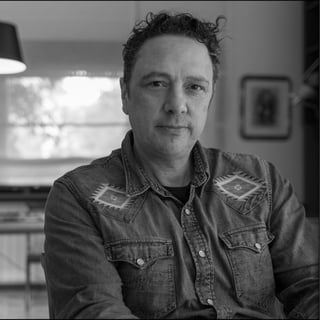
Speaker: Hey, everybody, this is something rather than nothing podcast. And I have Victor V. Gerbo here from New York. Musician.
Speaker: Victor, I've listened and watched a bunch of music. Really love it. Really enjoy it. Excited to talk to you um and, you you know, to talk about art and the music you create. But first of all, welcome to the welcome to the podcast.
Speaker: Thank you so much for having me. It's a pleasure to be here. That um what one of the One of the first questions I ask is, um and I know you've been doing music, art, and creating for for quite some time. ah was there in a moment Was there a moment when you were going along and you felt that you were an artist? You knew that you were an artist? that Was it an event or a moment?
Speaker: um I'm very fortunate to have been raised in an environment where art is really accepted. um my My father is a photographer um and he ended up ah working for a fairly famous photographer named Andre Cartes and has ended up his his his his day job, um which is now um slowly becoming my day job as well, um has been sort of managing his archive.
Speaker: um So I've grown up around art. My father's brought his work home his entire life. So um I've gotten to be raised around um really incredible pieces of art.
Speaker: um And on my mom's side, um they were all traveling. um My middle name is Vocally, um and that's my mom's last name. And they were all traveling opera singers and violin players. And um ah so certainly on on on both sides, I've art is your thing.
Speaker: Um, yeah so I, I was never discouraged. I've, I've had this conversation with other artists and they've, you know, I've said, you know, like, Oh, you know, I told my parents, I wanted to be a guitar player, a painter, writer. It was received poorly. And I'm, I'm, I've, I'm,
Speaker: we all I got you know lots of faulty wiring, but um so have you know that it's ah but that but that being said, um have never that that that has not been my that has never been my problem. And I'm very fortunate that um I've always been encouraged to be an artist. um I never expected to be a musician. ah When I was younger, i mostly painted, I drew, i wrote. And at some point ah towards the end of my tenure in college, um I started writing songs and something just eventually clicked. And I realized that playing music was going to be my main thing.
Speaker: um And it has been ever since. Love it. Love it. um Incredible, too. that dan You said Cortez? the Yes.
Speaker: yeah Oh, my goodness. I mean, i ah incredible photographer. Oh, yeah. No, I'm i'm really glad that you... you know is Photography is never... It's not really a household name for artists. um So whenever I meet someone that actually...
Speaker: knows who he is. um I'm always very impressed and very happy. ah My father knew him. um my This is, I'm now telling his story, and I hope when he hears this, he doesn't feel he doesn't feel too bad.
Speaker: um he He says that at the age of 15, his brother gave him a camera and a copy of on reading. And my dad said that he switched from Mad Magazine to photo books.
Speaker: And um flash forward, he was in something called the CETA Project, which was an arts rehabilitation program in the, guess it's probably the late 70s. And um he's being interviewed for a project. And after the interview, the woman says, all right, what gives? Your photos look Eastern European, but I hear the Brooklyn accent.
Speaker: And he just went on and on about how much he loved Cortez. And um she said, this is adorable. I know him. I have to bring you to him. Um, and, um, they began working together. My dad was a carpenter. He built, um, he built, uh, shelves and furniture for him and developed film for him, was a bodyguard in the city, walking around taking pictures. And, uh, and when Cortez passed away, um The people that were in charge asked him if they were first he'd help take apart his apartment. And then after that, they said, would you like to be the curator of his estate? and my father said, I'll do it for a year so it doesn't interfere with my own art. And about 40 something years later, here we are. um And um all my childhood, he's been bringing the work home because um I was born um slightly after. Um, he took on that, that job and my parents didn't want to, um, have babysitters. So they both worked part-time when I was very young and he's told the story. I have no memory of this, um, but it does go into art. Um, so I think it's a relevant story. Um, yeah my, my father is laying out a show, um,
Speaker: I forget where the exhibition was supposed to go, but he realized that the um dimensions of our living room ah was the same as the gallery space. so he brought So he brought the photographs home and he laid them out. Apparently I'm like five and I toddle in. and I said, what are you doing?
Speaker: And he says, I'm laying out this show. And apparently I walked around the show and I turned to him and I don't remember this, but I believe it. And I said to him, you've got it all wrong. and he said, excuse me. And I said, well, this photograph talks to this photograph and this piece looks like Oh, shit, yeah. Apparently I moved five pictures around and he said, all right, and that's how we hung the show. so And my argument for that is good art, great art, amazing art is so intuitive that even a five-year-old can understand it. Having the context and the history and the life experience certainly um you know will will embellish your understanding of it. um but And this is a quote from my father. It's not mine, but the job of an artist is to be a sponge in a mirror. It's to... um observe the world around you, to synthesize it through the self, and then create it in a way that other people can walk around inside of it. um And I think a you know a great
Speaker: a great Cortez photograph. I, I wasn't born in, you know, in, in, in, in Hungary in the 1800s. Um, I didn't serve in world war one, but when I look at, when I look at some of those pictures, you can, you can just, you can find yourself in them.
Speaker: Um, and, um, and it's the same thing for a good song. I mean, I love Bob Dylan and I haven't lived Dylan's life, but some of those songs, they just rip right through your soul. Um, So, um yeah, that's sort of my my take. I know that one of the one of the questions you asked is what is the role of an artist? And that's... um that that that Yeah. That immediately came to mind. Yeah.
Speaker: no enough this people thank you yeah Thank you for telling us about it. I just found it, just the point where you said that there was ah it really just struck me, like that intuitive piece where you said you know there's a lot of fuzz as we get older, but you just you know it's the eye. you You see, it's like, wait a second, it's all out of order. and and You're walking around. and It's just a beautiful story, walking around in the ersatz gallery. Yeah, yeah. No, no. It was...
Speaker: No, and um and i'm I'm very lucky that that that that now I get to look at the pictures. um you know Again, he my father often says you know he's accidentally become a Cortez expert, night and I too have accidentally become one as well, looking at them my whole life, um and now I'm doing work for the, um in addition, my day job is now that, and by night I play music and build guitars, and that's that's become my saga at the moment.
Speaker: my saga at the moment but I wouldn't have it any other way. If one must, if an artist must have a day job, um, which we all need because art doesn't make enough for any of us to survive unless you crack that amazing threshold.
Speaker: Um, looking at great art begets more art and it doesn't matter if it's a photograph and you play music or you're looking at a painting and you're, you know, and you take photos, it, it,
Speaker: it there there's a great series which i i hope um someone was discussing doing a book on it at some point but cortez in the 20s was hanging out with a lot of um his he had a his roommate um i think he also lived across the hall at some point his name was laos tiani he was a a mute Hungarian painter and etcher and printmaker. And they have this great series back and forth where Cortez would take a photograph and then he would make a painting and then he would make a painting and he'd take a photograph. And it didn't matter that they were doing different forms of art, but you can see this. it's not
Speaker: when i when i When I say it's competitive, it's not competitive in a bad way. It doesn't have to be a negative. um But good art begets more art and art's a conversation. It doesn't happen alone. If it's your experience that you're synthesizing or someone else's art, you can you can write a song in response to the geometry of a photograph. You can find how that functions in a different form. And that's something that would never happen if you were only listening to music or if you were only doing blank and this, I don't think our art is it's, it's, it's, it's broad stroke. It doesn't have to be retained. mean, I, I have one, one story that I, um, when I was in college, I took a um,
Speaker: It was a computer design class, and one of the assignments was to make um a flyer, a business card, and a brochure or something. And I made a business card for my music. I was writing at the time. I did one of those. And then the other one I did for, think it was painting or something. And the professor looked at it and kind kind of laughed and said to me, you know, you're going to have to pick one eventually. And at the time I found that so offensive. i was like, what do you mean I have to pick one? And then as time has gone, on i was like, oh yeah, that guy was right. I wish I could find him a card and say, yeah, yeah, you, you, you were, you were right on the money.
Speaker: But that being said, well, one thing always, you know, sort of does emerge as your main creative outlet. Um, um, having connections to everything that you can have connections to certainly helps your art improve.
Speaker: Yeah.
Speaker: Yeah. I ah really appreciated your point of like the interacting, interacting with art and it be getting more art. I wanted to ask it i is and somewhat standard, somewhat standard question, but like it opened my mind. My mind goes towards and it was talking about like the generation of your art. Anytime I read about musicians, you know, there's always this kind of like ah categorization, right? Like the way we talk about it, music can be so expansive and we use, you know, um terms to try to like try to place it.
Speaker: And in listening to music ah you in in in your band, um you feel a lot of different influences and I see other people, you know, describing it ah folk like, you know, expanding a long range of time. Yeah.
Speaker: Is there a way is is is there a way you would put it um as far as those influence, you mentioned Bob Dylan, but like the the stuff that really like rattled you and you could feel like their life in kind of like in your development in your music?
Speaker: a um i yeah i mean I love using the umbrella of folk rock Americana or folk singer-songwriter because you can get away with so much. um yeah Yeah, right, right. right yeah yeah is I don't like how do put this? i Genre specific to perhaps, perhaps to my own detriment, because, you know, certainly it's so easy to walk in and say, you know, I'm an indie artist or I'm this or I'm that. And with folk rock Americana, you can do a blues, you can do a country song. You, you, you can lean on all of those, you know, sort of American roots.
Speaker: um And I, you know, I love the diversity of that. And I, in addition to Bob Dylan, I mean, what I love the, you know, Alan Lomack's Smithsonian collection, stuff like that. i i you know
Speaker: Certainly with some of that material, there is an an anchor into the time that they were created, whether it is the quality of the recording. And of course, an artist can never really get away from the time period that they are in. But I love creating art that isn't really stuck in a time. i i i was talking to someone not too long ago. I can't i can't remember what the context was, but I was saying that there's a lot of like a lot of modern pop music that makes me really sad like when I hear it because it is so anchored in like, we are we are young, we're going to set the world on fire, which you know I'm still theoretical theoretically young for another five and a half minutes. Now it's four. But that um you know but that but that I've always been so conscious that like that that goes away. like that's that's It's such a fleeting part of your life.
Speaker: And I don't know, though those just some of those songs, just just they make me want to cry and I don't quite know why. i don't even like them that much. um but when But like when when you listen to a Frank Sinatra song, like the ones that just sort of have entered into that um like immortal category. It doesn't matter when he was singing them or why he was singing them. You can play them in any time period and they, they work for you.
Speaker: um And that's always what I've sort of tried to, tried to aim for is to not get too bogged down um, um and where I am and just make something that I would hope that in the event that it that it lasts, that um someone, you know, a hundred years from now could in theory, listen and and find their way, find their way through it.
Speaker: um Although, course, you know, I think I was listening to, what was it, um Why Try to Change Me Now. And I know that, like, even, you know, there's the line, I leave my keys in the door. And I'm like, well, you know, keys are starting to go away a little bit. You know, you don't have car keys anymore. Ah, you know i yeah, even that.
Speaker: I'm like, it's it's real. it like that's that There's things that you wouldn't even realize will become become antiquated. ah the one one The one thing that really freaks me out, um which I'll do my best to describe because I realize the video is not saved, is if you ask a um a child ah to pantomime taking a picture, and many of them will raise their hand like it's a phone, whereas mine is always going to be as if you're holding a physical camera. Wow, yeah. yeah a phone you put your hand up i always do the two fingers and then there's they they yeah you know they they do like it's a cell phone um but again that's just part of just part of the part of the journey you know um yeah i um no go ahead no and no that was i think the end of the the the weird rambling thread that i just had
Speaker: No, um you know, one of the things when you're talking about, you know, I don't want to you use these words that are used a lot, but like ah the through time or timeless, I'm a union activist, union organizer in folk music and and those embedded songs, ah you know, like they have it, right? So like I'm a worker in like, you know, 1927. Guess what? the but The boss got their boot on my neck and, you know, like, you know there's there's these there's these conditions. And there's this kind of like sound, I think, to it. There is a you know a primal yeah a primal sound um that comes from those those experiences. And recently, just with the world in the
Speaker: place that it's in in politics than the place that it's in. um I've been starting to look at... I've sort of stayed away from protest music. I love it, and I love playing it for myself, and I love listening to it. But again, like I've always personally strove to...
Speaker: you know, for my own writing and for the stuff and the songs that I cover to be, again, like not anchored in a specific time. And a lot of protest music is anchored in a specific moment.
Speaker: But as I've sort of begun sort of studying it more critically lately in an attempt to sort of synthesize it and figure out how I can... participate, um I've been amazed at how even when stories are specific to a time period, how they can still resonate and be so relevant today.
Speaker: um With Mark Caserta, who um I collaborate with him for my home recordings. um I sort of, I have multiple projects that I work on. One is my full band, um which Mark is also a part of. He plays bass in that project. But when I'm by myself, Mark has been a multi-instrumentalist, predominantly guitar, and he mix and masters the home recordings that we do. um And recently we've sort of done a foray into protest music and I've i've experimented with writing.
Speaker: um And we've been opening up our sets with a Woody Guthrie tune called Deportee, which is the plane wreck of Los Gatos. And it's a song that Guthrie wrote about in the late nineteen forty s um the The state rounded up a bunch of migrant workers that they deemed illegal and they put them on a plane and the plane crashed over the mountains. And um and the response on the radio was very lackluster. They didn't, you know, it's just, oh, you know,
Speaker: bunch of immigrants died and then they just went on the news and it upset him so much that he wrote this song. And i mean, again, there were moments in the song that are specific to the plane wreck, but the, the, but the, the subject matter is still so relevant today. um And that's both amazing from the standpoint of Guthrie as an artist, um also tragic that we're still dealing with the same,
Speaker: problems and the same missteps. um But that that being said, um yeah, with union music, it's it's absolutely incredible. There's so much material to to go through. And again, i'm and I'm sure you encounter this every day, that that even even even if it's specific to a moment, there's still a broad strokes relevance to to what you're doing and to enter necessary activism today.
Speaker: Well, the singing singing and bringing people ah together, you know, there there's just incredible components of, you know, where people like, yeah, we are together and they don't have to see it.
Speaker: They don't have to see it like on the strike line or they they can they can feel it in the words of everybody around them. And I think it's such a beautiful thing. All right. I got a different, I get ah a different question. So you're in New York city. yeah um I've, I've seen some your live ah videos, ah beautiful venues for you.
Speaker: um Tell us about like your favorite ah venue there that you play What, it what's it, what's it feel like? ah Where is it? Where is it in the city? I'd like to get a little bit of a feel of one of my favorite cities in the entire world. Of course. um Well, our, hmm.
Speaker: Our biggest shows that we've done, um which of course those venues come to mind um first and foremost, just as sort of like, ah we did um Carnegie Hall about two or three years ago now. um And um A bit longer ago, we did um one of the smaller stages at Brooklyn Academy of Music, and certainly just the history in those stages, it was incredible to be a part of. But recently, um we did now two shows at Café Woy, which Igor i connected me with you in in part because I cut um a Gerbo 2025
Speaker: ah live album and we and we recorded it at Café Wah and i mean obviously a much smaller venue comparatively to Carnegie Hall but um I would argue, you know, as far as the the history of folk and rock music in New York City, um quite a heavyweight contender in terms of um importance.
Speaker: um Dylan, when he first came to New York, the first place that he went to was Café Watt, I believe many of... early Hendrix sets were there. It's the wall is lined with photographs of the pivotal artists in our culture that were there. And it's amazing that not only does it still exist, because so many venues, especially during COVID, just went belly up,
Speaker: um The bitter end, also incredibly important, almost almost died during that period. And um there was a bunch of artists um came together and did a zoom Zoom show um in ah in addition to the owner launching a um launching a GoFundMe and it raised enough money to keep it to keep it afloat. And I just, one of my one of one of my idols is George Carlin and he opened up the previous Bitter End, um ah Save the Bitter End show. And I'm just thrilled that in the the one following it that my name is in the list of people that Hell yeah. um where i had a When I was in college, i had a philosophy class, and the professor asked me, who is your who's your favorite philosopher? And I said, George Carlin. And he said, all right, that makes a lot of sense. yeah um and um But ah but no but the but the the fact that both the Bitterend and Café Watt not just are still in existence, but they're still taking chances on...
Speaker: acts that are that are new, that are unknown, that are independent. um That's a great thing. I mean, the fact that, you know not only myself, but, you know many artists that I know that are just starting out get to say, like, you know,
Speaker: I got to play the samesaf the same stage as Jimi Hendrix. I got to play the same stage as Bob Dylan. I got to play the same stage as Lady Gaga and Taylor Swift. Some of their early shows were at the bitter end.
Speaker: ah That's great. And it sort of puts us all in the same... Like, we're all in the same we row on the same staircase. We're all in the same... Yeah. um And I just think that's great. And I think that you know a a lot of people will... I had dinner not too long ago with those in... um I was in Chicago and I met someone who used to live in New York City. And she said, like oh, well, New York City doesn't have any character anymore. And I'm like, first of all, like you don't live here anymore. So leave it alone. Don't take a jab. You can complain about it. You can't. And yes, the buildings are getting bigger to a point where the island is starting to sink into the water.
Speaker: and But part of the met like part of the magic of being a New Yorker is none of us have any idea how we pull it off. um And we all kind of hate it, but we're all madly in love with the place and we all can't imagine living anywhere else.
Speaker: And you know art, just like you know just like plants, just like weeds, it always grows, even though you know the life cycle is always the rent's cheap, the artists move in It becomes cool and then people start buying it up and then the artists can't live there anymore.
Speaker: um But there's, you know, we're, I always say this, like, also I say it to myself, like, you know, when you're on stage, you're always so worried about making a mistake or forgetting something or botching, you know, whatever, whatever line, whatever note.
Speaker: The audience wants you to succeed and other artists want you to succeed. i always say whenever I meet somebody, like if you figure out the secret code for, you know, whatever the next step is, whatever the next great show whatever the next social media viral moment or whatever, if i if I find it out, I'll tell you. And if you find out, please tell me. like this is we're all in this We're all in this together. And especially with you know the prevalence of AI becoming and taking over yeah weird spaces in art where it has no place. AI belongs in computation. It does not belong in the arts. um
Speaker: And i know that you know i'm I know that there are exceptions to that rule in the sense that you know when a camera was first picked up, no one knew where to put it. Perhaps being, and it it just shouldn't be, you could be perhaps an AI prompt artist or something, but still it's not it's not, where it is being used and the jobs that it is taking from artists right now, i would argue is reprehensible. Not to mention that you know each time you type something in chat GPT, you're pouring out a bottle of water.
Speaker: um But I've now lost my train of thought. um i No, I mean, it's the AI thing. Yeah, um that's a big one and I think something that we're all reckoning with. Oh yeah, but the culture is of of um art in New York City. I love that whenever um the the advertisements on the trains, whenever there is an an an ad for AI or an advertisement that has been created with AI, it is vandalized immediately and someone will write AI slop on it. There there is
Speaker: perhaps it's some kind of uncanny valley response. Perhaps it's that we all collectively do realize that the one thing that really does make humans special is our ability to create art. That the the angry response that I've seen um towards humans you know God knows how much they're paying people for Skechers ads, but do they really need the same thing with Disney? Disney has so much money and they're using AI to create images and stuff. It's just so bizarre to me.
Speaker: it's just so bizarre to me um but ah But yeah, no like and I think that's that's an example of you know New Yorkers are oddly do look out for each other, even though it does have a sense of you know this reputation of this cold cityscape.
Speaker: cold cityscape there is a there's theres There's a great art scene. um It's bifurcated. It's confused because, you know, ah with especially with venues, you know, rent is expensive. each each Each stage has to worry about being able to stay open. That then trickles down to the artists. I remember talking to when I first was doing shows, I With my full band, I had a drummer um who had gigged a lot in the 70s. And when I was telling him, like, yeah, we really got to hustle and get a lot of people out to the show. He said, like, we have to bring people to the show. Like the club doesn't make a poster and put it outside. I'm like, oh, no, man, that that's over.
Speaker: um The guitarist I work with right now was ah was a session musician. He was a guitarist in the China Club um in the 80s. And he he always says, when I say, like, oh, yeah, we got the good slot, it's like seven or eight o'clock. And he said, like, if you played before like 1 a.m., it was lame.
Speaker: you guys said, like, no, no, it's all very different now. It is a very different it's a very different environment um And there's been a big shift, but I i think there is still there is still a there is a reverence for art in New York City, and it grows through the cracks of skyscrapers. And there's still lots of wonderful independent venues that are taking chances on indie artists. And there's never a shortage of catching a good show um in ah a nice place. And some of the bars, they're really generous to their talent and they're really nice. and and i And I would argue the ones that weren't, a lot of them went away with COVID because I watched Left and Right
Speaker: um you know, GoFundMes and Zoom shows pop up to help keep venues alive. And, you know, the ones that that didn't foster that community with their artists, they weren't, you know, they they they they they didn't show up. um so um yeah So, yeah, I think there's there's still a great culture here for the for the arts. Yeah.
Speaker: it's not um It's not celebrated in the same way. They're like, oh, you go to Nashville and there's Songwriter Row and this and that. But it's just a bunch of crazy people who are trying to stay alive in New York City who have to make art. And a they're they're really cool to hang out with if if you know where to find them.
Speaker: And they're great shows to catch. Thanks. Thanks. Thanks for taking us in. um Yeah, absolutely. ah Love loved to New York City. Talking about AI, this one fundamental point that has shocked me about it is I was shocked as I would see a lot of people around me abdicate and give away their own thinking.
Speaker: Like, I couldn't, like like, a lot of things that they were asking and generating, it was of this kind of mono robot voice. But I couldn't believe how quickly a lot of people rushed to say, in my brain, i don't want to think that through anymore. Like, I was shocked at that. It was like, I have such a connection to that process. I'm like, i don't even want...
Speaker: somebody else or some other thing to do it for me because it's not me. So yeah I don't know. I always found that, that, that a real shocker. And there's almost sorts of fascinating, fascinating studies coming out of like,
Speaker: You know, people that use, i mean, a AI is here to stay. We've clearly collectively said, you know, I mean, when I say collectively, I mean, the the folks who have any kind of control over it collectively say, we ain't putting no guardrails in. We're just, this is here to stay. And this is now, you know, one thing that really drives me nuts is, is it's in Gmail now. And whenever you know whenever you misspell something, it's underlined in red.
Speaker: and whenever you, you know when it's you know when the grammar's incorrect, it's underlined in blue. And now all of a sudden it's underlined in purple. And I'm like, well, what is this? And I click on it. It's like your AI friend is saying, like you might want to say it like this. It's more concise. Am I allowed to curse on this show?
Speaker: I'm good. Of course. yeah At this point, yeah. What the like i I want to sound like a human. I want to sound like how I sound is trying to strip all of the human individuality out of...
Speaker: I had a speech and i you know, my my partner, my girlfriend, she teaches at FIT and she's always talking about this huge problem with people using AI. And like, I do understand I am dyslexic and having the ability to um Most people with dyslexia or a large swath of people with um dyslexia, they're affected in math. ah Sorry, therere they are affected in English and not in math. And of course, I'm flipped even even for that. But on occasion, I've always like, you know, there's a couple of grammar quirks that even through my Genesis of making trying to figure out how to connect the wires in my brain, but still I botch every now and then. So I like, you know, it's been, it's been really nice to be able to have, um, you know, like a, a system that one can use to like catch little, little things here and there. Um,
Speaker: But you really have to figure out how to use it as a tool and not let it completely. i was forget the name of the the person I was listening to. it was ah It was on YouTube somewhere. And I was talking about the dangers of AI and how it could really take over the world. And two of them were, you know, sort of, you know, Black Mirror-esque, you know, this happens and this happens. And he said the third one, he said, which is much more realistic and genuinely the one that's more frightening is that it becomes so pervasive in our culture that we do not feel comfortable sending an email, working out directions, paying a bill,
Speaker: basic communication without consulting the AI first. Um, and I, I can see that, I can see that happening. Um, it's, it's very, it's very easy, um, to, to, to, to lean on the crutch of it.
Speaker: And, um, there was there was a study I was reading that like basically like look, studying, studying the brain of of people that either a use the AI as a tool after the thing is made versus the people that use the AI and then modify it afterwards. They're like, you're using so much less stuff up here.
Speaker: Um, and how that is dangerous. Um, And yeah, the amount that it synthesizes other people's art and then regurgitates it as its as its own is is horrifying. I love, there's something called Poisoning the Well, um which there's some sort of software that um I haven't investigated enough because I haven't needed to. But um you can apparently put this over your art and it it does something in the pixels just enough that the AI doesn't know how to copy it. So if you said, you know copy a painting in the style of XYZ person who's using this, um it will come out just as like mush, um which is is smart.
Speaker: um I do think that there is... you know I've spoken to um artists, it's usually older artists, who are very hesitant to put their artwork out on the internet because they don't want someone to steal it, which I... One of...
Speaker: a key a key moment in my development was I i was when I was in college I took a it was a class it was art in the real world and um it was just basically a seminar class where you would sort of discuss how to be how to be a physical artist um in a real world setting and I asked the question what do you do if someone steals your art and the professor says oh I would love someone to steal my art and I I first, I thought it was a joke and then I realized he was dead serious. And the older I get, the more I'm like, yeah, well, you know, you, first of all, nothing will happen if you don't put yourself out there.
Speaker: And if someone does try to steal your work, at least it means that you're relevant enough that someone actually cares enough to try to steal it. um But yeah, it's it's that, it's that whole adage of you can never, you know, nothing's ever going to happen if you don't put yourself out there. And part of being an artist is, is there's so many,
Speaker: There's so many reasons that you can tell yourself not to put yourself out there. And that's not to say that one shouldn't copyright their material, register with, you know, as cap BMI, that they shouldn't do their due due diligence and learn things.
Speaker: how to function and how to protect yourself. But at the same time, like life is a series of things to stop you from doing things that you want to do sometimes. And it's about just figuring out how to emotionally and physically put yourself out there so you can do your art.
Speaker: Um, and um and But yeah, i've i've I've rambled off of AI, but AI is... ah It's dangerous. And there's something...
Speaker: something so cold about it. And it's because, again, I would argue as a, and I'm sure there's plenty of other things that make us different as a species. But if you look at, you know, and yes, I'm also aware that birds of paradise, they make the designs on the ground and there are other animals that kind of make things that are, that are art. But the thing that we do that's so special is that we make art.
Speaker: We make things, we make things without, and that we don't make them for a specific purpose other than yeah art And I think that's so so special and it's so uniquely human. and and And AI is never going to it's never going to pull it off right.
Speaker: um it's always ah it's ah ah it's it's ah it's it's It's a hollow echo of what we're capable of doing um as a people. um And it's just big business and you know shaving a couple of bucks off of paying an artist that has really put it in a place where, mean, again, it's so sad that artists are always the first ones to go. um Yeah.
Speaker: You know, um but, and I would argue her where we'rere we're the ones that make life interesting. um But, um but yeah, no, it's, there's so many ways that you could save money and time using artificial intelligence and instead, you know, cutting out, cutting out the person that makes a poster is so sad to me. Yeah.
Speaker: So, yeah, whoever is listening here, support support support your local artists. We're all hanging by us. least ah Yeah, well, it's it's it's of the it's of it's of this time, too, and it's you know it's it's it's in in in real time.
Speaker: And it's ah distributed unevenly. and um one of the so everybody, ah we's been cha ah Victor V. Gerbo, um musician, ah New York City, um really, really ah fascinating to talk about.
Speaker: um I know, it's like the generation of art, like the the special aspect of art. um But i have I have the big philosophical question I got to throw at you. And I know you're a big thinker. You've been thinking about these things too too much like myself, though. But um the the big question to the show is, ah why is there something rather than nothing, Victor?
Speaker: I...
Speaker: I think because the something is beautiful. I mean, it it really is. um i Whenever I'm, you know, on occasion, you know, I'll i'll be talking to my girlfriend and she'll say like, oh, this is terrible. And I'll say like, but but this is, you know, like even...
Speaker: even the bad stuff is beautiful. Even the, you know, even, even, even, even even even even the inconveniences, even the, even even the sad moments are gorgeous because life is fascinating.
Speaker: I mean, colors are great. Colors, just colors. Like, yeah I would already like, I, I, I, I think that, you know the something The something is amazing. and we've all been We're all here. We've been given something.
Speaker: and We have time to do something with that something. and Just experiencing the something and beholding the something is is is gorgeous. I i Yeah, i this is not the most formed out statement that I've ever made, but um I love the something. who the heck can you answer this question? Yeah, and yeah I know, I know. no, but no, I really, no, I'm serious. I mean, I i love what you have have to say. i i think it's some...
Speaker: i think I think what you say is that there is some you know there is there's something ah beautiful in and of it in and of itself in doing it. and And I think you're right with like making art and you know ah being comfortable with like creating, creating, creating. and Because it goes in such a it goes in such ah a far out ah place. So yeah it's ah it's it's a great...
Speaker: It's a great spirit. um Yeah. no e ah vi No, go ahead. Oh, I was just going to say that, you know, like even well Bob Dylan, when he was being interviewed, I think on, um on, on this, on the success of blood on the tracks, his response was, I don't understand why people like this album. It's so painful. And,
Speaker: that's a like even even the bad stuff is good. even the An artist's ability to take the pain in their life and synthesize it into something that's just out of this world gorgeous is is so incredible. um Tritez has a series. um he um His entire life, he was supported by his wife, um who was eight years younger than him. and um Every photograph, she has a cigarette in her hand. And in the 70s, she was diagnosed with lung cancer. And he, you know, as soon as he became famous, he spent, you know, he was simultaneously globetrotting and nursing her to her death. And like a true artist, he documented the whole process through her funeral. There's a self-portrait of him with... her urn under his under his arm. And they're wow they're they're they're so beautiful and they're so painful. um And then simultaneously, right after she passed away, um he's he stole a Polaroid camera from Graham Nash. of all people. Artists artist would hang out in his apartment.
Speaker: And Graham Nash had just gone to um had just gone to um the ah the Polaroid factory and they were giving famous artists cameras and film. And he showed up in the apartment right afterwards and he showed it to him and he said, And Cortez said, oh, thank you so much.
Speaker: And um my father was interviewing him for, the they did a small Polaroid book. And Graham Nash said, like, I couldn't tell him it wasn't for him. And when my dad asked, you know, like, do you know remember what day it was? And he goes you have any idea but what what we were on back then? i have no idea what a day or month it was. um But then he started, he he was apparently walking past Brentano's bookshop, Cortez, and there was ah a glass sculpture in the window. And he said it was a, it was a, um um a Murano glass sculpture, and it was just a a head and a neck, just kind of tilting like this, very modern art. And he said that the nape of the neck and the posture reminded him of his wife so much that he avoid he avoided going into the store. He would cross the street. And finally, when they pulled it out of when he when they pulled it out of the window, he ran in and bought it. And he started photographing this glass sculpture in his window over to Fifth Avenue. And it is...
Speaker: the most, I would argue, the most incredible body of work that he ever did. And it's about it's about grief and understanding and and and life. They're funny, they're sad, they're they'll just rip you to shreds. um And it's all immediate because he usually worked with you know black and white photography. he was very frugal with his film. He would shoot. send it to a printer, get it back, circle the ones on the contact sheet, etc et cetera, et cetera, et cetera. And this was, he needed immediate response.
Speaker: um And they're just so beautiful. And they come from such a great place of pain. But even that even that something is just gorgeous.
Speaker: um And that's why I would argue the something, even when the something is is bad, even when the something is hard, even when the something is confusing, um, it's just so great that we get to be the something, um, and to create something.
Speaker: Um, and yeah, uh, I, I highly recommend, um, searching out that there's, there's two books on it. Um, they're just incredible. One he produced when he was alive. The other one, um, was published after he died.
Speaker: Um, and they're, they're just, I would argue they're, It is a sacred body work. um And I think for anyone um who's who's dealing with grief or trying to understand grief, um it it is ah it is a it is a fascinating study um from someone who has spent their entire life perfecting a craft um jenna i i love the reason why i love listening to bob dylan now is i'm fascinated with a lot a lot of guitar players are obsessed with what was the guitar that was used by you know so and so when in the 60s when they were at the height of their fame i'm like i want to know what clapton's using right now after years and years of amps overheating and guitars feeding back i want I want to know what he's been like. Yeah, this is this is the thing. And we're so lucky when we do, because artists usually ah just burn up and you know go out like stars. there they They just... um So when we do get artists that manage to figure out either by by intent or just by luck that they're still here, um I always think that what they do later in life is worthy of such study because it's such a gift to be able to see what they've what they've figured out.
Speaker: um Because I don't believe there's any shelf life on creativity, that it's not just something for for for youth. it's a it it is It is a way of life and ah and and a thing that should always be a part of who you are.
Speaker: um But yeah, even times are good. Even the sad something is stunning. We are lucky to here.
Speaker: even the sad um something is um just stunning we all are lucky to be here
Speaker: Thank you. Thank you, brother. um Victor, where do people go to find your beautiful um music, your live music, what where yeah your recordings? Where do people go to find your art?
Speaker: um After that depressing rant, I'm surprised anybody would to come find me. um ah You can find me at
Speaker: And it's that um at on every social media. I'm the only one of me that I've found. um I think I'm the only one of me that wants to be me. um And if anyone wants to be me, I'd be fine. Um, and, um, and, and if I'm not on that, uh, if, if, if, if there's a new social media platform that I have missed, uh, I encourage, I encourage your listeners to write to me and that will be what I spend my evening signing up for.
Speaker: Um, all of my shows are advertised on my website. Um, very active on Instagram and Facebook. Um, and, um, um Our only next show on the books at the moment is um I submitted um ah a a protest song to the When Voices Rise a songwriting contest. And I'm a finalist in that. And on August 21st, I'm to perform amongst the other finalists and winners at Joe's Pub.
Speaker: um It should just be there should just be one song, but I've listened to all of the other acts and it's's it's a really great lineup and it's an honor to be amongst them. um And um I also think, again, as we were saying before about you know socially conscious music and topical music of of of the time, again, I've always kind of pushed away from that and um i'm i'm I've decided not to because I think it's important.
Speaker: um and um I'm seeing how important it is um and listening to other people who who have made the same the same call and and sort of listening to how important that is. ah And you can ah hear that ah live at Joe's Pub on August 21st. The tickets are on sale at publictheatre.org.
Speaker: And I'm sure I'll have more shows between then and now, um and it'll be advertised on my... on my website.
Speaker: Thank you so much, Victor. um I got to tell you like, I really like, you know, in talking about our, it's just really inspired by a lot of the ideas that you mentioned and taking us into those, those beautiful works. Like I was thinking of the Cortez and you're saying like, you know, all the pain, the horror, the loss and the grief and the work that an artist does to, to,
Speaker: to pull to to to pull that through and and in in my mind, like really help others through the work, through the work and creation that they do. And I think that's such a powerful idea. And I really thank you for, ra for, for leaning into that and the art that you create.
Speaker: Yeah. Well, it's, yeah it's, I, I, I believe that there are so many, you know cons and scams and predators in the art world, you know people who are trying to make a buck off of artists, because they know that we we can't do anything else. We're stuck doing this. like you know there there's it's it's and you know And there's certainly you know where We're we're all hungry um to to to to to be there
Speaker: um but i think that it's Being an artist is an important an important job. um And the best thing that you can do is look at and study other great art and just lean lean into lean into what what's going on in your life and figure out a way to, you know, whether it's escapism from that, whether it's documenting it um and and figuring out a way to just make something that,
Speaker: other people can look at and say, I see myself in that. I feel that. um Even if it's something totally different, um it's it's it's an amazing form of communication.
Speaker: um And if you know the if if you get one person to feel that when you do a show or when you make a piece, that's that that's a win. So, yeah.
Speaker: That's beautiful. Victor, pleasure to meet you. Thank you for living the art life. And the ah great, great love to the great city of New York and your live performances. And thank you so much. oh Thank you for having me, and I hope there was something vaguely coherent coming out of me that you could use.
Speaker: We're trying philosophy. Yeah, yeah, yeah. We're trying philosophy here. ah Oh, boy. Well, thank you so much for having me. You too. All right. Have a great rest.
Speaker: Bye.
Speaker: period jump the gun but all in all was a little fun that ripped the buttons clean off your coat she warned you not to let me in and that to do so was embodied sitting tell you she warned you not to gloat and how come there's gonna be no ward you should have locked the door should have told your daughters but well they all know by now
Speaker: Wait and watch till the ashes hit the ground. Howl like a volume for there will be no words. Sound of the burning mansion is going to form a wall cistern.
Speaker: And I told you every single fable And tried prove that this world is utterly flat Honey, baby, you know the table's round And your mama thinks your dick's abound And I've got a room here, can you imagine that?
Speaker: Unless they said they'd play about ya You know I've got something for ya I hand it over, but you gotta close your eyes Records in the jukebox turn And the pretty little lines they burn Long after the
Speaker: We're gonna burn the bastard down Sit and wait and watch till the ashes hit the ground We'll howl like a volia for there will be no words The sound of the burning mansion's gonna fall the wall tonight
Speaker: I not to meddle, won't you please light up a kettle And I'll have a cup before I leave this place Insanity is never learning The seasons change and the wheels keep turning You can see it in the lines of your face Who's hurt that ear banging love?
Speaker: It'll be the first thing I show Deep into the flames and rise in ice The tank is gone the king is dead And the radio's hanging on by Serestia If you feel something burning Don't you be rassed.
Speaker: Leave a light to henhouse, we're gonna burn that fucker down. The melody will rise and fall, but never make a sound. Feel troubled toil, you'll never find an end.
Speaker: Thank you. This is Something Rather Than Nothing.