Transcript
Speaker: Hey, it's the Reparadigm Podcast, and this is the third of our conversations about the center of the Christian faith, where we're examining what it really means for God to be revealed most fully, not in a library of texts, but in a person.
Speaker: Whether the Christian faith is grounded in a person or a book isn't just an abstract academic matter, I don't think. If the Christian faith is grounded in a book, not only do you run into the problems that we described in the last episode, but you also run into numerous other issues like the ability to translate words from language to language, or other things like the transmission of the text itself, and the interpretation of each individual text, and the interpretation of the whole metanarrative too.
Speaker: These are relevant questions for all Christians as we say we're people of the book, right? But they become real problems as soon as you say, the Bible says it, that settles it. Because then you need not only provide a coherent theory of language and translation, transmission history, canon tradition, and harmonized interpretation,
Speaker: But you also need to prove that more likely than not, your specific tradition is probably right, and it's probably closer to the truth than any other specific tradition.
Speaker: I think it's foolhardy to set up an epistemic paradigm like this. The burden is just too much for this task. Sounds like trying to just say the Bible says it, that settles it, actually opens up a much larger can of worms than we'd started with. Exactly. i think it does. And that's why the apologetics debates just get so bogged down in the minutia and these details.
Speaker: Debating every little point under the sun and you never arrive at Christ. It never really becomes an encouraging, Christ-exalting, Christ-conforming practice oftentimes because it stays at the level of just intellectual debate about facts and data.
Speaker: You can end up actually debating more your claims about the text than you spend trying to find wisdom in the text itself. Exactly. And then you're just talking to or about the text and you're not letting the text talk to you.
Speaker: But if our faith is built on the revelation of a person, we not only have a model for human ethics, but a vision of a God worth worshiping. Hmm. And when I say that God is revealed most clearly in a person, of course, I'm referring to Jesus of Nazareth.
Speaker: Jesus is viewed by Christians as the Alpha and Omega, the beginning and the end, the first and last, the final word about God, about who God is and how God is.
Speaker: you know, I think what shapes the human imagination and ethics and value structures more than anything else are really the narratives that we believe about ourselves and our place within the world.
Speaker: I think every religion or philosophical system tells their narrative. They've got their stories about the divine, about humanity, the plight of the world, and the and the future ideal of the world.
Speaker: Christianity is no different. What guides every ethical system is story, narratives that inspire us, and narratives that shape what we hold in highest esteem, we call these virtues, and what we despise, we call these vices.
Speaker: And the most supreme thing we hold up is essentially God to us. This is what we worship. This is what we give honor to what we orient our ethics toward.
Speaker: I think the passion narratives, along with the rest of the New Testament and all the other scriptures, whether or not we can draw, you know, those neat, clean canon boundaries, I think they function to help us live in true wisdom in conformance with the person of Jesus.
Speaker: For Christians, we say that as difficult as it is to know the Creator God, God has been fully manifested and revealed in the man, Jesus of Nazareth. As Jesus said, whoever has seen him has seen God.
Speaker: He is God to us. We worship, we obey, and we try to emulate him. The goal of our religion is conformity to the image of Christ, which we also say is conformity to the character and nature of God.
Speaker: It is interesting when you start with Jesus as a center of your religion, and then you recognize that the Bible is actually a tool for helping us build that wisdom that helps shape our lives to look like Jesus.
Speaker: So many of those questions that can easily bog us down regarding our claims around scripture suddenly seem so much less important. Yeah. You don't have to worry about every detail of the canon boundaries.
Speaker: If the true purpose of the Bible is to help bring us into conformance with the image of God, into conformance with Jesus of Nazareth, because the purpose of the Bible then is really shaped. It's no longer having to function as the foundation of our religion.
Speaker: It's a tool that helps us be conformed to the person who is the center of our religion. That's exactly right. And that's precisely why, interestingly enough, we ended up with the canons in the Christian tradition that we have today, particularly the New Testament texts. They're all based on the degree of fidelity with which the early church thought they were attesting to Christ. So some communities used more of these texts and some uses less texts, but all of them agree that the criteria for canon inclusion was the degree to which these texts attest to the person of Christ.
Speaker: In the New Testament epistles, we find in Colossians, Paul describing Christ as the very image of the invisible God, in whom the fullness of God was pleased to dwell, in Colossians 1.15.
Speaker: And that the fullness of the divine dwells in his bodily form, in Colossians 2.9. He says in 2 Corinthians that the glory of God is seen in Jesus' face. He also says that God was in Christ, reconciling the world to himself.
Speaker: In John 1 and chapter 14, John says explicitly that Jesus is the one who makes known the Father. And this is how Second Temple Jews referred to God, of course.
Speaker: The author of Hebrews says that in former times, God revealed himself in various fragmented ways, but now he has finally spoken to us by a son. And that this son, Jesus, is the exact representation of God's very self.
Speaker: In the early 2nd century, Ignatius of Antioch calls the Passion of Christ the Passion of my God. He says also that Jesus reveals God as gentle and meek, saving people by persuasion, not compulsion, because compulsion is no attribute of God.
Speaker: Also in the late 2nd century, Melito of Sardis said that in the crucifixion of Jesus, the Lord is insulted. God has been murdered. Origen, whom we know loved the Bible that he inherited, he says that we are not to be edified by the letter alone, and that God even intentionally puts what he called stumbling blocks into the scriptures so that the readers would be forced to read for the spiritual sense, what he called it, a sense that is worthy of God, that which points to Christ as the final and full revelation of God.
Speaker: You know this is a guy who spent a lot of his time in the inherited scriptures that he had. He wasn't someone that was trying to disparage the Hebrew scriptures of those early Christian writings.
Speaker: He's famous for his organizing multiple versions of the Hebrew and Greek texts that he had inherited. Yeah. The point in all these passages from the early Christians is that nothing can be substituted in for Jesus as the final revelation of God.
Speaker: Jesus corrects any lens that we have on when we imagine God with our mind's eye. And nothing is to supersede his revelation of the nature and i think the character of God.
Speaker: I think a lot of people can hear this and kind of think, oh, yeah, that all seems right. However, in practice, this is often not how we teach or describe God. And I think this difference here is maybe important to tease out a little bit.
Speaker: Our tradition often likes to start with a really specific understanding of God the Father, one where we focus on his character. We emphasize that his character demands perfect justice.
Speaker: Then after we've kind of set up God the Father's character and the problem that this presents for humanity, we often introduce Jesus as sort of solution to the human God problem. right This is actually a pretty standard way of presenting the gospel. The Romans road kind of does this. Exactly.
Speaker: However, what you're saying is that we should actually start from the very beginning of our understanding about who God is with Jesus. That's right. When you do that, you actually end up with a very different understanding of God's character and of God's relationship with humanity.
Speaker: Yeah, I think that's absolutely right. And this is rooted explicitly in Jesus's own self-understanding as presented in the Gospels. Jesus said that if you know me, you'll know my Father also. And that precisely because the apostles were with him, Jesus says, from now on, you do know God and you have seen him.
Speaker: He followed this up by stating more explicitly, he says, whoever has seen me has seen the Father. And believe me that I am in the Father and the Father is in me. It seems a little strange with Jesus having made that claim to then think that we can understand God by first starting with God the Father outside of the person of Jesus, then bring in Jesus at the end as just a sort of solution to the problem that our character of God creates for humanity. Right.
Speaker: And why would we? Why would we do that? What's the advantage of doing that when we have the face of Christ right there and the words of Christ saying, if you see me, you see the Father? Mm-hmm.
Speaker: I think it's important to focus in a little bit more on the passion narrative and the the cruciform image of Christ and what this does for our understanding of God. Jesus did a lot of things and said a lot of things, some of which are instantiated in the Gospels and a lot of which are not, as John says in his Gospel.
Speaker: But the central vision that we're given of Christ, the most important image, the narrative that the gospel accounts spend most of their time centering, is the passion narrative.
Speaker: Jesus rides into Jerusalem being hailed as a king. But by the end of the week, he's dead. The incarnate God died. it's not presented as an accident either.
Speaker: The Gospels have Jesus predicting and even perhaps provoking his arrest and his eventual suffering and his murder before it happens. He's presented as going intentionally into Jerusalem on a royal steed, right?
Speaker: Then provoking the events that lead to his faux trial and his torture and his death. Throughout the Passion accounts, the Gospel writers are really intentional about presenting kind of an ironic coronation of Jesus as King of the world precisely through his suffering and death.
Speaker: So Jesus is, of course, clothed in royal purple apparel, like a king would be. There's this royal procession through the city, and Jesus is lifted up onto a cross instead of onto a throne.
Speaker: There's a public proclamation put above his head that says, Jesus of Nazareth, King of the Jews. And then, of course, the climax of Mark's gospel, we have a Roman soldier standing at the foot of the cross saying, truly this man is the Son of God, which is a kingship title.
Speaker: So what's happening in these kind of ironic gospel portrayals is that the categories of power are fundamentally being inverted. We've talked about this a bit before on the podcast as well, but Jesus is really reigning on the cross even before ascending to the right hand of God.
Speaker: The cross is his throne. This is the visceral image of what true power looks like. You want to see power? Well, look at that man giving his life in love for his enemy and his friends.
Speaker: This is the image of agape love, as we like to say. This is the image of God.
Speaker: Yeah, that word gospel, Evangelion in Greek, was used to describe a person's rise to power or a claim to authority. The fact that the descriptions of Jesus' life and death were called a gospel rather than just a biography or a story about Jesus is actually really telling.
Speaker: it recognizes that the center of the stories, the climax, the thing that they are most clearly trying to portray is Jesus taking on of power. Right, which is why it's so important to just see how much time the Gospels spend on the Passion narratives.
Speaker: They eat up an inordinate amount of time in the life of Christ. Just that one week or the several days really takes up multiple chapters in all the Gospel accounts, very much presented as the climax of these works.
Speaker: Mark is willing to cut out the birth and even a lot of the events after Jesus' death, but he's not willing to cut out the Passion narrative. Right. Yeah, this ends up being a lot more than just a story about history that we're supposed to consider theoretically true, right?
Speaker: It's presenting a narrative that creates a whole new posture and perspective on the world for the people who choose to live within this story. As the narrative goes, God vindicates Jesus by raising him from the dead, of course, and seating him at the right hand of the throne in heaven, right? That's the imagery that's used.
Speaker: But this wasn't in lieu of Jesus' choosing the path of self-giving love. I think it was precisely because he did so. In Philippians 2, remember, it says, Jesus emptied himself, suffered these things, therefore God exalted him.
Speaker: The kingship of Jesus was birthed out of his self-giving love and forgiveness of his friends and enemies. In other words, how Jesus rules is through forgiveness and even enemy love.
Speaker: So I think any display of power that doesn't look like forgiveness and self-giving generosity is not only a lesser power, but it's perhaps a demonic one, one animated by darker forces, not by the Spirit of God, which always testifies to Jesus, right?
Speaker: And we know what Jesus looks like. It is interesting that so much of the passion narrative emphasizes the difference, the distinction between Jesus' approach to power and the approach to power that are being used by the authorities of the world, whether they're Roman or the Jewish religious authorities.
Speaker: It's that specific contrast that gets highlighted so starkly in the passion narratives. But I think we need to be honest, too, and say that it's a scandalous message in a world where power looks like might and brute force.
Speaker: You know, where the gods that we've imagined are made in the image of our view of power. i think sometimes we're perhaps embarrassed or at least confused when we see the ultimate display of power is in laying one's life down in love.
Speaker: Paul knew this wasn't a popular vision of the character of God in his world in the first century either. He says the message about the cross is foolishness to those who are perishing, but to those of us who are being restored, healed, it is the power of God.
Speaker: He goes on to say, It's written, i will destroy the wisdom of the wise and the discernment of the discerning i will thwart. I love this passage. He says, Who's the one who's wise? Who's the scribe?
Speaker: Where's the debater of this age? Hasn't God made foolish the wisdom of the world? The world didn't know God through worldly wisdom, but God decided through the foolishness of his proclamation about the cross to heal those who believe.
Speaker: He says, Christ is the power and the wisdom of God. Not surprisingly, too, Paul thinks God's character is seen in the fledgling Christian community that sought to emulate Jesus and his cruciform ethic.
Speaker: He says, "...Consider your own call, brothers and sisters. Not many of you were wise by human standards. Not many were powerful. Not many were of noble birth. But God chose what is foolish in the world to shame the wise.
Speaker: God chose what is weak in the world to shame the strong." God chose what is low and despised in the world, things that are not, to reduce to nothing the things that are, so that no one might boast in the presence of God.
Speaker: He is the source of your life in Christ Jesus, who became for us wisdom from God and righteousness and holiness and redemption, in order that, just as it is written, let the one who boasts, boast in the Lord.
Speaker: Paul even goes so far as to say that the only idea he cared about advancing to the early community was the message of the crucified king. Remember, I desire to know nothing amongst you except Christ crucified.
Speaker: For him, that is precisely where the power of God was made clear to anyone, in the crucified Jesus. If only Paul had instead been spelling out the mechanisms of a specific atonement theology.
Speaker: It is telling, I think, to just observe what he found important when he is advancing the gospel of Jesus across the Roman Empire. At the center of that good news proclamation was a proclamation of kingship.
Speaker: And the enthronement of this king is thought to be the cross of Roman crucifixion. This shameful looking story of the crucified Christ was actually for Paul now a revelation of the true power that had been shown through Jesus. Right. Like it reorients your whole life if that's true.
Speaker: Everything that you've thought about power, about what do you need to do to get ahead, about how you're supposed to live your life, what community is supposed to look like. ah Every orientation of your life is going to be changed by that total shift in understanding of the world.
Speaker: Your image of the divine has been radically transformed over any other image of the divine that the wisdom of the ages have produced for humanity and their gods and legends and myths.
Speaker: I love how self-conscious Paul is too when he's like, I know this will sound foolish to anyone else, but we are being restored by this transformed worldview of a humble God.
Speaker: To those of us who are being saved, this is the power of God. This meek, loving, sharing Christian community showcases the true nature of the divine with far more fidelity than did the brash, conquest-oriented ancient Israelites under the Debedic monarchy. even you know That's in the Bible too.
Speaker: But I think we can't miss this. God's plan of self-disclosure always looked like the humility of Jesus in order to produce a restored people that looked like him.
Speaker: We go backward if we look to incomplete sources of revelation as we have in the Hebrew Bible in order to form our social ethic as a Christian community. The Christian community's goal, the gospel message's goal, is to heal and restore humans to the way of being that is not death-oriented, one that is no longer animal, one that can restore the original human vocation of proper care for God's good world.
Speaker: a ruling of the world that isn't built on exploitation and death, one that's generative, generous, one that's life-giving to everyone. And that's precisely what we mean when we speak about the idyllic kingdom of God to come, right?
Speaker: But it's something that the Christian community is supposed to be welcoming into our lives right now and making ourselves fit for it as we live in the present state of this world. So then as we go back through our Bible and we go back through the messiness of the narratives and the poems and the law and all of these other components in scripture, are you suggesting that rather than reading those and saying, hey, I want these to show me what God is like, we start knowing what God looks like because we know what Jesus looks like.
Speaker: And then we go through the rest of the Bible looking for ways that that can direct us and encourage us toward living out this ethic of Jesus. Yeah, I think so. I think there are many uses of the Hebrew Bible in that regard. I think Helen Painter did a good job in this when we talked to her, where she talks about after seeing the person of Christ, we can reread the Hebrew scriptures and see some of the motifs that are woven throughout that are actually pointing toward him that are a little bit subversive to what was usually glorified in ancient times and ancient writings and in their religious myths.
Speaker: the devalorization of warfare, for example, that you can actually start to trace throughout the Hebrew Bible. It is still very violent. However, it's not presented in a uniformly positive light that God is a violent warrior. You know, sometimes you have those passages, but it is interesting to see in light of Christ that there may be some subversion going on of what those ancient peoples valued at their time and place.
Speaker: So are we looking for the way that those ancient values, value systems, were maybe starting to be twisted by the character of God toward a Jesus ethic? I think that'd be a very interesting way to read the Hebrew Bible, yeah. Even when they don't get all the way there. Yeah.
Speaker: I think we don't expect them to get all the way there. They didn't know Christ. Yeah, I agree with Karl Barth on this. He talks about Jesus being the Word of God.
Speaker: You know, we can talk about the scriptural library as the Word of God, maybe in a secondary sense, insofar as they attest to, they point toward, they sometimes typify that which we see most clearly in the person of Christ.
Speaker: I think this is actually kind of an important thing and might be a surprise for some people, but the biblical library as a whole is not self-referred to as the Word of God. The description, the Word of God, is always referring to Jesus.
Speaker: In John, we see this, but also that passage in Hebrews that a lot of people will go to, the Word of God is living and active and sharper than any two-edged sword. That is demonstrably you're talking about the person of Jesus in that context.
Speaker: I'm not trying to make too strong of a point on this other than to say the revelation of God is Jesus. The scriptures attest to Jesus. And insofar as they attest to Jesus, they too reveal God.
Speaker: However, I think we are doing something different than the earliest Christians did if we decide to try to get to know God according to scriptural texts that know nothing of Christ. If we read the scriptures bereft of our understanding of who God is in Christ.
Speaker: In other words, the character of God as revealed in Jesus of Nazareth cannot be corrected by something in the scriptures that came before. We're not going to read in the Psalms, ah, that's actually what the divine is like. And Jesus didn't quite reveal the the divine perfectly in this way.
Speaker: Quite the opposite. We would correct the theology of the ancient psalmist with the revelation of Christ. And we would say, oh, well, he didn't perfectly understand God yet at his time.
Speaker: And I think we would do that with a lot of the Hebrew Bible. It's definitely a different approach from diving into the Hebrew Bible and saying, hey, we're just going to learn directly about the character of God. and then we're going to go into the New Testament. We're going about the character of God. And then we're going try to put it all together into one big coherent image, which is suggesting is we start with the clear, the image of God in Jesus, because we are told explicitly that this is the clearest, the fullest representation of God and God's character.
Speaker: Correct. We're not only told that it is, but it is also factually the case that that image of Christ is inconsistent with a lot of portrayals of God's character that we find in the rest of the Bible.
Speaker: And so it's quite impossible to actually compile everything together and have a unified image of God because of the multivocality of the scriptures. That is interesting, thinking about the multivocality of Scripture.
Speaker: If you have the person of Christ, that now becomes kind of the lens through which you see all of those conversations, all of those different voices. You start to say, well, which of those voices are directing us towards Jesus? Or maybe which of those voices are in conversation in a way that we as community now start to wrestle with? What does it look like for us to live out and follow after this image of God as we see in Jesus?
Speaker: Yeah, think there's a lot to learn about the dialogue that we see in the scriptures. We, in our cultural context, don't have a clear ethical vision for everything in our modern world.
Speaker: Neither did the ancients have a clear ethical vision for their community formation in their world. We're at an advantageous place having the image of Christ known to us, revealed to us, the power of God revealed to us in the image of the crucified king.
Speaker: But we are still in a place where we need to be dialoguing about what that means for our ethical formation, much like the ancients did, as we see in the Hebrew scriptures. We just have a clearer image to ground all those conversations around.
Speaker: That's exactly right. You know, we shouldn't pretend at all that Job is always saying the same things about God as Deuteronomy is, or as the Proverbs are, or as the Song of Solomon is.
Speaker: They're not. These are in dialogue, and you will find competing ideas for what is the character of God in all these texts. It's an element of wisdom literature is to present different portrayals of God and have them in dialogue very intentionally to have the scrolls kept together so that they can be read side by side.
Speaker: To your point, I'm very thankful that as we continue to dialogue about the nature and character of God and what that means for our ethics in the world, that we do have God more fully revealed in the image of Christ to us as a grounding point than those ancient people did. And hopefully it's resulting in more positive fruit.
Speaker: It's really sad when perhaps it's not resulting in any type of different ethical formation. The ancient Israelites were not good people who had it together. Even the heroes of the Hebrew Bible, the King Davids, for example.
Speaker: We wouldn't say David was a good guy. He'd probably be in prison for rape and murder and all kinds of things. and'd have been a pretty average American politician. That might be correct, sadly.
Speaker: But again, American politicians are all claiming to be Christians. I think this is where it matters, because if Christ remains at the center of the Christian faith, if the goal of the Christian faith is conformity to the image of Christ, then it's actually really simple to discern what is compatible with the faith and what isn't.
Speaker: To discern those who are truly following Christ and those who are just using the name for whatever reason. That which doesn't look like Christ isn't of Christ.
Speaker: It's not of God. It's not of the way, the truth, and the life. It's as simple as that. But when we allow ourselves to be conformed to the image of Christ, we're living in the power of God, empowered by what we call the Spirit of God, what the New Testament would call the Spirit of God.
Speaker: We're living in the truth about the world and the truth about our identity as well. There's not any doctrinal affirmation that can substitute for this. Many people mistakenly think that the center of the Christian faith is, you know, these theological affirmations that we have.
Speaker: Intellectual assent to facts or beliefs or feelings about the Bible or something. But even the most diehard biblicists can simultaneously affirm and promote wicked and demonic ideology.
Speaker: This is maybe what I was referring to a little bit with the politicians, but it really is possible for many of us to be a quote unquote faithful Christian, but also to promote ideologies in the world that encourage death and destruction for some and life for a preferred group of people.
Speaker: To put a point to it, like I can believe in the inerrancy of the scriptures but hate my enemy at the same time. I can affirm the Trinity but harbor bitterness toward my neighbor.
Speaker: I can believe that Christ died for my sins but also fail to listen to the cries of the poor. I can affirm the resurrection but seek to gain and maintain social power for myself at the expense of others.
Speaker: I can believe in the return of Christ, but also scapegoat and marginalize a stranger who bears God's image. In other words, my intellectual affirmations to these doctrines, they can actually have very little to do with the formation of my life.
Speaker: Insofar as my life isn't conformed to the image of Christ, but I intellectually assent to all the right things about God, I'm still not wise in Paul's words. I'm still not really a Christian because Christianity is, again, conformity to the image of Christ.
Speaker: Yeah, i think it's interesting that when Jesus specifies to his disciples how they will be known as his, he doesn't mention a doctrinal affirmation. he says they will be known by their love.
Speaker: Yeah, I mentioned earlier that I think what shapes human identity more than anything else are the narratives that we believe about ourselves in the world. at some level, we could say that the grand narrative of the Bible is what grounds the Christian faith. Sure.
Speaker: What we mean by that, of course, is the interpretation that leads to the incarnate Christ. But if we wanted to simplify it even more, though, we could say that Christ is the center and his teachings are the final word of God, right?
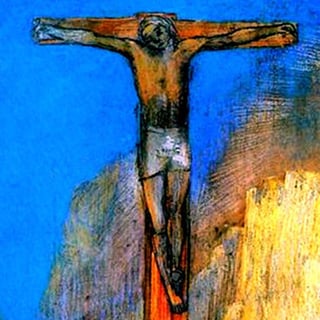
Speaker: And if we wanted to instantiate his teachings into a succinct and compelling narrative, we would have the passion narrative. And if we're to symbolize the passion narrative in an image, we would have the crucifix.
Speaker: The image of the incarnate God laying aside all his status and giving of himself radically for the healing of his enemies and friends, that is the image that grounds our faith. And I think any ethic that departs from that image is idolatrous and it's not of Christ.
Speaker: Fidelity to Christ must always and only be measured by conformity to his image. Yeah, it seems like that revelation of God in Jesus, if you really believe that, it demands that you shift your perspective on the whole world.
Speaker: It shifts your perspective on where you see God at work now, because you now have this image of Jesus that, like you've said, kind of acts as the barometer, as the litmus test of everything that goes on in the world now.
Speaker: Anything that acts in a way to try to garner power through means that are not self-giving love, we can know is not a love of Jesus. It's not a true power. It's a false worldly imitation of that true power.
Speaker: We now have the lens through which we are to view the world. It's Jesus on the cross. That's right. But this gets really challenging too, because unfortunately, a whole lot of us are very comfortable and find social advantage in using the name of Christ, but want nothing to do with conforming to his image.
Speaker: And i guess what I want to say is that isn't the real thing. We can call that Christianity if we want. And if that is Christianity, then Christianity isn't the real thing. You know, I would like for all of us to reform the way we use the word Christian and Christianity to only mean that which conforms to the image of Christ.
Speaker: Paul expresses a lot of anger and frustration about false gospels. Right. And it seems like if there was going to be anything in the world that presents itself as a false gospel of Jesus, it would be anything that seeks to garner power or influence for itself through any means that does not look like self-giving love.
Speaker: And it is not hard to find large, commonplace examples of that in our world today. People claiming the name of Christ and yet preaching hatred of enemies in a way that clearly does not look anything like Jesus.
Speaker: Yeah. Anything that is dehumanizing, unnecessarily divisive, not honoring to image bearers, none of that can be considered true or good or Christian in the most authentic sense.
Speaker: And we have to resist that no matter what quarters these ideologies are coming from. And we resist it not by returning the dehumanization and the division and the dishonor in kind. Not at all. But we resist it hopefully by modeling what the authentic Christian faith should look like.
Speaker: By treating all people with honor, with respect, with dignity. But we do need to stand fast and call ourselves out a little bit when we succumb to the powers that be that will use language that's comfortable for us in order to gain and maintain social status, wealth and privilege in the present world order.
Speaker: It's easy for us to slide into that and it'll take active resistance to stay out of that. A sort of death to oneself. Is that how you would describe it, Nick? Maybe how Paul would describe it.
Speaker: It is interesting. In our time, some of the most ardent critics of the evangelical version of Christianity are those that are raised within it. We all have family and friends who are in this boat.
Speaker: I don't actually think it's because evangelicals have actually failed to pass on the tradition to their children in a lot of cases. I think what's going on in many cases is that their children have actually bought into the radically generous worldview of Jesus, the one that they were taught about.
Speaker: And it's precisely because of that, that they now critique the evangelical church that is just so hypocritical to them. An evangelical church that's demonstrably self-interested in its own perpetuation as a dominant social order in our culture today.
Speaker: One that tends to be really self-preservationist to the point of compromising on every possible sort of moral decay that, you know, it's not only tolerated, but even celebrated in the political figures and movements that they feel will protect their social status.
Speaker: I really empathize with you know what many people call the deconstructionists. I really empathize with that because though I've not felt like I've lost my faith in light of inconsistent and hypocritical Christianity that surrounds me,
Speaker: I've come to feel that that hypocritical faith is not only not life-giving to the world, but is actively damaging to the name of Jesus and the long-term reputation of his name in our culture.
Speaker: To simplify it again, when a Christianity accepts or promotes anything that doesn't look like Christ... It is doing a disservice to the reputation of Christ.
Speaker: It is not useful to the world. It is not life-giving to the world. It is not healing to the world. It is not demonstrating new creation. It truly has nothing to do with the reign of God, the kingdom of God on earth as it is in heaven.
Speaker: So all these conversations about the center of the Christian faith, I really do think become so important. We so often see the Bible being used to promote all kinds of ideologies that are inconsistent with Christ. And what I want to say is that these are not faithful representations of the Christian faith.
Speaker: And it's important that we as Christians always look to be using the Bible as a source of wisdom, helping to form us into that image rather than as an excuse to go bypass the self-giving love and start to take up other ways of acquiring power in the world.
Speaker: Because we end up losing out on the true power that has been revealed in Jesus when we do that. Any use of scripture that would have us do anything that does not conform to Christ's image is a misuse of scripture.
Speaker: There are a lot of those out there today, and I think we all need to be very vigilant about this. Because again, the Christian faith is all about the community's formation to the ethics and the way of Christ.
Speaker: And there's no shortcutting that. There's no compromising in order to gain social power or wealth. Sometimes we think we should just take some shortcuts to to gain that social power so that we can then exert some change in the world.
Speaker: But I think there's no strong arming in an authentic Christian faith. There's only conformity to Christ or not. As we said before, that which looks like the image of Christ is of Christ, but that which doesn't is not of Christ and has no business using his name.
Speaker: I guess my prayer is that for those of us who claim Christ's name, that we are all sellouts for the radical love and forgiveness of God, and that the center of the Christian faith is always the image of a humble God revealed in Jesus of Nazareth.