Transcript
Speaker: Welcome to Voices in Pharmacy Innovation, the podcast where we spotlight bold ideas and groundbreaking practices that are transforming pharmacy practice and healthcare care delivery. I'm Dave Dixon, professor and chair at the Virginia Commonwealth University School of Pharmacy and core faculty member of the Center for Pharmacy Practice Innovation.
Speaker: In each episode, we'll sit down with pharmacists, healthcare care leaders, and changemakers who are rethinking how pharmacy can improve patient care and push the boundaries of what's possible in our profession.
Speaker: Together, we'll share stories, explore new models of practice, and amplify the voices driving pharmacy innovation forward.
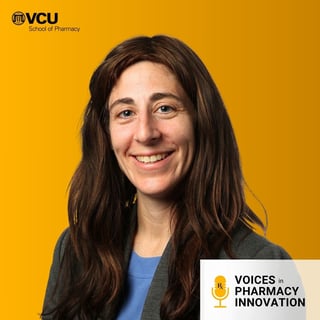
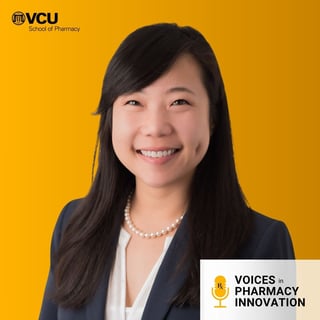
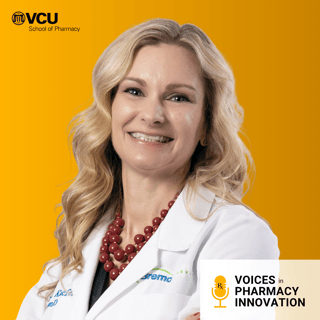
Speaker: Today, I'm very delighted to welcome Dr. Molly Scott to the podcast. Molly is a professor and regional associate dean at the University of North Carolina, Eschewald Men's School of Pharmacy in Asheville, North Carolina. She also practices as a clinical pharmacist practitioner at the Mountain Area Health Education Center, or MAHEC.
Speaker: Throughout her career, she has been a passionate advocate for advancing pharmacy practice, particularly in ambulatory care and women's health, and for expanding patient access to pharmacist-provided services.
Speaker: November is National Rural Health Month, and it's a time to recognize the unique healthcare care challenges facing rural communities and the people working to improve access to care.
Speaker: Having grown up in a rural community myself, I find this topic particularly meaningful. I've seen firsthand how geography, limited healthcare resources, and the relationships people build with their local healthcare professionals can shape their experiences with the healthcare care system.
Speaker: For many rural communities, pharmacists are among the most accessible healthcare professionals, often serving as a critical link between patients and the broader healthcare system. But rural pharmacy practice also presents unique challenges, including workforce shortages, pharmacy closures, and limited access to specialty care.
Speaker: At the same time, there are tremendous opportunities for pharmacists to expand their roles and improve health outcomes in those underserved communities. And today, that's why I'm very excited that Molly is joining us to discuss the evolving role of pharmacists in rural healthcare, care the challenges and opportunities facing rural communities, and how pharmacy education and practice can help build a stronger rural healthcare care workforce. Molly, thanks so much for joining us on today's podcast.
Speaker: Thank you so much for having me, Dave. I'm really excited to be here and happy National Rural Health Month. Yeah. um So to start off with, ah maybe tell our listeners a little bit more about your background and how you got where you are today.
Speaker: Sure, I'm happy to. um i am currently the Regional Associate Dean at UNC Ashland School of Pharmacy and Professor in the Division of Practice Advancement Clinical Education.
Speaker: And I oversee our Asheville campus in the beautiful mountains of western North Carolina. We are part of UNC Health Sciences at Mayhack, where we have a Presence of the School of Pharmacy, of course, and then also UNC School of Medicine, UNC Adams School of Dentistry, and UNC Gillings School of Public Health.
Speaker: um And I also, as you mentioned, work as a clinical pharmacist practitioner, so I'm still in practice working in an osteoporosis clinic. um I'm a UNC alum, um also graduated from Meredith College. I'm a liberal arts women's college in Raleigh. Did my residency training at the Durham
Speaker: And you and I go way back, right? um I did my PGY1 residency at the VA a in Asheville and got the pleasure to spend some time with the the residents over at Mission Hospital and yourself in terms of some of that early ah training and education in ambulatory care. And so I just want to thank you for for that. And it's always great to kind of you know revisit where you kind of came from professionally.
Speaker: You bet. I remember those days very fondly. And at that time was coordinating a series on ambulatory care um for some topics for our residents throughout Western North Carolina and also MAHEC's teaching and learning certificate program. So it's always terrific to reconnect from friends from your earlier days.
Speaker: Absolutely. Really enjoyed my time in Asheville for sure. So, ah to that point, ah you've spent much of your career advancing pharmacy practice and improving access to care in Western North Carolina. So, what initially drew you to rural health and how has working in that environment shaped your perspective on the role of pharmacist in that setting?
Speaker: I grew up in rural Western North Carolina in a small community outside of Asheville, and I'm so incredibly proud of my Appalachian Mountain heritage. I had the chance to return home to Asheville in 2001 when my children were very small and my husband and I opted to leave of the Research Triangle Park and come back closer to home um to raise our children close to grandparents.
Speaker: and We bought a house just a few miles from where I grew up and it was big change from living in the Raleigh area where we could walk for coffee and walk to the grocery store And now living in a a small community where I can see cows, you know, from my front yard. It's very rural, very beautiful, very lovely.
Speaker: And service to community has been just a really core value of mine that I think I really inherited from my parents that has served me well throughout my life. entire career and I've always been really passionate about advancing the role of the pharmacist and thinking about where we have care gaps and how we can serve populations that may not have access to care and so that kind of spurred my passion for serving folks in small and rural places.
Speaker: So kind of drawing from that background, what do you think people who have never lived or practiced in a rural community often must misunderstand about rural health care and pharmacy practice?
Speaker: Yeah, that's a great question. You know, I know that people who come from rural areas are more likely to want to return to small communities to practice. And so if you've never lived or worked or trained in small and rural communities, you may not know about all of the wonderful things that that exist about them. So thinking about incredible resilience, incredible commitment to community and how much um community organizations such as local churches and YMCAs, libraries, etc. play in the life of that community.
Speaker: think that might be something that is not understood if you have grown up in an urban area and go the whole day without seeing a bunch of people that you already know. Right. I think we definitely saw the the resilience of Western North Carolina and other areas that were impacted by Hurricane Helene after the devastation as folks just worked together with their neighbors to get health care back up and running, to get food and supplies to people who needed them most.
Speaker: And I think that was ah a devastating time in the state of North Carolina and, of course, for Tennessee as well. But also a time where I was, again, really proud to be a native of Western North Carolina and see how rural folks came together to serve one another, make sure people had the basics that they needed.
Speaker: Yeah, so you you touched on you know, issues related to to folks wanting to go back and and practice, you know, and live in rural areas. And we often focus on, you know, shortages of providers, geographic barriers to care in rural communities. But from your perspective, what are some of the most significant challenges facing patients in rural communities today?
Speaker: Yeah, that's such a great question because we have to understand what are the challenges so that we can focus on how we might um leverage even some of the dollars from the Rural Health Transformation Program to help improve um access to care in small and rural communities. So, you know, some things that are on my mind are definitely pharmacy closures. You know, sometimes an independent pharmacy might be the only pharmacy in a rural community.
Speaker: And if it closes because of challenges with financial sustainability, then patients lose a really important entry point into care. Also concerned about hospital closures. I know here in um the town of Limville, which is up closer to Boone, they no longer have a labor and delivery plan.
Speaker: um service there. And so patients who live in Linville, who are delivering or coming for obstetrical care, have to drive to Boone or to Asheville. And that might look not quite that far on a map, but you mentioned geography, you know, coming through those mountain passes and around windy roads, especially if the weather's bad in the winter, that can be really hazardous.
Speaker: I also think that we have issues around workforce development. I know right now there's a federally qualified health center in a rural community near us that is recruiting for a clinical pharmacist practitioner. That's a very desirable role as you think about practicing under collaborative practice agreements and serving patients in need. um But recruiting and maintaining that workforce in rural communities is often difficult.
Speaker: And so because of lack of access and and workforce challenges, what we see across the country are disparities in health care around um outcomes terms of maternal health or, you know, getting to the hospital on time to be treated for heart attack or stroke, you know, in a timely manner. And so this is one of the reasons why really excited about the Rural Health Transformation Program from CMS,
Speaker: and the investments that it's making across the country um in rural communities to help us address some of those challenges. Yeah, I think it's really exciting and certainly a tremendous opportunity to really find opportunities for the pharmacists, right, to engage further in trying to help address some of these gaps. So i'd I'd love to hear your thoughts on where you see the greatest opportunities for pharmacists are in these communities.
Speaker: Well, we all know that pharmacists are the most you know accessible health care professionals. We're drug experts who optimize medications. And here in North Carolina, we've had a lot of legislative wins in the past two years with um House Bill 96 and 67.
Speaker: And House Bill 96 modernized our collaborative practice agreement, made it a little bit easier for different types of pharmacies across different um systems of care to become a CPP provider. It also um allows us to administer long-acting injections.
Speaker: And so when I think about those things, I think about the psychiatry needs in small and rural communities. where patients may not have a psychiatrist nearby that they have to see, then they have to drive a distance to see them and maybe get their injection.
Speaker: And so having pharmacist in their community who are trained to provide long-acting injections, who are providing care alongside their psychiatrist, I think is definitely a great opportunity for those patients as we think about those social um drivers of health.
Speaker: And with um House Bill 67, it created new opportunities for financial sustainability for pharmacists providing clinical services, both in community pharmacies as well as in ambulatory care. And so now our insurance companies in our state are working to figure out what those processes for reimbursement would be. ah North Carolina Medicaid has historically paid us, and now we have new insurers that will come alongside them to do that.
Speaker: And because of some of the challenges that we face in terms of being financially sustainable, being able to be hired by, you know, primary care practices, i think this opens some additional doors for us and enables us to um build upon this expanded scope and really put it into action and implement the things that we want to do.
Speaker: Yeah, that's really exciting. And, you know, you mentioned the issue around pharmacy closures earlier, right? And so by having these additional opportunities to help with the financial sustainability of pharmacies may may help at least alleviate some of that pressure as well.
Speaker: Yeah, yeah, I think that's absolutely true. And, you know, one of the things that we're doing um at UNC Asheville School of Pharmacy is really kind of returning to some of our roots, focusing on how we serve the state. And part of that is the whole pipeline of pharmacists going all the way back to rural high schools and getting them engaged in certain you know opportunities to learn about what a pharmacist can do. And then thinking about our students when they're um in school, offering them some unique educational individualization opportunities to be better prepared for a rural ambulatory care workforce. And we're also working on more internships and creating opportunities with
Speaker: primary care practices across the state um and really are wanting to expand rural residency programs. And so that's one of the ways that we're trying to contribute to the workforce issues by training people really well and then also um ensuring that people have the opportunity to learn and practice in a rural community and see the advantages of what that type of life and practice can be.
Speaker: So i think that training and professional development piece is really important. And I know that you have been very much involved in that in your career, but you've also been involved in helping develop and establish ambulatory care pharmacy services in a variety of settings. So I'd love to hear a little bit about that experience and and what you've learned about successfully integrating pharmacists into healthcare.
Speaker: interdisciplinary care teams, especially when we're thinking about the the team maybe not all being co-located, right? So thinking about the pharmacist who's at the community pharmacy, but still working as part of the collective team in these communities.
Speaker: what What does that look like? What have you learned? What could our listeners kind of take away in trying to navigate, trying to build or establish pharmacy services in these rural settings? Yeah.
Speaker: that's a wonderful question. I've had wonderful opportunities across my career to help develop ambulatory care services where they didn't exist before in particularly family medicine clinics. I did that first at Duke University Family Medicine Center many years ago and then was the first ambulatory care pharmacist at Mayhack.
Speaker: And so there's been so many lessons learned that then we've been able to extrapolate to very specific focused areas of care to meet and the needs of populations in community pharmacy. So thinking about and the work around pharmacists prescribed for retinal contraception in North Carolina um and also being involved in a randomized controlled trial called Heart to Heart in North Carolina. We've been comparing CPP managed care
Speaker: um with specific technology for remote patient monitoring to usual care to demonstrate that value of the pharmacist on that team. um So I think some of the things that I've learned is, you know, you have to be able to explain the value of the pharmacist to folks who have not um experienced having a pharmacist on their team.
Speaker: And also helping practices understand that there's lots of ways to do that, as you mentioned. So embedding the pharmacist there or partnering with a community pharmacist um who can be supportive in providing care in a team-based setting for patients.
Speaker: um I think also the trust and relationships that you have with providers and, of course, with patients is paramount to success. um I remember um the CPP attending physician who oversees me saying many years ago, she said, i knew that I could trust Molly to co-manage my patients when I realized how much she cared for them. caring for them just as much as I did. And she said, you know, I know pharmacists are smart, but having that trust to know that we're going to work together to meet the needs of patients and move them along um towards their own personal health goals in addition to the ones that we have for them, I think is is really key. And now she's a great advocate for pharmacists and says she never wants to practice anywhere that does not have a clinical pharmacist practitioner that she could have um in the clinic.
Speaker: um You know, I think a few other pearls that I would share with listeners are um when you're thinking about developing new clinical pharmacy services, making sure that the practice is ready for you. And so we published a paper a couple of years ago led by Andy Warren at Mayhack and AJHP, where we examined what are the things that a practice needs to have in order to be ready for pharmacist. Because we've seen pharmacists work in practices and sometimes that's been successful and sometimes it hasn't. So, you know, what is the secret sauce? And I think definitely it's those relationships. I think it's alignment in terms of how we can bring value to the system around
Speaker: population health and value-based care. and you really have to have a physician champion um to walk alongside you. And then you have to have relationships with everybody in the practice, from the billing office to the front desk, to the triage nurses, to the labs. You know, we're all a team working together to improve care. And folks need to know who you are, what you're doing, how you bring value, and how they might interact with you said that then they can um support the patients in their journey throughout the clinic with the team.
Speaker: That's a great summary. And I couldn't agree more. And i think too many times there's too much focus on sort of those clinically oriented outcomes. But at the end of the day, it's really about the relationships of the people involved.
Speaker: And I think your mention of of trust and having the provider you know trust the pharmacist to ah you know to do what you know they're being asked to do or or whatnot is incredibly important.
Speaker: So when we think about expanding firms' roles in rural communities, what would you say are the biggest obstacles? Is it scope of practice barriers, reimbursement, payment, workforce capacity? it something else? how What's the one thing that you would change?
Speaker: If I could change one thing, it would definitely be having a national model for payment for pharmacist clinical services. You know, whether that's through ah provider status legislation or some kind of policy change that allows us across the country and every state to be paid for the services that we provide with all payers.
Speaker: You know time and again, when I'm talking with pharmacists that are implementing hormonal contraception services within their community pharmacies, they are looking for ways to be paid. But alongside that, I think the other thing that I would change is um better support for implementation of new services. I think we've clearly demonstrated the values.
Speaker: But once you have a policy, um once you have a new law, how do you go from, you know, Raleigh, where it was passed in the state capitol, down to implementing a new service so then it becomes the standard of care? And implementation takes time. And we're finding, you know, that practices need support around workflows, right?
Speaker: um around what populations to serve and how we would run those visits, how we would document those visits, how to be credentialed, how to bill for those services.
Speaker: So I think there's still policy change needed, but then there's also, you know, kind of practice administration skills that pharmacists need to know how to do. So we're not just clinicians. um Community pharmacies in a rural places are small businesses, and so having that financial savvy But then also how knowing how to actually sink your teeth into implementing a new service, everything from identifying your patients, the workflow, all those things, so that we can really take advantage of the policies that we already have and new things that are coming in the future.
Speaker: I agree a thousand percent. We've certainly experienced that here in Virginia with some recent legislative changes or around payment for Medicaid beneficiaries. And it's great when that switch is is flipped and you can all of a sudden, you know, submit to get paid for the service you're providing. But there is a there's a huge gap between that legislation and the actual day to day implementation. So I think that's an excellent point.
Speaker: I also know that UNC has a Rural Pharmacy Health Certificate Program, and I'd love to learn a bit more about the program and what motivated its development and and what you've learned from the experience so far.
Speaker: Yeah, so our Rural Pharmacy Health Certificate Program is um offered in Asheville and in Chapel Hill, so on both of our campuses, although it was born here in the mountains of Western North Carolina. It was so successful and the students loved it. So just last year, we moved it to the the main campus in Chapel Hill with an emphasis on eastern North Carolina, which is very different from the west in terms of its population.
Speaker: And it was really the the vision of Bob Lewin, who was dean at the School of Pharmacy some years ago, and Pam Joyner, who served as a vice dean.
Speaker: um Pam came from a small rural community, and this was a way for her to serve our state. And we we learned a lot, actually, from the University of Illinois Chicago with their Rockford campus and their rural program that they have both for pharmacy and medicine.
Speaker: And the structure of it, um it's now led by Amanda Savage and Stephanie Kaiser at the school. There are four seminars and that are focusing on all things rural health. And I know for the next semester, um Amanda and I were just talking and they're learning how to work within different rural settings and how to manage stigma around substance use disorder. Those are just some of the things that they're thinking about for the next semester in their um spring seminar coming up.
Speaker: And they do have service learning requirements and they have a rural practice mentor where they go and shadow and learn everything about that practice and that rural community. and work on a population health project with them.
Speaker: And I think our motivation was definitely service to the state um and focusing on the workforce needs within small and rural communities and thinking also about the skill sets that pharmacists need to work in those spaces around team-based care. They may be the only pharmacist and maybe there's only one or two physicians in their community. And so How do you develop relationships within that kind of small cohort? of healthcare professionals, again, to to work together, um and how can they influence policy and education and social needs within small rural communities. That's really been at the heart of the work that we have done. and then we've added an additional certificate in ambulatory care, um and both of those are are very popular within our students and really proud of those individualization opportunities that exist at Carolina.
Speaker: That's great. That's really exciting. And I love the the mention of Eastern North Carolina because that's where I'm from. So I'm glad to hear ah of the investment in the broader rural community in North Carolina.
Speaker: um So we'll wrap up with some reflection and perspectives here. So what resources have you found most influential in your thinking about innovation and pharmacy practice or just your career in general?
Speaker: Yeah, that's a really terrific question. um You know, I think from a rural standpoint, I'm encouraging pharmacists to get involved with the National Rural Health Association and with any rural organizations within their states, because there are state and national rural organizations that are doing the same work that we're trying to do. And so finding opportunities for synergy and not working in a pharmacy silo because there's medical, rural health programs. We just learned this week that the Social Work School at Carolina is getting ready to start a Rural Health Scholars Program, and we're very excited about that because partnership and teamwork is important.
Speaker: um I think, too, engagement with state and national associations. You know, North Carolina Association of Pharmacists has been key to innovating in practice advancement within our state with the bills that I mentioned before. And they've recently created um a toolkit around how to become a clinical pharmacist practitioner and develop those services that we were talking about, which is really terrific in terms of support for pharmacists, you know, out in the wild.
Speaker: And we have at the school this really terrific group that we've been working together for a long time. We're called the Practice Advancement Work Group, and we are totally connected to our school's strategic plan.
Speaker: So we have spent a lot of time thinking about innovation practice advancement, you know, what are the barriers, what are the things that we can do as an educational institution within our state to prepare the workforce and then also support the workforce, you know, once they are out in practice.
Speaker: um And I think as we're thinking about, you know, um other things that need to be done, we've talked about payment models, credentialing, I'm also preparing our students for diverse careers. You know a lot of our students are interested in industry. A lot of them are interested in kind of non-traditional careers. So how do we, you know, innovatively meet the needs of all of our students and and really help them make their mark and have their impact in their career in pharmacy? And I'd be remiss if I didn't say something about artificial intelligence and you know the important role that it is a will play in the delivery of services and the optimization of medications in helping us with quality metrics and dashboards and all the things that we need to do to advance value-based care.
Speaker: Great. Couldn't agree more. And yes, I think every episode of this podcast, ai has come up just about every time. Yeah, I'm sure. um What's something that you're looking forward to in the next six to 12 months? This could be personally or professionally.
Speaker: Yeah, yeah. I think the thing I'm most excited about right now professionally is some work that I'm doing with um other reproductive health leaders within the state of North Carolina.
Speaker: and So with my hormonal contraception work that we've done here in the state, I'm wrapping up um a three-year grant with the Duke Endowment that has helped support um acceleration, um and implementation of pharmacists prescribed hormonal contraception. And along the way, have met so many other people working in this space, um including leaders from the School of medicine, the School of Public Health, the School of Nursing, and then also reproductive health groups that are working in the reproductive justice space, working um at colleges and universities to increase access to emergency contraception, for instance, and folks that I would have never thought I might collaborate with, um including doulas. So that's been really exciting work. And where that is headed next
Speaker: is I'm working um with some of those stakeholders at the university that I mentioned. We're developing a new statewide contraception initiative called BC for NC. We think that will be our name, so Birth Control for North Carolina, that will be a one-stop shop for anyone in our state who is looking for reproductive health care, particularly contraception and emergency contraception, to know Within my community, where do I go? Where are services offered? Maybe I'm uninsured. Where should I go? Maybe I need to be seen after hours. Where are the pharmacists?
Speaker: And so we're in the community engagement part of that work where we've been meeting with small and rural communities um in the central part of the state and in the West. And then this weekend, we're meeting with folks in the eastern part of the state to advise us about the services that we want to offer, about our brand, um and what they would like to see within BC for NC. So I'm really excited about that work. I love the interprofessional collaboration and the the breaking down silos that we have done um around the contraception space in North Carolina and can't wait to see um where we went where we end up.
Speaker: That's phenomenal. You are just a tour de force when it comes to the profession. So want to thank you for all that that you have done and will do for the profession. And I've really enjoyed this conversation. And again, just want to thank you for sharing your experience and your work at UNC and c in where rural pharmacy practice is headed. So thank you.
Speaker: Thank you so much for having me. It's been a pleasure to share some of the things and that we're doing at UNC and um a little bit about my background and the things that I am passionate about. I have loved being a pharmacist every single day of my career. And retirement is looming at some point in time in the next, you know, five, six years. And um I can't wait to see what I will do after retirement because I know the fun will not stop.
Speaker: Also want to thank our listeners for tuning in into this episode of Voices in Pharmacy Innovation. If you enjoyed today's episode, please subscribe, share it with a colleague, and join us next time as we continue to spotlight the innovations that are shaping the future pharmacy practice and healthcare.
Speaker: Thank you for listening to today's episode. Voices in Pharmacy Innovation is published monthly. You can listen on Apple Podcasts, Spotify, or by visiting our website linked in the show notes.
Speaker: If you have any questions or comments, you can contact us through our email cppi.vcu.edu. We appreciate your engagement and look forward to having you join us next month.