Transcript
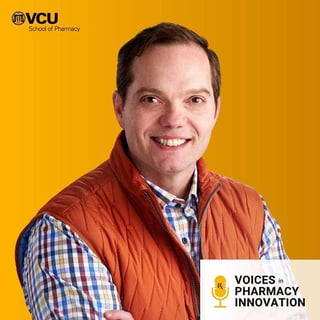
Speaker: Welcome to Voices in Pharmacy Innovation, the podcast where we spotlight bold ideas and groundbreaking practices that are transforming pharmacy practice and healthcare care delivery. I'm Dave Dixon, professor and chair at the Virginia Commonwealth University School of Pharmacy and core faculty member of the Center for Pharmacy Practice Innovation.
Speaker: In each episode, we'll sit down with pharmacists, healthcare care leaders, and change makers who are rethinking how pharmacy can improve patient care and push the boundaries of what's possible in our profession.
Speaker: Together, we'll share stories, explore new models of practice, and amplify the voices driving pharmacy innovation forward.
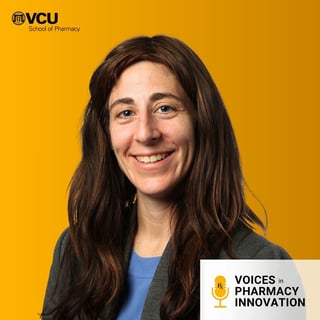
Speaker: Today I'm really excited to have Dr. Kelly Goud, professor in the Department of Pharmacotherapy and Outcomes Science at VCU School of Pharmacy and the director of the PGY1 Community-Based Pharmacy Residency Program here at VCU.
Speaker: Kelly is a nationally and internationally recognized expert in immunizations and community-based pharmacy practice. She serves as the American Pharmacists Association liaison to the CDC Advisory Committee on Immunization Practices and as a member of the National Foundation for Infectious Diseases Board of Directors.
Speaker: Few areas of health care touch as many people as immunizations. Vaccines can prevent serious disease across the lifespan, but the immunization landscape has also become increasingly complex.
Speaker: Recommendations may depend on age, underlying conditions, pregnancy, immune status, prior vaccination history, season and individual risk, and patients are navigating more information and misinformation than ever before.
Speaker: At the same time, pharmacists have become one of the most accessible sources of vaccine education, assessment, and administration. Today, we're talking with Dr. Gu to understand how we got here, how to make sense of the current recommendations, how to build vaccine confidence, and where pharmacy-based immunization practice is headed next. Kelly, thanks so much for joining us on today's podcast.
Speaker: Thanks, Dave. I'm so excited to be here to talk about immunizations. It's my favorite subject, but there is a lot happening in that space. Absolutely. And it's definitely why we have timed the episode when we have, given that we are very much into the immunization peak season, as we'll call it.
Speaker: So before we get into that, ah could you tell our listeners a little bit more about your background and how vaccines became such a central part of your career? Of course. So I'm homegrown. i have both my bachelor's of pharmacy and my PharmD from VCU School of Pharmacy. And I was originally hired by VCU School of Pharmacy to develop patient care services within a family-owned local supermarket chain, UCOPs Pharmacy.
Speaker: And that was done really because Dean Ruggiero wanted to help advance community-based pharmacy practice similar to what faculty had done early on with health system practice, right? They placed faculty and health systems to sort of develop those patient care services. And soon after I started with the school, the Commonwealth of Virginia granted pharmacists the authority to vaccinate adults. we It's in our practice act that we can administer medications, but it was a little bit more clearly defined in 1997 for us to be able to administer vaccines.
Speaker: And I was fortunate that John Beckner, who at that time was director of pharmacy at UCROPS Pharmacy, never said no to trying something new. And so we started our vaccine program the fall of 1997, and we administered over 5,000 influenza pneumococcal vaccines that year, and and we never looked back.
Speaker: So went forward the next year, 18,000 flu vaccines and the program just kept developing to comprehensive adult and then some pediatrics um at that time that we could administer. And I was just really, i feel like in the right place at the right time, being able to disseminate those best practices and things that we had learned. Immunization was so different at that time. People really didn't have access to influenza vaccine like they sort of do now. And so people would line up. We'd have lines coming in. We'd have lots of people walking in
Speaker: And then I was also able to sort of get involved with APHA. And then that shaped the education for pharmacists and student pharmacists and technicians. And And then advocacy work and also publish some of our best practices. So I think that sort of got me involved and interested. And it was just um so fascinating to be able to learn and see how pharmacist care sort of developed over that that. That's sort of just how and I just enjoyed it. So that's sort of how I got involved.
Speaker: Yeah, that's terrific. And it's really quite fitting that you recently led a group of authors in publishing ah paper, Pharmacy-Based Immunization Delivery, A Comprehensive History and Current Challenges, that was published in June in and the Journal of the American College of Clinical Pharmacy, and we'll certainly put that into the show notes. So I kind of want to start there in talking about, you know, how we got where we are ah in regards of pharmacists and our role in immunization delivery. So you've had a front row seat to this, as you've just described. So how did we get from vaccines being a relatively limited part of pharmacy practice to pharmacists really becoming such important immunization providers?
Speaker: You know, it it really comes into how we help fill gaps, right? The gaps in health care. and And that really started when the APHA was sort of asked by the secretary at that time to how can pharmacists really help improve vaccinations in the country, right? Our vaccination rates are still low, unfortunately, but how can we do that? And so APHA really looked at that. There were some early training programs um sort of in that public health space. And so it was really just started with, you know, trying to how how can we fill the gaps? And community-based pharmacies are the perfect access point, right? People can typically walk in The hours are typically a little bit longer. and and we know now as we've seen the evolution. So we saw training and we saw early on pharmacists getting trained. and Now it's incorporated in all schools of pharmacy. colleges of pharmacy into their curriculum to teach pharmacists about vaccines and how to administer. But then the pandemic hits, right? We always talk about pre-COVID and after COVID. And pharmacists really saved save the world and enabled people to sort of get back to our lives. They were ah access points when other providers didn't have access for patients.
Speaker: Pharmacists in the first three years of that COVID pandemic administered over 300 million COVID-19 vaccines. And then not to mention other sort of service expansion was test and treat for COVID-19. And then just being that that health that trusted healthcare provider in the community to answer questions and and really reassure individuals about what we knew and what we didn't know and and help them kind of understand and navigate all of things that were happening during that time.
Speaker: Yeah, and I think you ah you know alluded to the pandemic, right, which is really, I think, a tipping point in terms of not just what pharmacists were doing, but the recognition for the work, right? And so what has the expansion of pharmacist humanization services really taught us in terms of the unique role that our community pharmacies play in public health and access to preventive care?
Speaker: Yeah. So it's really, you know, we're we're accessible. um A lot of times, again, filling in those gaps. So, you know, if you go to your primary care provider, it's a very limited amount of time you get. And so preventive care is sometimes not part of that story. So pharmacists can identify preventive care and help with the um sort of what you need, and then also begin to provide those preventive care services. Pharmacists are also the individuals that can help identify when somebody people are coming in looking for self-care products because there's an infectious disease happening or something. And so that way they can sort of identify that early because you have all these people coming into the pharmacy. So preventive health and preventive and public health is really important a piece that the community-based pharmacist should embrace and should be recognized for being able to to do those services.
Speaker: So you mentioned that our immunization rates are still not ah where we'd like for them to be. So where do you think the profession has the greatest opportunity to improve vaccination coverage?
Speaker: Yeah, so there was a great paper that I've been citing all over the place that on the CDC just published recently. on on Meter was the the um first author on that paper. And it really evaluated pharmacists immunizations from 2013 22-23. So 2013-14 to 22-23. And over that span, they recognized that about um influenza almost doubled, right, for the number of influenza vaccines. So we're like 22 million in 2012-13 and then 22, 23, 44 million. And we also looked at, you know the height of the pandemic when everybody was close was when we gave the most vaccines, right? And we gave it more vaccines across the population. But what I think is important for pharmacists to think a little bit about is the person who's most likely to come to the community-based pharmacy is somebody 65 years and over to get their vaccine. But we are missing a huge population in that 18 to 49 years of age. And how can we get that that patient population who are probably always coming in, right? They visit the community-based pharmacy much more. So they're getting things that may not be healthcare related, but they're coming into the pharmacy and how can we get to that population to get them vaccinated? And then we are seeing increasing pharmacists get um get involved in childhood vaccines. So that is also, we're seeing, you know, decreases in and flu shots for their almost um Last year, when we look at the data from influenza vaccines, about half the population, almost six out of 10 individuals are not getting their influenza vaccine. And sort of if we look across the population, so everybody's below a 50 percent vaccination rate for influenza. So that's a lot of opportunity for community based pharmacists.
Speaker: Yeah, you know, the adage that a young adult, you're invincible, right? Right. Yes. Nothing bad is going to ever happen to me. That's right. um So I'd love to shift gears and and talk a little bit about vaccine recommendations. So you have served as APHA's liaison. to the Advisory Committee on Immunization Practices. So for listeners who, you know they see those final recommendations, they read through them, ah maybe don't fully understand the process behind how they're developed and what should clinicians really understand about the evidence that actually informs these recommendations. So give us a peek behind the curtain, if you will.
Speaker: Yeah, so a lot going on in and behind the curtain, unfortunately, and in front of the curtain. But what we see ACIP is um ah is the Advisory Committee on Immunization Practices. And prior to 1964, we didn't really have a body that made recommendations for the general public.
Speaker: And so ACIP was formed in 1964 to provide those recommendations to really look at public health and what vaccines should we be recommending recommending for individuals who weren't serving in our armed forces. Yeah.
Speaker: In the 30s, AAP um did issue recommendations. So the academy of um American Academy of Pediatrics issued the first recommendations around vaccines for children. And so they sort of had done all the work in the childhood space, but not necessarily adult or comprehensive um vaccine recommendations. So the advisory committee was formed. There's a federal charter. So they have to follow, they're supposed to follow the federal charter.
Speaker: And so when you look at that advisory committee, it's a public meeting. So people can can listen to the the meeting. And there are liaison organizations, which I serve as the American Pharmacists Association liaison.
Speaker: And there are other public health groups or other professional societies, because we're sort of the people who have the clinical expertise and and can sort of provide extra information to the advisory committee. So then how, when we think about vaccine recommendations and approvals, so it starts with the FDA. The FDA provides the approval for the vaccine and the population that it should be used in based on the the safety and efficacy data. So once we know that a vaccine is going to be approved, or that an indication might change for a vaccine.
Speaker: ACIP puts together what's called a work group to really dive into all that data you were talking about, Dave, all the evidence. What do the clinical trials say? What does observational data say? What does some of the non-published data say? So there's going to di they work through that, and typically it's been done over multiple ways. ACIP meeting. So they come up with what's called a PICO question, which is the population, the intervention, the comparison, and the outcome to what they're going look at for the recommendations. And then that work group puts all of that evidence up against it using what's called the great approach.
Speaker: So that's grading, recommendations, assessment, development, and evaluation, which then takes them to the evidence to recommendation framework. And really, that's an evidence that the grade approach is evidence-based. It's um transparent. It's rigorous. And they use all these methods to to sort of look at that certainty of evidence. So when they're making a recommendation, they want to know how strong is that evidence. Are we really certain that that evidence is telling us is correct?
Speaker: And then what they do is they put that up to that evidence to recommendation and framework, which is looking at, is it a public health problem? What are the benefits and harms? Is it feasible to do the intervention? Is it acceptable um to the people who who are supposed to get the intervention?
Speaker: What is the cost effectiveness of the intervention? And then health equity. So that's why sometimes when we look at vaccine recommendations, we see a difference in what the FDA is approved versus what the recommendation is. And then that that evidence to recommendation framework is usually presented over several ACIP meetings before they take it to a vote. And then they vote, and then it goes to the CDC director for final approval, and they're usually published in the MMWR. The guy like the the whole, you know, all the evidence is published there, and it's added to the vaccine schedule.
Speaker: So I'm hearing that it's a very comprehensive process. Yes. And it takes a little while, yes. Yes, indeed. So the outcome ah is, of course, an immunization schedule, which can often feel kind of complicated. There's lots of routine recommendations. There's risk-based vaccination approaches. We have to think about shared clinical decision-making, catch-up schedules, seasonal guidance. So how does one simplify all of this at the point of care?
Speaker: Yeah, so first I just want to make sure and remind everyone is that yes, you have a schedule, which is a bar graph, which is the best on pictorial of what we know recommendations need to be. However, there is an accompanying note section, so the schedule should never ever be used without those notes. That gets people into trouble and it can cause vaccine errors. So how I would look at it is really if you understand the basic vaccine guidelines and recommendations for routine vaccines, which is typically done around age, then you can build on the others, right? So then you build on your risk base and your shared clinical decision making. And so at the point of care, how I approach it is every encounter is a potential vaccine encounter, right? We want to make sure that we gather that immunization history to see what we have and what they may need.
Speaker: And then we want to look at, so we can start that that schedule at age and then look at chronic conditions as we begin to make those recommendations and then move into those shared clinical decision-making recommendations. But always, every encounter should be a reminder that patients need vaccines and then making sure that you always use those notes when you're evaluating that schedule because that can really cause you to to not do the right thing for patients.
Speaker: and That's great advice, especially viewing each encounter as a vaccine opportunity, right? Yes. Excellent. So let's talk a little bit about some of the specifics as it relates to select immunizations. So we're heading into respiratory virus season.
Speaker: How should pharmacists approach assessing and recommending influenza, COVID-19, RSV, and pneumococcal vaccination? Without treating each one as a separate conversation. So sort of getting into some of that implementation.
Speaker: does this look like? Obviously, this can sometimes be overwhelming. And so how does one navigate? So I guess, it so we'll go back a little bit. So it is that encounter, right? So this is, they show up in October if they need all four, you know, this is, today it is time for your influenza, your COVID, your pneumococcal, your RSV. And just putting it out there, it's not a it's not a, we have the vaccines, would you like them? It's today's the day, you need these vaccines um based on your vaccine history. But I think we also, I want to ask step back a little bit, Dave, and talk about the fact that right now, pharmacy authority has different ways that we can administer based on certain recommendations. And I just want to,
Speaker: make the caveat that pharmacists need to check their state laws and regulations to understand what which recommendation guides their authority. So right now, the recommendations are pretty similar for all of those vaccines. However, since ACIP has been in flux, the recommendations are back to July of 2025. That's the current CDC schedule. So what that means is we do not really have an ACIP recommendation for influenza, but CDC did issue interim clinical guidance or clinical considerations for influenza to then enable that, yes, we want to give a 26-27 influenza vaccine, and this is what it looks like. they We think that COVID-19 clinical recommendations are going to be coming very soon, but right now we do not have CDC guidance for the 26-27 COVID-19 vaccine. So if you are a pharmacist who has to follow CDC, you don't have really a recommendation for that vaccine.
Speaker: So that's just something to think about. But when we look at flu, we're still at everybody six months and over gets a flu vaccine. That's really important. So that's easy, right? So you always start with age, flu, everybody flu, um COVID, all adults are being recommended um through some, all the other professional societies. I don't know where CDC right now, if you look at the adult schedule for July, 2025, CDC is saying also COVID-19 vaccine for those adults. But the approval, the FDA approval was for 65 and over and for people with a severe risk condition that would put them at risk for severe COVID.
Speaker: So then that's sort of flu and COVID for our adults. RSV is going to be a one-time only vaccine, but you've got to have a condition that puts you at risk if you're 50 to 74. And so if I'm a 75-year-old, then yes, I need RSV if I've not had it. And then pneumococcal, again, is also now 50 and over, makes it a lot easier for pharmacists, everybody 50 and over. But if I'm in the 1849 and the chronic condition, so again, Dave, it always starts with age, right? And then you look at chronic conditions and risk. And then I want to just also mention pregnancy. So pregnancy, ACOG has said influenza COVID, RSV during one pregnancy should be administered. And they changed the RSV to a little bit later in the year. So now we're budding that up to March because of the RSV being extended. The last couple of years, we're seeing RSV go a little bit later than we thought. So that's how vaccine recommendations also look at that epidemiology. So we have to really look at those pieces. So you need to look at what guidance is out there and which recommendations you can follow.
Speaker: Fortunately, they're not all that different across the the societies. There's some nuances there. And the biggest nuance is that we don't have a recommendation from CDC for COVID-19 vaccine. But our flu pretty much aligns, ah RSV aligns.
Speaker: Pregnancy um aligns for the RSV and aligns pretty much for influenza. COVID, again, there's no recommendation or guidance on that schedule for pregnancy. So again, you have to sort of think about what you're
Speaker: statutes and regulations say for authority. No, great for me. Thank you for making that point. Certainly regarding what's allowed in the state and helping our listeners kind of understand all of the the nuance here as it relates to ah respiratory related vaccines. So moving beyond respiratory vaccines, which adult vaccines do you think are overlooked or, you know, where there are maybe missed opportunities for Yeah. So i you know, for pharmacists, I believe we've done a pretty good with Zoster because it's built under Medicare Part D. Physician offices typically don't have it. they're They're funneling those patients to us. And RSV has been a little bit of that probably as well because of the the Medicare Part D payment for RSV vaccine for our people 75 years and over.
Speaker: The pharmacist really should think about how they can do a global assessment of what's needed. And so there are huge gaps in Tdap. There's gaps in that hepatitis B for our adults. There's also gaps in that shared clinical decision-making of 27 to 45 for our HPV vaccine is really something that we want to try to, again, to continue to look at who should have that and and making those recommendations. And then hepatitis A is ah it's pretty much a permissive vaccine. If I'm an adult and i want to and I'm eating or I'm traveling, a Bill Atkinson, who was the Sort of the CDC vaccine guru, when I first started getting into vaccines, he said you should have a hep A vaccine if you eat, not if you eat out, but if you eat. So he was very big promoter of having hepatitis a vaccine. We don't have that specific recommendation. There are some risk factors and things, but it is a permissive vaccine. So I think pharmacists can look beyond flu and and pneumococcal and RSV and sort of this and COVID and this fall respiratory and and expand their their services all year round.
Speaker: Great. Well, it's not going to be a conversation about vaccines if we don't talk about vaccine confidence and communication, right? So a recommendation from a trusted healthcare professional, such as a pharmacist, can be really powerful, very effective in helping patients understand vaccines.
Speaker: how to think about not just medications, but vaccines. So what does an effective vaccine recommendation sound like in practice? how How should we be communicating regarding the benefits and potential risk to patients?
Speaker: So first, just need to think about that everybody might have a question or a hesitancy that's different. So unfortunately we don't have, everybody thinks this, and that's why I don't want to get my flu shot. So you have to understand the concern so that you can address the problem. So I always tell people it's gotta be presumptive, strong recommendation. So it shouldn't be, we got our flu vaccines in today, would you like yours? It should be, you know, Mr. Smith, our flu vaccines are here. Let me give you the paperwork so that you can fill it out and we can give you yours. So it's it's using that strong recommendation that's important. And then if you have some hesitancy, it's really, well, what concerns you? Understanding the concerns.
Speaker: And then you can reflect that back a little bit. Well, Mr. Smith, if I had heard that, I would be confused or not sure as well. And would it be okay? And so using some motivational interviewing, asking permission, would it be okay if I tell you what I know about that?
Speaker: And then give the information. And then you could also offer to give the vaccine information statement so they could read it. But it's asking those questions and understanding. And then the last thing that I think is really important is if they that it's still their right to refuse a vaccine. But you should always, what I call, keep the door open.
Speaker: because you want to be able to ask them again and have the conversation again. So you I typically will say, would would you like some information to read? And then when you come back, you can have we can answer questions. But I just want you to understand that we are probably going to ask you again because we believe that it's important. We want to make sure that all the patients that we're working with are protected. And so just wanted to let you know that we will ask you again and we'll continue the conversation so that it keeps that door open. I have a patient that if he sees me in the fall, he goes, going ask me about that flu vaccine. And I'm like, yes, I am. Would you like one today? We're going to get one today. And he's like, so it's not, would you like one, but we're going to get one today. and And he always says no, but he did get a COVID vaccine. So I feel that's a really big win that he got a COVID vaccine. So it's just continuing. And I think one day we're going to get him a
Speaker: get Get a flu vaccine, honey. But it's it's just that continued report. But if if he had told me no and then I'd asked him again, then you lose your trust. So you have to keep that door open because you can't always remember who you've asked and who you haven't asked. And so keeping the door open will keep your trust and your report, your patience um at the forefront.
Speaker: That's great advice. ah Building off of that, there is a lot of misinformation, particularly online. So any tips or tricks for ah pharmacists navigating ah the really the source the sources that are out there that are sort of propagating a lot of the the misinformation around vaccines?
Speaker: Yeah, that that I don't think any of us can can get all of it or push all of it back or debunk it pre-bunk it. There's a lot of information out there about whether you pre-bunk it, you debunk it. The biggest thing is don't argue it, right? So find out the concern And don't tell them that they're an idiot for listening to that. or But it's finding the concern and and then, again, using that same strategy of offering to let them know what you know about it And if you don't know the answers and say, you know, would it be okay if I look it up and find out more information and share with you what, what,
Speaker: I know after that. But it's really about, you know, doing that because there is a lot of, you know, the misinformation and then disinformation is incredibly hurtful because it's, it's meant to hurt. um So really just letting them know and asking the permission. So just don't feed it to them. Well, flu vaccine does not cause the flu. And here's why, because um bu but above above above it's really, would it be okay if I tell you what I know and then say, you know,
Speaker: We know that you feel kind of bad after a flu vaccine, especially if your first one or you're still late. And sometimes people think that's the flu and talking to them through those some of those things that, you know, and and really working with them. Yeah, it reminds me a lot of my own practice of. ah speaking with patients regarding statins, which are among one of the most demonized classes of medications, I think right up there with vaccines and and similarly trying to navigate a lot of the misinformation out there. But I think you... are absolutely correct that we can't dismiss ah the patient's feelings, beliefs, attitudes.
Speaker: We can help educate. We can help redirect. Like you said, I think we can continue to advocate for them and educate them and hoping that one day ah they'll come along. um Because, yes, we we really damage the trust in that relationship with the patient if we if we dismiss their, ah you know, beliefs and attitudes or around medications or vaccines. And ma that's not what we're here to do.
Speaker: Now, if you could, what is one of your favorite myths or misconceptions about vaccines that you've heard? I think the biggest one that we hear a lot about is that vaccines cause autism. And we know that there's a lot of the evidence is clear that it does not. But it's unfortunate that we don't know what causes autism. and And I don't have a child with autism. So you have to also, again, be empathetic. And understand how people might feel with it with a child with autism. And vaccines are given around the time. yeah Autism diagnosis is much greater now, much easier to diagnose. We diagnose more children. But we know some of the things that have been attributed in vaccine do not cause it. Denmark took thimerosal out of all their vaccines and their autism rate went up. So it's it's sort of, you know, just we really would like, we need to find that what causes autism and figure out how to best help those children. But I think that's the biggest one that really just is not. But that is also one you have to really be careful and talk and make sure that you ask permission and give evidence that's factual based and work with them on that because that that can be very important.
Speaker: powerful emotion for people who believe that or might have a child with autism. Well said. So as with all of our episodes, we like to close out with ah three kind of standard questions. So what resources have you found most influential in your own thinking about innovation and pharmacy practice?
Speaker: So I don't really have a resource, but I do think that engagement in the profession outside of what you're doing day to day in your own practice is the best resource ever because you learn what other people are doing. You can bring that back to your practice. You can think about, wow, they're doing that. Well, maybe it looks like this in my practice and really using that to help. And then.
Speaker: Thinking critically day to day what's going on in your practice and what they are the gaps. So it's what what do my patients need, what other healthcare providers need, and and how can can we make that happen?
Speaker: Couldn't agree more. Your colleagues are an outstanding resource, especially those that are outside of your own bubble in your day to day. Yeah. So I know you've thought about the next question quite a bit, but I'd love to hear your thoughts on how pharmacy education and training should continue to evolve and helping prepare students for providing immunizations and, again, you know tackling the issues related to myths and disinformation as it relates to vaccines.
Speaker: So it's really around you know thinking critically and and learning how to apply the information. what I'm discovering is that they're they're struggling with applying um and using the schedule correctly. And so how do we we help them learn that because things are going to change and how do I keep up?
Speaker: And really then the conversations, communication, you know communication always when you read, it looks easy, but then when you got to say it and you got to remember what you have to say is hard. And I practice it all the time and I still don't always say it the correct way. So, you know, you have to, you have to print, And I think just really critical thinking and and looking at it taking that scholarship that sort of research scholarship mind about what are the questions and and how do I solve them to your clinical practice and what you learn every day because it may be you you've got to learn. I learn something new every day. And so how do how do you teach them that that's part of it? You're not going to know everything.
Speaker: What's something that you're looking forward to in the next 6 to 12 months? This could be personally or professionally. Well, so Dave, I was thinking about this. I'm just trying to get through September. i bet. I bet.
Speaker: But, you know, what I'm really excited about is is pharmacy and the profession and where we're headed. you know, there with all the challenges, we really, you know, i always say this, you know, the future is really bright. You got to wear shades. And, you know, we we do. and And the train is not coming down the track as much as that the light is at the end of the tunnel. I think we're really making progress. And so my work in vaccines continues to continue.
Speaker: give me joy and and enthusiasm, even with all the challenges. And I think the advocacy work, Virginia Pharmacists Association really working on the advocacy space to fix some of our pharmacy problems. And so that excites me. So I think there's a lot to look forward. I don't really have specific things. I think I'm new residents, new students. I think all of that's exciting. And I'm still excited to be a pharmacist, which is great. And I think I'm really looking forward to where our profession's headed.
Speaker: I'm glad to hear that. Well, thank you, Kelly, so much for helping us make sense of an immunization landscape that continues to evolve. ah Your perspective highlights that pharmacy-based vaccination is about much more than administering a shot. It is about identifying opportunities, translating evidence into practice, building trust, improving access, and making prevention part of routine care.
Speaker: Please let our listeners know where they can connect with you and where you recommend they go for reliable immunization information. So the best place, I like immunize.org that has great information. And then my email is jrgood at vcu.edu.
Speaker: is the best place. If I don't email you back, email me again. In closing and out here, I want to thank our listeners for tuning in to this episode of Voices in Pharmacy Innovation. If you enjoyed today's episode, please subscribe, share it with a colleague, and join us next time as we continue to spotlight the innovations that are shaping the future of pharmacy practice and healthcare. care Thank you for listening to today's episode.
Speaker: Voices in Pharmacy Innovation is published monthly. You can listen on Apple Podcasts, Spotify, or by visiting our website linked in the show notes. If you have any questions or comments, you can contact us through our email cppi.vcu.edu.
Speaker: We appreciate your engagement and look forward to having you join us next month.