Transcript
Speaker: This episode is sponsored by First Home Mortgage.
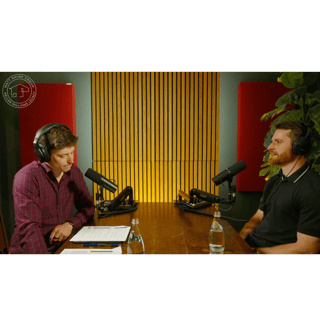
Speaker: All right, everyone, today we've got a recorded show because I'm away on vacation. This is Matt Ryan. He's a real estate agent. He's one of the top 20 real estate agents in Maryland. He's building an agency. And today we're gonna be talking about examining that whole real estate agent business model. We're gonna talk about his plans for growth. And we're gonna see just how things have changed over time and and see if we can't give Matt some feedback.
Speaker: Anyway, stay tuned. We're gonna get right into it.
Speaker: Matt, welcome to the show. as i already i already spilled the beans, you are a top performing real estate agent in Maryland. So I wanna ask you the first question is how many houses you have to sell to get that distinction?
Speaker: Yeah, so how many do you have to sell? So I sell close to about 150 year. And so to be- Three a week, that's ah that's that's a lot. It's a lot. And so to be a top agent, you have to sell, like a top 4% agent is probably 8 million in volume.
Speaker: And now every state and region is different, but that's in Maryland. And so it depends on your price point. But so my price point's probably around five or 600,000 on average with, with you know, that give or take what Maryland typically offers, some much higher, some a little lower.
Speaker: But that's it, it's a lot of crazy hours. So that's what I can describe. It's ah it's a crazy job. Well, that's I mean, that's a good point. um we'll We'll get into you know what the real estate industry is like and what it what it you know means for somebody who's working in that space. But but why don't we start with a little bit of background on you? Like how what did your career look like and how did you get into you know being a top performing real estate agent today? Yeah, so I'm now in my 40s, but when I started this, I was 20. So I've been doing this about 20 years and I went into right out of college into pharmaceutical sales. I wanted to go that route. I knew I wanted to do something more technical, but I've always loved you know to run my mouth, right? So I always knew I wanted to be in sales. And so I went in the medical field first. I did that for about seven years. And while I was doing that, I had my license. And so I was selling homes to physicians and you know I look relatively young now. I look like I was 10 back when I was doing this. And so it was challenging to say the least to get taken seriously. But I think um a lot of what I did was kind of commingling both careers.
Speaker: And then I realized the enormous opportunity that real estate offers. it It's incredible. So I was making great money as you know ah a pharmaceutical rep, right got a free car and got to wait in and and waiting rooms professionally, basically. and But the ability to get to meet people in the real estate world and get to be in confidence with them very quickly, you get to know them in ways that you probably may not even know some of your close friends and you get to do it quickly.
Speaker: And so I love that connection piece that you don't get typically in other career paths and that's what is addicting to me it's the people component like the homes once you've sold enough of them they're very similar but it's the people it's the connection and and that's what that's what it keeps me engaged and wanting to do it So so let's talk let's talk a little bit about the the way real estate is organized for people that don't know. um In most states, there's some kind of licensing system going on. And usually you have an agent's license, and then maybe you have a broker's license. And so an office needs a broker, and then you have to be licensed to be an agent. And
Speaker: And there's kind of a supervisory capacity there. And yeah in I know in some states, the offices manage trust accounts for deposits and things of that nature, too. So so obviously, when you started off, you you started off as an agent. Can you talk about the progression through your career of how you operated within the different offices that you've been part of? Yeah, so when I started, things weren't as developed as they are now in terms of the structure of teams and brokerages. They were a little different. So I started with a company ah that everyone probably is familiar with, Long & Foster. and And that was really the older original model, at least it was when I was there.
Speaker: And so they had a more traditional split structure. It was 50-50. And so I had to get a mentor at the time. who tried to teach me, I knew nothing. The structure of learning how to sell real estate is not taught in your pre-licensing class.
Speaker: So for those that are looking to get licensed and do a dual career, newsflash, you don't learn anything of note of any actual importance to help you day to day in these classes. It's just not how it worked. And I was a solo agent. I wish, I wish, I wish I joined a team back then because I would have learned, it's just you can shorten the runway of success.
Speaker: If you learn from someone who already has models and systems and knows what they're doing, um even though I probably wouldn't have lasted that long with someone else's team, but ah just due to my personality type, um it wouldn't have worked, but it would have been great for a period of time.
Speaker: And I wish if I had any advice for someone that wants to consider this journey, go and work for someone else that's successful and you can emulate the parts you like, and then you can kind of reinvent the portions you don't.
Speaker: um That's what I wish I did. And then I became a broker because do you mentioned the distinction. i went and got my broker's license in the state of Maryland. You can choose to open up your own shop.
Speaker: And that's what I thought I was going to do. I just never chose to do it once I learned exactly what that was. And I still am now hanging my license underneath a ah national franchise rather than ruining myself.
Speaker: Okay, so so let's let's break this down a little bit for people who may not be that familiar with real estate. So when you say you started off as an agent on a 50-50 split, when when a home is sold, or the the person selling the house is paying a a commission of some kind. And that commission is usually, so if there's a buyer's agent and a seller's agent, that commission gets split between those two agents. But then each of those parts may be in turn split between the actual agent and their office, right? That's what you're talking about when you say a 50-50 split?
Speaker: Yes, and so there's been many lawsuits, so don't get me sued. um Many lawsuits around agent fees and who's paying who and And a lot of ah consumers don't feel that there's clarity. And that's true. I believe that's a true and accurate statement as to who's paying who and am I paying? Like I'm a buyer, am I?
Speaker: So there's a lot of things I think that could be more clear in the process. And so if you have a good agent, they should do a proper consult so you don't feel like you're in the dark here. But what you would do if you're a seller, and this is, I can only speak to what I know, especially in Maryland, every state or region could be different. But most sellers offer compensation to bring a buyer's agent and their client to come tour the house.
Speaker: And so that's typically the way it works. That's not a fixed amount that could be negotiated. and And then also the seller pays their agent who represents their interest on the listing side.
Speaker: And so there's a lot of back and forth as to how much the broker gets, who is ultimately responsible for your experience. And the agent who you probably interact with on a one-on-one basis, they could have their own agreement. And that could vary dramatically. It could be 50 split. It could be a full cap, which is a different structure where the agent gets almost all of it. So there's lots of arrangements for the broker side.
Speaker: And then the consumer may or may not be aware of any of that. And so there's a lot of ways to do it. And it depends on, and honestly, your need. So if you're looking to get into the business, it's your need set would justify how much I'm willing to give up.
Speaker: When you're brand new, you should be willing to give up more to learn more. That's my opinion. And then as you're more proficient, you probably don't need to pay the same. Because what the broker and the office are bringing, the reason why they get part of the commission is because they're providing the sort of commercial infrastructure of doing this business. They're you know doing training. They have the office. They've got someone who answers their phone. like like They're supposed to be bringing, ah and like you say, in theory, they're supposed to be bringing a bunch of this stuff. And obviously, it varies from one office to the next what exactly they are offering the agents.
Speaker: um I remember, know I'm 50 now, so what I remember back in the 90s, a buddy of mine's dad was a real estate agent. And um you really had to be with an office that had, and in some of these offices had big support staffs, because there was a lot of manual paperwork being done, like things photocopied, things being couriered around, documents, all that kind of stuff.
Speaker: And then over the course of time, what started to happen with the internet is that increasingly people were able to find and do business with agents more directly. And the the industry had kind of evolved where I remember at one time, real estate signs had the office number on them and then they went had the cell phone numbers on them. And now you have to look really closely where I live anyway to see what the office is because it's like the the sign now is just about the person's face and their cell phone number. It it almost seems like...
Speaker: the the the the commercial gravity or the goodwill in that industry has moved from the big sort of national franchise names we might recognize to to almost being individual celebrity kind of... ah ah marketing, like, you know, the individual people, right, are trying to build a presence for themselves in the market, I guess, to the degree where they can move from one office to another and and maybe retain a lot of their will. You try to, and it used to be you had to drive. I mean, go back even before I started. If you wanted to buy a home, you had to drive to a brokerage office and physically look at the paper, right, to see what was listed in your own neighborhood. There wasn't a centralized source of information.
Speaker: And now it's we're actually going backwards in a weird way. We're now i mean, just as of recent as a 2026, you're taking listings that used to be everywhere in one common place called the and MLS, the the multiple listing service and we're splitting it up. Now all these brokerages are hiding listings, pre-listings, exclusive office listings. So now if you're looking to buy a home, you might have to go in multiple websites and talk to multiple people like you did in the past because everyone's trying to hide their inventory to a certain extent to have at a certain advantage in their eyes to sellers and to also retain opportunities for themselves and their team or their office.
Speaker: it's And this is just happening. This is something that you're going to find as a common theme moving forward. That's going to be a real issue, I think, for some people because of the fact that it's not that easily found.
Speaker: And there's the big players. you have All of this, we have ourselves to blame as ah as a community, a real estate community. We gave all of our information free. Just here you go to the syndicates, the portals.
Speaker: And that's how Zillow has all the homes and Zillow has the eyeballs. And so now we we bow our heads to the Zillow gods and all those other, you know, who now turn into brokerages, by the way.
Speaker: And so there's all these, it's really transforming the whole industry right now. And so be careful if you're getting in this business to own a brokerage, if this is, you know, something you discuss and I would run, i wouldn't walk, I would run out the other way. Personally, I wouldn't go into the brokerage. This is interesting because because, of course, at one time, 20 years ago plus, like owning a brokerage that had 100 agents that were all busy producing deals would probably be ah have been a very lucrative business to be in because you would get a very small piece of all those agents you know doing their work every day. Probably got a large piece of all those agents. The old well structure was much much more dominantly favored in the brokerage side and the agent got less.
Speaker: And now the agent controls all the cards. The offers i get, people that want my services to to hang my license with their brokerage, they're willing to give me almost all of my money because they want my production.
Speaker: And that's so it's flipped. Who has the power is now the agent, whereas before it really truly was the brokerage. Well, I know somebody here locally who had their own brokerage office up until just about two years ago or so. And then he realized how much effort, work, and liability exposure was involved in being the broker.
Speaker: yeah And then he said, you know what? For what I'm getting out of this, it's just not worth it. And he shut down his office. And they all went and joined another office. And now he's a team leader under that other office. That's what i am. That's the same model I chose. Let's talk about teams then, and because we talked about individual agents having a split with their office, for example, but how is it different with a team? Can you give us the idea of how how the the funds flow or that you share commission? So I think the team structure makes a lot more sense. So if you didn't know, we have a tremendous ah tremendously large turnover ratio in this industry. It's one that you can get a license, at least in our state, in two weeks.
Speaker: And so very small startup costs. You can very quickly get in. And by the way, the top earners make well into the seven figures. So if I can get into the business in two weeks and potentially earn seven figures, that's a very compelling cost.
Speaker: reason to potentially enter in, but the fallout rate is close to 70% in two years. And so it's a huge turnover turnover. That's why it's not that much. you ask, how do you become a top producer? I'd say have a pulse, be reasonably talented on the phone, be willing to work, and you're going to be in the top couple percent.
Speaker: it's not It's not really honestly much more complicated than that. it's just a lot of effort. um So the team model, to answer your question, is what I am now in. eye let the liability associated with hanging the license to a national company who can facilitate the payroll and the paychecks, offer liability protection um through these insurance providers. If you ever have a lawsuit or some other issue, they can protect you in a meaningful way. And then I get to just operate the business of being an agent.
Speaker: And so as a team leader, I facilitate the more more of a curated experience for an agent. So we handle marketing. We set up all of their client database relationship software. We set up the parties and we help them get into connection. And we try to focus an agent on their most important 20% their day Where I can tell you firsthand when I was new, most of my time was spent doing the 80% tests that don't produce any results.
Speaker: Like just, you know, I wanted to get accreditations and I wanted more letters behind my name, which by the way, everybody wants to sell something to a realtor, right? only takes, you know, two commissions and you can pay for this.
Speaker: you can only do that so many times before you realize you have no money. And so that's why if you join a team, you should expect a much faster on-ramp. And they're gonna tell you specifically, I don't care what you know, like you're gonna have to put at least a hundred contacts, for example, in your database before you start day one with me.
Speaker: You're gonna have to communicate with them and let them know your new occupation and who you're with. And I'm telling you, just getting on the phone and connecting with people As good as I think I am, if you, David, got into the business, like the people that know and respect you already, I'm likely not going to win their business. Most of the time, they're going to gravitate to the person they know and trust already.
Speaker: And so that's the interesting thing about real estate. It's about 76%. The number fluctuates year to year when the National Association of Realtors conducts a study every year. But almost 80% of people interview a single agent.
Speaker: One. Really? And it's somebody, obviously, they have some kind of connection to before. Possibly, or don't. that's a That's a generalized number. And so i i used to get in my head, how do I compete against someone that's done it for 20 years? like i was I would be nervous at the person I am now back then, but yet I'd still get hired back then because if they only interview one person and you're reasonably competent, you're going to get hired.
Speaker: And so I just didn't I was terrified to do something horribly wrong. And so um if you have a backstop, like a brokerage, not the best in my opinion, because they're so much larger, a team structure to me makes the most sense to make sure you don't screw anything up. You know, you say the right thing, they put you in the right light and you serve your client better.
Speaker: Well, let's let's talk about that because I've driven past the billboard. I'm sure many of you have watching this where it's like the so-and-so power team, real estate team, whatever, and you see the six people on the billboard together. so So if in a regular agent is splitting their commission with the broker, then you as a team leader, you've got some kind of arrangement with your brokerage where you're splitting commissions, but then amongst your teammates, There must be some sharing of the money as well. How does that tend to work? Yeah, most of the time, it's you you split your bucket up into two. And it all comes down to your lead source.
Speaker: So if this is a personal friend, your brother, your sister, somebody you know that I would have no connection to previously, you normally get a higher split for that particular lead because that's newfound business into the into the team that we would have never had.
Speaker: However, if we generate the opportunity through our marketing, through what we do, and we hand deliver them to you and say they would like to meet you at 2 p.m. tomorrow, that's normally at a different split that's more in in favor with the team.
Speaker: And so I think that's a very fair arrangement because that allows you, especially as a newer agent, to work with a lot more people than you might have otherwise. And then that's why I say it shortens the duration of the window that it takes while you're spinning your wheels because you're going to get a lot more opportunities in at-bats than if you tried to wait until you only work with the people you can generate on your own.
Speaker: So so when when a house is sold, for example, then there's almost like there's three splits. The the the agent handling it gets a piece. You as the team owner leader get a piece. And then the the brokerage gets a piece as well. it kind of gets split three ways.
Speaker: Unless you get it more complicated and you have a Zillow. If you click the button on Zillow, it's split four ways. So it depends on the lead source. So who generates the lead, generate that you the cash flow starts there every time.
Speaker: And it's no different than anything else. You want to talk about you know um Ramsey or any of these other people on there that talk about money, they get cuts too. So there's a cut all the way down the line, which – In a perfect world, you bypass all of that and have a relationship with someone in your local marketplace.
Speaker: And it it really, to to me, it's the best, most authentic relationship to have. so So from the point of view of someone who's building a team, how many people are on your team right now? Four us.
Speaker: Four of you. Okay. so i So there's a lot of businesses out there that um kind of have these these these professional operators, right? let's Let's just say professional person, skilled person, right? Sure. And so what we give about law firms, accounting firms, architectural firms, but you also have like hairdressing workers. studios and places like that, where these individuals are the talented people that are dealing with the customers and the relationship between the the talented team member and the customer, that's where the goodwill resides. And so eventually somebody gets to a certain point where they realize, hey, I could go off on my own.
Speaker: Happens all the time. Yeah. And so, so what is it that you are focused on as being a, by being a team leader to try and, and, and keep people happy being on the team and and within the, you know, your organization?
Speaker: Yeah. So much of what I do, most normal humans don't want to do because it's not it's not the fun part of the job. um I don't like, I still don't like the finding talent on the administrative side, finding them, um trying to recruit them, trying to be able to ensure that they get paid competitively, keep them engaged in opportunities. It's the people side of the business that as a team lead, you're responsible for. I always say, I can't predict my income in 60 or 90 days, but I could sure as heck tell you exactly what I'm going to pay.
Speaker: i know my ah my financial obligations are outlaid. And there's a reason why have people all the time that want to work on the team, but I don't take them on. I could grow exponentially if I chose.
Speaker: I'm very careful to do that because then I'd have to dramatically increase my administrative size of the business, which is a fixed cost. And I'm still in production. Many team leaders, once they start down this path, they go, oh, this is great. And they start reducing their personal production.
Speaker: And what they do is they start trying to give all the opportunities to their team and they have to make their money solely based on team production. And that's tough. thats ah Talk about a business. If this is a business conversation, that's the that's the path that every team leader finds themselves on. And when do they reduce? Because I did over 40 million individually last year, which is not that's not a healthy equation if you know how much work that is in addition to trying to run a team.
Speaker: Well, but but here's the challenge because when you say that people try to back away and become more of an administrator with the team members doing all the work, the actual transactions, yeah what you're talking about is what is traditionally thought of as a path to scaling, right? Like this is how I'm going to grow this bigger and bigger.
Speaker: But what you're also describing is you're describing a very risky business model in that you are liable for all of the administrative overheads and all of the staff staff and the office rent and all that kind of stuff, and you are dependent upon a certain level of business production, if there's a general downturn in activity level, which I know is happening in some places in the US, like the some states, you know the number of transactions is going down.
Speaker: Well, that's a recipe for a squeeze, right? I mean, so... So what you're saying is part of what you're doing to try to prevent that is you are also doing part of the work. and it's im doing I'm doing a lot of the heavy lifting. No one is more profitable on the team than the team leader because I don't pay a split to another agent. So the the if I sell a million dollars of real estate, it's significantly more profitable to the business entity.
Speaker: And so if you had to do a whole podcast based on how to run a team, you learn that every hour I put in the business is almost cheating the time I could put on the business.
Speaker: And then you end up in this wheel because your income that you get used to is so high to make that transition over to solely being a team leader. By default, usually your income dips for a period of at least a year or two, three years it could be.
Speaker: And then if you choose to have private school and you now you're driving the newest car and you have just the big house and you we all kind of grow right to the extent that our income grows and our it's not, you know, hopefully that's not everybody, but it can happen.
Speaker: And then you realize, oh my God, you're self-employed. You mean the government wants a third of this? And we get the whole thing. So if you make 10 grand in commission for a house you sold, they give you 10 grand.
Speaker: yeah And it's on you to realize and be wise enough to maintain deductions. And, you know, I have a lot of friends that are great as agents, but really lousy business people. And that is one of the reasons even good agents cycle out because the IRS gets them.
Speaker: It's probably the number one reason. Because they spend all their money. they don't They don't do that accounting and set aside money to be able to pay their tax bill. Because the IRS isn't a problem if you have the money to pay them. And if you're going up every year. So it sounds crazy, but we expect, especially if you're pretty good, you go up. I doubled every year for at least 12 years.
Speaker: and Every year. So no problem. I got it. I got it. God forbid you have a down year or slow down in any capacity. You better be aware of it. And the and i once again, I have to admit, this is the way most of us run our businesses until you get to a certain size. You look at your operating checking account. Is it higher or lower than last month?
Speaker: That's it. That's the whole P&L. It's not a healthy way to run a business, but many people choose to do it that way. And it hides a lot of things. So are you building a saleable business?
Speaker: I don't think you would pay me $5 for my business currently. yeah so but But the reason why I want to ask the question was because a lot of what we're just describing about that sort of scaling methodology, you know build up a team that sets yourself back as the administrator, it is usually geared around this notion that you're building a business as an organization with other people executing the day-to-day work. yeah And that you are somehow building this saleable thing. But but to your point, I would like i would agree with you. It'd be really hard for you somebody to want to write you a check to then step in. it is it is possible. But the challenge with this particular industry is those that become team leaders often are very talented salespeople.
Speaker: yeah That is not, I always say that I'm a great salesperson inside of my business. I'd hire myself every day for that role. But to hire myself as a CEO, that might be a different thing entirely. I think I've proven myself as a salesperson, but the people that get the opportunity to run these teams oftentimes are really successful salespeople, and they are not effective managers, or they're not effective in the role as CEO.
Speaker: And I've even had one business coach tell me, I've always had business coaches where I should wear a physical ball cap. So anyone in this office knows who what seat am I wearing? If it says CEO wanted, don't you ask me about a file that's closing. you know like But no one does that. They come to you with all these. like That's the challenge. I feel like some of us have earned the right to start a team but haven't aren't truly deserving of it yet. like We haven't embraced the other side of the business.
Speaker: Well, you know it' you know, this whole, am I scaling, am I growing, am I building a saleable business question? I mean, a lot of people like to to get in on that excitement, right? Because that's what the hype is about. It's like, let's grow, let's build, et cetera, et cetera.
Speaker: um What I have seen in a lot of people's businesses is that they will wanna grow and that means maybe hiring another staff member. and then And then of course that causes earnings to go down because you've added some of the payroll.
Speaker: And now you've got to grow again to get back to the prior level of profitability. Yes. Right. And and and it's almost like you, I always envision it as a staircase. Like you might actually become unprofitable when you hire the next person for a little while, then you've got to grow into being able to afford them, et cetera, et cetera. Right.
Speaker: where And the whole idea being that at some point in the future, you're going to be able to sell this for a multiple of earnings, but honestly, the multiples don't get that high. And ahve I've challenged some business owners on this before. I'll just say, well, if you didn't grow and you took a big chunk of that profit you're earning that you're thinking about investing into this new person, you just squirreled that away somewhere.
Speaker: And you did that for like six years, you would end up with the same net amount of money as you would for a sale of the business if everything worked out okay. Right. And so there really are people in certain scenarios and certain businesses who probably should not be trying to to scale and grow to some saleable business. like There are some more so sure ways to end up with the bag at the end.
Speaker: Yeah, and I think there's tremendous profit margins in our industry, in real estate, at at at smaller levels. And then there's a lot of pain in the middle. So a lot of the go broke or that that messy middle where you're trying to scale. And I think the people that have it figured out, quite frankly, you can't hate on them. It is the Zillows of the world. It's the folks that have realized whoever has the lead controls the entire game. And so Zillow, for example, charges agents 40% on average.
Speaker: It can vary, depends on where you are and price point and all these other things. But they're collecting basically what a team could collect on a in definitely more than a brokerage is collecting, way more than that. um By just providing the lead source, and by the way, they their their administrative staff is somewhere else, confined to just worrying about the website and the leads. And now they're into mortgage. Now they're into all these other things. I believe they're the smart the smart money is that direction.
Speaker: So I would advise anyone looking at our industry that's considering getting into it, go after the leads, be at the top of the funnel, not near the bottom where I am, if you want a scalable business where the money is.
Speaker: So explain to me how it works. People, ah real estate agents sign up with Zillow and say, I would like leads. Is that how it works? If you can wait in line. Like it's not, it's not easy. They have all the chips. So, you know, Redfin, all of the, the, the syndication portals,
Speaker: have the eyeballs. And that's what all these brokerages are starting to discover. That's why they're doing all these, what I started the podcast with, where they're trying to hide inventory, if you will, under the eyes of saying this is an exclusive listing because they want those eyeballs. They need the they need the leads.
Speaker: Because everybody who thinks they're an agent is doomed if they don't create a reason to be contacted directly. And so if you lived in my area, the reason you want to contact me directly is you want Matt Ryan and and or the service or the enthusiasm, my connections, you want me, you would know, you want me on that wall in theory, right? Where you don't want a chance of by clicking the button.
Speaker: And so it's how well can I, it's one of the reasons I do a podcast is trying to get my voice out there to articulate the reasons why I do what I do. You're trying to create goodwill for your brand your personal brand in your marketplace. so you As a consumer, if you were to move to Maryland, this is what's going through my head. Do you want to risk it by clicking an an aggregator button with all the national portals? And most of the time, you're going to get a much less seasoned agent who's willing to give up that commission split or who's on a you know who eventually is going to have their little name badge of the entity that you click the button on, who's a paid employee that... that
Speaker: will not give you the same level of knowledge, service, and fiduciary capacity that someone who's at a at the highest level of the service. like I've charged the same as what that button would be. You don't pay any more, for example, as a buyer.
Speaker: But in theory, you'd say, well, I'd rather have him negotiate for me. like If you had the choice, like I don't know, if I had the choice to have someone who's a multiple business owner, multimillionaire, someone even better than myself,
Speaker: negotiate on my behalf when I want to get into a space for the same amount of money. Wouldn't you choose that than someone who just got in the industry six months ago? who's never around now this link The 150 houses that you said that you sold, was that what your personal production or was that your team?
Speaker: No, that would be our team. Production runs through the team. So my capacity individually was a little over 40 million. And so i I think I did close to 70 of that. Okay. So, so 70 is still one and a half a week, right? That's three houses every two weeks, right? So in understanding what is involved in what you do, I mean, there's there's a lot of running around. Like what what kind of time load does your business require of you? Because real estate is an evening and weekend game, right? And you got to be around for business hours for the business stuff that happens during the day.
Speaker: it's It's a lot. So i always say if it... It's one of the reasons I have a team is because I still love what I do and I want to do it, but I also have three little children. And so I'm a dad and a husband first is the way I truly view it. And so the only way to do it is to have an entity. So I have other people that help me to facilitate open houses. Or if you want to request a showing last minute on a Sunday night, you're not going to get me anymore.
Speaker: And I don't even I'm not even going to apologize anymore for that. And so when you set expectations, it's a lot better. um I think that in that capacity, because I am needed seven days a week.
Speaker: And so I have my phone on me at all times, but I coach three little league teams. And so it's like the privilege of you're working for someone else I could have never done as a parent when I'm doing with three kids, nine and and younger, that I'm able to be a participant with. i I grew up on a dairy farm. My father worked, my hours are worse. He couldn't participate doing anything because that farm, he said, those cows, Matt, need to be milked twice a day, regardless of how you feel or I feel or what's your game schedule. You can schedule appointment and meetings around a baseball game. He can't schedule the cows.
Speaker: Correct. But you want the privilege. I just, the privilege of working for yourself. I laugh i like, I don't have a boss per se, but I have 70 bosses every year. Right. So it's a little bit different.
Speaker: Are you, are you taking advantage of any kind of AI tools in your office to try to magnify your ability to handle as many clients as you do? We do. And so we're connected through AI, but I also have a virtual assistant help.
Speaker: So if you text me or email me, I have someone that's able to watch it seven days a week, 24 seven. And so you get timely responses and then you get filtered the things that need my eyeballs versus the things that don't because I'm very big on. the 80-20 rule where 80% of the noise doesn't require my attention, but it is still important.
Speaker: So if you need to schedule a walkthrough prior, you know, two weeks before settlement, just to measure the floors because you want to get, don't new carpet installed, you don't need me directly to do that. right That's the hard part because you used to do it all.
Speaker: And so now I have some help to get through that to make it a more manageable, you know, um workload. But I always say at the same time, I don't think anyone hired me directly for my ability to give them access personally.
Speaker: They just need access. do What do you think the future holds? you mentioned you You alluded a couple times to these big aggregators and how they're know changing the way things are doing. I think you've made an allusion to you believe one day there could be like Zillow employees in different cities that are like doing these deals and things.
Speaker: so So how do you see it changing? do you do Do you see real estate sort of fragmenting between these big operators and these smaller agencies that are trying to do their own exclusive listings? Like what what can you foresee sort of happening Yeah, I would say everyone has their own opinion on this. my has touch My opinion is such that I think we're going to go very similar. the The real estate agent's going to go a very similar path to what I see a lot of financial planners.
Speaker: So back when the financial planning industry went through their big shakeup, you remember we were now competing, if you were a financial advisor, its to Fidelity and to all these online e-brokers, and they thought there'd be no such thing as a financial advisor.
Speaker: If you recall that it was just doom and gloom, they were all getting out of business. Well, that's not true. ah Several, many of them did. And by the way, some of them that did good, like they weren't probably the right fit, but those like I still have a financial advisor. i don't know about you. um So the better ones still have jobs. The ones be able to differentiate themselves and offer a more curated experience and justify their fees exist.
Speaker: So I think in real estate, you're going to get a lot of big players that are going to do a lot of transactional volume for much lower fee structure, which will be better for consumers. You know, if you live in a certain marketplace where there's 5,000 homes that look just like yours, whether it's a newer community like in Arizona, and they're all the same, you know, you could do that online. Click a button here. you know, someone takes photos the next day.
Speaker: There's going to be a service for you that's at less cost. And I think someone like myself who wants to be a more hands-on, more of a tailored concierge experience, I think there will be a market for those people as well.
Speaker: i mean So i think I think it's going to have a lot of compression, and I think fee structures in general are going to compress significantly. Now, there was this big lawsuit, you kind of alluded to it, where the the whole commission structure and splitting of commissions, etc. was challenged. Have have you seen in your market anyone try to get really creative or innovative with something new and different that that you think could be in insightful for for other people to look at? I hate to say it but I think the only people that made out well during that lawsuit were the attorneys.
Speaker: You know, they made several hundred million dollars in fees, but I don't think consumers saved a dollar, in my opinion. I think I have a lot more paperwork for you to sign now as a result of that lawsuit. But if you look at the National Association ah survey that's done every year, the average commission went up in the country, not down last year.
Speaker: The number of buyers, for example, choosing to be professionally represented by an agent is the highest in history last year. So you see more people using agents and you see average agent splits, like the actual dollars go up.
Speaker: And so isn't that fascinating considering we had a lawsuit that was supposed to change the game? Well, I don't know. i like Because there's the lawsuit and what happened in court, which is you know when people think about a lawsuit, they think, okay, well, there's this legal action and it had an outcome and there was a judgment and all that kind of stuff.
Speaker: But I think one of the other results of the lawsuit was just the fact that there was so much media coverage about this thing and so many people learning about these details sure and so many people maybe who didn't know Well, wait a minute. i like I can get my own agent to work just for me and I don't have to pay them. like They get a split of the other person's money. like like It could have been very, very bullish for the industry in general and for the idea of getting a buyer's representative. Because I know that some of the agents that I know
Speaker: have told me that earlier in their career, it was it was more common for a buyer to have an agent back in the days when there were like printed um MLS books, you know people didn't have access the information. So they'd reach out to a realtor, maybe they'd reach out about a house, but the realtor would say, what are you looking for? Maybe i can find something. And then all of a sudden you got a buyer relationship, right? And then it moved with the internet to people being able to very clearly see who had the listing for the house And the number of what we call double endings went way up because people were reaching out directly to the agent.
Speaker: And I think maybe this this ah real estate commission lawsuit kind of shone the light on the fact that, hey, you know like you know potentially there's a conflict if you both have the same agent or you know maybe i should have your own agent, like all this kind of stuff. it It could have educated the public in a way that an ad campaign may never never have been able to.
Speaker: that's ah That's a more hopeful way to look at it. That's possible. I think some very savvy buyers are asking questions that they might not have otherwise asked. I do believe that's true. I think that goes back to just my personal belief. You should have a full in-depth conversation if you were coming in as a client of mine. These are things I never...
Speaker: I never didn't speak about. i just think the idea that most people don't even have consults is mind blowing to me. And by the way, all of these search engine you know platforms out there, they don't build in consults. They're required as an agent to show up and meet them at the front door because they click a button. They want to see the house today.
Speaker: You know, most people don't want an agent, they want a house. Likewise, they don't want a mortgage, they want a house. And so you have to give them the candy first. And I think that's doing a disservice. It's like, all it's like,
Speaker: it's almost insulting an average consumer's capacity to understand the process and to to understand their options, their choices, and for them to make decisions. I wish there was a law that says you have to have a a consult, a proper consult, which there is not.
Speaker: And I think if that was the case, I think people, you'd learn very quickly if the person and opening the door knew anything, because you could ask questions and their ability to correspond with you would be indicative of do you choose to work with them.
Speaker: So you mean like you think that the buyer should have to go through some kind of like sort of almost like an like an interview or getting to know this person to really understand that they're getting the right representation? It would be nice if a consumer knew what it is that they're about to do.
Speaker: And so some consumers know, have done it many times, are very savvy. They might not need it. But boy, it would be nice to have protection for a buyer or a seller, to be honest. To have a a sheet that said, these are the facts.
Speaker: This is what your agent should be explaining to you in here, initial off here. I think that would be very useful. This is one of the hazards of licensing, I find. Because because as soon as you have a government agency that says, or a government body or anything like that, that says, we're going to license people to do a certain thing, that you create this implicit endorsement.
Speaker: where people then start to think, oh, well, this person has a real estate license, therefore they must check all the boxes of being you know perfectly qualified and knowledgeable when in fact, you I always say people people like real estate agents are kind of like doctors. like there's you know there's There's brain surgeons, there's family physicians, there's, you know there's, you know, dermatologists, like there's all kinds of different doctors that do all kinds of different things. And in the world of real estate, there's the people that are doing industrial warehouses and the people doing commercial strip malls and the people doing houses, like they all got the same license.
Speaker: And there was was still saying what do you call the person that graduated last in medical school? Doctor. Doctor, right? So it's not the same. ah Getting a license in real estate is, I think, the is the lowest. It's the lowest barrier to entry. And I think a lot of my own, like, I don't exactly think super highly of kind of what I do for a living, in part because of sometimes the people I have to work alongside. A lot of what I do is to keep it all together sometimes because the advice that's being given or no advice that's being given to the other side
Speaker: is detrimental to everybody. And so now I'm trying to keep Humpty Dumpty up on that wall. And if you don't think that's a lot of what an agent has to do sometimes, that's exactly what we do.
Speaker: and And I think a consumer might not know that. And so I think online ratings have helped, by the way, like the scores you can get, the reviews you get, that's very helpful.
Speaker: I think nowadays you can see your your deal flow. You can look at Agent Up and see if they've done any transactional volume. um i think i So those things I think are very good tools. And that's why I go back to my financial advisor comparison. I think there'll be a lot less agents out there. I think we have close to 2 million agents and in general in the United States at the moment.
Speaker: I believe it should be at least half of that, maybe a quarter of that. And I think that would be a big big benefit. I think it would be advantageous for everybody.
Speaker: Well, I think, as you said, because the barrier to entry can be so low in in a lot of jurisdictions, whenever you have a rising market with with a lot of hot activity, you draw people in who see it as an easy way to to maybe make some commissions. Social media doesn't help. You just see the photos of that closing table and they'd say, oh, that's easy. Look at that. They're happy.
Speaker: Yeah. And, and, and, and, you know, you get some, some people are doing ah some real estate agents are doing marketing online where they're doing the whole lifestyle. Look at me, I'm rich doing this, come buy a house or whatever. um But then as soon as things turn, of course the numbers crash and ah like, I, so it just ebbs and flows with the market, I guess it, the, the,
Speaker: ah and so And we're going to come to an end here of this conversation. So I've got to ask you, because you are a top performing real estate agent, um what do you see as far as house prices in the coming year? Are you seeing things are the same? They're going to go down or they're going to go up?
Speaker: What do you think? And keep me in mind, you are in Maryland. And so obviously, this will be an answer attuned to your market. Yeah, the weatherman analogy is the best one ever. It's like you know saying, what should I wear? Do I need a coat today? you know In general, like you can't have a national forecast. What's the average temperature in America? Not very useful to determine if you need to wear a coat. right um So I can tell you, in general, um our market, we're a little bubble. So we're outside of DC. We have a lot of government contracting jobs, very high-paying jobs.
Speaker: We have ah one of the most secure markets. We don't see a lot of the the high highs and we don't see a lot of the the low lows here. So we are very consistent. And so I literally think I've had one down here since I've ever been in business.
Speaker: So that's how rare that is here. We're protected. We're going to see probably 6% or 7% increase in home values here.
Speaker: And i think interest rates are preventing because they're still high, right? We've been promised low interest rates. I don't see them yet. um A lot of obviously that's a much bigger conversation, but it is what it is. um i can just look at the numbers. I think a lot of people aren't going to choose to move and that that is going to continue to have the supply side constrained.
Speaker: And with lower inventory available, you can continue to see pricing go up. And so I know a lot of people that have waited to buy a home. You can wait ever since COVID. It was too crazy in COVID. I can't possibly buy. Well, now you can buy that same house, but it's going to be 30% or 40% more expensive with double the interest rate.
Speaker: That's what you say. And so I just don't believe when people say, i can never buy a home. Like the average age of a first-time home buyer in the state, or I'm sorry, in the country is now 40, if you didn't know that. I think that's shocking.
Speaker: um And I think we need to have better publicity that you can actually, and get the word out, you can buy a home with very little money down. And in in most marketplaces. So I know there's certain areas of the country where it's so expensive, it's outrageous. But many, many locations around the country can be done.
Speaker: So I don't think we're going to have a lot of down markets throughout the country. I think in general, it's going to be relatively strong. um you know it's it defi It defies logic how we've had such a strong market in considering the headlines every day we all read.
Speaker: And this has been going on for a while. i don' know about you, but I still try to figure that out. Well, but I know that there's some there's some places where where prices are going down just from what I've seen online. But again, like as you said, it's very localized. It depends on where you are.
Speaker: yeah Matt, if somebody is interested in buying a house in Maryland, how should they reach out and get connected to you? ah The easiest thing is just to find me own online. Go figure that, right? You just look up Matt Ryan in real estate and I better pop up or I'm going to be very upset.
Speaker: And so, um yeah, I have my own podcast. I love doing what you're doing. So, you know, what the world needs is another podcast. I've learned that. That's a very important thing. And so it's been useful. So you can always check me out on there. And and I do a lot of consults with people who are on the verge of moving. I might move. And so it it can be an early discussion. So it's not necessarily like I'm moving tomorrow. I'm ready to hire you. It could be an initial conversation. Happy to have it Awesome. Well, down in the show notes, I will put your real estate brokerages website as well as your own LinkedIn URL so that people can reach out and find you. And thanks so much for joining us today. This has been a great conversation, Matt.
Speaker: Well, I appreciate it Thanks for having it All right. Have a good day.
Speaker: And big thank you to our sponsor, First Home Mortgage. You can check them out at firsthome.com.