Transcript
Speaker: So we have a lot of tradition in lawyering in general and for good reason, you know, we have precedent and we have, you know, in, in legal cases, we have precedent in contracts. We have precedents as well. You know, we have boilerplate language that is supposed to be tried and true and safe and what we're supposed to use. But even that if we know it gets negotiated.
Speaker: but the problem is that the people who live with those documents cannot understand them they literally cannot understand them and many lawyers cannot understand as well yeah that's so there's something wrong there right the idea of memorializing something in writing is so that you can have clarity and agreement about what it is you're doing with another party.
Speaker: And we are completely missing the boat. If we are just putting the like, whatever, like it looks good. i don't know what that indemnification really means, but I'll just copy paste it in.
Speaker: Yeah. So that's, that's the problem is we have a lack of clarity.
Speaker: Hi everyone. This is Akshay Verma. I am the chief operating officer at SpotDraft and also the host of our podcast, SpotDraft Beacon Voices. I'm excited to have a conversation today with a longtime peer and former client in the industry during my Axiom days, Lindsay Krolick, who is the senior director of ai governance and product legal at a fascinating new AI company called Credo AI. Lindsay, how are you? I'm So good. It's great to see you. And it's been fun kind of catching up with you over the years. And so I'm excited to be on your podcast. No, I appreciate you taking the time. i know it's a crazy schedule, especially at a startup, but generally for us and especially at your level. So appreciate you taking the time. You've had a fantastic career on the in-house side in privacy through some amazing experiences in corporate changes and so forth. You go to law school, you do a bunch of commercial work, um you come out, you open your own firm. So contracts have kind of been in your blood, so to speak, for the entirety of your career, so much so that you decided to write a book about it.
Speaker: And again, that book for our listeners is called Visual Literacy for Lawyers. We'll be doing a a webinar and a workshop at the end of October to walk people through the concepts and the practical applications of that book. But take us to kind of the beginning and the inception of that idea with your coauthors, how did that come about and how did it finally get to the point where it's, it gets away from being conversations or around the coffee table or lunch table or dinner table, or whatever table you choose about the ideas and be like, no, this is worth writing a book about. How does that happen?
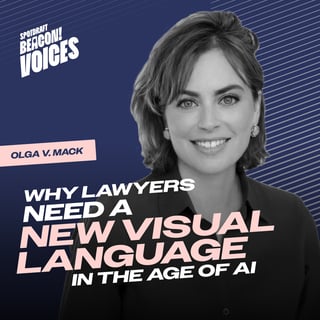
Speaker: So, well, I think, I mean, there was another book before this book that I was invited to be a contributor for. Olga Mack, one of my co-authors, had wrote a book about product counseling because I i was a deal lawyer, but then I i eventually sort of, you know, you this is what happens. You yeah da start dabbling. I became interested in privacy and and then I got tapped to work on the PayPal separation from eBay, which was an amazing project. And that's where I met you, Akshay. And then I came back and led the product legal team. so
Speaker: um Olga was writing this this book about product counseling with Adrienne another product lawyer at eBay. And i was one of the contributors on that book. And we would have these really fun calls to just, you know, it was kind of like therapy, like, oh my gosh, you do that too. Yes, that's the way we do it, you know. And i um during during that process, I kept saying things like, I feel like a visual would be helpful here or maybe a table, you know, because that is the way I started to think I became interested in plain language, which is a really big part of visual contracting. Actually it is, there is text, um, that we talk about in the book as well as pretty pictures, you know, yeah you you do have to start with the text. Right. And for me, I became really interested in in plain language when I was working at PayPal on rewriting the user agreement and privacy policies worldwide, which was like a huge project, 30 different versions, et cetera, and ah and real and real business drivers there.
Speaker: um And so Olga said, you know what, Lindsay, had been writing, I had been thinking about writing this visual intelligence, visual visual literacy book for lawyers.
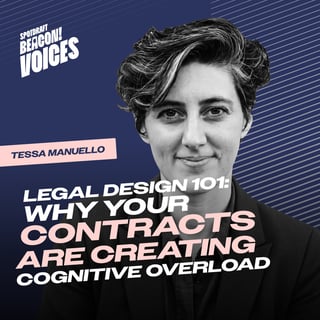
Speaker: Do you want to be a co author with me?" And she actually already had somewhat of a draft um that then i took a look at and, and, you know, kind of, we reshaped some things and decided this should be about contracts, actually, like, we want this to be a real practical application. Because there's a lot of things that we could talk about with visual literacy for lawyers, but contracts is so fundamental and, yeah and, um, and it's, and it's a great place to start. And then we found Tessa and brought her in as well. And that's really started to come together.
Speaker: Got it. Got Help, help our listeners. i think I know the answer to this, but I, I, I'm going to ask anyway, help our listeners understand why you think contracts are so fundamental when it comes to something like visual design.
Speaker: Well, I mean, this is where business happens, actually, right? So this is where the the business terms live. And it isn't, you know, it's not litigation that's going to maybe, you know, go on in the background. And it's super, it's very, very important, of course. But business people don't necessarily interact with litigation, or they don't want to but Hopefully they don't have to, right? ah Contracts is really,
Speaker: where we are living when we're trying to drive value for the business, right? That's what business is all about is revenue, right? At the end of the day, that's pretty much what we're talking about. And so it's, it's the bread and butter ah that we need to get done. And there's so many, you know, right now, like one of the interesting contracts that I'm working on are AI addendums, which is like a new thing that we didn't used to have. And So sometimes you can have fun things like that, challenging new contracts that come into play that are just vital for risk shifting. um And, but at the end of the day, this is about, you know,
Speaker: the the revenue and, and propelling the business forward. You in a few sentences, what main problem do you think the book addresses or tries to solve for the readers and for, we'll we'll talk little about who you think the readers of the book should be, uh, ideally, but, but what's the problem that you think it's really trying to solve?
Speaker: So we have a lot of tradition in lawyering in general and for good reason, you know, we have yeah precedent and we have, you know, in, in,
Speaker: legal cases, we have precedent in contracts, we have precedents as well. You know, we have boilerplate language that is supposed to be tried and true and safe and what we're supposed to use. But even that, if we know it gets negotiated.
Speaker: um But the problem is that the people who live with those documents cannot understand them. They literally cannot understand them. And many lawyers cannot understand them as well. yes So there's something wrong there, right? The idea of memorializing something in writing is so that you can have clarity and agreement about what it is you're doing with another party.
Speaker: And we are completely missing the boat. If we are just putting the like whatever, like it looks good. i don't know what that indemnification really means, but I'll just copy paste it in yeah So that's that's the problem is we have a lack of clarity.
Speaker: Yeah. And obviously I think, you know, the, the, the logical conclusion from the identification of that problem is you're losing out on revenue. Potentially you're creating risk for yourself that may not necessarily need to be there. you're missing out on obligations and opportunities and all the other funky things that can go into the agreements. you know, in my world, i talk a lot with our customers about contracts being the lifeblood of the business. I've now used that term twice in this episode, by the way. But, um, but that's so true. You cannot run, you cannot start, run, grow a business without agreements.
Speaker: Um, and so I'd love to get your take. You know you, you said that, um, the people who live with these agreements and and i I'm going to assume that you mean both the lawyers, the legal team, but also the business, because it's really the business that brings that deal to the table, that they don't really know what the agreements say.
Speaker: Yeah. and can you can you just give like, why do you think that is like, where did all this language structure? Where did it come from? Did it serve a purpose at one point in its existence? And have we just surpassed that need?
Speaker: It definitely i mean, it serves it serves a need and it continues to serve a need. I mean, it even just like the A.I. addendum that i just brought up yeah i mean a year or two ago, I think we were starting to see A.I. clauses.
Speaker: put into like this agreement and that agreement and this agreement and that agreement. It was kind of shoved in. And now we have this ballooned, what I've written one myself, yeah AI addendum because there's a lot of complexity to address there. um So it's it's not that it's not needed necessarily, but um we can do better. I think part of it is that a lot of the precedent contracts that that we see, the traditional contracts that we see that that students learn from, junior lawyers learn from.
Speaker: They are long blocks of text, nested sentences, um all caps to call attention to things, which is like a typewriter.
Speaker: We don't work it with typewriters anymore, guys. So we we have all these amazing tools that we are not using because we're just, a lot of it is just habit. And we lawyers generally want to feel safe.
Speaker: and And, you know, the the traditional way of doing things can feel very safe. But I think, and we talk about in the book, that the real value, right, is bringing the clarity and highlighting the opportunities and allowing the business to get on with it, right? yeah Getting that deal to close faster is something that every business is asking for, you know, absolutely with our legal teams.
Speaker: So as you think about the book, and I know it's written for lawyers, I'll ask a two-parter one, is there a particular segment of lawyers that you think this is really, really useful for outside of just commercial lawyers? That's one question. The other question as a follow-up is who are the other stakeholders across the business that you hope read this book?
Speaker: Yeah. Yeah. I mean, I think that, um, you know, commercial lawyers, i mean, it's it's written through the lens of how can we use this for contracts, but the lessons are really universal for legal language yeah in general. So the examples that we're talking about in the book are contract examples, and it's helpful to see, you know, ah before and after of a contract provision and see how you can do it differently. But you can apply this to
Speaker: any other type of law. And I, you know, just even house, you know, because I've been a deal lawyer, a commercial lawyer, i have a product counsel, private run privacy programs continue to do that now work on AI governance and, and there's, there's a lot of documentation, we generate so much legal language.
Speaker: um you know even consent flows you know or onboarding flows and what's the legal language and how does that you know how does it all play in. um this is This is really you know useful for any in-house lawyer. I'm i'm not a litigator, but I think you know just in general, um any lawyer who wants to be more clear about their writing and learn some techniques for how to really reach their audience.
Speaker: I think this book is really going to help. Yeah. Uh, anyone outside of legal, uh, business, commercial teams, as in like sales teams, things, yeah things ah of that nature. I mean, usually when you're working on projects or contracts, you are, you have a cross-functional team, you know, and, um, it's interesting how you will, like, for me,
Speaker: You know, when I'm working on a contract, i might have questions for product. I mean of course, sales, finance, tax, right? The usual suspects in the product legal arena and privacy work a lot with um design, content, experience, yeah customer service, right? I mean, all of these groups that you might not necessarily think of that touch words same you know i mean we all touch words it's it's not just lawyers that are interacting absolutely know with words so you know one example of that is um when i was working on the paypal user agreement we we a little tip that i can share is that we were struggling with all of the financial services regulatory lingo right this is you know sometimes
Speaker: you do have in contracts legally is that you need to have, right? Because it's defined in a financial services, right? Or whatever. Sure. And, but we had design content product, me, UK legal, German legal, Australian German you know legal. none of us could agree on what these words meant that we were using.
Speaker: So the tip is we actually pulled all of the terminology out of the contract and put it in a spreadsheet, yeah you know, and i built a table, right? yeah You don't have to use a spreadsheet if you're not a former financial analyst like me, but you can, you you know, anyone can build a table. They're so useful. Just pull it out of the contract and Get a set, like, what are we even talking about?
Speaker: yeah um So everyone needs these skills. If I have a book and it's got one paragraph in it and it's small font and it's just packed, my brain literally goes, oh, I don't want to read this. or And I just have to slog through it. Versus, let's say on that same page, I have a list of six bulleted items.
Speaker: I'm going to absorb it like that. Yeah. So what do you think it is about the eyes for lawyers and contracts that's particularly um relevant to write a book like this?
Speaker: Yeah, I mean, I think that, you know, there's there's so many studies that have been done, like we, you know, we spend somewhere between 11 to 13 seconds, you know, depending on the year that you're doing this study and reading an email. So 13 seconds reading an email, right? Okay. And um What you retain in 13 seconds, if you look at at this with a contract, that provision, right? that That dense, small paragraph of text, you're probably gonna remember the first couple points in that section. yeah you know um And so one of the things that we've learned from user experience design and just the way you know people interact with,
Speaker: um any kind of experience and reading a contract is an experience, right? And so we know that people skim and they're trying to move quickly.
Speaker: and um and so there are techniques to help, you know, separate the ideas, you know, put things in bullet points, use a table, use a flow chart, and we can digest things so much quicker. Yeah. um And so I think, you know, for, for lawyers and contracts, you know, if we're trying to um get something that is very clear and we can close the deal faster, um you know, if we have something that is um in plain language and also has some white space and, you know, just simple visual treatments, it doesn't have to be this like amazing, you don't have to draw, you really don't. yeah but but You But there's so many different techniques that you can do that you can use to to make this digestible and so that people can read it, but then so that two parties can negotiate it quicker That's a lot of the pressure, right? It's it's like, get the deal done. Yeah.
Speaker: Yesterday. Yes. Please. Yeah. I you actually, it's a perfect segue to my next question, which is just around the deal making process, which is to some extent, and we learn this in contracts, consideration, offer acceptance, there's a meeting of the minds. But those minds, to some extent, are adversarial in the process.
Speaker: But the more that you can have, the more and earlier that you can have a meeting of the minds, the faster your deal process is going to go. And most likely the more effective of a deal that you are going to create from a contract perspective. Do you like, is it too bold to say that the impact of the concepts and practical applications in this book can actually lead to that kind of an outcome on a regular basis for a legal department?
Speaker: It absolutely can. There's a fantastic study that we talk about in the book and people can read about online too. It's from Harvard Business Review yeah from like 2014, I think. And it's GE rewrote. They spent three years, actually. It's a pretty significant time investment because this isn't necessarily easy, yeah but it's worth it. It's so worth it. So they spent three years of you know, um doing this. They rewrote all of their contracts in plain language.
Speaker: And the study showed 60% savings in negotiation. Wow. GE GE by the way, first legal department ever created in the history of legal departments. So that is very, very telling. Uh, interestingly, I tell this story in my talk sometimes it was in the early seventies. The CEO of GE went out to, so i think it was Sullivan and Cromwell is his largest firm by spend, told the lead partner there, Hey, I'm paying you a lot of money, but it's a real slog to get you information and get advice because you're not tied into the businesses. How about you come and be my employee? you'll make just as much money, I'll give you stock options. Oh, and I can, you will have free reign to build the team that you want at GE. That created the first legal department.
Speaker: So it's very telling that that was the that was the case study in the HBR study. That's fantastic. I did not know that. See, I love learning new stuff with my podcast guests. Okay, let's, and you it's 2026, actually no, it's almost 2027. Where is it going? It's almost 2027. And so you just can't have a conversation these days without talking about AI. You are in an AI forward company in an AI forward role, both from a governance perspective, but also from a product perspective.
Speaker: You have been a contributor, as I have not learned. I remember Adrian's book when it came out. in in what it means to be an effective product council and what product council counsel really means, like legal operations being relatively new into the mix, product legal and product counseling is a relatively new discipline in the grand scheme of legal professions and disciplines. But as you think about the role of product council and you think about how AI is coming into the mix, how much does it change how a product council should think and what they should care about?
Speaker: Yeah. I mean, um we have such fast development cycles now. Yeah. And, and the other thing, less than a day. Yeah, right. and I mean, you know, the agents worked all weekend. I don't know. yeah know So, um but we, you know, so there, so I think the, there's no time to get legal involved. Yeah. and to ask legal unless you really, unless your product team really, or your business partners, you know, whatever you call them are really attuned to know that they have to actually be the issue spotters in some cases, you know, like the law students on the the exam that we were talking about earlier. Yeah. um So, but they're not going to catch everything of course. And so it's all about, it continues to be about relationships.
Speaker: um Unlike, a contract where generally you need a lawyer for a product. You can just release the product. You don't need a lawyer. wow And so how do you do that? You need to have coffee with people. You need to, you know, show your value.
Speaker: And this is another part of the book that I think is so impactful. It's like, you know, just having like a lot of words, you know, for your product team is not going to help there.
Speaker: My eyes glaze over, right? ah That that is that's going to happen, right? so it's just going to be like, Oh, like, whatever, I don't have time to read that, right? So you really have to think about how you are interacting with your clients with your business partners, how you're, you know, not just saying with words, I'm here to enable you you, have to do that. But I will do things like when I'm, when I am sitting in person, um, I will sit on the same side of the table as my business partner versus like across.
Speaker: Um, I will go to the happy hours, right? I will have, you know, coffee chats that have nothing to do with work or maybe it does have something to do with work, but it's not like an emergency situation. yeah Because then you have that trusted advisor and they think, oh, you know what, Lindsay might, they start thinking of me as a business person who happens to have a law degree and that can help them, yeah you know, in what they're trying to to accomplish. And AI just makes it all um faster, but also more fun. Like I am building with AI, just like everyone is building with AI, which is, you know, there's a lot of,
Speaker: you know, a lot to to handle there, a lot to think about governance, responsible, trustworthy use, what does that mean? How do we track that? How do we govern that?
Speaker: How do we keep up? It's really challenging. We're all figuring out it out together. okay But it's it's also really creative and really, it levels the playing field in in other ways too.
Speaker: Yeah. um We talked a little bit earlier about the tension between the business and the legal, which has kind of been this historic tension in legal departments and and businesses and corporations.
Speaker: Is it, again, too far to say ah that AI can actually bring build that bridge stronger, bring those two parties together? Because the things that you just mentioned that you probably need to double down on are very human things.
Speaker: Relationship, go spend time with the people that you support, learn about their businesses, learn about what they care about. show them that you can do your work in the same fashion that they need to do their work so that you are, you are aligned in how you go about and attack the market or the product or, or whatever it is that you're doing together at the company. Uh, do you see the potential for that? Uh, because a lot of people have the feeling that AI is making us less human.
Speaker: Yeah, I do. I mean, I, I think that, that it, it's, for all of us to, we're we're all figuring out how much our relationships really matter. And like we were talking about before, you know, we follow people throughout our yeah our careers. And and that's just ah that is's just a human thing. It's not because someone told us to, it's just, we tend to like working with people that we that we resonate with and we want relationships. You know, it you know i don't think that humans are going to be living in caves. At the same time, like I have Claude Co-work going like a lot and, you know, I'm, dead I'm trying out all the different tools, you know, and, you know, it's so fun to have help, you know ah because there's so much, there can be a lot of drudgery in law. Absolutely. You know, yeah and so having tools to help speed things along like spot draft and You know, just amazing, right? What we can actually leverage and and get ah get more time so that we can have the strategic conversation so we can move the business forward and we can hold hands together as we jump into some risk.
Speaker: Yeah. this the The holy grail, the brass ring, the mission of legal operations has to be the has been to be the enabler for the legal department, to enable it to support the business because that that chasm continued to grow because lawyers were so mired in the repeatable mundane work. You've been through many of those kinds of corporate transactions in your career. There's a lot of routine, like,
Speaker: Gotta do it. Let's be very clear. It has to be done. But that's not why you went to law school. You went to law school to advise, to be that strategic partner to the business. That's why that's what really drives you. And in the same vein that you talked about the things that you do now or that you need to do in the age of ai to me, my perspective on this has been, as somebody who's been in legal ops for that long, is this really enables that reality to happen. And I don't know fully yet what role legal operations will play in it. I think to your yeah to your example, I think the legal ops legal ops kind of being the architect and maybe the owner operator of many of those agents across the legal department, I think that's a reality in terms of how we think about it. And that brings me to the next question, which I think is true both for legal ops professionals. And I'll ask whether you think it's particularly true for lawyers moving forward as well. do you think we need to be more technical in the way that we approach our work than we ever have before? Because we don't learn about technology in law school.
Speaker: Yeah, i I do think, and there's, you know, i because I've worked in privacy also for the last 10 years, i think there's a, you know, I've, and and when you work for tech companies, you end up picking up things, you know, yeah um and AI, there's just so much to to learn about. But I have been lucky Credo AI to be a part of a squad. This is like an agile scrum kind of concept. Sorry, I'm using like typical product does you know terms, but yeah um this squad, we have an AI engineer on the team that was, we we all just were like, yep, we're okay. The AI engineer's challenging us to
Speaker: you know open up our turn the terminal on our mac and you know get claude going and start dabbling in some things that um that we had you know i would never do this on my own so i do think that there is learning about technology and learning the definitions but then there is using the technology and so using an AI product, whatever it is, all of the products and playing around with them to see what it can do.
Speaker: You know, that is how you learn the limitations and how you learn the opportunities. And, and then it helps you to think about, well, does, you know, who does, who should own AI output and what, how does that really work? What is the AI output in my use case with my contract?
Speaker: for instance. Yeah. Yeah. So it can only help. I think, you know, I, I heard some advice from, um, from somebody to, to law students to my, in my AI governance class, cause I teach an AI governance class at Santa Clara. Um, and, uh, I had a guest speaker come in and he said, you guys should all have GitHub accounts yeah and put that on your resume. And they were like, oh my God, I've never thought about that. And it's, it's a game changer. Okay.
Speaker: Um, I know we have a webinar coming up with you and Olga and Tessa, which will be around the book. And so without kind of divulging the specifics of that, because we want to get a little bit of a hook and get people interested in anything they should attend.
Speaker: What can people expect at that live webinar that they may not necessarily get from reading the book or the workbook, I believe that's also associated with it. Yeah, we have a companion guide, I think is what you're, what you're, we right which is, um a bunch of case studies and checklists that you can actually download for free, but on our on our website now if you want to. But um the webinar, what we're trying to do is show some examples and really, and really um you know, i have my hook is a grilled cheese sandwich, actually, you know. so that's what i start with i Love it. Yes. You'll have to come and find out where, what happens with the grilled cheese sandwich, but you know, it, it really is, um a law, a big part of visual literacy, just like literacy of any type is sort of the first step is awareness. And, um, so coming to the webinar and learning about, you know, we'll, we'll kind of give you some nuggets and some things to put into practice, um, immediately because,
Speaker: Sometimes, you know, all of this, a whole book can seem really overwhelming, like, oh, I can't do all that, right? The five-step process. There's a five-step process, but, you know, we often, you know, need something that we can implement Monday morning, right? yeah our yeah our idea here is to to give some sort of how do you get started? Here's some tidbits about how to just start tinkering around with this.
Speaker: Yeah, very cool. Awesome. Well, I'm excited for that. I think it's gonna lot of fun. I've always been a big proponent of practical application of concepts and learning those with hands-on manipulation with the material and tinkering, playing around with things. So excited for that webinar. It'll be late in October. So for all of our listeners, keep an eye out for all the social media information around that webinar itself.
Speaker: Okay, Lindsay, one last question, which I try to ask every single guest, okay? which is with the benefit of hindsight in your career, what is one piece of advice you wish someone had given you at the start of your legal career?
Speaker: So um this is actually why I came to teach at Santa Clara is because I learned this late and I said, students need to know, um which is that the idea is not zero risk, actually.
Speaker: We will never get to zero risk. we can We can have zero risk, and that means no zero business, right? And so really learning how to prioritize and think critically about that list of legal issues that we are spotting and we're getting points for on the on the law exam you know the law school exam. yeah How do you do that in practice? um And just, I think just somebody telling you that the goal is not zero risk, for me, that was ah an aha moment.
Speaker: And um I think I was prioritizing, but it wasn't until somebody said that to me. um And this is Wanji Walcott, who was ah my boss at at PayPal, who's now the chief legal officer at Pinterest. um You know, just super clear and, you know, and that's the facts.
Speaker: and That's the goal. Very cool. We should have a risk calculation exercise or class for law students as well. Yeah. I think they'll be there's so many cool classes that we need to come up with to teach at Santa Clara. so Just sneak it in, you know, in every single class, you know? Yes. Yes. Yes. yeah All right. My guest today has been Lindsay Krolick. Please keep an eye out for her book, Visual Literacy for Lawyers, which is available on Amazon. Lindsay, thanks so much for spending time with me today.
Speaker: Thanks so much for having me, Akshay. I look forward to the next time. Likewise.