Transcript
Speaker: Hello everyone and welcome to our new edition of Scrapbook, the podcast dedicated to all things digital art.
Speaker: I'm your host, Michele Colonna, and today's guest is San Francisco-based artist, Gary Edward Blum.
Speaker: Welcome to the show, Gary.
Speaker: Thanks for having me.
Speaker: Good to spend some time with you today.
Speaker: Yeah, I'm very much looking forward to this conversation, Gary.
Speaker: I really enjoyed the last few days really digging deep and getting more familiar with your work, with your art.
Speaker: I followed you throughout at least the last two years, collecting your work,
Speaker: researching your work, getting familiar with it.
Speaker: And there's so many qualities to it.
Speaker: First and foremost, from my perspective, there's a lasting element to it.
Speaker: There's almost like a visual consistency that it seems like what it seems to me like a quite slow progression that is methodical, that is well thought out.
Speaker: And there's something sobering about the visual, the overall visual experience of the body of work.
Speaker: So super excited to really dig deep into the vision, the thesis, the plans for the future as far as the work is concerned.
Speaker: We also have a few questions that have come from the audience, some of our friends.
Speaker: Actually, some of them are fellow artists as well, like Lily Illo from Australia.
Speaker: That sent us the question, which I want to start from because her question pertains to your early years.
Speaker: So I think it's a great place to start.
Speaker: You know, you know, Lily, right?
Speaker: You're familiar with Lily.
Speaker: Yeah, yeah.
Speaker: She's one of my newest crushes.
Speaker: Yeah.
Speaker: I love that.
Speaker: I should say, um, I, I love her work and actually listened to, um, the scrapbook episode with her on it, um, which I just loved.
Speaker: I loved it.
Speaker: Yeah.
Speaker: That was a great conversation.
Speaker: Yeah.
Speaker: She was, uh, she was my guest about, I would say maybe a couple of months ago and, um, an amazing human, an amazing talent.
Speaker: Um, I've been, yeah, I started collecting her about a year ago and, uh,
Speaker: I've been really, really enjoying watching her progression.
Speaker: So yeah, fantastic.
Speaker: So let's start with Lily's question.
Speaker: The first one is, it's two parts, right?
Speaker: The first one is, is a collector of life's artifacts, did you collect things as a boy?
Speaker: And if so, what?
Speaker: What did you collect?
Speaker: Well, I actually wasn't much of a collector as a kid.
Speaker: That probably didn't start till I was a little bit older, maybe college.
Speaker: Even then I was more of a collector of my own history, I guess.
Speaker: I have a terrible memory.
Speaker: So I started to kind of tape things to my wall that became a way of seeing my own recorded visual history, a way of kind of remembering things that I had done, things that
Speaker: kind of inspired me.
Speaker: And I actually stole that idea from my nono, my grandfather.
Speaker: As a kid, I loved going to his house.
Speaker: He was a merchant marine and immigrated to San Francisco from Italy, probably in the later 30s.
Speaker: Oh, wow.
Speaker: Didn't I know that?
Speaker: Yeah.
Speaker: Both my grandparents actually immigrated here.
Speaker: But after my nana passed away, he kind of went full-on eccentric bachelor artist guy.
Speaker: But he was kind of a quiet guy, at least with us kids.
Speaker: But his house was like some kind of museum, turned into like this museum of oddities.
Speaker: So he started to kind of...
Speaker: make driftwood sculptures and paint them and put googly eyes on them.
Speaker: And some were just these kind of abstract wood things.
Speaker: And his walls were covered with photographs, postcards, various memorabilia from his life.
Speaker: He would catch a mouse and skin it and put the mouse pulse over like a walnut shell and put little eyes on it.
Speaker: And that would be like on the dinner table.
Speaker: You have leopard skin, you know, lamps and green shag carpet.
Speaker: These like colored, you know, ornate colored glass bowls with candy in the cabinets and ornate bottles of booze.
Speaker: And the other thing he loved to do is you'd have random things around and he would say, I borrowed these from the local supermarket, but we kind of realized that he was a bit of a kleptomaniac in his later years.
Speaker: He would go and
Speaker: take things and bring them home like you have multiples of packages of band-aids or something.
Speaker: But the best might have been his collection of faded stuffed animals that were in the front window of his apartment.
Speaker: You could see from the street, the biggest, the main one was this massive pink teddy bear in the center of it all.
Speaker: So that definitely left an impression on me, not only as an artist, but like this idea that life
Speaker: didn't have to be normal, quote unquote.
Speaker: Right, right, right.
Speaker: They actually be better that way.
Speaker: But it wasn't until college that I realized how I treated my studio walls and the things that I collected or the idea of collecting was really based on him.
Speaker: Wow.
Speaker: So he was a very early influence and a lasting influence in your life, it sounds like.
Speaker: Yeah, he was a very dynamic person.
Speaker: I think I also got a lot of my interest in travel was from him, being a merchant marine.
Speaker: I wish I got to talk to him more in depth, but I was maybe 16 or so when he passed.
Speaker: So I was a pretty shy kid and he was kind of a more reserved guy.
Speaker: So I wish I would have talked to him more about it, but I know that he traveled
Speaker: And that was, you know, I would see things on the walls from, you know, images from like Africa that he had.
Speaker: So his walls were filled with those sort of those images back.
Speaker: And so, like I was saying, one, I don't know, just kind of struck me one day, like, oh, my God, this is this my walls in my studio look exactly like Nano's kitchen.
Speaker: Oh, just covered with this stuff.
Speaker: Yeah.
Speaker: I think my taste is a little better than his.
Speaker: But.
Speaker: Right, right, right, right, right.
Speaker: Well, listen, the next generation always doing better than the other, even in taste, right?
Speaker: But he caught you in your most formative years, right?
Speaker: So that's when you're most impressionable, right?
Speaker: So, you know, it's an influence you can't escape, right?
Speaker: And it's, you know, you carry throughout.
Speaker: Did he settle in San Francisco right away or did he...
Speaker: He initially wanted to, he thought he was going to settle in Seattle because that was one of the main ports that they would go to.
Speaker: But I guess he was talking with someone and said, no, no, no, you need to, you need to, you need to settle in San Francisco.
Speaker: It's a better place, maybe more cosmopolitan at the time.
Speaker: So that's what he eventually did.
Speaker: And he brought my, my grandma from Italy to San Francisco.
Speaker: And we still have actually one of the picture on my wall.
Speaker: a really cool image of them, maybe one of their first days in actually when they landed in, they came to New York first, and they're all dressed up with the fedoras, and they really dressed well in those days.
Speaker: And so I guess someone was taking pictures, and we have a snapshot of the two of them when they first got here, which is pretty amazing.
Speaker: Wow, that's amazing.
Speaker: And so you were saying it didn't start until you were like 16 or 17 when you started collecting or, or wasn't it really never a big thing, a big part of your life?
Speaker: He, he, that's probably the time when, when, um, he passed away.
Speaker: It wasn't until it wasn't until college.
Speaker: I wasn't, I mean, as a kid, um,
Speaker: I definitely was a creative, that was creative person.
Speaker: That was something that I really identified with, but it wasn't until college that I really started to flourish as an artist, I would say.
Speaker: So that's kind of where that all kind of the collecting of memorabilia and of objects and things and
Speaker: And like that recorded, you know, my own recorded visual history, I guess, that I started to amass.
Speaker: Markings of time, right?
Speaker: In your lifespan, right?
Speaker: That I guess, you know, eventually you figured they would make their way into the art at some point, right?
Speaker: Yes, for sure.
Speaker: For sure.
Speaker: And so the second part of Lily's question is, you exercise a beautiful restraint in your minimalist compositions, and yet you seem to hold such a deep attachment to ephemera and artifacts.
Speaker: How do you balance those two aspects of yourself?
Speaker: And what is your thought process when composing your work with this in mind?
Speaker: Well, I would say I try and strip down my compositions to really what's necessary.
Speaker: I mean, this has taken quite some time.
Speaker: I've been doing this for a while, but my earlier work was actually filled with a lot of color, a lot of voluminous objects.
Speaker: I did a lot of things that I would collect at that time.
Speaker: Maybe I was really into collecting old spoons.
Speaker: keys, railroad ties, a lot of things that, you know, actually would kind of collect and dry flowers, paint those, everything that kind of was rusty or old.
Speaker: And those were, you know, had significant weight to them as a painted object.
Speaker: So for those of you listening and don't know my work offhand, my paintings are
Speaker: are trompe l'oeil paintings.
Speaker: So they look photorealistic.
Speaker: They look like, you know, if I were to paint a spoon on canvas, it would look like it was just sitting there floating in space to drop shadows.
Speaker: And then my background in graphic design, I would do a lot of typography.
Speaker: So there would be color, there would be objects, there would be typography.
Speaker: I was very interested in definitions.
Speaker: My painting, earlier paintings would have a definition of a word, maybe stillness, relinquish, or, you know, words that kind of had meaning, heavier meaning to them that I was trying to add to the narrative of the painting.
Speaker: But over the years, I started to kind of strip that all away.
Speaker: And that's kind of started, I got my master's at Berkeley in 2002.
Speaker: And during that time, I really started to kind of,
Speaker: towards abstraction.
Speaker: It was a time that I really, earlier on, I wasn't really that into the history of art or really studying influences and things like that.
Speaker: But when I got, when I was at Berkeley, I really started to dive into particularly abstraction, minimalism, abstract expressionism.
Speaker: And that's a, it's a place, it was a place and time where they really wanted you to experiment with your work.
Speaker: And at that time, just kind of painting realism was kind of a no-no.
Speaker: It was like, oh my God, you're just like, realism isn't really art.
Speaker: Abstraction is where it's at.
Speaker: Well, it felt dated more than anything, right?
Speaker: Yeah, it was more of a technique.
Speaker: Yeah.
Speaker: Which I, which I did agree with, you know, realism can be, or I kind of think of realism and trample the way that I would use it in painting.
Speaker: It is, it is a tool of expression.
Speaker: Yeah.
Speaker: And it's a, it's an amazing foundational, right.
Speaker: Element, right.
Speaker: To.
Speaker: Yeah.
Speaker: Yeah.
Speaker: So, I mean, I, I love it.
Speaker: I, it's something that it's, it's kind of one of the first things that I was, I recognize that, wow, I'm, I'm actually good at this.
Speaker: I can.
Speaker: Right, right, right.
Speaker: I can.
Speaker: I could paint something on a canvas, walk by it and make myself like double take.
Speaker: Like, wait, is that?
Speaker: Okay.
Speaker: That's, that's, that's exciting.
Speaker: But so at that time, my work started kind of moving from the realism being kind of the center center focus to kind of being more abstract and the quiet space around the objects.
Speaker: Um,
Speaker: There's a kind of a grid system within the backgrounds of my work.
Speaker: There's a built up history in the backgrounds.
Speaker: I'll paint layers underneath different various colors and paint marks that I'll, you know, then I'll put paint over that.
Speaker: I'll sand through it.
Speaker: So you kind of see the pentamenti building up within the background.
Speaker: So that kind of became more and more important to me, which is still kind of still exists to today.
Speaker: I would say that that idea.
Speaker: But as far as collecting objects for me, it has a place in my life, in my day-to-day life as a way of remembering things, time, a place, or a smell.
Speaker: But my art is trying to pare those ideas down into like a moment, something that's not overwhelming, something that's calm and peaceful, but also imbued with power and weight and a sense of history.
Speaker: And Gary, the transition from realism to abstract expressionism, was that mostly because of the prompt from the faculty, from the programs at school?
Speaker: Or is it because you always like, or because your own personal growth, like meaning it was like a meeting of the two, right?
Speaker: The professor is kind of prompting you to do so.
Speaker: And then you being ready to sort of move on to the next phase of your work.
Speaker: I think that that's exactly what it was.
Speaker: And I had a very poignant studio visit with one of my favorite professors at the time.
Speaker: And I was already kind of, well, a couple of things happened.
Speaker: Number one, I started getting into, like I mentioned, the history of art.
Speaker: And I was like,
Speaker: kind of the higher ideas of art.
Speaker: And I kind of felt realism.
Speaker: I enjoyed doing it.
Speaker: I still do.
Speaker: But people, I started noticing people were kind of getting obsessed with the technique of painting trompe l'oeil.
Speaker: So they weren't asking me about the ideas of the artwork.
Speaker: They were asking me how.
Speaker: How do you do this?
Speaker: How do you paint this instead of the why?
Speaker: So that was kind of my first clue that I was kind of interested in something more with my artwork.
Speaker: And one day when I had a studio visit with this professor and I was still doing...
Speaker: definitions in the background, typography in the background.
Speaker: And it really struck me.
Speaker: She said, why are you trying to tell me what this work is about?
Speaker: You're saying this is relinquish.
Speaker: Why don't you let the painting express that instead of you telling me with a word what this painting means?
Speaker: And that, to me, really stuck.
Speaker: And it made me think, OK, there's something more I want to do with my work.
Speaker: something deeper.
Speaker: So the first thing I did was I just completely stopped putting definitions in my work, which was at the time a really big thing because I'd been showing or was showing in galleries for at that time for maybe four or five years.
Speaker: And typography was one of the big elements of my work, what people liked about my work and what people wanted to collect, you know, my physical paintings.
Speaker: So it was a big deal for me to kind of get rid of those things.
Speaker: But what it did, it really made me kind of focus on the backgrounds of
Speaker: focus on the what else there was to kind of investigate in the work and make that more responsive to the viewer.
Speaker: And one way that I did that was I started to introduce abstraction in the way of, I would, I noticed one day, like I'm painting, you know, the top kind of trompe l'oeil part, I would mark make on the walls, you know, mixing my palettes and mixing colors on the wall.
Speaker: And I looked down one day and I was like, holy shit, that's amazing.
Speaker: Like it had this freshness and it had this freedom.
Speaker: And here I am painting dust spots on a piece of paper up here trying to make the perfect photorealistic composition.
Speaker: Right, right.
Speaker: But wait a minute.
Speaker: This is way cooler down here.
Speaker: So what I thought was like, and this kind of goes into the idea of duality, which I love in my work, I'm going to put the realism of the Trompe-Loy in this kind of top quadrant, but then I'm also going to paint
Speaker: the kind of abstraction and mark making below.
Speaker: So as I'm painting the realism, I will also leave the mark making and the visual progress, the color palettes, the mistakes in the bottom.
Speaker: So you can kind of have these two things in the same painting.
Speaker: So that's the kind of was, I think in 2010, it was actually the year after my father passed away, I did this show called The Long Year.
Speaker: And it was all these paintings that kind of reflected on that idea.
Speaker: I mean, there was more, there was a lot of other things happening in the work, but the main idea being this realism and abstraction kind of happening in the work that got a lot of praise.
Speaker: It was one of my most successful shows.
Speaker: Wow.
Speaker: Is there a record of it?
Speaker: Are there pictures?
Speaker: Is there a catalog that we could reference at some point?
Speaker: I'm sure it's somewhere online.
Speaker: I don't know if I have any of that work on my website.
Speaker: I may.
Speaker: I can't.
Speaker: I'm terrible with updating my website.
Speaker: I think I might.
Speaker: It was a while back, so I might have newer work.
Speaker: But I do have catalogs of some of that work still.
Speaker: Yeah, I'd love to see it at some point.
Speaker: It's the long year or the long years?
Speaker: The long year.
Speaker: I'm sure if you look it up or you can find it in my bio, my resume, I think it was 2010.
Speaker: I definitely will, yeah.
Speaker: You can find the work.
Speaker: For me, if I may say, some of my best work, I think.
Speaker: Yeah.
Speaker: Oh, great.
Speaker: Fantastic.
Speaker: Good to know.
Speaker: I'll definitely check it out.
Speaker: Uh, and at that stage now, Gary, you were, I mean, you were committed to a life in the arts, right?
Speaker: At that point you, you had set out to, you know, to be an artist, right?
Speaker: Yeah.
Speaker: Yeah.
Speaker: I, I, you were an experiment, like you were in like, well, I'm going to, you know, give it a shot.
Speaker: Try being an art.
Speaker: Like at that point you were, you were committed to being, to being.
Speaker: Yes, for sure.
Speaker: For sure.
Speaker: I think in, I was working in graphic design.
Speaker: I had, um,
Speaker: I had my own business as a graphic designer.
Speaker: I would do my own work.
Speaker: I would do freelance.
Speaker: But in 2000, I quit all of that.
Speaker: That's when I went to India.
Speaker: And when I came back, well, kind of before that, I thought I might want to be, I might want to teach.
Speaker: Because when I was in high school, I was fortunate enough for my high school art teacher to tell me, oh, you should be an artist.
Speaker: You should go to school, study art.
Speaker: And as a kid, my parents were working class.
Speaker: Like college wasn't necessarily like a big...
Speaker: thing to kind of, you know, tell me about or make sure that I do it.
Speaker: So to have to have someone do that and kind of push me in that direction really, really got me into being an artist.
Speaker: So I thought, OK, I was very influential and very understanding in a way that kind of pushed me into the world of art.
Speaker: But when I when I started kind of deciding I would do that, I kind of got very selfish.
Speaker: And I literally went to go the first day that I was gonna get my teaching certificate starting the classes.
Speaker: I basically did one class and then just bailed.
Speaker: I was like, I wanna get a master's.
Speaker: I want to get a master's.
Speaker: I want to see if I can be an artist.
Speaker: Like there was something calling, maybe it was my grandfather speaking to me like, no, you don't want to go into the path of like nine to five.
Speaker: You want to go in this other direction.
Speaker: So that's what I did.
Speaker: Got a master's.
Speaker: And I mean, I'd been showing before that even, but getting the master's was a way of kind of building my resume and
Speaker: Right, right, right.
Speaker: And kind of step forward to kind of having a life of being an artist.
Speaker: And Gary, at that time, were you exclusively painting or were you also doing photography?
Speaker: At that time, I was strictly painting.
Speaker: Photography is very new to me.
Speaker: I mean, I always took photographs, but that was for my own personal use, which I actually really enjoyed.
Speaker: I didn't start... Photography didn't become part of my...
Speaker: practice as far as like galleries go and things that I would show until around 2016 when I was in a residency here called Hedlund Center for the Arts that's just in across the Golden Gate Bridge there's a program out there that you apply for and
Speaker: Well, I was there.
Speaker: It was one photography really kind of took hold.
Speaker: Yeah.
Speaker: Is that by Sausalito or Tiburon?
Speaker: Yeah.
Speaker: Sausalito out, um, out by the water.
Speaker: Oh, gotcha.
Speaker: Okay.
Speaker: Yeah.
Speaker: Yeah, spectacular place.
Speaker: Yeah.
Speaker: Yeah.
Speaker: If anyone's listening and they are an artist, I want to go apply to a place to do residencies.
Speaker: It's called Headlands Center for the Arts.
Speaker: And it's an amazing experience.
Speaker: Very difficult to get into now, but it's really wonderful.
Speaker: Gary, let's talk about the zine project.
Speaker: So you just published it, right?
Speaker: Did you publish it or you just finished and you're getting ready to publish it?
Speaker: It's finished, it's self-published.
Speaker: Okay, so it's printed and it's ready to ship or?
Speaker: Yeah, so it's been a very long process.
Speaker: Shipping and dealing with that has been pretty difficult, to be honest.
Speaker: Oh, really?
Speaker: Yeah.
Speaker: It's been two years in the making.
Speaker: No.
Speaker: Wow.
Speaker: A labor of love.
Speaker: A labor of love, to say the least.
Speaker: Shipping being the final hurdle and probably the most difficult hurdle.
Speaker: Yeah, yeah.
Speaker: I've been, I think...
Speaker: I've shipped around 150 of them now, not including yours.
Speaker: I see yours.
Speaker: Yeah, I can't wait.
Speaker: I can't wait to get it.
Speaker: You know, it's funny, Gary, because I was just talking to Space Case, ADHD, right?
Speaker: He just put one out and I just got his as well.
Speaker: And it just feels like it's like zine season all of a sudden, right?
Speaker: You got yours already from there.
Speaker: No, I didn't get it yet.
Speaker: I ordered it.
Speaker: I didn't get it.
Speaker: But the idea of the printed matter, a book, a booklet, an art book, a zine, I'm going to call them that.
Speaker: I just love that idea.
Speaker: I just think it's, again, speaking of collectibles, what better way to collect in other formats than
Speaker: Yes.
Speaker: I don't know if it's technically something you collect.
Speaker: I guess it is.
Speaker: But artist books are definitely one of the things that I will collect.
Speaker: As far as the zine goes, since I do have a degree in graphic design, I spent many years working in that field.
Speaker: I still do things from time to time.
Speaker: But
Speaker: That idea, the idea of the book started during the pandemic, which was probably like maybe with a lot of artists, probably one of the most prolific times of my artistic life.
Speaker: You know, I love books, particularly artists' books.
Speaker: The one thing that I will never say no to, if I see one that I want, I'll buy it.
Speaker: I think it's immensely important for artists to have influences to refer to in your studio.
Speaker: I'll buy a book because if I see one image that sparks something in my mind, I think it's worth buying.
Speaker: I would agree with that, yeah.
Speaker: Of course, it has to look cool, has to be well designed, because I like it as an object.
Speaker: That's a big part of why I wanted to make this piece.
Speaker: So I had done a few experiments with oversized newsprint.
Speaker: There's places you can go and print newspapers, like the size of newspapers, very oversized, which I love.
Speaker: I've done things with publishers like Blurb, but I wanted to make something that was
Speaker: properly printed four color, four color press on the big Heidelbergs, not digital.
Speaker: You know, you could smell the ink, you could smell the paper.
Speaker: So I got the idea in my head that I wanted to make something that reflected the threads that run through all of the types of work that I do.
Speaker: So my design, my painting, photography, kind of manifesting itself in a physical piece
Speaker: that might be worthy of artistic merit on its own, as a beautiful object, as a thing that you can hold.
Speaker: So I just started playing around with images and layout on my computer, very intuitive.
Speaker: And eventually I found a printer in Greece
Speaker: a small family owned operation through Instagram.
Speaker: I just kind of love what they were doing, the quality of it.
Speaker: I love the idea of a, you know, of a family run business.
Speaker: Yeah.
Speaker: And that, that took over two years to do.
Speaker: Wow.
Speaker: Being in Greece was, was definitely a hurdle as far as getting, you know, color proofs and,
Speaker: We had some issues with how the images were printed.
Speaker: Part of the problem was that a lot of my photographs have a dot pattern in them as kind of
Speaker: the way that I process images to kind of give them that more of a vintage look, something more found.
Speaker: So if you're familiar with printing at all, you know, four color process has dot patterns.
Speaker: So all those dot patterns mixed together.
Speaker: If you add a fifth layer, a fifth screen to that, you get something called a moray pattern.
Speaker: So that was causing havoc.
Speaker: So that took a long time to kind of figure out how to,
Speaker: rectify that eventually we did figure it out and the images look beautiful you know really really happy with the final piece but it was it was definitely a process yeah did you have to go there and supervise at some point or or you did everything remotely i wish i wish i would have i could have you know take a trip to greece yeah i mean come on you go all the way to greece to you find a print all the way in greece it's like the least you could do is
Speaker: I should have.
Speaker: I should have.
Speaker: Wait, was it because of the reputation of this particular print?
Speaker: There was nobody closer, like in the States, that would have had the facilities?
Speaker: No, there's definitely a couple of factors, not to get into the minutiae of doing this sort of thing.
Speaker: It's a large piece.
Speaker: It's 11 by 15 inches.
Speaker: So, you know, very large.
Speaker: Oh, I didn't know that.
Speaker: 11 by 15.
Speaker: Yeah.
Speaker: It's, I mean, people can't see this, but you know, it's, it's this big.
Speaker: It's a broad tree.
Speaker: Yeah.
Speaker: Which is part of what I was kind of one of the initial ideas that I wanted.
Speaker: I just wanted it big because I love the idea of something large.
Speaker: They see the detail, the images that are in there are printed like the,
Speaker: The works on paper that are in the piece are printed actual size.
Speaker: So I wanted something big enough to have space around it, kind of like my work.
Speaker: But with that, there is a huge expense once you start getting larger.
Speaker: And places in the United States in particular, things are a lot more expensive.
Speaker: A lot of times they want you to do a run of 5,000.
Speaker: Right, the minimums.
Speaker: Yeah.
Speaker: Huge expense.
Speaker: Yeah.
Speaker: So long story short, I eventually found this company, another one in Spain, but I went with the one in Greece.
Speaker: Things are a lot cheaper there.
Speaker: And they'll still do four color process on the big printing presses, just like you would hear.
Speaker: But they are much, much more cost effective.
Speaker: So I could do a run of 300 and I could do that and, you know, I can still be able to sell them at a reasonable price.
Speaker: Even now, you know, what's become the big issue with this is it's very expensive to ship these things, particularly if they're going overseas, which when I do this again, you know, hopefully this was going to kind of be the first in a series of,
Speaker: Yeah, that was going to be my next question, what the plans are, right?
Speaker: And are you planning on doing that?
Speaker: Yeah, the piece is called Wonder.
Speaker: So the idea was that I'm going to continue to do these.
Speaker: I don't know what kind of format they might change, but the scale of them needs to be reduced, particularly if I'm going to do self-publishing.
Speaker: Because shipping them, basically, if they're going back overseas, it could be...
Speaker: depending on where they go i have a lot of collectors in like australia it could be 30 to yeah if not if not 40 yeah yeah so i'm kind of i was i decided to you know eat that cost because um i want them out there you know i'd rather i'd rather have them out in the world yeah i mean it's just not sustainable or you cannot do if you know that's basically the cost of right of the of the of the zine right it um
Speaker: And they are generally, I guess, if you probably asked, you know, a hundred artists, like, did you make money doing a book?
Speaker: You know, generally you're looking to basically break even, to be honest.
Speaker: It's just the love of doing it.
Speaker: It's the love of wanting to, you know, create a physical piece of art, which is kind of how I look at it.
Speaker: Yeah, I mean, it's the bane of being an artist, right?
Speaker: It always comes down to that.
Speaker: The money is a byproduct, but really the true drive is just that need to say something which is bigger than you, right?
Speaker: You have this compelling...
Speaker: feeling that this work has to make its way into the world.
Speaker: And that's really the main drive to be a true artist, is to really needing to get the story out.
Speaker: So I'm not surprised at all.
Speaker: It's the impulse to make.
Speaker: The more I have been working creatively, the more you just want to kind of spread out and try different things.
Speaker: And like I said, during the pandemic, I was really kind of flourishing in the ideas that I was having.
Speaker: And the scope of things that I wanted to do and, you know, doing a book or a zine was one of those things that kind of I had to do and I had the time to do.
Speaker: No, it sounds like it's a bit of, not a trend, I don't want to call it a trend, but I'm definitely seeing it more often.
Speaker: And I'm excited because I really, really love the medium.
Speaker: So I can't wait to, you know, in my case, start collecting them because it is, you know, they are collectibles for sure.
Speaker: Yeah, yeah.
Speaker: Yeah, I have some very, very expensive artist books in my studio.
Speaker: So they are collectibles for sure.
Speaker: Yeah, for sure.
Speaker: So Gary, now moving on to your photography, I mean, in your photography, there's this, you know, there's a lingering feeling of, you know, of our, you know, our struggle, our eternal struggle with, you know, what is the most elusive of elements, time, right?
Speaker: In your case, it's compounded even more by, you know, the vintage feel of the subjects.
Speaker: You know, when I look at your photograph, you know, there's that
Speaker: that tint, that just overall feel of vintage, right, of things past, of, you know, of memories, of lives, you know, been lived already, right?
Speaker: Are your alterations, your manipulation of the photography, is it a way to reclaim memories as if it's the only thing that we can do and that it's the only thing that matters as humans or is it something else?
Speaker: Not exactly.
Speaker: I mean, maybe on some level that there is that part of it.
Speaker: That's a pretty heavy way of thinking about it.
Speaker: But yeah.
Speaker: I would say that I am mainly just nostalgic, like almost to a fault.
Speaker: I am trying to stay more present, learning to be more present, but I, I,
Speaker: My brain tends to want to live in the past.
Speaker: I have an affinity for old things.
Speaker: I love the idea that you can connect with the past in the present by nostalgia, by holding something old, by looking at architecture.
Speaker: If you go to Europe and you're looking at these architectural pieces that are so old, you can touch them.
Speaker: So I tend to work in black and white for a lot of reasons and have that vintage look.
Speaker: There is a feeling that I want to place the viewer in a moment of reflection, graphically like black and white because it kind of breaks down images into shapes.
Speaker: So your brain isn't overwhelmed with trying to analyze color because color feels real.
Speaker: We see in color.
Speaker: using kind of a vintage feel kind of brings you into another space.
Speaker: So I'm not just using black and white just because, you know, I just like black and white.
Speaker: It really, it really, for me, I'll just say me, it places me into a place of reflection.
Speaker: There's something about paper,
Speaker: black and white imagery, nostalgia that, that I want to, I want to, my artwork to kind of express.
Speaker: Yeah.
Speaker: I mean, it's, uh, it's, it's, I don't know, man, there's, there's just this connection with it, you know, and, uh, and then those, like, you know, those careful, not careful, they're well-studied, you know, applications of like, you know, color squares, color rectangles.
Speaker: And, uh,
Speaker: It just brings a whole new dimension, a whole new life to the subject, to the photography.
Speaker: And it makes it so, I don't know, so relevant, so modern at the same time.
Speaker: Well, I guess that is the duality, right?
Speaker: Yeah.
Speaker: I guess the other thing, too, that I'm trying... I mean, it's a very subtle thing, at least in the way that I think about it.
Speaker: These images, all the images that I take, all the photographs that are in all of my work are taken by me.
Speaker: They're...
Speaker: 90% digital photographs, but they look old.
Speaker: So they are treated, they are processed to be made to look old.
Speaker: Yeah.
Speaker: Yeah.
Speaker: So there is an inherent idea that there is a duality just within that.
Speaker: These are contemporary images that look old.
Speaker: Right, right.
Speaker: I like the play between that.
Speaker: Whether someone notices that or not or makes that kind of connection, a lot of the work, if you look closely at it, there's a lot of dirt, there's little pieces of fuzz.
Speaker: I'll take a photograph, I'll print out a digital negative of it, and I'll throw it around my studio.
Speaker: I'll scrape it on things here.
Speaker: So it's actually, it's picking up
Speaker: pieces of my studio of contemporary life.
Speaker: If you zoom in on it, you'll see all these things.
Speaker: So that not that someone would think of it that way, but it's a way for me to kind of capture contemporary time within the photograph, within the image, even though it looks old.
Speaker: So I did not know that.
Speaker: So I, so you actually capture all the subject.
Speaker: Those are all your, I thought you were working with, um, you know, just vintage photographs that you were, that you were grabbing and then, you know, um, you know, transposing it, you know, uh, digitally and then, and then manipulating and altering.
Speaker: So you actually, you, you own the whole process from the creation of the actual photograph then to the manipulation, the, uh,
Speaker: the alteration and so on and so forth.
Speaker: Yes.
Speaker: Every image you see of mine is taken by me.
Speaker: There's nothing, no found images.
Speaker: It's completely photographed.
Speaker: Most of the images or all of the images
Speaker: will come from a lot of images come from iPhone.
Speaker: I do have a Leica as well.
Speaker: I've done some large format stuff with Leica cameras.
Speaker: But yeah, all images are mine.
Speaker: They just process to look as if they're old.
Speaker: Right.
Speaker: Right.
Speaker: And Gary, the, the nostalgia part, right.
Speaker: The, the, you know, the longing for the past, um, in your case, is it specifically your past or, you know, just the past in general, you know, the humanities past, right.
Speaker: Um, are you, you know, trying to tap into your, you know, your own, your personal, uh, past, right.
Speaker: It depends on the piece.
Speaker: There are, there are some, there are some, um, some works that are very personal to me.
Speaker: There's the,
Speaker: The one piece, I don't know if you're familiar with it, that I did for a fake whale called Melting Stone.
Speaker: Yes, I did see that.
Speaker: I'm familiar with that.
Speaker: That piece in particular, that's the beach that I grew up on.
Speaker: Yeah.
Speaker: Maybe just, you know, a five minute walk from my house.
Speaker: And that rock I've been taking pictures of for 20 years.
Speaker: So that particular piece, you know, has a strong history to me.
Speaker: But other pieces are...
Speaker: It could be a tree that I photographed in Italy or like the Galapagos series that also kind of translated from my gallery work into NFT.
Speaker: That was something I took on our trip to the Galapagos.
Speaker: Some of them have, I mean, they're all, they all, I guess they all have a connection to my past because I'm taking the pictures.
Speaker: And so I can remember being in the Galapagos.
Speaker: I can remember, you know, being in Paris, taking a picture of, of a bridge.
Speaker: So in that way, they, they are connected to my own personal history and, you know, me trying to capture that moment, remember that moment.
Speaker: But once I take, once I take the photograph and I,
Speaker: put it out into the world.
Speaker: You know, it's not, I don't want, my hope is that the viewer will connect with it for their own reasons.
Speaker: I don't feel the need to, you know, want them to, you know, connect with my personal reasoning.
Speaker: I mean, they can if they want.
Speaker: Yeah, yeah.
Speaker: But that's not the intent of it.
Speaker: Yeah, and I keep going back to the idea of longing for the past, which I'm of the same way, but I'm curious as to, in your case, right, is it longing for a different life, the way life used to be?
Speaker: Is it long for sounds and sights and smells that are no longer available to us?
Speaker: You understand my question, or is it something more, I don't know, more personal or more generic?
Speaker: I think there's something...
Speaker: a longing to be, you know, somewhere else, a different time, maybe there's, I know.
Speaker: As preferable to the present as a, as a, a happy moment in life, you know, in, in one's life or a better world.
Speaker: I don't know.
Speaker: Yeah.
Speaker: There's some of that is wrapped up in, in, in the work and the way that I kind of think about things.
Speaker: I think that's, that's part of the, the nature of nostalgia is that you're always kind of looking to the past as kind of like a romantic,
Speaker: Right.
Speaker: Remembrance.
Speaker: Things in the past are always, you know, more beautiful than the mundane of today.
Speaker: So I think I'm a pretty romantic person.
Speaker: So I think, you know, oh, wow, it would be amazing to, you know, live back in the time when
Speaker: You know, I take this picture of an old bridge in Paris.
Speaker: Like, what was it like back then?
Speaker: You know, what was the feeling like back then?
Speaker: Like that idea that, you know, were you born in the wrong time?
Speaker: Right, right.
Speaker: I think I, I mean, that's kind of dramatic, but, you know, I do, you know, I do have that kind of sense sometimes.
Speaker: Yeah, no, listen, I'm sure it's a very, very common exercise, you know, that, you know, that us humans go through.
Speaker: I do that.
Speaker: I do that myself.
Speaker: So not unusual at all, but it, yeah, it is a longing for, yeah, you know, what would it have been like, right?
Speaker: Just, you know, and then obviously the, you know, the
Speaker: The mind, you know, does its own exercise trying to reimagine, you know, trying to imagine it and and color it and so on and so forth.
Speaker: OK, so again, moving on to I want to go back to your paintings.
Speaker: I spent some time really, really, you know, looking at the work and.
Speaker: you know, for me, it, it, it turns out to be like a, it's almost like a, a meditative exercise because there's a really, uh, a stripping down of the, uh, of the aesthetics, right.
Speaker: It's, it's, uh, there's such a simplicity to the, to the composition, to the, uh, you know, the overall, you know, the overall appearance of the work, you know, and I'm sure it reflects, and I'm sure you're going to be, uh, you're going to discuss that, you'll, you know, you'll speak to the,
Speaker: the inspiration behind and the vision behind it.
Speaker: But so when I look at your paintings, you know, I can't help but think of the, it's almost like a deafening sound of certain silences, right?
Speaker: With, you know, those silences that make a lot of noise.
Speaker: That's how I see the work, right?
Speaker: But, you know, the aesthetic is very Spartan, right?
Speaker: And it's Spartan aesthetic, right?
Speaker: And the work still packs, in my opinion, an amazing, amazing punch, right?
Speaker: You know, you say so much, you know, you say a lot with very little, right?
Speaker: You say so much with very, very little.
Speaker: Can you share with us what, you know, the artistic vision and the thesis behind, you know, the work, you know, the body of work that was done in that stage of your life, you know, when you were painting?
Speaker: Yeah.
Speaker: I would say for me, it's quite the opposite.
Speaker: I look at it from the opposite angle.
Speaker: Interesting.
Speaker: Yeah.
Speaker: The deafening sound is the world around me.
Speaker: In my work, I'm trying to distill all that noise into a moment, into a moment of calm, into a moment of stillness, moment of reflection.
Speaker: I think these moments are all around us.
Speaker: It's seeing them, particularly today,
Speaker: and the world that we live in, seeing them seems to be getting harder and harder to do.
Speaker: And it's kind of funny, and I'll get back to my paintings, but I was thinking about this.
Speaker: In a way, Web3 might be the hardest place for my work to be seen.
Speaker: You know, the entire system is built on scrolling and taking as much information as possible, as quickly as possible.
Speaker: And I'm trying to get the viewer to stop and take a moment to slow down.
Speaker: But as far as my work and, or at least the painting, and of course the work that I do today, it is about silence.
Speaker: It is about balance and stillness.
Speaker: For me, I've learned over the years that that
Speaker: my painting and my artwork is a way for me to kind of control all that, to make a place that I can block out all of the external noise, all the noise in my head.
Speaker: You know, there's...
Speaker: There's a lot of stuff in my mind that is distracting, that is pulling me in a lot of different directions.
Speaker: So I've realized over the years that artwork and making work that is centered and balanced, even if my compositions, I'm using the Galapagos series because that's one that people can see as an NFT or who are familiar with my work probably know that series.
Speaker: Even if it's, you know, the weight of a massive weight of an island on one side, you know, a thin little small line on the other side can balance that out.
Speaker: So that balancing in my work is a way of me trying to balance out the noise in my mind, trying to reconcile, trying to reconcile those things as a way of trying to control it, I guess, in a way.
Speaker: It's funny.
Speaker: I mentioned this to you when I was
Speaker: when I was first reviewing your paintings, I was playing Bex.
Speaker: I don't know if you heard that album.
Speaker: I think it's called Morning Phase.
Speaker: I just felt like it was the perfect soundtrack to take in the work.
Speaker: It was just so in line with that.
Speaker: It was a perfect musical reflection of the art.
Speaker: It made me think, so if you had a mood board in your studio, really where you were just
Speaker: put all your inspirational, you know, whether it's articles or books or visual imagery or anything, like what would be on that mood board in your studio?
Speaker: My mood board would probably just... The one that designers have, you know, where they put all their inspiration for the season?
Speaker: My mood board probably would just be white.
Speaker: To be honest, I would say my studio is my mood board.
Speaker: The...
Speaker: the entire thing is a mood board.
Speaker: I am very purposeful in how my studio looks and feels.
Speaker: Everything in it visually has a purpose.
Speaker: I really see it no differently than my artwork.
Speaker: It's just another manifestation of who I am as an artist.
Speaker: So I'm wanting to
Speaker: in regards to like a mood board, I expand that to my entire space.
Speaker: Yeah.
Speaker: You know, all of the things that I hold dear that I can, you know, I haven't looked over here.
Speaker: I have some necklaces that I made while I was in India, you know, so that can instantly kind of take me back to that time, that feeling, you know, postcards that I might have on the wall, a little bottle of something.
Speaker: a mug that I made in high school or all those things kind of add up to a feeling that I think you're that mood board, that space kind of gets put into the artwork, even though no one can see it.
Speaker: Right, right.
Speaker: But what you're saying, they eventually all they'll make their way into the work, right?
Speaker: It's because it's a it's it's the sum of your parts, right?
Speaker: Right.
Speaker: It's the life that, you know, it's those things that you've collected throughout the years that have been that you created throughout the years and that, you know, summed up, you know, add up, you know, add up to your what, you know, what your experience, your life experience is.
Speaker: Yeah, there's kind of going back to that show that I was telling you about in 2010, the long year.
Speaker: There actually was, you know, I have my wall of thousands of things.
Speaker: A lot of it is just like I put something up just because I like it.
Speaker: It may not be something that I am gravitating towards at the time, but one of the things that I had done
Speaker: In grad school, I made a bunch of paintings on paper.
Speaker: So I get a book page, which I started was kind of a theme that started in grad school, was collecting books, old books, and using those pages that have like this built-in history, almost like a self-portrait skin almost.
Speaker: And I would paint on those.
Speaker: I'd put maybe 20 of them on my studio wall and kind of as an exercise, I would just start painting on them.
Speaker: Maybe I would tape them off and make very precise lines.
Speaker: Maybe I would kind of do a swirl in the middle, different colors, different layers as just an exercise.
Speaker: Years later, this was maybe 10 years later, I had those pinned on my wall and I was doing my, doing this, getting ready for this show.
Speaker: And I looked at those pieces and I went, huh, they just all of a sudden had different gravity to them.
Speaker: I thought, well, instead of, you know, a found object that I would paint, what if I started making my own objects and painting those?
Speaker: So that whole series was about those works on paper that I used as kind of the seed image that I would then paint trompe l'oeil on the paintings, if that makes sense.
Speaker: And so I would, for that show, I actually had the acrylic painting
Speaker: on one wall and then the framed work on paper next to it.
Speaker: So there was kind of this dialogue that was happening.
Speaker: But in that way, as far as like a mood board goes, like my studio being a mood board,
Speaker: I look upon the wall and I might one day I might look at something and go, holy shit, that's like, that's a really cool color or that's a cool something that kind of sparks my brain and use that and something, maybe taking an image
Speaker: 10 years ago, but now it has different resonance.
Speaker: And that's something that happens with photography for sure.
Speaker: You could take your picture on your iPhone and I'll maybe put a bookmark it or something, and then maybe come back to it years later.
Speaker: It has a different significance because time has passed.
Speaker: I'll do that with a lot of my photography.
Speaker: Like I took a trip to Sicily a couple of years back and I have not.
Speaker: Oh, you did?
Speaker: Yeah, I have not.
Speaker: I haven't even looked at those images yet.
Speaker: Oh, wow.
Speaker: So is that where your grandparents came from?
Speaker: No, my grandparents came from Genoa up north.
Speaker: Oh, Genoa.
Speaker: Oh, wow.
Speaker: OK.
Speaker: But so I have, you know, there's probably, you know, thousands of images that I have not actually looked at yet because I want I do want some time to pass.
Speaker: Wow.
Speaker: Okay.
Speaker: Interesting.
Speaker: I can kind of see them with fresh eyes and be excited by them kind of anew.
Speaker: Yeah.
Speaker: How long?
Speaker: That was two years ago, you said?
Speaker: Yes.
Speaker: My memory.
Speaker: Let me look at my wall and find something that reminds me when the hell I was there.
Speaker: Right, right, right.
Speaker: Yeah, I think it was like two years ago.
Speaker: You're treating it like a good vintage bottle of wine, right?
Speaker: You're going to open it at the right time, right?
Speaker: One of the companies that usually comes up in my talks with the artists is the concept of identity, right?
Speaker: And now, sense of place.
Speaker: shapes that, informs that.
Speaker: You were raised in Northern California, right?
Speaker: You were born and raised there, right?
Speaker: I'm just curious to understand how those places, those experiences have shaped your existence.
Speaker: I would say without a doubt, where I grew up particularly was paramount to kind of
Speaker: the work that I do, the person that I am.
Speaker: I mean, it may vary from person to person.
Speaker: Like if you didn't have a great upbringing in the place you're at, maybe that's something that you try and you want to get away from.
Speaker: But I still think it's impossible for it not to have a profound impact on who you are as a person.
Speaker: I mean, mine definitely did.
Speaker: I grew up about 30 minutes south of San Francisco on the coast in a small town called Monterra.
Speaker: We lived on a dirt road with, you know, there was nothing but a, we were the last kind of road in town.
Speaker: So in front of our house was just, you know, big open,
Speaker: you know, golden field and we had the mountain range in front of us, the ocean to the left.
Speaker: So there's the smell, the salt air was pronounced.
Speaker: As a kid, I would, you know, spend hours, you know, just wandering alone out in the landscape, you know, in bed at night, just listening to the waves crash.
Speaker: that rhythm.
Speaker: How can one not be nostalgic of that?
Speaker: Right?
Speaker: Yeah.
Speaker: I mean, I miss that.
Speaker: Yeah.
Speaker: Yeah.
Speaker: Yeah.
Speaker: It's amazing.
Speaker: Yeah.
Speaker: I mean, all these things and the place that you grew up for me in particular was
Speaker: You know, the rhythm of nature, the openness of where I grew up there, we were kind of free.
Speaker: I feel very fortunate.
Speaker: You know, we were free to just run around and stay out and, you know, really no curfews.
Speaker: The doors were, you know, unlocked.
Speaker: The garage door was open.
Speaker: We could kind of just go out into the world.
Speaker: Right, right.
Speaker: It was...
Speaker: It was a very free and expansive time.
Speaker: My mom actually convinced my dad to move.
Speaker: They lived in San Francisco.
Speaker: That's where my both my parents grew up in San Francisco, actually a block away from each other.
Speaker: No, they didn't.
Speaker: They didn't meet until my mom was a senior in high school and my dad was a couple of years out of out of high school.
Speaker: But my mom didn't want to raise me in the city.
Speaker: She just thought that that would not be good for me.
Speaker: My dad was a city boy at that time, so he kind of, you know, begrudgingly went along with my mom.
Speaker: And it ended up being like one of the best things that could happen to him and could happen to me.
Speaker: I feel very fortunate to have grown up
Speaker: in that place in that time was was very magical.
Speaker: And I can I can see it along with along with other things that we would do.
Speaker: Our family was really big into outdoors, camping, fishing, hunting.
Speaker: You know, a lot of our vacations would we would go up to this place called Fish Lake up near Humboldt up there, you know.
Speaker: Oh, wow.
Speaker: Humboldt.
Speaker: Yeah.
Speaker: And we would spend two weeks just out in the woods.
Speaker: We would camp, we would go fishing, we would just play around on the lake.
Speaker: So, you know, openness, nature, the landscape, all those things to this, to even now, I still go camping.
Speaker: You know, I like to go do, I go with my cousins or friends, but I, you know, one of my favorite things to do is just go camping.
Speaker: bring one of my dogs with me, and just go out into the wilderness and just be surrounded by the magnificence of nature.
Speaker: That would be my spirituality, I would say.
Speaker: Yeah, yeah.
Speaker: So it sounds like actually it's been a major influence not only in your work, but also in your persona, right?
Speaker: Who you are, right?
Speaker: Yeah.
Speaker: Yeah, for sure.
Speaker: Now, do you revisit the place?
Speaker: Do you go back?
Speaker: Is anybody left there or has everybody moved on?
Speaker: To where I grew up?
Speaker: Yeah.
Speaker: Unfortunately, my parents sold my house.
Speaker: When my parents retired, they
Speaker: My mom, once again, where I grew up in that town in particular, it gets, it's very foggy.
Speaker: So in the summer times, as in San Francisco, it can just be, it can be just months of fog.
Speaker: So as a kid, I always thought, you know, there was no sunlight in summertime, you know, we had to go on vacation to find sun.
Speaker: Wow.
Speaker: Oddly enough, I'm one of these weird people.
Speaker: Like, I love rain.
Speaker: I love cloudy days.
Speaker: They, to me, are just like the best days to be creative, be in the studio.
Speaker: I love.
Speaker: Oh, best life for photography, right?
Speaker: I love it.
Speaker: I love it.
Speaker: When it's sunny out, I don't like it.
Speaker: I feel like outside or it just doesn't feel right.
Speaker: But it's like...
Speaker: Nothing interesting about it.
Speaker: Yeah, today's like super cloudy, so it's a perfect time to be here.
Speaker: But my mom, when they retire, she's like, I want to have warmth.
Speaker: I don't want to be gloomy all the time.
Speaker: So they ended up moving up near Yosemite.
Speaker: Oh, wow.
Speaker: Beautiful place.
Speaker: Which is, we have relatives that live up there.
Speaker: That was another place that we would vacation.
Speaker: We would rent cabins up there and
Speaker: you know, go fishing and hang out up there.
Speaker: So they ended up retiring, selling the house in Montero, which was really, really hard for me.
Speaker: I had so much connection to it.
Speaker: I always thought that I would live there at some point.
Speaker: But it ended up ultimately being, I won't say good.
Speaker: It would be a different aspect in life.
Speaker: So living up in the mountains, there's trees, there's lakes.
Speaker: There's also a lot of nostalgia up there as well since we had spent that time.
Speaker: with my relatives and cousins and uncles up there.
Speaker: My grandfather, who I spoke of earlier, he had a cabin up there.
Speaker: So there was a lot of that, a lot of memories up there.
Speaker: So moving from the ocean, like kind of half my life at the ocean, and now this second half of my life moving up to the mountains,
Speaker: it's been it's been uh just as powerful i would say yeah has the community changed down in uh is it's monterra is that what it's called monterra yeah monterra monterra is as as the community changed there does the landscape changed uh in the last 20 yeah it has um it's changed a lot and i don't know if it's necessarily for the better
Speaker: It's a small town.
Speaker: I go back, you know, every once in a while I go back.
Speaker: I was there maybe two months ago and I visited with our neighbors that still live behind.
Speaker: Those are the best.
Speaker: Yes, which was, I would almost get like teary-eyed talking about it because, you know, this one couple that lived behind us, they were hippies to say the least.
Speaker: one of the most influential, two of the most influential people I would say growing up.
Speaker: They were artists, they were hippies, they, you know, they were
Speaker: They weren't married.
Speaker: They were just living together.
Speaker: They built their own house.
Speaker: Once again, it was this idea that life could be different than kind of the norm.
Speaker: So actually, his wife passed away quite a few years ago, but I was just driving by his house and there he was.
Speaker: And I jumped out and we hung out for like three hours.
Speaker: Wow.
Speaker: Wow.
Speaker: bullshitting about the old days.
Speaker: And I could remember I have pictures of me as like a five-year-old black and white photographs of me, you know, little Gary standing, you know, in this room.
Speaker: Now I'm, you know, now I'm grown up Gary and, you know, we're all getting older and, you know, and I can have this conversation with him.
Speaker: So it was, um,
Speaker: I go back there, it's a bit sad, to be honest, because not only the history of the place that's there, but the town itself has kind of gotten run down.
Speaker: I think being on the coast, things get worn down a lot.
Speaker: The weather is not kind to, salt water is not kind to wood.
Speaker: So I still love going there.
Speaker: It brings back a lot of memories.
Speaker: But I think ultimately it's probably, you know, my mom made the right move again to kind of move out of there because even our street is a little run down.
Speaker: I think my mom, my dad, when he was alive, probably would have just been going, you know, crazy the way things kind of turned into a lot of renters.
Speaker: There wasn't a lot of, you know, he probably would not be happy.
Speaker: Right, right, right.
Speaker: Yeah.
Speaker: It probably was a good thing.
Speaker: I almost thought the opposite would have happened, though.
Speaker: Almost like people coming out of the city and just moving there.
Speaker: So bigger developments, bigger mansions, and overall gentrification in general.
Speaker: Yeah, that is odd that that hasn't actually happened.
Speaker: I think it might...
Speaker: Because it is commutable, right?
Speaker: It's only 50 miles, right?
Speaker: Yeah, exactly.
Speaker: It's perfect.
Speaker: It's really, that town is literally like five minutes, or five minutes, 30 minutes from San Francisco.
Speaker: You could be in San Francisco and then be out on the coast.
Speaker: I think what might, maybe it'll change kind of the next generation, because I think what's happening is my parents and the generation that
Speaker: kind of started in the 70s, those were new houses and they were bought by people like my parents.
Speaker: Then they were sold, maybe either sold or the parents pass away and are given to the children and the children still live there.
Speaker: So nothing's kind of been updated.
Speaker: I mean, there's a few houses here and there, but for the most part, it's, I guess, in a good way, hasn't turned into just a bunch of mansions down there.
Speaker: We might have just created a real estate investment opportunity, right?
Speaker: Anybody wants to act on it, yeah.
Speaker: Just go to Montero, California and start buying up some of that land, some of those properties there.
Speaker: Beautiful place.
Speaker: Yeah, I can imagine, yeah.
Speaker: So, Gary, I was going through your work.
Speaker: I came across a project and it was hard to decipher like really what the essence is.
Speaker: I don't know if it was something that was started and not completed or something is in the process.
Speaker: I'm referring to drawings for Sylvia.
Speaker: You know, it's very intriguing, at least the aesthetics of it.
Speaker: Anything to share about that project?
Speaker: Yes, yes.
Speaker: That is a project that I started about a year ago and then kind of just got lost in the shuffle of, you know, this project, that collaboration, something new comes up.
Speaker: I am very painfully particular, so I've been very slow at getting this, getting it going.
Speaker: Like I said, it's
Speaker: It's been something going on for about a year now.
Speaker: I'm actually very close to the first drop.
Speaker: I'm actually thinking maybe
Speaker: Oh my God.
Speaker: Wow.
Speaker: But everything has to be perfect.
Speaker: It's almost annoying how much of a perfectionist I get.
Speaker: Like sometimes it slows me down from just letting something go.
Speaker: But it's actually the first project I've done in Web3 that was specifically born out of the intent of becoming an NFT.
Speaker: Of course, I've made NFTs.
Speaker: I made work to become NFTs, but that work is kind of based in the artwork in my studio that I've done IRL.
Speaker: But these are drawings I've done completely digitally on my iPad.
Speaker: I was actually on vacation for a couple weeks last summer and was getting frustrated that I would be away from my studio.
Speaker: And I'd seen one of my favorite artists, Enes Derig, working with Procreate.
Speaker: Yeah.
Speaker: So I asked him a little bit about it and he told me, oh yeah, you know, this is what you can do and blah, blah, blah.
Speaker: So I started playing around with it.
Speaker: And so I brought my iPad on vacation and I was like surprised how instantly obsessed I got with it.
Speaker: It had been a very long time since I actually sat down and drew something, something I did a lot when I was younger.
Speaker: So this whole series drawing for Sylvia,
Speaker: Drawings for Sylvia are drawings that I've been working on based on photography, based on my own photography.
Speaker: As far as the name, Sylvia is my mom.
Speaker: Oh, wow.
Speaker: So she's the daughter of the Italian grandfather that I spoke of earlier.
Speaker: Yeah.
Speaker: And she is one of the people that I get probably my biggest artistic influence from.
Speaker: She's fine now, but she's been very sick for a long time.
Speaker: For many years now, she has bladder cancer.
Speaker: So I've been thinking a lot about her and what she means to me.
Speaker: and she's really one of those people that fostered my creative process from a younger age.
Speaker: Uh, and I always love to tell this story when we're, we're talking about like the past and influences and stuff.
Speaker: So she, um, and like one of my very first influences when I was just like a little guy, like maybe five years old, um, her and her girlfriends had a China painting business.
Speaker: So they would get, you know, white plates, mugs, um, and they would do drawings of them, names, um,
Speaker: you know, with pen and ink on these on these plates and mugs for like a wedding or birthdays.
Speaker: So as a little kid staying home with my mom, I would be, you know, she'd give me a chipped plate or something or a mug.
Speaker: And I would sit down at the table with, you know, three or four other women and my mom.
Speaker: And she'd give me a pen and ink and I would start drawing on these plates.
Speaker: And it was one of those foundational moments.
Speaker: I think that got me to learn about how to use line weight, how to use pressure, how to use tools.
Speaker: It's hard to control a pen and ink.
Speaker: And as a kid, if you put too much pressure, you're just going to get a big blot of ink.
Speaker: And it really kind of cemented my...
Speaker: my interest in art and making things.
Speaker: I always loved like making my drawings and putting them with a little small kiln downstairs and, you know, seeing the, putting the work in there and seeing what happens when it came out.
Speaker: So anyway, so she's one of those people that really fostered that early drive to create.
Speaker: So that's kind of where the name comes from, what the kind of artist was.
Speaker: for doing this work.
Speaker: They're going to, they'll be, the idea is probably going to be that there's going to be one of ones.
Speaker: Oh, wow.
Speaker: Okay.
Speaker: Probably on Tezos.
Speaker: And then there will be a physical print that will go along with the piece.
Speaker: The first one, I might have an edition go along with it since it'll be the first one.
Speaker: We'll see.
Speaker: Yeah, that's a good idea.
Speaker: Yeah, yeah.
Speaker: But... And it's happening soon, you said?
Speaker: You're thinking about doing it pretty soon, right?
Speaker: Yeah, I'm working, I'm getting one last piece for it, particularly for the print.
Speaker: There's something I'm trying to more and more with NFTs in particular.
Speaker: I'm becoming interested in doing the NFTs, but also a print.
Speaker: I like the idea of that combination because just in my artistic life, like having prints, working on paper is kind of fun.
Speaker: I like to make things
Speaker: print them out.
Speaker: I have stamps, I have embossing things that I'm kind of adding to the print to kind of make it a unique object.
Speaker: Just something that's interesting to me and just kind of one more part of the process.
Speaker: And Gary, since you brought that up, would you use anything like NFC technologies to sort of to attach to the physical print that would link it to its NFT counterpart?
Speaker: If I knew what that was, maybe I would.
Speaker: I'm not sure what that is.
Speaker: I think it stands for near field communication.
Speaker: It's like those, they're literally tags that you apply to the paper, right?
Speaker: To the printed piece.
Speaker: And then you, through apps, I think there's one called NFC tools that you can, you can connect it to the, to the NFT, right?
Speaker: Actually, now that you mentioned that a long time ago, I was talking to somebody, he was, this is before I was into NFTs and he was talking about something like that to attach to paintings, like the back of your paintings that,
Speaker: could somehow be connected.
Speaker: Yeah, it uses RFID technology, I think.
Speaker: So it's, you know.
Speaker: Huh, I'll have to look into that because that could be interesting.
Speaker: Yeah, especially if you're going to treat it as sort of like wanting the NFT with a print piece together, it might make sense to link.
Speaker: Oh, see, now I have to, now I'm going to have to put off the drop.
Speaker: You got to postpone for another two weeks now.
Speaker: Never mind.
Speaker: Never mind.
Speaker: Put it out because we want to see this.
Speaker: Hey, Gary, we have a question from one of our listeners, which you know.
Speaker: Why Sigma Toad?
Speaker: She has a question for you.
Speaker: Yes.
Speaker: And she said, almost all of Gary's artwork is static.
Speaker: However, there is one piece called Portrait of the Man, which is minted on objects.
Speaker: that is animated, it's a GIF.
Speaker: What brought the change and will we be expecting more animated pieces in the future?
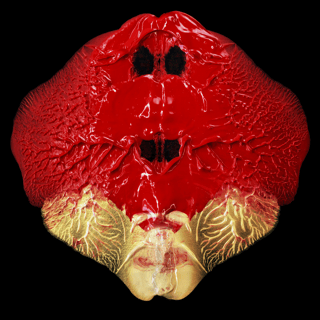
Speaker: First of all, HiWise, it's actually, it's called Portrait of the Many.
Speaker: Of the Many, okay.
Speaker: Yeah.
Speaker: That piece was born out of the idea, I mean, as the title implies, Portrait of the Many.
Speaker: So there is motion to it.
Speaker: I've never done motion before.
Speaker: And I wanted to kind of portray the idea
Speaker: that through the it rotates through very subtle color changes that represent to me represent the many.
Speaker: And it was a it was a piece that I had done for the value art at a solo show with them recently.
Speaker: So I wanted to have something since they were in a digital display that wanted to have something.
Speaker: I love those guys.
Speaker: What's your value?
Speaker: Value art?
Speaker: Yeah.
Speaker: Yeah.
Speaker: I was thinking about verse.
Speaker: Sorry, I apologize.
Speaker: Yeah, the two different equally great people on both sides.
Speaker: I've worked with both of them.
Speaker: I love the vision.
Speaker: They're really
Speaker: I feel like they're really pushing the frontier of NFTs and physical spaces and what the future can look like in Web3.
Speaker: So both great.
Speaker: But this was for ValueWard.
Speaker: I had something called, they do something called solos.
Speaker: So they set up their physical gallery with artwork.
Speaker: So I felt like it was an opportunity to kind of show something that had motion, like I said, which I've never done before.
Speaker: So that piece, Portrait of the Many, was kind of my first foray into trying that.
Speaker: And like with the aesthetics of my work,
Speaker: the transformation, I don't know, maybe people, a lot of people might not even notice because the transition between colors maybe takes like three to five seconds to kind of move from one color to the other.
Speaker: So if you're just kind of looking through, you might just see it looks purple.
Speaker: You know, and that's it.
Speaker: Oh, gotcha.
Speaker: But if you watch it, you'll see it slowly kind of moving from color to color.
Speaker: So the idea being that this one shape can represent many people, many colors in a very direct way, kind of thinking about, you know, my
Speaker: my experience with NFTs in the community that I've met and the people that I've collaborated with, Wise being one of them.
Speaker: She's in Australia.
Speaker: So, you know, I've met
Speaker: a kaleidoscope of people from all over the world, from many different backgrounds, many different languages, many different colors.
Speaker: And I think for, for, for that piece, I kind of wanted to represent that in a work.
Speaker: Yeah.
Speaker: So is it an isolated incident or do you see yourself, you know, kind of coming back to it?
Speaker: I could see myself coming back to it.
Speaker: I mean, one of the,
Speaker: One of the things, it's just not a vocabulary that I am comfortable with, the technology and how it kind of works.
Speaker: Strano, if you're familiar with him, he's the one that actually optimized the piece for me.
Speaker: Shout out to him for helping me navigate that because I was just like, how the hell do I do this?
Speaker: Yeah.
Speaker: You know, so he really helped me out with it.
Speaker: But it's really it's really a space that I feel like NFTs are meant to handle.
Speaker: Yeah.
Speaker: Not just, you know, a static image that.
Speaker: you know, you, you meant and that's that, you know, NFTs have this innate ability to really show emotion, to show something that kind of can just loop.
Speaker: And NFTs refer to me, like I look at it and I feel like NFTs were made for that, you know, even maybe more than, than any other expression that you could, you know, my work included that, you know, that you can take advantage of that.
Speaker: So,
Speaker: I don't know how that will kind of work.
Speaker: I'm trying to, you know, add another project to the list.
Speaker: But yeah, I think there'll be more.
Speaker: I think that's an exciting avenue to take.
Speaker: I mean, well, did you enjoy the process?
Speaker: Was it a positive experience for you?
Speaker: Yes, ultimately it was positive.
Speaker: I think I was a little, maybe because I'm not familiar enough with it and maybe people don't see my work having motion that I wasn't sure if it actually came across in the way that I was kind of hoping.
Speaker: But, you know, we'll see.
Speaker: It's something I definitely want to explore.
Speaker: I'm just not exactly sure.
Speaker: Yeah, I want to go see it now.
Speaker: Where was it minted?
Speaker: What platform?
Speaker: It's on Tezos.
Speaker: So it's actually the last piece that I meant to go to my object profile.
Speaker: You can definitely look it up to two circles.
Speaker: Yeah.
Speaker: Background is actually a
Speaker: Yeah.
Speaker: What do you call it?
Speaker: The Rorschach.
Speaker: Oh, yeah.
Speaker: If you look at it, it's a landscape that's kind of a Rorschach in the background.
Speaker: Well, listen, an hour and a half into this, that's pretty amazing.
Speaker: It flew right by.
Speaker: This is great.
Speaker: Did we cover everything on your end?
Speaker: Anything else you think we need to touch on or...
Speaker: or share with the audience anything that i missed no no i don't i i i would say just you know maybe just to to wrap up on the the nft on the nft front just i'm really one of the one of the one of the things that i love most i love most about it is opportunities like that we're doing today you know as
Speaker: as an artist kind of growing up in a non NFT world, you know, being able to connect with people, being able to connect with artists, collectors, you just didn't, at least someone like me who's like, you know, very introverted, you know, I didn't really have a lot of those experiences.
Speaker: And
Speaker: to kind of have have Web3 NFT, the community here, you know, and people like yourself, you know, you have a gallery and
Speaker: you're a collector.
Speaker: It's really a wonderful thing, I think, to explore.
Speaker: So thank you for having me.
Speaker: Yeah, I know.
Speaker: And you have a very impressive network of friends and fellow artists and collectors.
Speaker: I mean, yours is a great community, but that's why we do it.
Speaker: One of the amazing things about Web3, the fact that it allows us to create these worlds, these networks of friends and
Speaker: You know, they become family after a while, right?
Speaker: People that you maybe never met in real life, but nonetheless, they feel as real and as close as, you know, any IRL friend or family member, right?
Speaker: Yeah, for sure.
Speaker: And it really, you know...
Speaker: I mean, it's even with collecting and making NFTs, like anyone, anyone with a computer and an internet connection, you can, you can, you know, you can buy their work, you can connect with them.
Speaker: And, you know, that's the wonderful thing about it.
Speaker: So, yeah.
Speaker: And it's global, global and 24 seven, right?
Speaker: Like, that's a good, that's a good and bad thing.
Speaker: You know, that's for another conversation.
Speaker: Yeah, I mean, listen, as much as you want to partake in it, right, there's always somebody up, right?
Speaker: Because if it's Asia, it's Europe, it's Africa.
Speaker: It's always calling, which I struggle with a lot to be honest.
Speaker: Yeah, always on.
Speaker: It's important to disconnect, everybody.
Speaker: Very important to disconnect.
Speaker: Get some quiet space, be alone, be bored.
Speaker: All those things are very, very important to the creative process.
Speaker: So Gary, listen, we're going to end it with the question that everybody hates, but I ask it anyway, right?
Speaker: Because I just like to ask it.
Speaker: So Gary in one, Gary in five, and Gary in 20 years.
Speaker: So let's see, June 27, 2024.
Speaker: Where's Gary?
Speaker: Gary is probably right here in this chair, hoping that Tezos is back above $1 by then.
Speaker: Where are we now?
Speaker: 0.78?
Speaker: Where are we?
Speaker: I don't know.
Speaker: I think we're hovering around 80 cents right now.
Speaker: Maybe in a year we'll be back to $1.
Speaker: That's where you'll find me in a year.
Speaker: five years.
Speaker: Hopefully you'll find me back in some IRL galleries.
Speaker: That's something that we really didn't dive into, but I've been showing in galleries my entire career, but for the last few years, for many reasons, haven't been doing that.
Speaker: So I really miss the... Some people probably will be yelling at me for saying this, that have grown up in the NFT world.
Speaker: Galleries kind of seem to be
Speaker: you know, the bad guys, but I love showing in galleries.
Speaker: I love participating in that world.
Speaker: So hopefully, you know, in five years, I'll be back showing my physical work in galleries.
Speaker: Doesn't preclude, you know, doing NFT stuff or anything like that, but kind of want to get back into that world.
Speaker: 20 years from now, let's see.
Speaker: I just got back from Italy or Japan or New York.
Speaker: Carving little sculptures, maybe little Buddhas out of wood or stone in my studio somewhere in the woods.
Speaker: Maybe overlooking a lake or an ocean.
Speaker: Maybe in a house that my partner and I designed and built.
Speaker: got plenty of land around it, enough that I don't have to hear or see any neighbors.
Speaker: I got my dogs with me, maybe waiting for like a fire pit to get hot enough to cook some fish that I caught earlier that day and grill some veggies from the garden.
Speaker: That's where I'll be.
Speaker: Go find me in 20 years.
Speaker: And hopefully there's an internet connection, of course, so I could be minting NFTs.
Speaker: Of course.
Speaker: Yeah.
Speaker: It sounds like the humblest of dreams, but envision, but at the same time, it's also the most sounds like the most accomplished, you know, the most, the most fulfilling, you know, I've given it a little thought.
Speaker: This wouldn't be the first time I've thought about 20 years from now.
Speaker: This is great.
Speaker: This is wonderful.
Speaker: All right, Gary, listen, thank you so much.
Speaker: Again, I was very much looking forward to, you know, meeting you in person, although, you know, on a video and I'll really look forward to meeting you in person at some point.
Speaker: But, you know, thank you for joining me.
Speaker: I was really looking forward to this conversation.
Speaker: This was a wonderful conversation.
Speaker: I wish you, wish the best, you know, and look forward to the zine coming into the mail.
Speaker: Yeah.
Speaker: You can see me turning red right now.
Speaker: Oh shit.
Speaker: I'm perfect.
Speaker: on the spot for it right but it's just me it's just me yeah it's a one one man operation yeah so yeah so thank you again yeah i really appreciate it thanks for having me yeah everybody to your next time uh i'm michele colonna your host and uh see you on the next episode