Transcript
Speaker: What I always love about being a bibliophile, quite honestly, is not necessarily the new books, but the old books, and exploring the idea of who owned this book before. Did it come from another collector? Did it come from a public figure? On and on and on. What life did that book have, so to speak, before it got on my library shelves? And I like that idea.
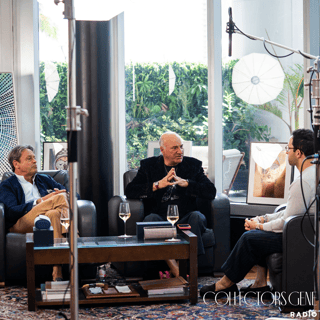
Speaker: What's going on everybody and welcome to collector's gene radio. This is all about diving into the nuances of collecting and ultimately finding out whether or not our guests have what we like to call the collector's gene. If you have the time, please subscribe and leave a review. It truly helps. Thanks a bunch for listening and please enjoy today's guest on collector's gene radio.
Speaker: Aaron Sigmund, or as a lot of you may know him, Sig, is one of the more well -known authors in the luxury space. You know that $1 ,200 book for Masoline, The Impossible Collection of Cigars? Well, that's Sig. Or the Drive, See, and Airtime series, also Sig. Nonetheless, you've seen his books, and if you know him, his love for cigars doesn't stop at writing about them.
Speaker: But as an author and collector, you can imagine being a bibliophile takes precedence. We talk about his upbringing and how collecting always remained top of mind in the household. And after getting acquainted with and mentored by a well -known film director and fellow bibliophile, Sig's career went from being editor -in -chief at Smoke magazine to being one of the most respected authors on Life's Luxuries. He was taught to never be envious of anyone else's possessions, which I think is what makes him a great collector.
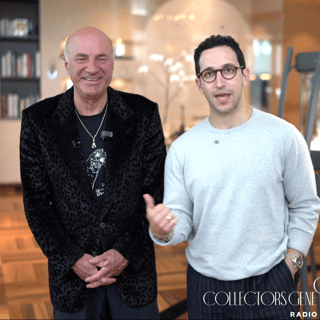
Speaker: It's the same old story. Buy what you love and what speaks to you the most. Sig's got some exciting projects on the horizon that he can't quite spill on yet. So for now, please enjoy Aaron Sigmund for Collector's Dream Radio. Sig, welcome to Collector's Dream Radio.
Speaker: Thank you, Cameron. I really appreciate it because I know I'm going to mention it at some point in time and just slip up. I'm just going to let your listeners know that you were very kind and we are actually recording this show for the second time, although it will be spontaneous, but I was not exactly on my A game.
Speaker: The other day when we recorded it the first time so we're kind of doing it again and i'm a lonely man so just having the conversations alone is is really a it's really a good thing it allows me to interact with others it's not my pleasure and happy to have you on again and we'll get this.
Speaker: Absolutely, absolutely. I just knew I would say something. I'd be like, don't you remember? And then, of course, the audience would not remember that. Yeah, don't you remember when we spoke about this yesterday? Exactly, exactly.
Speaker: All good, but you know for those that that don't know you or don't follow you on social media or don't have your books You're you're a collector of many things, but your main focus is on books But at the end of the day none of your collecting I would say is by accident
Speaker: Yeah, that's very true. Obviously not particularly original for a author to be a bibliophile. I think they kind of go hand in hand, not necessarily some of the books I buy because they're not always related to the subjects and more often than not are not at all related to the subjects I actually write about. However,
Speaker: My father's fortunes when I was growing up rose and fell dramatically but when they were at various high points or peaks my father and mother were very active collectors and I think my mom
Speaker: really had the gene or the bug and I know we're gonna talk about that later on but she was really the one who had the collector's itch for lack of a better word quite honestly. My father collected things but he was very specific about what he collected
Speaker: and usually it had to a certain degree some sort of utilitarian function. He had what I would consider a modest car collection when he was kind of at the apex of the height of his game. He had a couple of really nice watches.
Speaker: And then he collected wine. He was really, really, really a serious onophile. He was really, really into wine. He was like a charter subscriber, so wine spectator. But the wine he shared with business partners and investors and friends and family, of course, the cars he drove, even the oldest ones, I mean, he believed in
Speaker: If you have a car, drive it. If you have a watch, you wear it. If you have a wine, drink it. If you have a cigar, you smoke it and you share it with others. Not the cigar because that'd be kind of gross, but the wine. But it was really - Predicting COVID early on. Exactly, exactly. But it was really my mother who really
Speaker: She was in her day for a good while. She was a really prolific collector of many different things, mostly centering on the end of the 18th through the earliest part of the 19th century, or I'm sorry, the 1800s through the 1900s. So the 19th century and the earliest
Speaker: parts of the 20th century, right up until Deco, like she stopped at Art Deco, like that wasn't her thing. So when she was collecting, you know, decorative vitamins or pieces of art or whatnot, her kind of sweet spot was very much, let's say, the 1870s through the 1910s.
Speaker: And, you know, that was her period. What was interesting was that none of that period personally interested me. Her collecting interested me, but the period in which she collected held very little personal interest to me. To me, the most exciting periods were absolutely post -World War II, or just what people call post -war. So modernism, all the art trends that came
Speaker: up after essentially starting in 1950 to present. So I always thought that part was kind of interesting. So even if you get the gene, it may not be the exact same itch or bug or whatever you want to call it, that the person who kind of taught you how to be a collector really kind of focused on. And I think that's kind of interesting how you morph and grow is not just a person, but as a collector and how your taste evolved.
Speaker: So I guess it's obviously no doubt that you've appreciated all these things that your parents had collected over the years from a young age. But at some point when you were young, your father had gifted you, I guess you could say your parents, but your father had gifted you
Speaker: Two very important things that I think would probably help shape the way you collected and the way you looked at collecting in the future and what you had interest in over the years to come. Could you tell us about the car and the watch that he gifted you?
Speaker: Sure, I mean, I've written about it kind of extensively in one book in particularly, but I got a very fancy car when I was too young to have a 12 cylinder car and I got a watch and the watch was a hand -me -down day -date Omega or Omega, depending on how you want to say it.
Speaker: I think the watch perhaps more than anything I've had a lot of automobiles over the years and there's definitely a period in time of cars that I really personally love and I've owned a number of cars but I would never have considered myself a car collector per se but the watch really started me down
Speaker: a path that led to me writing 11 books on timepieces. So obviously it was a very, very strong path. And subsequently after getting that watch, I got another watch, but it was brand new. It wasn't a hand -me -down, which is another watch I also talked about, which was a Cartier Santos, a two -tone that my parents gifted me.
Speaker: And I actually gave the Omega to one of my best friends at the time who I'd grown up with who didn't have a really good watch. And I thought it was important for him to have a good watch. So I gifted it to him. And I don't know. He may still have it today. He may not. I don't know.
Speaker: So as an award -winning author, editor, publisher, and we'll be sure to touch on your works later, everyone's always curious, you know, when your profession is, and you're writing about the things that you love in your profession, where your love for writing originates. And it's possible that it originated from an early age, but when you were in college,
Speaker: you met another really important figure who was a serious collector and bibliophile who helped shape the way that you collect some of the books that you collect today. Can you tell me about this gentleman and the story and what that meant to you?
Speaker: Yeah, absolutely. But I will answer the first part of that question first. I was actually on the path to being a writer well before I met George, and we'll get to George in a second. I was the editor -in -chief of my what used to be called junior high, now middle school newspaper. I wrote a few pieces for my high school paper. I didn't like the faculty advisor for that paper.
Speaker: I wound up being on the staff for The Daily Trojan, which is the USC newspaper in Los Angeles. And by the time I graduated from SE undergrad, I was already writing for national publication. So my path as a writer was very, very linear, starting from, I don't know, however old you are in seventh or eighth grade. So I was like 12 years old when I started writing.
Speaker: but uh there was a gentleman there it was because he's no longer with us unfortunately which is very sad he had a lot of health issues by the name of George Pan Cosmatos and George was just this larger than life figure um he was a relatively well -known Hollywood director and
Speaker: my then girlfriend now wife work for george she i was a double major so i was in school a year longer than her shoes working ahead of me and she was working for george and for a merry to reasons george did not drive so everyone smile he would ask me to drive him and i had a nice car and he was a.
Speaker: a rather portly fellow and he fit nicely in the car so it all kinda worked out and on weekends or one days when I was not working myself or I wasn't in class I would drive George around and he was very very very generous and one day he said we are going to a very important book
Speaker: sale or book show really in Pasadena and We drove up and He was buying all sorts of books from all sorts of book dealers from around the world. There were people there from New York and Los Angeles, of course, but London and Paris and even as far away as Tokyo and Hong Kong as long and the books were in all sorts of languages and
Speaker: George said as a thank you because he never paid me for my services. I just kind of did it as a favor George said he would buy me a book if I found a book that I wanted to Buy he would buy it for me within I assumed it was certain parameters. I didn't go crazy. I
Speaker: And that's exactly what happened I bought a book and it is not dissimilar to many of the books I collect today so it was an art book it was a book on Matisse but it actually had lithographs Matisse lithographs.
Speaker: in there. Now that's going to contradict exactly what I just said earlier about my taste not running the same as my mother, who very much was a Matisse fan. And I realized that contradiction, but I also no longer have that book because as my taste evolved in art, Matisse no longer had great interest to me. But I do remember the lithographs were plate signed and it was a relatively valuable book and it increased in value.
Speaker: Greatly even though it wasn't particularly dear Price wise when it was purchased it wasn't inexpensive either but it was not thousands and thousands of dollars and you know that also made me realize that You know sometimes the point of entry when you're collecting doesn't have to be so expensive or it wasn't then and that is something that we touched upon After we actually recorded the show yesterday that is something I really feel that
Speaker: it would be remiss to say sorry for but it is unfortunate that the point of entry for collecting these days due to the democratization of all things on the internet really kind of everybody knows what everything's worth and so everybody wants to get the maximum price so finding that little treasure of that little jewel unless you
Speaker: Are involved in a very certain set of circumstances where you kind of can create your own collectible for lack of a better description It just wouldn't happen and and and that's unfortunate and this book is a prime example I personally felt this book was very undervalued. I mean these were plate sign but these were Matisse lithographs and they were exceptional and it was a smattering of Matisse themes so there were nudes and there were flowers and there was one of his studio and
Speaker: And that was quite exceptional. And it was a limited edition catalog from an exhibition in Paris. And it was numbered. And it was a very small edition. I think it was 250 or 500 right around there. But when you think about it, it's one of whatever it was, 200 or 250 or 500 Matisse lipos. And so it was what it was. And so George really, really put me on the path of art books.
Speaker: Arguably cooler though in a lot of ways than than an actual painting I mean, they're just so so novel and interesting and things that people don't really know exist You know who who maybe know me, you know Matisse, but aren't necessarily art fans or art collectors In my opinion just super novel and very interesting
Speaker: Right. Well, not all of us get to be Dr. Barnes and have, you know, whatever it is, 75 Matisse's of our own. So, I mean, you talked about, I was talking briefly about the entry point of collecting, getting a book on Matisse, plate signed, or otherwise with lipos is much more attainable at any period in time.
Speaker: Even in the teases like time than actually buying a piece so yeah i think that's a that's a good way of putting it inside you know and to me what i always love about being a billy file quite honestly is not necessarily the new books but the old books and exploring the idea of who on this book before did it come from
Speaker: another collector did it come from a public figure, on and on and on. What life did that book have, so to speak, before it got on my library shelves? And I like that idea. Sure. Provenance is always important.
Speaker: Right. Well, but you're talking about provenance as far as potentially adding to the value. I'm just fascinated. Let's say an English teacher from Des Moines owned a very important book. To me, that is fascinating and that will contribute nothing to the value of the item other than making it more interesting. And to me, that is a huge element and component of what collecting is all about, quite honestly.
Speaker: couldn't agree more. You mentioned that, you know, you were kind of driving George around for free. And I'm curious to know if that was because, you know, your wife had worked for him and you were doing a favor, or did you have the foresight to say or to think rather that this guy is obviously very important and that you were going to learn from him and he was going to kind of guide you in a certain direction that would propel you to maybe where you are today. Was that maybe the goal?
Speaker: No, I wasn't that smart then. I don't know that I'm that smart now, quite honestly. But I definitely wasn't that attuned to things then. George was a fascinating guy. I mean, he had just directed, I think it was Rambo 2 and Cobra. So those were kind of these big action movies back then. And he was a prolific collector. There's no toys about it. And I appreciated that part.
Speaker: He collected primarily three things, books, very important books and manuscripts, movie posters, but vintage ones and important ones, both one sheets all the way to four sheets. And then he was a watch collector, but he was collecting watches that at that time while I appreciated them.
Speaker: I had no personal interest in them in that they were vintage Patek's and vintage Vacheron Constantine's and those were the watches he really focused on, but pieces from, you know, deco pieces all the way through, you know, maybe the 50s or the 60s and he kind of stopped there. So he didn't have a dozen nautiluses when you could have so.
Speaker: So, you know, his watch collection wasn't of great interest. It was to others after he passed away. All three of his major collections, the watches, the posters, and the books were sold. One auction was held by Sotheby's. I think that was the watches and the manuscripts. And then later, Christie sold his poster collection, which is a shame. You know, his heirs obviously did not share his enthusiasm or kind of cherry -picked a few pieces and then sold the rest. But he spent a lifetime
Speaker: He came from money and he made money in Hollywood, but he spent a lifetime curating significant collections in all three of the categories he was focused on. And I think I appreciated him as a collector and an individual more in later years than when I was present. I mean, I was driving around because Melissa
Speaker: A .K .A Mrs. Sigmund, asked me to and his family was up in Canada and he was spending a lot of time in Los Angeles and just, you know, just circumstances were and I was a nice guy and I didn't mind driving around and he had great stories. I mean, he was a Hollywood film director. I mean, he
Speaker: He had great stories. So who wouldn't want to you know, drive around and I was even smoking cigars then and he didn't mind the cigars So yeah, I would smoke a cigar and he'd tell me stories. I don't know. That's pretty good Saturday to me Even today quite honestly and I miss him kind of hard to beat
Speaker: Yeah, he was quite a character. He was just this really, he himself was something straight out of central casting. He just was this very mercurial, temperamental Hollywood director, half Italian, half Greek. He was just, he was quite a guy. And had great influence later on in my ideas about collecting and really about curating
Speaker: I feel Willy Nilly would do a disservice to my mom and how she collected, but I think she was not an active collector. If a piece came her way and she liked it, she would purchase it. It was always in a theme, but George was a curator if he had a original Wizard of Oz one sheet.
Speaker: then he knew he would actively look for a wizard of oz for she which is obviously four times the size. He was that type of collector he wanted to fill the inside straight and my mother certainly my father was not that way at all you know you like something he had the means at the time he bought it.
Speaker: But my mother, who was still a much more active collector, she never said, well, I have three of these and I know there's a fourth. I have to get the fourth. Where George was very, very, very much of, I have these and I need the next thing to kind of fill in this blank that's in my collection. So he was a true, again, it's remiss and I don't want to disrespect my parents.
Speaker: But they were collectors and they had the bug, but they didn't have the refinement. And George did. I mean, he was a he was a collector's collector. I guess that's the best way to describe him. And you mentioned curating, so I want to talk about that for a bit. So after school, you moved to New York, you become editor in chief for a magazine by the name of Smoke, which was the second or within the two largest men's luxury lifestyle cigar magazines.
Speaker: And now you're at the point where you've launched some of the most respected books in the luxury space, such as Drive Time, Sea Time, The Bull of a Book, and maybe the most impressive ones is The Impossible Collection of Cigars and the Arturo Fuente books from Aseline. The intro to The Impossible Collection of Cigars was about curating. And I'm curious why that was the route you took for the intro there.
Speaker: Well, I think you touched upon something, and we'll get to Impossible Collection of Cigars in a second, but I'm going to lump it in with what we now call, even though it didn't start out that way, the Rizzoli timepiece trilogy, which is drive time, sea time, and air time, as well as the Impossible Collection of Cigars, and all those books
Speaker: curation is at the heart of all those books you know irrespective of regardless of the subject matter they present it's really a
Speaker: almost a fantasy retrospective that you would see at a museum or something like that. I think that's really what all those books have in common because on the surface you would say, okay, the watchbooks are watchbooks and the cigar book is the cigar book and I've written on other subjects as well, but those books actually are all tied together.
Speaker: Going to the impossible question of cigars. So within Azalein's ongoing catalog, they have a group of books that they simply label the ultimate, of which the two Fuente books that you mentioned, or one in particular, is part of the ultimate series or ultimate collection.
Speaker: However, within that, within the Ultimate, is the impossible collection of series. And there's the impossible collection of wine, and automobiles, and motorcycles, and champagne, and whiskey, and art, and all sorts of things. And I'd written the bull of a book for Azaleem, but I hadn't started work on the Accutron book yet.
Speaker: And I went to Prospera Azalee, and he was a fantastic guy who I knew years before I started writing for the publishing house. And I said, I wanted to write the Impossible Collection of Cigars. And he's like, Aaron, Nachrome, I have this idea many, many, many times, but I just wait for you to ask, to write this book and do me the favor, which is hogwash, which is absolute bullshit. But I appreciate it, and he's a very charming guy.
Speaker: French Moroccan, and he's a très chamont. So I said, well, it would be my pleasure. And without exaggeration, I think that's the quickest book deal I've ever done within 48 hours. I had a contract on my desk, and I think by the time it was signed and reviewed, or reviewed and then signed, I don't even think 72 hours had really passed because I really wanted to do the book. And so when I approached the book, now, the one thing about all the Impossible Collection,
Speaker: monograms is that there are only 100 examples of any of the given respective categories that these books are on. So there are 100 wines, there are 100 watches, there are 100 champagnes and so on and so forth.
Speaker: I really really wanted people to understand the curation process that went into the selection of the one hundred cigars that were in my book and.
Speaker: What this monograph really was all about i mean it's a weighty tome it's expensive people definitely collect them so we're talking about. A author who's a bibliophile knows about a book that will be subsequently collected which is a whole kind of being john malkovich thing in itself and then.
Speaker: But I really wanted people to understand the process. I thought it was necessary for them to really garner some insight on why I was writing the book that I was and why these were the 100 examples
Speaker: the archetypes of this particular category that I really wanted to share with them. And so a good portion of the introduction is all about how I arrived at this particular list. Now, funny enough, subsequently, because that book will be
Speaker: I believe four years old in, um, in June. So, and I wrote it a year before that. So it's five years old in my mind. And there are already, like, I want to refine the curation of that book. There are cigars, maybe three or four that I would absolutely pluck out of there and replace them with something else. And without getting to inside baseball, cause I realized many of your,
Speaker: Listeners really don't care about cigars, but there was one in particular funny enough that came out the book was released in London and Without exaggeration four or five days later a very important regional Cuban cigar came out
Speaker: and called an El Redo Mundo La Riena. And that particular cigar absolutely has a place in any future second edition of the Impossible Collection of cigars. So I think once you have the collector's mindset, or in this case, the collector of backslash curators mindset or the collector's collector, as we kind of identified with George, the fact of the matter is, you're always refining, you're always thinking,
Speaker: I need this. It's kind of like in one of those old -fashioned movies where the kids are going through the baseball cards and the one kid's like, got it, got it, got it, need it, want it, need it, you know, need to buy, blah, blah, blah. And they're kind of going through it all, right? And I think that's the way I am with all these books. I have been
Speaker: blessed or fortunate, lucky, whatever you want to call it, when it came to drive time, which is absolutely one of my personal favorite books that I've gotten to write, I've done four editions of it. And every single time I do an edition, I refine the curation of the watches that are in there. Now, unlike the Impossible Collection cigars, there isn't a set number of watches, but it's always roughly
Speaker: oh, I don't know, about 120. There is no, there can be an odd number, it doesn't really matter, but inevitably the reader is going to lose their, you know, interest in it, and so you can only go so far. So that's kind of where I was with that, but I loved it because I kept on saying, okay, that watch no longer really belongs, or I think in the first edition we had a couple of quartz watches, and at the end I think we only had one.
Speaker: one that was particularly important and you know it was just that kind of thought process should they all be mechanical should they all be chronographs because it was racing an automotive related do they you know do they have to have a certain you know real affiliation or can they just borrow some of their design elements and take some of their cues from
Speaker: cars and motorcycles and whatnot. So there's that constant refinement of being a curator, not unlike a museum curator or the head of a museum that looks at the totality of a collection and really says, you know, we need some of this. We are willing to sell a couple of pieces to achieve our other goals. And I think once you get to a level of collecting
Speaker: either actually collecting and or just mentally kind of psychologically. I mean I don't own most of the watches really almost any of the watches that are in drive time. I own a very few and but yet this kind of
Speaker: Ultimate collection is really what that's about. So that's why sea time which is about dive watches and air time Which is about pilots watches that's why the curation of those was so Kindred to the curation of the impossible collection of scars. It's this endless kind of refinement and even though I didn't write the bulk of air time Marc Bernardo did and
Speaker: He and I worked funny enough on the curation first, so we worked on the concept. It was part of my trilogy. We worked on the outline of the book, and then we did all the curation together. He wrote the bulk of it, and then I wrote a small piece, kind of like an executive producer, I guess, on a TV show or a movie. But to me, the most important part, the most influential part
Speaker: for that particular book was really the curation process like what are we going to include, what is going to be excluded, what kind of seminal models of a particular manufacturer, watchmaker that are so important to that category, but you can include them all. And so you're kind of cherry picking the best of the best of the best.
Speaker: I had one guy who he purchased the impossible collection of cigars and his goal was to track down and smoke every single cigar in that book all one hundred and i told him.
Speaker: uh he'd never do it it just there are a few cigars in there that the odds of him finding are just infinitesimal there's just no concealer you never say no and you never say never but i would say it would be uh hard pressed and i don't i kind of lost touch with him so it was through social media so i don't know if he completed or not but i did
Speaker: You could probably get to 90 of them, the high 80s, low 90s, but by the time you got, and you could do the same thing with drive time, seat time, and air time. You could probably get really close, but I don't know that you'd get all of them.
Speaker: So these are obviously areas that you're extremely passionate about and either collect or curate in, or for cigars it's a very large hobby of yours. What are the pros and cons of writing books on the subjects which you love the most, right? Is the con maybe that you're surrounded by this stuff so much that you lose interest sometimes and it gets a little redundant, or is the pro that it makes you fall more in love?
Speaker: I see no downside. I'm not a jealous individual. It's just not one of the emotions that, I have many other, not necessarily positive emotions that go through me. But jealousy isn't one of them. So if I'm writing about a book, I know I will never ever have the means to purchase. And yet I know others with that particular watch. It just doesn't bother me in the least. And so I see no negative.
Speaker: I think the way you phrase the question, it's a passion. And as long as you keep on becoming more informed and more knowledgeable, I mean, I'm learning, I'm sharing what I've learned with the readers when they read one of my books, but take my word for it, the amount of research that goes into some of these books. And I think the best example that funny enough is the first edition versus the fourth edition, which will probably be the last with Rizzoli.
Speaker: of Drive Time, which is the introduction, the introduction to that book, which is the history of watches and the automobile and how they grew up kind of side by side and how many of the elements, like a clutch, for instance, were interchanged between the two and on and on and on. The original introduction to that, I want to say, was something like 1 ,800, 2 ,200 words. I think on the last version, it was 7 ,000 words or something up at that level.
Speaker: Thank you.
Speaker: And so I keep on learning and if you are indeed truly passionate about something, anything that, you know, whether you're collecting it or not, I don't see how increasing your knowledge is ever, how that could ever be a bad thing unless you're just going through it and all you're looking at it as if it was a Christie's or a Southerby's or a Phillips auction house and you're just dismayed that you'll never
Speaker: own most of these pieces, but I'm not that guy, so it doesn't resonate with me that way. I want to talk to you about unintentional collecting.
Speaker: For example, someone with a car collection will want to make sure they only have the best lifts or storage mechanism, so they end up unintentionally collecting the best lifts and storage solutions. For someone like yourself who has collected art in the past and loves watches and collects books, how can unintentional collecting relate to these categories? Even cigars, which you say you don't collect, but you buy them in enough quantities, I'm sure, to have to think about your storage.
Speaker: I think it's not really a semantic argument but I'm going to say I wouldn't call it unintentional. I actually would group together all the accessories or accoutrements or the things
Speaker: that are related to a particular collection whether it's a shelving system or unit for your book collection or a watch winder for your watches or safe for that matter or humidors and lighters and cutters and cases for your cigars or a very specific wine refrigerator if you're a wine collector and on and on and on and when it comes to art
Speaker: There are There are framers as Famous as some of the artists that they're framing within their world It's a little inside baseball or in this case inside the art world, but there are really really really famous framers there's one here in New York called bark frameworks and When the Met needed their water lilies? Reframed they went to them Yeah That's an I mean you can't put a price on
Speaker: on a water lily that big so you know the fact that you have the distinction and the honor of being selective all the picture framers in the world to do the frame for that is means you know you're a real craftsman you're a woodworker who happens to to really you know appreciate you know framing things I think the most interesting frame you know the combination of that that we're talking about is
Speaker: I interned very relatively early in my college days at a big, famous, not physically large, well -known art gallery in Los Angeles called the Michael Cone Gallery. And Michael was having some sort of group show and within that group show was a small painting that had a frame by Diego Rivera around a very small Frida painting.
Speaker: And to me, they obviously went together for all the reasons that Prida and Diego went together, which is both in oil and water and not. But I just thought the frame was so important.
Speaker: And obviously the picture was important within it too. So I don't see it as an adjunct thing. The way you're phrasing it is, it's in addition to, I think it's just part and parcel of collecting.
Speaker: Have onus wagner baseball card it's gonna be in one of those hermetically sealed acrylic things that baseball cards right now in my days they were basically in like plastic sleeves in a in a free ring binder but a binder yeah exactly but you know i think.
Speaker: I think that's really what this is all about that you never collect in a bubble. You're just not going to buy. If you're a car collector, you need a garage or some sort of storage unit, a warehouse, something to put that in. You're going to need a mechanic to work on it. You're going to need an upholster or somebody to help restore the cars. If you have a wine collection, again, you're going to need, you know, you're going to
Speaker: Subscribe to a magazine, you're going to belong to a club, you're going to belong to various wineries clubs to get certain wines that you want to acquire and on and on and on. And all these are really saying one thing, you are part of an all -encompassing community, a community that spans beyond the core of the collection.
Speaker: For argument's sake, even though I do not collect cigars per se, I definitely have quite a few cigars. Now, I could just stop there. I could just buy cigars from some of my favorite tobacconists or cigar merchants, if you prefer, and just kind of freeze there. But that never happens, because you have to put them somewhere. And so you buy a humidor, or maybe you buy two or three, and then you like a Davidoff humidor, but you really want an LA blue humidor, or you really want
Speaker: of Fuente Opus Exhumed or it becomes a collection within the collection but it never loses sight that you're part of this community that doesn't stray from the core context of your collection and I know I keep on saying collection and collector with great redundancy but that's really what it is. There's a bigger world and I think that's one of the reasons people, not all people, some people are immensely private about what they collect but
Speaker: For the most part, cars are a great example. If anyone's ever been to Amelia Island or Pebble Beach or Greenwich, any of the bigger American concourses, there's a great camaraderie, even if these guys are vying to purchase the same cars. And so that camaraderie in cars, typically a very paternal kind of body,
Speaker: It's a community. It's a community that involves, you know, respirators and upholsterers and mechanics and actual collectors and even the detail guys and the guys who make the lifts that you mentioned or, you know, custom build the flooring for the garages that you're going to store your car in and on and on and on. And that to me
Speaker: is really what the overall, the overarching concept of collecting is all about is being, is acknowledging that there is something beyond to be a collector, to collect anything doesn't just mean you have.
Speaker: X number of bottles of wine or X number of cars or X number of paintings. It's part of something larger. And that's part, at least for me, and I would suspect most collectors, that's part of the joy of it all. That's the pleasure. It's not the compulsive tendency of collecting. That's another psychological element of collecting. But you know, or auction fever, you know, that just getting swept up in it. But this is something bigger and really very positive and
Speaker: And I think that's a whole part of what collecting is all about. I agree. I think a lot of people honestly don't focus enough on the tangential side of collecting or the unintentional collecting side of things. Tangential is better. Yeah, absolutely. I've spoken to furniture collectors who collect very rare, you know, furniture. And when the, I guess, fabric or the leather was
Speaker: shot. They went and sourced really high quality, amazing leather to reupholster it. They didn't go to Joanne Fabrics and just buy a spool of fabric. I don't think people spend enough time on it or realize when they do certain things. Yeah, I think there's a lack of realizing. They may even inadvertently doing it. If you
Speaker: I've known some great furniture collectors, mostly mid -century modern stuff. If you have a particular fin jewel chair or you have something else similar to that and you really
Speaker: You need to get it reupholstered, you need to have it repaired, you need to have a modern, a modicum, rather, of restoration. If you have an original Eames lounge chair which had feathers in them down instead of foam, which they do today, where do you source that down from to refill it because you've lost some of the feathers over the years? These all become very important to collecting.
Speaker: Not just as you kind of stated before the provenance of it all because you want to keep anything you collect as authentic as possible if it's not consumable i mean you have a bottle of wine you have a cigar you drink it you smoke it it's gone and so it doesn't matter but we're talking about tangible things that are meant to be you know go on for generations.
Speaker: those little things really matter and sourcing those whatever it is, a respirator or some sort of restore or some sort of fabric, a house or on and on and on, that all becomes part of it. And so does maintenance. I think one of the things that always surprises me is when people collect, regardless of what it is,
Speaker: they don't think about the maintenance that comes with it. And that always. Shocks me quite honestly that also shocks the collector you know yeah it shocks the collector from a financial standpoint but you have something and it was you know relatively i mean most things that people collect are relatively expensive not always but you know if you just do hummel figures or something like that you're still a collector but it is what it is.
Speaker: But, you know, they require maintenance. They require maintenance like anything else, whether it's a watch and it needs to be overhauled every, depending on who you talk to, seven to 10 years. Now there's a very big trend. You don't really maintain a watch until it stops running. And, you know, there's all sorts of debate about that. What I'm seeing is all these things, the lighters need to be clean. They too need to be overhauled and they're the same way, automobiles, obviously, whether it's an old car or a new car,
Speaker: you know a degree of maintenance is required and it always shocks me when people are like oh i just didn't know about that you know i'm not saying you have to buy.
Speaker: a drawing and take it to a famous conservator and have it deacidified so it will no longer yellow and do all sorts of stuff. That's a whole different kind of level of stuff, but there's a basic maintenance to just about anything, but it always surprises me when other collectors are like, yeah, I just didn't know that. And I'm like, I don't know how you didn't know that. So yeah, obviously this,
Speaker: However, we want to I like adjunct. I think we found a common term in adjunct. So, uh, there you go. Yeah All right, bonus question for you But before we wrap it up here with the collector's gene rundown because I know you're a big fan of art and specifically Warhol So what's more interesting to you? Andy Warhol art or his personal cookie jar collection?
Speaker: So I love the fact that he was competitive with the cookie jar collection. There's another pop artist by the name of Peter Max, who also did kind of pop art in his own style, portraits. And Peter's definitely not nearly not
Speaker: By many levels as important as war all but they were kind of frenemies in new york and they would go down to the chelsea flea market on weekends and they would competitively scour for cookie jars and i guess i like that for a couple reasons i love the facts
Speaker: That were all new his pieces were being collected was himself a collector of something and something that relatively speaking didn't have great value i love the fact that he was competitive with another.
Speaker: relatively well -known New York artist within the same overall pop genre for that very specific thing, which again has no real inherent value. It's not gold, it's not silver.
Speaker: There are many pieces of Andy's that I like, but I appreciate the fact that he was a competitive cookie jar collector because how many people really are. I personally have owned a couple of books over the years that had some doodles in them from Andy. So from a personal perspective, neither
Speaker: I've had a couple of copies of the philosophy of Andy Warhol from A to Z, or maybe A to Z philosophy of Andy Warhol. I can't remember the order, it doesn't matter, where he would inscribe it. As a matter of fact, I think at this juncture, it would be more difficult to find an unsigned copy than a signed copy. For me, what interests me personally is the book that had some drawings in it.
Speaker: From a notion or concept of collecting i think the cookie jars. Love it alright let's wrap it up here with the collector's gene run down you can answer these questions based on any of the collections that you have. Feel free to take it whichever way you want sure alright what's the one that got away. You know.
Speaker: I am not like George was I don't look to fill the inside straight. So the only thing that would have ever gotten away is if I did not have the financial means to buy something at that given time, but I don't dwell on it. So there isn't like a single painting or a book or something that came across. Oh, actually I'm lying. I am absolutely lying to you and your audience. There is one thing.
Speaker: and I'll tell you what it is. Within Disneyland, there is a club, it's called the 33 Club, and I went there as a gig. Club 33. Club 33, thank you, yes. And there was a humidor in that club back in the day, and it was Walt Disney's personal humidor.
Speaker: And somebody acquired that humidor. I can't remember how they came about it. And Dave Smith, who was a very famous archivist at Disney, who I knew from my animation art days in high school and college,
Speaker: He wrote a letter of authenticity saying, yes, this is the humidor that was in Club 33. Yes, this was Walt Disney's personal cigar humidor. And I really, really wanted it. And I was offered it. Marvin Shakin was offered it first. But he had just bought JFK's humidor for a lot of money. So he wasn't going to buy it. And so it was offered to me second while I was at Smoke. And it was just out of my financial reach.
Speaker: And even to this day, not very often, obviously, I had to kind of really dig back in the old memory bank. But that is something I deeply regret that I simply didn't have the money. It was a lot of money even back then. So this is 30 years ago. But I really regret. So that's the one that got away. That's a tough one.
Speaker: Thank you. You're very kind, Cameron. It's like, yeah, you should really feel bad about that one. Yeah, you should feel like crap. Yeah, thanks. The on -deck circle. So I usually ask folks what's next for them in their collecting, but maybe for you, you could share with us what's next in your writing. Oh, that's very kind. Yeah, because I don't have a lot of regrets, apparently, other than the aforementioned Walt Disney humidor, which you won't let me down.
Speaker: uh let me forget um yeah i don't really have anything on deck collecting wise because that's just not me um i am working uh presently
Speaker: on one new book for sure, and three that are kind of out there in different stages of maybe. But I will have another book come out in 2024. I never talk about my books in advance, but I have three books come out this year, which was Arturo Fuente since 1912, the Arturo Fuente from Dream to Dynasty, which comes out this summer, I think, in July, and then the fourth
Speaker: Version of drive time which just came out as a matter of fact just is available now and that is called drive time The second deluxe edition or something to that effect. So there you go looking forward to him. Thanks
Speaker: The unobtainable, so one that it's just so out of reach. It's literally in a private museum and you can't take it off the walls because they have security everywhere or something like the Walt Disney Humidor where you know it's in a private collection. You know it's never coming back up for auction, at least not anytime soon, but it's so it's unobtainable that way.
Speaker: Well, I think that kind of goes with, in the beginning, in that we talked a little about, you know, being envious or jealous, that's just not really wholly in my DNA. So, you know, look there, every time I travel, I go to a museum and there are things that in every, we just took our daughter to the Barnes Collection not that long ago.
Speaker: Even there, there were a couple Rousseau's or a couple Matisse's that, even though it's not necessarily my favorite period, I would have loved to take a few of those off the wall and take them home. But I mean, I think that just means you appreciate fine things. I mean, there's an endless list of, if you, to be a collector is also to be an appreciator, and I think everyone would agree on that.
Speaker: And so if you appreciate all these things and you're, you know, we're members of a number of different museums here in New York and you're wandering through and you, you know, you just kind of fondly look at something and say, boy, wouldn't that be nice to hang over the mantle or, or put on a shelf? And, uh, but that's endless. I mean, that, that in and, in and of itself could fill an entire book for me. So, uh,
Speaker: I think you're just an appreciator of things and you know not necessarily because of their their financial or their material value because you know the craftsmanship and or the artistry in it i just think that goes part and parcel with the whole. Psychographic of being a collector absolutely. The page one rewrite so if you could collect anything besides your current money no object what would it be and why.
Speaker: Well, for a very, very long time, I always said if I was worth $100 million, I'd want $90 million worth of art in a $10 million house. Given the price of art these days, I will amend that to say if I was worth a billion dollars, I'd want a $900 billion collection in a $100 million house. But money notwithstanding, I mean,
Speaker: I am just old enough that I could have not Basquiat, but I could have really gotten some good deals on not just Warhol, but Herring and a couple, the New York, specifically Kenny Sharp, some of the East Village artists.
Speaker: I was on the West Coast at that time, so it was a little distant. It seemed removed from me, but if you could go back in the Mr. Peabody Wayback Machine and just say, plant me in the mud club in 1982 and I'm just going to buy everything that I see, I guess it would be that. Part of that has to do with
Speaker: the love of that period, my love for New York, and it just really resonates with me, all that artwork does. It was really when graffiti, you know, Crash was in there and all those guys, when graffiti and fine art, it was the next level of pop, right? So here's stuff that was on the side of walls that was really just a personal expression, and that in itself became, you know, collectible fine art
Speaker: to the point where we are with like cause and artists like that today. So to me, that speaks to me personally. And they were relatively attainable, all things considered back then. And so, again, not big on regrets or things like that, but that is a bummer because I know it was within reach. For sure. The GOAT. So who's a well -known figure with a well -known collection that you think has done it right?
Speaker: Well, I think a lot of people would think Ralph Lauren did it right with automobiles. You'd be hard pressed to say otherwise. But, you know, I think there were a lot of people who did it right. We were talking about the Barnes Collection in Philadelphia, which used to be in Marion, Pennsylvania, and Dr. Barnes.
Speaker: 150 years ago now, I guess, also really did it right. I just feel that there are a lot of super passionate collectors. The Broad Collection in downtown Los Angeles, if you're talking about art, he was somebody who picked up very early on on East Village Painters and continued to grow his collection. He also built a lot of buildings, a lot of homes, and that financed it.
Speaker: You know, I think there are a lot of great, great collectors out there, and it just, you need to pick a particular category. You know, you look at Elizabeth Taylor and all the important jewelry that she owned. I mean, there are hundreds of great collectors out there. It just, you need to pick a category. But, you know, if I was ever gonna hold a shining light to any single individual, I guess it would be Mr. Lauren and his car collection. As a lot of us do.
Speaker: Yeah, yeah. It's not a tough one. It's not a far reach. The hunt or the ownership?
Speaker: Well, for me, it's always the hunt. And the ownership comes secondary, I suppose. I mean, it's the end game, so that's not always the most exciting. But it's also how you hunt. And sometimes you can make your own magic. And you and I talked about this off air yesterday, but I'll share it with some of your listeners, or all of your listeners who are listening, who we haven't lost at this juncture yet.
Speaker: I was at a watch event, funny enough, with Mayakami, the Japanese contemporary artist, whose work I really, really, really like.
Speaker: And I went out and I bought a book. The book was, I don't know, 100 bucks, 85 bucks. I don't think it was much more than that. And like a total fanboy, I went to this event dressed to the nines, and I handed him a pen. I handed him the book, like thrusted it in front of him after he'd given a talk, and he drew a really, really,
Speaker: kind draw like he drew a pretty elaborate drawing on the book and or in the book I should say and you know so here I took something that was
Speaker: relatively, I mean, it wasn't a particularly collectible book. It was one of his more known books. And I bought it at the Gregosian shop, so they had plenty of copies. But now it has an original drawing. The drawing cost me nothing. And all I paid for was the book. So to me, that really is the hunt because I was an active
Speaker: participant in creating it, now somebody's going to be like, well, I want Sig's book, and they're not going to get it. But like now the hunt has shifted. So it depends on how you define a hunt. But to me, being an active hunter, for lack of a better description, whether it's flea markets or going to book signings or going to an event like that, to me, that's much more interesting. I love the fact that I have the book, but I really, really enjoyed
Speaker: getting the drawing in the book, which is a vastly different thing. Most importantly, do you feel that you were born with the collector's gene? Yes. We didn't talk about my folks on this episode as much as we did on the, uh, the lost episode, as we'll call it in forever. But yeah, I grew up with, uh,
Speaker: My mother, even when they weren't doing great, my mother always would go to flea markets, go to swap meets, look for different things. She really instilled that in me and then taken it to the next level with
Speaker: George and some of the collectors who bought some of the animation art and comic art from me when I was in high school and college. So, you know, once you kind of get in and around it, it becomes a bug. It's, I won't go as far to say it's an illness. I guess it is for some. But the simple answer is yes. I was, I don't know if I was born with it, but it certainly I had it by a very young age.
Speaker: I love it. Sig, thanks so much for coming on. It's been great to chat with you and learn. And I really look forward to the up and coming books. That's very kind. Thank you, Cameron. I really appreciate it. And you're taking all the time with me. And hopefully, you know, I imparted some coherent words to your audience. And I thank them for their time and listening to all this. So thank you. And I appreciate it. Anytime. Chat soon. You bet.
Speaker: All right, that does it for this episode. Thank you all for listening to Collector's Gene Radio.