Transcript
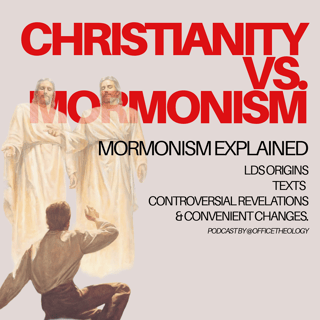
Speaker: So if you attended part one, you learned the origin of the Latter-day Saint movement, Joseph Smith's visions in the woods of upstate New York, the angel Moroni, the golden plates, the founding of the new church that claimed all other churches had fallen into apostasy, learned about all their extra-biblical texts from Book of Mormon, Doctrine and Covenants, Pearl of Great Price, that the Mormons placed alongside and in many cases above the Bible,
Speaker: Learn about maybe some controversial revelations that changed due to external pressures when it demanded it. So that's the part one was kind of the origin story. Now we could have spent probably weeks on weeks on weeks unpacking so many of those things. But as I was wrestling through what to bring to the table and what to talk about, that felt like the good starting spot to be able to at least understand what when you're talking to someone who else who is LDS, um the framework that they're working with. Does that make sense?
Speaker: And so that's really what was the purpose of part one. Now part two. This one's more intense than last week. um What do Mormons actually believe about God? Why do they reject the Trinity, Jesus, the Holy Spirit, salvation, eternity, and much more? And why does it matter that these beliefs are fundamentally incompatible with historic biblical Christianity? We not want to be able to say, like, hey, we they because you could talk to someone in the LDS faith, they'd be like, we believe Jesus is the atonement for our sins so we could go to heaven.
Speaker: We need be like, Yeah, right? But the depths below that of what we do we mean by all those words is what we're gonna unpack today. Sound good? Yeah.
Speaker: Once again, I always wanna be clear that all of these specific conversations are from their website or BYU forums, all things that they have deemed as their things that they publicize and what they teach from. And my goal, as always, is to make sure that everything that is said is within the proper context of what they mean, because we don't need a proof text. There's no need to do so.
Speaker: I just want to make sure I say that just so you guys know. And i would as always, I'd encourage you, as you're listening to some of this, like go and look on your own if you need to. Go read ah what you need to on these specific topics. Sound good?
Speaker: Cool. All right. So I want to show you with clarity that Christianity and Latter-day Saints or Mormonism, they are not the same religion.
Speaker: They cannot both be true. One teaches that God has always been God. The other teaches that God was once a man. One teaches that Jesus is the eternal creator. The other teaches that Jesus is a created being.
Speaker: One teaches the salvation by grace through faith alone. The other teaches exaltation through works, ordinances, and progression. These are not minor disagreements um that don't really matter in the long run or whatever you want to say. These are contradictory claims between the two about the most fundamental questions of existence.
Speaker: And so even if you walk away from this conversation unconvinced by my arguments, I want you to see the truth between the two that they are teaching actually two different things but using the same words.
Speaker: So that's the whole entire conversation today. Same words, different meanings. Here's what makes up the conversation between Mormons and Christians so confusing, maybe be frustrating or seemingly seemingly fruitless.
Speaker: You'll sit across from someone, a neighbor, a coworker, or a family member, and you will both use the same vocabulary, right? God, Jesus, atonement, grace, salvation, scripture, heaven, faith, eternal life, all these different things. They roll off the tongue natural in this conversation.
Speaker: If you're not listening carefully, and if you do not ask probing questions, it's remarkably easy to come away from those conversations thinking, well, we might disagree on a few details, but we basically believe the same thing.
Speaker: um Oftentimes, people will be like, well, the name Jesus is in the church. I'm like, Great. But what do you mean by Jesus? Right? Who do you mean by Jesus? So this is precisely the problem that we run into.
Speaker: You do not basically believe the same things. You believe fundamentally different things, but you're using the same words to describe two different things. And so, once again, when jesus when Christians say Jesus is God, they mean the second person of the eternal trinity, fully divine, co-equal, co-eternal, with the Father and the Holy Spirit, the creator of all things God himself took on human flesh, right? Right?
Speaker: When a Mormon says Jesus is God, they mean Jesus is the firstborn spirit child of a heavenly father and a heavenly mother who through obedience attained status of God, one of three distinct gods in their Godhead subordinate to the Father in authority and one one among potentially countless gods through the cosmos.
Speaker: little different, right? We'll get there. Don't worry, we'll get there. you see there's You see the problem? Same word. Entirely different baggage, if you will. One is monotheism.
Speaker: Christianity. One is polytheism. the affirms the One affirms the deity of Christ as taught in Scripture, the one true God. The other denies it. They both cannot be true. So this is not just like semantics, like arguing over things that don't matter.
Speaker: This is the difference between the true God and a false God, a lowercase g and a capital G. Between true Jesus and a quote, another Jesus, whom Paul warns about in 2 Corinthians 11, 4, which we talked about today, the church.
Speaker: Words have different meanings. Doctrines have consequences. And when the meanings change while the words stay the same, people get deceived, right?
Speaker: So let's define our terms carefully. Let us look at historic biblical Christianity teaches and what the Church of Jesus Christ of Latter-day Saints teach. And let us do so with enough clarity that the differences become impossible to miss. But also, my desire for you, like I said in the last first class,
Speaker: It's for you to understand, not to argue, but to have a conversation with someone. Does that make sense? So it's not like trying to give you ammo for for for your whatever, but it's actually for you to understand and be able to have these conversations with people of the LDS faith.
Speaker: So the nature of God, so the Christian doctrine of Trinity is this. Christianity stands or falls on the doctrine of the Trinity. If you deny the Trinity, you are no longer a Christian.
Speaker: This is, once again, not just some some theological peripheral belief, but it's or optional theological idea. The Trinity is the bedrock of Christian orthodoxy, affirming affirm affirmed in every major creed, confessed by every branch of Christianity, Catholicism, Orthodox, Protestant, for 2,000 years.
Speaker: Here is what Christians believe, that there is one God, who eternally existed in three distinct persons, Father, Son, and Holy Spirit. The three persons are co-equal, co-eternal, co-substantial.
Speaker: They share one divine essence. They are not three gods who happen to get along well. They are one God existing in three persons. The Father is fully God. The Son is fully God. The Holy Spirit is fully God.
Speaker: Yet there are not three gods. Welcome to the complexity of the Trinity. The Father is not the Son, the Son is not the Spirit, and the Spirit is not the Father. Yet, they are not divided.
Speaker: They exist in the eternal, perfect communion, one essence, distinct person. This is a mystery. Yes, it stretches our finite minds to breaking points, right? But it is clear in the teaching of Scripture, Deuteronomy 6, 4, Hear, O Israel, I, the Lord your God, is the Lord is one.
Speaker: One God, not two, not three, not a pantheon of gods, just one, right? And yet the scriptures also reveal this one God in three persons. At Jesus' baptism, the Father speaks from heaven. The Son stands in the Jordan, and the Spirit descends on him like god dove, Matthew 3,
Speaker: Jesus commands his disciples to baptize in the in the name of the Father and of the Son and of the Holy Spirit. Matthew 20, 19. One name, three persons. Paul blesses the Corinthians with the grace of the Lord Jesus Christ and the love of God and the fellowship of the Holy Spirit. We see it throughout Scripture.
Speaker: See, the Trinity is not a word game. That's the reality of who God is. One God in three persons, eternally existing in perfect love and communion. God has always been this way.
Speaker: He did not become triune at some point. He has always been Father, Son, and Holy Spirit. Before creation, before time, before anything else existed, God existed in a Trinitarian manner.
Speaker: In the beginning, God said, let us make man in our image. The LDS rejection of the Trinity. The Church of Jesus Christ of Latter-day Saints explicitly rejects Christian doctrine of the Trinity.
Speaker: Not as a matter of interpretation or emphasis. It's clear, undeniable denial of the Trinity. Mormons believe in what they would call the Godhead, which is three separate and distinct beings, the Father, the Son, and the Holy Spirit, what they would say, Holy Ghost.
Speaker: These are not three persons sharing one divine essence. They are three separate gods united in purpose but distinct in being. According to LDS teaching, the Father and the Son have both physical bodies of flesh and bone.
Speaker: Doctrine and Covenants 130 verse 22 states this plainly. The Father has a body of flesh and bone that is tangible as man's, and the Son also. But the Holy Ghost has not a body of flesh and bones, but is a personage of spirit.
Speaker: God the Father has a physical body. Jesus has a physical body. Only the Holy Spirit is a being. So these are not like metaphors or symbolic descriptions according to Mormon doctrine. God the Father is a physical being with a body made of flesh and bone just like yours.
Speaker: But he goes deeper than this. Not only does the Father have a body, he acquired that body through process. According to LDS teaching, God the Father was once a man. He lived on earth somewhere in the cosmos, and through faithfulness and obedience, he progressed to become God.
Speaker: Brigham Young, the second president of the LDS church, taught, How many gods are there? I do not know. But there's never a time when there were not gods and worlds. Polytheism. Polytheism.
Speaker: Think about what that means. In Mormon theology, there is no eternal, self-existent, transcendent transcendent God who created all things ex nihilo, which is out of nothing. Instead, there is a being, albeit a very exalted being, who is once like us.
Speaker: God is not fundamentally different from humans in nature or kind. He is simply further along the path of progression. He's an exalted man. Lorenzo Snow is the fifth president of the LDS Church, summarized this doctrine in a famous couplet that has become a cornerstone of Mormon teaching, and it's this.
Speaker: As man now is, God once was. As God is, now is man may to say that again. As man is now, God once was.
Speaker: As God is now, man may be. So this teaching... is not some like off-the-cuff like fringe teaching. It is cornerstone to who they are.
Speaker: This teaching has been constantly affirmed throughout LDS history and remains the official LDS doctrine today. The Gospel Topics Essay. So if you go onto their website, there will be this big thing called Gospel Topic Essays. And they have tons of them.
Speaker: This one is under Becoming Like God. published in the on the official LDS website, churchofjesuschrist.org, and approved by the First Presidency and the Quorum of the Twelve Apostles. That's their leadership. They state this.
Speaker: Since that sermon, known as the King Follett Disco, which Joseph Smith gave at a funeral of this person, the doctrine that humans can progress to exaltation and godliness has been taught within the church. Lorenzo Snow, the church's fifth president, once again coined that well-known couplet that we just walked through.
Speaker: So there's a staggering difference between what Christianity teaches about the eternal God, one eternal God, and the infinite and transcendent who has always been God and always will be God, and Mormonism that teaches God who was once mortal, mortal who progressed to divinity, and who exists among amongst countless other gods in the eternal cosmos.
Speaker: So when you say God, don't you see it now? Hold on a minute. What do you mean by God? See, this is not, Mormonism does not teach the God of Abraham, Isaac, and Jacob. This is not the God who spoke to Moses from the burning bush who declared, I am who I am.
Speaker: This is not the God who declares through the prophet Isaiah, before me, no God was formed. There shall be none after me. See, the Mormon concept of God flatly contradicts Scripture. But remember what we talked about last week about how they view the Bible. It is corrupt through corrupt priest and translation errors, so they have a scapegoat out of that. Next week, we'll talk a lot in depth about the Joseph Smith translation of the King James Version they use, just so you know.
Speaker: So it fundamentally redefines what it means to worship God. In Christianity, we worship the creator who is utterly distinct from creation. In Mormonism, we aspire to become what God is, which means God is not truly God in any meaningful sense. He's simply more advanced version of us.
Speaker: Lots of questions probably, but we have a lot to get through. So here we go. So let's talk about God the Father. Christian understanding of God the Father. Christian theology teaches that God is spirit, that Jesus himself declares in John 4, 24, that God is spirit, and those who worship him must worship him in spirit and truth. God does not have a physical body. He's not constrained by space or time. He's infinite, eternal, and unchanging.
Speaker: This doesn't mean that God is impersonal or abstract. God is the most personal being imaginable. He thinks, he feels, he wills, he loves, he judges, he acts, he reveals himself in Scripture with language we can understand. He has a face, quote, he has a face, he has hands, he has hears, he sees.
Speaker: But these... are These descriptions accommodate or are trying to accommodate our finite understanding of relating to God. They do not mean that God literally possesses physical organs, but God is the creator of all things, including matter itself.
Speaker: He existed before the universe began. He spoke all the cosmos and came into existence. In the beginning, God created the heavens and the earth, Genesis 1.1. He did not organize pre-existing material.
Speaker: He created out of nothing. There was God and they're then there was God in creation. Creation added nothing to God. God was not incomplete before creation. He was complete, perfect, and eternally blessed be before a single Adam existed.
Speaker: God is not also unchanging. Malachi 3.6 teaches that I, the Lord, do not change. God does not grow in knowledge or power. He does not progress from one state to another.
Speaker: He is eternally perfect, lacking nothing. This is the God of Scripture. Eternal, infinite, all-powerful, all-knowing, everywhere present, unchanging, holy, just, good. He is the only God, and there has never been another, and there never will be another.
Speaker: Isaiah 44.6 says, I am the first, and I am the last. Besides me, there is no God. LDS teaching of God as an exalted man. Mormon theology teaches something radically different.
Speaker: According to LDS doctrine, God the Father has a physical body of flesh and bone. He says, he is glorified resurrected man as we've already noted dr cons thirty twenty two explicitly states father has a body and flesh bone tangible as men his son also but the implications they go even further this is why because god the father was not always god he was once a mortal man living on earth similar to ours through obedience and eternal principles and laws Presumably revealed to him by his God, he progressed to exaltation and became a God.
Speaker: Once exalted, he gained the resurrection body of flesh and bone, received his own world to govern, began the process of peopling those worlds with his own spirit offspring.
Speaker: this teach is not This teaching is not like a fringe idea promoted through like a few Mormon thinkers or kind of like offshoots, like they're not really Mormon. It's official LDS doctrine. It's taught by prophets, apostles, published in church manuals, confirmed in official essays on the church's website. Once again, the topic gospel topic essay, Becoming Like God on their website.
Speaker: Discusses this teaching at length. While the essay is somewhat cautious in its language, acknowledging that little has been revealed about the first half of his existence, is Lorenzo Snow, what he said, it affirms that this teaching has been consistently taught within the church.
Speaker: president um Church President Gordon B. Hinckley, when asked about this doctrine by a reporter in 1997, responded, that gets into pretty some pretty deep theology that we don't know much about, was his response.
Speaker: So you can see the implications this all of a sudden,
Speaker: hinkly responded clearly well as god is man may become we believe in eternal progression very strongly so you can see the implications of this all of a sudden right If God was once man, then he is not eternal, self-existent, creator revealed in Scripture.
Speaker: If he progressed to divinity, he is not unchanging. If he is one God among many, then he is not the one true God. And there's more, LDS teaches that God the Father is married.
Speaker: He has a wife referred to as Heavenly Mother or Mother in Heaven, the Gospel topic essay on their website. You can go on your phone right now and read. It's called Mother in Heaven. It states this, the Church of Jesus Christ of Latter-day Saints teach that all human beings, male and female, are beloved spirit children of the heavenly parents.
Speaker: a heavenly father and a heavenly mother. This understanding is rooted in scriptural and prophetic teachings about the nature of God, our relationship to the deity and godly potential of men and women. The doctrine of the heavenly mother is cherished and distinctive belief among the Latter-day Saints.
Speaker: The essay continues, men and women cannot be exalted without one another. Just as we have a father in heaven, we have a mother in heaven. As e Elder Dallin H. hoke Oaks of the Quorum of the Twelve Apostles, he said this, ourology our theology begins with heavenly parents.
Speaker: Our highest aspiration is to be like them. According to Mormon theology then, God the Father is married, exalted man with a physical body who once lived on earth progressed to Godhood. He and his wife produced billions of spirit children, including you and me, in premortal existence, which we'll talk about that later. These spirit children then come to earth to receive physical bodies, go through their own process of progression and the ultimate goal of becoming gods themselves.
Speaker: So no, this is not the God of the Bible. This is not the God worshiped by Christians for two millennia. This is a radically different concept of deity and one that scripturally explicitly condemns as false and idolatry.
Speaker: Jesus Christ. Let's talk about him. The Christian doctrine of Jesus Christ. Christianity has always taught that Jesus is fully God and fully man. He's the second part of the Trinity, eternally begotten of the Father, not made or created. In the beginning was the Word, and the Word was with God, and the Word was God. He was in the beginning with God. All things were made through Him, and without Him nothing was made.
Speaker: Jesus is not a created being. He is the creator. Colossians 1, 15 through 17 declares that he is the image of the invisible God, the firstborn of all creation, which we'll talk about that in a second. For by him, all things were created in heaven and on earth, visible and invisible, whether thrones, dominions, rulers, authorities, all things were created through him and for him, and he is before all things, and in him, all things hold together.
Speaker: The term firstborn, you might be like oh, Mormons say Jesus is the firstborn, right? The term firstborn here does not mean Jesus is the first created being from heavenly parents. It means that he has supremacy over and preeminence over all creation. He is the heir of all things. He is the one through all things were made. See, Jesus has always existed as God.
Speaker: Before Abraham was born, in Jesus declared, i am, John 8, 58. Using the divine name to reveal to Moses in Exodus 3, 14, when Thomas saw the risen Christ, he worshiped him, saying, my Lord and my God.
Speaker: Jesus didn't correct him. He accepted the worship, which only God can rightly receive, the first commandment. Jesus is also fully human. He was conceived by the Holy Spirit, born of the Virgin Mary, lived a sinless life, died on the cross for our sins, rose on the dead from the dead on the third day, ascended to the right hand of the Father. He is the God-man, the one person with two natures, fully divine, fully human, not 50-50, without mixture, without confusion, without separation or division.
Speaker: This is Jesus whom Christians worship. The eternal God, the Son, creator of all things, who humbled himself and took on human flesh to redeem his people from sin and death. He did not become God. He's always been God.
Speaker: His incarnation did not add to his deity. It revealed his deity in human form. Okay. The LDS teaching of Jesus as the spirit child who became God.
Speaker: Mormon theology teaches something fundamentally different. According to the LDS doctrine, and Jesus is the firstborn spirit child of heavenly father and heavenly mother, his heavenly parents. He's not eternal. He had a beginning before the creation of the world and pre-mortal existence. have The heavenly parents produced billions of spirit children, and Jesus was the first.
Speaker: This makes Jesus our elder brother. You might hear LDS people say that. He's not fundamentally different from us in nature or kind. He is a spirit sibling through faithfulness, obedience, and progress to become God.
Speaker: His divinity is real. Listen, but it's derived divinity, inherited from the Father, achieved through progression, not a state of who he is from the beginnings. The first presidency of the LDS Church to issued a declaration in 1909 called The Origin of Man. So if you want to read that, you can go to the website, The Origin of Man, which stated, Jesus, however, the firstborn among the sons of God,
Speaker: The first begotten in spirit and only begotten of the flesh is our elder brother and we, like him, are in the image of God. All men and women are in the similitude of the unit of universal father and mother and are literally the sons and daughters of deity.
Speaker: The statement continues, God himself is an exalted man perfected and thrown and supreme. So we have to think about those implications, right? The Church of Jesus Christ of Latter-day Saints, not the same.
Speaker: Think about just as a human child grows into adulthood, the spirit child like Jesus grows into Godhood. Jesus did not create all things. He organized pre-existing matter. that makes That's very important.
Speaker: He organized pre-existing matter under the direction of the Father. Jesus was not eternally God. He became God through obedience. See, Mormon teaching explicitly affirms that Jesus and Lucifer are spirit brothers.
Speaker: I've talked to some Mormons, like, we don't believe that. like, just go on your website for a little bit. Both are sons of heavenly father and mother. They are both born in the premortal existence.
Speaker: This is acknowledged in official LDS sources, the Gospel Topics Manual called Premortality. So if you want to read it for yourself, Premortality. teaches that the premortal council, both Jesus and Lucifer, presented plans for how to redeem mankind. The manual states that Lucifer, another spirit son of God, rebelled against the plan and sought to destroy the agency of man. He became Satan and his followers were cast out of heaven.
Speaker: this is not This teaching is not hidden or obscure to LDS members. It's part of standard LDS theology. Jesus and Satan are brothers, both spirit, children, the father and mother in pre-mortal realm.
Speaker: Mormons would say they sincerely revere, i will say, respectively, this version of Jesus. They speak of him with deep emotion and devotion, like talk to someone of the LDS faith, how they feel about Jesus. They feel deeply about him, right?
Speaker: They believe he atoned for our sins, right? rose from the dead, made salvation possible. We'll get to those. But the Jesus they describe is not the Jesus of the Bible. It's the Jesus of Mormonism, create a created being, a spirit child, an elder brother of who progressed to Godhood.
Speaker: Jesus of the christian of Christianity is the eternal son of God, creator fully divine for all eternity. These are two different beings. They both cannot be true.
Speaker: Right? They contradict and each other at every fundamental level. One is the true Christ and one is an image of Christ, but not the true Christ. Let's talk about the Holy Spirit, the Christian doctrine of Holy Spirit. Christianity teaches that the Holy Spirit is a third person of the Trinity, fully God, co-equal, and co-eternal with the Father and the Son.
Speaker: Spirit is not some impersonal force or divine energy. He is actually a person. He speaks, he teaches, he testifies, he intercedes, and he can be grieved. Acts 13, John 14, John 15, Romans Ephesians The Spirit is also fully divine. In Acts 5, when Peter confronts Ananias, why? He says, why has Satan filled your heart and you lied to the Holy Spirit? You've not lied to man, but you've lied to God.
Speaker: To lie to the Holy Spirit is to lie to God because the Spirit is God. God the Spirit. And so the salvation the Spirit's role in salvation is is essential. He convicts the world of sin, righteousness, and judgment, John 16.
Speaker: He regenerates the spiritually dead, giving them new birth, John 3. He dwells within believers, sealing them for the day of redemption, Ephesians 1. He sanctifies, produces the fruit of Christ-likeness in believers, Galatians 5.
Speaker: He gives spiritual gifts for the edification of the church, 1 Corinthians 12-14.
Speaker: He empowers believers for witness and service. Acts chapter 1. Without the Spirit, there is no salvation, no sanctification, no power for Christian living. He is not optional or supplemental.
Speaker: He is God present with us, applying the work of Christ to our hearts. LDS doctrine of the Holy Spirit is this. Mormon theology teaches that the Holy Spirit, also called called the Holy Ghost in LDS terminology, is a separate person, just separate from the Father and the Son. Unlike the Father and Son who have a physical body, flesh and bones, the Holy Spirit is a spirit being without a physical body.
Speaker: Doctrine and Covenants, once again, we've read several times today. The Father and the Son have a body of flesh, tangible as man. The Son, the Holy Ghost, ah has not a body of flesh and bones, but as a person.
Speaker: Um, The Holy Spirit in Mormon theology is subordinate both to the Father and the Son. He is not co-equal or co-eternal with them. His role is to witness of the Father and the Son, which is 2 Nephi 31.18, and to reveal the truth, Moroni 10.5.
Speaker: and he But he does not share the same status and or authority in LDS Church. This is not the Holy Spirit of of the Scripture. The Bible teaches one God, three persons, each fully divine, each deserving worship and honor. Mormonism teaches three separate beings, unequal in status, in authority, and only united in purpose.
Speaker: All right. That's one topic. Here we go. doctrine human deification. doctrine of human deification. There's one doctrine, or one of many doctrines that distinguishes Mormonism from Christianity, it is the teaching of human deification.
Speaker: The belief that faithful Mormons can become gods themselves. This is not a fringe belief or outdated from old whatever. It's many of them modern mormons have or many modern it's not many modern Mormons have abandoned. It's central and official LDS doctrine taught from the beginning and consistently affirmed through prophets, apostles, and official church publications.
Speaker: So the LDS doctrine of exaltation and godhood is this. According to Mormon teaching, all human beings were literal spirit children of heavenly father and mother. We talked about this a little bit. Begotten in premortal existence. We came to earth receive physical bodies to be tested with the ultimate goal of progressing to exaltation to become gods ourself.
Speaker: So the official gospel topic on their website is going to be called Plan of Salvation, if you want to read it. In the premortal life, our heavenly parents called a grand council to present his plan for our progression. We learned that if we follow his plan, we can become like him.
Speaker: We would be resurrected. We would have all power in heaven and on earth, and we become heavenly parents and have our own spirit children just as he does.
Speaker: That one's in the Council of Heaven if you want to look it up at the gospel topics. Joseph Smith taught this doctrine explicitly in one of his final sermons. We've referenced several times in the these two classes. The funeral of Elder King Follett in April of 844. The sermon known as a King Follett Discourse, the foundational to the Mormon theology. In it, Joseph Smith declares, God himself was once as we are now an exalted man. Sits enthroned in yonder heavens. That is the great secret.
Speaker: Smith continues to with even more clarity. I'm going to tell you how God became God. This is his message. We have imagined and supposed that God was God from all eternity. Listen, I will refute that idea.
Speaker: I will take away the veil so that you may see. is the first principle of the gospel to know for certainly the character of God and to know that we may converse with him and as one man converses with another and that he was once man like us. Yeah, God himself, the father of us all, dwelt on earth the same as Jesus Christ did himself.
Speaker: And that he's literally saying, I will refute the idea that God is God of all eternity. And so he goes on to say this. This is when he made the doctrine of human deification explicit. Here then, this is what he's saying, is eternal life.
Speaker: To know the only wise and true God, and you have to learn how to be gods yourself and to be kings and priests to God, the same as all gods have done before you.
Speaker: This teaching has been consistently affirmed by subsequent LDS leaders. lind Lorenzo Snow said, made that that couplet very famous that we read several times already, as man now is God once t was, as God now is man may be.
Speaker: The official gospel topic essay, Becoming Like God, published on their website and approved by the first presidency and the 12 apostles, says since that sermon, they're talking about the King Follett sermon, known as the King Follett sermon, the doctrine of humans can progress to exaltation and godliness has been taught within the church.
Speaker: Learns us know the church's fifth president coined a well-known couplet. the The essay continues this. latterday saints see all people as children of god in full in a complete sense they consider every person in divine origin and nature and potential each has an eternal core and is a beloved spirit son or daughter of heavenly parents each possess seeds of divinity and must choose whether to live in harmony or tension with the divinity that they have
Speaker: Through the atonement of Jesus Christ, which we'll get to, all people may progress towards perfection and ultimately realize their divine destiny.
Speaker: And so we have to ask this question, what does exaltation mean? You see the the handful things on your notes there. What does this mean practically? According to LDS teaching, faithful Mormons who achieve exaltation in the celestium celestial kingdom will, first point is become gods themselves.
Speaker: With all the powers and attributes of deity, these the official gospel manual states, they will become gods. Doctrine and Covenants 132. They will have everything our heavenly father and Jesus Christ have.
Speaker: Doctrine and Covenants 132 as well. They will receive their own worlds to populate and to govern. Henry B. Earing, the first presidency, taught, we learn both the spiritual things and the secular things so that we may one day create worlds and people to govern them.
Speaker: To continue to procreate eternally, producing spirit children, the gospel principle manual explains... They will be united eternally with the righteous with their righteous family members and will be able to have eternal increase.
Speaker: The Encyclopedia of Mormonism clarifies increase in this instance means bringing or bearing of spirit children after mortal life. Progress eternally eternally in knowledge and power. President Joseph Fielding Smith wrote this, they shall increase in knowledge and wisdom and power going from grace to grace until the fullness of the perfect day shall burst upon them.
Speaker: And lastly, preside as gods over their own creation, just as Heavenly Father presides over creation. Once again, Doctrine and Covenants 132 talks where they shall be gods, because then they have all the power angels subject to them.
Speaker: The Gospel Topics Manual, Council in Heaven, teaches that we would become heavenly parents and have spirit children just as he does.
Speaker: Yeah, we got a lot to go still, you guys. The Gospel Topics Manual on the Celestial Kingdom explains that those who inherit the highest degree of celestial glory will live in God's presence, become like Him, receive the fullness of joy, and they'll live together for eternity with those of their family who qualify.
Speaker: We'll go through all eternity stuff a little bit. It's not some like a metaphorical thing that they're walking through. Mormons genuinely believe that they can become gods. Not like God in moral or spiritual sense, but actually divine beings who create and rule over worlds.
Speaker: Elder James E. Talmadge, one of the 12 apostles and a respected LDS though theologian, wrote this. In spite of the opposition of sex that would be us, in the face with direct charges of blasphemy, the church proclaims the eternal truth. As man is, God once was, as God is, man may be. They are doubling down on all of this.
Speaker: In 2004, an LDS study manual published by the church recounts the story of President Lorenzo Snow visiting a kindergarten class where children were making clay spheres.
Speaker: Snow told the school's official this, these children are now at play making mud worlds. The time will come when Some of these boys, through their faithfulness to the gospel, will progress and develop in knowledge, intelligence, and power in future eternities until they shall be able to go out into space where there's unorganized matter, call together necessary elements, and through their knowledge of of and control over the laws and powers of nature to organize matter into the worlds on their posterity may dwell and over which they shall rule as God's.
Speaker: just
Speaker: um This is just polytheism. That most pure base. There's no other word for it. monoth Mormonism teaches there are countless gods and you can become one.
Speaker: Throughout the cosmos, each will in their own world, having their own progressed mortality to divinity, each continuing to progress eternally. Heavenly Father is our God, but he's not the only God.
Speaker: He is one among innumerable amount of gods who have achieved exaltation. Christian response. One God forever. Christianity unequivocally rejects the doctrine of human deification.
Speaker: We will never become gods. This is not... humility or false modesty, this is the truth revealed in Scripture. God himself declares, before me no God was formed, nor shall there be any after me.
Speaker: Isaiah 43. Isaiah 44 says, i am the first, am the last. Besides me, there is no God. Isaiah 45 says, I am the Lord, and there is no other. Besides me, there is no God.
Speaker: The first commandment could not be clearer, right? You shall have no other gods before me. Lowercase g. the great hair This great heresy is condemned throughout Scripture as idolatry, the worship of false gods, and is the great deception of the serpent in the garden which says you will be like God.
Speaker: It's the entire premise of the LDS faith. You can become God.
Speaker: Satan tempted Eve with the promise of God had she believed him. That lie had been whispered in humans' ears ever since. Mormonism simply baptizes that ancient demonic lie with religious language and presents it as restored truth.
Speaker: Christianity teaches... that we will be glorified, we'll be made perfect, we will be conformed into the image of Christ, we will we will receive resurrected bodies, we will reign with Christ in the new heavens and the new earth, but we will always remain creatures.
Speaker: We will always remain fundamentally distinct from the creator. God will always be God and we will always be his people, his creation. See, we do not bear the crushing weight of aspiring to godhood.
Speaker: We rest in the finished work of Christ. We rejoice being adopted and grafted into the family of the living God. We look forward to the eternal life in his presence, not as God's, but as his beloved children.
Speaker: The difference cannot be more clear. So let's talk about salvation. The Christian gospel is this, salvation by grace through faith alone. Christianity teaches that salvation is a free gift received by grace through faith in Jesus Christ alone. This is the heart of the gospel, Ephesians 2.
Speaker: We are saved by grace alone, not grace plus our works, not grace plus our obedience, not grace plus supplements to our efforts, grace alone. Why? Because we are utterly incapable of saving ourselves.
Speaker: We were dead to our trespasses and our sins, Ephesians 2. We are slaves to sin sins, Romans 6. We are by nature children wrath, Ephesians 2.
Speaker: Apart from Christ, we can do nothing, John 15. But God... The creator of all things, so rich in his mercy, sent his son to do for us what we could never do for ourselves.
Speaker: Jesus lived the perfect life we could not live. He died the death we deserve, bore God's wrath in our place. He rose victorious over sin and death, and now he offers forgiveness, righteousness, eternal life as a free gift to all those who believe in him. You see, salvation is not earned forever.
Speaker: It's received, right? It is not achieved through obedience to laws and ordinances. It's granted by God's grace to those who put their faith in Christ. Now listen, this does not mean works are irrelevant. That's not what I'm saying.
Speaker: Good works are the fruit of salvation, not the means of earning salvation. we are We are his workmanship, created in Christ Jesus for good works, Ephesians 2.10.
Speaker: We are saved for good works, not by good works, right? But the ground of our salvation is grace alone, through faith received through faith alone, in Christ alone. This is the Christian gospel, and guess what? It is very good news, right?
Speaker: The LDS gospel teaches exaltation through works and ordinances. See, Mormon theology distinguishes between salvation and exaltation.
Speaker: General salvation, if you will, meaning resurrected from the dead, is a free gift granted to all people through their versions of Christ's atonement. Everyone will be resurrected. Everyone will receive some degree of glory in the afterlife. We'll get there.
Speaker: In this sense, nearly everyone is, quote, saved. Exaltation is different. Exaltation means achieving Godhood. Entering the highest degree of the celestial kingdom, receiving all that the Father has. And exaltation requires far more than just faith in Christ.
Speaker: According to LDS teaching, exaltation requires faith in Jesus Christ. I'm not going to keep saying this, but know what I mean is when I say faith in Jesus Christ, their definition of Jesus Christ.
Speaker: Repentance, baptism by proper LDS priesthood authority, receiving the gift of the Holy Ghost, receiving temple endowment, being sealed in eternal marriage in an LDS temple, obedience to the commandments, faithfulness till death.
Speaker: The LDS Church's official gospel principles manual used for teaching new converts states this, to receive exaltation, we first must place our faith in Jesus and then endure in faith to the end of our lives. Our faith in him must be such that we repent of our sins, obey his commands, and he commands us to achieve or to receive certain ordinances now.
Speaker: little hook in there, right? Later in the same manual, It says, the ordinances of the temple are so important that members of the church are counseled to live near the temple if possible.
Speaker: These are not suggestions. These are requirements. If you have not received the temple ordinances, if you've not been sealed in eternal marriage, if you've not remained faithful to all the LDS teachings, you cannot receive exaltation and you may receive a lesser degree of glory and you will not become a god.
Speaker: LDS Apostle Bruce R. McConkie wrote in his book, Mormon Doctrine, salvation in its true and full meaning is synonymous with the exaltation or eternal life and consists in gaining an inheritance in the highest of three heavens within the celestial kingdom.
Speaker: With a few exceptions, this is the salvation of which scriptures speak. It is a salvation which the saints seek. The LDS view of salvation is fundamentally works-based. Yes, Mormons affirm that grace is necessary. Yes, they acknowledge Christ's atonement, but in their system, grace is not sufficient. Grace enables you to be resurrected. Grace makes it possible for you to work out your salvation through ordinances.
Speaker: But the ultimate the exaltation depends on your obedience, your ordinances, and your faithfulness. This is not the gospel of the New Testament. This is a different gospel. And Paul is very clear about what we should think about different gospels.
Speaker: Even if we or an angel from heaven should preach to you a gospel contrary to the one we preach to you, let him be cursed. Galatians 1.8. The irony is almost too perfect, and it's it's really hard.
Speaker: um Next week, we'll talk about common LDS arguments. So if you quote Galatians 1, they'll say, well, that's about circumcision. No, it's not. Like, we'll we'll go through all those common rebuttals and give you information on how to respond back to those if they're willing to have those conversations.
Speaker: um Anyway, so but the irony is almost too perfect because Mormonism claims to be the rest restoration of the true Christianity delivered by an angel, Moroni, and it preaches a gospel contrary to the one Paul preached in Scripture. By Paul's own standard, this standard this falls under God's curse.
Speaker: All right, the afterlife. The afterlife. Christian view, heaven or hell. Christianity teaches there's two eternal destinies for humanity, heaven or hell. Those who die in faith, trusting in Christ alone for salvation, will spend eternity in the presence of God. This is heaven. The new heaven is a new earth where God dwells with his people, where there is no more death, mourning, crying, or pain. Revelation 21.
Speaker: Heaven is not floating in the clouds playing harps. mean, Heaven is the restoration of all things, the fullness of joy in God's presence, the consummation of God's redemptive plan.
Speaker: Those who die apart from Christ, rejecting God's offer for salvation, will spend eternity separated from God. This is hell, a place of conscious eternal punishment, where the worm does not die, the fire does not quench, Mark 9, 48.
Speaker: Hell is not a place of annihilation. i know there's there's arguments for annihilationism or temporary purification until you get good enough to eventually bow to Jesus. It's eternal separation from the source of all goodness, truth, and beauty.
Speaker: There are only two options. There's no middle ground. That's why the gospel the gospel has urgency behind it. Whoever believes in the Son has eternal life. Who does not obey the Son shall not see life. But the wrath of God remains on him. Man, that's mean. Who says that? John 3.36. It's in the gospel of John.
Speaker: That may sound harsh to modern ears. But it is consistent teaching of Scripture affirmed by Jesus himself in the parable of the sheep and the goats, or today's sermon, the wheat and the weeds.
Speaker: Jesus describes final judgment at those who will go into eternal punishment, and the righteous will go into eternal life, Matthew 25. The LDS view is three kingdoms of glory.
Speaker: Mormon theology teaches something radically different according to LDS doctrine. and There are three kingdoms of glory plus outer darkness, which we'll cover those. Nearly everyone ends up in one of the three kingdoms, often varying a degree, um depends on the eternal reward.
Speaker: The teaching comes from the Doctrine Covenants section 76, a vision received by Joseph Smith and Sidney Rigdon in February 1832. So let's explain each kingdom, the celestial kingdom, the highest degree of glory compared to the brightness of the sun. This is where faithful Mormons who received all the necessary ordinances, baptism, temple endowments, internal marriage ceilings, have remained faithful to LDS teaching will dwell.
Speaker: Those who will inherit the celestial kingdom will live in the presence of God the Father and Jesus Christ, receive exaltation, become gods themselves, have eternal increase, continue to have spirit children throughout eternity, preside over their own worlds, and experience the fullness of joy.
Speaker: This is the goal of Mormonism. This is what faithful Latter-day Saints are striving for. Not just to be with God, but to become God. The terrestrial kingdom, the second one down, the middle degree of glory compared to the brightness of the moon.
Speaker: According to Doctrine and Covenants 76, 71 through 80, the terrestrial kingdom is for those who died without having the opportunity hear the LDS gospel. Why do they have to distinct between gospel and LDS? It's different conversation.
Speaker: Or maybe this conversation, but not right now. But who would have accepted it, given it a chance? Right. Honorable people who are, quote, blinded by the craftiness of men and did not accept the fullness of the LDS gospel. Members of the LDS church who were not valiant in their testimony of Jesus end up here too.
Speaker: Those in the terrestrial kingdom will receive the presence of Jesus, but not the fullness of the Father.
Speaker: Enjoy a degree of glory that surpasses earthly comprehension, but not become gods and not have eternal increase. The terrestrial kingdom is a place of significant blessing, but falls short of exaltation.
Speaker: Many good, moral, and decent people will inherit this kingdom, but they will not become gods. The telestial kingdom is this, the lowest degree of glory compared to the brightness of the stars. According to Doctrine and Covenants 76, 81 through 112, the telestial kingdom is for those who rejected the gospel, the LDS gospel, the testimony of Jesus and the prophets, liars, sorcerers, adulterers, those who commit sexual sin, murderers, and all those who love and practice falsehoods.
Speaker: Those in telestial kingdom will eventually be resurrected after the millennium, receive the Holy Ghost through its ministration of angels and higher kingdoms, enjoy the glory that surpasses all understanding, but never seeing the Father or the Son's face to face. Even in the telestial kingdom, it's described as a place of glory and blessing.
Speaker: moremon if possible Mormon Apostle Joseph Fielding Smith taught that the telestial kingdom is so glorious that if we could see it now, we would be tempted to commit suicide to get there. This is how different the Mormon view of the afterlife is than Christianity.
Speaker: Then there's reference of outer darkness. Outer darkness is the only place of true punishment in Mormon theology. It's reserved for Satan and his demons, the son of perition perdition.
Speaker: Those who had perfect knowledge of the truth received the Holy Ghost and then willfully delight denied and rejected it. Very few people qualify for outer darkness. You'd have to have an absolute certain knowledge that Mormonism is true and then consciously and deliberately rebel against that knowledge. I think that might be me since I grew up Mormon. so Dang it.
Speaker: The problem with the three kingdoms. You see a problem here? In Mormon theology, almost everyone receives some sort of degree of glory. Murderers, adulterers, liars end celestial kingdom, which is described a place of incomprehensible beauty and blessing.
Speaker: Good people who rejected Mormonism ended up with terrestrial kingdom, which is glorious but not beyond imagination. Only faithful Mormons is achieve exaltation and godhood. This system makes salvation contingent on membership in the LDS church and obedience to LDS teachings.
Speaker: It creates a caste system in eternity where different levels of glory correspond to different levels of Mormon faithfulness. It flatly contradicts Jesus' own teachings because Jesus spoke repeatedly of two destinations, eternal life or eternal punishment, sheeps, goats, wise builders, foolish builders, those who welcome the masters with joy or cast out into outer darkness. He never mentioned three degrees of glory with graduation requirements.
Speaker: Three kingdom doctrine is not found in scripture. It is Joseph Smith's invention dressed up in biblical language. If you go to 1 Corinthians 15, it is often cited.
Speaker: Though it says nothing about the kingdom of the athletes, talking about the resurrected life. Just go ahead and read it. This one, okay, if this, a lot of them get me all upset and feeling a certain type of way, but this one is extra wild.
Speaker: It's sin in the fall.
Speaker: The Christian doctrine of original sin. Let's talk about this. Christianity teaches when Adam sinned in the Garden of Eden, his sin had consequences consequences for all of humanity, right?
Speaker: Paul writes in Romans 5, therefore just as sin came into the world through one man and death through sin, so death spread to all men because all sinned.
Speaker: Later in the chapter, though, it says, For by one man's disobedience, many were made sinners. So by one man's obedience, we were made into we will made him be made righteous. Romans 5.19 This is the doctrine of the original sin. Adam's sin corrupted the human nature.
Speaker: We are born with sinful nature, inclined towards rebellion towards God. Just have some kids. You'll figure it out. I didn't have to teach them. They just figured it out. We do not become sinners when we commit our first sin.
Speaker: We commit sin because we are sinners in the original sin.
Speaker: This does not mean we are guilty of Adam's specific act of obedience. It means we inherit the consequences of his sin, spiritual death, separation from from God, and nature bent towards sin. This is why Jesus had to come.
Speaker: We needed a Savior because we could not save ourselves. We needed someone to break the power of sin, to restore what was lost in the garden. And God himself, God the Son, came to reconcile his creation.
Speaker: That is us. The LDS rejects the doctrine of original sin.
Speaker: i keep my remarks to myself. is i can do it. Here we go. The second article of faith in Mormon teaches explicitly rejects the doctrine of original sin. It says, we believe that men will be punished for their own sins and not Adam's transgression.
Speaker: Notice the language Mormons call Adam's sin transgression, not sin. In LDS theology, Adam's choice, listen, to eat the fruit was actually a positive step.
Speaker: It was a necessary part of the plan of salvation. Without the fall, Adam and Eve would remained in the garden forever, unable to have children, unable to progress. The fall was a blessing, not a curse.
Speaker: This is fundamentally disagreement with Christianity. If Adam's sin did not corrupt the human nature, if we were not born sinful but became sinners only through our own choices, then why did Jesus need to die?
Speaker: Why couldn't God just forgive us directly?
Speaker: The LDS answer is that Jesus' atonement was necessary to overcome physical death and make resurrection possible, but this misses the heart of the gospel.
Speaker: Jesus did not die merely to give us resurrected bodies. He died to save us from sin. to bear God's wrath of that sin, to satisfy the divine injustice towards God, the Father, to reconcile us back to the Father. See, the Mormon view of sin minimizes the seriousness of human rebellion, therefore diminishes the glory of Christ's atonement.
Speaker: Deep breath.
Speaker: These are two fundamentally different beliefs. Same words, different definitions. Now want to cruise through a couple other LDS doctrines that are um flying the face of of historic Christianity. The first is temple worthiness.
Speaker: In LDS theology, temple worthiness refers to a meeting the specific requirements necessary to receive a temple recommend. It's a card that grants access to LDS temples where the most sacred ordinances are to be performed.
Speaker: So for instance, my family, I were sealed in the temple in Bellevue. So we had to go through all the temple worthiness to get approved to go in there to receive that specific sealing.
Speaker: make I will make no comments. Okay, any move on. To be declared temple worthy, a um a member must participate in an annual interview with their bishop and stake president, during which they are asked a series of questions about their beliefs and behavior.
Speaker: The questions assess whether they have a testimony of God, Jesus Christ, and the restoration through Joseph Smith. Whether they sustain church leaders as prophets, whether they're keeping in the word of the wisdom, which is no coffee, tea, alcohol, tobacco, all that stuff.
Speaker: Whether they pay a full tithe of 10% income. Whether they keep the law of chastity, whether they're honest about their dealings, whether they support or affiliate with groups opposed to the church.
Speaker: Only those who answer satisfactorily to all these questions receive a temple recommend, and without this recommend, members cannot participate in temple ordinances, which include marriage sealing, receiving their endowments, performing baptisms for the dead, all of which are considered essential for exaltation in the celestial kingdom.
Speaker: Thus, temple worthiness functions as a gatekeeping mechanism that makes salvation dependent not only faith in Christ, but on adherence to specific LDS standards and loyal to the church leadership.
Speaker: Then we have to talk about eternal marriage and temple sealing. Another distinctive LDS doctrine is the teaching of eternal marriage. Mormons believe that marriages performed in LDS temples are, quote, sealed for eternity, not just death do us parts, but forever. This doctrine is essential because to the Mormon concept of exaltation to become God, you must be sealed in eternal marriage, right, because to become heavenly parents.
Speaker: Single individuals cannot achieve the highest degree of glory in the celestial kingdoms.
Speaker: Jesus wasn't married. Oh, but he's in the second one, so never mind. He's in the second kingdom. I forgot forgot about that.
Speaker: This is essential to Mormon doctrine, concept of exaltation to become God. Like I said, he must be sealed in eternal marriage. Single individuals cannot get to the highest degree. The word sealing refers to joining together of man and woman and their children for eternity.
Speaker: This sealing can be performed only in a temple by a man who has the priesthood or the authority from God. According to Latter-day Saint belief, the sealing means that the family relationships will endure after death if the individuals live according to the teachings of Jesus Christ.
Speaker: For Latter-day Saints, the family is essential to God's plan and the most important unit both on earth and in eternity, which makes sense of why they value family value why they have the family values they do.
Speaker: Now you understand. Their, quote, biblical justification is cited in Matthew 18, 18, where Jesus says, whatever you bind on earth shall be bound in heaven, but that's proof texting in its finest. But this passage is about church discipline, not marriage ceremonies.
Speaker: But what's funny is just not even four chapters later, Jesus addresses the question of marriage in the afterlife directly. In Matthew 22, 23 through 30, the Sadducees presented Jesus with this hypothetical scenario about a woman who was married seven times in the resurrection. Therefore, of the seven, whose wife will she be? For they all had her. And Jesus responds, you are wrong. Listen, because you neither know the scriptures nor the power of God.
Speaker: For in the resurrection, they will neither marry or give into marriage, but are like angels of heaven. But let's think back to how they view the Bible. It's been corrupted by priests and translations.
Speaker: See the loophole every time. Jesus explicitly denies that marriage continues in the resurrection. Mormons claim this passage refers only to marriages not sealed by proper priesthood in LDS temple.
Speaker: But that all interpretations require me, this but that interpretation requires reading Mormon theology into the text. Jesus' words are clear. No marriage in the resurrection. I love my wife, but I'll be far more infatuated with Jesus than my wife.
Speaker: Ordinances. Baptism for the dead and the necessity of LDS baptism. um I had my mormonist Mormon baptism reversed at 18, praise God. I was baptized in the mormon church at 8.
Speaker: But one of the most, another distinctive LDS practice is baptism for the dead. Living church members being baptized by proxy on behalf of deceased individuals. This baptism, this practice is performed exclusively in LDS temples and is considered essential for salvation of the dead.
Speaker: ah LDS Church teaches that Jesus Christ taught baptism is essential to salvation of all who have lived on earth. Many people, however, have died without being baptized. Others were baptized without proper authority because God is merciful. He's prepared a way for people to receive the blessings of baptism. By performing proxy baptisms on behalf of those who have died, church members can offer these blessings to deceased ancestors. Why are LDS people so obsessed with their genealogy?
Speaker: For this reason.
Speaker: This practice is based on 1 Corinthians 15.29. This says this. else what else shall they else What else shall they do which are baptized for the dead if the debtor if the dead raise not at all? Why are they baptized for the dead? Here real quick. Paul is referencing here a notoriously... This reference here, Paul is referencing...
Speaker: He's not endorsing the practice of baptism for the dead. He's referencing something that the culture is already doing, baptizing for the dead and saying, if if there's no resurrection, why are you even doing that? So what he's doing, he's using third person they, not we or you. He's indicating and referencing here what others were doing, not what the church practiced, not his point of this rhetorical, if there's no resurrection, why would these people even bother getting baptized for the dead?
Speaker: He is using their practice, whatever it was, as a logical argument for the resurrection, not for teaching as Christian doctrine. You see, historic Christianity have never practiced baptism for the dead, viewing salvation as a decision made in life, Hebrews 9.27.
Speaker: It is appointed unto man once to die, after this the judgment. The LDS Church teaches that baptism is the only baptism performed by LDS priesthood authority grants entrance into the celestial kingdom. The Church states that any deceased person who wasn't baptized by the power of authority of God in the Church of Jesus Christ Latter-day Saints can be baptized by proxy.
Speaker: This means even Christians baptized in other churches must receive LDS baptism or proxy or proxy baptism after death to enter the celestial kingdom. Historic Christianity teaches that baptism is important but not the instrument of salvation, but we could argue amongst denominations within Protestantism, but is not an instrument of salvation.
Speaker: The thief on the cross is promised paradise without baptism, correct? Salvation comes through faith. But also, let me back up. That verse is not an excuse to disobey and not get baptized either.
Speaker: saying, Jesus got baptized himself. Salvation comes through faith. for god For by grace you are saved through faith and is not of yourselves. It is the gift of God, not the works of men, lest any men should boast. Ephesians 2, 8-9. All right, premortal existence. Guys, we're come we're getting close. Premortal existence.
Speaker: Premortal existence. One of the most, another distinctive doctrine of of LDS doctrine is this, premortal existence that all humans lived as spirit children of Heavenly Father before being born on earth. This includes detailed narrative about what occurred in the premortal realm.
Speaker: The christian LDS curt church teaches in our pre-earth life, we live in the presence the world. This the gospel topic premortality on their website. At this, quote, "...council in heaven, God presented His plan for our progression." we attended a council with heavenly father and other spirit children that at that council heavenly father presented his great plan of happiness this is the gospel topic of pre-mortality on their website at this quote counsel in heaven god presented his plan for our progression We learn that if we followed his plan, we would become like him. We would be resurrected. We would have all power in heaven on earth. And we become heavenly parents and have spirit children just as he does.
Speaker: Gospel topic, counsel in heaven. Jesus Christ, the firstborn son, volunteered to be Savior, but Lucifer, another spirit son of God, rebelled against the plan and sought to destroy the agency of man. When his plan was rejected, he followed him and his followers rebelled, resulting in, quote, war in heaven. One-third of God's spirit children followed Lucifer, were cast out, became Satan and his demons, denied physical bodies. Everyone born on earth chose to follow God's plan.
Speaker: Premortality, that's the gospel topic. The teaching suggests different levels of pre-mortality achievement. they were There were among those spirits and different degrees of intelligence, varying grades of achievements, and wide diversity of talent and ability.
Speaker: Once again, this is the doctrine of the gospel student manual, chapter 6, Our Premortal Life. Historic Christianity affirms God's foreknowledge. Before I formed thee in the belly, I knew thee, right? Jeremiah 1.5. But this speaks to God's omnipresence, his all-powerful, his all-knowing, not literal pre-existence as spirit beings. The Bible nowhere teaches that humans existed as spirit children before the conception or attended councils making choices about our mortal life.
Speaker: The Bible presents humans as created in God's image, Genesis 127, but as creatures, not eternal beings. Our spirits are created by God, not begotten in premortal existence.
Speaker: Our purpose is not to become gods, but to glorify the one true God. All right, this one is my favorite. Eschatology, Missouri, not Jerusalem.
Speaker: i won' I won't say that with less ask. Missouri, not Jerusalem. Historic Christianity looks at Jerusalem as the focal point of Christ's return. Zechariah describes Christ's return. His feet shall stand on the day of the Mount Olives, which is before Jerusalem. Acts 111 records that the angel saying, Jesus so shall come like the manner that he as you have seen him go into the heavens ascending from Mount Olives.
Speaker: The LDS Church teaches that the Garden of Eden it was in Jackson County, Missouri.
Speaker: And that Christ will return there to establish a new Jerusalem. I need to check my tone, sorry. um While there's no definitive official LDS publication stating this, it's interesting, substantial historical evidence shows Joseph Smith taught it. Brigham Young stated, Joseph the prophet told me that the Garden of Eden was in Jackson County, Missouri.
Speaker: The source is on theirs. It's the Journal Wilford Woodruff, Volume 5, March 15, 1857. See, the LDS president, Joseph Fielding Smith, taught, and according to the revelations given to the prophet Joseph Smith, we teach that the Garden of Eden was on the American continent, located where the city of Zion, or the New Jerusalem, will be built. When Adam and Eve were driven out of the garden, they eventually dwelt in a place called Adam, Adam Inn, situated which is now Davis County, Missouri.
Speaker: The teaching is that the New Jerusalem will be built in Jackson County. It's firmly established in LDS Scripture. Doctrine and Covenants 57, 22 through 3 says, This is the land promised of the place of the city of Zion.
Speaker: The place is now called Independence, is the center place. It's Independence, Missouri. The LDS 10th Article of Faith declares, We believe that Zion, the New Jerusalem, will will be be built upon the American continents.
Speaker: It is taught this is where Adam gathered his descendants before his death and where a great council will be held before Christ's return. The LDS church owns over 3,000 acres there because after all, that's where it's going to be.
Speaker: This teaching creates ge geographical problems. How did humanity migrate from Missouri to the Middle East where the biblical historian biblical history occurred? More importantly, it shifts the focus from ademptive history from Jerusalem where Christ was crucified, buried, resurrected, ascended to Jackson County, Missouri. I'm just going to move on.
Speaker: Law and commandments, the word of wisdom and tithing. We are... Getting in there. the lds church teaches a health code called the word of wisdom based on doctrineary covenants eighty nine while includes general guidance of healthy eating but is defined primarily by the prohibitions of no alcohol tobacco coffee tea illegal drugs the church teaches that prophets have clarified the teaching the doctrine of covenants eighty nine include abstinence from tobacco strong drinks ill alcohol hot drinks tea and coffee The church has specified drinks with names that include cafe, cafe, mocha, latte, espresso, anything that ending in a chino, are coffee and against the word of wisdom. Green tea and black tea are both against the word of wisdom. Also prohibited is vaping, e-cigarettes, green tea, coffee-based products.
Speaker: This is gospel topics, word of wisdom. What makes this significant is the inheritance that became in 1919. The requirement for temple recommends you can't get into the temple. You can't ascend to the highest level of the kingdom.
Speaker: A Latter-day Saint who drank coffee or tea cannot enter the team temple, receive the audience necessary for exaltation, cannot achieve celestial kingdom. So why would i risk it on this? Hey, there we go.
Speaker: Tithing carries such a weight. The church teaches that members donate one-tenth of our income to the church. Tithing became a required for temple worthiness in 1910. Members must declare themselves full tithe payers in an annual tithing settlement.
Speaker: Only full tithe payers can receive temple recommends or the ordinances necessary for celestial exaltation. Imagine how good that would go on a Sunday morning here.
Speaker: Elder Robert D. Hales taught tithing is one of the commandments that qualifies us by our faith to enter the temple.
Speaker: This is the on their website. It's called tithing, a test of faith with eternal blessings is the topic. This creates works-based salvation. While Christians should give generously and care for their bodies of believers, the Bible never makes coffee abstinence or precise tithing or percentage requirements for salvation.
Speaker: Paul addresses legalistic requirements. Let no man therefore judge you by the meat or in drink, Colossians 2. He warned, Steadfast, therefore, the liberty of wherewith Christ hath made us free and not be entangled again with the yoke of bond. You see, the gospel message is salvation by grace through faith, not keeping health codes or tithing precisely. While Scripture does teach us to be a cheerful, generous giver, generosity is a way of living, including our finances, not exclusively our finances. And also salvation is not withheld because of lack of giving. Just to clarify.
Speaker: The LDS system makes coffee abstinence, 10% tithe, donation prerequisites for temple access, which is a prerequisite for exaltation, salvation, ultimately depends on human performance, not Christ's finished work.
Speaker: Here's the conclusion. We're landing the plane, everybody.
Speaker: Two different religions.
Speaker: We have covered a great deal in this study today. Well, there you go. Yes, one true religion, one great heresy. Let me summarize fundamental differences about God. Christianity teaches one God existing in three persons, Father, Son, and Holy Spirit, Spirit infinite, eternal, unchanging, creator of all things. Mormonism teaches three separate gods, physical bodies,
Speaker: Except for the Holy Spirit, God the Father is once a man who progressed to Godhood. There are countless other gods through the cosmos. About Jesus, Christianity teaches Jesus the eternal Son of God, fully divine, created of all things, who took on human flesh to redeem his people.
Speaker: Mormonism teaches that Jesus is the firstborn spirit, child of heavenly Father and Mother, created a being who progressed to Godhood, the elder brother of all humanity and of Lucifer. Salvation, Christianity teaches salvation by grace alone, through faith alone, and Christ alone.
Speaker: Good works are the fruit of salvation, not the means of earning salvation. Mormonism teaches that general salvation, resurrection is free, but exaltation, godhood, requires faith, repentance, baptism, temple ordinances, eternal marriage, lifelong obedience to LDS teachings, and giving 10%.
Speaker: About the afterlife, Christianity teaches two eternal destinations, heaven, eternal life with God, hell, eternal separation from God. Mormonism teaches three to three kingdoms of glory, celestial, celestial, and celestial.
Speaker: With nearly everyone receiving some degree of glory, only faithful Mormons achieve exaltation, become gods. About humanity's potential, Christianity teaches redeemed redeemed humans will be glorified and perfected, but will always remain creatures of the creator.
Speaker: Mormonism teaches that faithful Mormons can become gods themselves, and they with all the powers and attributes of deity ruling over their own worlds throughout eternity. These are not minor differences. These are not matters of interpretation where just interpreted it different. These are fundamental, incompatible religions.
Speaker: These are different religions. One it teaches eternal transcendent God revealed in Scripture. The other teaches exalted man. One teaches the deity of Christ. One teaches created being who became divided. One teaches salvation by grace. One teaches works-based progression to Godhood. One teaches monotheism. The other teaches polytheism.
Speaker: They both cannot be true. But this is the call for this one right here. is this. The definitions. battle for definitions. I refuse to concede these words to the LDS faith.
Speaker: Absolutely refuse.
Speaker: Because why like some people will say this to me, why does it matter? Why not just let Mormons use Christian terminology if it makes them feel included? Because they're not included. Can I just be blunt for a moment?
Speaker: It's not the same. And I mean that with the most love in my heart. Because words have meaning. Doctrine and improper doctrine have consequences and rewards because ideas and doctrine shape our lives.
Speaker: If we surrender the language, if we allow the term God to mean exalted man, if we allow Jesus to mean a created spiritual child, if we allow the word salvation to mean works-based progression, then we have lost the ability to speak truth clearly.
Speaker: Right? The gospel is at stake here, not just definitions. Not just like peripheral doctrine or secondary issues. It's the gospel itself, what saved all of us.
Speaker: See, Paul warned the Galatians church I am astonished that you are so quickly deserting him who called you into the grace of Christ and turning to a different gospel. Not that there is another one, but there's some but there's some who trouble you want to distort the gospel of Christ. And this is the famous one. But even if we are an angel from heaven should preach to you a gospel contrary to the one we preach to you, let him be cursed.
Speaker: An angel from heaven, Paul anticipated exactly what Joseph Smith would claim and also Islam claims, by the way. Paul's verdict is clear. If angels preach a different gospel, he's cursed.
Speaker: Mormonism is not Christianity. It's not just a different sect of Christianity. It's a completely different religion with a different God, a different Jesus, a different gospel, and a different eternal destiny.
Speaker: And so I bring all of this not with a ha, but actually with a heaviness. this This type of stuff is is more than just like, I have the right answer and you're wrong.
Speaker: What we're carrying is the eternal weight of the gospel and the gospel that saves And i would just pray that our hearts are not just wanting to argue with Mormons, but our heart is to reveal the gospel of who Jesus truly is, that it is not on them to achieve exaltation. It is just on them to surrender to the two true Jesus, who is God himself, and he's the one who saves.
Speaker: So. Allow this knowledge to create and stir a deeper love for the people in your life who are Mormon, who who who believe this LDS doctrine that may not know otherwise.
Speaker: Do not push them away with arguing. Bring them in through relationship and discussion and genuine curiosity.