Transcript
Speaker: Like I had said, I put a lot of emphasis on trying to find my style and really just working out those emotions is what you should focus on, not trying to make something for other people. You should be making those things for yourself.
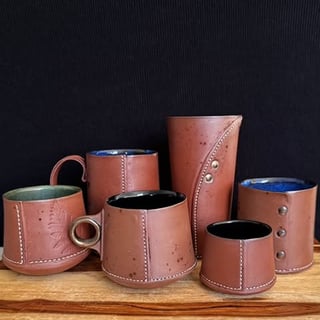
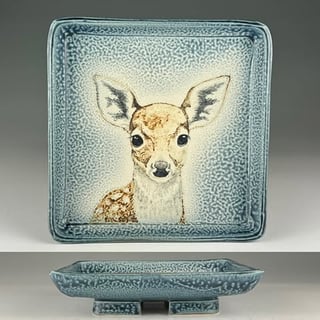
Speaker: What is up Shaper Nation this is Nick Torres here and I had the great opportunity to interview Calliope. Calliope makes all kinds of different pottery from relief sculptures onto her mugs from production styled pottery and so much more. In this episode you will learn how Calliope creates her relief sculptures. You'll also learn about why Calliope started doing production styled pottery as well
Speaker: And you also learn about working out your emotions through the clay. And there's so much more in this episode. I hope you guys enjoy it. I'll see you guys in. If you love pottery and want to take your skills to the next level, you're in the right place. Find your own pottery style right here on Shaping Your Pottery with Nick Torres. Let's get started. Welcome to Shaping Your Pottery and share with me what is something you believe potters should be doing to have success in pottery.
Speaker: Hello, I hope you're having a good day today. And I think there are tons of things that artists can do to be successful. But I think it's really important that artists are documenting their work and sharing it online. It's a great way to find a community and people who love your work. Absolutely agree 100 % on that. So now, tell me the story how you got started making pottery.
Speaker: So I've always been an artist. My mom likes to claim that she put a paintbrush into my hand before a pencil. But I started taking ceramics classes in college and I had mostly been a two -dimensional artist beforehand. But when I saw ceramics classes, I got really excited to bring those two -dimensional ideas into a 3D form. I love that. So you contribute your growth as an artist to taking ceramic classes when you were in college. Can you tell me more about this?
Speaker: Absolutely. I had a really excellent ceramics teacher. Her name was Lindsay Rogers. And she makes a lot of functional pottery that's about food sustainability and production and stuff. But she is super encouraging in all aspects of ceramics. So if I wanted to make a teapot into a monster, she was down. If I wanted to make a five -headed flamingo sculpture balanced on a precarious concrete base, she was going to help me figure out how to balance it.
Speaker: And you know, while we were in college, she also took us on field trips to working ceramic artists studios. And so she kind of illustrated what it was like to be a working artist and and helped me create work that was in my head. So I contribute a lot of my growth to college because that's where I really got to experiment and try stuff. What was the most craziest idea you had that you experimented in college?
Speaker: Oh, definitely. I mentioned the five -headed flamingo sculpture. Definitely the five -headed flamingo sculpture. I put over 200 hours into it. They're life -size. All the tail lens are touching, and it's in the round. And it's on a steel pole, balanced on a upside -down triangle concrete base. And it looks like you could just kick it over.
Speaker: I basically learned how to like build a giant sculpture. We had to rebuild the kiln around the sculpture. That's how big of a sculpture it was. And so it was just like a really crazy project and my teacher was down to just teach me how to how to do it. So I absolutely love it. That's that's an insane sculpture. I love it. Yeah. And I actually just displayed it for the first time in six years and it was super nerve wracking to put it back out.
Speaker: I love it. So how did your time at college really help you transform your own pottery?
Speaker: While I was in college, my teacher, I cannot say enough good things. She really provided a lot of opportunities and techniques. She offered surface design classes and wheel throwing and hand building. But one of the things that really helped was technical ceramics, where I learned how to develop clay bodies and glazes and stuff. And she really, I don't know, she's just so encouraging, you know, like the
Speaker: The transformation was truly just like having a really great mentor supporting me and helping me flesh out those ideas. I absolutely love that. I love hearing that. So during your time in college, what is something you learned that you still use today?
Speaker: So I had touched on the technical ceramics, where I had learned how to develop clay bodies and glazes. And I use all those things today. I also, after college, I had to do a residency program where I had to help maintain the studio. And so those were lessons I learned of how to run a pug mill, how to manufacture enough glaze for the whole studio, and how to clean, which sounds kind of silly. But all those things are important things that I use every day.
Speaker: So before we get into talking about your pottery, you briefly just mentioned that you attended a residency program. Can you tell me a little bit about that?
Speaker: Yeah, so my college is, as I began taking ceramics classes in college, they were changing between one professor to another. And there was not a residency program. And as I was graduating, my ceramics teacher began to reintroduce. And so after I graduated, I was allowed three more semesters of working in the studio to just keep creating work.
Speaker: and like maintaining the studio getting to work with other students help people help other students wheel like throw on the wheel and it was just kind of like a working in a pottery studio kind of experience but just so I could help continue my work because right as I was graduating I was making my best stuff and as potters know you have to have a kiln to fire
Speaker: fire your work and I didn't have that and she basically allowed me to to do that and I did that and then I took a break and then I did a residency at the William King Museum and taught classes there and then you know just going residency to residency each one provides new experiences. Would you say going to residency has helped you with continuing to develop your own pottery style?
Speaker: Absolutely. Absolutely. Because doing a residency really introduces you to new perspectives on your work. It's good to have a new boss every now and again to show you something or a new mentor to teach you new techniques and maybe look at something in a way you never have before or
Speaker: Another great thing about the residencies I've done is that they've been community spaces where it's not just ceramic artists, so I get to work around painters and metal sculptors and it's really cool to see the perspectives of people outside of the medium as well. So it's just really, I think it's a really awesome opportunity that any artist should pursue.
Speaker: Absolutely great shaping nation. Sometimes the best thing for your work is to get outside perspectives, new perspectives and surround yourself with other creative people. I absolutely love that. So let's talk about your pottery. Tell me a story how you started making the relief sculptures on your mugs. So during that residency after graduation, I was looking to decorate my pottery in a way that was like my signature design, right? We all want to have like our style.
Speaker: and I was throwing a lot on the wheel and I had a lot of thick bottoms on my pots and I thought it would be cool to find a way to take some of the weight off of the pot while incorporating my two -dimensional designs through my earlier college work. And so I began doing some graffito, drawing a little design, and then carving away those thick butts on the vases and pots and started to really develop
Speaker: scenes and shadows and Really that relief sculpture came from this eureka moment I had in college where I was making a monster teapot and I carved it in a way where the shadows Created the definition in the colors for me and I realized I didn't have to paint shadows anymore and I realized if you sculpt something well enough and
Speaker: and give it dimension brings it to life and it was kind of like incorporating all these ideas I had been building through school and all of a sudden it was like oh I can just like make scenes and make cool stuff on this pot and and it was like cathartic to carve away the clay and pull those designs out of out of the clay instead of adding it on like applique
Speaker: I love that so much. That was great. So you are inspired by nature and emotions. Can you tell me how these things impact the way you make your own pottery?
Speaker: Yeah, so in my personal life I've had a lot of emotional ups and downs and I struggle with anxiety and decision making and I actually incorporate those themes into my work and in a lot of varying ways from slice of life portraits. I have a planter where I just made myself in my laundry room surrounded by my little plants to like the iconography of personified animals like the five -headed flamingo sculpture. You know flamingos have meaning and birds and flocks and
Speaker: I just kind of like tie animals and emotions all into like a package to like present my ideas and my emotional atmosphere basically. I love that. Shaping Nation, you can add all your kinds of emotions into your pottery. If you maybe have anxiety, you can add that into your pottery. If you're happy, you can add that into your pottery. I love that you do that.
Speaker: Yeah, it's good because I think like I had said, I put a lot of emphasis on trying to find like my style and really like just working out those emotions is what you should focus on, not like trying to make something for other people. You should be making those things for yourself. Absolutely agree. So something I love that you do is you don't just focus on functional pottery. You also make sculptural pottery. Can you tell me more about this?
Speaker: Yeah, so the functional pottery I find ends up being very repetitive, and I really struggle with repetition like that, and so I find myself experimenting with all types of production methods. Sometimes I find myself throwing on the wheel, sometimes a form calls for a hand -building method, but most recently I started learning like slip casting techniques. I had dabbled on it in college for a project or two,
Speaker: But I really had to do a lot of research. I looked into hammerly ceramics, bantiki, all sorts of big potters to find information. And basically, I just get bored. So I want to just keep learning and making new things. And that's important to me because I think that helps develop my work as an artist.
Speaker: I absolutely love that shaping nation. The most important thing is to make what you want to make and also to keep learning. If you're getting bored with something, you can go out and learn something new so you can apply that to your own pottery. I love that. So let's talk about the business side of pottery. Can you tell me about the moment when you decided to go full time with your pottery?
Speaker: So my decision to go full -time was premature. I was ready to go full -time in 2021 when I began my residency at the William King Museum, but my pocket wasn't ready, so I had to keep working basically. And while I was putting full -time hours into teaching pottery at my residency and creating my own work for my exhibition, I still was the general manager of a restaurant.
Speaker: But slowly, as I've put all the time into filming my process and documenting and sharing with the world, I've been able to take my foot off the gas pedal. And just recently I've been able to stop restaurant work altogether. So more. I'm actually officially full time this year. Two thousand twenty three. I love it. So.
Speaker: Outside of your relief sculptures, you also make some production -styled pottery. Can you tell me the story behind this and how did this help with selling your own pottery?
Speaker: So the biggest game changer for me was finding a vintage frog mold during my residency at the William King Museum. I was given the frog mold and I began documenting the process and I got a viral video and people liked seeing the viral video and I had a problem where the frog I made didn't work right so I smushed him and that was another viral video and before I knew it I had an audience of people who want to see more frog content and so
Speaker: What really pulled me into the production work was people wanting to have that work. I wouldn't have made it into a production if there weren't many people who wanted it, because I'm a very much a one -off, one -and -done kind of sculptor. But going into that, I make these production frogs, but when they come out of my molds, I modify them into one -of -a -kind sculptures. I still have that in me.
Speaker: So, you know, what helps me sell my sculptures is documenting that whole process and sharing with people my failures, my successes, my modifications, all of that. And I think that, you know, anecdotally, that should be kind of a process other artists should approach. Just film everything, mistakes included. I definitely agree. So you've mentioned documenting your own work a couple of times. How has documenting your own work helped with the business side of pottery?
Speaker: Yeah, so I really, I find that, you know, hold on, I need to start that sentence over. I apologize. I find that documenting my work is a whole job in its own, but it's an important job because as working artists, we are really running our own business here. And I did not take any business classes in school, so it's trial by fire every time. But basically documenting my work
Speaker: is what people find relatable and makes them connect to you and they want to support you because anybody can go out and buy a frog sculpture from the mall or from a thrift store but people want to buy a frog sculpture from me or from you because you're the person who made it and put the time into it and they've seen you create this whole thing and now they get to hold it in their hands and it's kind of just like
Speaker: It's an interesting experience like holding it virtually in your hands on a screen to holding it physically. It's just an interesting process and I think people are, I don't know, I think people are just drawn to watching people have a journey. So I think it's a cool thing people can do nowadays. I absolutely love that. That's some excellent advice right there. So now, what are the steps you believe someone should take if they want to start being able to start selling their own pottery and start having some success selling their own pottery?
Speaker: I definitely, I'm just gonna keep repeating. Take time to photo and film. I'm just gonna keep saying it. Take the time to photograph and film your work. Take little process videos, do little voiceovers. You don't have to have your face in a video, but I truly think that
Speaker: You know, people are tired of corporate stuff and they enjoy seeing handmade stuff and they enjoy connecting with you and make that connection with your viewers online to to help. I'm sorry. Make that connection with your viewers online. Absolutely love that advice. So let's talk about discovering your voice. Can you tell me about the moment when you knew you were heading in the right direction with your pottery? I'm so sorry.
Speaker: I think finding your voice in pottery, you know, it always reminds me of that moment where I was trying to find my style. But the truth is that I think you just need to keep creating because as you look back through your old work, you see threads of design that you've been doing the whole time. The style is already there. So I just find that, you know, just keep creating, creating, creating and make what interests you. Don't make work for other people.
Speaker: absolutely great. I love that shaping nation. You probably already have something that is already sticking out to you in your own style. It's already there, you just kind of have to maybe refine it a little bit more. I love that. So what would you say was your biggest obstacle when it came to finding your own voice? I definitely I
Speaker: I think that the biggest obstacle for me has always been time management. I have a million ideas. My sketchbook is full of all different types of drawings and sculptures. And it's really just like finding time to make the things I want to make and like locking down those ideas and fully creating them. And so, you know, I think finding my voice comes from
Speaker: that the projects i decide to actually go through with and create and take the time to make and put together and fully make it functional because i don't know if that's confusing but that you know biggest obstacle like where's the time so earlier you mentioned that you really were looking to try to find your own style would you mind telling me more about that
Speaker: My ceramics teacher kept taking us to Asheville, North Carolina, where there is a huge population of ceramics and pottery people. And you can go walk through different museums and galleries or different art shops or different ceramic studios. And you can see these people creating work that is very them. Like you can look at that mug and say, yeah, Bob made that. And I just desperately wanted to make something where
Speaker: somebody could look at that mug and be like, oh yeah, that's a Calliope design. And artists who have really specific designs like that, Liz Lott -Summerfield has very beautiful work that's very significant. I think I could recognize it if I saw it. Beth Kavaner makes big, beautiful animal sculptures that are very recognizable. Tim Kay, whose last name is difficult to pronounce, but he makes cardboard -looking pottery because his family worked in a cardboard factory.
Speaker: I just think that I wanted that too. I wanted people to look at my work and say, yeah, she made it. And I think I've achieved that in a way that I wasn't expecting, whereas I look back and all of these two -dimensional low -relief designs are present through my work, whether it be pottery or maybe another media. It already existed. I didn't have to strive for it. It was already there.
Speaker: All these artists I was looking at that had it, I also had it, but I couldn't see it because I was too close to the work. Absolutely. I love that. You were too close to the work. You just had to take a step back for a second. I love that. So what advice would you give to someone that is looking to discover their own unique voice with their pottery?
Speaker: Just create, create, create. If you're in the mood to try something, try it. If you want to make the same thing over and over again and make it perfect, do it. Because again, don't make art for other people. You need to just be making art for yourself because talent is not what you create. It's the passion and the desire to create those things. Absolutely. I love that. So Calliope, it was great chatting with you today. And as we're coming to a close here, what is one thing you want to hammer home with my audience today?
Speaker: We live in a time where there are more art jobs than ever. Being a working artist is learning how to run your own little business and market yourself. And it won't come all at once, it won't come easily, but keep your ambition and keep creating because that's what will carry you through to creating art and being a working artist. Some excellent advice right there. So Kalypi, where can my arts go and learn more about you?
Speaker: check out my website at CalliopeAvonCeramics .com or check me out on any social media at CalliopeAvonCeramics. Hey thanks for listening to this episode of Shaping Your Pottery with Nick Torres. If you want to discover how close you are to actually discovering your own unique voice with your pottery, I put together a free
Speaker: four question quiz it's very short it take 30 seconds for you to take if you want to know how close you are to finding your own unique voice go to shapingyourpodtery .com forward slash quiz or you can simply go to shapingyourpodtery .com and it will be right there at the top. I hope you guys enjoyed this episode and I'll see you guys next time.