Transcript
Speaker: This is Mission Texas.
Speaker: Welcome back to Mission Texas. We're celebrating our one year anniversary and we're rolling back the tape to our first episode to check in. with our first guest, reelected chair of the Texas Democratic Party.
Speaker: Welcome back, Kendall Scudder. Thanks so much for having me. Congratulations on a whole year. That's no small accomplishment. That's great. Thanks. Feeling very nostalgic. I think I shared in our group chat the other day, there was picture of you and me at a Texas College Democrats ah conference. I was like running slides for you.
Speaker: Me about a hundred pounds ago, right? folks So young. We'll post that in something, but, uh, well, I mean, thank you for the compliment, Kendall. You of course, uh, had a podcast, have one currently you're relaunching. So we want to hear about that, but I wanted to get in. I listened to the last episode or our first episode with you, our first one ever. and I had a couple of reflections that I wanted to start out out of the gate with you, Kendall.
Speaker: One, I'm proud to say that our audio and mic quality has vastly improved. Alex, I think we sound way better. Much i think our podcasting has ah as ah improved a little bit.
Speaker: ah But it was interesting to hear, and I wanted to take you back in time, because right out of the gate, you were talking about how you had a newborn. he was five weeks old. and you had just gotten back from Chicago quorum breakers. And I just like, my mind was blown because it didn't seem like it was a year ago. it seems like eons ago that we had this mid-sentence redistricting, and yet here we are.
Speaker: Like this is, so I wanted to ask you right out of the gate. I mean, do you have any like thousand foot level, like wave top reflections on this past year personally, professionally?
Speaker: Oh, gosh, i I think post-election is the time for me to do that. But, I mean, it's been a really hard year and a half. um i think I think some of my biggest reflections from it, it's been really challenging because it feels like we're just constantly being handed these, like, unprecedented things to deal with. And I keep joking with the tap with the team now that the... the Republican National Convention in Dallas is over. No more unprecedented things until Election Day. Okay. Election Day, all the unprecedented things. That's fine. But none until Election Day. And so, like, just keeping track of
Speaker: of of all of that, it's just been a lot, but I think indisputably the party's just in such a better place than it was a year and a half ago. I feel really good about it. I'm really proud of it. um It has been no easy feat. And ah luckily my wife hadn't divorced me yet. So that's cool. So, you know, I i i just, um I think just looking back on it, I'm really glad to be in the fight. I really appreciate the opportunity to do it, even though all the moments in between may, I may not have, you know, felt that way.
Speaker: Fair enough. Fair enough. Brutal. I appreciate the yet on the wife hasn't divorced you that we're we're we're pulling for you guys. We still have what, 35 days? we'll see.
Speaker: Make it. Just gotta to make it to November 4th. No, I mean like that my honestly bragging on her for a second, cause I don't get an opportunity to do it very often. I mean, i wouldn't be able to do any of this if she weren't patient as hell letting me do it. and I mean, she's, there's a lot of times where she's basically a single mom here and that's not what she signed up for, you know, but we, we in our household kind of understand, you know, this is a moment and we're here to meet it and hopefully we can save the country and save the world. It's all riding on you. Yeah. Well, no, I wouldn't go that far, but I would say, you know, like it is, it it is counting on Texas Democrats getting our shit together. It would be different, I guess, if I were the chair of a, you I don't want to call anybody out, but it's a less relevant state, you know, but this is a state where like, if Democrats were able to pull this out, we saved the Republic. And so, you know, my wife has been, and you know, doing her part. It just isn't quite as, as glamorous. Yeah. She doesn't end up on the news quite as often as I do.
Speaker: But i mean, she should, right? ah Because, and I hear this a lot from other candidates, and I would love to talk about this more, which is that a lot of our candidates, electeds, our organizers, they have families and ah routinely they're telling us, yeah, I have a really supportive system, you know, support network. I've got ah a parent or I've got a friend or I've got my spouse. And so this is something of a sacrifice for all of us in this in this gig, but yet we're doing it for the greater good, right?
Speaker: And what I wanted to ask you is, as you're a parent a one-year-old now, I mean, what I've seen also is strides in becoming a more like family-oriented party. Like we are the party that is oriented around not just having kids at events, but like talking about the affordability of how we raise a family here in the state of Texas and the cost of groceries.
Speaker: You know, i was looking back on the episode, I heard you talk about a couple of things. Your goals were, one, I want tone from the top. You know, we're kind of like the messaging that you like what I'm speaking to is that we're plugging to what's going on in somebody's family life. Two, you were talking about infrastructure, ah you know building out precinct chairs, county chairs. And then three was showing up to the places where we need to show up to. And so as you reflect on the last year, like, how did we do? i mean, i I can see it from an outsider's perspective. But what do you think?
Speaker: I mean, i think there's always room for improvement. But what I'll say is that this cycle, I don't hear the complaints about the Democrats not being on message. It feels like people are understanding the assignment. And it's not because we're doing some regular call telling them what to say. Frankly, I don't i think that would be detrimental because then everybody would just be parroting talking points. They'd sound like a bunch of robots.
Speaker: But instead, people talking about their real life lived experiences and the lived experiences of the people they meet on the campaign trail. And it feels like they're Dems are on message this cycle.
Speaker: And I think that we've been really strong messengers at the state party on those items, and even kind of before it was a fad that everybody in the country is talking about it. And so i'm I'm really proud. I think that we've kind of driven some of that messaging stuff. um And then on the infrastructure, you know, we've already recruited and trained more than a thousand precinct chairs around the state. And, and you know, I think there's look just thought short of 10,000 vacant or like seats in the state. And so we've got a long way to go.
Speaker: and But my goal is to end this election with more precinct chairs than Republicans. and I think we're going to do that. Yes. We'll see. TBD. and And so like the infrastructure piece, it feels like it's growing. People are working together. we have a coordinated campaign that has top of the ticket rolled into it all the way down to the bottom. That doesn't mean everybody's happy with everything. You know, everybody wants the state party to be the people who shows up with burlap sacks full of cash. And that's just not how any state party, Republican or Democrat in the country operates. And so there's some misconception of what what the party's role is. But I do think we've held a coordinated campaign together that's a well-funded entity that's doing record voter contact work. I think that infrastructure is there and we're going to get up the day after the election and load our pickup truck up with a bunch of signs and start recruiting for the next one. And we're going have the infrastructure to build off of. So that'll be cool. And then what was the third one?
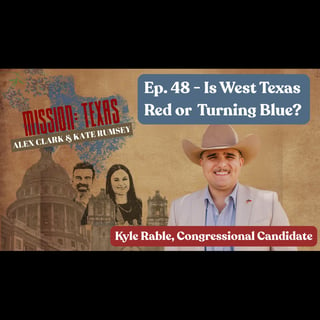
Speaker: You mentioned showing up in all the different places, and I think that goes to your opening up the offices, right? I mean, and going to all, you know, Sherman or Abilene, West Lubbock. I mean, and we're hearing from folks, even like Kyle Rabel, who are saying like, we got one statewide candidates coming out all over the place that people haven't been before. And that goes, i don't know if you remember this, Kendall, but you made the point in the episode that you know Some of our flyover cities like Abilene or whatever are the size of capitals that are must haves in other democratic states like Richmond, Virginia is the example that you gave. And it's like I think people are coming to terms with that. Like it's not just the big three or the triangle ah city, as we've mentioned, it's San Antonio,
Speaker: Dallas, Houston, Austin. It's all the other ones. Yeah, and so showing up around the state for sure. i think I've done events in more than 110 counties around the state. and Holly Taylor's coming up on her 254th. I'm really proud of her on that. but Friend of the park. candidate Our candidates are covering a lot of ground. We've decentralized the party. we We used to only have one office that operated everything out of Austin. Now we have five that offices different aspects of the party out of different communities. And what it's meant is that people in different communities have interactions with the party when they hadn't in the past and they feel more connected to it. It's helped our party's fundraising quite a bit. I think people see us as an entity that's that active and trying, even though we may not always be perfect in everything we're doing. i think what people want is a state party that works as hard as they do. And I think they're able to see that when you have people around the state officing and So anyways, yeah, I mean, I think check, check, check. I feel good on those three items. I think there's always roots for improvement, but I think that's the path. And I think it's leading us towards a lot of success in this cycle.
Speaker: Speaking of check, check, check, I have a pitch for how you can recruit more precinct chairs. Okay. Oh, okay. You say to the precinct chairs, everyone who's a precinct chair when the Democrats win in November will get a check from the Texas Democratic Party, but it's only if the Democrats win.
Speaker: $5,000, right? Well, you know, right whatever amount the the coffers can afford, apparently that's legal. So, you know. Yeah, $5,001 is give everybody. Yeah, well, yeah. One more. if i'll say But in all seriousness, um what are your like expansion plans? Like what's next?
Speaker: Say we we have we blow it out in in November and they're like, wow, Texas really can do it. And we should invest in them the way that Alex and Kate have been preaching for a year now because 2028 is coming and we don't have any Texas Democrats on the statewide ballot. And those electoral votes are going to be important now, but they're going to be way more important after this census. So we got start taking Texas seriously. and mean Suddenly you have an influx of money and Where would you deploy it? how would how would What would expansion of what you're currently doing look like?
Speaker: So let me be clear. I'm not telling anyone we're blowing anything out this election. What I'm saying is I think we have a lot of opportunity and we have to keep our heads down and try to deliver everything. To be clear, this is like a wild hypothetical.
Speaker: but but But I mean, where I think... getting out of the thick of an election allows us to focus on infrastructure strengthening right so you're not just recruiting you can focus more on your training you can see where you had gaps in this cycle and you can go through and evaluate what your data is from the previous cycle so i think the first thing we do is a post-mortem we look through and see um where did we do different programs and were they effective comparing them to other places where those programs weren't effective or didn't run or whatever and see what works. We can't be afraid to admit when things went wrong.
Speaker: I think one challenge the party has had over the past is they have adopted this self-preservation mentality of we don't ever wanna admit when we made a mistake because if we do, then people will say we made a mistake.
Speaker: I think what you'll see from us is something completely opposite. You'll see us say, well, we tried all this and all this. we These things all didn't work. They were duds. We tried these things. They seemed to be fine. They could have been improved XYZ. And here are the things that worked that, holy shit, they were great. And I think that's how we we build and grow and decide what we're doing in the next cycle. So i think there's that post-mortem element.
Speaker: But then I think we go straight in on the recruitment front. we We've done a coordinated where we've ID'd a bunch of Democrats at this point. And so you cross reference it with precincts where you don't have precinct chairs and counties where you don't have county chairs and you get to work. We can't really do a bunch of that right now because we're trying to turn voters out. So this like great you recruited county chair October 1st. Well, they have 30 days for the election. that Good luck. Right. I mean, what a nightmare. So so I think we pivot back into that space. you do the post mortem. I think you transition back into that and when I want to.
Speaker: I think we're going to start earlier on the candidate recruitment this cycle where we've done. We've now successfully done a state and federal recruit. I expect to do that again next cycle. That's going to be a goal is to try to have a full slate again. And how do we dip below that?
Speaker: Like how do we make sure we're recruiting for County Commissioners and We didn't we just didn't have bandwidth to go below state and federal this time. I think next cycle we learned some lessons and so if we start earlier, we can start our trainings earlier and our candidates can you know start building. Unfortunately, ah candidates tend to get a lot of really bad advice from consultants that really want to get money in their bank accounts. And so they'll start spending too early or they'll structure it the way they think they need to structure it because TV told them that or whatever. I think starting earlier on some of that training stuff can help save our candidates money down the road. And and to be clear for our listeners who may not know this, you're talking about federal and state, like every single office, federal and state, since 1972, this is the first time you've had a candidate in each of those spots on the ballot, right?
Speaker: I guess that falls in the show up all over the state category. Yeah, I think so. So you're saying not only are we going to aim for federal and state, like maybe we get every every county is going to run somebody for county judge.
Speaker: Maybe we can get the commissioner's courts. I'm just saying like really casting a vision, like that would be what what would be next. But I would also just love to see it as a habit to be federal and state every single election cycle.
Speaker: That we don't wait 40 years. Yeah. I'll tell you, it was no easy feat. it was It was a very heavy lift to recruit those in. I'm really proud of us accomplishing it. I don't know that we'll be able to have a full, full ballot, including counties, but what we can try. we can at least do an effort in recruiting into them Because part of the challenge with recruiting candidates is the filing fees. of So you find a candidate in Fort Stockton who wants to run for county commissioner. um
Speaker: they've got to come up with like 700 bucks to get on the ballot. you know And like, if you're just kind of a do-gooder that knows that you've got a really tough race ahead of you, you're willing to take one for the team and knock on a bunch of doors and try to see if you can pull a rabbit out of a hat, are you gonna come 700 bucks out of your pocket to make it happen? So like, you know fundraising is gonna have a lot to do with whether or not you know what we're able to do there. but But yeah, I mean, I think, I'd like to see that being a thing that every cycle you do it and your candidates are spending their elections doing voter contact. So they have a bunch of volunteers who are standing and waiting and maybe they'd want to run the next cycle.
Speaker: You know, that's how you build a bench. That's how you build. But we've got districts that don't even have counties or didn't even have county chairs that have Democratic candidates now. and So i'm I'm really proud of it. Some districts were harder to recruit for than others.
Speaker: yeah That's amazing. and and Quick correction on my math. I think I said every 40 years. Quick check on that. I think 54 years ago was the last time we had all those. 1972, right? Yeah, that would have been 54 years ago. Can I piggyback off of that? Because it seemed to me we're talking about data, it's good to have a baseline, right? To understand where we're at as a party, to understand if we're going to have a counterpoint to the Republican nominee, then we know at least how many Democrats we might have in that area. Is there any amount of post-mortem that happened in the primary of understanding the new data we got with all the different Democrats that came out for that primary?
Speaker: Yeah. um I think there, there's been an effort underway to try to understand a lot of that. I think post-election, you can analyze it a little bit better. yeah,
Speaker: Primary electorates are so different than a general electorate, but having an increase in a primary electorate means you have an increase of party faithful types that you can recruit from for this infrastructure stuff. So where I see the primary numbers being the most helpful will be an infrastructure build post election.
Speaker: and And to your point of of having data to work from, this is another thing we did that I'm really proud of. We opened up the voter file for all red districts for free this year. um I hope I'm able to do that again next cycle. I don't know. It blew about an $800,000 hole in my budget. So we'll see if we can raise the money to do it. But we're going to be able to see what that means if you're a candidate running in a red district that wouldn't have been able to afford the voter file you now got it for free did you use it how many how many districts that we gave it to for free put data in to actually feed our voter file uh maybe there'd be enough that it makes a a good a good argument to continue doing it to improve that voter file maybe people didn't take advantage of And if they didn't, we should assess whether we should do it again. But that's another kind of thing we tried this year is what happens if you give red districts free access to the voter file and TBD. We'll see after the election how much they used it.
Speaker: And that's not, I recall it was about several thousand dollars, if I recall, as a candidate in my blue-ish area. So that is a significant cost to a campaign that I'm sure they hopefully appreciated. But as I'm understanding, you're saying that there's sort of consideration there, like, If you use the file and you add to it, you know we're willing to give this to you to help you out in this red district where you're probably gonna have a hard time raising money.
Speaker: Yeah, I mean, if you're a candidate that's only gonna raise five to $10,000 for your entire race, which if you're running in the panhandle, that might be it, right? I mean, you don't have major metros to pull money from. and you know it's's it It's a tall order to raise money. ah Then we would, what, ask $2,000 for your voter file?
Speaker: And that just feels disproportionate and kind of outrageous. So that was the decision is that we'll we'll give it for free in red districts and we'll and it analyze it and see if it made sense. So that's just going to be another item on the list of postmortem discussions to see if it made sense. But I think it's another part of showing up everywhere, competing everywhere, leaving nobody behind. And I don't know, for years, we all said that if people did that, we would perform better. Let's see. i i love that because i feel like You hear a lot about, you know, did the Republicans over gerrymander? Are they gonna lose some seats they shouldn't? um
Speaker: Are there gonna be enough Texas House districts that flip that we actually might even take the majority? But no one ever even, really talks about the texas senate as like worth the discussion because it is just so drawn in a way that it just feels hopeless that's what they say but that's what they say but all i'm saying is that what what you're doing is you're you're you're challenging that by going after the places that we have written off and that's the only way we can ever make the texas senate in play is if we treat it
Speaker: like it's a battleground, every single district like it's a battleground. And so ah so yeah, you you take the floor on this one. I mean, how do you see the the path to the Texas Senate?
Speaker: We talk a lot about the State House. 14 seats is what you need. You need three for the Senate after we flip the remet seat. And so you hold remet, you flip three seats. We have the Senate now. And we have now seen numbers come in that show Bob Hall losing by two points against Kenan Colbert. Fantastic candidate. Nobody in state of democracy lose more than Bob Hall. I ran against Bob Hall. I have a particular dislike for the guy and I'd like to love to see him lose and Keenan Colbert's a phenomenal candidate. To a veteran.
Speaker: Yeah, he's a veteran. he's He's young. He's I mean, he's he's a he's great. If you don't know Keenan Colbert, you should look him up. He's phenomenal sending money. um But and it shows him up two points.
Speaker: We've seen internals from the Republican side that show Paul Thomason against shortener down one point shortener who has now gotten arrested for DUIs and gets caught sending dick pics around to everybody. And I mean, he's just a clown. He he treats the ledge session like a frat party and he doesn't get anything done for his district running against an actual preacher at the Bryan College Station. Paul Thomas is a fantastic candidate there. I think in a surge for for sure, being one point down means you're statistically tied. He can win that thing. uh and then shannon diceley down in uh in harris county and we've heard some rumblings that some internals may be showing her up uh you've got other races like amy solace that's running against brian cook i mean there's just bettencourt running out in the panhandle we've got a bunch of these seats ambrose running in one against hughes but they're certainly we're starting to see a path for the senate now well what happens if you flip the senate
Speaker: Well, if you flip the Senate, you don't have to worry about a quorum break anymore. If you flip the Senate, you don't have to worry about redistricting maps anymore. All this bad stuff can't get through and you force everyone to the table to work together. And so even if the Dems don't flip 14, let's say they flip eight, let's say they flip six. Right. um I think we can get to the to a majority, but it's it's a challenging path.
Speaker: You know, you don't you if you flip the Senate. accomplish the same thing there so um i'm i'm very excited i think nothing ahead of us but opportunity previous elections don't vote polls don't vote let's fucking go i guess my point is this is going to come out in october right october 1st our one-year anniversary my my son's actual second birthday we had his birthday party of the weekend i'll talk about that during good news but um if if we were having this conversation about the texas senate you know, a few months ago instead of the October before the election, I feel like people should have a better opportunity to know about how competitive these races would be. I mean, obviously we didn't have a crystal ball, but, um, I guess my point is my, my biggest criticism of the Texas democratic party, pre Kendall Scudder era is this sense of doom.
Speaker: Um, like this unique level of pessimism that writes contests off before they happen. Um, in like almost a unique way compared to other democrats across the country and yeah go ahead on on well i'll tell you on sd2 back to keen and colbert a little bit people certainly wrote it off when i ran in it people wrote it off it was the reddest district in the in the state and no democrat had run and i jumped in and did it we moved it exponentially and then in redistricting they drew it and made it more blue
Speaker: So that they could carve me out of it. They carved my where I currently live out and they carved my hometown out of it where I overperformed. And so instead of it being on East West District, it became a North South District. So what they had to do was pull it North and then it has a bunch of North Dallas and South Collin County. Those are blue boxes, buddy. And so where I was pulling within a margin of error at some point during my race. Now it's more blue and you're seeing surges and turnouts in urban and suburbia. i think I think we saw Keenan being able to do this.
Speaker: You know, like I just think writing these people off is so disingenuous. It's this this pretending like candidates don't matter. The candidate you have does matter. And you put them in they meet people in the communities, they build relationships, they fit good ah molds of what that community needs and wants. I mean, that district stretches down to Ellis County now. Ellis County, one of the only counties in the country that trended blue in the last election. And you're seeing it get a lot younger. You're seeing a lot more people of color move into Ellis County. um
Speaker: I think Kenan Colbert's a great representative of of what that district's looking like and becoming. So I just, I don't write anybody off. I think everybody's got a chance. and Their path may be improbable. It may be more challenging, but there's a way to do it. It's just math.
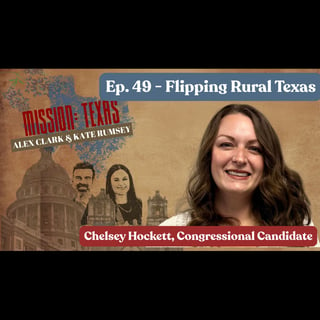
Speaker: Well, yeah, we talked to Chelsea Hockett running for Congress that overlaps significantly with his district. And she was reminding us what you're saying, which is that So much of those areas, either you're being dummy-mandered and you're now creating districts that are bluer, or you've got these rural areas that are now stepping up and becoming more organized and they're younger. And it even reminds me of the conversation we had with Junie Zanu of saying that, like, A lot of East Texas, if you just turn out the East Texas vote or the black vote out there, then we win the state. And I think that we're we're seeing that you know people are getting more organized. um
Speaker: But I mean, I know you you're telling us you know you don't pay attention to polls, but we've seen a lot coming out. And we're talking about that margin of error and quorum report. And even Dan Patrick is saying things like we could lose the state Senate. So Like, are there certain polling reports that you tend to look at or like, which ones are you paying attention to? None? Genuinely, Texas and I have been in a bit of a lover's quarrel since so probably 2010. Okay, let me just context.
Speaker: East Texas is where I cut my political chops, kind of like doing grassroots stuff. And when you have worked your tail end off in East Texas during the 2010 election,
Speaker: and you lived through that election day, you learned very quickly that the polls don't matter. It's all about people's guts. It's where they are. And I just, it may be a pessimistic way to view it but I just never get my hopes up. My job is to shovel as many Democrats out to vote as I possibly can. And if candidates were asking me where they should, who they should use for his pollsters, I would tell them no one, stop wasting your money on polls. They all spend their money on polls because they want to prove to people that they're viable and raise money. I get it. You're going to meet more voters if you just go out in the field and talk to people and and do your voter contact.
Speaker: And so so I genuinely I'll look at them, but I treat it more like a TV show. It's entertainment to me. It's not something that gauges a lot of trust. Kendall and I were sophomores in college for that 2010 cycle, and it was the Obama midterm for the first first term.
Speaker: And what was his term? I think he's called it a shellacking. Yeah, y'all think 24 was bad? Y'all think 2016 was bad? 2010 was brutal. Because 2010, I mean, Democrats had everything. We had all the seats in in East Texas. We had all these commissioner spots and judge, county judge spots and Senate spots. And I mean, we, I mean, East Texas was the blue wall.
Speaker: And that was the year that we lost everything. We lost everything. but State and local politics in particular was was really rough under the Obama term, midterm.
Speaker: and yeah After that election, I've just learned I don't get my hopes up. My job is to shovel as many people out regardless of what the outcome is. And that's what I'm here to do. So I know that's not the answer you wanted.
Speaker: but No, no, no. I mean, it's fair. But I think that the doom and gloom, I think, also comes from national talking heads who are like, oh, we always are hoping for Texas. And then they always let us down. And, you know, we were rooting for Beto and all those things. and ah but Were they, though? I feel like they started rooting for Beto in, like, the last month of the race.
Speaker: And, like, i'm going to make it Beyonce, like, does her endorsement on, like, Election Day in 2018. You know what i mean? Like, I feel like everyone was late to that party in 2018. and make a controversial point okay i don't particularly care if nationals believe in in us being Charlie Brown the football or not. Hell yeah. Because if Democrats flip the US Senate, whether James Telewico wins or loses, it was because of Texas Democrats that we flipped it. And my argument why is because Republicans are going to spend probably $220 Texas
Speaker: ah Previously, the amount of money they would spend in Texas to win it is zero dollars. And that 220 million dollars that they are not spending in Maine, Georgia, Kansas, Ohio, Michigan, yeah ah Nebraska, Alaska. All over the country, that $220 million dollars could go a very long way. And where we are we have put an operation together that is requiring Republicans to flush cash. It reminds me of when I lost in 2018 for my Senate race.
Speaker: I never expected to win when I got in. I was going to give it a run and do everything I could. But they spent $3 million dollars to beat me. And that was $3 million dollars that didn't go against Nathan Johnson. And it didn't go against Beverly Powell. And they won their seats. Right? So I did my part. I was very happy with it. It's kind of the same concept. I think we have a good shot to win. Even if we don't, you're welcome, rest of the country, for delivering you the United States Senate.
Speaker: $220 million dollars is such an absurd number. I mean, Beto set the Senate fundraising record in 2018 with $80 million. dollars And you're right, like, $220, that's primarily all super PAC money.
Speaker: Yeah. Ken Paxton is just a piss poor campaigner and hasn't raised all that much himself, but almost all that's going to come in from MAGA Inc and Elon Musk and whoever else feels like they have to save this guy.
Speaker: Yeah, he's about as sharp as a pile of mashed potatoes and he's got the magnetic pull of a plastic spoon. I mean, he's he's the worst candidate you could possibly put in your ticket. Every time you see him on and like public speaking, you're just like oh, that's why they haven't debated yet.
Speaker: i don't think any of us really realized we'd not heard ken paxton until this year like it never occurred to me i've never sat through listening to him give a campaign speech before and this year i was like wow he's really bad really bad just awful um because i mean but when you're not in it for the right reasons it's easy to be bad people can sniff out whether or not you're authentic and you're trying to do things for the right reasons yeah just cheat your way through it. Well, may i pivot before we go to our last sessions in the podcast? ah
Speaker: We're all afraid that Trump is going to steal this election. And by God, Texas Republicans are helping him out, it seems like as much as they can. ah So what is the party? I know that that y'all are doing something. So i want to give you this as an opportunity to talk about voter protection. But also, we're seeing this year round. I mean, it just seems like we're dealing with the mid-sensit redistricting. We're primary shenanigans in Dallas County, all the things that are going on in Tarrant County. It seems like we're constantly dealing with this. So is there a role for the party statewide to sort of dive into these efforts?
Speaker: Yeah, I mean, we're we are in the middle of constructing the largest voter protection program in the country. And we're partnering with the DNC on that and with local counties on that. Again, all of us working together, not duplicating efforts because in the past everybody's egos have gotten in the way and they're all trying to do their own thing. That's silly. We're not here when arguments were here to win elections. So we're doing this one together. um We're going to have five boiler rooms around the state of Texas. We have attorneys on staff that are are helping to monitor. We have our voter protection hotline 844 TX votes. If anybody has a hard time casting their ballot, They can call a voter protection hotline. It directs them to their nearest boiler room to be able to get the help that they need to get those ballots cast. and So that's the first component of voter protection is building all of that. It is a very unsexy but very important thing that the state party does, because otherwise every campaign would have to have their own voter protection program.
Speaker: that's ah That's a thing that our team has has under its kind of purview. So the voter protection piece leading up to the election. Then there's the voter protection after the election. I don't know that we're done with this election after the election. Ken Paxton is going to be the attorney general until January.
Speaker: And if we've learned anything about Republicans in the last five years, it's that they don't lose very well. They're not gracious losers, and so if they do lose races, I think you will see them screaming, squawking, complaining that everything's rigged.
Speaker: Hilarious to hear them say that in a state that has been run by Republicans for 30 years, has a Republican secretary say Republican governor, Republican attorney general, but they are going to be trying to knock down everything they can.
Speaker: An example of a time when this happened was in the last election in North Carolina. They won a Supreme Court seat, Democrats did, and Republicans refused to concede it. They took it to court.
Speaker: They didn't have it solved for about six months, and the state party had to spend about $3 million dollars in legal fees fighting to to win that seat. I would not be surprised if there was a lot of that. Also, depending on what it looks like, if we flip the House or flip the Senate or if Gina wins governor or things like that happen, they'll probably try to call a special session of the legislature and start trying to pass laws and rain in the power of the governor, redistrict all the seats, so try to roll back, refuse to certify elections. There's probably going to be all kinds of crazy stuff. So I tell everybody buckle up because your state party will never have been as important as as it's going to be the day after this election. That's a really good point. Democrats do well. We were really important during primary filing and recruiting all these candidates. That's where I think we really shined, led during the quorum break, all that stuff. But it will never be as important as it will be in the next two months following this election. Yeah, the State Bar of Texas tried to sanction Ken Paxton for his efforts to overturn the 2020 election, filing you know these BS lawsuits. And so if he would do that on behalf of somebody else, I'm sure you'll do it on
Speaker: his own behalf, right? hey Yeah. race So the challenge that I'm going to face, just, you know, talking amongst friends here, the challenge I'm going to face is when the election's over, everybody's going to say, great, we won, Democrats did great.
Speaker: Well, I'm going have to raise millions of dollars to do this. And so I have to convince everyone, don't be done yet. We need you to transfer this over because if we don't have the legal resources, they're going run circles around us. Wouldn't it be great if there was a podcast or two in Texas that existed beyond elections?
Speaker: i think this might be a good transition for to talk about good news. And I'm basically choosing your good news for you, Kendall. I want you to tell us about the relaunch of Podbless Texas. If you have been under a rock, maybe you've missed it.
Speaker: but actually probably a lot of people have missed it because it's very hard to break through in a state this big. so So tell our listeners all about it. I've also got so much I'm working on. I haven't really had a chance to promote it quite like I should. But yeah, so before I was chairman, I was i was the host of Podbless Texas with my friend Lillian Salerno. And, you know, we still own the trademark for it and we built such a great following up. I mean, we were at a point where we had like 10,000 listeners that were cranking through and it was like, you know, we've had so many fun developments. Lil had been appointed to the Biden administration. I got elected state party chair and we're like, it doesn't feel right to not let our pod bless family know everything that's happening. And so we we brought the podcast back. Lil is an executive producer on it, so she's not on it every episode. She'll pop on and off. But we decided to bring it back. And instead of doing what every podcast does, just rehashing the news and talking to paul political types, we're going to some of that because I can't help myself and I have no self-control. But also we're going to just kind of rotate in regular people.
Speaker: So waitresses and bartenders and ah medical massage therapists and you know teachers and people who just work every day and hear kind of what their perspective is on life and politics. And it's a no judgment zone. They're going to have some opinions that may be offensive to some of the political sometimes. That's fine. um the Podblest Texas universe, we're friendly people. We're not here to rip people up. We're here to support people and, uh, and to learn. And so that's going to be kind of the goal. And we're going to bring people in and talk to real folks. And, uh, you know, as Democrats take over and do more things, maybe they'll have good feedback on what would be more helpful to them.
Speaker: So that's, that's Podblest Texas and it's in all your pod podcast stores. And, uh, yeah, I'm really excited about it and, uh, hope people will join us. well I think that definitely qualifies as good news as a long time listener of the, I think you called it the Podbless Texas universe, PBTU, like the MCU. Sure. Yeah.
Speaker: The lovable losers is what we called ourselves because at the time, Lillian Salerno and I had just come off of our losses in 2018. So we were like the lovable losers having the pb PBT universe. Yeah. Love it.
Speaker: Okay, do you have some good news you want to share with them? Yeah, um and Kendall, this is a new segment that we have since you were on last year. We like to give our guests and ourselves an opportunity to say good things that are actually happening, so spread positivity. We need more of that as a party.
Speaker: ah Mine is a bit different. I mean, other than celebrating a year into our podcast, which is incredible, 52 episodes, but we are heading to Austin this weekend for ACL, and we're bringing my four-year-old, I'm really excited about that.
Speaker: and it's going to And it's also raining, ah so we're kind of nervous about this, you know, being outside. But I think the fact that we've gone through this big drought and there's rain coming is a good thing, I hope, ah for all of us here in the state of Texas. So um those are two good things that I'm share. Pack the rain boots. I always forget the rain boots, but the rain boots make a big difference when you got kids stomping around. Oh, yeah.
Speaker: Yep. Thank you. Yeah, for sure. my My good news is, ah kind of alluded to it before, but my son ah had his birthday party over the weekend. ah He loves all things vehicles, trucks, buses.
Speaker: ah So we had a school bus themed birthday party for this kid. And ah he'll turn two years old officially on Thursday, October 1st, which is our official anniversary date. um And tomorrow, but yesterday when it publishes, ah anyways, time's weird. We're going to be going to the state fair.
Speaker: And the reason why is because if you've ever been to my house, you'll see like at our like kitchen area, we have like a picture in front of the Alamo and Katie and I were teachers and Teach for America. and then we have a picture in front of the Capitol whenever I was in Austin for law school and my clerkship.
Speaker: And then we had a picture of just the two of us and Hattie, my daughter, in front of SMU's Dallas Hall because we were trying to like find another iconic Dallas building um to kind of complete our trio. it was almost like a three-part comic panel.
Speaker: um But we have another member of the family, so it was weird to leave that third picture up without him in it. So were like, well, Well, it's like an iconic Dallas thing we could take a picture with. And we've decided it's Big Tex. Big Tex. Yeah, man. Yeah. We're going that tomorrow. I love it. That's awesome. But also, okay, a little bit of Grinchy stuff here. I love the State Fair.
Speaker: i just don't like having to go to it. It's hard. Say more. yeah like it's ah It's a lot. Okay. There's lots of people. It is a lot. It feels like everybody's out in public for the very first time. It's just a real challenge to like, for me, I'm kind of a purpose person. Like I know I'm walking in here are the things that I'm getting. I'm getting this corn dog. I'm getting this deep fried something. I'm getting this. So I'm like walking with purpose. I'm in, I'm going here. I'm going here. I'm going here. I'm going home. yeah And then there's all these people that are like enjoying themselves and lounging around who has time for that nobody yeah we're trying to win elections we we love the safe fair and you know i was thought what you were gonna bring up is just how how expensive it's got it's gotten expensive and you know there was a great talarico ad about it you know like this time last year i hope they make an update just like comparing the prices from the last ad to this one because i'm sure it's not pretty um
Speaker: also our little guy you know he's 15 months now he's not gonna remember going to the state fair i think this might be our last year we can get away without going so think that's right i'm gonna not go this year even though i saw some really good stuff like the pickle pickle bacon yeah fried ranch really great fried ranch But I think this this year we might skip it. We've got an election to focus on. My little guy is more focused on he's learning how to dance. So it's a whole thing. yeah
Speaker: One more thing on the state fair and we'll move on a Pro tip from our mutual friend David De La Fuente. Take the dart. For sure. Avoid parking altogether.
Speaker: That's the play. That is the play. For anybody new to Dallas, that is the play. Go if you even have to drive somewhere and park at a dart, go drive somewhere and park dart. And if you're not from Dallas, dart is our public transit.
Speaker: Yeah. All right, Kendall, we've got last few seconds with you. ah Send us off. What are our marching orders? If you want somebody to help out, somebody at home that's on their couch, what do you want them to be doing to help us out in this election?
Speaker: Couple of things. First, most important thing that you can do is talk to the people around you. We often forget the people closest to us when we're doing this work. I once lost an election by seven votes and then noticed that I had 24 friends that had committed to me that did not show up to vote. Because I did not talk to the people closest to me. I tried to go outside of that, assuming everyone closest to me was good. So my advice is friends, family, neighbors, people that you're close to, make sure everybody's got plans to vote. Because even if they seem like a person who votes all the time, this is a midterm election. People forget all the time. So the most important thing you can do is that we can blow them up with text messages all day long. They're going listen to you more than they're gonna listen to us. That's number one. Number two, and there's all kinds of volunteer work that you can do with the state party. and You can do Texas Together work where you're doing canvas work and phones and all that good stuff.
Speaker: Or you can volunteer on the voter protection team and get trained in on doing that. You can find more information TexasDemocrats.org where you can roll in and do that kind of volunteer work that you can do. um The third is I'm telling everyone vote early. First, the election day is not November 3rd. It is October 19th. Here's my argument to you.
Speaker: Some people just want to wait until election day because it just feels good. OK, well then election days March or October 19th. If you vote on the first day, then all the campaigns get updated lists and they see that you voted and they leave you alone.
Speaker: OK, you stop getting the text, you stop getting the emails, you stop getting the calls. They stop begging you to show up because you already did it. So get these politicians to leave you alone and show up and vote on October 19th. First day or second day, that's it. Then you're off their list and they can spend their time trying to drag other people out to vote that actually need help getting out to vote. OK. So those are the the things that you can do that would I think are the most helpful. And then the obvious one is make a contribution to the state party. But you should do a monthly recurring small dollar, right? 10 bucks a month, 20 bucks a month, but because when this election's over the day after, we're recruiting for the next one. And being a sustaining donor helps us make sure we have a year round party and not one that has to lay off all their staff after the election.
Speaker: Yes, I'm a recurring donor. All right. Same here. Thank you, Kendall. We really appreciate your time. We'll sign off by saying God bless Texas.
Speaker: you