Become a Creator today!Start creating today - Share your story with the world!
Start for free
00:00:00
00:00:01
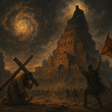
Jesus or Caesar? Church or Empire? - Power E2 image

Jesus or Caesar? Church or Empire? - Power E2

Reparadigmed Podcast
Avatar
111 Plays1 year ago

“Follow Jesus” seems like such a simple command, until you remember that Jesus went to the cross. The early church had an uncompromising allegiance to Jesus, unity in a non-violent ethic, and a shocking willingness to obey Jesus’ words, “Follow me.” But how did the church in Rome go from being a non-conforming problem for Rome to asking the Roman military to settle church division within a century? Nick and Matt chat about the transformative effect of a “Christianized” Roman Empire, and how this newfound political power radically shifted the church’s beliefs and practices regarding state, violence, and the purpose of the church, resulting in the horridly violent legacy that is church history.

Resources Referenced: Caesar and the Lamb by George Kalantzis, Jesus Wars by Philip Jenkins.

Interlude Music: In the Beginning of Time by Of Water

Theme Song: Believe by Posthumorous

Connect with Us: Website Youtube Instagram

Episode Outline:

00:41 Introduction: The Early Church and Its Ethic

02:34 The Early Church's Response to Violence

04:18 The Role of Martyrdom in the Early Church

05:58 The Early Church's Stand Against Violence in the Roman Empire

15:00 The Early Church's Rejection of Military Service

21:31 The Shift in the Church's Stance on Violence

22:55 Constantine and the Rise of Christianity in the Roman Empire

27:26 The Influence of the Roman Empire on Church Doctrine

30:38 Augustine's Influence on Christianity

33:35 The Shift in Christian Approach to Violence

42:16 Christianity and Violence in the Reformation and Post Reformation Eras

43:29 Manifest Destiny and the Dangers of Christianizing Behavior Contrary to Jesus' Ethic

Recommended
Transcript

Introduction and Content Warning

00:00:00
Speaker
Hey, it's Nick with Reparadigm. Just wanted to let you know that due to the topic of conversation, there are some fairly vivid descriptions of violence in this episode. So if that's inappropriate for your audience that's listening in with you, just wanted to let you know on the front end. Thanks for listening. Here's the episode.

Shift of Western Church from Peace to Power

00:00:17
Speaker
We're in a series talking about the church's relationship with power. Jesus said, love your enemies, turn the other cheek. But from the fourth century onward in the western church tradition, something radically shifted.
00:00:43
Speaker
And we, who were full of war and the slaughter of one another, and every kind of iniquity, have in every part of the world converted our weapons of war into implements of peace, our swords into plowshares, our spears into farmers' tools, and we cultivate piety, justice, love of humanity, faith, and hope, the kind that comes from the Father through the crucified One.
00:01:03
Speaker
Now it is obvious that no one can frighten us or subdue us who believe in Jesus throughout the world, for it is evident that though we are beheaded and crucified, thrown to the wild beasts, the chains, the fire, and all the other forms of torture, we will not renounce our confession. The more such things happen, the more do others, in great numbers, come to faith and become worshippers of God through the name of Jesus.

Radical Faith and Resurrection Hope of Early Christians

00:01:27
Speaker
Justin Martyr, in his dialogue with Trifo.
00:01:30
Speaker
We talked last week about this ethic of Jesus and this call to live in a way that's really contrary to this kind of violent pattern of the world. I think we kind of ended with this question like, is this for real though? Is this possible? It all seems kind of extreme in a lot of ways.
00:01:46
Speaker
I find when I read writings from the early church, they just carry so much clarity in their worldview. It's kind of shocking and invigorating at the same time. The early church writers saw themselves as these followers of Jesus who were called to witness to His authority and His victory over death.
00:02:04
Speaker
And to do that in really powerful ways. It's interesting, when we talk today about what witnessing looks like, I think we usually focus on the things that we're supposed to say, right? The kind of conversations we're supposed to have. That's good stuff. But when we read the early Christian writers, what we see is that they witness to the world in the way that they live. They're supposed to live in a way that proclaims to the world that something is radically different as a result of what Jesus has done. They were people born into a resurrection hope.
00:02:33
Speaker
freed from the fear of death, freed from the violent struggle for security, freed to live with a crazy sort of love that turns the cheek and loves one's enemy. They saw that when you face the violent powers of the world and you show that you now as a follower of Jesus will not be shaken, you're demonstrating that resurrection hope is greater than the fear of death.

Martyrdom as Testimony to Jesus' Victory

00:02:52
Speaker
So when these early Christian writers talk about suffering, their death, they're showing that by being martyred, Christians are refusing to be controlled by the fear of death.
00:03:01
Speaker
And by doing this, they're actually announcing to the world that Jesus is king, that death is defeated, and that the old systems of fear and violence that have controlled humanity since the fall have no power over them. It's like raising this banner that says Jesus is king and they just keep raising it higher and higher.
00:03:18
Speaker
by their actions. Their ethics proclaimed, louder than their words possibly could, where their allegiances were. It wasn't like they just had formal theology about Jesus, his identity, his way of life, what he was up to, although I'm sure they talked about all those things and they did hash out theological issues to be sure. The primary lasting legacy that those early Christians left for us
00:03:42
Speaker
is a completely transformed way of life that was counter-cultural to the Roman world. And it successfully embodied the way of Jesus in that culture such that people saw the beauty in it. Even in the midst of tribulations and trials and even occasional persecutions, people were coming into the church and were attracted to it because it was an aroma of life and not an aroma of more death and violence.

Non-Violent Resistance Against Oppression

00:04:09
Speaker
In some crazy upside-down way, when the church looked like it was losing, it was actually winning. I love the way John Chrysostom puts this. For often, to be defeated is better, and this is the best mode of victory, for he also that is dragged to martyrdom thus conquers by being bound and beaten and maimed and slain. And what is in war's defeat, namely for the combatant to fall, this with us is victory. Thus also the rocks in the sea, by being struck, break the waves.
00:04:39
Speaker
Thus also all the saints were proclaimed and crowned and set up their glorious trophies, winning this tranquil victory.
00:04:46
Speaker
The rocks on the sea by being struck break the waves. I love that idea. The early Christian writers that we have, they see it as their mission to declare the victory of Jesus by looking at this violent system in the world around them and refusing to live by its rules. Their response to this violent system was basically, no thanks. We're not going to be controlled by this. We're not going to participate in it because Jesus has defeated it.
00:05:11
Speaker
So you can come at us all day, but we're a people defined by resurrection hope. You're gonna look like a big scary wave coming at me, but when you break on me, that's actually gonna be my victory over you. Yeah, and we talked about this last time, about the only thing that could really get you to take on this worldview is that resurrection hope. Seems a little bit foolish if it weren't for that resurrection hope. And it seems like that's what really transformed the early church to be able to break the rules.
00:05:40
Speaker
not live within those rules, be liberated from the fear of death and from the actions that that fear of death usually drives humanity to. And in that hope they stood, and in that hope they demonstrated a completely different way to be human, unlocked by Jesus' passion and his resurrection hope.
00:06:00
Speaker
But when the church stands firm on that resurrection hope, it's going to look very weird. It's going to stand out. It's going to be something that the rest of the world notices. It's going to be a light of the world, a city on a hill. That's what Jesus described in his Sermon on the Mount, where he talks about turning your cheek, loving your enemy. He's describing this church, this new group of people who by living out resurrection hope are going to look really weird.
00:06:25
Speaker
They're going to look strange from the perspectives and the expectations of the worldly powers. And being that strange organization that sticks out and doesn't play by the rules of the world was not an easy thing to do in the first few centuries. Rome was this empire built on the idea that the way to achieve peace is to crush all your enemies. Roman culture held to a firm hierarchy, which protected the power of the elites and ensured the lower classes lived in fear.
00:06:52
Speaker
A huge portion of the Roman population were slaves. Worship of the Pantheon and of the Emperor was demanded and served to maintain unity. Anyone who would challenge Roman power or the system of hierarchy were given gruesome public executions like crucifixion that was specifically to strike fear in anybody who might be considering rebellion, to dissuade anyone who would challenge the Roman system.
00:07:14
Speaker
Ultimately, in a world of powers fighting for control and security in a violent world, Rome was really, really good at it. They were an effective and violent machine.
00:07:23
Speaker
Yeah, I think governments ever since then have probably learned a thing or two about how to wield violence and fear of violence effectively to coerce conformity.

Christians Threaten Roman Power with Non-Conformity

00:07:33
Speaker
Absolutely. So what happens when Christians in Rome, this growing movement, when they refuse to offer worship to the emperor, or when they wouldn't participate in sacrificing to this pantheon of Roman gods,
00:07:44
Speaker
What happened when they challenged the cultural hierarchy systems? Or when they challenged the very idea of Roman excellence and declared that Jesus is the king of kings? Well, they started to be viewed as a threat to Rome. What happens when a violent superpower empire gets threatened? Well, it's going to respond with violence and power because that's what it's good at. That's what it knows how to do.
00:08:05
Speaker
And that's exactly what happened. We see that martyrdom became a defining feature of the earliest church, when violence in its most extreme form ends in somebody being killed. The Greek word martireo, which means to witness to something, to testify to it. But you can probably hear that the martireo, that's where we get our word martyr from. So this connection between dying for Jesus and witnessing to His death, to His power, is very closely connected there.
00:08:34
Speaker
Yeah, it's like martyrdom became the ultimate form, the ultimate way to testify to Jesus. It is. How else do you declare to the powers of the world that you have no power to transform me because I have resurrection hope than by proving it to the very end of your life? When you say, I'm not going to play by the system, I'm not going to be conformed with fear to worship the empire, I'm not going to use fear, I'm going to withhold myself from the system,
00:09:03
Speaker
And now you can come and you can do your worst, but it turns out the worst you can do is kill me. And I'm not afraid of that. And if I'm not afraid of that, and your ability to kill me doesn't actually get you with the thing that you're hoping for, I'm now proving that the power behind me is bigger than the power behind you. Yeah, that's putting your money where your mouth is. We see martyrdom even in the New Testament writings. So very early in the history of the church.

Lactantius on Suffering and Life After Death

00:09:26
Speaker
Yeah, Revelation 2, 12, these are the words of him who has this sharp double-edged sword.
00:09:44
Speaker
This idea that anybody would be willing to go die for something they believe in rather than be conformed to the world, like you mentioned earlier, it's strange. It doesn't make sense to somebody who doesn't have a resurrection hope. Lactantius is an early Christian writer who addresses this strange idea that Christians would be willing to suffer and die.
00:10:00
Speaker
Yeah, he says, the apparent folly of a man who prefers to be in need or to die rather than cause hurt or seize another man's property is caused no doubt by the fact that people think death destroys a man. This belief is the source of all the confusion on the part of the philosophers as much as of ordinary people. If we are nothing after death, then certainly it is the mark of a very great fool not to consider how this life may last as long as possible and be full of every advantage.
00:10:27
Speaker
Anyone so doing is bound to depart from the rule of justice. But if a longer and better life awaits us, then it is the mark of the wise to despise this temporal life with its goods. Every loss of this life is repaid with immortality.

Effective Nonviolent Resistance vs. Manipulative Conversion

00:10:57
Speaker
political relevance to get our guys in the right place to protect us. We're playing a game for a much bigger prize than what y'all think you're playing for. Because we don't think that, in fact, death destroys a man, as Lactantius put it. When the church lives this idea out, when they hold firm to their allegiance to Jesus and to his victory over death, the church becomes a beacon, like a giant flag in the world with a banner that says, Jesus is king, death is defeated.
00:11:35
Speaker
you
00:11:40
Speaker
Imagine witnessing a public punishment of Christians in Rome. The purpose of these public displays was to force the Christians to renounce Jesus, to come out and worship the emperor, to declare the authority of Rome, and then to be violently tortured and executed so that any Christians in the crowd would be scared into renouncing Jesus. The whole idea here was to show that Rome was the big guy. That Rome had more power than whatever this group of Christians was claiming. Yeah, they were the true master.
00:12:07
Speaker
The goal was ultimately pretty simple. Use force and violence to crush the movement that didn't comply with the expectations of Rome. So when Christians get dragged out to be tortured and killed, and instead of doing what Rome had hoped, they instead claim the authority of Jesus to the very end.
00:12:22
Speaker
they bore witness to a higher power than anything Rome could wield. It's like the early church was raising this banner declaring Jesus as king, and every time that Rome came trying to tear it down, it instead got raised a little bit higher. As Chris Austin put it, the rocks break the waves by being struck.
00:12:40
Speaker
Yeah, and other people would flood in and raise the banner higher. New recruits. It was incredibly effective. Yeah. If you saw this week after week, month after month, these people being tortured and to the very end saying, no, I believe in a higher power. There's something bigger than Rome that I'm living my life for. That's going to have an effect on you.
00:13:01
Speaker
Yeah, I mean, all this talk of the early church obviously removes ourselves culturally from them quite a bit. Like, we are not at all saying we find ourselves in a similar position today or something like that. Not that it doesn't happen in some areas of the earth for, you know, religious persecution does happen, not only Christians all across the world in different times and places.
00:13:21
Speaker
However, I'm thinking of even our American context right now. If we really wanted an effective evangelism strategy to get people to make decisions to follow Jesus and have come to Jesus moments, instead of following theologians like Charles Finney and playing just as I am 16,000 times until you coerce an emotive response,
00:13:42
Speaker
Maybe we would be better off faithfully resisting the corrupting influences of power and prestige and status. And even that's not really persecution per se, but even if we were fine with being somewhat strange and uncomfortably loving towards those who we perceive as our enemies,
00:14:03
Speaker
Would that not be a start? And would that not be in the mold of those who actually paid a lot higher of a cost? Because we know that when you start living in this worldview, if you're looking for effectiveness, there is no better way to effectively proclaim the gospel of Jesus than to live the ethic of the Passion of Jesus.
00:14:24
Speaker
It does not feel intuitive for us, but we see that that's the formula Jesus gave, and the early church lived it out in a time and a place where it should have gotten crushed constantly.

Rejection of Violence and Military Participation

00:14:34
Speaker
Like, by the rules of this world, this never should have worked. The world tried. The empire tried. Rome did their best. And what happened to Christianity? It only grew. That banner for Christ got raised higher and higher, and more and more people saw it, and people came to Christianity because they witnessed a power that Rome could not defeat.
00:14:54
Speaker
That temptation, I think, to go participate within the violent systems of the world, to go use the powers, that was very much a temptation that the early church faced too. They were not immune from temptations. We see this addressed specifically in some of these early Christian writings. Given their understanding of the church as this entity that's supposed to be unique, it's supposed to stand out and it's supposed to stand as this banner for resurrection hope over the violent powers of this world. And against the violent powers of the world, if need be? Definitely.
00:15:24
Speaker
Given that understanding, I think it makes perfect sense that that saw no place for Christians to be participating in violence or within these violent systems. One of the questions that would have come up obviously is, well, what if a Christian is in military service? What happens if somebody in military service becomes a Christian?
00:15:40
Speaker
Now, in the higher up positions within the military, it was a pretty clear answer because those who were in charge of divisions were basically in almost priestly type roles. They were responsible for performing sacrifices for all of the troops under their command. They were required to give worship to the pantheon. That was an obvious problem for Christians. They couldn't do that. What about the lower positions where you're not necessarily participating in this pagan system? Would that be okay?
00:16:06
Speaker
Tertullian, an early church father, says,
00:16:36
Speaker
Yeah, he sees very clearly. It's Christians, you're called to be part of this institution that means you cannot go participate now in these violent systems. Another Christian writer, Origen, points out the idea that Christians are very distinct from the Jewish people in not participating in violent rebellions. He says, Jesus considered it contrary to his divinely inspired legislation to approve any kind of homicide whatsoever.
00:17:00
Speaker
Concerning the Christians, on the other hand, we say that they have been taught not to defend themselves against their enemies, and because they have kept the laws which command gentleness and the love of people, on this account they have received from God that which they could not have succeeded in doing if they had been given the right to make war, even though they may have been quite able to do so.
00:17:19
Speaker
Yeah, Lactantius again says when God forbids killing, he doesn't just ban murder, which is not permitted under the law even. He's also forbidding us to do certain things which are treated as lawful among men. A just man may not be a soldier, since justice itself is his form of service, nor may he put anyone on a capital charge.
00:17:41
Speaker
Whether you kill a man with a sword or a speech makes no difference, since killing itself is banned. In this commandment of God, no exception at all should be made. Killing a human being is always wrong because it is God's will for man to be a sacred creature.
00:17:57
Speaker
is really remarkable that in all of the Christian writings we have from the first few centuries, every one of them offer the same rejection of violence. Which is especially crazy because from pretty early on, Christianity spread across all these ethnic, social, geographic, even gender barriers, and there was a ton of diversity in the early church. Both in the makeup of the people, the ideas brought in a very diverse organization.
00:18:20
Speaker
This offered a lot of interesting challenges. The early church certainly wasn't perfect. They had all kinds of problems to deal with. You read through the New Testament letters. They make it pretty clear. There were major issues in these early churches. So I'm not trying to portray these early churches as perfect. They had problems. Even given all this diversity and the problems they were dealing with, the amazing fact is that the writings we have from the early church, the first three centuries,
00:18:42
Speaker
are unanimous in their affirmation that as Christians, they were called to live out love for one's enemies, to not participate in violence or within the Roman system of violence, they saw that the Church was supposed to stand as a banner, declaring that the very forces underlying the Roman system had been defeated by Jesus on the cross.
00:19:01
Speaker
You can feel free to look in the archives and see what you can find, but what you will find is even the Christian tradition that does see a place for military participation and stuff like that, what they will appeal to is the fact that there are some Christians still in Roman service. They will never appeal to church leaders post-apostolic period who are advocating for the legitimacy of such service because it doesn't exist.
00:19:29
Speaker
at least we have no writings that would ever make that argument for participation in the Roman Empire.
00:19:36
Speaker
Yeah, the church was growing. It was a new movement. Like of course there were going to be people who were in Roman military service who came into the faith or people who may be born into the faith and came into Roman military service. This was very much a real thing. So there were people who considered themselves Christians participating in the military. Every writing we have where a Christian has sat down and thought through this and is offering instruction or advice to other Christians, every piece of that we have from the first few centuries is telling people you cannot be doing both.
00:20:06
Speaker
It's especially interesting to note that later church fathers post-theodosius in 381 had a vested interest in collecting writings from earlier church fathers who gave approval to participation in the Roman military.
00:20:21
Speaker
And even they do not offer it. This cuts against the argument in this case, like history is written by the victors, which is true, but even the victors in this case couldn't come up with early church examples. Jesus's apostles or the apostles disciples or the apostles disciples disciples, who are any of them advocating that it's okay to be a part of this violent system that is the Roman Empire in a military capacity.
00:20:47
Speaker
The church was incredibly diverse, but this is one of those unifying items. Yes. It was a central teaching of Jesus, and all these early Christian writers see, well, when we live this out, this has clear and obvious implications for what we can and cannot do.

Diocletian Persecution to Constantine's Rise

00:21:27
Speaker
What happened? Because that seems like it is not the story of the rest of church history, so something seems to have shifted here. Yeah, if you've studied much of church history, you recognize that this first few centuries stands out because this is definitely not the pattern that was followed by much of following church history. So what was the big change?
00:21:46
Speaker
This is where it gets interesting. So, late into the third century, there's actually kind of a lull in the persecution of Christians. He had some emperors who, I don't know, they must have had more important stuff they were doing. They weren't as concerned about, you know, this Christian movement. Probably infighting. Probably. So, largely Christians within the Roman Empire were starting to live more normal lives, right? They weren't having to be quite as secretive. But then what you get, right at the turn of the century, so, you know, right around the year 300, you get Emperor Diocletian. He comes in.
00:22:14
Speaker
And he says, OK, no, I'm done with this easy approach. I'm going to bring the hammer on Christians. So persecution comes in fast and widespread. Yeah, that was one of the worst ones that actually was widespread. Before that, any persecution of Christians from the evidence we have was occasional and in certain regions for particular reasons. There wasn't like a universal ban on Christians in the Roman Empire or anything like that. But yeah, Diocletian seems to have been a bit more intentional and widespread.
00:22:41
Speaker
So you get this generation of Christians who had grown up in a time that was relatively peaceful for Christians, you know, they could practice their faith openly. And then all of a sudden, major persecution comes. Well, it's right around this time.

Constantine's Influence and the Shift to State Religion

00:22:52
Speaker
It's actually the year 312 that a new emperor comes in, Constantine. Technically, he's actually fighting for the position of emperor at this time. This is a pretty common thing. He's in the middle of fighting for his spot on the throne. And as he's preparing for one of these battles, he has a vision. And he claims that in this vision, he saw a cross
00:23:11
Speaker
like the cross of Jesus. And he was told that by this, so by the cross, you will conquer. And he also says that he had a dream in which Christ appeared to him and promised him victory in this battle if he bore the cross as his standard. So, he had this symbol called the Cairo symbol placed on the shields of his soldiers,
00:23:33
Speaker
and he won the battle. The Cairo is a symbol you've probably seen before. It looks kind of like a P crossed over an X. And in Greek, this Cairo are the first two letters of Christos, Christ in English. So he's putting the initials of Jesus' title on these weapons of war and then goes out and wins the battle.
00:23:51
Speaker
The irony in that just cannot escape me. It's almost funny if it weren't so sad. Yeah. So Constantine, who had this experience, became emperor, then considers himself Christian. And then all of a sudden, Christianity is now not only permissible within the empire, but it starts to become the actual official religion of the Roman Empire.
00:24:14
Speaker
How's that for that OG prosperity gospel? I have this vision that I would gain great position and wealth if I did this one thing. I did the one thing, now I got all this wealth and position and I'm the emperor. So within a hundred years, Christians go from suffering this new, terrible persecution
00:24:32
Speaker
to now Christianity is the religion of the Roman Empire, and the emperors who follow Constantine, they begin actually outlawing pagan practices. They begin issuing statements regarding Christian doctrine, and they start declaring that anyone without those specific views, the views endorsed by the Roman Empire, are no longer considered part of the Christian Church.
00:24:54
Speaker
Yeah, they famously start basically presiding over Christian councils, which is sort of funny. So they're acting as kind of theologian general as well. Yeah, I think it's interesting to try to imagine what this would have been like be a Christian because this would have been a crazy time of transition.
00:25:09
Speaker
So once Christianity becomes the religion of the empire, then suddenly there's a whole bunch of benefits for Christians. You get the immediate benefit of safety, right? There's no more persecution for being Christian. So pro-Christian unbelievers are celebrating these actions and saw the emperors as a continuation of the victory of Jesus. There were Christians in support of Constantine who actually came to see him as like a Redeemer-Savior figure. He's the benefactor of Christianity.
00:25:37
Speaker
Yeah, famously Eusebius, who is a very important church historian, he writes about Constantine as if he is the second coming of Christ. Christ incarnate. Yeah.

Council of Nicea and Unified Doctrine

00:25:49
Speaker
Constantine, by any measure, was still an extraordinarily violent man. Yeah.
00:25:53
Speaker
It was not like the ethic of Jesus transformed him. No, he just started putting crosses and the Cairo on his symbols, on his tools of violence, on his shields, and on his banners. Yes, he continued the warring that all emperors had done and now was doing it in the name of Christ.
00:26:09
Speaker
But he stopped persecuting the Christians, so that was nice for them too. Yeah, but it's just such a weird inversion, right? For centuries, loving one's enemies and standing against violence had been a key feature of Christianity. Now, suddenly, under Constantine and then the following emperors, the cross and Christ's initials were being placed onto weapons of war. One of the things any emperor had to do to maintain control was to make sure that there was a lot of unity.
00:26:37
Speaker
We'd already mentioned that within the early church, diversity was actually one of the key features there. So this is kind of a problem if suddenly Christianity is the religion, the official religion of the Roman Empire, right? Factions and schisms are bad news for somebody who's trying to maintain control over their empire. So given that the empire was now aligned with Christianity, unity within Christianity became important to the empire.
00:27:00
Speaker
Oh, that's a great point, actually. I mean, the empire was great at creating homogeneity everywhere else, so of course they would try to enforce homogeneity within Christian doctrine and practice once it was the case that Christian doctrine and practice was very much a part of the empire.
00:27:16
Speaker
And that's exactly what Constantine, this first Christian emperor, did. In his supreme authority, he invited bishops, these leaders from the churches, to hold a council to start clarifying these doctrinal issues that had arisen around the relationship between Jesus and God. Yeah, Council of Nicea 325. Yeah.
00:27:32
Speaker
If you studied church history, this is a big event within church history. And so his goal here was that the church would be unified in their doctrinal beliefs. And in order to develop this unified doctrine, they put together what is called the Nicene Creed. You may say it in your church today. At this council, it was declared that every bishop who wouldn't sign this unified statement of belief was going to be exiled, excommunicated from their church, and their writings would be seized and burned.
00:27:57
Speaker
The ultimate example of the victor writing history. Exactly. And you get this council of Nicaea, and then as questions come up in church doctrine over the next centuries and centuries, you get more and more of these councils. So it's the Roman Empire basically saying, no, no, no, we need unity within the church because it's the official religion of the Roman Empire. And the state has an interest in that unity because of social order and things like that. Yeah, they need to maintain control. They need everybody to be on the same page here.
00:28:24
Speaker
strikes me that the emperor has a far different reason for wanting to create conformity around certain doctrines than does, say, a pastor or a theologian who actually thinks these things are true and important and are important for the inner life of the people and the community for other reasons.

Political Influence on Church Unity and Authority

00:28:42
Speaker
The emperor is just like, hey buddy, I mean, I just need some social conformity here because that's how a state runs best.
00:28:48
Speaker
Yes, you could get into so much of the interesting dynamics in the interplay between the theology and the unity and the church and the empire. There were, in fact, some theological beliefs that were viewed to be more beneficial to the empire. So those were promoted by the emperor and sometimes the church pushed back.
00:29:06
Speaker
you just get all this interesting interplay where now suddenly the church and the Roman Empire are like pushing back and forth trying to figure out who has authority in what areas. In fact, Constantius II, who was Constantine's son, he declared, let whatsoever I will be that esteemed canon. Oh man, that is funny.
00:29:26
Speaker
So basically, no, if there's any questions within the Church about what we believe, he's like, I get to decide. Now, on the other end, you actually get Emperor Theodosius, who was excommunicated by Ambrose, who was the Bishop of Milan, after he, Theodosius, ordered a massacre in Thessalonica.
00:29:42
Speaker
Yeah, so you still have like pastors, theologians, leaders who are trying to be faithful to the ethic of Jesus as they saw it or whatever. And in fact, sometimes pushing back against the emperor trying to be God Lord over the church. Yeah. And at least in this case, the emperor submitted to that. So he was actually only allowed to come back into the church after he repented.
00:30:02
Speaker
That is so funny. This whole dynamic of the political powers getting involved in church doctrine, I think it's a really interesting one to explore. If anyone wants to read further on it, I would recommend some of the historian Philip Jenkins' work. One book that's pretty helpful on this is called Jesus Wars. Subtext is how four patriarchs, three queens, and two emperors decided what Christians would believe for the next 1,500 years.
00:30:28
Speaker
Pretty quickly see that the questions and challenges facing the church after Constantine are really very different than the challenges and questions facing the church before Constantine. Of course. Yeah, they very much have political ramifications now and it's all wed together with like the state's goals.
00:30:45
Speaker
this relationship between the empire and the church pretty quickly kind of just becomes an assumption. If you're born into this, it's just, oh, okay, this is how it is. So then how do you practice Christianity within this system? Especially if you're reading like Eusebius as your church historian, and he very much paints that wedding of empire and church as a positive thing. Again, Constantine is Christ incarnate, the second coming of Jesus himself.

Augustine's Writings and Power Dynamics

00:31:10
Speaker
Yeah. So it's into this situation, right, where you've got this newly wedded church and empire that one of the most influential writers in all of Christianity is born and starts to write. His name's Augustine.
00:31:20
Speaker
at least in the Western church tradition, Catholics and Protestants. Yes. Much of what Christians think even today can be traced back to Augustine. Yeah. So he was a bishop living during the time when Christianity became the official religion of the Roman Empire. And he was a prolific writer. He wrote at great length about the power dynamics in the world. So he offers his ideas about how Christians are supposed to live this out within this environment.
00:31:45
Speaker
Not surprisingly, given how different the situation is, there are really crucial shifts in Augustine's thinking. If you read earlier Christians from before Constantine and you read Augustine, you're going to see major changes in the way he views Christianity.
00:32:00
Speaker
Of course, because the realities on the ground are just far different. Yeah. So I think for early Christians, what we've seen is that they've got this idea that resurrection hope frees them from the fear of death and that the church is to witness to this by living it out radically. They were a minority group.
00:32:16
Speaker
The key witness was this collective life of the church. The way the Christian community lived was supposed to be like this flag, this banner for the power of Jesus. Their dedicated allegiance to Jesus, their rejection of the systems of violence and power were supposed to signal to the world that death is defeated by living out their hope and resurrection and restoration. For Gustin, he's coming into a very different world.
00:32:38
Speaker
For him, he sees Christianity as being about living out this ethical standard of what he calls the spiritual city of God. The real goal of Christianity for Augustine is fulfilled in a separate world to come. So he frequently describes the Christian life in the body here and now as a pilgrimage through the world while we look forward to entering the city of God beyond. So he starts to place a much higher emphasis on internal understanding, on knowledge and virtue.
00:33:05
Speaker
interestingly aligns pretty well with our Western individualism, which is maybe a reason why we appeal to him so much in our theology. Yeah, that is interesting. Reading him, it's like, oh yeah, a lot of that just feels right. That's the Christianity I've been born into, that I've grown up in. You start to realize how much of our tradition really does go back to Augustine and start reading him. Sure.
00:33:26
Speaker
One of the places that this distinction between the early church and Augustine is really easy to see is in this approach to violence. So, like we've said, for the early church, they saw that they were called to live out this ethic of Jesus here and now, right? Turn the cheek, love the enemy. That's supposed to make you a really distinct assembly of people.

Justification of Violence for a Just Cause

00:33:44
Speaker
You know, the whole world should look at the church and say, oh, look, yeah, they're living by some higher power. For Augustine, since membership in the city of God is much more internal and individualistic,
00:33:53
Speaker
It's, you know, something that you're going to realize in the world to come. For him, he says Christians will need to work in and within the powers of the world here and now, you know, where unjust governments and violence are simply inevitable. So for him, the violence of the state can actually be used by Christians for God's purposes. I think for Augustine, when push comes to shove, if you need to, it's better to kill the body to save the soul.
00:34:16
Speaker
Because it's really this focus on, ah, what's going to happen after? That's where my real membership lies in that future, that city of God.
00:34:26
Speaker
Yeah, and you could actually start justifying killing people then, so if there's some schism group that has bad theology that is leading people into hell on your view, like the Donatist or something like that, you might be like, well, maybe we should use the power of the state to suppress them, lock them up, kill them if we need to, because their message is so bad it's leading people to hell, and that's even worse.
00:34:50
Speaker
He starts to see huge changes in what's allowable for Christians to do. You know, in political office, so he sees, oh yeah, Christians can go do that, even if they need to be killing. Military service for him, fully acceptable to Christians. Even killing, so long as you do this with the proper internal conviction.
00:35:06
Speaker
He sees the state and course of force as tools, right? If you're using them correctly, like, oh, sure, go ahead. And Christians can and should use them. And like you mentioned, even in dealing with problems within the church with schismatic groups, famously, he wrote a lot against a group called the Donatists. They're a group of Christians in North Africa,
00:35:24
Speaker
who had taken a very firm stance about who was going to be allowed back into the church. Remember, you'd had that period of a ton of persecution and then Constantine became emperor, Christianity became the religion. So all of a sudden, you had a lot of churches that were dealing with deserters, people who had left during the time of persecution and wanted to come back in. The Donatists were very firm on this. They were not going to allow people who had been traitors to the church, or so they thought, to come back in.
00:35:47
Speaker
And they were violent too, by the way. They were, yes. I'm not here to defend the Donatists. I just think when you look at Augustine, the way he approaches violence in dealing with the system is very interesting because it shows really clearly the way his thinking is different from earlier Christians. Yeah, it's unrecognizable. But also the realities on the ground, like we said, are unrecognizable. I mean, we have to cut him some slack because he's a man of his time and place.
00:36:12
Speaker
Yeah, definitely. So he's dealing with what he sees as this major issue of the Donatists and their approach. And he actually writes, recommending that the empire's power should be used to persecute and oppress the Donatists. So he supported using the power of the empire to compel and control church function.
00:36:30
Speaker
And I think it's interesting, especially comparing his approach to the earlier Christians, it's like, how does Augustine defend this, right? How does he go back to the teachings of Jesus, the teachings of the New Testament, and say, oh, yeah, this is legitimate for me to do? It's pretty difficult to read the Sermon on the Mount and then to justify persecuting, harming anybody's body, even Christians, like what on earth?

State Power for Religious Conformity

00:36:52
Speaker
Yeah, I think it is. So not surprisingly, he does not go back to Sermon on the Mount.
00:36:56
Speaker
Oh, he goes to like Plato or Aristotle or something? He does go back to Jesus, but let's look at how he does it because I think it's interesting. He goes back to this parable Jesus tells of the wedding banquet in Luke 14. So this is a parable about a man who held a feast, but all of the invited guests, they give these lamb excuses for why they won't come. The host of this feast tells his servant to go to the streets to get the poor and the crippled. They do that and there's still room at the banquet. And then we get this in Luke 14, 23.
00:37:24
Speaker
Then the master told his servant, go to the roads and country lanes and compel them to come in so that my house will be full. So in this parable, this host, he uses coercion to bring people into his house for the banquet, compel them to come in. So Augustine takes this language as being permissive now of his using forceful coercion by the Roman state to bring the Donatists back into line with proper doctrine. That is some creative thinking.
00:37:50
Speaker
it just feels like such a stretch to me. So long story short, Augustine, given the fact that he's living in a very different world, starts to see a very different relationship between the church and violence than the earlier Christians had seen. And what we see moving forward is that this new sort of approach that Augustine takes kind of just becomes the standard for much of the Christian tradition that we claim.
00:38:12
Speaker
When you start seeing Christianity this way as just a power that is inevitably going to be working in and within these violent systems, but that living out Christianity is really about your internal conviction, right? It's about what you think, what kind of virtues you have, how you feel. It becomes very internalized. It's actually very easy within this system now for conversion, right? This idea like, oh, well, I'm going to save somebody for this world to come to become a justification for violence.
00:38:39
Speaker
The cross becomes just another war banner.

Embracing Violent Systems

00:38:43
Speaker
Christianity, actually at this point, becomes much like any other religion. It's now a tool that can be wielded by worldly powers to unite their people for violence and this control. You fall back into this violent cycle that has characterized all of human history. And now instead of having the church standing outside and against this cycle, it now just becomes a label on one of the players within this violent system.
00:39:06
Speaker
The church, the gospel, the name of Jesus itself is just another tool in the belt of someone trying to gain or maintain status or power in the world. Charlemagne, he's a famous king who's fighting this battle against the pagan Saxons, and he does so in the name of Christ.
00:39:39
Speaker
Repent and follow Jesus, or die. Exactly. That's the approach he takes. How about in the Crusades? So Pope Urban II, in preparing his knights for this first crusade. Yeah, he says, if in olden times the Maccabees attained to the highest praise of piety because they fought for the ceremonies and the temple,
00:39:50
Speaker
At least this is what he claims. He says,
00:39:59
Speaker
It is also justly granted you, Christian soldiers, to defend the liberty of your country by armed endeavor. We now hold out to you wars which contain the glorious reward of martyrdom, which will retain that title of praise now and forever.
00:40:16
Speaker
I think there's two things that are really interesting. First, that rather than appeal back to Jesus or to the ethic of Jesus, he appeals back to the Maccabees. We talked a little bit about this the way Jesus shattered all the expectations that people might have had based on what the Maccabees had done. And he was actively standing against those who were thinking about launching a rebellion in the mold of the Maccabees.
00:40:38
Speaker
Yes. I know you guys saw the Maccabees and now you've got all these expectations. He's like, I'm going to flip all of those on their head. He's like the counter Maccabean Messiah. Post Jesus, some of Jesus's followers are like, oh, how about those Maccabees? They're looking pretty good again, aren't they? Yeah. I also think it's really interesting. He says, we now hold out to you wars which contain the glorious reward of martyrdom.
00:41:01
Speaker
dying for the state. He's equating that with martyrdom for Jesus. That is some powerful propaganda, if you ask me. Yeah. This is the same martyrdom that was seen by the early church as always a nonviolent way of demonstrating to the world that violence is not the way to win. Right, when the state was doing that to them. Yes. And now it's a call like, hey, you might die in my battle, but let's call it martyrdom.
00:41:28
Speaker
You go kill other people, and if you die by the sword, well, we'll call it martyrdom. It's just,

Reformation and Return to Violence

00:41:34
Speaker
yeah. When you compare this thinking to the early church, it's become so clear how different it is. Well, it's a different religion. I think so. The only things that are similar still are, I guess, the names being used, the symbolism, but, like, all those are being twisted into weird and gross ways, like that cross of Jesus on one's war banner. What a wild twist!
00:41:56
Speaker
That's like from the pit of hell itself. It's so backwards, it's hard to imagine. How about into the Protestant Reformation? Oh no, stop with the Catholics. So, almost every Reformation group was pro-violence. Not the Anabaptists, baby. I wasn't going to plug the Anabaptists here, but I appreciate it. I think this is really interesting. In Luther's commentary on the Sermon on the Mount,
00:42:19
Speaker
He says, if a Christian goes to war or sits and acts as a judge and punishes or sues his neighbor, this he does not as a Christian, but as a warrior, a judge, jurist, etc., but retains nevertheless a Christian heart desiring to harm no one and sorry that an evil must befall his neighbor, and he lives thus at the same time as a Christian towards everybody. He goes on.
00:42:43
Speaker
I think this contrast is really interesting because for the early church, it was clear that they were supposed to stand against the systems of violence, even if it meant their own death and that that was central to their faith. For Luther here, he goes, well, you're going to be participating in violence. So just make sure that while you're doing so, you're feeling sorry for the people that you're committing violence against.
00:43:05
Speaker
Luther, in one of his other writings, this was in response to the German Peasants War, he wrote that the peasants must be sliced, choked, stabbed secretly and publicly by those who can, like one must kill a rabid dog. Sounds a lot like his Lord and Savior Jesus Christ. Oh my goodness. And even after the Reformation, we start moving closer into today, you get this idea of manifest destiny. Oh, we're getting way too close to my culture and my time and my place. There was a strongly held belief
00:43:33
Speaker
that the United States of America was a specially chosen nation. This belief in the special identity of the nation actually led to the belief that American expansion was part of God's will, and it served as justification for any violence that needed to be used in taking this land.
00:43:48
Speaker
Yep, genocides were committed in the name of God's city on the hill that is the United States of America. I think that this way of thinking has an effect of Christianizing behavior, right? Kind of taking behavior, putting a Christian label on it that is actually clearly contrary to the ethic of Jesus. So Jesus' call to his followers was to establish a community that was known for loving one's enemy. And I don't think we should be quick to take that label of Christian now
00:44:16
Speaker
and co-opt it into a justification for violence. Seems so perverse. One would need to be very careful and to have some very specific reasons why they're taking up the sword for it to have any possibility of being faithful to the ethic of Jesus. I mean, it just seems like so many things are off the table.
00:44:40
Speaker
At the default, to use violence, fear of violence, state-sponsored violence in order to advance one's own country's interests, one's own culture's interests, any one of these things just seems so antithetical.
00:44:55
Speaker
to what Christianity initially offered the world. It's like, what are we doing here if we have now turned the cross of Jesus, the ethic of Jesus, the name of Jesus into another tool to keep doing what humans have always done to each other from ages past to infinity and beyond. What even is Christianity anymore? Maybe it's
00:45:20
Speaker
Well, we are the people who feel really bad while we do it. So good for us. And we're going to heaven when we die. So that's nice too. Sitting here today, we're in a time and a place where we hold the separation of church and state as a value. That's something that we want to see happen.
00:45:37
Speaker
And I think that's a good

Modern Christianity and Worldly Power Concerns

00:45:38
Speaker
thing. I don't think it's cleared up a lot of the strange thinking that Christians have that has come out of a weird time of Christian history. And I think that's what we're going to talk about next time. Just some of the ways that we think about Christianity are confused.
00:45:52
Speaker
Yeah, I guess my fear is that we've reduced it to a philosophy that's compatible with any worldly, violent power of the world. And if that's what we've reduced it to, then what even is it? Is it distinctive? Is it true? Is it life-giving?
00:46:09
Speaker
That's what I want to talk about next time. The strange ways that we've twisted and transformed Christianity to fit it into this violent power struggle, rather than hold firmly to a Christianity that is distinct. The kind of Christianity that declares the power over the system of violence, but instead sometimes is tempted to just go participate in it. Yeah, let's do it, man.