Transcript
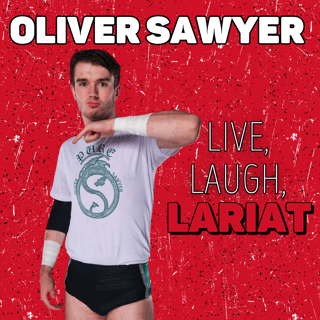
Speaker: Live.
Speaker: Laugh.
Speaker: How's it going, everybody?
Speaker: I am joined tonight by referee Kevin Pierce.
Speaker: You've seen him all over the place.
Speaker: If you're in the East Coast, you've seen him.
Speaker: If you're a fan of New Japan, you've seen him.
Speaker: If you're a fan of Impact, you've probably seen him at some point as well.
Speaker: How are you doing tonight, Kevin?
Speaker: I'm doing good.
Speaker: Thank you for having me.
Speaker: Of course, man, of course.
Speaker: So I want to start out with something because I don't know where it fits into your story, but you're the first referee that we've ever had that has refereed a match that involved a drone.
Speaker: You remember that.
Speaker: What was that like?
Speaker: And is that the favorite match that you've ever done?
Speaker: That was an interesting day.
Speaker: No, I had never worked with a drone before.
Speaker: It was funny because it was my first time getting to work in a movie-like setting because when we filmed it, we didn't film it like it was an episode of television.
Speaker: We filmed it like it was a movie.
Speaker: So they had the speaker in the back of the room, and every now and again, you'd hear the director go, hold, please.
Speaker: And we'd have to stop what we were doing.
Speaker: they would go and conversate and then come back and our guys were going to do it again.
Speaker: And we had to go back to where we were standing at the beginning of the shot.
Speaker: Yeah.
Speaker: So it was like way more to have to remember instead of like a regular match where you just go.
Speaker: Yeah.
Speaker: You just go.
Speaker: Right.
Speaker: And, uh, yeah, that was, that was a fun day.
Speaker: Um,
Speaker: The drone definitely won at the end of the day.
Speaker: But, yeah, that was a fun experience.
Speaker: It was heavier than I thought it was going to be.
Speaker: Really?
Speaker: As soon as I grabbed it, I had to almost reset myself when I was on the floor because I was like, wow, these things are heavy.
Speaker: That was the first time I had touched the drone all day.
Speaker: Yeah.
Speaker: You didn't get to go over the match beforehand with them.
Speaker: No, we talked to them, but I never actually touched the drone until the spot.
Speaker: And we filmed it two or three times.
Speaker: So I don't know which tape they ended up using, but by the second or third one, I had a firm grip on it.
Speaker: That first one, I almost dropped it.
Speaker: Yeah.
Speaker: So we, I might have it here.
Speaker: So we, when this podcast started out, we were doing like reviews.
Speaker: So we would like review crazy episodes of the thing.
Speaker: And the last, we never actually recorded it.
Speaker: But we did, here I have like a little, oops.
Speaker: I have like a bunch of clips on here from that episode of TNA, ironically, but we never actually did the episode.
Speaker: So I've just got like, special report.
Speaker: Welcome back to WCAM Action News.
Speaker: They're all in there.
Speaker: Go ahead.
Speaker: I was going to say that with that day we filmed the episode of television itself was a full episode of Impact.
Speaker: So throughout the scheduled matches, you had Abyss and Crazy Steve going through the compound running into different obstacles.
Speaker: And I would be the referee that once they defeated that obstacle would come running out of the bushes and go to count.
Speaker: And I'm literally, I was counting in the driveway where the gate is and I'm counting so hard that like as soon as I got up, I started pulling pebbles out of my hand.
Speaker: Oh, really?
Speaker: But that was a lot of fun.
Speaker: It was a cold night, too.
Speaker: And I remember I was out there in full ref gear, which is basically just like a uniform.
Speaker: And I'm freezing.
Speaker: So these guys who were in their underwear, basically, I knew they had got to be cold.
Speaker: There's just no way around.
Speaker: But we all made it through.
Speaker: Yeah, there was a water spot at some point, I think.
Speaker: Yeah.
Speaker: Crazy Steven, like the mist or something.
Speaker: And you could see the steam coming off of the guy.
Speaker: Yeah.
Speaker: That's awesome.
Speaker: We could touch a little bit more on that later.
Speaker: But that was I was in a moment.
Speaker: I was like, is that Kevin Pierce?
Speaker: And I kept watching.
Speaker: I was like, yep.
Speaker: So that was a really cool experience.
Speaker: But to kind of go back to the beginning for you with wrestling, where was that moment that you were first introduced with wrestling?
Speaker: And how long did it take for you until you were just like, I'm hooked?
Speaker: Uh, I was hooked immediately.
Speaker: Um, the first time I ever watched wrestling was in 1996.
Speaker: And I remember specifically because it was the first night that Scott Hall showed up.
Speaker: Uh, it was in May, I believe.
Speaker: Um,
Speaker: And I just remember not knowing who this person was like I had no backstory or anything, but I was like, this guy just disrupted the whole TV show like nobody nobody just like walks in in the middle of the scene of a movie.
Speaker: And it's like, hey, real quick, I've got a question for you, you know.
Speaker: And so I was immediately intrigued.
Speaker: And then we just started watching Nitro and.
Speaker: we originally grew up in Augusta, Georgia.
Speaker: So like WCW was huge down there.
Speaker: I didn't know WWE was a thing until I was 12.
Speaker: Like I was that sheltered in the area that we were as far as wrestling went.
Speaker: Um, and that, the only reason I found that out is because I was flipped to the channels and it was the night that the NWO showed up on raw.
Speaker: I'm like, okay, well I know NWO.
Speaker: Okay.
Speaker: They must be on this different.
Speaker: I thought it was just another version of WCW.
Speaker: I had no idea.
Speaker: Yeah.
Speaker: The world opened up.
Speaker: Yeah.
Speaker: That's awesome.
Speaker: Um,
Speaker: really a great time to join in to like right at the beginning.
Speaker: Right.
Speaker: What were some of the characters that drew you in originally?
Speaker: Originally?
Speaker: I had never seen the multicolored face paint stain.
Speaker: So my introduction to stain was the black and white stain.
Speaker: Yeah.
Speaker: Because he had just started to turn right around the time I started watching.
Speaker: I was just enamored with the fact that somebody could walk into a room or any place, not say a word and have everybody's attention.
Speaker: That was impressive to me as a kid.
Speaker: I'm sitting here screaming at the top of my lungs and I can't get anybody's attention and here he is.
Speaker: He just walks in the room.
Speaker: Nothing.
Speaker: And he's got everybody.
Speaker: That's so funny because a lot of times the people we talked to, the first moment that they had that really caught them was The Undertaker.
Speaker: But yours was very similar.
Speaker: It's just on a different brand where you've got this guy who kind of does his talking with his actions.
Speaker: It is kind of creepy and like
Speaker: always look up and he's in the Raptors.
Speaker: I really learned about selling at that point because he could just tell a story with his face and not have to say a word.
Speaker: Yeah.
Speaker: Great learning experience.
Speaker: Yeah, for sure.
Speaker: Would you say that it was the Larger's Life characters or was it the in-ring work that kind of drew you in?
Speaker: I, so I'm a production guy.
Speaker: Like I'm a, I'm a huge proponent of the guys that, uh, do all the things that nobody sees.
Speaker: Uh, and I, I kind of wanted to be that guy, like, you know, in a, in full metal jacket, when they were talking to reporters, the one of the reporters, like I prefer to be in the rear with the gear.
Speaker: And then I'm like, that's me.
Speaker: Like I'm back there with all that stuff.
Speaker: Um, and the production of like how clean everything looked as far as lines and angles.
Speaker: just the viewer experience because I really, I want to say as a kid, I saw wrestling live maybe two or three times and that was WCW coming to our local civic center, you know?
Speaker: Um, so
Speaker: Being the fan that always had to experience it at home, I always appreciated that on a greater level, and I wanted to know who these people were.
Speaker: And lucky for me, back in the day, in the pay-per-view, there was a scroll that told me exactly who these people were.
Speaker: I was like, all right, cool, so I know who Craig Leathers is.
Speaker: All right, I'm going to remember that name.
Speaker: And the cool thing about that is it kind of came full circle.
Speaker: I was working a show in Wilmington, North Carolina, and Bill Apter was there, and I was doing my usual stuff, running around, getting zip ties, duct tape, everything, just trying to clean everything up.
Speaker: And Bill Apter walked over to me and he said, do you know who you remind me of?
Speaker: And I said, no, sir, who?
Speaker: And he goes, Craig Leathers.
Speaker: And I'm like,
Speaker: I've known that name since I was a kid.
Speaker: Yes.
Speaker: That was like just a personal achievement.
Speaker: And I guarantee maybe 90% of the people in the room didn't know who Craig Levers was, but I did.
Speaker: So I was like, all right, that's pretty cool.
Speaker: Yeah.
Speaker: Of all the people for him to say, like he found the perfect.
Speaker: That's awesome.
Speaker: So you're watching wrestling.
Speaker: Has it always been an obsession?
Speaker: Is there a point where you decided you wanted to take a break or is it always just been wrestling for you?
Speaker: It's always been wrestling.
Speaker: Once I graduated high school, I knew exactly what I wanted to do.
Speaker: I didn't know how I was going to do it.
Speaker: Yeah.
Speaker: But luckily there was a training school in Atlanta and I was able to finagle my way in there.
Speaker: And like the one thing that I learned there more than anything else or my introduction was working on television because, you know, eventually if you want to make money in this business, you have to know how to do that.
Speaker: Yeah.
Speaker: And just the different experiences with the different companies I've had the chance to work with, like just learning how everybody does television differently.
Speaker: Like WWE is television far different than Impact and Impact does it different than New Japan.
Speaker: But everybody has their own style and if you can be adaptable and mesh with each one, then even better chance for you to keep a job.
Speaker: Of course, yeah.
Speaker: I think you've proved that you're able to do that.
Speaker: Your resume speaks for itself.
Speaker: But going back to when you started wrestling school, was the intention always to be a referee?
Speaker: I had never, ever intended.
Speaker: I'll be honest with you.
Speaker: I had never intended to be a referee.
Speaker: That was never on.
Speaker: I didn't even think of it as an option.
Speaker: I wanted to be a manager.
Speaker: I wanted to be a mouthpiece.
Speaker: So when I started out, I was the I played sort of the evil GM boss wherever I went.
Speaker: And it was just the thing where I
Speaker: Not to dive too deep into it, but I didn't have the greatest upbringing.
Speaker: So to say the least, I had the perfect example of what an asshole looks and sounds like.
Speaker: Yeah.
Speaker: So I know how to piss people off immediately because I've seen somebody do it multiple times.
Speaker: And I'm like, okay, if I just do what they did, but in a wrestling context, maybe I can piss these people off.
Speaker: And it worked.
Speaker: Um, and then I was working a show and someone walked up to me and they said, Hey, uh,
Speaker: I know you're doing the manager thing and I know you're doing the GM spots.
Speaker: But when was the last time you read an article, you know, indie wrestling manager hired by WWE?
Speaker: And I was like, I don't think I've ever read that.
Speaker: He goes, exactly.
Speaker: He said, but they do hire referees.
Speaker: He said, why don't you give that a shot?
Speaker: And I was like, okay.
Speaker: So I tried it.
Speaker: The first match that I did,
Speaker: I did.
Speaker: I broke like when I train referees, if I saw a trainee doing this, I would chew them out.
Speaker: But I did it myself in my very first.
Speaker: I'm wearing bright white shoes, bright white socks.
Speaker: My pants don't fit.
Speaker: My belt didn't like this.
Speaker: Everything that could go wrong with my uniform just didn't work.
Speaker: But it was one of those things where it became I figured out about myself that I enjoy a challenge.
Speaker: And so when I figured out that at the end, at the time, I weighed about 250 pounds.
Speaker: And so I was getting pissed off that I couldn't keep up with these wrestlers.
Speaker: I was just like, it just bugged me personally.
Speaker: I don't know what, and it wasn't one particular wrestler, just the fact that I felt like I couldn't keep up with anybody else.
Speaker: Oh, hell no, we're going to change this.
Speaker: And then that's where the whole reffing thing started.
Speaker: And then once I got with PWX and I was with them for about six years, um,
Speaker: That was where I was given the freedom to not only use my ideas as far as the setup was concerned, but I was also allowed to still be the referee and get that work out as well.
Speaker: So I had a tremendous amount of time learning at PWX.
Speaker: Nice.
Speaker: To take it a little bit back further, how does training differ for somebody that wants to be a manager?
Speaker: I'm sure a lot of places are different, but...
Speaker: For a lot of the stories that we hear are people like running the ropes, taking pumps.
Speaker: So what does the first day look like for you as a manager in trading?
Speaker: Oh, so the way that I was trained was all through, I didn't do classes.
Speaker: So when I went to the WWA for in Atlanta and at the time I was dead broke.
Speaker: I mean, I had enough money to put gas in my car to get to the building and get back home.
Speaker: And so, but I had a bunch of audio equipment like speakers and mics and cables that I just had hoarded because I'm an audiophile.
Speaker: And so I walked up to Mr. Hughes, who was training, and I said, hey, I don't have the money to pay for classes, but I understand you do a free show every Thursday for your students.
Speaker: If you would allow me to be a part of that show in some way, shape, or form, I don't care what it is, I have this equipment that you can use.
Speaker: And so we kind of
Speaker: little trade deal.
Speaker: And I was the guy at first who was behind the mixing board, plugging in cell phones, being like, what's your passcode?
Speaker: I got to get like that.
Speaker: That was the first thing.
Speaker: And then there was a night where the guy who was supposed to announce with Mr. Hughes didn't show.
Speaker: And so he looks at me and he goes, have you ever done commentary before?
Speaker: And like anybody who wants to get a job anywhere, they, of course.
Speaker: Yeah.
Speaker: Never touched commentary day in my life.
Speaker: I had no idea what I was doing.
Speaker: Yeah.
Speaker: And he goes, all right, you're doing commentary tonight.
Speaker: And he just made it so easy because he would end all of his statements.
Speaker: They were all in his questions.
Speaker: So I had somewhere to go with it.
Speaker: And he's like, all right, so what's going to happen?
Speaker: And this is how rinky dink it was.
Speaker: And I love this about it because it works.
Speaker: It works.
Speaker: we did our commentary by standing behind a tripod camera that was filming the match itself.
Speaker: We were actually just standing behind the hard cam, doing our commentary that way.
Speaker: There were no mics, no headsets, no monitors.
Speaker: We're just watching the match.
Speaker: And he was like, anytime it's time for you to talk, I'll tap you on the arm.
Speaker: I was like, good bet.
Speaker: I can do that.
Speaker: That's awesome.
Speaker: Yeah.
Speaker: Uh,
Speaker: Yeah, that's pretty cool.
Speaker: Especially like we've heard of a lot of people.
Speaker: I don't say a lot of people.
Speaker: I think Caleb Conley trained a little bit with Mr. Hughes when he started out.
Speaker: Yep.
Speaker: But he definitely has that training impact.
Speaker: So where do you go from there to like now you're on like an involved character in the promotion?
Speaker: So I did, there was a company in AP in Royston, Georgia called APW.
Speaker: And I was the, they first brought me in as the assistant director of human resources.
Speaker: I'm like, this is an indie show.
Speaker: We're doing way too much right now.
Speaker: Yeah.
Speaker: But yeah, I came in and then I was basically kind of like the network to Paul Heyman.
Speaker: I was the one going, Hey, you can't do this.
Speaker: That's against regulation.
Speaker: You know?
Speaker: Yeah.
Speaker: And, uh, we built it up to where we had, it was a three match series and, um, which I had never wrestled at.
Speaker: And I just knew that I was at, I had heard Jim Ross say years ago that any heel worth their salt knows that people will pay money to see them get their ass.
Speaker: Uh, so I'm like, all right, I gotta take one.
Speaker: So we had a cage match, got my ass whooped in that thing.
Speaker: Um,
Speaker: And it was cool because when we first started going, the crowd was maybe 20, 30 people.
Speaker: By the time we got to the cage match, we're looking at like 150.
Speaker: And I was like, OK, it's like in my mind, I'm like, OK, that's progress.
Speaker: That means I can do it.
Speaker: The numbers may not be huge, but at least not in this area, but I can do it.
Speaker: I did help increase the audience because they all, I mean, I got kicked out of Waffle Houses in that town because all the fans would go to the Waffle House after the show.
Speaker: I didn't know that.
Speaker: So I just stopped by to get some food and I hear Pierce, Pierce, Pierce, three different parts of the room.
Speaker: And these people are coming at me with, you know, like, and I want to say that all I did was throw the guy out of the building because he was double booked.
Speaker: Yeah.
Speaker: That's all I did.
Speaker: And they were furious.
Speaker: But that's the country crowd for you.
Speaker: I won't say country.
Speaker: I'll say rural.
Speaker: Yeah, rural.
Speaker: Yeah, definitely.
Speaker: That's the crowd where you have my favorite part of wrestling, like my favorite wrestling fan, which is the elderly lady.
Speaker: Yes.
Speaker: She's so involved that she's screaming at the wrestlers and she's getting fights.
Speaker: Like the last person you'd ever expect to be like screaming a wrestler.
Speaker: She's probably screaming at the ref.
Speaker: No, in Georgia wrestling.
Speaker: Yeah.
Speaker: Does it piss you like just a sidebar like.
Speaker: Like with referee, like there's a certain amount of like dramatics involved.
Speaker: Like, of course, you're supposed to look the other way, but like all the shows were out.
Speaker: We're like, come on ref.
Speaker: Like, I don't like, how does that make you feel?
Speaker: Do you feel like that's a part of your job or how is that viewed?
Speaker: Is that something that annoys you?
Speaker: I will be honest at first it did.
Speaker: It did make me angry a little bit, but then I was like, I realized that if, okay, if I'm hearing, it depends on what I'm hearing.
Speaker: If I'm hearing certain things, um,
Speaker: Like the one that I can't, the one I, and I guarantee if I say this, it'd probably start a chant or something.
Speaker: But the one that I can't personally stand is that was three.
Speaker: I'm like, Oh, motherfucker.
Speaker: If you know how hard it is to get, to get close and then have to yank that.
Speaker: It's like, Oh man.
Speaker: Like,
Speaker: Other than that, like, usually it's in a spot where, like, the ref, you know, goes down and then a bunch of stuff happens behind me and I don't see it.
Speaker: The one I can't personally say is, hey, look over there.
Speaker: And the ref just, you know?
Speaker: Yeah.
Speaker: Like, come on.
Speaker: That would never happen in a real fight.
Speaker: Now, if you throw something at him and he had to catch it, and he comes this way, you know, there's a magic and a science to what we do.
Speaker: And for most ideas, there's a way to do it.
Speaker: You just have to do it in a specific way, so that way it makes sense.
Speaker: Yeah.
Speaker: Sorry, I sideboarded too.
Speaker: I'm about to do it again.
Speaker: It was my co-host actually.
Speaker: We were at a hockey game and he looked over at me.
Speaker: He's like, can you imagine if all refs were like wrestling referees?
Speaker: A football ref just like actually get knocked down and he's there for 10 minutes on the sideline.
Speaker: Right.
Speaker: Like there's a touchdown and you just see somebody doing this for us.
Speaker: That was just a funny thought that I thought like, especially with like,
Speaker: like a football ref, like in the middle of the field, they're just playing around though.
Speaker: But right.
Speaker: But yeah, I guess we could go back three sidebars ago where, so this is the promotion that you kind of start refereeing with.
Speaker: Yeah.
Speaker: PWX was the, the first one that I really started like reffing full time.
Speaker: The first time I reffed was, um,
Speaker: in my hometown.
Speaker: And that was the night where the guy pulled me aside and told me about possibly being a referee because he saw something in the work that I did that night.
Speaker: Yeah.
Speaker: So I started mainly with PWX.
Speaker: And then when PWX around 2019 got to working with New Japan, they brought me on for that to build all the sets and to ref for them.
Speaker: And honestly, like
Speaker: It was bittersweet because I wanted to be that guy that started working with him, and then I got the first couple opening matches, and I got the dark matches, and I worked my way to the middle, and then from the middle to the top.
Speaker: But the problem was because of the way that I worked, that wasn't going to happen.
Speaker: So usually there's three referees whenever –
Speaker: whenever we would do an East Coast tour.
Speaker: And they'd be like, the first three matches would go to the first ref, the next three matches would go to the second ref, and then the last three matches would go to the main event ref.
Speaker: And so because they didn't want me to be overworked, because I was the one doing the load in and the setup and the teardown, they put me in the middle every time so I could rest at the beginning and I could rest at the end before I had to go out there and tear all this stuff down.
Speaker: Yeah.
Speaker: And luckily Brian Kenabrowski, when we were in Philadelphia, he stuck his neck out for me and like kind of went to the office and was like, Hey, can we just give him main event matches like just one time, just one time.
Speaker: And so I ended up getting Tana Hashi's match.
Speaker: I got Suzuki's match and then I got Will Ospreay's match.
Speaker: And it was funny because of all the ones that I, of all three, I was most nervous to work with Ospreay.
Speaker: Yeah.
Speaker: Like,
Speaker: Watching him call a match is the most incredible thing I've ever seen.
Speaker: He's like a hummingbird.
Speaker: And he's, okay, so you do this, and we're going to go over here, and we're going to do this, and we're going to – but at any point, if you have any questions, he'll stop, rewind, and then play it back in regular speed.
Speaker: Yeah.
Speaker: And it was the most beautiful thing I'd ever seen.
Speaker: It was so much fun.
Speaker: Yeah, I can imagine.
Speaker: What was he saying?
Speaker: This was around 2019?
Speaker: So we started with him in 2019, and then I've been with him –
Speaker: I want to say we did one show in 2020, like the beginning of the year.
Speaker: Yeah.
Speaker: And then came back in 21, worked with him in 22.
Speaker: And then since my diagnosis, I haven't been able to work with anybody, but I'm still in good standing with him.
Speaker: I hope.
Speaker: Yeah.
Speaker: Yeah.
Speaker: Sure.
Speaker: It's always nice to see you at those shows.
Speaker: I think we were able to go to like the one that was in Charlotte recently.
Speaker: Grady Cole.
Speaker: Yeah.
Speaker: Yeah.
Speaker: Yeah.
Speaker: Yeah, I also ring it out.
Speaker: I think I ring it out for him that night.
Speaker: Yeah.
Speaker: So, oh yeah, I think you were at the table.
Speaker: That table is tiny too, and it is strong.
Speaker: When they talk about Japanese tables, they shipped a couple over here, and they are strong.
Speaker: That's wild.
Speaker: I would have thought that they would have shipped even the tables over.
Speaker: Yeah, they ship everything.
Speaker: I want to say when we did a show in Chicago, they actually had, instead of us bringing a ring from Charlotte to Chicago, they brought the ring from LA, from the dojo, to Chicago.
Speaker: The first time I actually got to work with New Japan Ring, and theirs are 22 by 22.
Speaker: Those things are huge.
Speaker: Yeah, some of the things that you've mentioned, I think that people probably don't think about for referees, which is like, like you think of referees, they're just there for the match, but like, you also have goals, you also have aspirations, but like, working the main event, like that's something to me that like, I would like, it makes sense that that's important to you.
Speaker: But it's not something I necessarily would have thought about.
Speaker: What was the first time that you got to work a main event of a show?
Speaker: What was that like?
Speaker: Oh, it was nerve wracking because the one thing you don't want to do is mess up.
Speaker: And any referee that I train, I tell them, remember, when you go out there, you're the only one that's going out there with insurance.
Speaker: And that's the rules.
Speaker: As long as you follow the rules, you are golden.
Speaker: Yeah.
Speaker: As you step out of that, that's when you run into trouble.
Speaker: So like.
Speaker: Perfect.
Speaker: Perfect.
Speaker: As an example, when we were in Chicago, the main event was Osprey versus Moxley, and I'm sitting ringside.
Speaker: And they want you attentive if you're ringing that bell.
Speaker: And it's a gong, and it's about 30 pounds, solid brass.
Speaker: And you have to hit it so hard that at times they've broken the hammer.
Speaker: And so they have backup hammers, but you really have to hit that thing.
Speaker: And so the whole time I'm standing there with a hammer in my hand, anytime there's a two count, the referee has to look at me.
Speaker: And if I'm not standing right here, I'm going to hear something about it.
Speaker: That's how serious they take it.
Speaker: And the finish was supposed to be DDT cover one to kick out into a submission immediately and then a tap out.
Speaker: Brother never kicked out.
Speaker: And so he hit three.
Speaker: So then he looks at me, says, ring the bell.
Speaker: And so I rang the bell and in front of me, I've got my notes, I've got the gong and I've got my phone posted up because the New Japan office will text me just different things that they want to add throughout the night, anything else I need to say.
Speaker: And I got a text in all caps that said, did you ring the bell too early?
Speaker: No.
Speaker: And I started immediately looking around for witnesses.
Speaker: I'm like, all right, I know you.
Speaker: I know you.
Speaker: I know you're at my hotel.
Speaker: All right, cool.
Speaker: Anybody.
Speaker: I know for a fact you motherfuckers heard him say ring that bell.
Speaker: I'm not getting chewed out alone here.
Speaker: The funny thing was later that night, about two hours later, I'm laying in my hotel bed and I get a text from that same referee.
Speaker: And it was a text and then immediately followed behind it a video.
Speaker: And so I played the video first before I read the text.
Speaker: And it was a slowed down version frame by frame of his hand.
Speaker: And you see his hand hit three.
Speaker: Yeah.
Speaker: Brother didn't kick out.
Speaker: Yeah.
Speaker: And then so then I exit the video and I read the text and it just goes, fuck it.
Speaker: We were right.
Speaker: Yes.
Speaker: All right.
Speaker: Cool.
Speaker: We're going into court with some evidence.
Speaker: I'm okay with it.
Speaker: How do you recover from that?
Speaker: Is that something like I know sometimes like things are reversed, but like, where do you go from after that point?
Speaker: If it was a situation where the bell rang, there's two things you can do.
Speaker: Mainly one thing you can do.
Speaker: If let's say I did a near fall and it was one, two, and my hand looks like it, or maybe even hit it and you heard the sound, that's when you jump up immediately and you start waving it off.
Speaker: DPW had a tag match with Jay Malachi,
Speaker: and he was supposed to have a partner.
Speaker: I think he either didn't show up or showed up late versus Lucky and BK.
Speaker: I want to say it was when he teamed with BoJack, actually.
Speaker: Yeah, yeah, BoJack.
Speaker: It was at the Darum Arbery, yeah.
Speaker: So Malachi goes to feign the knee injury so that way he can leave to go up to the balcony for his balcony spot.
Speaker: Yeah.
Speaker: And so he goes down and I threw up the X. I was told by the office to throw up the X. They knew it was coming.
Speaker: I forgot to tell the guy ringing the bell.
Speaker: Uh-huh.
Speaker: So I throw it up and all of a sudden, ding, ding, ding, bell rings.
Speaker: I'm like, whoa, no, no, no, we're not done.
Speaker: We got another 12 minutes.
Speaker: We got time to fill here.
Speaker: And so luckily they were able to edit out the bell ringing for the post view.
Speaker: It was a thing where because everybody heard it and they were all kind of looking at each other, Lucky Ali, who's a goat and a saint, I love him to death, he says out loud, is this match over?
Speaker: I was like, my dude, I got you.
Speaker: No, this match is not over.
Speaker: I did not ring that bell.
Speaker: Boom.
Speaker: Everybody's on the same page.
Speaker: We can keep moving forward.
Speaker: What a pro.
Speaker: Ultimate pro.
Speaker: Ultimate pro.
Speaker: uh it's kind of sidebar again here so uh my uh co-host christian uh we worked a show like we did like a social media like kind of like uh what lebron cozo does like where he puts the clips up we were helping out doing that for the show and right before the the show started the referee looks around like we don't have anybody to ring the bell
Speaker: Christian, never having to do this before, is now in charge of ringing the bell.
Speaker: That's awesome.
Speaker: And he's getting yelled at, and he finally figures it out.
Speaker: But I have a video of him ringing the bell.
Speaker: And if I could play it for you, would you mind offering any critiques for him on how he did it?
Speaker: Sure, sure.
Speaker: It's three seconds.
Speaker: I'll play it twice if you need me to.
Speaker: But here goes nothing.
Speaker: Okay.
Speaker: So I will say that each bell is different.
Speaker: So for a regular run of the mill, you know, ring bell, you want to hit it on the side.
Speaker: Yeah.
Speaker: But the problem was, let me see if I can find, he had what looked like almost like a tool of some sort.
Speaker: So instead of hitting it, he was hitting it with the flat side instead of the rounded side.
Speaker: But again, you didn't have the best equipment.
Speaker: But with like the New Japan, you don't hit it on the side.
Speaker: You hit it on the top.
Speaker: Yeah.
Speaker: Because that's the way it's built.
Speaker: It's built differently.
Speaker: So you have to hit it on the top.
Speaker: I mean, like I said, you have to hit that son of a bitch.
Speaker: I've actually gotten texts before in all caps going, hit the bell harder.
Speaker: Awesome.
Speaker: I think he'll find solace in knowing that you've also had to hit the bell harder critique.
Speaker: Oh, absolutely.
Speaker: I've got chewed out for it.
Speaker: Not too much I haven't gotten chewed out for.
Speaker: Awesome.
Speaker: Another sidebar.
Speaker: What are your thoughts on places like GCW just having an audio of the bell that they play?
Speaker: Pro wrestling is like ice cream.
Speaker: There are many different flavors and there are some people that are allergic to certain flavors and there are some people that, you know, have their favorites and no matter how many new flavors come out, they're not going to step away from their favorite.
Speaker: If they like chocolate, they like chocolate period.
Speaker: So yeah,
Speaker: I wouldn't with them not being on like cable television.
Speaker: It makes sense.
Speaker: Yeah.
Speaker: It makes sense from a financial standpoint.
Speaker: That's much cheaper than having to hire somebody to do that because whoever's next to that laptop is probably running music too.
Speaker: Yeah.
Speaker: So you now consolidated that.
Speaker: So from a business standpoint, it makes all the sense in the world.
Speaker: It depending on the clip itself, it depends on the scenario that you run into.
Speaker: Because if you have the sound that just goes ding, ding, ding, and that's your match, well, let's say you have a spiel or something on the outside after a match, and the referee's going, ring the bell, ring the bell.
Speaker: Is it just going to go ding, ding, ding?
Speaker: Yeah.
Speaker: Ding, ding, ding?
Speaker: No, you would hear the ding, ding, ding, like the continuation.
Speaker: Yeah, yeah, yeah.
Speaker: So it depends on the situation.
Speaker: So if they were paying attention to that scenario, then yeah.
Speaker: Okay.
Speaker: I have another sidebar.
Speaker: I'm so sorry.
Speaker: We are fine.
Speaker: So you're talking about like when there's a skirmish or there's something we try to break it up and they're ringing the bell.
Speaker: What is that supposed to do?
Speaker: So in a perfect world, the referees never get touched and the bell is always adhered to.
Speaker: Okay.
Speaker: But what it's almost, it was used as a signal to call out other referees.
Speaker: Okay.
Speaker: So like in WWE,
Speaker: or Evolve, I worked with Evolve one time when they did a double shot with PWX.
Speaker: And one of the many things that I learned there was that you keep your earpiece in all night because you could be in the back talking to somebody and all of a sudden, hey, we need all referees to the ring right now.
Speaker: Boom, you got to go.
Speaker: No matter where you're standing, no matter what you're doing.
Speaker: So that was used back in the day as that, since there were no radios, the minute you hear the multiple things, you need to start running because somebody broke into a fight.
Speaker: Okay.
Speaker: It's almost like the fight bell.
Speaker: Yeah, yeah, yeah.
Speaker: That makes a lot more sense because it always happens, and then it'll ring for a little bit, and then it keeps going, and then it'll ring for a bit, and it keeps going.
Speaker: Sometimes some plays might have so many referees that they chop them up in waves.
Speaker: So like the first series of dings, okay, that's wave one.
Speaker: Oh, that's not enough to break this fight up.
Speaker: We need wave two.
Speaker: Boom, send them in.
Speaker: Yeah.
Speaker: Awesome.
Speaker: Awesome.
Speaker: That was very insightful.
Speaker: I'm trying to remember where we were before this.
Speaker: Main event, working on main event.
Speaker: Was your first main event for New Japan or have you worked main events before that?
Speaker: I did a lot of the main events for PWX because for a while we were kind of short staffed on the ref side.
Speaker: So there were like three or four shows where I was the only referee.
Speaker: So I just through literally through seniority and just having been there as long as I did there, I ended up working a lot of the main events.
Speaker: But I also, as I booked the referees, I didn't.
Speaker: My goal was to never book based on, you know, necessarily where I wanted to be.
Speaker: It was about who fits this match better.
Speaker: Yeah.
Speaker: So like I feel like I have certain strengths that other other referees don't have, but they also have strengths that I don't have.
Speaker: Yeah.
Speaker: So like I know for a fact when it comes to like a submission match, I know there are plenty of referees who are really good in that spot because they know where to be as far as their positioning and they know how to add to that moment as the guy's crawling to the rope, you know.
Speaker: And so I always try to book referees as to where it would be best for the show.
Speaker: as opposed to where, you know, I personally, and to be honest with you, a lot of times they did a much better job than I did.
Speaker: Much better.
Speaker: And it was all because they were in their element.
Speaker: It's where they, I put them in their niche.
Speaker: It was always my goal.
Speaker: Yeah.
Speaker: That's awesome.
Speaker: PWX is, it's almost kind of like this weird, like,
Speaker: thing that existed like in itself like yes it was an indie promotion but it was something bigger right it was like the p pwg for this area like it was more than a just a regular md um it was almost like a like an honor to like work there they had all the like some of the best matches uh what were some of the favorite matches that you got to work over your time at pwx
Speaker: Um, first one that comes to mind was chip day versus David Richards.
Speaker: Um, cause to me, it reminded me of one of those matches where I originally started reffing that I couldn't keep up with, but now I was like, all right, let's go.
Speaker: Like, let's, let's go.
Speaker: These guys, then they went and it was, and it was hot.
Speaker: And I'm going to say it was in Cabarrus, but it was hot.
Speaker: Uh, being able to not only stand the elements of, you know, the building that you're in, but to be able to work with the talent that I got to work with was unmatched.
Speaker: That's awesome.
Speaker: Yeah, I think that's another thing with wrestling is these are performers that are having to operate.
Speaker: Like you mentioned earlier with Impact, like the extreme cold or working at the Firestar training school.
Speaker: It's literally a sauna.
Speaker: There's so many different elements.
Speaker: Or you're working outside, and they're raging hot.
Speaker: And the wrestlers get to go back.
Speaker: You get to go back for maybe 10 or 15 minutes, and then you're back out there.
Speaker: Right.
Speaker: It definitely takes a toll.
Speaker: We've talked to a lot of people that say wrestling conditioning is a lot different.
Speaker: Yes.
Speaker: I think those are one of the reasons why, because you're never going to have optimal, unless you're working for WWE, you're never going to have the best conditions possible.
Speaker: Yeah, that's the truth.
Speaker: At least for a referee standpoint, if I had a track star, I would tell them, run as fast as you can.
Speaker: And I would follow behind them in a golf cart and then immediately go, stop.
Speaker: and make them stand there for a second and then go again like that because refereeing is all stop start stop start yeah so it's like with the conditioning you can be conditioned to go all day long but are you conditioned to go and then stop yeah and then go again that that's an example of how the conditioning would be different oh yeah for sure um for uh pwx you said your favorite one was um
Speaker: David Richards and Chip Day.
Speaker: Chip Day underrated, I think.
Speaker: I agree.
Speaker: Very much so.
Speaker: But what would you say is the match that everything, was there a match where everything went wrong?
Speaker: Or do you have any fun anecdotes of like?
Speaker: I do.
Speaker: OK, to call back to our Bell story earlier, it was one of the very first shows I worked for PWX.
Speaker: And the match was Lance Lude versus Zane Reilly.
Speaker: And the finish was supposed to be a time limit draw, but there was no bell.
Speaker: So the ending spot with both of them, we're going to be on their knees and they're just trading punches, trading punches, trading punches at the apex of the trading points.
Speaker: The spot, the bell was supposed to ring.
Speaker: It's like I'm waiting for the bell, the crowd's at its apex, they're all cheering.
Speaker: I'm not supposed to know when the time is up.
Speaker: That's somebody else's job.
Speaker: So as Zane Reilly's throwing these punches, he yells to me, he goes, where's the fucking bell?
Speaker: And I'm like, I don't know, brother.
Speaker: And so I just acted like I did something that I said earlier in the podcast never to do, where I basically did the spot where it's like, hey, ref, what's that over there?
Speaker: But I did it for myself.
Speaker: I was like, what's that?
Speaker: Huh?
Speaker: Oh, time limit draw.
Speaker: Okay.
Speaker: And I just looked at the ring announcer as if the ring announcer was talking to me.
Speaker: Yeah.
Speaker: Like trying to get my attention or something.
Speaker: So I was like, that's the only thing I can think of in this moment because there was no bell.
Speaker: There's nothing else I can do.
Speaker: Yeah.
Speaker: So that was...
Speaker: It's a very Zane Reilly story too.
Speaker: Oh, I love Zane.
Speaker: Yeah.
Speaker: We had him on the show and he said he had a story about working a match with John Schuyler where he poured milk on himself because they were working at a high school instead of beer.
Speaker: And so by the end of the match, he said that it was just disgusting.
Speaker: Oh, he was so sour.
Speaker: Yeah.
Speaker: Were you there for that?
Speaker: I wasn't there for that one.
Speaker: Oh, okay.
Speaker: I want to say I started with them in 2015 and then went all the way to the end.
Speaker: Nice.
Speaker: Did you get to work the Minera Suzuki-Anthony Henry match?
Speaker: I did not.
Speaker: Chris Wiggins did.
Speaker: He did a phenomenal job.
Speaker: Yeah.
Speaker: I kind of want to start a feud between you and Chris Wiggins.
Speaker: We've had him on the show.
Speaker: He's a good friend of the show.
Speaker: Well, it's funny because Chris actually was the owner of the company that I had my first ref match in.
Speaker: That was in my hometown because we're both from Augusta.
Speaker: And so it's funny that you say that.
Speaker: That would be really entertaining.
Speaker: That'd be a lot of fun.
Speaker: So you're aware of the Miami bad boy?
Speaker: Oh, yeah.
Speaker: Oh, yeah.
Speaker: I think more people need to know about the Miami bad boy.
Speaker: That was our first ever interview.
Speaker: Oh, cool.
Speaker: We were talking to him, and we got to the Miami bad boy part, and I think we spent almost the rest of the interview just asking questions about that.
Speaker: I was like, how is this not a story that's out there?
Speaker: You see this guy with the mustache, and he's...
Speaker: the Miami bad boy.
Speaker: Yeah, Chris is awesome.
Speaker: Kind of a segue.
Speaker: We kind of hop around all around with this one, but you and Chris both work together in DPW.
Speaker: What is it like being involved with DPW?
Speaker: Because I feel like
Speaker: I don't, I personally wasn't like around for PWX.
Speaker: I got it, got into the industry afterwards, but I feel like there are definitely some comparisons that can be made as far as like what PWX is doing and what DPW is doing now.
Speaker: So what's it like working there?
Speaker: I love it.
Speaker: It's one of my all time favorite places to work for.
Speaker: And the cool part for me is that I never wanted to get, I'm not a big politic guy.
Speaker: I don't want to go, you know, Hey, you know, the so-and-so shouldn't be over there.
Speaker: So-and-so should be, you know, it's, it's more of a thing where, you know, you, you survive on your merits, you survive on the work that you put in.
Speaker: And so I, I was hired strictly when DPW hit me up for the very first show, because I've been with them for every show and I've only missed two.
Speaker: And I was with new Japan when I missed him.
Speaker: And that was the only reason I missed it.
Speaker: Um,
Speaker: And I got hired based on my merits because they were asking everybody in the locker room, hey, what referee should we bring in?
Speaker: And my name was brought up unanimously is what they told me.
Speaker: And I was like, that was just the coolest thing ever.
Speaker: And then, like, they're all very respectful, very knowledgeable.
Speaker: They ask questions.
Speaker: You know, they're getting their feet wet in this whole arena, and they're doing a phenomenal job.
Speaker: Like,
Speaker: I couldn't ask for better people to work with.
Speaker: And ever since my diagnosis, they made it a point to let me know and keep letting me know, like, hey, you know, you're still here.
Speaker: Like, I produce the referees now for DPW.
Speaker: So I'm back there at the monitor during the show.
Speaker: So, like, they still keep me involved and everything like that.
Speaker: And the best part is I don't think they know about me being a manager before, so they don't know that I can talk.
Speaker: So I might actually pitch that idea with me in a wig.
Speaker: Yeah.
Speaker: call him out like oh god we both be semi-trained i mean i'm semi-trained i know he's trained so yeah we might be able to pull off a match who knows just gonna spitball an idea maybe you um he he does a finish you come out you're like that's the worst fucking finish or that's the worst fucking three count i've ever seen oh man there's a way we could do it that'd be fun yeah um
Speaker: When you started with DPW, did you have any idea it was going to become what it is now?
Speaker: No.
Speaker: Honestly, I try to keep my hopes up for all the shows that I work on.
Speaker: But I could tell after that first show that this place was different.
Speaker: These guys, they didn't operate the same way I'd seen most promoters operate.
Speaker: Yeah.
Speaker: And again, like one of my favorite things about them is if they don't know something, they have no problem saying that.
Speaker: I love that.
Speaker: Like, okay, if you don't know something great, tell me you don't know it.
Speaker: And we'll both go find the motherfucker in the room that knows it.
Speaker: Yeah.
Speaker: Now there's three people that now know this.
Speaker: They're even better.
Speaker: Yeah.
Speaker: Like we, the first show we went to is the one you were talking about with Lucky Ali and J Balakai.
Speaker: I think we've missed like two of them since then, but like, it's something that like,
Speaker: like kind of reignited my love for wrestling again.
Speaker: Like I was kind of like watching on TV.
Speaker: Like there wasn't a whole lot of local wrestling to go to.
Speaker: Right.
Speaker: But like from, from like ultimately from DPW, I would say that like that it kind of sparked us to like do this and get involved.
Speaker: And like now we're going to Firestar shows.
Speaker: Now we're going to like these shows and we're, we're, we're kind of like,
Speaker: finally understanding what all North Carolina has to offer, but they kind of brought something that wasn't there before.
Speaker: That probably was very similar to PWX.
Speaker: What is the favorite match for DPW that you have been able to work?
Speaker: I have to say at this point, the Colby Carino-Lucky Ali match.
Speaker: That's...
Speaker: that one and mainly because at this point I had as much fun as I had in the match but that was the last match that I got to ref before everything started to crumble so like I love that that's my standard from where I get to come back from if I can at least do that I'm good and like
Speaker: was bleeding lucky was bleeding colby was bleeding like it was an insane match yeah and kind of when you call it back to like the beginning you're talking about doing the the count outside of the rig uh or at the the impact uh final deletion did you get the rocks in your hands um do you go into like a match like that knowing hey i'm probably gonna have to like
Speaker: like snap some some some tax or there's probably going to be glass in my hand does the adrenaline kind of take over for that so because i had so much going on that day i really didn't get to talk to them that much about the match um but i knew it was a carolina warfare match but that in my mind that could mean anything as far as what weapons could show up yeah so
Speaker: it wouldn't make sense for me to know that there are light tubes under the ring and then just happen to have my handy dandy light tube gloves.
Speaker: Like to me that it character wise, that doesn't make sense.
Speaker: Now if it's a barbed wire match, hell yeah, I know there's going to be barbed wire.
Speaker: It's already advertised.
Speaker: I'm going to have gloves.
Speaker: Yes, that makes sense.
Speaker: I don't know what these guys are going to pull out.
Speaker: That should be my mindset.
Speaker: So I chose not to have any gloves or of any kind.
Speaker: And so I remember,
Speaker: Kobe, there's a moment, you can watch it in the playback.
Speaker: There's a moment where Kobe goes through the barbed wire door.
Speaker: And I'm leaning behind him, and the whole time I'm talking to him.
Speaker: And at one point, I just hear him going, fuck, fuck, fuck.
Speaker: And so I leaned in and I said, brother, your best bet is just to sit straight up.
Speaker: Don't twist, don't turn, just Undertaker.
Speaker: Just sit straight up, it's your best bet.
Speaker: And so he goes to do it, and the camera zoomed in on both of us, and you see my face, and you see me go, goddammit.
Speaker: I was like, no, I didn't mean for that to make it.
Speaker: It was just like that real moment when I saw it like literally ripping it.
Speaker: Yeah.
Speaker: Yeah.
Speaker: So sidebar city here tonight.
Speaker: The gloves, are they not just like plastic like medical gloves or are they actually padded?
Speaker: No, they're not padded.
Speaker: They're usually just the black medical gloves or tattoo gloves.
Speaker: Okay.
Speaker: And like the reason for that is just like safety, like or at least like.
Speaker: If somebody's bleeding in the ring to where it's a lot of blood, a lot of times, and usually it's for insurance purposes.
Speaker: Okay.
Speaker: That makes sense.
Speaker: Yeah, it's another thing that we see as fans, you'd probably assume, but always good to know for sure.
Speaker: Right.
Speaker: Yeah, that match was very crazy.
Speaker: We were fortunate to see it live, and it was wild.
Speaker: It was an awesome crowd, too, yeah.
Speaker: Yeah.
Speaker: Speaking of a Carolina Warfare match, what would you say is the favorite crazy stipulation match that you've ever had the opportunity to work for or work?
Speaker: So for me, the craziest outside of that Carolina Warfare match would have to be
Speaker: And this is just a personal moment for me.
Speaker: When we did the New Japan show in Chicago, they actually had a Chicago street fight.
Speaker: And I am a huge fan of a street fight.
Speaker: And being able to announce that in Chicago, like my wife was getting annoyed with me because every time I go to take a shower, instead of singing, I'm like, this is following contest.
Speaker: She's like, I think you've got it.
Speaker: You're good.
Speaker: You don't have to say it anymore.
Speaker: Yeah.
Speaker: Uh, funny that you mentioned you're a fan of street fights.
Speaker: Do you have like a Mount Rushmore of like street fights in wrestling?
Speaker: First one that always comes to mind for me is, um, Shawn Michaels, Triple H, SummerSlam on two.
Speaker: It's just one of like, this is a story that was told.
Speaker: And I was a huge fan of Triple H. I never saw anybody bump like Triple H. Like he made you think that it was like, he was actually getting his ass.
Speaker: I believe, you know, um,
Speaker: So, and then that was my introduction to Shawn Michaels, believe it or not.
Speaker: Yeah.
Speaker: Had no idea about like WrestleMania 10 or any of that stuff.
Speaker: So I had a bunch of homework to do after that.
Speaker: Yeah, I learned about Shawn Michaels in 2005.
Speaker: So I definitely... Right.
Speaker: Maybe for you, but I feel like it's a different Shawn Michaels.
Speaker: Yeah.
Speaker: You learn about the Shawn Michaels who's out there, workhorse Shawn Michaels.
Speaker: And you're like, oh, this dude's an asshole?
Speaker: Oh, he did all this?
Speaker: And it's just like, okay.
Speaker: Right.
Speaker: You could tell when he came back, he knew where to take it easy.
Speaker: yeah yeah for sure um i guess for for matches that you've had uh you'd say that the chicago street fight is whether you're involved with that was uh up there um i would say like the least favorite but like what's a match that like if you know you're having to work it that you're just like oh fuck um or is there one i would i mean and it wouldn't be big on the list um
Speaker: But outside of selling, I would say a cage match because there's not shit for me to do.
Speaker: Yeah.
Speaker: They can literally do whatever they want to.
Speaker: And like all I have to do is wait for a set of shoulders to go down or submission to be locked in.
Speaker: uh so just from the standpoint of i wouldn't have too much to do like now don't get me wrong there have been nights where i was just so tired that i was like well okay i'm gonna take the cage just because i don't have to do anything yeah awesome um i think this is all sidebar so i'm gonna stop saying a sidebar because i'm just usually i try to like take it like one century line but that's gone tonight so but as far as like uh
Speaker: My wife went to her first wrestling show at the last Firestar show.
Speaker: Oh, right.
Speaker: Yeah, I was there.
Speaker: One of her big takeaways was Yo-Yo's reaction to the match, like how she was reacting to the person getting punched.
Speaker: How does the psychology of being a referee, what are some of the things that maybe people don't realize that you guys are doing that you kind of do that adds to a match?
Speaker: So I've been in matches before where, you know, the guy was kind of new to the whole process and never hadn't had too many matches.
Speaker: And so when you're working on television, the referees actually talk a lot more than is heard.
Speaker: And it's usually all under our breath as we're walking by.
Speaker: So there'll be times where like for WWE, for instance, let's say a match is going on and one wrestler is beating down on another wrestler and they want that second wrestler is getting beat down to fire up.
Speaker: In my earpiece, I'll hear telling fire up, fire up, fire up.
Speaker: So I'll just walk down like I'm checking on them.
Speaker: Hey, you know, you want to give up fire, fire, fire, fire.
Speaker: And then they know the little secret messages that are being passed here and there.
Speaker: And a good referee can do it.
Speaker: You'll never know.
Speaker: Yeah.
Speaker: Yeah.
Speaker: That's, that's something that like, I, you don't like, you always see the referees get down there and you, you know, that they're probably talking to a message, but they're like, it's not something that people really know.
Speaker: Um, who are some of the referees that you like looked up to or studied or some of like, like the takeaways that you took away from some of your predecessors?
Speaker: Um, so once I started reffing, I was watching, um, all attitude area at the time, just to, and I would just like watch whatever referee was on there.
Speaker: I would just watch them and get my critique them.
Speaker: Um, and Jack Doan was always one of the ones that like, he had a tremendous slide.
Speaker: He had great selling.
Speaker: Um, it was always one of the ones that I always enjoyed when he was working or if, um,
Speaker: I was a fan of Kyoto because Kyoto would get those near falls, like those 2.99.
Speaker: And I'm like, man, it wasn't until I saw one of my two counts in slow motion that I realized just how close we get sometimes.
Speaker: Yeah.
Speaker: But yeah, Jack Dome, Kyoto.
Speaker: Mike Goga, one of the referees from Firestar.
Speaker: I trained him.
Speaker: And I remember after about a year of working with Mike, I was in the back and I just kind of h ad a little conference to myself because I was watching his work and I was like, man, I think I may have taught him too much.
Speaker: shit he's really good like and but mike was the one that i would travel up and down the roads with on new japan so yeah it was basically you know us just talking about wrestling from the drive the 14 hour drive from charlotte to miami or you know the how many of our hours to chicago or to nashville or wherever yeah it's been a lot of time in front of you i'll try that's i bet um
Speaker: You mentioned you've trained a lot of people.
Speaker: What is like the first day of referee training look like?
Speaker: Or what is the process of being a ref?
Speaker: Like what are considered the basics?
Speaker: So the basics are uniform, volume and uniform, volume and wingspan, as I call it.
Speaker: Because if you like I said, those moments where you accidentally hit three, it's only supposed to be a two and you need to wave it off.
Speaker: It needs to look like a football call.
Speaker: No, no, no, no, no.
Speaker: Like it's one person letting thousands of people know one thing at the same time.
Speaker: And he doesn't say a word.
Speaker: It's just his arms.
Speaker: Yeah.
Speaker: um but the uniform is most important and if you can't get loud then it's going to be hard to be a referee because you have to present this aura of authority at the end of the day you're in charge whatever any wrestler wants to get done in that ring that's great and dandy but doesn't get done without a zebra standing in the corner yeah period um
Speaker: So it's one of those things too, where if, if you don't get it at first, that's fine.
Speaker: It's all about, can you be teachable?
Speaker: Can we say, okay, Hey, we noticed you did this like swimming is something that's famous for referees.
Speaker: When they go down for the count and as they're hitting one, their legs are kicking like they're in a pool.
Speaker: We call it swimming.
Speaker: Yeah.
Speaker: You try to avoid that if you can.
Speaker: Now, sometimes in the heat of the moment, it's kind of hard to do depending on where you're having to go from the pin.
Speaker: Yeah.
Speaker: Um,
Speaker: But little things like that, signaling back to the referees, like letting them know, introducing them to the technology of the earpieces that a lot of companies use.
Speaker: And it's just one of those things where can you stop and start?
Speaker: that's really that conditioning really comes in because you'll i work with guys like jonathan gresham who will go into one two no one two no one two it'll be eight or nine of these damn things and so you got to be able to keep up with them on each one and not only that but time your one twos to where they don't run into each other so it's not like one two one two one two one two it's one two oh one two oh one two and then
Speaker: Like I said, there's a science and an art to what we do.
Speaker: If you understand the math and the science, it makes it that much easier.
Speaker: Yeah, that's awesome.
Speaker: Do you have wrestlers that are your favorite to work with?
Speaker: I love working with Lucky.
Speaker: I love working with Jackson Drake.
Speaker: Jackson Drake is a personal friend.
Speaker: It's one thing when you get to go in there and work with talented people, but when those talented people are your friends, it makes it that much better.
Speaker: Yeah.
Speaker: TGA Moss is another one.
Speaker: Really good.
Speaker: Oliver Sawyer, he's really good.
Speaker: If I just ran off the DPW roster alone, that'd be pretty much anybody in there.
Speaker: Yeah, another sidebar question.
Speaker: We had Oliver Sawyer on recently.
Speaker: Would you say that he's an asshole?
Speaker: Not to me.
Speaker: Okay.
Speaker: Okay, that's all I'll say.
Speaker: But yeah, he's great.
Speaker: All those guys that you mentioned, like a lot of the Firestar, like Grant Watts, like some of these guys.
Speaker: But who are some wrestlers that are like on your bucket list to referee a match of?
Speaker: If I can ref Ospreay again, that'd be fun.
Speaker: I'd like to ref Moxley.
Speaker: I've worked with them on shows, but I've never had a chance to ref for them.
Speaker: Yeah.
Speaker: Just to see if I, if I was at that level, you know, or where I would need to work.
Speaker: Cause it, to me, it's not even about always, okay.
Speaker: Even if I wasn't at that level, okay.
Speaker: What did I learn?
Speaker: Where can I, you know, and it's all about the growth for me.
Speaker: I would say Moxley or,
Speaker: If I could, and this will never happen, but if I could work with debut era Abyss, that would be so much fun.
Speaker: I would sell the shit out of that character.
Speaker: It would be so much fun.
Speaker: I've got a few more questions because I want to be cognizant of your time tonight.
Speaker: What is the least favorite ref bump that you've had to take?
Speaker: Oof.
Speaker: I took the Bray Wyatt crossbody from TJ Boss.
Speaker: Okay.
Speaker: And he told me, so they were nice enough to hit me up a week or so before the match itself to be like, hey, are you cool with this?
Speaker: And I have to, you know, being married, you know this, you have to run all the spots by the wife.
Speaker: So her first question is, who is it?
Speaker: What are they doing?
Speaker: Okay, that's fine.
Speaker: Or no, that's not fine or whatever answer is.
Speaker: Yeah.
Speaker: And this is because I had no idea how much of a hoss TJ Boss was.
Speaker: He hit those ropes and brother, like, I'll have to send you the clip of it, but he hit me so hard.
Speaker: Like, I did a full rotation and almost went out of the ring.
Speaker: Yeah.
Speaker: The toes of my shoes were touching my eyebrows.
Speaker: It was
Speaker: I was like, this is not right.
Speaker: Yeah.
Speaker: I could definitely see TJ boss doing that.
Speaker: Uh, that's a, I think a very good answer.
Speaker: And I don't think many people would argue with that on that.
Speaker: Oh no.
Speaker: Yeah.
Speaker: Don't get me wrong.
Speaker: He was very safe and he took care of me.
Speaker: But when brother, if you get hit by a train, you don't know you got hit by a train.
Speaker: There's some things like, like a JD Drake chop.
Speaker: Like, yeah, there's only so many ways.
Speaker: Yeah.
Speaker: Um,
Speaker: So we've got the dream opponents.
Speaker: We've got the ref bump.
Speaker: What would be your like all time, like any wrestlers alive or dead, like in their prime, what would be your dream match referee?
Speaker: I wish if I had it my way to ref Steamboat Savage for WrestleMania three.
Speaker: Okay.
Speaker: Because Dave Hebner did a phenomenal, it's one of my all time favorite just ref performances ever.
Speaker: Yeah.
Speaker: At one point there was a really close near fall and to let 93,000 people know in 1987, all he did was lift his foot up and put it on the rope.
Speaker: No.
Speaker: And let 90,000 people know.
Speaker: I'm just like, oh, I love it.
Speaker: Yeah.
Speaker: It's going crazy.
Speaker: yeah definitely savage steamboat from wrestlemania 3. that's awesome um and then i guess this is kind of like a like your bucket list like what are where do you want to be like when you're taking a look at the end of your career uh like 20 years from now what do you want people to remember you by
Speaker: how hard I worked and how my goal every night was to leave wrestling better than I found it.
Speaker: I feel like there's not a lot of people that are looking to do that.
Speaker: So that's definitely awesome.
Speaker: And like you mentioned earlier, you're working the DPW shows.
Speaker: I see you running around.
Speaker: I've seen you running around the five-star shows.
Speaker: You're not just in the referee.
Speaker: You're there to make sure everything moves smoothly.
Speaker: And it definitely shows.
Speaker: We always end up one final question.
Speaker: And you've mentioned a few of them.
Speaker: But who are some wrestlers or also some referees that you think more people should know about?
Speaker: I would say anybody on the DPW ref staff, especially Chris Wiggins.
Speaker: Chris is another one of those guys that works his ass off.
Speaker: He does a phenomenal job.
Speaker: I would say Yoya and then Mike Goga, the referees from Firestar.
Speaker: Yeah.
Speaker: Because Mike doesn't do social media, so not a lot of people know who he is.
Speaker: But he's just so fucking good.
Speaker: I get mad.
Speaker: You motherfucker, you're lucky I can't get in there right now.
Speaker: Yeah.
Speaker: That's awesome.
Speaker: And who are some wrestlers that you think we should know about?
Speaker: Ooh.
Speaker: I'd say it wouldn't hurt if more people knew about Jackson than Lucky.
Speaker: A lot of people already know about Lucky, but the more the merrier.
Speaker: Yeah.
Speaker: I wish people would talk more about, maybe I'm just not in the right conversations, but I wish people would talk more about Calvin Teichman.
Speaker: I enjoy working with Teichman.
Speaker: Oh, Calvin Teichman.
Speaker: He's one of my favorites.
Speaker: Speaking of hard-hitting people, it looks like, I don't think there's a lot of selling involved in a Calvin Teichman match.
Speaker: I'll put it that way.
Speaker: No, it's if there is selling it, it's me naturally reacting to watching somebody almost get knocked out.
Speaker: Yeah.
Speaker: Some of those like, oh, like, I don't know how he does it.
Speaker: If you go back on the DPW streaming service, DPW On Demand, they actually, in the very first episode of television they did, I want to say it was fire.
Speaker: It was Calvin Tankman versus Everett for the very first time.
Speaker: And there was a spot where he throws a punch and the sell Everett hit was gold.
Speaker: And I just, the crowd reacted beautifully to it.
Speaker: And like you said, it wasn't very much of a sell on my part.
Speaker: Yeah.
Speaker: Sidebar again, did you have the opportunity to work either of the Takeshita matches?
Speaker: Or there was three of them, actually.
Speaker: I want to say I worked him... It was the second night that Everett and Teichman worked.
Speaker: Can't think of the name of the show off the top.
Speaker: Was that Colby?
Speaker: I think it was him and Colby.
Speaker: Yep, yep.
Speaker: I got to do that one.
Speaker: That's another one that's like... Everything that dude does is like... For me as a wrestling fan, he's like the perfect wrestler.
Speaker: Just the way he operates and the way he moves in the ring.
Speaker: He's like a real-life Superman.
Speaker: Imagine if The Rock had his ability.
Speaker: Right.
Speaker: Just next-level stuff.
Speaker: But another guy that hits hard and definitely you don't have to sell as hard for.
Speaker: But this has been really awesome.
Speaker: I would love to have you back on because we didn't
Speaker: barely talk about New Japan.
Speaker: We didn't really talk about other stuff, but I've had a lot of fun.
Speaker: Yeah.
Speaker: Super excited to see what the future has for you.
Speaker: Hopefully we'll see you on TV soon so that we can brag.
Speaker: And all I request is that once you do get on TV, you come back.
Speaker: Oh, absolutely.
Speaker: But this has been great.
Speaker: Thank you so much.
Speaker: I hope you have a great night.
Speaker: All right.
Speaker: Thank you, folks.
Speaker: Thank you for having me.