Become a Creator today!Start creating today - Share your story with the world!
Start for free
00:00:00
00:00:01
Beyond the Stage: The Careers You Never Expected Musical Theatre to Lead To image

Beyond the Stage: The Careers You Never Expected Musical Theatre to Lead To

S1 E5 · NYMT Open House
Avatar
58 Plays2 months ago

What if the skills you build in youth theatre don't just prepare you for the stage — but for a life you never saw coming?

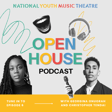
In this episode of Open House, the official NYMT podcast, host David and NYMT Young Company member Tash Werblow are joined by three NYMT alumni who've each carved out a remarkable path beyond performance.

Robin Franklin is completing his PhD in American history at Princeton University, where his love of musical theatre led him to specialise in the cultural history of LGBT life. Adam Hepworth is the Singing Physio — a professional performer turned vocal physiotherapist who has just completed a year on the Mary Poppins UK tour. And Cathy Tate is a wardrobe and costume designer with decades of experience across theatre, film and television, including work on the Matilda film.

Together, they explore the crossroads that so many young performers face — and why following more than one passion might just be the best decision you ever make.

In this episode:

  • How Robin went from NYMT stages to Princeton's lecture halls — via American musical theatre
  • Adam's journey from performer to specialist vocal physiotherapist, and why he retrained at 30
  • Cathy's 40+ years in theatrical costume and what the industry has lost since she started
  • Why the skills you build in theatre — resilience, empathy, collaboration — travel further than you think
  • The impact of COVID on backstage careers and the freelance workforce
  • Why theatre isn't just for performers, and the huge range of roles that surround a production
  • Honest advice for young people at a career crossroads

Guests:
Robin Franklin – NYMT alumnus and PhD candidate in American history at Princeton University
Adam Hepworth – NYMT alumnus, performer and specialist vocal physiotherapist (The Singing Physio)
Cathy Tate – NYMT alumna, wardrobe and costume designer across theatre, film and TV

Hosts:
David Grant – NYMT Associate Producer
Tash Werblow – NYMT Young Company member and co-host

Follow / find out more:
NYMT: nymt.org.uk | Instagram & TikTok: @NYMTuk
Tash: @tashwerblow
David: @david.z.uk
Adam: @singingphysio
Transcript
00:00:01
Speaker
No matter how much we love belting out our favourite show tunes and the magic of time spent in the rehearsal room, there can often be some tough decisions to make when it comes to the next steps. Which way to turn, what to focus on, or am I making a huge mistake? In this episode, we're talking about careers beyond and around the stage, some actually not that far from it. Welcome to our official and NYMT podcast series, Open House, the podcast that brings you insight and inspiration from a whole host of incredible guests and friends of NYMT in celebration of our 50th anniversary. Yes, over 50 years of musical theatre for young people with me, your host David. And I think it's fair to say I've been around for a fair few of those 50 years, but not all of them. Certainly not all of them. And you can find out even more about our 2026 season and how to get involved on the socials at NYMT UK or online at nymt.org.au.
00:01:05
Speaker
dot u k And by the way, don't forget to like, comment and subscribe. So before we get things started, I'm delighted to be joined today by my co-host and young company member, Tash Werblow. Tash, welcome to Open House. Hello, I'm happy to be here. Thank you very much for having me. Oh, it's an absolute pleasure to have you. We are so, so delighted to have you joining us.
00:01:28
Speaker
Tell us a little bit about you. What have you been up to? What was your last MYMT project? And what are you up to currently? So my most recent and NYMT project was Carousel. um I was one of the assistant stage managers for our wonderful open air production with a actual carousel it was very very fun i had a great time um and i'm currently completing a postgraduate degree at mount view um in stage and production management tiler stage and production management easy like you that's amazing i mean so so varied and i think you said when you were younger you actually had an interest in performing
00:02:08
Speaker
Yes, I always wanted to perform. I always wanted to be an actress. um And then when it got to the time of deciding between whether I'd go to university or apply for drama schools, um I decided that drama schools were not necessarily the best fit for me and what I wanted to do. And so i went off to do um an undergraduate degree at the University of Bristol. did a theatre and performance studies degree. And I kind of fell into stage management within my first year of being there. And I kind of thought,
00:02:36
Speaker
that's what I want to do with my life. love it. I love it. And I can't wait to hear more about it. And I think we've got three pretty interesting guests that we're going to be wanting to hear from as well. Go on, tell us, who have we got on the show? So we have the fabulous Robin Franklin. Robin is joining us all the way from America. Whilst he is studying for his PhD in history at Princeton University, we have the incredible Adam Hepworth, the singing physio, as some might know him, and he has just completed a year on the Mary Poppins UK tour as a physiotherapist. And we have a wonderful insight into the backstage world of theatre with the wonderful Cathy Tate, who is a wardrobe and costume designer and maker across film, TV and theatre.
00:03:21
Speaker
wowzers three guests and there was me thinking we normally just have two we are going all out for this episode well from academia to physical well-being and a career built behind the scenes in wardrobe three unique individuals with three very different journeys since their time with nymt this is open house
00:03:50
Speaker
Hello and welcome. Hello. Oh, look at that. That's like being Pantomime. I said hello. Hello. That was fantastic. Robin, Adam, Kathy, welcome to Open House. It's so fabulous to have you here. It's great to have you with us and so excited to get chatting to you all. There's just so much to talk about, so much to do and so little time. But I want to kick things off in the way that we start all our episodes, which is casting your mind back to your first memory of youth theatre or theatre as a young person, as a child.
00:04:26
Speaker
What was it? Where was it? And what springs to mind when you ah when you take your mind back to way back when? Cathy, go on, cast that mind back. What's your first memory?
00:04:36
Speaker
I think, like many people, it was being taken to pantomime. I think my my dad... my dad's work, they used to do Christmas outings for the family's kids. And we were taken to see Terry Scott in Babes in the Wood, I think it was. That was my first one. And then I saw Dorothy Tewton, this is aging me, Dorothy Tewton as Peter Pan.
00:04:59
Speaker
But we didn't really see much I didn't see that much theatre until I was at college, interestingly. that was It was sort of very quite a rarity. I lived north of London, only about 25 miles north, but the theatre didn't quite reach there. So when I went to college, it was a whole new world. Brilliant.
00:05:16
Speaker
That's fantastic. Panto can often be the taster for so many people. Yeah, it's the gateway drug. Those feathers and sequins had you hooked and wardrobe for life, didn't they? Adam, was it panto for you? What was what was your first experience? Yeah. Of watching theatre, I think it was... Not necessarily watching. You get to performing, training, all of the above. It was panto, but I was in a school panto aged about nine or 10. And I was cast as Widow Twanky in Aladdin. And I had to wear the school receptionist's high-heeled boots and stuff and stuff. I don't know whose bra. um So that I had something to kind of do a bit of that zhuzhing action.
00:06:00
Speaker
And let me guess, you put on those high heeled boots and then you felt a bit of stiff then you felt a bit of stiffness in your back. And you thought, you know what? I need a physio to help me with my back posture. I this i put those shoes on and I was I put those shoes on and I was home. Well, I tell you what, it sounds like a good home to me. Robin, tell us, was yours involving high heeled boots or sequins and feathers and panto?
00:06:23
Speaker
I don't think so. I don't remember going to Panto much as a child. I mean, I really remember going to see The Lion King and we were close enough to London. And I really remember the feeling of being amazed that we were up at 11 o'clock in the evening. It was just incredible feeling. And then I think I did some stuff at school, but it's all lost in the mists of time. Exactly what it was. Yeah, I bet. And Robin, Robin, in particular, I know that when you were with NYMT, you had done very many NYMT production.
00:06:57
Speaker
How many years did you actually do? And what's your what's when you think back to your time with NYMT? What's your biggest memory or your biggest takeaway from your time with the company? Wow. Okay. So I did seven years of NYMT. And, um, I mean, I do think that the first year that I did when we did 13, the musical was, was pretty incredible because I was only really young at the time. And it was just amazing being on the West end with, uh, you know, an awesome cast doing a cast recording. it was such a whirlwind of adventure and, uh, Jason Robert Brown, and the the composer of the show directed and it was just a remarkable experience for all of us.
00:07:41
Speaker
What made you kind of decide that you wanted to keep carrying on with NY&T after your first time of doing it? It was just an addiction at that point. There was always new, there was new stuff, you know, there's new stuff to do. And every show was different. I loved all the new musicals. Adam and I were in a new musical together. we were. Yeah, which was just wonderful. The other school. And then, you know, there were other kind of classics. and i got the chance to um to to be in Sweet Charity as Oscar. And I remember that was awesome in in Leicester. You know, it's just every year seemed to offer such different opportunities for performing and playing new kinds of characters and stuff. So...
00:08:23
Speaker
yeah You were able to do so many shows and so many roles with such a passion for performing. What took you from that that that musical theatre focus to then the world of academia and studying actually taking you beyond the UK and across the United States of America?
00:08:40
Speaker
Well, you know, it was, it felt very natural because musical theatre was how I got interested in America because I study American history, right? And I've been studying seemingly, seemingly without end since that time. And I'm doing my PhD now. Musical theatre got me into American history, but it was also a very personal thing.
00:09:00
Speaker
because I'm sure this will resonate with a lot of people when you're in a space like NYMT and I went to an all boys school and being in a ah place where people could be open about, especially being queer, right?
00:09:14
Speaker
um That was really an important part of what NYMT was about for me. And now I write about the history of um bisexuality and and stuff. So, you know, there's, there's so many connections between what I did then and what I did, what i do now.
00:09:31
Speaker
if um If anyone listening wants to find some of your reading, where can we find it? ah Well, it's all it's all on the boil. i'm i'm I'm still doing it. I'm hoping to write book. That's what a dissertation is. Well, listen, we'll stay tuned. Don't you worry about that. We'll keep an eye out. Robin, your first show was 13 in 2012. I don't want to put a year out there, but I have a sneaky feeling that Cathy's first MYMT year may have been one or two years before. Cathy, tell us, what did when did your and MYMT journey start? I know it started in the world of wardrobe. And how did that passion and interest grow for you?
00:10:05
Speaker
I had finished, I'd actually gone to college to do theatre costume accidentally because I wanted to do fashion and I hadn't got into St. Martin's. I'd had a really horrible experience as an interview and it hadn't worked out.
00:10:19
Speaker
wanted to live in Liverpool because I liked the music and there was happened to be a theatre costume course in Liverpool. So I got onto to that and at the end of my college year, my friend that I was sharing a flat with had worked with NYMT before and she said, come up and do the Edinburgh Festival. So the summer after I finished college,
00:10:39
Speaker
So I was 22, so I could enjoy Edinburgh to its fullest. um We went up and we did um Oliver. So it was 1985, very long time ago. We did Oliver and Jack Spratt VC. And I helped Jenny... Gaten and Sheila Darlington who were in charge of the costume department and we just had a ball. It was amazing and I think I was so overwhelmed with the standard, the high standard. I think I i perhaps snobbishly had not thought that an amateur company could be such a brilliant high standard and everybody worked so hard and they were really friendly. It was like family and I'd had
00:11:21
Speaker
a placement from college that hadn't been particularly happy. And it was fantastic for me to be in an environment when I thought, actually, no, this is my home. I love being in this environment. So it was really, it was really reinforcing that I'd chosen the right career and I had a great time. And then worked ah the following summer, I think, did bits of freelance work.
00:11:41
Speaker
And again, in 1990, did the costumes for Pal Joey that also went up to Edinburgh. So it led on to great things for me. Really, really good fun times. So lucky me.
00:11:52
Speaker
How did NYMT kind of help set you up for your life um in the industry, working obviously and within costume and backstage? It's not necessary. It's quite a different pathway to how performers from NYMT get into the industry.
00:12:07
Speaker
um I think it were it gave me confidence and um I think that I knew that i could do it and be part of a part of something that creates something fantastic. so It just gives you the confidence to go for what you want, really. So when I was going for interviews and things, I had that confidence because I knew that I could, what I could offer really in the in the roles in the in the department. And you learn every every job you do. I'm still learning now. Every time you do a job, you learn something from it and think, oh, next time I'll do that slightly differently. And
00:12:41
Speaker
you know, it's just been, it just led on from that. um I was really lucky, really lucky. And also at the time, i very fortunate again, that at that time, every city had a regional theatre and it had a wardrobe department and we could all learn. Same as for act for performers, you know, they could come and do a repertory season and they'd be doing a different show every two or three weeks. And, you know, what a time to be in the industry. I think it's Harder now. Tell us, how's that changed? How's that changed now from when knew think there's not the funding for the department because theatres that used to have a department of four or five have maybe got one permanent member of staff.
00:13:21
Speaker
um I live down in Plymouth. I worked in i was ah the... head cutter, which is a very good title, I always think is quite funny, um for 17 years and they made the entire department. There were nine of us in the department. They laid the whole department off. So you think, you know, all these theatres around the country, there's like 10 times as many courses doing the training and about a tenth of the jobs available. So it is really tough now people. Absolutely. And I think that's an interesting observation to make. And I think that's why so many people, when they're young and training, fill this this this get this crossroads of two passions or two interests. but the two don't, the two can exist side by side. Tash, you you obviously had an interest in performing when younger. University course was a bit different for you. How did you manage those two interests and and keep them running along simultaneously?
00:14:14
Speaker
So I was really lucky, actually, because ah the university I went to has an incredible extracurricular kind of societies and programs and Bristol where I went was a very very booming place for young theatre makers so alongside my degree I performed um in like musical theatre societies um I did ah some musical ideas some showcases but it also gave me opportunity to kind of direct and write things um and kind of
00:14:46
Speaker
allow me to kind of hone in on what I actually wanted to do but also gave me the freedom to kind of do it with it being I paid like a small fee to maybe perform in about three or four musicals a year and a lot of people don't really get that opportunity especially um even in drama schools as well because it's so regimented in their training I felt really lucky that I was able to kind of have both of those types of opportunities to kind of explore what I actually really wanted to do once I finished.
00:15:16
Speaker
that's um That's really great. And I'm talking about simultaneous interests or two strands. Adam, don't worry, we've not forgotten about you. It's a busy it's a busy show. Here am. I guess my question for you, Adam, was physio and performing without was that always two interests, passions, something that you're curious in while you're training to be a um a performer? Or did it come um later on? Talk us through that journey for you. Oh, so when I was at sixth form, I originally thought that I wanted to be a doctor. I come from a family of um public service people with doctors and nurses and police and firefighters. So it it it was always ingrained in me that kind of service to others,
00:16:04
Speaker
uh kind of sector of work but i eventually kind of saw myself going down the music path um but i've always had that interest in healthcare care and in helping people and then as my performing career progressed i I saw that little niche in the market of, ah because I specialize as a ah vocal physiotherapist. So I work with singers and professional voice users to help them get the most out of their voices through um manual therapy or through exercise and working alongside other kind of professionals in that kind of sector. You are the singing physio. you're not just any physio. You're the singing physio. The, yeah. um ah Yeah. it And it's that that niche that I saw where most most performers who retrain as physios come from a dance background. And one of the questions I got when I um interviewed to go back to university to train as a physio was, well, if you're interested in singing,
00:17:09
Speaker
um shouldn't you be training as a speech therapist? Because that's kind of the set paths that have historically happened. And I said, no, i I want to do the opposite. I want to be the singer who trains as a physio so that I can work with people on their entire body and not just focus on one area. I saw that that kind of hole in the treatment though and thought, well, nobody else is going to fill it. So I guess that's up to me to to kind of try and find that that way to bridge the gap.
00:17:39
Speaker
Now you say it, it sounds logical, doesn't it? It's the logical connection between the two, but I haven't even thought of it before. Five years later, it feels like a logical step, but at the time it was like a big a big leap into the unknown. I knew i knew from kind of having physio myself as a performer that that that that existed this role, but I hadn't seen anybody with the same background that I have.
00:18:02
Speaker
And I think the really interesting thing, particularly with your work as a physio, the singing physio, and Cathy's work in wardrobe, is that the world of theatre and the arts, you can there's so many other people involved around it, around the stage, around the performing space. There's the obvious roles, you know, wardrobe, stage management, that are in the immediate vicinity. But then you've got the physios, you've got the PR, you've got the producers, you've got marketing. And there's all these people that are all connected to theater in some way. So for those listeners that are listening at home and perhaps they do have that passion into history or English literature, um or they just can't get themselves away from a good spreadsheet. There are so many roles in and around theater that welcome those expertise.
00:18:51
Speaker
Adam, you went from the from the perspective of performing into becoming a physio and you did that training, some fabulous training at GSA, had an amazing career doing some fabulous work as a performer. Robin, you did a bit different route. You pretty much went straight into that academic route, and pursuing that other interest of yours into the world of academia and history. Tell us about how what helped you make that decision pre going to drama school or university?
00:19:20
Speaker
Well, it was, you know, for a long time, I had them very much at the same time. So i used to do academic work when I was in the wings of shows and stuff. And ah everyone thought that I was always doing academic work. And when I was supposed to do my academic work, I was doing theatre. So, you know, it was also easy for me because I don't necessarily even see it as someone, something that but that won't be back in my life in various ways. I mean, I'm trained as a cultural historian.
00:19:45
Speaker
So I'm very interested in the cultural history of of all kinds of things, including theater. um Occasionally I do dip my toe back in. I did it a couple of years ago a show at 54 Below in in New York, and that was wonderful chance to to be back on the stage. And luckily, I was always more of a character actor anyway. You don't need to be really young. So I'm thinking, you know, when I'm like 55 and I'm thinking maybe I'll come back in with all these eccentric parts, you know, and I'll still hopefully I'll be able to sing still.
00:20:19
Speaker
But also the other thing I wanted to say was, you know, people who are interested in history, it can really feed into performance and stuff. We did the show with NYMT, Brass or Brass, set in Leeds. And there was so much history in that show. It was all tied up with the centenary of the First World War based on some real stories. We even went to France where some of the... The folks who the the stories were based on were varied. Soldiers in the First World War. Yeah.
00:20:48
Speaker
I always say some of the most interesting actors and performers are the ones that have that context or knowledge of history or other topics or subjects around them. It can be such an interesting thing to delve into. And I recall one or two of those crazy character roles during your time with NYMT that you spoke about.
00:21:06
Speaker
And I cannot wait to see a few more of them. Go on. Give us a high... Give us a highlight, Robin. There are a few um character roles that you speak of. If you had choose one during your time with NYMT, what would it be? What was the production and where was it?
00:21:22
Speaker
Well, I don't think I've ever had a more self-indulgent role than the headmaster in the musical Imaginary, which we did at the other palace in 2012.
00:21:34
Speaker
2017, I think. That was utterly outrageous. I was an evil headmaster. I just got to be totally evil. There's even a ah recording of it circulating somewhere online, so you can go and have a listen if you like. robyn if speaking characters sorry i was just saying ah Are the bad characters always more fun to play? Because I'm not performer, but I always imagine that they're the ones that I think, well, I'd like to have played that, rather than the the heroines or the heroes. I always used to say if i if somebody somebody who wants to ask me kind of what are your favorite roles to play and I always used to say I would love to play one of those um like Christoph Waltz absolutely losing their mind villains. i think I think I don't know whether it's just that that secret part of me that wants to be let out in a safe space. ah But I just I've always had that thing of I'd love to play an evil character. I'd love to play somebody who's absolutely ah unhinged and hellbent on just causing chaos. Maniacal. Yeah. Yeah. I can
00:22:39
Speaker
Picking up from that, Robin, what if you were to come back to your performing later down the line, what would kind of be your like dream show or dream role? that you would kind of want to do? Oh, so hard. Well, you know, I suppose like the best ones for me are the lead roles that have a very big character element. So Oscar was like that, for instance. You know, this this person is just absolutely terrified of being trapped in a lid. I have to say ah my own favourite role that I've...
00:23:09
Speaker
played, not with M1C, was Bobby and Company. I think it's just an amazing musical. I never got the chance to play any of the characters in The Producers. And I really, i got my eye on on Max or maybe, what's the name of that director? I've forgotten, but he's so funny.
00:23:29
Speaker
So maybe I'll try and get one of those one day. And they'll be gone I'll age into it. If there's anyone listening, producing a production of the producers, Robin Franklin. Yeah, yeah. Still available. still Willing to come out of retirement. Yeah.
00:23:48
Speaker
I mean, the the three of you, it's fair to say the three of you are absolutely you know doing very well in your respective journeys and and careers. some Some are a little bit longer than others, but they all have challenges along the way. Adam, what would you say has been a challenge for you in your journey as a physio?
00:24:06
Speaker
Oh, I think it would probably be making that decision to commit to changing that career. i I was obviously doing quite well as a performer and I was building my career and I just...
00:24:22
Speaker
I felt like I was still missing something. And I think it was a really difficult decision that I made ah to kind of take a back seat from that performing and pursue this entirely new thing.
00:24:38
Speaker
um and And I was 30 at the time when I went back to university. It's really brave. It's really brave to do that. And it was a big step. And it was a book that I'd read that kind of gave me that... um that nudge to say you can do multiple things. And it's the reason that my you know business name now is singing physio is because i still I still do bits of singing. it's not I'm not auditioning and performing at the minute, but I still try and do um recordings for people if it's like a one-off thing. And I still get involved in as many different small projects if I can.
00:25:14
Speaker
because I still have that love for it and that enjoyment of it. But it's just knowing that I can do two things at once. I can be a singer and a physio and work with singers as the singer physio.
00:25:26
Speaker
For any of our listeners that agree with you and are going through that moment or that feeling of something's missing, something isn't quite right. What advice would you give to them to try and work that out and try and work out what the next step might be?
00:25:41
Speaker
It's okay to try things. You absolutely do not have to commit 100% to the first decision that you make. And you can always change your mind. there is no wrong There is no wrong answer in life and in your career. You can say, I'm taking a career break from my job as an accountant and I'm going to pursue...
00:26:04
Speaker
a performing career as a musical theatre star. And i know people that have done that. And i know people that have done the opposite, like me, and have gone, I've had a wonderful performing career. And i feel like I need to do something different. I need to explore a different avenue. And that's perfectly acceptable. And you shouldn't listen to anybody who says that it isn't.
00:26:26
Speaker
It's entirely your prerogative to do with your life what you think is best at that moment. Kathy, was there ever a time for you when you tried something else or tried a different area of theatre or wardrobe or production along the way?
00:26:40
Speaker
Well, i no, not actually no. Although I did, ah when COVID happened, um obviously all the theatre work and film work and everything stopped.
00:26:51
Speaker
And I, like everybody, you always have a moment in your career thinking, oh, really, i should... I should go into politics, I should write a book, I should, you know, all these various things that crossed your mind when you're making a jacket, the 50th jacket of the year or whatever. um But then when COVID came, obviously, with all the other costume makers, we were making scrubs for the and NHS, and then everything stopped. And I found myself, despite that, still going back into my sewing room and creating projects myself. And I thought, obviously, i just love to be making things. So
00:27:25
Speaker
actually thinking I want to do something else I i always come back to sewing so realised then it was quite a positive thing because I realised actually this is what I want to be doing and I'm I am enjoying it so I'm like you know I'm lucky in that way there's still time ah you know if I ever retire I might do something else you don't retire from theatre do you just carry on till it's a lifestyle a lifelong love yeah absolutely Kathy how did that kind of impact with the pandemic how did that impact you when you kind of went back into work once theatre started? reopening and laws kind of started shifting. How did that impact you on what you were doing? It was a scary time because you look, I can look back on it now and think of the positives. I was very fortunate. I had a house with a garden. My family were here. So there were many, many things that were fortunate for me. But it was a frightening time because obviously for all of us, we didn't know how long it was going to last. And then theatre took a long time to open, which I'm sure you'll remember. But I was very fortunate because I'd also done some film work and filming started sooner. So I got film work.
00:28:37
Speaker
I worked on Matilda the Musical, which was fantastic, really good fun. So I went up and worked at the studios, but we were being tested um three times a week. You had to have COVID tests before they'd let you into the studios. And there were yeah all the workplaces were separated by plastic sheet. It was just um it was a bit weird, but at least we could work. So, um yeah, filming started before theatre. So I was very lucky I could go between the two. um and obviously you do, you test before fittings and it was a real nightmare, I think, for some some of the shows in London that I do regular cast change makes on and the and it they would have, you know, the whole cast would go down, they'd keep having to cancel shows because one person gets it, 12 people have got it, you know, it was really, really frightening times and I'm glad I was later on in my career because I had the wherewithal and the support of my family to sort of
00:29:35
Speaker
wait it out but I think for a lot of a lot of people particularly freelance people it was a really really scary time I think a lot of people changed careers actually and left the industry which is very very sad so absolutely tricky and I guess it's scary but also in many ways inspiring too because it's it's allowed people this license and this permission to pivot to try a new career to try something different that's which I think is a really inspiring time. And all I can say is I hope when you're filming Matilda, no one missed any of those COVID tests, even if sometimes you have to be a little bit naughty. Do you see how I just... Very clever, very clever. I don't think anyone noticed. Oh, David.
00:30:20
Speaker
So witty. Thank you. Thank you. wellre I'm glad you're enjoying this. for For those listening, you can't see us, but we can actually see each other. And there's laughs and smiles all round, which is glorious. Robin, your your career has moved on from theatre currently.
00:30:36
Speaker
You may come back from it in the future time. But what skills have you taken from your time performing with NYMT that are still applicable to everyday life for you? Tell us about that.
00:30:47
Speaker
Oh, there's two things that stand out for me, one of which is resilience. My friends in theatre, and all of whom are still, you know still such a big social world for me, they are the most resilient people and the things that they are able to do, you know, dashing between different auditions, different jobs and everything, it's an amazing skill. And you realise as you get older that it's a skill that is great to have in life in general.
00:31:12
Speaker
The other thing I think is empathy. You know, I think... Theatre trying to play a part and history trying to understand people in the past. There's a lot of common ground there. And I think I'm a big believer in empathy in life. And I believe it's one of the most wonderful things that you you you are always training when you go and see a show or you or you perform in a show. You're always training your empathy. And it's just the most amazing generative way of connecting to other people.
00:31:44
Speaker
And so that for me is is something that theatre really, really, and being an NYMT and interacting with people from all across the country, um really taught me. And I think you're right. It is something that we sometimes are lucky enough to learn a lot in the world of theatre and taking it into other walks of life is just so, so precious. Well, listen, we are slowly coming towards the end of this episode. I cannot believe it. The time has flown, but we do have a few on-the-spot questions coming for the three of you from our listeners that Tash has to chuck at you. You're going to get one question each
00:32:23
Speaker
And we want questions and answers fired, rapid fire, on the spot. Tash, over to you. Okay, I'm going to start with a question from Janelle, who's 20. For Adam, um what are some kind of common injuries that you kind of see from performers that you that you help work through their injuries in your physio?
00:32:48
Speaker
Ooh, I think it depends on the show that the performer is in. Obviously, a lot of theatres still use a rake, so kind of ah a a stage that's tilted um on a bit of an angle. So you get a lot of performers who have bad backs and bad knees from performing every day on those kind of stages.
00:33:07
Speaker
um And there are a lot of performers who train as dancers when they're young, and they generally well they you get quite a lot of performers who have hypermobility in their joints so you get a quite a lot of overuse injuries from people who haven't quite um been given the opportunity to build their strength through their their range so they're very flexible because they're naturally mobile but they haven't quite got the the strength built in yet so you see quite a lot of performers coming in with those kind of related injuries so it's it's really nice to be able to
00:33:41
Speaker
to help them figure out how to navigate and negotiate their way back to to full health and to being able to perform pain-free. That's really interesting. Thank you. um For Cathy, have a question from Ellie, who's 22. What is your career highlight moment, if you have one or two, however many?
00:34:04
Speaker
i o I have a few. at One, i was doing a fitting for White Christmas and Lorna Luft was in it and I was fitting her costume and we were talking about earrings and she said, oh, I've never had my ears pierced. My mum wouldn't let me. And I suddenly thought she's talking about Judy Garland. Her mum is Judy Garland. I was like oh my god I'm in the room with Judy Garland so that was that was a bit of a wow clang clang clang went the trolley ding ding ding went the bell oh what a fabulous story ah wow um that's amazing um and Robin um another question from Ellie um kind of what did you what drew you to your career and deciding that you wanted to kind of focus on academia and the writing and the cultural history that you are studying?
00:34:58
Speaker
Wow, yeah. I mean, I think, like I said, it's it's so many of the same instincts that drove me towards theatre, you know, that that interest in how do you connect with and understand other people. And it became very personal to me because I i ended up specialising as a ah and a historian of, ah you know, LGBT history.
00:35:17
Speaker
life and so that ah you know to me it's it's become clear that history isn't just about old stuff that happened a long time ago it really matters and it you know it really shapes how we understand where we are in the world now and it can be really meaningful for people so you know that that's that's what motivates me every day is knowing that the meaning that it can have for people out in the world amazing thank you so much And keeping an eye out for um lgp LGBT books coming out by Robin Franklin. in ah keeping those One day Well, folks, thank you so much. I am going to steal the spotlight for the final question, if that's okay, Tash, because we ask all of our guests one final question. And here it comes. 2026 is the season of dreams for NYMT. And I want to know what is a dream of yours? It can be industry related, career related, personal friends, family life, anything you like. And I think we're going to go to Adam first.
00:36:25
Speaker
Adam, tell us what is a dream that comes from you ah My dream is I've always had the dream that I'd be able to travel with work and, um and very, I've been very fortunate that I've kind of been able to achieve that in both of my previous, both of my careers. So as a performer, I got to travel and perform on cruise ships and around the world. And now obviously for the past year, I've been traveling around the UK as a physiotherapist with a musical. So it it was always.
00:37:02
Speaker
being able to experience in the same way that Robin was talking about being able to experience culture. part of enjoying musical theater is being able to put yourself in the shoes of someone else and to experience their life, whether you're watching and you see a snapshot of it or whether you're performing and you're getting to experience it for yourself in a way. And, and I've always had that passion for being able to, to see other cultures live. So that's definitely kind of my dream.
00:37:30
Speaker
And I've been lucky enough to achieve it. I thought you were going to say that your dream is to travel in the future. And I thought, hang on a minute. I thought, hang on a minute. You and I bumped into each other in Birmingham last summer at the Birmingham Hippodrome. did. Yes. And if that doesn't count as traveling, i don't know does. The fantastic Birmingham Hippodrome. the Birmingham Hippodrome where and NYMT had their season last summer and we are this summer as well. well if you're listening and you fancy a trip this summer, August 2026, you can catch some of our fabulous NYMT productions. And in Kingston as well, we also have two productions going on there in July. Cathy, you're going to try and get to see any of our shows this summer? I'd love to actually. I would really love to. And Jenny Gaten from Wardrobe lives quite near me.
00:38:13
Speaker
So I think I need to bring her along and the two of us will come up and see a show. I'd love that. And is Jenny Gaten anything to do with the dream of yours or is that does not the dream of yours? Bless her. She's just a very good friend. We love Jenny. She's a fabulous, hardworking woman have and a great friend of NYMT. Yeah, she's fantastic. um My is bit of a pipe dream, really. I was so fortunate when I started in theatre that the arts were better funded. And i my dream would be that ah it became better funded again so that a lot of the smaller theatres could flourish. and
00:38:49
Speaker
all over the country people would have access to a theatre that they would feel they had some ownership over and they identified with in their region um and that's the best way to feel that theatre is for everybody not just for people with a lot of money um so I would really love to see that coming back really I don't quite know when that will happen but I'm i'm hoping that it will Absolutely I'm sure more funding for the arts and everyone on this call and everyone listening would agree Yeah, and art is important. I think that you were talking about you come from a family of of academics or scientists or whatever.
00:39:25
Speaker
We all need to remember that art changes his lives. It's not just about you know inventing some fantastic engineering thing or science or being a doctor. It literally changes lives. So working in the arts, you can make a real difference in the world.
00:39:42
Speaker
And I think just off the back of that, it's important that you have those experiences when you're younger as well. And I think that's a really great thing about NYMT is that you get that ability to build those skills that you may not get the opportunity to do in your own life.
00:39:58
Speaker
And those skills are so transferable. Yeah, that they make you better communicator. like Yeah, it's it's a really fantastic ah opportunity to be able to be a part of the arts, right?
00:40:10
Speaker
Yes, i agree. Very much so. And from dreams in North London to the American dream with Robin to to wrap us up.
00:40:20
Speaker
Tell us what would be a dream of yours? I know. I sort of well, I feel like I'm kind of living a dream some of the time. i You know, I mean, I've been so, had so much joy in my life doing theatre and doing history stuff and getting to travel, as as Adam said. You know, Cathy reminded me that i have ah I have a dream for the industry as well, which is that I think musical theatre films are ah like an under-realised medium of art I don't think we've had the kind of the great, I think it's still yet to come, the flourishing of musical theatre and film. We had a heyday back in, you know, the 30s and stuff like that. But I think we maybe the 2030s will be a new heyday of musical theatre films. And I want that. for that. I'm there for that. day Yeah. yeah
00:41:08
Speaker
I mean, there was that minor two-parter that came up in the last year and the before. I forget the name now. A couple of small things. Yeah, a couple of small things. If anyone is listening out there, I want to see a musical film of the show Floyd Collins, which I think is amazing. If someone could just get that done, that'd be great. Amazing production, amazing story as well. Well, listen, thank you so, so much to our fabulous co-host, Tash. Thank you for joining me on today's episode. Thank you very It's been absolutely joyous to have you with us. And thank you to our three co-hosts.
00:41:42
Speaker
incredible guests from three such varied careers and backgrounds, all starting, of course, with NYMT in their own way at their own time, but now going on to three phenomenal journeys. Cathy, Robin, Adam, thank you so, so much. And Cathy, you couldn't have put it better. Art changes lives. Youth theatre also changes lives. But youth theatre doesn't just create performers. It reveals possibilities often where you least expect them.
00:42:18
Speaker
That's it for today's episode. And thanks so much for listening to Open House. If you enjoyed the show, please don't forget to like, subscribe and comment wherever you're listening from. And hey, why not tell a friend? The more the merrier.
00:42:31
Speaker
Check out nymt.org.uk to learn how you can support us, get involved and what's on throughout the season. Or find us at and NYMT UK on the socials. And why not drop us a message with what guests you want to see and hear from in a future episode. So, so long. Farewell, Auf Wiedersehen and goodbye.