Transcript
Speaker: Hello and welcome to our podcast, Easter Conversations with Anthropologists, here in the Institute of Social Anthropology at the Austrian Academy of Sciences, Vienna. Here we introduce anthropologists and their work across a broad spectrum of social, cultural, environmental and political research.
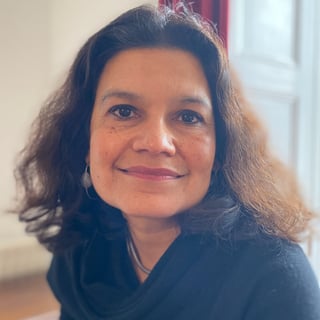
Speaker: We also give an insight into what anthropologists and social scientists actually do in their day to day. Today's guest is Diana Sohadiman. director of kitlv at the royal netherlands institute of southeast asian and caribbean studies she's also professor of natural resource governance climate and equity in cultural anthropology and development sociology at leiden university
Speaker: Diana works on the intersection of water, land, climate and environmental governance. and is particularly interested in the politics of knowledge. reproduction and state transformation processes in thus Southeast Asia.
Speaker: Her work contributes to decolonizing climate debates and climate justice, and we are very happy to have her with us today. Dana a very warm welcome. Thank you for joining us. Thank you.
Speaker: Can you briefly start by telling us about your lecture here at ESA today? What have you come to talk to us about? Yes, first of all, I would like to say thank you for the opportunity given to uh to be part of this podcast. So my lecture today at ISA will be about tracing evolutionary pathways in grassroots climate governance, connecting past, present and future grassroots climate strategies across Southeast Asia.
Speaker: And when I talk about tracing evolutionary pathways, what do we really mean with it? It's actually looking at... the processes of knowledge reproduction. uh cultural continuum and agency shaping.
Speaker: And the main argument in the talk is that uh at present when we look or when we study climate adaptation or climate governance, there is a tendency that we are addressing And. that issue from the present. right towards the future to think about future adaptation strategies and how to mitigate.
Speaker: But my research actually take a step further in the sense of arguing that people throughout history has always been adapted. They have always adapted to something, either climate or capitalist intrusion, imperialism. So adaptation is... nothing new and adaptation should not be seen only as something that is happening at the present towards the future but i think adaptation can be one of the
Speaker: key concept that can help us understand how to connect past present and future adaptation. yeah future strategies in the way people... ah continue with their livelihoods, but also... ah survive and strive for a better world.
Speaker: wow Thank you. I'm so looking forward to hearing the... that talk in full. um From what we know, you work across multiple disciplines as as well as multiple field sites in Southeast Asia. And as a postdoc anthropologist, I find this extremely impressive.
Speaker: generally as anthropologists we engage with different disciplines but it's often quite a challenge particularly for early career scholars um to work across so many different fields of knowledge so My question is, would you call yourself an interdisciplinary scholar?
Speaker: And if so, what does that look like in the day to every day? Yeah, i would I would actually rather call myself as someone that continuously.
Speaker: Learning either it's from interdisciplinary or disciplinary perspective. uh and because i think and and i would suggest i think and that positioning of learning probably will help a lot also. in the way you position yourself how you pose your questions how you observe and see the world when you are going through different field sites but also when you are entering a field that is new to you So I think...
Speaker: that is a very important starting point that the in academia we have this idea of scholars right scholar activism or school interdisciplinary ah transdisciplinary scholar, disciplinary scholars.
Speaker: But I think the essence of all that is our capacity to learn. and Often times when you are uh, in the trajectory of your academic career, people find out that, oh yeah, I did it during my PhD research, so now I'm... i'm Like I have my doctorate degree, so then I...
Speaker: I'm able to do that and that, which is kind of true. But I think at the same time, there is also a lot of other things that is still open for learning. So I would... always encourage that.
Speaker: Uh...
Speaker: that quest to always continuously learning. because Even when you think you know everything. You. I mean like every time I think, okay, I got this. This is the...
Speaker: this is how it is and then you meet another of farmers and then okay this again another story right so that's that's i think it but i think so learning and for that quest of learning, I think what we need is a a healthy sense of curiosity right that you are curious but at the same time also Uh...
Speaker: passionate in the sense of you are not doing this only for yourself. You're doing this because also you want to convey other people's voices. You want to convey things that are maybe hidden in plain sight.
Speaker: conveys things of kind community voices that probably would not be able to reach the discussion at the global level or at the... academia, and that makes it, I think,
Speaker: Uh... a very nice entry point to keep spirited about learning all sorts of things that you come across in the field. I really like that, the the commitment to continuously learning. um and the curiosity we need to continue forward with. so
Speaker: With this podcast, we're trying to get both an insight into the cutting edge research that's been done in anthropology, as well as give our listeners a better idea of... of what um social scientists and scholars do day to day. And particularly with social scientists and more so with anthropologists, we often ask this classic question of how you ended up doing research in a particular region or on a particular theme. As we mentioned and and as you you you talked about already, you're working across many different field sites as well as multiple fields.
Speaker: And we wanted to understand um how you ended up working across so many places in the Southeast Asian region. But more importantly, how do you manage those multiple contexts? yeah Now actually I started ah like i'm indonesian so when i did my phd i think i choose the topic and also the context in Indonesia and then when I finished my PhD
Speaker: I almost automatically think, OK, then I'll also be working on this and this issue in Indonesia. And then I saw another app and then someone asked me to apply for a position that is not in Indonesia. And I was thinking.
Speaker: uh what to do right and then I was ah at that time my consideration to apply and take the position not in Indonesia is because I think For Indonesia, I will always be able to return.
Speaker: that's the first thing but also I also feel that if I choose to the position that that will allow me to continue my research in Indonesia.
Speaker: This will be my field. for almost like I mean, the the career trajectory will be very much. defined. right because you have a PhD in Indonesia and you continue your postdoc in Indonesia.
Speaker: and And maybe later you will... make a segway but The part is actually... rather defined. So for that reason, I thought like, okay. I will not.
Speaker: Go into that path yet And then I take the... the postdoc that is in at actually for the mekong region so looking at the four countries in the mekong in the lower mekong basin countries and i think the learning part actually I didn't plan it. uh all from the beginning.
Speaker: And it is also, I think, it has always been a process of co -creation, because when I go to the field... I want to do research. ah about water. right about why people, why farmers... ah Just to...
Speaker: uh Bye, Pom. to irrigate their field with the groundwater and why others don't. But then when I interview, I realize.
Speaker: that They are not at all interested with this topic. And they kept telling me, like, yeah, but our land's being grabbed. Our land is being taken away by the company.
Speaker: And then issue come in like. almost every two, three minutes in the discussion. So then I realized, okay, drop the groundwater things. Go further into what is happening with your land. Is it like an issue of land grabbing? Is it an issue of internal conflict? And that is how I...
Speaker: actually pave the path. Dead. it's not just water but also land and then later it becomes also with the hydropower development because at that time in Laos there are many dams being built and there's a lot of concerns from local communities also how they would And...
Speaker: cope with that what kind of resettlement action plan they would get what kind of compensation so it is more i think it's the way i see this it's like I have this capacity to do research and I have the autonomy to define what topic it is. But I think it would be very selfish if I... uh Just look at that without really connecting it with the with what is happening on the ground. right In this case, in Laos, Cambodia.
Speaker: a part of that process of continually learning as you say and though. co -creation with people that you're working with. Um. With a little bit of a change in in question now, um and But maybe it relates to your work on the field and that... co -creation.
Speaker: with with people on the ground. I wanted to ask you if... There was something recently that inspired you or reminded you of the importance of doing the work that you do. um for today's world.
Speaker: ah Yeah, I think it's constantly, every time I go to the field. Oh. I realized, okay, I'm doing this work, not... uh, not for myself, or not for the advancement of my field only, but also... to convey voices from the grassroots, right?
Speaker: And also, I think, to make ah the discussion that is happening in academia, but also at the policy ah level ah more on equal footing. because sometimes ah When I go... ah With my research in for example in Indonesia in with working with the sea nomads Uh...
Speaker: I realized how ah how masterful they navigate the entire sea, right? They can read every single ah sign from the wind, from the currents, from...
Speaker: the ah like the positioning of a different island. or without any technical navigation. And at the same time, within the Indonesian context, but I think also in the Global South, there is this stigma that Sinomads are backwards, they are poor, they need to be educated, they need to be...
Speaker: uh Brotha - brought out from the poverty right so what I'm trying to do with my work is also to change that narrative too, because the Cinemats cannot. argue this stigma by themselves. And I think it's also our obligation as a scholar.
Speaker: to convey that voice and to make Uh... Jodi Field. grassroots multiple realities that is that is like Perhaps you can view the sea nomads as backwards and ah poor.
Speaker: using this and this lens, right? but Our obligation is also... to show the other parts of the stories. that look at how they navigate at sea.
Speaker: and how can we learn from them and actually how they have always adapted. uh regardless of the climatic variability, the tsunami warning and everything, nobody would care to...
Speaker: warn them But they found their own way. to... ah to take care of and... to adapt and that that is i think something very important that we need to also uh get at the table for the discussion because uh only by taking all elements ah and give them equal consideration and equal measures that the
Speaker: we can then move forward in our quest to address the global climate. Crisis. So part of that that learning is also allowing ourselves to be curious and and and inspired by other people's knowledge and sharing that with... with a broader audience. yes amazing Amazing. So as as you mentioned, you work on climate, the topics of climate, sustainability and and justice. and
Speaker: Our institute's current research theme um is that of destruction. which is a ah topic we're consciously trying to keep quite broad and and open, but it it it includes ideologies of why destruction might be necessary and desirable.
Speaker: but also questions of ah blame and justice following disaster or catastrophes or conflict. um So I wanted to put to you um the question ah of of destruction and and what sort of forms you see destruction appearing as in in your work, or maybe perhaps the responses to them are more pertinent to to what you're you're talking about today.
Speaker: Yeah. ah I think it's it's a very interesting question because I think we tend to look at destruction when the destruction strikes, right? So we see the when we have to pick up the pieces, then we see, okay, this is...
Speaker: distracted but at the same time i think there is also this idea of slow destruction When. when like for example when sea nomads fishing territory were encroached by uh capitalist nickel industry ah or when ah rotational farming in the forests of current communities is also encroached by large -scale ah infrastructure development. So that slow destruction happened actually.
Speaker: Uh, And it happens quietly, maybe, for the outside world until... the real destruction strikes in terms of disaster, landslide, floods. So I think Uh...
Speaker: That. whole notion and idea of destruction is very much present in the work that I'm doing in natural resource governance and climate governance and I think the the essence of how local communities respond to that. disaster of destruction.
Speaker: is also important I think. ah as such that based on um strategies that they applied on the ground. we are also trying in the project. that uh the yeah erc project that i will be start doing next year we will also try to set up ah transnational social movement networks.
Speaker: based on grassroots reality so that the sea nomads could also connect with upland farmers. also connect with lowland farmers with foresters and at the same time also across countries so that uh These communities, we won't see it only as, oh yeah, they are in the Philippines, in that remote island.
Speaker: try to get more of a transnational networks where they can learn from each other but they where they can also support each other in their ah Quest. to stop or to halt or to prevent destruction.
Speaker: sounds really really interesting the the connections to be made across different places and sharing knowledge transnationally. and Um, as well as sort of bringing together people for for solidarity purposes, of course.
Speaker: um We... I have a final question that we'd like to ask people who who come and and... give lectures here at ESA and it is about
Speaker: the the one pearl of wisdom or that one thing that you continuously tell other scholars or perhaps people at the the start of their careers or maybe even people who are studying um for for for other reasons. um Do you have a...
Speaker: Oh. one pearl of wisdom or a tip, let's say, for people who do research and writing. Mmm. One tip would be, I think, quite tough but I think if if I can, ah um if if I... did ah can place it also within my research i think
Speaker: ah research should not be so much different than any other activities that we are doing as a human being, right? So when you go to the office, when you go working, I think we have to somehow make research.
Speaker: more human. that we are talking to a human being, that we are ah entering a human being's life. So sometimes I think... in the academic. Well... there is this tendency to have ah I don't... know like an objective attempt that we as scholars and researchers we have to be objective because analysis can come only
Speaker: from a clear mind you know but i think at the same time you also need your heart and passion to come to combine it with your clear mind because a clear mind alone uh will probably... ah show certain aspect. off. the research that they are doing, but then it would lack.
Speaker: The... What is it? The compassion and also the experience and the feeling and... and the sense of belonging in the context of that as a researcher or as as a scholar, we are not so different.
Speaker: than the communities we are working with. then I don't know the forest we are studying. Right. So make make research more human.
Speaker: A great pearl of wisdom. i'm Excellent. Thank you so much. It's also really good to hear. i Thank you so much for your time, Nana, and the inspiration um you've given us from um from your work. um Thanks once again for joining us. Thank you so much for the opportunity.