Transcript
Sonja Kamper: Servus and welcome to the World of Marketing Jobs podcast, where I am taking you on a journey of job awareness, consideration and application.
Ljupka NAUMOVSKA: Thank you.
Sonja Kamper: And in this episode, I'm taking more of the education path because I'm currently in the last stretch of my master's program digital marketing management at Rennes School of Business and for that I thought it would be a great idea to invite one of the brightest and also one of my dearest professors Ljupka Naumovska
Sonja Kamper: Hello.
Ljupka NAUMOVSKA: Hello, Sonja Thank you for inviting me on your podcast.
Sonja Kamper: Of course, it is my pleasure always to talk to you. And today we will talk about your role as an associate professor and academic director of master and PGE programs.
Sonja Kamper: So as I'm understanding it, you are not only lecturing about marketing, but you also are coordinating all the masters and PGE, which stands for Programme Grand École.
Sonja Kamper: So in France, This involves bachelors and masters together. So tell me a little bit more. Is that right?
Ljupka NAUMOVSKA: Actually, yes, so it's very much correct. And thank you for choosing the right words to simply describe the situation around the the higher education in France.
Ljupka NAUMOVSKA: Yes, I sit in two chairs. I fulfill two roles at this moment. I'm an associate professor in the field of marketing, and normally I teach digital marketing related courses in the master level.
Ljupka NAUMOVSKA: But also I'm a Starting from last academic year, I'm the director of the master and PGE II and III programs, which in terms of equivalence, PGE II equals master I and PGE III equals master II in the French national educational system.
Ljupka NAUMOVSKA: What does it mean to play the two roles? Although it sounds very complicated, I don't want to disappoint anyone, but it's actually two very complementary roles.
Ljupka NAUMOVSKA: I'm being honest. They're very complementary roles. Well, the first one includes more teaching and some research in the field of digital marketing. which is also very, let's say, a dynamic. That means that we are in a field that is highly affected by the by the evolution and the revolution. Marketing has been one of the disciplines that has been the most severely attacked by technological revolution. So we as professors, we are also learning as we are progressing and creating content for the courses.
Ljupka NAUMOVSKA: includes very predictable schedule. Well, the schedules are already set for the next academic year, so I know exactly where my classes are taking, when and where my classes are taking place because we are distributed we are distributing the sessions in both campuses, Paris and Rennes.
Ljupka NAUMOVSKA: So that part is very dynamic, very interesting, very reactive, fulfilling, but also predictable in terms of activities. The second role I'm playing, on the academic director of the master and PGE program e and I wouldn't say it's so predictable.
Ljupka NAUMOVSKA: And it's some sir it's around managing the portfolio of the masters. As you mentioned, we have program granite call and specialized masters. As you, Sonja, an international student, you are one of the many international, much valuable,
Ljupka NAUMOVSKA: students who are the DNA of Rennes School of Business in one of the most popular masters of digital marketing management. In terms of number of students, it comes as the second most popular, while the first one is international finance.
Ljupka NAUMOVSKA: We have nine specialized masters, and I'm trying to manage them all now. um and program PGE, which is a Master in Management. We call it Master in Management while all the rest are specialized.
Ljupka NAUMOVSKA: What does it mean to manage a portfolio of masters? It means that we have to make sure that our students are getting the knowledge the theory and the skills, which is not the same. Knowledge and skills is a complementary set of benefits, but they're not exactly the same. So skills and knowledge for the master they are pursuing in the context of what skills and set of knowledge is required on the job market.
Ljupka NAUMOVSKA: So my major mission is to make sure that the course list, the selected courses, the course content, the way the course content is delivered, and above all, the way the course is being evaluated, the exams are aligned with the requirements of the job markets.
Ljupka NAUMOVSKA: On another level, that has to come in nigar and needs to be seen in an aspect of the complexity of the academic requirements and restrictions. We are being strictly monitored not only by the Ministry of Education, but also international bodies in order to deserve the accreditations the school has.
Ljupka NAUMOVSKA: So we are working under a very strict given frames. while trying to be very much unframed in the way we deliver the knowledge. so In order to do that, we are also trying to involve as much as possible the industry in the classroom, to bring the industry in the classroom and to bring the students outside of the classroom in order to apply their their learned knowledge.
Ljupka NAUMOVSKA: So I also need to make sure that the theory is well aligned with the application of the theory, if possible, immediately, meaning that whatever theoretical frameworks their learning by actually moving through their learning journey, we need to make sure that they are very good at applying those set of skills they did they gained throughout the studies.
Ljupka NAUMOVSKA: And on the final part of my Short, relatively short description of my second part of the job is that we are also trying to obtain as more as partnerships with academic institutions, but also business partners that can actually help us as a school and help our students achieve their learning objectives.
Ljupka NAUMOVSKA: So this is a very short and I hope simple description of the two roles I'm playing here.
Sonja Kamper: Yes, definitely. So we can really see the school motto of unframed thinking coming through and especially with the offer of apprenticeships.
Sonja Kamper: So work-study programs, which in France,
Ljupka NAUMOVSKA: that are increasingly, increasingly popular in France. And as you you you you already mentioned, and you already have experience, they are increasingly popular, although it's not so easy to to be a student who is on an apprenticeship program.
Ljupka NAUMOVSKA: I believe you can confirm that.
Sonja Kamper: Yeah, definitely. It's all about adapting. What are the needs of the school? What are the needs of the company? And then in the rhythm of two or three weeks at the company and one week off school in school to really tackle all that is needed, writing a master thesis, for example, or delivering some presentations. So it's definitely challenging, but definitely a very enriching way of doing a master's in general.
Ljupka NAUMOVSKA: It's definitely very fulfilling for the students. I can see how the students are growing in front of our eyes and it's one of the most beautiful parts of our job, seeing students growing and Believing that parts of it is because of your work and your impact, it's ah it's really rewarding. But it's not an easy journey, we must say.
Ljupka NAUMOVSKA: Also, the full-time journey has their own advantages. It takes a different tempo, a different way. They have much more homework work that compensates for the hours they have in the days that you have your companies.
Ljupka NAUMOVSKA: But both have their own benefits, let's say.
Sonja Kamper: Definitely. So let's come back more now to your job.
Ljupka NAUMOVSKA: Okay.
Sonja Kamper: And the next element in my podcast is the this or that exercise. But in your case, since you're in education, I think I need to rename it a little bit.
Ljupka NAUMOVSKA: All right.
Sonja Kamper: So this or that or another in case this or that doesn't fit.
Ljupka NAUMOVSKA: Let's try.
Sonja Kamper: Perfect. So B2B or B2C. or b two c
Ljupka NAUMOVSKA: 70% B2C and 30% B2B, let's say. I'm more gravitating to our B2C. It gives much more variety and complexity and challenges and options. And B2B can be based on the rules of B2C. So let's go for B2C.
Sonja Kamper: Okay. SME or large corporation?
Ljupka NAUMOVSKA: I cannot say both, right?
Sonja Kamper: is Small or big campus, let's rephrase it.
Ljupka NAUMOVSKA: Yeah.
Ljupka NAUMOVSKA: medium towered big oh definitely international no hesitation here agency
Sonja Kamper: who
Sonja Kamper: Are we local or international?
Sonja Kamper: Agency or in-house?
Sonja Kamper: Full-stack marketer or are you a specialist?
Ljupka NAUMOVSKA: and
Ljupka NAUMOVSKA: I go for specialists
Sonja Kamper: Do you work in a small or a big team?
Ljupka NAUMOVSKA: Medium, let's say, for some activities. and the The beauty of this job is that for different tasks, you create different set of teams. Sometimes they work intensively with professors only, and sometimes they work only with people from management and administration.
Ljupka NAUMOVSKA: But in most of the cases, we learned that smaller teams can should be normally are more effective. So let's go small teams.
Sonja Kamper: And the last one is, do you work structured or are you flexible?
Ljupka NAUMOVSKA: Me, and I'm definitely flexible. I am the least structured person I've ever
Sonja Kamper: sister
Ljupka NAUMOVSKA: and
Sonja Kamper: Good to know.
Sonja Kamper: If you were to craft a job slogan for your associate professor and academic director role, how would it sound like?
Ljupka NAUMOVSKA: It should sound like a marketing slogan, right?
Sonja Kamper: Yes.
Ljupka NAUMOVSKA: Fancy.
Ljupka NAUMOVSKA: I recently was part of a meeting where probably the inspiration for this answer will come from that meeting. And I think the best way to describe my colleagues, ma my my my my my colleagues and my work currently is turning the potential of students like you, Sonja, Erwan, or any student in the School of Business or any student in general, turning your potential into an impact, either local or global.
Ljupka NAUMOVSKA: So the point is to turn what you have as talents, as knowledge and skills into something that will create a a difference, either small or big or i or on a long run or a short run.
Ljupka NAUMOVSKA: So turning talents into impact.
Sonja Kamper: very nice to hear and very inspiring also from a student perspective that you have someone at the top that really cares for the welfare of the students, that knowledgeable students come out of the program. So very, very good to hear.
Ljupka NAUMOVSKA: I think it's reversed. We're also very much, we don't say this often as we should, but we take a lot of inspiration from you.
Sonja Kamper: Thank you. So how does your day-to-day work look like? A day in the life of Ljupka Naumovska.
Ljupka NAUMOVSKA: so
Ljupka NAUMOVSKA: Well, should I start from the moment I wake up or? Yeah.
Sonja Kamper: More towards your tasks in your job. and the
Ljupka NAUMOVSKA: Yeah, let's say that I'm trying not to be late every morning. And often I do succeed, but let's say the work that they can have, if a day is full of teaching, the answer is very simple. I teach three hours in the morning, I get my lunch, and then I drink teach three hours in the afternoon.
Ljupka NAUMOVSKA: Yeah. I usually like to divide my days into teaching and admins because when I do both in one day, I don't see myself very successful when I move to one task to another one. Although I do love to multitask, but not in the same day.
Ljupka NAUMOVSKA: So I'm trying to have my teaching days and my admin days. If I have no teaching the day, that means my day is full of meetings or workshops tasks that I need to complete on the behalf of the meetings or on the behalf of the department.
Ljupka NAUMOVSKA: So normally my day will start with early morning preparation for a small or big meeting. After the meeting milestones come to be completed. So I tend to, if I'm leading the meeting, I tend to send the commitments and the milestones immediately because I don't want them to disappear.
Ljupka NAUMOVSKA: So I tend to send the notes from the meeting immediately, which means it's taking 25 to 30 minutes after the meeting. And meetings here usually are taking place around 45 minutes. We're trying to keep them short and sweet.
Ljupka NAUMOVSKA: Then if I... how the The lunch is usually semi-formal because we do have a school continuum, as you probably can assume, where everybody is with everybody. So normally the topics are, again, around work and school and activities.
Ljupka NAUMOVSKA: after the lunch, we another important or meeting or two, depending on the the length, which creates...
Ljupka NAUMOVSKA: milestones and topics to be discussed. If my day is the third variant, I have days when I have to create projects or I have to work on activity that requires a lot of thinking and creative work,
Ljupka NAUMOVSKA: and it's not necessarily connected with colleagues. I tend to be alone, and for this, so I'm either working on my office completely alone, or I'm taking télétravail i I do it in my own private space, because that's completely third mindset.
Ljupka NAUMOVSKA: And what is the most interesting part is that when I do my teaching, my brain is resting from the other two. When I do my active for active meetings and I'm exchanging a lot of ideas with my peers, colleagues, and my superiors, that's completely different set of energy. And then I'm resting from the teaching.
Ljupka NAUMOVSKA: And then when I'm performing a very creative task, for example, like yesterday, and I had to present this a project to today, which went very well, and that's why I was late for this podcast.
Sonja Kamper: Mm-hmm.
Ljupka NAUMOVSKA: And then that gives me another identity, i would say, another perspective that gives me a space to breathe and to rest from the first.
Ljupka NAUMOVSKA: So I would say that I have three types of working days, and I find them very complementary, although they do sound very diverse. And while doing one, I'm refreshing my brain for but the second one, and when doing the second one, I'm getting my rest for the third one.
Sonja Kamper: Very interesting. What tools do you use to organize these three parts of your job or your day?
Ljupka NAUMOVSKA: Well, I'm using a how confession to make. Well, I'm using a lot of Copilot and ChatGPT for structuring my thoughts, my ideas, or validating whatever <unk> happening, especially for the third type of activity when I have to have my creative thinking validated or cross-checked or structured.
Ljupka NAUMOVSKA: I'm also using all tools of Microsoft, absolutely everything. I'm lately using a lot of Power BI for analyzing nodes of students and identifying any deviations that we don't want to see or want to see.
Ljupka NAUMOVSKA: So Power BI is an amazing tool. I'm using a lot of Canva for my classes. I'm using still PowerPoint. I'm using Semrush for some of my courses. I'm using Google Trends for...
Ljupka NAUMOVSKA: Microsoft Forms, sorry, Word, yeah, oh Google Forms I'm using. oh Then we are all in Moodle. When I'm teaching in partner University, we're using Blackboard as well.
Ljupka NAUMOVSKA: think I mentioned all.
Sonja Kamper: So a lot of tools to to help you tackle your day.
Ljupka NAUMOVSKA: I think. Yeah.
Sonja Kamper: Particularly interesting is for me, of course, the AI aspect, because it's often discussed how to use AI in the university context. What is your point of view on that?
Ljupka NAUMOVSKA: well it's a very touchy subject currently
Sonja Kamper: Mm-hmm.
Ljupka NAUMOVSKA: well I have been part of let's say, a good amount of meetings discussing how are we going to deal with that. And I still stand in the same position that the battle is lost.
Ljupka NAUMOVSKA: We have to surrender and we have to accept the winner and the winner is the I. And we cannot deny it. We cannot forbid it.
Ljupka NAUMOVSKA: We cannot say don't use it. and On the contrary, we should encourage future generations to know how to handle it and to control the tool, right? <unk>s It's a tool. It's an assistant. Let's be honest. It's not a, I will not replace us.
Ljupka NAUMOVSKA: It will replace certain missions and certain functions. It will assist much better than we assume, but it's still going to remain assistant. And we should treat it as one, not as an enemy, not as an invader,
Ljupka NAUMOVSKA: But I will definitely replace a lot of written forms, a lot of essay, a lot of written case studies, a lot of things related with final projects, unfortunately. So we are...
Ljupka NAUMOVSKA: We're reframing the rules of how students should use AI. We don't say how students should not. How students should use artificial intelligence in the academic writing still the referencing is not clear, although the the discipline of is very much progressing on the way how do we read reference a content generated by the AI.
Ljupka NAUMOVSKA: However, it's not this not only the only solution. I think we should find a way to to use it properly, to use it ethically and correctly, and still try not to jeopardize our creativity and critical thinking.
Ljupka NAUMOVSKA: It definitely is going to slow down the critical thinking we are used to on having, but it doesn't mean that there is not another way to encourage critical thinking, creativity, individuality, curiosity in research.
Ljupka NAUMOVSKA: I'm sure there is. i We don't know it yet. Nobody does, to be honest. I've been doing some homework. I've been doing some research for another purpose, not for this podcast, but for another set of meetings.
Ljupka NAUMOVSKA: Not even the best rated top 10 universities have a solution for it. So nobody does anywhere else. just struggling find the best possible solution, but definitely I'm sure the solution is not to forbid it or to ignore it or to punish students for using Unfortunately, it's also it's it's also so very very honest to say that the generations you belong to are much more native with these tools than we are.
Ljupka NAUMOVSKA: And we should be very honest about it. And forbidding you to tell that to use a new emerging, by the way, fantastic tool. we should all We should all agree that it's a fantastic tool. It will make our life so much easier.
Ljupka NAUMOVSKA: For forbidding it's a nonsense. So my point is to accept the victory of the I, to accept where we stand and to accept of the the changes that are occurring.
Ljupka NAUMOVSKA: and find a way to develop or sustain critical thinking and creativity and individual curiosity and ah ah in a different manner and accept what i is already offering.
Sonja Kamper: Very clear. So let's come back now to your job again. What three tasks would you say are not part of your job?
Sonja Kamper: That you're happy to delegate.
Ljupka NAUMOVSKA: I'm happy to delegate. They're linked to my work, but not really my job.
Ljupka NAUMOVSKA: Let's say one of them would be um um accepting individual meetings with students, which I have to be honest, it's not part of my job. It shouldn't be the case, but I sometimes do it.
Ljupka NAUMOVSKA: Another would be dealing we dealing with non-pedagogical demands by students or to dent or a group of students.
Ljupka NAUMOVSKA: I don't deal with that. My colleagues will gladly do, but I'm in the loop in a way. And maybe the third would be... Animating students outside of the curriculum, that will be someone else, but I'm related, but that's not part of my work.
Ljupka NAUMOVSKA: Outside of the curriculum would not be my desk.
Sonja Kamper: Makes sense. If i want to become you, how should my job persona look like to tackle your daily jobs the best way possible?
Ljupka NAUMOVSKA: Let's divide the answer in two parts. Let's say the first part will be your soft skills. Your nature should be extrovert. I don't think my job can be done by an introvert person.
Ljupka NAUMOVSKA: You should love working with people and students and people who are willing to grow. So you have to have a decent amount of patience, but also a decent amount of mentorship and ability to push students who are emerging and growing into the right direction with that.
Ljupka NAUMOVSKA: with a delicate way of dealing with the complexity that that process brings. So you have to love people. You have to love to be surrounded with groups and amounts of people. You need to love to speak because my job requires talking all day long.
Ljupka NAUMOVSKA: um um And then it requires a skill for multitasking, which i don'm I'm not sure if it's a soft or a hard skill, but anyway, you need to love working on very diverse projects happening at the same time, sometimes overlapping and thinking about two or three at the same time.
Ljupka NAUMOVSKA: So your brain needs to be activated to minimum three to four different projects who are not always similar and similar. and complementary, sometimes contradicting.
Ljupka NAUMOVSKA: all' Moving tower, the hard skills, my job, I'm sure it requires strong academic background, PhD, higher education, master and PhD, and then it requires industry background, which I i have both.
Ljupka NAUMOVSKA: And maybe that's why was offered this job as well. So industry experience was definitely helpful because this job revolves around partnership, revolves around around energizing the theory with practice.
Ljupka NAUMOVSKA: So having the two backgrounds, professional, academic and professional, is going to be very helpful. And maybe the third will be someone who is humble enough to say that I'm happy to learn from you, Sonja although you're more than 20 years younger than me. So I'm really happy to learn from you. And every exchange is actually...
Ljupka NAUMOVSKA: giving me an opportunity to learn about my work and sometimes even about myself in a completely different way. So humility is very important because as I mentioned, every summer I'm revising my courses.
Ljupka NAUMOVSKA: Every summer i'll learn something new. That's why I'm often implementing in class, flipped class, classroom learning where everybody learns from everybody, including me sometimes from you. So it takes a personality to to to be humble enough to say I'm learning as much as you are or we are all learning at the same time, but also curiosity and discipline to actually learn in order to have an ability to oversee everything that is happening now and probably will be happening in the next five months or five years.
Ljupka NAUMOVSKA: Yeah.
Sonja Kamper: Very interesting. And I think that's what really makes a good teacher, that it's really on the same level with students and eager to learn from each other.
Ljupka NAUMOVSKA: Yeah.
Ljupka NAUMOVSKA: Yeah.
Sonja Kamper: I think that's a very enriching way or how the school would describe it as unfriend thinking, because I feel like it's not in every university that teachers like to be on the same level or look into the eyes of the students or look through the eyes of the students.
Ljupka NAUMOVSKA: yeah
Sonja Kamper: So...
Ljupka NAUMOVSKA: The keyword describing your generation is authenticity. I don't have we have the choice. So authenticity will be the way to speak with you, the way to collaborate, and the way to pursue your work in the end.
Ljupka NAUMOVSKA: So that's why it's very important, I think.
Sonja Kamper: Let's go now towards a summary to the job value proposition, where I will give you a little fill in the gaps exercise to grasp your job even better than we did in the last couple of minutes.
Sonja Kamper: So and associate professor and academic director helps
Ljupka NAUMOVSKA: students
Sonja Kamper: by reducing
Ljupka NAUMOVSKA: confusion clarity
Sonja Kamper: and increasing.
Sonja Kamper: Very clear.
Sonja Kamper: So maybe three golden nuggets. We heard about ai we heard about a shift in learning, in teaching, in working. How can I still do the job? Or how can you better said, do your job still tomorrow as so well as, or even maybe better as today?
Ljupka NAUMOVSKA: That's a great question. I'm going to repeat what I said on the two questions. before, i think the keyword is humility.
Ljupka NAUMOVSKA: We all need to know that we are in a stage, no matter if it's a question directed to me or somebody who is building houses or somebody who is running a restaurant, and we should all be humble enough to continue learning. I think we should be opening our eyes and breaking our egos, in no matter our titles, our high and fancy titles, we should be learning.
Ljupka NAUMOVSKA: So in order to keep my job for the next year, I have to learn. I also have to have a very intuitive skills in order to predict the future, if that's even possible, but it still requires some sensitivity, some mindset to predict the future and see how things will evolve because we are Living in times of double revolutions, let's say, we are talking only about a technological revolution, but on the other side, we have very complex geopolitical situation that is impacting the world, maybe even in the in the in the same level as the technological evolution.
Ljupka NAUMOVSKA: And then we have the environmental evolution, which is currently yeah I wouldn't say the third place, maybe the equal, but still we have three active evolutions. So assuming where things will evolve is definitely something that might might be as a a set of skills or or an aspect that will help us pursue our job properly in the next five years.
Ljupka NAUMOVSKA: And I don't want to sound lame, but i I also think that another aspect will help us continue being good at work, and that's kindness. And think I think it has never been more important to be kind to each other, first of all, to others, but then to our ourselves.
Ljupka NAUMOVSKA: We talk a lot about communication skills. We talk a lot about soft skills. We talk about work-life balance, but kindness is something that actually helps a lot. I've been witnessing in my professional career,
Ljupka NAUMOVSKA: I'm 43 now. That means ion I'm working for 20 years now. And I've been seeing a lot of talented people in their work, especially in academic positions as as as universities and business schools, where no matter of their highly...
Ljupka NAUMOVSKA: highly, highly on let's say, gained skills or high level of education or expertise they own. If they lack communication skills, they cannot pursue their careers in the right direction, let's say, or they will never get the earned, the deserved reputation as experts.
Ljupka NAUMOVSKA: On the contrary, I've seen people around me who have... but let's say average or below the average expertise in the field, but they have amazing communication skills. they have They have soft skills and kindness that is remarkable and they're moving thought forward in a way that is completely different and much faster and much well-deserved and everybody wants to be around them.
Ljupka NAUMOVSKA: So I think this stands for me, but it stands for everybody. We should not forget to be kind to ourselves and to our peers.
Sonja Kamper: Definitely something that's been overlooked and definitely something we really need to work on because at the end of the day we're working together and teamwork can only make the dream work if the team works.
Ljupka NAUMOVSKA: Exactly.
Sonja Kamper: So very important aspects. And now with the question from my previous guest, we go from the future ah ah little bit to the past.
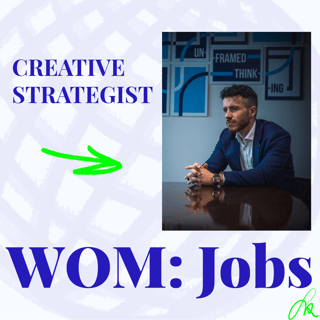
Sonja Kamper: We've mentioned him before. Erwan was my last guest. He works as a creative strategist and he came up with a very interesting question.
Sonja Kamper: So, Ljubka, if you had give an advice to your 18-year-old self, what would it be?
Ljupka NAUMOVSKA: Just one?
Sonja Kamper: Yes
Ljupka NAUMOVSKA: It will be...
Ljupka NAUMOVSKA: Professional personal, or both. It will definite yeah
Sonja Kamper: However you prefer.
Ljupka NAUMOVSKA: it will definitely be keep going. You know what you're doing, don't listen to the others. Because very young, I knew what I wanted to do and be, and um but I was interrupted by the society and the environment multiple times, as probably you are at some point.
Ljupka NAUMOVSKA: But definitely I would tell my 18-year-old version that I'm doing great and I'm going to make it. Just keep on doing what you're doing and believing in your yourself.
Ljupka NAUMOVSKA: And if you know what you want, that's fine. If you don't know what you want, that's fine. Again, it will come. Yep.
Sonja Kamper: Very inspiring. So what question would you like to leave for the next guest without knowing who it might be?
Ljupka NAUMOVSKA: Yeah.
Ljupka NAUMOVSKA: and All
Ljupka NAUMOVSKA: right.
Ljupka NAUMOVSKA: It would be, if you're about to change your profession, radically, what would that be and why?
Sonja Kamper: super intriguing now even more curious to know the answer of the next guest and uh thank you so so much for your time today it's been truly inspiring and it gave my last stretch of university some spirit and uh we'll make it maybe a little bit harder now to to leave these great minds behind.
Sonja Kamper: But also, as you said, your advice, if you don't know, like it will work out. And I'm very curious to see how Rennes School of Business involved evolves, how our master's evolves.
Sonja Kamper: And yeah, just thank you so much for your time.
Ljupka NAUMOVSKA: And thank you. And we're looking forward to see how are you going to evolve. And I'm pretty sure you're going to be shining bright and Whatever you do and whatever you go, it's been really privileged to to be in the same classroom with you, to have you as my student. And i also learned a lot of things from you.
Ljupka NAUMOVSKA: And that I wish you all the best. And thank you for inviting me in this podcast.
Sonja Kamper: Thank you so much. It's been my pleasure. And also to the listeners who stayed in this podcast till the very last minute. Thank you for listening and Bus- si.
Sonja Kamper: Baba
Ljupka NAUMOVSKA: Bye-bye.