Become a Creator today!Start creating today - Share your story with the world!
Start for free
00:00:00
00:00:01
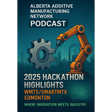
Industrial Additive Manufacturing Hackathon Challenge - Software image

Industrial Additive Manufacturing Hackathon Challenge - Software

Alberta Additive Manufacturing Network
Avatar
68 Plays2 years ago

Are you an engineer wanting to learn about design for additive manufacturing? Can you spend 3-8 hours per week over a 2 month period to learn a new skill?

Register as a participant by JANUARY 10 to:

• Gain exposure to digital tools in design, engineering, AM, etc. (from ideation to testing)

• Develop your understanding around the concept of design for AM

• Receive hands-on experience with the above

• Connect with industry peers and develop collaborative relationships

• Raise your industry profile through a project presentation at SmartMTX May 15-16, 2024

• Potentially develop a relationship with the end-user

• Earn APEGA PD credits

Are you a company wanting to take advantage of additive manufacturing, but don’t have the time or resources? Do you have a problem that could be solved with the re-engineering of complex parts with a part count reduction, or by having replacement components fabricated with a faster turnaround to reduce production downtime?

Submit a project by JANUARY 10 to:

• Receive a reduced or potentially free solution development cost

• Support local industry and develop digital skills and AM expertise in local industry

• Better solution / value added vs. traditionally designed / developed / existing solution

• Raise your ESG profile with clients and the public
Transcript

Introduction and Welcome

00:00:13
Speaker
Three, two, one. Welcome everybody to another Alberta additive manufacturing network podcast. Today is an awesome day. It's a Friday and it's nice and warm outside. Um, there is some white stuff on the ground. Yes. We're in Edmonton and it's just one of those things that we deal with. It's fun.

Hackathon Excitement and Guests

00:00:32
Speaker
We're going to have a hackathon.
00:00:34
Speaker
And we've been talking a little bit about this, and we've brought in some really cool guests today. We've got a full house.

Tanya on Additive Manufacturing Hackathon

00:00:40
Speaker
To start, we're going to go with Tanya with RDP. And she's going to introduce herself because she knows herself better than everyone in the room. And she's going to tell us a little bit more about this hackathon, RDP, and all the fun things that are happening in the central Alberta region. Thank you.
00:00:58
Speaker
Thanks, Jordy. And if you didn't catch our last podcast on design for additive using jigs and fixtures, we're continuing on that today, but looking on the software side. So if you didn't catch that, what is this hackathon that we're doing? So the Alberta Additive Manufacturing Network, the Manufacturing and Export Enhancement Cluster, and Red Deer Polytechnic Center for Innovation and Manufacturing, which is the SimTech, are partnering to host industrial additive manufacturing hackathon challenge.

Carson Explains Hackathon Themes

00:01:26
Speaker
Now that sounds really great.
00:01:28
Speaker
with that. And so Carson's here with me today. He's one of our applied research techs within the SimTech and he's going to be helping us all run this challenge here. So Carson, what is this hackathon that we're doing today, this year?

Designing and Sharing Knowledge at the Hackathon

00:01:44
Speaker
Thanks, Tanya. So the hackathons this year, so this year's themes is jigs and fixtures. In this industry-focused design hackathon challenge, teams of engineers and technical people will design their selected project for additive manufacturing in context of design.
00:02:00
Speaker
simulation, material selection, post-processing, and quality control. The team's designs will be fabricated and tested. The business case for the additive manufacturing design changes will be developed, and the knowledge for the projects will be shared publicly. Participants can also register as a team or be mixed with engineers from other companies.
00:02:26
Speaker
Thanks Carson. Sounds super exciting. So are you an engineer or technical person wanting to learn about design for additive manufacturing? And today, do you want to learn about Altair and how can you use this as a tool to help grow your business on the technical side? Can you spend some time every week over a two month period to learn a new skill?
00:02:48
Speaker
Are you a company wanting to take advantage of additive manufacturing? I've heard about all these softwares out there, but don't know where to start or the resources or the time.

How to Register for the Hackathon

00:02:57
Speaker
So inquire through the AAMN website, which is AlbertaAMN.com. It'll also be in the show notes to learn more about how you can participate in this hackathon. And we're going to pass it over back to Shorty to introduce our guests from Altair and how their software tool is going to support
00:03:18
Speaker
the hackathon and how it can be used for design for additive and other simulation spaces too.

Role of Altair's Tools in the Hackathon

00:03:24
Speaker
So let's meet our guests and explore Altair.
00:03:29
Speaker
Oh, this is going to be exciting. Things change so rapidly. And having RDP get all the toys, it's so cool for companies and individuals like us to just go and experiment and play. So let's find out a little bit more about this crazy cool software that's going to help us get some jigs and fixtures designed because our company is going to be putting in quite a few projects. Hopefully one of them gets selected. It's always fun to sponsor students and get these projects going.
00:03:57
Speaker
On the software side, we've got two esteemed gentlemen from Altair here. Who would like to go first? You know what? Let's just throw a coin up in the air and whoever goes first. So Julian or Hassan with Altair and the coin goes up and there you go.

Hassan Discusses Altair's Solutions

00:04:16
Speaker
It looks like it's Hassan.
00:04:19
Speaker
Perfect. Welcome, Hassan. Tell us a little bit more about Altair, what the company does, what a sort of platform is, and what types of industries it can help with. In Alberta, we've got a myriad of different types of industries. Obviously, oil and gas is quite a predominant one, but we're getting more into aerospace and medical, mining, nano, you name it. So how can you help us and show us what we can use to be successful?
00:04:50
Speaker
Thank you, though. Thank you, Tonya. It's very exciting to be part of this Alberta hackathon, I would say. And Altara is very pleased to provide these kind of products and services to the companies and to the engineers to learn more.
00:05:05
Speaker
Let me start this. Altar basically is a global technology company known for providing simulation, high performance computing and product development solutions for various industries. It's established in 1985, so you're talking about 35 plus years, to offer a comprehensive suite of products for different industries like you name it, aerospace, automotive, medical,
00:05:27
Speaker
you're talking about manufacturing, you're talking about AEC energy, so all sort of across the board, our software has been used. And it's not just simulation and analysis, it goes beyond from an analysis part of it, where you design and optimize your product, and you try to solve it with multiple cores, using HPC, with our cloud solutions,
00:05:51
Speaker
And we just jumped into our data analytics and data visualization domain as well. So basically, we are one-stop shop, I would say, for all the design and simulation needs. Wow, that's really comprehensive. And your partner next to you, Julian.

Julian's Client Support with Altair Tech

00:06:12
Speaker
You're with Altair as well, and it sounds like from what we chatted a little bit about offline was you're big into aerospace and you're more of an international fellow. So you've been moving around and seeing all these different cool technologies. So what do you do? Well, hi, Darrell. Hi, everyone.
00:06:36
Speaker
I mean my role in the company is really to support clients and you know it's working hand in hand and you know sort of understanding what the client's trying to do and trying to put the right technology and the right tool set in their hands and trying to show them how to make the most of it. So you know when it comes to anything with additive manufacturing you know we've been at the forefront of that for a long time and
00:07:01
Speaker
you know, all the way back in the 90s when we started doing topology optimization and, you know, sort of brought that and over the year developed an entire toolset for that, you know, and I started my career, you know, like you said, in aerospace, and that's where I learned the toolset and, you know, sort of flipped to the other side of the aisle and sort of started taking that knowledge and helping sort of people, you know,
00:07:31
Speaker
in other fields. That's great. So you basically became, you were a customer than it sounds like. So you became a technical expert and then you're still a technical expert, which is great. That's the best part. I love it.
00:07:46
Speaker
I'm very curious how you guys can help us then with this hackathon. We talk about jigs and fixtures. Now, I've got this little bone-looking thing on my table, and this was an AMP set that a customer brought into us. What I'm trying to do now is I'm trying to machine, and I need to drill and tap a hole in this to be able to screw it into the other part of the bone assembly, I would say.
00:08:12
Speaker
Typically, um, I'm going to go back here when I went to school, I had my sketch pad out, you know, my mechanical pencil and I dropped it out, you know, on paper, what my jig and fixture was going to look like. And then.
00:08:25
Speaker
I would go to the machine shop and learn how to build that. So we've evolved a little bit, I think, from then. I'm probably going to show my age or people can see my age just talking about that. But moving forward, we've got some CAD systems. And they're not just 2D CAD. It's not 3D CAD. And so your platform, your software would be more of an integration between that CAD software from what I'm thinking. And you guys can correct me if I'm wrong.
00:08:54
Speaker
Users that have SOLIDWORKS or Inventor, those types of platforms are Fusion 360. How do they take full advantage of the ALT platform to be able to help me figure out if the drilling forces, for instance, for machining this part are going to be suitable? And that's really the biggest thing that I'm looking for. And so how do we solve that problem? Is there a solution, I should ask, before assuming there is?
00:09:21
Speaker
So either either Hassan or Julian, please help me out.

Designing Jigs and Fixtures with Altair

00:09:26
Speaker
You can, you can answer that maybe. Yeah, no, for sure. So, I mean, you know, it's, it comes down to, you know, you start from a CAD, you start from whatever geometry we have, you know, one of the, one of the sort of hallmark of Altair has always been to be an open platform. So we support importing data from many, many different sources.
00:09:47
Speaker
Um, and obviously our bread and butter is, is simulation, um, and has been for a long time. So if you want to analyze, you know, uh, anything in terms of jigs and fixtures or, or, or whatever else, you know, we can, we can support. And, uh, when it comes to am, um, you know, if, if you're going to be printing jigs and fixtures, you are not going to be designing the same kind of things that we used to do, you know, when we were.
00:10:15
Speaker
younger or using big machining fixtures that would be made out of metal using welded assemblies, big machine block, or very blocky structures. The goal of additive is usually what? It's going to be to get a fixture quicker. It's going to be to get a fixture that's more adapted, use less material. And to limit cost, often you're going to want to use plastics.
00:10:44
Speaker
So that's where suddenly you have a problem because your fixture might not be strong enough. So like you said, you want to sort of machine that little part while we need to analyze whether the fixture is going to be first strong enough, but also stiff enough. Stiffness is not something to be underestimated when you do some machining, right? Because the part moves while you're machining, you're not going to get a great result.
00:11:13
Speaker
There's a lot of cutting forces involved there. And that's kind of the beauty, I think, of the simulation software is you can start doing different types of scenarios and tests to see if your design is actually going to perform the way it's needed to. We were chatting with an application engineer from Stratasys the other day in one of our previous podcasts. And the amount of materials that are being produced for stiffness, rigidity, chemical resistance, you name it. It's just amazing these days.
00:11:42
Speaker
So when we start using the software as part of the hackathon, we're going to have access to certain features or I guess software features that are going to enable us to do certain things. What types of things will we be looking at? I would imagine something like finite element analysis would be one to determine
00:12:05
Speaker
the strength of the material and figure out where we have those support structures. But what are the types of things we'll be looking for specifically when it comes to AM? I mean, how much variability is there and how much can we play with?
00:12:21
Speaker
And I'm guessing it's gonna be like a massive amount that we could pretty much do anything we want to. And you're probably gonna ask me, well, what specifically, what problem are you specifically trying to solve? But please don't ask me that. It's a very broad topic, right? Because
00:12:40
Speaker
Um, you know, I mean, you, you pointed to finite element analysis, actually, I would say structural analysis in general, because you'll find that, um, we have tools that are not finite element based, but are, uh, much faster, um, to get results, um, and are embedded into the sort of platform, you know, um, we, we're going to be trying to work with.
00:13:01
Speaker
One of the main platforms we're trying to push with this Hackathon is our Inspire platform because it's really an end-to-end workflow for anything related to AM from simple analysis
00:13:15
Speaker
to even doing some basic design around an initial part you've

Inspire Platform and AM Design Tools

00:13:21
Speaker
embedded. So one of the things you may want to do with additive is lightening your structure using some lattices or some very sort of complex geometries. So we can do that with some of the newer technology that we have. And we can even explore things like
00:13:43
Speaker
you know, looking at how much support is going to be needed for printing and things like this. Yeah, that's great.
00:13:53
Speaker
Yeah, I'm not being fair to you guys because I'm throwing a what-if scenario that could encompass absolutely everything. But I think maybe you guys probably have a ton of success stories. Is there one that maybe you could walk us through that process? What was the name of the piece of software that you're going to be supporting us with with the Hackathon?
00:14:17
Speaker
You just said it. Altair inspired. Inspired, that's it. So we're going to use this as an end-to-end platform. So can you walk us through a really good example of that iterative process and how that works for us? I think that'd be really good to help me understand it. And maybe our listener will get it as well. I'm sure they would. They're usually smarter than I am.
00:14:41
Speaker
Well, I mean, obviously the, you know, it always started in the same place with whatever you're trying to achieve. So whether you're starting from a geometry or whether you're going to create your geometry, you know, we, I mean, obviously with talking about optimization and, you know, all the, all the design for additive manufacturing, very often we, we work at the,
00:15:02
Speaker
I'd say at the front end designing the part, the final part that people are going to be using. And, you know, that's kind of the shiny objects of additive manufacturing of fine, but it's actually not where a lot of the games are. So I'm really glad the hackathon is going down the jigs and fixtures sort of route because there is so much potential there. So, you know, you're going to start from a design, you're going to say, okay, you know, I need some,
00:15:29
Speaker
Jigs fixtures, and it can be, Jigs fixtures is very broad, right? It can be a machining fixture. It can be a measuring fixture for a CMM sort of setup, but it could be supporting test equipment. And then, you know, you can go to an extreme and what about an end effector for a robot? You know, we do a lot of machining with robot, multi-axis robots and things like this, whether it's a water jig cutting and things like this. So depending on what you're trying to achieve,
00:15:58
Speaker
It can be as simple as bringing in a design, putting some forces on there, and then testing it. But it can also be things like designing the entire part, having an initial design, iterating through that design, bringing some complex geometry. So I was talking about lattice designs and things like this, but it can be way more complex.
00:16:24
Speaker
At the other extreme, if you talk about an end effector for a robot, well, often there's going to be some electrical wiring going through there. There's going to be some fluids going through there. So you could have a suction system embedded in there, or it could be an end effector for a water jet cutting where you're going to have the fluid going through there.
00:16:46
Speaker
So we can really embed all this. So we can do some fluid design. We can then sort of start from that fluid design and then sort of grow a part out of that. So grow the structural part around the fluid instead of, usually you start from a part and then you start drilling it, putting channels everywhere. And so, you know, what we can do is the exact opposite.
00:17:10
Speaker
tell us what fluid system you need, and then we'll build something around there. And the technologies that we bring in terms of geometry, so things like implicit geometry or polynerbs geometry that allow you to create complex geometry very quickly, are going to be at the forefront there. And obviously, the fact that you have both the fluid and the structural simulation in the same tool afterwards will help you
00:17:42
Speaker
So are you adjusting and modifying and tweaking the design of say the part, I guess not the part, the fixture that you're trying to design. Are you able to do that in the L-tier software? Are we constantly going back and forth between a 3D CAD software system and then re-importing it? How does that work?
00:18:02
Speaker
No, so we're not at all. So we have the ability to import CAD from many, many different sources and we can directly modify the CAD to an extent.
00:18:13
Speaker
We're not going to be taking the parameters from your original CAD and modifying this, but I have the ability to take the geometry that's been important and then start cutting it, start push pull, sort of start modifying it or adding to it for that matter. So I can come up with, if you have a library of already existing components that are
00:18:37
Speaker
going to be mounted on top, then we can embed that into an assembly directly in there. And then we have full CAD history. So we have full construction history. We can modify at will. We can parameterize. And for the past few releases, actually, we've been able to also do some design exploration.
00:18:57
Speaker
So you can only parameterize your design, but you can do full parametric studies, rerunning the simulation multiple times for different set of parameters and then sort of quickly understanding the different effects of, you know,
00:19:12
Speaker
I wish I had knowledge of that like a week ago, because I just destroyed all our fixtures at our CMM and started from scratch. But it sounds like I didn't need to do that. Hmm. Well, maybe there is a good thing coming out of these podcasts. More and more people are going to hopefully learn from my mistakes and
00:19:34
Speaker
learn what is out there. It's just amazing to hear this. So in that sort of user case example, the parametric thing is just amazing to me. Are you controlling any of the printer parameters then? Or are you creating sort of an STL file? Are you prepping? I guess my question is, what point are you taking us to the end result? Because we want to take, I guess, a file to the printer and then print something, right? Or make something.

Focus on Geometry and Future Capabilities

00:20:04
Speaker
At this point, we're mostly working on the geometry and the analysis. The endpoint, if you want to send that to the printer right now, you can either send a geometry and export a typical geometry, be it a step or something like this, and send it to your printing software.
00:20:30
Speaker
We can export an STL directly or 3MF as well. We support the 3MF format and I've been recently. So depending on what it is that you're doing as well and now to inspire, you will have different choices. If you start playing with very intricate, implicit geometry, then your 3MF sort of file format is going to be your best friend. Now, this is...
00:20:57
Speaker
the as is. And this is really what's going to be on offer to people like right now. But it is definitely something that's on the roadmap to say, you know, we want to be able to send file printer ready almost so sliced files and things like this. But obviously, there's a lot of moving part, it depends on the printer, depends on what language you need to support. But
00:21:23
Speaker
And if, you know, the name brands like Stratasys, you know, they have a pretty unique recipe on how they want things to flow, you know, their workflow process. So, but that's neat. I really love the idea of you supporting, you know, all the other software companies. I think it's great. The only drawback is going to be that they might want you guys to do absolutely everything and kind of, that's where you kind of have to draw the line, it sounds like, right?
00:21:49
Speaker
But yeah, I know what you're doing so far, it sounds great. With the hackathon that we're going to do, what sort of simulation questions do you think a lot of our participants are going to have? Like, where do you think the first sort of simulation hurdle is going to be? And typically, what have you seen? Is it structural mostly, or is that sort of a different idea?
00:22:19
Speaker
So we get a bit of everything, right? So, you know, the, the fundamental questions when you start designing jigs and fixtures is the questions that you don't necessarily usually ask yourself. Um, you know, like we talked about in, when you design a traditional jigs fixture, it's very bulky. It's very heavy. You don't really worry about how stiff or strong it is. Um, and because, you know, some people may not do those analysis.
00:22:47
Speaker
The biggest hurdle usually is understanding what info do I need to be able to do a structural analysis? Because the geometry and the material is one thing. Everyone has that. But understanding how the model is constrained, understanding what forces might be acting on there, that's a different question. And it's not necessarily easy offhand what this is.
00:23:18
Speaker
It sounds like we kind of needed a bit of homework before we, you know, sit down and do something, right? The software is not going to solve every problem that we have. It's not going to solve my problem of not knowing anything because I have to ask the right questions, right? So I guess we have to look at the entire process as a whole. And one of the examples I'm thinking of right now is CMM fixturing for inspection. The ability to have this visualization of knowing
00:23:45
Speaker
where your collision points are going to be, for instance, those probes are pretty expensive. And I would really love to simulate as much crashing as I can in the virtual space. With the simulation side of it, we could add everything we really wanted to and try and identify every little thing that could go wrong, right? But there has to be a point where you just have to say, you know what, I'm just going to start my project, see how it goes, and we'll go from there.
00:24:14
Speaker
So, I mean, you know, in an ideal world, you'd put the CMM directly in there and we can actually technically do that. You know, put the CMM directly in there and, and sort of simulate the motion and simulate the, uh, you know, the, the collisions and things. Um, some of it might be done in inspire, some of it might be done in our more advanced software. Is it needed? Most likely not. Um, you know,
00:24:42
Speaker
Like you say, a CMM is very fragile, so you will avoid collision at all costs. And therefore collision is not really the sort of things that you would do with a CMM, maybe more with a machining sort of fixture because machines are way more powerful and they will happily knock the fixture out before you knock the head of the machine. Never happened.
00:25:11
Speaker
We've not done that ever. No, it doesn't ever happen. Nobody's ever done that stuff. Yeah, we don't learn by. The one thing I will say is I don't want people to shy away from launching projects because they say, oh, we don't have the in-house knowledge.

Embracing New Tech with Altair

00:25:28
Speaker
One of the strengths of Altair, I like to think at least is
00:25:35
Speaker
We have a whole breadth of experience across, you know, and behind us, behind Asan and I, there's a vast army of experts in many different fields. And one of the things we never shy away is from helping people. You know, so we don't just supply you a software and teach you what buttons to press. My sort of role in life is to teach people how to use the technology, not the software.
00:26:02
Speaker
So you know the way we traditionally proceed when we have people that have an idea but they're not too sure how to go about it is to sit down with them and start asking questions. And it starts as a simple conversation and as you ask questions you know brings other topics, brings other information and people quickly realize they have more information than they think.
00:26:26
Speaker
I love it. It's a great approach. And you know, with the Hackathon, we're so excited to have, you know, you support us and be behind us as we do it. And I think you're 100% right. We just have to, you know, start doing something and learning along the way. And don't be afraid of it, right? Everyone's afraid of new technology and new software. But man, if you've got the right support group behind you, oh, you can accomplish anything.
00:26:54
Speaker
Wow. Well, thank you very, very much for today. It's been fantastic. I know. I think we've just scratched the surface of what we're able to do. Can I say that you guys have inspired me? You certainly can. It is fun Friday after all. So we have to throw that in. All right, Tonya and Carson.

Registration Deadlines and Participant Support

00:27:14
Speaker
So I'm really looking forward to this hackathon. Um, do we have dates yet? Uh, am I jumping the gun here? Am I getting a little too excited?
00:27:22
Speaker
Absolutely not. So we're looking to have everybody registered by January the 10th. That includes companies that want to put in an idea and participants as well. And then we'll get all those teams together and Carson will be your contact point there. So you'll be hearing from him and getting people together as well as connecting you to Julian and Hassan and their team to figure out how to access the software because that's part of being a member is that you do get to
00:27:49
Speaker
have full access to all of the Altair suite or most of it to be able to use on this piece. And they're there to, like you heard here, answer some of your questions, point you in the right direction and provide a lot of support on how you can really utilize the software, not only in your project that you're working on the hackathon, but what are the other applications that you have there as well. So as you're listening to this over the
00:28:15
Speaker
the holiday break, make sure you come and register to participate in it. But if this is well past that time, then do check out Altair and connect with the team there to explore further on how the software can start supporting your solution. Julian, is there anything you want to add with that?
00:28:35
Speaker
No, I think for me, the main thing is for people to take the first step. For as long as I've been talking about additive manufacturing and optimization in general and all these topics, the main thing is take the first step and we'll help you along the way.

Competitive Edge Through Hackathon Participation

00:28:54
Speaker
That's fantastic. Hassan, you probably
00:28:59
Speaker
chat with customers every now and then. I would imagine being in sales. For sure. Yeah. Yeah. I'll chat every day. Perfect. So you probably have a lot of success stories, and I'm sure you'll be available for mostly companies. And I challenge companies out there and I challenge industry. This is a great event and an opportunity for you as business owners to send some of your stuff and learn some of these new techniques.
00:29:26
Speaker
both RDP and Altair, they're going to be asking a lot of questions relating to the project, but now is your chance to ask a lot of questions too. How can you use this in your facility? How can you become more profitable and see yourself more as a competitive versus just trying to struggle to survive? It's a great opportunity, I think.
00:29:47
Speaker
Shame on everybody if they don't take advantage of this. So it's competition based, I believe. And so we want to get as many people to put their projects in as possible so you can select the best ones. And I'm really looking forward to it. So yeah, I guess that's everything for today. Thank you so much for hanging out with us on this Friday. And thank you again to Altair and to Julian and Hassan for
00:30:11
Speaker
Volunteering? Is that, can I use that term? Were you voluntold? Typically, I'm the guy that's doing all the the barking as a business owner. So, but I see that you guys are super passionate and I really look forward to it. So thank you guys so much. Really appreciate it. Yeah, thank you. Thank you very much for being here today. It's been great.