Transcript
Speaker: Improvising!
Speaker: Improvising.
Speaker: The multiverse is real.
Speaker: Improvise.
Speaker: Compelling.
Speaker: Innovative.
Speaker: Improvisation.
Speaker: It's magic.
Speaker: You know, make something up.
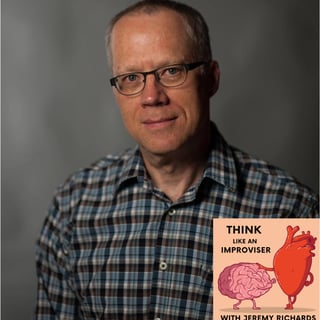
Speaker: Welcome to Think Like an Improviser.
Speaker: I'm Jeremy Richards.
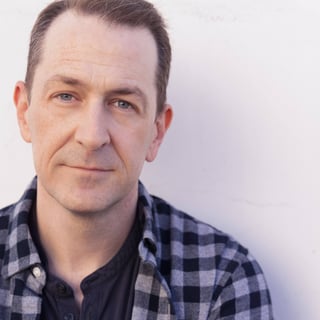
Speaker: My guest for this episode is philosopher, rapper, and actor DeAndre Anderson.
Speaker: Dre is a Seattle native and truly ingrained in the community.
Speaker: He describes his mission as helping people learn to metabolize trauma by utilizing the five pillars of hip-hop.
Speaker: Dre brings an impressive academic background to his work with degrees in philosophy and performance theater and an MA in urban environmental education.
Speaker: In this conversation, Dre shares with me how discovering improv was a pivotal transformation in his life and how he helps others tap into their own stories and unique gifts.
Speaker: Dre, thanks for joining us.
Speaker: Man, I'm happy to be here.
Speaker: Thanks for inviting me to the show, man.
Speaker: You're blowing up out here.
Speaker: Writing books, doing podcasts.
Speaker: Trying.
Speaker: I'm trying.
Speaker: I appreciate you being a part of it.
Speaker: And I know you've been in the Unexpected Productions ensemble for what, five years now?
Speaker: Man, yeah, I think it was 2017.
Speaker: So, yeah.
Speaker: How did you get into improv initially?
Speaker: So I took an improv class in college.
Speaker: I was at Seattle Pacific University and the professor was an adjunct prof who came into the school just to teach this improv class.
Speaker: And it was the legendary Jen Matthews.
Speaker: I'm like, I had no idea.
Speaker: I was, as you saw for today's meeting on CP time, still my freshman year of high school, I'm in college and has have yet to get off of that time.
Speaker: So she, she would,
Speaker: actually grill me when I would come through to the rehearsals or whatever, because she was originally my stage manager for a play that I was in.
Speaker: And then to see her come back as my improv teacher was like, whoa, wild, it's great to see you again.
Speaker: But she was like, she would always hit me with the wisdom.
Speaker: She'd be like, man, what can I do as a stage manager to make sure you get here on time?
Speaker: And they started telling me a little bit of the history of things that she had done for other cast members to keep them there.
Speaker: And I was just like, oh, man, you're really dope.
Speaker: So to see her as a teacher in that regard to pick up some of the skills was nice.
Speaker: I think that I'd always been a part of improv, though.
Speaker: You know, it's always been like part of my day to day, just that living in the moment was the first time I got a chance to listen to like the words of Uta Hagen and, you know, live believably imagined circumstances and really got to think about what that means.
Speaker: Nice.
Speaker: I felt like I fell into it naturally.
Speaker: I'm going to live my best life now.
Speaker: Were you already improvising in the hip hop space, freestyle, anything like that?
Speaker: That point in time, not really.
Speaker: I wouldn't have called myself a rapper.
Speaker: My Dermot.
Speaker: during my college days that's when the the instinct kind of came i've done a couple of freestyles when i was like am i 16 you know when i started to kind of come into it in the style of t-pain i'm gonna buy you a drink always were just snapping and then i kind of found the flow in that and they're like you know how that song goes you know it in your head so make your own words and then i started to just like you know
Speaker: Keep it going with that.
Speaker: It was a good time to really kind of start tapping in.
Speaker: That's when I first learned, like, whoa, I might be kind of good at this.
Speaker: And you definitely are, as we've seen.
Speaker: Did you grow up in the Seattle area then?
Speaker: Yeah, so I'm from...
Speaker: Federal Way.
Speaker: I grew up in Federal Way, went to Federal Way High School.
Speaker: I was going to say you have a Federal Way accent.
Speaker: I don't know what that means.
Speaker: I don't know.
Speaker: Visiting family in the South and stuff, they'd always be like, why you talk money?
Speaker: You talk like a white boy.
Speaker: So when you say there's a Federal Way accent, I think it is true.
Speaker: It's like whatever's on the news.
Speaker: Right.
Speaker: I feel like our accent is pretty close to it.
Speaker: But yeah, man, living the better away life.
Speaker: My mama passed away when I was 16.
Speaker: So I ended up moving to Tacoma to try to, you know, stay with my dad for a little bit and ended up moving out on my own.
Speaker: Not too long after that kind of just worked a couple of jobs in Tacoma mall, anchor blue and lids.
Speaker: And I did some AP classes at Clover Park high school and kind of just like did scholarships and shit until I could get up out.
Speaker: Wow.
Speaker: That's amazing.
Speaker: I can.
Speaker: relate to some degree in coming up on hard times and finding an outlet in a creative life, in an academic life.
Speaker: What did that mean to you at the time?
Speaker: I mean, what is any teenager really doing?
Speaker: Just trying to like figure out who the heck that they are.
Speaker: I just had to do that exact process with a little bit more trauma.
Speaker: So, you know, I did the things.
Speaker: My dad really loves sports.
Speaker: He played sports in high school.
Speaker: So I play sports most of my life.
Speaker: So I try to keep that up and join the football team because that was something I like knew I could do.
Speaker: But I didn't like love it.
Speaker: You know, study hall, sitting around all these big sweaty dudes all the time.
Speaker: Standing on the...
Speaker: You know, on the field, you know, I don't know if you know much about football, but there's 11 guys that run on the field and stuff like that.
Speaker: So I was, my positions were left out NASFAC.
Speaker: So when those 11 guys will run out onto the field, I was left out.
Speaker: And then whenever I'd ask the coach, hey, coach, put me in the game.
Speaker: He'd be like, boy, get your ass back.
Speaker: So I didn't really see a lot of play time per se.
Speaker: I mainly spent a lot of time on the sidelines cheering on the team, reeling up some of the hype.
Speaker: But really just away games, cold nights, practices, all the training, all the strength conditioning, all the gyms, all the extra stuff.
Speaker: And it wasn't fun.
Speaker: I didn't enjoy it.
Speaker: I didn't love it.
Speaker: I remember one study hall.
Speaker: there was like an audition that was happening for the school play, little shop of horrors.
Speaker: And I was like, I'm gonna go to that.
Speaker: So I'm like packing up my stuff early from like, you know, the football player study hall and coach is just like, never said, what do you think you're doing?
Speaker: I was like, Oh, there's a play and I'm going to go audition for that.
Speaker: He's like, this is study all and you're not supposed to leave.
Speaker: I was like,
Speaker: I'm in AP classes.
Speaker: I got better grades than most of the people in this studio.
Speaker: I don't really need it.
Speaker: So I'm going to go.
Speaker: He's like, if you walk out of that door, then you're off the team.
Speaker: And I'm just like,
Speaker: All right, who's coming with me?
Speaker: And a couple of cats stayed up.
Speaker: We're like, yeah, one of my friends, Dustin, he hopped up to like a few of the freshmen and some more.
Speaker: Like people started popping up and we all went and auditioned and all of us got roles in the play.
Speaker: And it was just like a great time.
Speaker: Like that was fun.
Speaker: I got the voice of Audrey too.
Speaker: Let's see more feedback now.
Speaker: It was great.
Speaker: Perfect.
Speaker: Yeah, man.
Speaker: And he got the voice of C, he got the part of Seymour.
Speaker: So it was like, man, we were football players that decided we really liked to act better and had way more fun in it.
Speaker: So that's what I followed into college.
Speaker: Amazing.
Speaker: The passion.
Speaker: And it was then in college that you got into improv specifically, right?
Speaker: Yeah.
Speaker: I did that one improv class and was like, this, this was really fun.
Speaker: Were there any initial experiences in improv that really clicked for you?
Speaker: Oh, yeah, the games like we just started, you know, improv playing games, word associations, and it was like all of these ice breakers to get people like more comfortable with themselves and each other.
Speaker: And I think
Speaker: in those icebreakers or where I really started to like come out of my shell.
Speaker: I mean, I didn't I didn't have a shell at that point in time, but I already come out of it, cast it aside.
Speaker: I was a beautiful butterfly and I was really learning how to flap those wings.
Speaker: You know what I'm saying?
Speaker: So I think it was really the games, but it was a long form improv that I really fell in love with being able to tell a story beginning, middle and end and not having to like
Speaker: worry about it sounding exactly right, not worrying about a script.
Speaker: You just live in that moment and create magic with the people next to you.
Speaker: And I always thought that was the best part of improv.
Speaker: I do love long form and unexpected productions, as you know, is known for that.
Speaker: And there is something magic about that storytelling.
Speaker: It's something that you brought back around eventually in developing the
Speaker: The hip opera show, right?
Speaker: I mean, yeah.
Speaker: I got to be clear.
Speaker: I did not develop the improvised hip opera.
Speaker: That was Tiffany Hitt's brainchild.
Speaker: She came up with the hip opera after watching like the Carmen hip opera starring Beyonce, Mekhi Piper.
Speaker: And, you know, I watched that when I was a kid, too, so that was great.
Speaker: But like, that's kind of where her ideas of the hip hopper came from.
Speaker: I actually got invited to join after my first duo.
Speaker: We just had the duos competition yesterday where me and my best friend Frost competed in this.
Speaker: And I bring that up because he was the reason why I started at Unexpected 2.
Speaker: I had met like Allison Kazan and Tiffany hit at like, you know, karaoke a couple of times.
Speaker: That's my circuit.
Speaker: I'm a karaoke host.
Speaker: I'm at Tyler Rico's and the whatnot in West Seattle.
Speaker: But like at the time I was at Ozzy's in Lower Queen Anne.
Speaker: There was this competition and that's how I started to meet some improv folks out here.
Speaker: My friend Frost wanted to do some improv.
Speaker: I was asking him to come out and do some.
Speaker: I was like, let's do a duo.
Speaker: People are doing those.
Speaker: They seem like they can be fun.
Speaker: That was like my first real time in the theater.
Speaker: And he was like, all right, let's do it.
Speaker: So we start to do this duo.
Speaker: And in the middle of the duo, he like pimps me out to start rapping.
Speaker: He's like, yeah, now do that and rap like whatever he does to make me start rapping.
Speaker: So I do it.
Speaker: I hit a burst.
Speaker: I just like, you know, the musicians playing some music and I just start freestyling up there.
Speaker: But in the style of like what our story is and people were just blown away at the theater.
Speaker: Like I remember after that, every like multiple people coming up to me, like, yo, that was really good.
Speaker: Oh, my God, that was great.
Speaker: Eventually, I was approached by Tiffany, who wasn't even at that show.
Speaker: She was like.
Speaker: yo, I'm doing an improvised hip opera.
Speaker: And people said that you are amazing freestyler.
Speaker: I think you would be great for the show.
Speaker: Are you interested?
Speaker: Like, so I like, first off, that was like the start of a beautiful friendship already in the works.
Speaker: And then like, you know, that just added to it.
Speaker: So come to this hip opera.
Speaker: And for those of you that don't know, it's like,
Speaker: We tell an entire story, a beginning, middle and end based off of audience suggestions.
Speaker: And throughout the course of it, we break out into songs and each songs are raps and the raps don't really advance the story as much as embellish the background of the characters you're seeing.
Speaker: So you get to know us better through our types of raps and our freestyles and everybody has such a different flow.
Speaker: So it was like joining that as part of the team was amazing.
Speaker: I was like, oh, my God, this is this is exactly what I think I want to be doing.
Speaker: More music, more improv, putting all my skills together just felt great to do that.
Speaker: So when Tiffany asked me to come back a couple of years later and like co-direct with her, I was over the moon.
Speaker: Within that, that amount of time, we'd already taught a couple of classes at unexpected production.
Speaker: We do like a hip hop fundamentals of hip hop class is what it's called.
Speaker: It's like a 300 level class, which is funny.
Speaker: Cause I never took any of the levels of their classes, but you know, now I'm teaching them.
Speaker: So that was kind of cool.
Speaker: Yeah.
Speaker: You just could jump right up there.
Speaker: It doesn't matter.
Speaker: You have the talent.
Speaker: Yeah, it was just wild that they were like, sure, you can teach this class.
Speaker: I was like, all right.
Speaker: So we had groups of students coming through.
Speaker: And I think the biggest things that we would teach them there are to embrace your own stank.
Speaker: Like if I had any message to give to anybody who ever wanted to try to freestyle in their life, I would say, you got to embrace your own stank.
Speaker: Like lift up them arms, get into them pits and just...
Speaker: That's you, 100% authentically you, and no one else is gonna have that kind of stank.
Speaker: So you need to know what you're bringing to the table and know that that's something worth appreciating.
Speaker: And I think that's what really started to knock our shows out of the park when everybody's styles were just like coming to the forefront.
Speaker: Like J hit, for example, has like that old school 1980s, like birth of hip hop kind of flow.
Speaker: And he really leans into it for every single occasion.
Speaker: And we ended up loving that about J. Like, that's what he brings to those characters that come in.
Speaker: It's like every single person has their own style and way to do it.
Speaker: Tiffany has an amazing vocal range.
Speaker: Jess and Tiffany like work together and create these like really dynamic, like
Speaker: beautifully melodic hooks and verses and bridges that are in a way that I could never really do.
Speaker: Like, man, I don't have the pipes for that.
Speaker: So it's really to see how everybody's like, cool, but I have the freestyle.
Speaker: I can tell you an entire story in the middle of a flow, make it rhyme and like, you know, not cuss while doing it.
Speaker: So people think that's impressive.
Speaker: So it's like, I'll bust the flows.
Speaker: They hit the hooks, we hit the bridges and we tell you this amazing story every time.
Speaker: It's it's one of my favorite.
Speaker: I can't wait till we're able to bring it back.
Speaker: I can't wait either.
Speaker: And that's one style that's still really challenging for me after 28, 29 years of improv is just trusting the beat and rapping on the beat.
Speaker: You know, I can think of language and rhyme and,
Speaker: Shakespearean iambic pentameter all day, but there is something about just being in the moment, not overthinking it.
Speaker: Trusting my stank, as you would say.
Speaker: Embrace it.
Speaker: So what would you say to those types of improvisers who tend to overthink?
Speaker: I would say that that is also part of your brand, your thinker, your planner.
Speaker: So do that.
Speaker: Spend some time in your free time thinking about raps.
Speaker: Plan it out.
Speaker: When you're not on stage, write some raps down.
Speaker: Just write some words.
Speaker: Make some rhymes.
Speaker: That way you have loose word associations just in your mind.
Speaker: My recommendation for anybody who's ever taken any of my classes or anybody that wants to, like, try to do this improv thing,
Speaker: with hip hop is to do a five minute free write every day.
Speaker: Just spend five minutes connecting the pen to the paper.
Speaker: And I mean, that's how I pretty much got my start.
Speaker: I'm a free I'm a freestylist now, but I started off as a spoken word artist.
Speaker: And these five minute free writes were things that helped me expand where I was at and when I was going through.
Speaker: They kind of give you pictures into my life.
Speaker: So now I teach you.
Speaker: Where did you do spoken word?
Speaker: Oh, man.
Speaker: So that was what that's what I spent most of my free time doing in the high school and college.
Speaker: I would go to open mic nights and stuff like that to check them out.
Speaker: UW was one of the biggest ones.
Speaker: They had a retro open mic night, and that's where I really came into my own.
Speaker: People were playing music and, you know, I was doing my pieces that I wrote and I felt really powerful about that with like
Speaker: Silence.
Speaker: I was really accustomed to commanding a silent room and using my voice and my vocal patterns to like change the syncopation in that.
Speaker: And then when they started adding live music to that, I started developing this ear for it.
Speaker: I can catch that beat, say the things that were already in my head and just like find new ways to piece these puzzles together.
Speaker: And that's when I really started to evolve into from being a spoken word artist to an MC was from live music and freestyles.
Speaker: That's amazing.
Speaker: So I don't know if you know much about my background, but my big piece in the spoken word world was T.S.
Speaker: Eliot's Lost Hip Hop poem.
Speaker: And so bringing, you know, the dusty old dead white men poetics to, you know, influences in hip hop as well when I was growing up and probably closer to the J-Hit old school styles.
Speaker: I'll send you a link to that.
Speaker: But I took that to Deaf Poetry on HBO and
Speaker: What?
Speaker: Yeah, yeah.
Speaker: I got to go up there with Mos Def and Russell Simmons and Lauryn Hill and all that.
Speaker: And eventually it did not air my particular performance.
Speaker: I was going to say, bro, I've watched all the Def Comedy Jams.
Speaker: How did I not remember that?
Speaker: Or the Def Poetry Jams.
Speaker: Yeah.
Speaker: Yeah, poetry.
Speaker: I mean, it's all connected, right?
Speaker: But a lot of my friends did that and a lot of them went back to their part-time jobs and you know, it's like, like full disclosure, you get a trip to New York, a hotel room and $600.
Speaker: It's not that glamorous, but I take it.
Speaker: It was, yeah, I would, I would take it again too in a heartbeat.
Speaker: It was a good experience.
Speaker: And that national poetry slam community is still really close.
Speaker: So I can see that being a definite inspiration and influence.
Speaker: Man, yeah, I kind of wish I did a little bit more.
Speaker: I never did a national circuit of poetry slams, but that sounds like a lot of fun.
Speaker: Yeah, there's open slams still in the Seattle area, so we should plan up some time and go together.
Speaker: Oh, so down.
Speaker: Oh, definitely down to do that.
Speaker: Let me know when the next one is, man.
Speaker: I'll run through.
Speaker: I'm just spending a lot of time doing the open mics, trying to just get into the community more.
Speaker: Yeah, I'm going to have to look it up.
Speaker: I'm out here in the suburbs now, all domestic and boring.
Speaker: That's leveling up, bro.
Speaker: In some ways it is, and in some ways it's sliding back into solitary if you're not careful, you know?
Speaker: Mm-hmm.
Speaker: I feel that.
Speaker: There's a lot to be grateful for.
Speaker: Definitely sold out on a few different degrees, but I miss also just the humble roots and the connection to the creative community.
Speaker: Mm-hmm.
Speaker: I certainly would have said that.
Speaker: And you had mentioned that it was the academic and then the creative elements that really kind of brought you up and help you find your own voice and your own community.
Speaker: You studied philosophy in undergrad, right?
Speaker: Yeah, straight up.
Speaker: Another thing we have in common?
Speaker: Philosophy and theater.
Speaker: Yeah.
Speaker: philosophy and theater and and communications philosophy how did philosophy end up influencing your work and your outlook
Speaker: That's a good question.
Speaker: I was one of those kids that in high school, I was like reading like, you know, books on 101 philosophical ideas.
Speaker: Like I was like getting into like dipping my toes into Plato.
Speaker: I was like already very concerned with understanding how it is that I think and being able to
Speaker: concisely craft what it is that is happening up here in my brain space, formulate into something cohesive, and then be able to present it to people in a variety of formats.
Speaker: So I had a plan.
Speaker: I was like, I need to be able to utilize this vessel I have to the most of its capacities.
Speaker: So I wanted philosophy.
Speaker: I wanted to understand what it is I think, how I think, what are these connections and relations that I'm trying to make out here for myself, how to relate those to other individuals.
Speaker: So I also took up a double major in communications so I could learn how to speak to everyone.
Speaker: I can do it on a broad scale, public speaking.
Speaker: I could do it interpersonally, one on one.
Speaker: We could do it over a screen in the metaphysical verse.
Speaker: like communication and pretty much finding the mirroring of these two.
Speaker: I didn't realize what I was doing or why I was doing this, but it felt really important to me to understand how I think and how to convey messages to the people around me in a clear and concise manner.
Speaker: And still didn't know why I was doing that for the longest.
Speaker: It took until I was in my master's program
Speaker: For urban environmental education, I started going on this education track that I really started to see more of why I was so called, why I was so drawn towards communication and philosophy.
Speaker: And I think that's because I was always kind of set to be an educator.
Speaker: Is that what you're doing now then, mostly teaching?
Speaker: I mean...
Speaker: I'm not working in like any one school as like a eighth grade teacher or anything like that.
Speaker: No, more of under like I'm a teaching artist, so I work for Seattle Theater Group.
Speaker: I work for Seattle Children's Theater.
Speaker: And I go into places and I'll teach either musical theater or I'll teach hip hop classes or I'll do like lessons and lectures.
Speaker: I was just at Roosevelt High School two weeks ago for a hip hop session where I taught the kids how to get into compliment rap battles with one another.
Speaker: So I had everybody first like say you are dope to themselves on their smartphones.
Speaker: They're all like in selfie mode on their I don't know, tick tocks.
Speaker: I don't know what the kids are on these days.
Speaker: And they were like doing freestyle raps about themselves for, you know, a beat, two minutes or whatever like that.
Speaker: Let them get some verses in and we cut it.
Speaker: Tell them to share in partners.
Speaker: Now you rap about each other and all of the best compliments you can give each other now.
Speaker: All right, we cut it.
Speaker: Now who's feeling brave?
Speaker: Who wants to come up to the front of the class and get started in a rap battle against me?
Speaker: You know, and then they're like, yeah.
Speaker: So then they come up and we're giving compliments back and forth or they're doing it against each other.
Speaker: And I'll be like the boss battle.
Speaker: And that's like ways to help the youth remember that.
Speaker: Yeah, there's a lot of going on in the world, but I'm so dope.
Speaker: And to hear kids in the room, like you just hear a cacophony of kids.
Speaker: You rubbed in.
Speaker: I'm so dope.
Speaker: I'm awesome.
Speaker: I can do.
Speaker: Like just hearing them go off is a, it's a blessing.
Speaker: It seems to come effortlessly to you, that sense of certainty and confidence and courage.
Speaker: Was it always that way?
Speaker: Oh, yeah.
Speaker: Kind of.
Speaker: I was one of, I was never the shyest of kids, but I was always kind of like introverted in my natures.
Speaker: I always wanted to make friends, but never really knew how to get the words out there in the best ways.
Speaker: So I spent a lot of time in isolation.
Speaker: I'm an only child to a single mom.
Speaker: Like, man, I lived in, she worked at the casino.
Speaker: So my mom was gone from noon to midnight my entire life, and I would wake up for school, catch the bus.
Speaker: Since I was like 10, I was fully self-sufficient.
Speaker: I would come back home, empty house would like, you know, make some Tostitos pizza rolls or something, do my homework, do my chores, call my mom's pit boss to be like, hey, can I go outside or can my friend Shane come over and hang out?
Speaker: Yeah, then I'd like, you know, put myself to bed after watching some late night raw.
Speaker: You know, I was probably staying up later than I probably should at like 11 or 12 years old.
Speaker: But then I would go to sleep by about midnight when my mom would come home and I would be like the little bit of time that we had to like connect.
Speaker: I'd like pretend like I was sleeping.
Speaker: She'd walk into my room, flip on the lights and be like,
Speaker: you're not sleeping.
Speaker: And I couldn't hold back my laughter.
Speaker: I just laughed.
Speaker: And then she'd laugh and we'd come in and we'd talk about the day a little bit and stuff.
Speaker: But like, those are like some of the things that I remember the most.
Speaker: nice i mean she passed away when i was 16 so i do i send some prayers up there you know let her know about what's going on i got a whole like i keep my five minute free writes and a lot of my five minute free writes are just letters to my mom i'll get five minutes out of the day and just like do that tell her a little bit about what's going on some of them are just like you know thoughts and associations so i keep some of that in there
Speaker: But yeah, you know, I spent a lot of time by myself figuring things out.
Speaker: That's when I had a lot of time to write more and started to really understand who this vassal who Deandre is.
Speaker: Where do you see that in the kids you're teaching?
Speaker: Do you recognize some of what you were struggling with when you were growing up?
Speaker: Oh, when you go back into the schools?
Speaker: Definitely.
Speaker: Definitely that.
Speaker: I mean, walking through the schools is always like a time machine.
Speaker: It doesn't matter what age you're in.
Speaker: Yeah, the kids' styles are going to be a little different, but like not really.
Speaker: You're still going to see the clicks that are up and you're like, oh, those guys are clearly jocks.
Speaker: Okay.
Speaker: You guys are on the library playing commuter games.
Speaker: I know where my geeks are.
Speaker: Like, you know, there's still very much cliquish in their own regards.
Speaker: Like it doesn't change too much.
Speaker: And I can always catch the kids that are similar to me on those basis is to, you know, the trauma bonding.
Speaker: We can,
Speaker: You can go into a crowd full of 150 strangers, take a random seat in a crowd and happen to strike up a conversation with the person next to you.
Speaker: And then it turns out they've been through similar traumas you have.
Speaker: It's like the weird synchronicity that kind of happens in the world.
Speaker: And when I'm at schools, I'm constantly talking about the hard times that I've gone through and how people can like overcome their challenges that they face.
Speaker: So kids do find their way to kind of gravitate towards.
Speaker: They won't ever be like, oh, my God, this is everything that's happening.
Speaker: I mean, that did happen a couple of times, but most people will be like, hey, you've given me a lot to think about or like this is really helpful or they'll ask very pointed questions.
Speaker: And when I see kids that are like really struggling with these issues, I'm like, yeah, let's take some time.
Speaker: Let's talk about that.
Speaker: If you have any questions, if you need anything, let me know.
Speaker: This is your teacher.
Speaker: Let them know.
Speaker: We're here.
Speaker: We're contacts for you to be able to help.
Speaker: And that's really the thing, letting kids know that there's systems in place to help them through these difficult challenges.
Speaker: Absolutely.
Speaker: There are all these methodologies and resources, and it's never just one thing, but beyond the talk therapy, beyond the medication, beyond all the traditional things, what do you think is unique about
Speaker: creative expression and especially improv that has helped you and others deal with some of these emotionally overwhelming things?
Speaker: Ah, man, I'd say that first it's the ability to just let go and just be.
Speaker: That is one of the hardest things for people to do generally, especially kids like anybody that's been through some trauma.
Speaker: Like I'm a dissociator when I'm in a situation that I cannot handle.
Speaker: I'm not even there anymore.
Speaker: I'm somewhere else entirely.
Speaker: This is just a vassal.
Speaker: And that happens like everybody has their own coping mechanisms to go through their life ways.
Speaker: And mine was really learning how to just speak, to be in the moment and be present.
Speaker: I get panic attacks about the inevitability of death and that's coming for me.
Speaker: I can't change the past and there's so many things I wish I could go back and just like say to people who aren't here anymore.
Speaker: So taking moments to just.
Speaker: Take a deep breath and ground myself into the moment and speak on how I'm feeling and any particular time is perfect and I can bring that to improv.
Speaker: I'm having a shitty day.
Speaker: I'm not going to make believe I'm doing
Speaker: happy improv to change my spirits i'm gonna do a shitty day improv walk in somebody's like hey how you doing on this glory day what's so glorious about it like you know and see right there that's already like that's the humor in it you bring yourself authentically you who you are to the stage and you make people think that's a care or at least that's how i do it
Speaker: Yeah, there is something almost paradoxical about the authenticity of being able to drop into any supposedly random character and just embody that.
Speaker: Yeah.
Speaker: Or that mindset, right?
Speaker: You're not just that character.
Speaker: That character is you.
Speaker: It's one in the same.
Speaker: You don't have to make believe new parts about yourself.
Speaker: You just got to hyper accentuate those parts that other people have told you.
Speaker: Whoa, that's a little too loud.
Speaker: You might want to calm that down.
Speaker: hey, that's weird.
Speaker: You probably shouldn't think like that or say that.
Speaker: No, these are the perfect times to be you.
Speaker: That is your stank.
Speaker: That's your embrace that.
Speaker: Now, don't do anything like derogatory or rude or like, you know, like sexually charged.
Speaker: You see some of that in the theater.
Speaker: That's like kind of gross, like any theater where you're like somebody will use like improv as their own playing ground to like do something they would never do to another human's body in real life, but they can do it on stage because it's a character.
Speaker: I've seen improv, a beautiful tool used in negative ways, but the people that are utilizing it as a means of expression to be like, Hey, this is who I am.
Speaker: This is what I'm going through.
Speaker: And I'm yeah.
Speaker: Gonna talk about it here.
Speaker: I'm going to talk about these real issues that we have.
Speaker: Yeah.
Speaker: We're going to make some laughs and it's going to be a lighthearted way to deal with some really serious issues.
Speaker: And not so serious ones, of course.
Speaker: Right.
Speaker: That's the side of it.
Speaker: Not everybody realizes having just seen,
Speaker: who's lying on TV or short form elsewhere.
Speaker: They don't realize that improv can really dig in to some really painful and hardy and profound issues.
Speaker: Yeah.
Speaker: I mean, and if done wrong, I've seen bad improv for people in very bad situations and they just did not enjoy themselves.
Speaker: I was on stage one time and there was a dance scene that was happening and I
Speaker: This dude decides that he wanted to make this whole dance happen and decides to like grab a female performer, any performer really, but by the wrist and then like proceeds to puppet her to like make her dance with him on stage.
Speaker: And she was very clearly uncomfortable with it.
Speaker: Everybody watching was pretty uncomfortable with it.
Speaker: I myself as like, you know, being a part of the show is like uncomfortable.
Speaker: So like off stage even was like, all right, now take off your virtual reality headset.
Speaker: There are no girls around you.
Speaker: You're alone in your room by yourself.
Speaker: And I don't like kind of just like shut it down as even an offer.
Speaker: And it's like, you know, not big deals, but I could see someone was in a very uncomfortable state.
Speaker: And then that actress took some time to like be by themselves, had to walk away.
Speaker: People had to tell this other actor how inappropriate it was.
Speaker: It became a, it became an issue.
Speaker: And that sometimes happens.
Speaker: But yeah, no, it's at the end of the show, we all talked about it as a group.
Speaker: We brought it together.
Speaker: We're like, hey, this is the issue.
Speaker: This is what went down and this is how we're working to grow.
Speaker: And I think that's what's beautiful about improv.
Speaker: Some of the shit you say or do on stage, if that were to happen in somebody's like office space, you would get fired.
Speaker: You would get canceled.
Speaker: There would be no there would be HR involved.
Speaker: Like there would be so many different levels.
Speaker: And, you know, audience doesn't really always see it that way.
Speaker: They are seeing the laughs and the humor of what's happening on stage, but we don't really always notice when somebody's past that threshold and be having ways that we can bring that back and still keep a community strong and growing is what I love about the community.
Speaker: Yeah, it's important that there are people like yourself who can recognize that, call it out, recreate the safe space.
Speaker: And that's something that especially
Speaker: beginning improvisers have a hard time recognizing the nuance of yes and that the yes and in terms of acknowledging the other person's reality goes beyond just the superficial whatever I come up with you're gonna say yes and go with it no matter how inappropriate the meta
Speaker: acknowledgement of the whole space of theater and improv is that we're in a safe space, that we have each other's back, that we can create something beautiful together without having a violation of our boundaries.
Speaker: Exactly.
Speaker: And knowing when a boundary has been crossed because we set these up, we talk about them before shows.
Speaker: We don't just say, I got your back.
Speaker: We say like, hey, guys, I'm feeling green today.
Speaker: I'm green, which means you can physically touch me on stage.
Speaker: It's OK.
Speaker: I'm having a good day.
Speaker: I'm feeling positive.
Speaker: You can be like, no, I'm yellow.
Speaker: You know, I kind of had a shitty day.
Speaker: We can still do like physical touch or whatever.
Speaker: Like I'm fine with that.
Speaker: But I kind of want a little bit more of like my own space when I'm up there on a stage.
Speaker: Or you can be like, I'm red.
Speaker: I've had a shit day.
Speaker: I don't really know if I can even be here.
Speaker: Some things are happening in my life that are outside of my control.
Speaker: But I am here and I'm going to try to be present.
Speaker: But please just do not touch me.
Speaker: I can't handle that.
Speaker: My back hurts.
Speaker: I fell down some steel.
Speaker: Whatever the reasons are.
Speaker: Like there are levels to that and respecting that ahead of time, knowing what people's levels are, associating those with boundaries.
Speaker: And then when you're on stage, if one of those boundaries are crossed, being willing to say yes, and I'm going to do something to make myself safe.
Speaker: Yes, I will dance with you, but only from three feet away because it's a pandemic, like giving the other person space to choose their options as well.
Speaker: So no one ever really feels like they're in a forced situation.
Speaker: Let's be honest, we're going to be on a stage.
Speaker: Yes, we're going to kiss our compatriots sometimes.
Speaker: It might be a boy-boy kiss or a boy-girl kiss.
Speaker: It doesn't really matter, but sometimes these things happen.
Speaker: And to know that somebody's okay with that, you don't just throw your face into their face.
Speaker: Settings, the situation, if it's called for, you do the hitch move, you move in closer, do they move in closer?
Speaker: There's nuances.
Speaker: So it's all about that.
Speaker: And then having the post-talk, being able to come back after it's all done and be like, hey, that was cool how this worked out.
Speaker: Hey, man, when I jumped on your back, you kind of grabbed my butt a little bit.
Speaker: It's okay.
Speaker: That happens.
Speaker: I know it wasn't important.
Speaker: Whatever.
Speaker: You can talk about that afterwards.
Speaker: Squash a beef or be like, oh, I had no idea.
Speaker: Whatever.
Speaker: Move on.
Speaker: I like that.
Speaker: I think I want to adopt that in
Speaker: some of the other shows.
Speaker: Have you found that this clarity and expectation setting and vulnerability helps you be on the stage in your relationships with your family, your partners, friends?
Speaker: I would say, yeah.
Speaker: I mean, just again, learning ways to communicate with people, knowing ways to just have an authentic conversation with someone wherever you are is the key.
Speaker: And yeah,
Speaker: Being in the moment on stage helps translate to being in the moment in your workplace, being in the moment in your family life.
Speaker: If you're at work and you see a coworker getting harassed or bullied or any of the other things that are like happening and you're just like, well, it's not my department.
Speaker: That's just how that person if you find yourself in your head making excuses for other people, that's how you can already start to tell the signs that you're in a situation that doesn't feel right.
Speaker: And improv can help with that.
Speaker: being more vocal about where you are and speaking your mind is never a bad thing.
Speaker: And if you're ever in a position where you feel like you're going to be punished for speaking your actual like true thoughts in this situation, you might not be in the best place and not everybody's thoughts are the best thoughts, but we all have a right to at least like say them, you know, I'm pretty sure that's in our constitution.
Speaker: Yeah.
Speaker: Yeah.
Speaker: I think that's a wise application of the improv ethos.
Speaker: So I try to do that with my family.
Speaker: When my dad says something that is like, that's a little rinsy, dad.
Speaker: I don't think you could say that.
Speaker: Like, I'm going to say that at Thanksgiving.
Speaker: I'm going to, you got to check people where they are.
Speaker: You can't leave those grounds uncertain because most people don't even know that they're doing something that could be like considered offensive or that they cross that line until someone tells them, hey, there it was.
Speaker: Now let's bring it back and have some pie.
Speaker: And have some pie.
Speaker: I think that makes everything better.
Speaker: Well, I think we have suggestions for your freestyle here in a minute.
Speaker: And before we build up to that, I was going to do what we call our short form round.
Speaker: Okay.
Speaker: Which is where I ask you a few kind of stock lightning round type of questions, but it's improv.
Speaker: So we call it the short form round.
Speaker: Okay.
Speaker: So here we go.
Speaker: Short form round.
Speaker: What's one thing that people are generally surprised to find out about you.
Speaker: That I'm friendly.
Speaker: Okay.
Speaker: Tell me something you think is true that almost nobody agrees with you on.
Speaker: Often I think that avocados are absolutely disgusting.
Speaker: Really?
Speaker: Okay.
Speaker: I'm going to have to agree to disagree on that too.
Speaker: What was the last thing you Googled?
Speaker: Googled how to download Google Chrome onto my phone because I was doing this podcast with you.
Speaker: Okay, fair enough.
Speaker: And finally, in your own words, what does the phrase think like an improviser mean to you?
Speaker: You never actually think.
Speaker: Just forget everything you've been taught and live in the moment.
Speaker: Nice.
Speaker: Okay.
Speaker: Let's see if we've got some suggestions on Facebook.
Speaker: I think we do.
Speaker: Are you ready to freestyle?
Speaker: I am.
Speaker: Let me bring up a little instrumental or something on my end.
Speaker: I tried to have this ready for the peoples.
Speaker: And I'll put them on random so we don't even know what it's going to be.
Speaker: Okay.
Speaker: And your word, you ready?
Speaker: Okay.
Speaker: Your word is pancakes, suggested by Mary Stover.
Speaker: Good morning, Mary.
Speaker: Now it's time to move over.
Speaker: Can we get up in the morning and get the dough cooked up?
Speaker: I'm about to get it with the morning with the eggs.
Speaker: You can go ahead and put the pancake mix.
Speaker: Put it in.
Speaker: I'll get the bacon on the side.
Speaker: I'm about to get with the smoothie on the ride.
Speaker: I'm about to get it really quick.
Speaker: Give me a little that apple juice.
Speaker: Make it quick.
Speaker: What I really want to do for you is for you to whip it up for me if that is true.
Speaker: That's right.
Speaker: Use a fork or the whisk.
Speaker: All you got to do is take the bowl and use a lot of grit to get it all together, get it all together.
Speaker: Pour it in the pan in a different size.
Speaker: If you and Debra, we can always make it through.
Speaker: We can make it true.
Speaker: Give it a little dollop from me to you.
Speaker: A little ring, another one, another one.
Speaker: A fat one, a skinny one, a skinny one.
Speaker: It doesn't really matter as long as you are having fun.
Speaker: And then we sit back and wait.
Speaker: While the bacon bubble laying over flip it, when you start to see the bubbles flip it.
Speaker: That's really all you need for the digits.
Speaker: When you start to see the bubbles coming near the flip.
Speaker: See the bubbles popping up and flip.
Speaker: Get that other side golden brown.
Speaker: Now you recognize what we do.
Speaker: You're making pancakes for the entire town.
Speaker: Thank you so much.
Speaker: I'm a ease.
Speaker: Put it on my pay.
Speaker: Got a little sausage, please.
Speaker: Put it with the bacon and I gotta get my eggs.
Speaker: Make sure that they strangle.
Speaker: Please don't make me beg.
Speaker: Add a little cheese.
Speaker: If you make it blue, that's cool.
Speaker: And I'm a be doing this every day for schools.
Speaker: I'm going to teach you on the way to build the stack.
Speaker: Add a little bit of sourdough where it's at.
Speaker: Add it with some layer.
Speaker: Put a little bit of egg.
Speaker: Then you want to toss that pancake right there.
Speaker: Then you want to keep it going on the other side.
Speaker: Get a double stack right here.
Speaker: And you top it with the sourdough.
Speaker: Then you take a great bite and a check of hope.
Speaker: Oh man, I forgot something.
Speaker: I just need a little gallop of that syrup over it.
Speaker: It's more young.
Speaker: Pour it on.
Speaker: Just pour it on.
Speaker: This is how you do it on the stack.
Speaker: Making my breakfast into a snack.
Speaker: If you want to get back me, we could attack.
Speaker: Attack.
Speaker: All I need is a twerk and a knife.
Speaker: If you want to set it down, you could take a slice.
Speaker: We can kick back and enjoy our life.
Speaker: Roll up another one.
Speaker: Another boy.
Speaker: Beautiful.
Speaker: Thank you.
Speaker: Thank you.
Speaker: That was amazing.
Speaker: I appreciate you.
Speaker: Anything else I should have asked you?
Speaker: Yeah.
Speaker: What parts of my actual life do I end up translating to stage life?
Speaker: We talked a little bit about characters, and I was embodying yourself into the character, but I never really gave y'all any bit of my stink.
Speaker: And what I try to do whenever I come up onto the stage embodying one of these new suggestions is my new Holy Grail.
Speaker: And one of the things that I always try to bring is joy.
Speaker: Every time that I step on the stage, no matter what character I am, no matter what suggestion that I'm giving, that is the thing that brings me joy in that scene.
Speaker: And when I'm talking about lists, if I'm making things that happen, like you might even see it in the last rap that I did, I'm not creating something I've never done before and just throwing it together.
Speaker: I'm telling you an actual thing that I have done in my life.
Speaker: I love to make pancakes with my lovely lady.
Speaker: I love some bacon and some sausage.
Speaker: I love making things into a sandwich.
Speaker: Like I'm really giving you me in these freestyles when I'm on the stage.
Speaker: Yesterday I told them I liked comic books, video games, and animes as a character, but that's just me.
Speaker: Look at my walls, like all around me.
Speaker: It's what I do.
Speaker: It's who I am.
Speaker: So really embodying that is the key and bringing that to the stage.
Speaker: So if anybody's worried about these characters that you're going to make, I would say bring your full self there.
Speaker: Your good days, your bad days, your real stories, things that happen to you and friends in your life, like really bring those to stage and watch yourself be able to work through them.
Speaker: I work through a lot of things through my writing.
Speaker: I work through a lot of things through my freestyles and through my improv.
Speaker: When I'm on those stage, I use it as an opportunity to either break an old thought that I had before or share a new one with my new friends that are around me.
Speaker: And that can be on Facebook.
Speaker: Really any situation, it's up to you.
Speaker: But that's one of the things that I would instill for everybody to do.
Speaker: Be authentically you because you are valued.
Speaker: You're important and you belong here.
Speaker: Beautiful.
Speaker: Authenticity and joy.
Speaker: I don't think we could offer a better prescription for improv or life.
Speaker: Thank you so much, Trey.
Speaker: Thanks for having me.
Speaker: For more information about Drake Anderson's work, transcripts and show notes and a link to the video of this interview, visit jeremyrichards.com.