Transcript
Speaker: Well, here we are after many, many years and many cycles of time. i'm with two of my dearest friends who emerged in my life through my work with psilocybin, ah through the challenges I went through when my sister died.
Speaker: i'm Katherine McLean. i was a research scientist at Johns Hopkins in my late 20s, early 30s. I have two young children who are now almost 10 and 7.
Speaker: I met our guest today, Ishelle, when she was Michelle Bodycomb living in Baltimore, Maryland, as one of the first study participants in a new study at Johns Hopkins with high doses of psilocybin and spiritual practice and meditation.
Speaker: I met my co-host Eileen Hall when I traveled to London for the first time to give a talk at Breaking Convention, a psychedelic conference. And we connected over the deaths of our dear family members and over Eileen's art.
Speaker: And honestly, since those moments, so with Echelle 2010 and Eileen 2010, and i lean in twenty 13, it's been a kind of wild ride. And we've all been through so many different adventures, lessons.
Speaker: ah Sometimes it feels like it was just yesterday that I met both of you. And then I remember that I've grown up so much. So before we started recording, i ah remembered that Ishelle was my age when we first met.
Speaker: And so I feel like it's kind of a full circle moment that here we are talking about life. And Ishelle was one of the first people that I met as a researcher studying psilocybin. She was one of, if not the first, she actually was my first study participant.
Speaker: So she was the first person that I was, um it was my job to take care of her during her entire session. And even her session was a wild ride. So we can talk about that a little bit more, but um it's like being there for the birth.
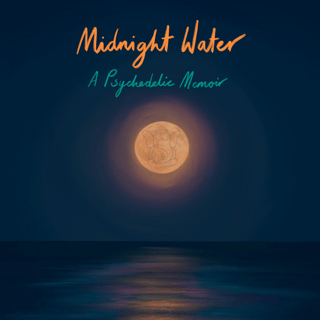
Speaker: It's like she was there for the birth of me in a new life. I was there for her birth into a new life and then witnessing all of these different transitions since. ah So the reason we're here talking today is because I wrote a book called Midnight Water and different characters kind of wove themselves into my story.
Speaker: ah The book has been out for a couple years now, not even two full years. And it feels like the characters in that book um are from a movie or like a myth.
Speaker: It already feels like a different lifetime ago. And one of the reasons I wrote the book was to be free of the stories from my past so that I could choose the stories for the rest of my life.
Speaker: And Ischel is one of those people that has exemplified moving beyond past stories, like being one kind of person living into ah life story and then starting over and then doing it again and again.
Speaker: And lot of people I hear from when they read the book, they kind of they're amazed like, oh, wow, you did all of this amazing work. You helped your sister. You helped your dad die. You were, you know, you were a mother to your two children.
Speaker: It sounds amazing on paper. And then here we are kind of living this regular life. And one of the themes I'd love to explore with you, Ishael, today is how do we find that magic, that like secret ingredient in regular life that produces joy, that that allows joy to arise spontaneously without needing it to be a fancy life or a glamorous life or whatever.
Speaker: ah an adventure-filled life. All those things can be amazing. But on those day-to-day moments, you know I want to kind of explore this magic that I feel you found and was a apparent to me even when we first met.
Speaker: um So maybe we can start there. what do you you remember what it was like when you first walked into that weird building in Baltimore? Or... I do.
Speaker: i do remember. And I had no idea what to expect. I would like to say that I grew up in a little town in Trinidad called Uruka, and I had no idea what psilocybin was before I entered that study.
Speaker: ah The desire to enter the study for me was born out of a desire to meditate.
Speaker: And because I'm not, I can't account to myself for meditat meditating. ah Back then I couldn't. i would start and drop off. I'm like, oh, if I can find some place I can go where I have to be accountable to someone else.
Speaker: And so this study popped into my, into my awareness and I saw psilocybin. So I went to my husband who worked at Johns Hopkins at the time. And I'm like, what is psilocybin? And he's like, Oh, there's this thing called magic mushrooms and whatever. I'm like, Oh my God, that sounds like a, you know, a bonus that I would get. And so I entered, I had no idea, but I am able to go forward into experiences without expectations.
Speaker: Um, And it it was it was really good. It was great to just get to know people, to just tell my whole truth to my guides and um and meditate on a daily basis.
Speaker: and keep a journal on a daily basis so that I can talk about it with my guides. So it helped me in that way to um to gain what I was desiring. And um to answer the beginning of your question, you know, it's like going forth and taking the opportunities that life presents you.
Speaker: Even though you might be scared sometimes, but you know, because we know that this is what this life wants right now. you know So even though I didn't know what it was, i went in there and it was the beginning it was a new beginning all over again.
Speaker: So um it was paper, it was people. It was like so much paperwork. Yes, there was a lot of paperwork. Beautiful, beautiful people. Yeah. yeah And so, you know, a question that people um often ask me, um and we don't have to spend too much time psychoanalyzing Roland Griffiths, but I wonder, coming from your world, what was it like to meet Roland as the head scientist? Like, what did what do you remember about that, those conversations? Because early on, remember, you had to pass several gates to
Speaker: You know, Mary Casimano was the first gate, and that must have been a breeze for you you. must have just laughed and chatted. She was the sweetest thing ever. She's just so sweet. I'm sure you guys just hit it off. And then it's like the final gate is Roland. And I'm sure you charmed him as well. But I just wonder, like, what do you remember about that meeting?
Speaker: I remember Roland's passion for the study, you know. And he was so, like He believed, like he believed in it, you know?
Speaker: But, and this is this is how I see people a lot of times, right? I see people as that age of maybe 10 or 12. Most people, I see them at an age where they they they have that excitable childlike,
Speaker: um space. So he was like a really excited boy about this thing that he was building, working on. and um And because of what I, when I learned about what they were hoping for with the outcome of the study, I was very excited to be a part of it. I was very excited to join it because I had already known that yes, joy, eternal joy is possible.
Speaker: And so one of the funniest things about the meeting with Roland that he forgot to express to us, the guide. So it was me and Bill Richards were your two guides and Bill, you know, the elder clinician in the room and me, the like newbie,
Speaker: researcher who doesn't even have any clinical training. It's like, couldn't be further apart on the spectrum of experience type of person. These are the two people you get. And somehow in the, in the transition from she's in the study to working with you, he forgot to mention that you'd had this life changing mystical experience in Trinidad.
Speaker: And so I wonder And i you know it's like there's so many times, I think, Ishael, in your life that you've gone through these transitions. But I think this is an important one because right now, people often disregard the importance of the mystical experience in favor of like a biological explanation for psilocybin.
Speaker: And i found what was interesting in your story was that you'd already had a mystical experience. You'd had this life-changing event and you still were interested in what meditation, spiritual practice, and psilocybin had to offer.
Speaker: So I think it kind of flips the narrative around that, you know you came to us out of a life-changing experience, very open. And so I wonder, just like kind of take us from like who Michelle Bodycomb was in Trinidad to then how you got to Baltimore through that.
Speaker: And there's a lot of details. So you pick the ones that you think are the most important, but. and And I won't pick because it's just, um the universe is going to, Bring out of me whatever needs to be heard right now in this moment.
Speaker: ah My very first mystical experience, which was in 1999, can't you remember the date or the month because I was just living life.
Speaker: And it was a spontaneous awakening into this knowing of joy, peace, and a truth that no matter what I did in this world,
Speaker: I was always going to be okay. As long as I act out of love for myself and all involved. And I did not need to feel responsible for any but how anyone chose to respond to me taking care of me, right?
Speaker: And I also knew that love is all there is and only love is real. That has been my byline since that day. Like I live by those words. And it was a spontaneous. So what was happening in my life at the time is I had decided to leave my first husband, my daughter's dad, my daughter's now 32, 33, I think. and he was mad at me. My family was mad at me. His family was mad at me. So I felt alone in the world.
Speaker: I was working at a job where I was not happy. And um the universe sent me someone to introduce me to journal writing and meditation. So I went to this six-week workshop that just dropped in my lap.
Speaker: And I'm like, oh, I go there because I'm going through all of this thing and I can't figure it out. So I learned meditation. I would go through guided meditations. It was one day a week for six weeks. And she would guide us. we would have I would have visions or visualizations. And then I would share my experiences. And then the very last week, I had a ah vision that was so profound, like it moved me.
Speaker: And I said to the facilitator, I said, I feel like I'm at a threshold that I need to cross over, but I don't know how will you help me? And she said she would, but she had to go away for two weeks.
Speaker: And in that two weeks, I would go home. I'd be completely like devastated at work and home and my life just sucks. And um and one evening I went home and I laid down on the floor.
Speaker: And I said, God, usually, you know, I'm trying to figure out how to fix my life so that everybody's happy. Because all I could see is they're happy and I'm not. I'm happy and they're not.
Speaker: So I lay on the bed and I say, God, usually I know what to do next, but this time it's up to you. That was a thought. And instantaneously. I felt joy, love, light as a feather.
Speaker: I felt like, so I was like, I wish I could bottle bottle this and give it away because that knowing and that feeling and that joy and that peace and that love has never left me to this day.
Speaker: You know, so that was my awakening. I remember I would go to work after that and people would see me in the street and ask me, what are you on? What are you smoking? Because my joy was so, they'd be like, what? Because, you know, in the Caribbean, people smoke marijuana, weed all the time. They're what are you on? You know?
Speaker: And I'm like, I don't know. And I had no clue because I did not go searching for this. This was like, a but this was a blessing blessed by grace. So it was complete surrender.
Speaker: You know, um and I had no teacher to say I can go to and they can guide me. So my guidance that I received after this, before this, my whole life has been the universe.
Speaker: So I just flow with it wherever. and um And that was my awakening experience. And some it just stayed, it stayed, it just never left me. I know that the ground that I stand on can never be shaken. I know this whole world can fall down around me and I'll be okay.
Speaker: Like no fear, no, just love for myself and everybody. and I can testify to this. When I first met you, you were talking like this.
Speaker: and I was just like, this lady's nuts. like Because I hadn't met anybody else like you. I was like, this must be like for you know to impress us or like because she wants to be a certain kind of spiritual person or like maybe she's a real jerk at home and she just thinks she's happy.
Speaker: I had all of these judgments about you because you were like an alien from another planet. Like I didn't know that it was possible for a human being to be as you were and authentic.
Speaker: And it's still shocking out of, you know, in the last 15 years, I don't think I've met another person like you. And when people ask me like, oh, is the mystical spirit experience even important?
Speaker: I'm like, it's arguably the only important thing. Because you can do all of this other change. You can improve your anxiety. You can improve you know how you feel about what happened to you as a kid. you can You can make all these incremental changes, but there's that door that you can walk through.
Speaker: And once you've walked through it, you cannot walk back through it. You can't lose it. That's that's very true. That's very true. What I tell people when they ask me, it's ah but man it's complete surrender.
Speaker: And so I'm not religious, but the Bible, you know, there's something in the Bible that talks about being in this world, but not of this world. ah and And that's it. It's like, everybody's going to see me or anyone else.
Speaker: And you look the same. You do the same thing. If you have a job, you go to job. If you're raising kids, if you've got a family, you're doing everything. But that surrender, that complete surrender, that's how I live. It's not my will, but thine.
Speaker: you know And so like even if something comes really strong through me that says I have to go somewhere, and it's the will of God or the will of the universe, I have to go.
Speaker: i can't say no. Right. So you've, in a way, you made...
Speaker: yeah Well, it's like you made a kind of choice not to choose what was coming next, but to give up, to totally surrender. Yeah. and And I think I wonder if one of the reasons a lot of folks have trouble with that first step is because we're not taught that surrender is safe.
Speaker: You know, like in our culture, we don't have a lot of role models demonstrating that surrender is a good choice, right? We're always taught that like being in control is the best choice, like being i control of being a certain kind of person who, um you know, has all these characteristics.
Speaker: And what I always found interesting about the psilocybin studies is i could see people letting go of that control for the first time in their life. Me too. you know It's like i I must have started with like an astronomical level of need for control. So now it's just down to an average amount and it's still you know it still makes me miserable sometimes. But man, if I didn't start chipping away at that, I would have grown up to be of really stubborn, miserable old lady. And like now I'm just an averagely stubborn, you know somewhat unhappy middle-aged woman who's still working hard.
Speaker: But that surrender, I think, doesn't come naturally. And it's a really scary thing for a lot of, especially Americans. I don't know what it's like in Trinidad. You grew up Christian. Yeah. I grew up, I was raised Christian up until I was a teenager when I told my mother I'm not going to church anymore. it didn't make sense.
Speaker: You know, and um and then I was just, yes, I'm Christian because our country is Christian, but I don't identify by any of those anymore. And so interestingly, one of the other themes that has come up in the past, like Eileen and I have talked about, she grew up in Ecuador and it's a different kind of, um the focus isn't on the individual, it's on the family unit.
Speaker: yeah And while there's some surrender of individual responsibility in terms of like, I know I'm taken care of by my family, there's a lot of rigidity around like what's allowed in the family. Yeah.
Speaker: you know So I don't know, Eileen, if you want to reflect on that, like, where's the, is there space in the culture you come from for this kind of surrender? Or is it always kind of the most important thing is still like within that family function? You know, it's like, for an individual to go off on this kind of mystical journey.
Speaker: yeah Is that something you see examples of? Or is that That's an interesting question. um Well, I mean, Ecuador is still Catholic. So I grew up in a Catholic family with everyone praying and praying to God. And so I suppose in that sense, certain prayer practices are like surrender. I'm not yet aware of...
Speaker: someone in my family having been a mystical like well my dad did but um yeah we have a nun in the family so it'd be interesting to ask her but i would say um i don't know there's just something inherent i've said this before by latin culture that's just generally a little bit happier they can just be happier with less because they fully fundamentally understand that their family's health is wildlife. I mean, that's how I am i'm understanding. I was speaking to um our friend the other night, ah who is a single mom. She's from Ecuador. She's in Scotland. She's a single mom.
Speaker: And she's just happy as well. She's just, she's gone. She's had to put, you know, she's been through a really hard time. And yet, because her kids are healthy, she can feed them. She has a house.
Speaker: And she's just happy. And that like really struck me the other day when ah when I remember just how potent that kind of view from Ecuador just is. And and I couldn't say that 100% of people there um are like that.
Speaker: But it again, we can we can really complicate this this whole joy of living, this whole happiness thing, because we don't have a framework within which we can just say, actually,
Speaker: Just the joy, just the fact that we're alive, the fact that we have life, that we are healthy, or that we can interact with each other that we just, the the one thing I will say, and i but I really paid attention to this with my Ecuadorian family, they're just happy to have each other.
Speaker: That's, I would say, that's one of the main things. they They think that's amazing. It's amazing that we have each other to share with with this life. um And, and i you know, I still have that with my mom and sister.
Speaker: It is harder to keep it up in this culture, I have to say. Like, there's a just a, I would say the the levels of general happiness are definitely, in my opinion, higher in Ecuador and and such countries. um Yeah. Yeah.
Speaker: Yeah, so that's interesting. So the different countries and depending on what that country or culture emphasizes, can produce greater happiness or less happiness. I don't know, Ishael, what was your experience growing up in Trinidad, even before you had this experience?
Speaker: It's similar to Eileen's. There's Christianity, Catholicism, um Episcopalian, and um and there's this spiritual Baptist religion is what my mother was a part of.
Speaker: And they were mix, a blend of Christian and African religion. um And what I so would think, which is what I hear Eileen saying, it's about community. And I was just really feeling this recently that where there's an extended family and in my case, I grew up in a...
Speaker: I don't like the word poverty. I grew up in an economically challenged community. Right. so money wasn't abundant. You know, i mean, as a kid, I had maybe one of a few days where we had no food, but we were always there for each other.
Speaker: Always, always there for each other. Like like the bond. I'm so close. Like my cousins are my brothers and sisters. Right. Um, the neighbors are my aunties, like aunties, like they're not blood, but to me, they, they're more than blood.
Speaker: Um, their kids are my brothers and sisters too. So we grew up like that. Everybody looking out for each other. It's not like that ah today. Today, it's so much more um divided. you know Just, I guess, knowing about money and what other countries have and getting um caught up in material things has um taken away.
Speaker: But in terms of spiritual seeking and stuff, it was not a thing in my country am i when I was growing up. ah When I had my um mystical experiences, I didn't even know about spiritual seeking.
Speaker: Um, so. Well, and it's interesting because like when I'm hearing you two speak, it's like, it's almost like the family, the extended family unit being the source of happiness and safety works to a point.
Speaker: But then like you, if you do an action that disrupts the family unit, you then suddenly you're cat you could be cast out, right? You said it, you know, your family was upset with you, your husband's family was upset with you, you know? And then it's interesting, because I think often about like, what's like the ideal way to be human.
Speaker: And it seems like that kind of tribal or like family, extended family community works like 90% of the time. But we know as women, it's very easy to make a mistake and then you're you're out you know, you don't you don't do motherhood the right way, or you don't, you know, you know, or you don't do marriage the right way, whatever it is, it feels like the rules are more strict for women than for men. Oh, always have, everywhere, the entire world.
Speaker: So I find it fascinating that like so many of the world's religions, the the hero stories, the but God, the people hearing the word of God, these are like male stories.
Speaker: Because it was probably safe for those men to branch out of what they were ah part of. But you don't hear so many stories about female mystics. Because it's a little bit more dangerous to do that, right? It's like you're walking away from all of this safety and love.
Speaker: And i always what I always found fascinating too with you, Ishael, is that you kind of came from that place. You went on your journey. And then at the on the other side, it's like it all reconnected. You didn't lose anything.
Speaker: At the end of it, you know, you you still have this amazing relationship with your daughter, your brother, your cousins, like you go back to Trinidad all the time. So that the exile that you were that you thought was going to happen was actually, it wasn't real. It was just in your mind. No, exactly. Something bad is going to happen if I followed my heart.
Speaker: Exactly. But we don't know. Listen, when we think about our future, or how our life, the trajectory of our life. We can only inform that based on the past.
Speaker: If it's like the life I live today, I could never have dreamed that up 20, 30 years ago. I could not. It's like way out of this world. So... For me when I'm thinking how to fix my life, it's like, because if I'm choosing to be happy and they're mad at me, then if I choose to stay in my marriage where I'm not happy for them, then I choose to live unhappy for the rest of my life.
Speaker: But what the universe showed me as you choose you. You step off into that darkness for joy, for love, for peace, because I decided,
Speaker: I will be the happiest person by myself.
Speaker: And then the universe says, yes, you do that and everything else I bring on to you.
Speaker: I have more people all over the world that I love, family, chosen, blood, family, you know, all over the world. I'm like, I'm not alone. I'll never be alone.
Speaker: And that is not me. I'm not special. i know this is possible for every human being on the face of this. so you know as So confronting that fear, the possibility of being totally alone.
Speaker: Yes. And then realizing that you can't be alone. You're not alone. can never be alone. Yeah. Yeah.
Speaker: No, no, no
Speaker: So, but I wanted to come back. Can I come back around to something you just said? Yes. You said, um you talked about the women and how dangerous it was for women to come forward. And I was remembering my psilocybin journey in the study.
Speaker: Oh, yeah. Talk about that. Yeah. So because my my experience, my journey I experienced as past life experiences, right? Right. And about three of those experiences were one, i was like royalty in Scotland and I was killed.
Speaker: Eileen, I totally forgot about that. It's wild. Eileen's dad is Scottish. She's in Scotland. oh wow. i was um I was visiting like the slums area and I had a soldier with me and then somebody just came up and ran and stuck a knife in my back.
Speaker: And I felt it. Like I felt it physically too. And i I felt it. And then I was like, Oh my God. And then I'm like, Oh, that's me. You know? And so that was that one. Another one i was in, it had to be somewhere like Rome or one of those European, old European places. And I was being burnt.
Speaker: Like I was laying on the pile with the wood up against the sides and they were sprinkling like kerosene or something to set me on fire. Right?
Speaker: So... and um And then there was the one where I was a woman, of a lady of the night in New Orleans back in the day. Right? And um yeah.
Speaker: So i I remember, as you said that, I'm like, yes. I mean, for eons, we've been killed. We've been murdered. We've been burnt at the stake. And just last night, I had this dream where someone said, oh, wow, you're a witch. I'm like, yes, I'm a witch. I always have been a witch.
Speaker: Wow, no, now it's all coming back because... You know, your session, well first of all, we had to unblind the session. From the scientific side, people could, let's just, this is like my little like side note for the people kind of wondering about the science of this.
Speaker: You could have had a low dose your first session, but it was a medium high dose, which is a lot for someone who's never had any drug before. Had you, you hadn't even smoked pot, I don't think, right?
Speaker: And so, yeah. You went there right away. You went to the depths of what psilocybin had to show you. you had amazing um moments of grief and forgiveness for your mom, the past lives.
Speaker: And then it all kind of got cut short for medical reason. But even like an hour and a half of psilocybin was still like so much. It was amazing. That was like 20 years.
Speaker: Right. Yeah. And the past lives, I do remember, I didn't think that was possible. i What I remember, again, being like, is this lady like for real? Is she like, is she coming up with these fantastical stories? Like, is this just her mind?
Speaker: being so imaginative that it hurt like somehow her own imagination turned on. And then, of course, later on, I had my own experiences just like this. So now it's like old hat, very normal for me.
Speaker: But I remember at the time, I'd be like, this I've never heard anyone talk about this ever.
Speaker: Yeah, I forgot my mom had died. In 2009. Pretty recently, right? Like the last year. And I hadn't grieved for her. and I do remember, I remember, and this was in Africa. Actually, it was in Kenya. It was the Maasai people.
Speaker: i had never been to Kenya before. I have been now. But when I had that journey of seeing my mom on a grass mat, on the ground, dying, and this hut dying,
Speaker: and ah you know, she was outside this hut and the person who was there was like slim and skinny. And I was there and I was witnessing it. And I started, I'm like, Oh my God, it's my mother. And I started sobbing, like sobbing uncontrollably.
Speaker: And then I was like, Oh my God, it's me. You know? So it's like, I saw myself as my mother and then as me dying and that sobbing. I remember asking, please somebody hold me.
Speaker: i remember. Yes. Yeah. Yeah. And wow, that was very moving. It felt like that was like true completion of my grief for my mother.
Speaker: Yeah. I mean, this is the amazing, I call it intelligence of psilocybin. Whatever psilocybin is, it's an ancient organism. It's been on this planet for a super long time, way longer than humans.
Speaker: And sometimes it feels like it's using its super intelligence to kind of come in and help us very creatively, like with these visions, understand these poignant moments of our life.
Speaker: And I mean, i think in one way, Eileen and I kind of came together because we'd had these visionary experiences with our family member.
Speaker: So while they were dying, it was like this level of visionary grief. um And it was beautiful and it was mystical. And so but our sober experiences with death were like what you had with psilocybin.
Speaker: And so again, I think there's this theme of, it's not like psilocybin turns on something unique. It's that it's kind of opening us up to something that other experiences could just as well open us up to, whether it's death of a loved one or you were in a crisis of, yeah you know, who am i What should I do? yeah.
Speaker: perhaps it's just like how you get to that precipice. How do you get to the edge of the cliff? Right. It's like, I've been asked that question many times. And the only response I can give is I have always lived sincerely growing up where I grew up.
Speaker: There was nothing to compare my life to. Everyone's life in the village was kind of the same in the town. And I guess my mother, I was raised to be contented, you know, so I was contented with life.
Speaker: um I cannot remember, like, I have no memory of pretending to be something other than I was. None. So, and I'm not knocking anybody's life for however it turns out to be because is,
Speaker: in this physical form, you know, has to survive. However, it figures it it happens, whether it be donning a mask or um suppressing stuff, which is a lot of stuff that I released over the years after becoming awake, you know, that was suppressed that I wasn't even aware of, you know, a simple one ah is like recently my mom, I had this,
Speaker: in my meditation that asked for like, we pulling all my soul fragments back. And i had this memory come up of when I was like six years old and my mother had left me with my auntie and my grandmother to go work in a different town.
Speaker: And I got sick, like within a day, a couple of days of her leaving, i was so sick. For week I wasn't getting better. So they sent for her to come home. Soon as she came home, I got better, right? So this is me now today, like in a few weeks ago, revisiting this memory.
Speaker: And what was the reason for my sickness? And it's because I didn't feel safe. And I didn't feel safe because we had just moved there with my aunt and my grandmother and my older cousins were kind of bullying us.
Speaker: o And so I got sick. But that, I mean, like I love all of my cousins to this day, but I have not remembered that anymore.
Speaker: right You know, so it's a memory that that that came up to be experienced, the pain to be felt and released. You know, and um and I've had many, many like that over the years. And, you know, the thing about it, having a mystical experience and becoming awake doesn't mean that you won't experience pain or dissatisfaction with something. Right.
Speaker: It just means that you're better able to navigate through it. without losing the truth of who you are. Because if you're in this physical body, you're going to have to- Okay, so you be you're better able to navigate without losing the truth of who you are. I think that last part is so critical, without losing the truth of who you are, because there are lots of ways to navigate life's challenges by becoming less true to who you are.
Speaker: Yeah. By becoming a different kind of, you know, hardening up, being in more in denial, being more in control. Like there are lots of ways to do it. Yeah. But it's very possible.
Speaker: Very possible. And so I don't know, Eileen, it's interesting when she was talking about the bullying, because that's something you've talked about, too, that when you left Ecuador for Scotland, so much of that was such a shock to your system, because it's like you were removed from your extended family.
Speaker: The climate was very different. You were bullied for being, you know, for different than the other kids in school. and I don't know. How do you feel like those childhood experiences played out through your own mystical journey, like with your dad? Do you feel like that was, do you feel like all the grief kind of came out after his death in a way? Like it finally felt like it could come flowing through or...
Speaker: Yeah, I mean, absolutely. i think we have spoken about this before in that there's the grief of the loss or the pain of the experience, but then that tends to open up the the the gates to the underworld. So everything else that you've been repressing or not processing or haven't yeah fully made sense of comes out to rear its ugly head. And that's exactly what happened for me.
Speaker: was just years of repressed sadness and ah Yeah, just unprocessed emotion and mostly confusion because I was still trying to make sense of having left Ecuador and trying to be in this very different culture. Hmm.
Speaker: I mean, that was certainly true for me. i feel like my life would have gone mostly unexamined if my sister hadn't died. And like, who knows? I might've had another life event that inspired a lot of stuff to come up. But sometimes I hear scientists and clinicians poo-poo the idea of like psychedelics revealing old memories or reminding you of things that you've forgotten as if they're kind of like false memories.
Speaker: Yeah. I said, no, they're not false. It's just we forget 95% of what happens to us because we need to survive. Like, if you remembered all of the crap that happened when you're a kid, like you wouldn't get through first grade, you know, you'd just be sick at home, sick in bed all day, right? So...
Speaker: you know When we get to be adults and we start opening these doors, it's like finally those memories feel like they can be seen. And I think it's a good process, but just being open to that as a healthy thing that's happening rather than some kind of either character flaw or some kind of personality disorder, which is how I've kind of seen it talked about. Like, oh, all that like childhood memory stuff, like, come on, get a grip, like move on.
Speaker: You know, who knows if that was even real or it's like, of course, you know, once you've had that revelation, when things come back, you're like, oh, right. It's just a part of me. hi Haven't seen you in a while. It's been a long time.
Speaker: You know, a good response to people fufu-ing it or shoot whatever. It's like a placebo. If it works, it works. Yay, I'm happy for it. So it may not be real for you, but if it's real for me, then it is pertinent. And that's one of the things that um I think people look for um similarities and they want to be in like the, what's it called? The crowd or the sheep mentality.
Speaker: Like we're all going to go through this together, but it doesn't matter what we do. We're going to come in. We came in this world alone and we're going leave alone and our growth and expansion while the interaction with others helps us, that expansion and that growth, we can only do alone.
Speaker: We can't do it anyone else. And no one can do it for us. We can't do it for anyone else. You know, so I'm always, yeah. but That's what's so confronting about living is is the realization that we have these experiences that come through us or come towards us. And like you say, we are the ones that have to face them, process them.
Speaker: And that can make us feel alone. But in a sense, I've been... really trying to see life playing us like a musical instrument. So instead of thinking that it's, ah you know, something that we're not built for, it's more like, ah yeah, life is playing through us. It's just these are different notes when you know, it's it's doing it with us.
Speaker: And so in that sense, we aren't alone. There is a larger intelligence moving through life. as I don't know what it is, but it's definitely intelligent and it will appear through us in different forms and shapes. And sometimes that will be these memories. Sometimes it will be if some people see past lives or whatever pops up for them.
Speaker: um It seems to be quite particular to people's psychology and cultural makeup as well. um I've seen some articles on that as well. It's interesting to note well what visions come to people according to what religious background they have or ah just how they're made up, you know?
Speaker: So that's always an interesting space to see how how it expresses, um yeah, how life wants to express itself through these these thresholds. I agree. I agree with that totally.
Speaker: Ishelle, I just wanted to ask, when when Eileen said that, do you remember Bill Richards used to always talk about like the opera that psilocybin was putting on for you? That like it had a beginning and a middle and an end that you're going to get the opera for you.
Speaker: And operas can take seven hours and there can be all these like ups and downs and long, you know, periods of singing. And like, what are they even saying to each other? But at the end, you're like, wow, what a beautiful story. yeah Do you remember that?
Speaker: i do. I do. Because, and it's the truth, because we'll listen to the same music and have a different experience. What I get is mine. You know, like I remember in the early years of my um after my awakening, someone suggested that I should start my own religion.
Speaker: I'm like, no, I'm like, listen, what I got is for me. Who am I to tell people that what I got, they should follow, you know, which is what a lot of people think and do.
Speaker: Yeah, people are just desperate for an answer. And they don't like when the answer is, i don't know what your answer is, you have to figure it out. They're like, oh, yeah come on, that sounds hard. yeah But I agree with you, Eileen, in terms of um what how you live, what you have been um exposed to, what has been imprinted on you.
Speaker: When you have your mystical experiences, that's what shows up, right? Yeah. Because this is what happened with mine as well. i don't know I think I told you guys everything, Catherine. So you would remember this story too.
Speaker: After that awakening moment, when I would sit to do my little five-minute meditations, there was a profound dream I had in my, i think I was 18 when I had the dream the first time.
Speaker: And on that last day of the study, um the not the study, but the workshop I was doing in 1999, but I had ah similar waking vision, which was me moving in a neighborhood.
Speaker: It was dark and everywhere I stepped became light. So it's as if I was bringing light. And so after after my awakening, that same vision kept coming back to me every time I i would close my eyes to meditate.
Speaker: and it progressed. Like up the hill, I would walk and I brought light into the whole frame that I was witnessing. And as I was midway up this hill, saw the horizon, suspended in midair, image of what I knew to be Christ.
Speaker: So it was the clothing that you would see depicted um on Jesus Christ in photos or paintings, but there was no body. There was no face, no hands, nothing, just the the clothing.
Speaker: So I would stretch, and I saw this, um and as I kept walking up the hill, that image came down, and we both crested the hill, and we we sat on the top of that hill for a very long time, and we talked, and I don't know what we talked about, but I talk with my hands.
Speaker: And so I saw my hands moving. And so Christ and I sat there and talked and talked and talked. And then one day when I had gone through, um i went to this crusade about accepting your purpose.
Speaker: And I made this conversation. um prayer, not my will, but thine, you know, from every fiber of my being. And I went home and I lay down to meditate. And this vision came back and Christ and I stood up on that hill and merged into one.
Speaker: And that was the end of the vision. So like, I can remember it, I can talk about it, but I don't see it the way that I saw it before. So I feel like if I was raised in a different religion, it could have been, you know, Allah, Muhammad, it could have been an alien, it could been anything.
Speaker: You know, it's just, I was raised Christian and I went to school and I studied about Jesus Christ. So, um that's what Christ, um, came to me. Yeah. So I do, I do, i but I'm not, do remember this.
Speaker: And I remember this was the story where I went back to Roland before your first psilocybin session. And I said, do you know that she's met Christ? How did this not get through to us before we were like the night before her session?
Speaker: And he's like, well, do you think we should cancel it? I'm like, no, we shouldn't cancel it. But it's like kind of critical information. Like, How did that just get lost in the shuffle? It just seems like in that and we just had this like moment of like, what are we even doing? This is so hilarious that like we're trying to study something that's so mysterious.
Speaker: And there are people just walking around who've had these experiences. And like, even when the story is shared with us, we don't fully register it. It's like our brains aren't yet ready to hear the reality of something like this.
Speaker: I know that. The ego is leading the way. Right. Or we're looking for what we want to hear, right? Exactly. Exactly.
Speaker: It's quite amazing to also see the figures on the mind of people just off the street that have had some kind of mystical experience or have, you know, and a lot of people just keep them quiet. i i When I went to do a residency at the Monroe Institute of Consciousness, I did a course that was, again, you run off the mill American off the street and I could not believe that.
Speaker: how many people had just had these things happen to them spontaneously or in dreams, um if you believe them, of course. But this center was set up so specifically so that people could share their stories without feeling ah shame anger.
Speaker: you know, some kind of prejudice against them. um and And for me, I was just sharing with someone other day how much I have zero interest in convincing anyone of this reality, like my the mystical reality. And I have loved my personal, as you call them, mystical experiences so much that sometimes I don't want other people to, I don't want to talk about them because I don't want other people to ruin them.
Speaker: That's... You know, sometimes, you know, it's fine. You know, totally, absolutely understand people wanting for things to be more materialistic and and to, you know, not let us loonies get too loose. But...
Speaker: um But yeah, but at the same time, certain experiences are really some of the most precious things we get to have on on in our lifetime. And I i was saying to some friends the other day who have started a spiritual path and that they you know They can just make things up for themselves as they go along and they can create their own domestic spirituality. They don't have to follow the guru. They don't have to follow the tradition.
Speaker: That's part of the journey, but really it's about their... day to day experience and their moment to moment experience that they're creating with their consciousness that's touching the the environment, you know, this realities constantly we're we're in this constant, intimate dance through our senses are in a consciousness with reality.
Speaker: That's in itself already quite amazing and mystical, and unknown, you know, fundamentally, it is the unknown that we're stepping into all the time. It's just that our brains can't quite hold that very well. So we freak out. as soon as we realize, oh my God, we don't know, like we fundamentally duck, our brains cannot handle what made us, we we freak out. And that's, you know, it's it's it's, I find it fascinating that we we were given consciousness and awareness to to see things, to have knowledge. And at the same time, that awareness can also drive us a little bit off the edge.
Speaker: We have to be careful and that's where some of these mystical experiences can also drive people over the edge um if we're not careful with how we hold them in our lives.
Speaker: Well, so that's actually really interesting. Eileen, myself, Ischelle, we all dramatically changed our life after this mystical experience. So I left my job at Hopkins um when my sister died, but it wasn't just her death. It was that a god...
Speaker: materialized into her body and spoke to me. Like you said, Christ showed up and we had a conversation. Ganesh showed up and we had a conversation. Like the energy is so palpable and real that you can't just continue doing what you did before that conversation.
Speaker: your life may end up looking fairly normal, but it's like we all kind of chose um and a path that was different than what was happening before. And so, Eichelle, you moved to America.
Speaker: um i left my job and became a mom, which is essentially like moving to a different country. Like I just upended everything I had trained my whole life for. Eileen, you...
Speaker: You know, you changed your path. You were an architect. You know, you're working these very grueling jobs and now you're an artist. And so I don't know, it's interesting, maybe using that energy of that moment to change your path is this is the health, is like the protective action.
Speaker: Like maybe if you just try to ignore it and go back to your life, that's when it drives you crazy. You know, if you try to just keep it under wraps.
Speaker: So I would like to speak to that. One of the biggest thing, because that's but it's it's interesting what you're saying and it's interesting the way you're saying it. Because way you're saying it gives the illusion of me being and in control.
Speaker: I did not make a choice to move to the US. but The universe seemed to like pick me up out of Trinidad and said, you do not belong here anymore.
Speaker: Here is where you belong. right I said, this box, you have outgrown this box. Get into another box. you know And when i I've outgrown this, you know I'm using the box you know metaphorically, but it's like you when you have that mystical experience and you allow...
Speaker: The energy that has built up with that to just move you where life wants you to go. That's how I experienced it. I really like that reframing.
Speaker: Yeah. So because, and I, and I think more and more now, even with the, like the changes that I've had, even in the yeah last year, more and more, I, I so i know that we have to re-script.
Speaker: We must re-script. The words are so powerful. They're so powerful that you use a word that puts you in a box. That's where you'll be. But if you use your words for limitlessness, then that's what you have.
Speaker: hu You know, so we're here to create, but not from an ego perspective. It's like having a desire and allowing the universe, that energy, that love to move you towards that thing you desire and manifest it in the way that it's best for you and the entire world.
Speaker: that's kind of how I experienced this, this, this thing. so That's a super helpful. That's a super helpful way of reframing it because I remember at the time, I knew as soon as my sister died that like my previous life was over.
Speaker: But then it's like I had to go back and somehow like justify the choice to people. I had to come up with a plan. I had to like schedule the departure. I had to say what I was doing. And like, there so it's like our culture makes it sound And then even in my memory, I say it was a choice, but like, was it?
Speaker: There was, I couldn't have made a different choice. I had to That was choice, yeah. But it's like, you end up owning it as a choice because of all of the steps you have to follow. And like, man, how hard is it to even leave a job?
Speaker: How hard is it to leave a marriage? How hard is it to make any of these like slight changes to the path that everyone expects you to be on? And that's it. It's like our culture makes it so hard to choose this limitless path versus one that's prescribed.
Speaker: And I will, I'll never forget my, my shamanic teacher from Scotland, she divorced her husband here because he just couldn't, um they couldn't see eye to eye on this. So she then kept saying, you know, spirits showing me to where to go now. And she just went to Nepal, she went to different places. And then she ended up in Bali.
Speaker: And someone gave her money to build her own center there. And ah all I kept her, all I heard from her was spirit is showing me where to go. is Spirit spooling me in this direction. That's the main thing she would say.
Speaker: And ah she now has her own teaching center in Bali that someone paid for. And I could not, I remember when I was learning from her, I could not get my head around that. I am too, too mathematical for that kind of thing. I was like, how does that, that doesn't make any, what kind of bet is that, what kind of thing is this? You know, I could not be, couldn't believe it then, even though I was already being played by life in that way, but I'm still too cynical. I would say I'm still quite cynical sometimes, but
Speaker: um But she just fully trusted and surrendered. And it's completely, it's so inspiring and amazing to watch her continue to live that way.
Speaker: oh That's awesome. And we can all live that way. Every single one of us.
Speaker: So I wanted to say to you, Aileen, that... You know, when you were talking about keeping, because this is the thing, I didn't tell anyone about my awakening right off the bat. I didn't know what it was, and I wasn't telling anyone about it.
Speaker: And even coming to the U.S. and getting more and learning more about it and getting more into environments where people knew and had ideas and stuff, I would not share because my reason had always been i i have no desire to justify how I choose to live to anybody.
Speaker: So I'll just keep everything to myself and live my joyful life and not share for anyone to say, well, this, well, that, well, whatever, and shoot me down. And then I have to come like I'm this defensive or or trying to justify why. I'm like, ah no, we don't need to justify in this world.
Speaker: No, we just need to be happy, joyful, and at peace.
Speaker: Yeah. So here here's a question. And I would like, I guess I would love for each of us to kind of try to answer this. And it's a hard one. So if we consider the, and I don't know for Eileen, you know, for me, there's like a specific, you know, night of my life with my sister that was like the mountaintop, you know, the closest I got to that heavenly realm.
Speaker: Eichel, maybe for you, it was that merging with Christ, you know, if we think about it in this mythical way. And Eileen, I don't know if there's like a particular moment with your dad or, but like, let's just think about a really specific place where like if we were climbing Mount Everest spiritually, like we got to the top, we took our picture, we're like at the highest point, and then we're kind of back down on earth.
Speaker: So since that time, what would you say was the hardest and also the the easiest moment, like since? because I think people often wonder, like what does it look like afterward? you know it's like it's not And we said we said this a bunch of times, it's always it's it's always going to be challenging in different ways.
Speaker: And it's also, but I also feel like there are these other moments where it it is really easy in ways that are just as miraculous. So I just wonder if we could talk about that for folks so they can kind of get a sense of, if they've never had a mystical experience and they seek out mushrooms and they have it, then what?
Speaker: Right? What do they have to look forward to? What does it look like after you're at the mountaintop?
Speaker: And you could use what know, Ishelle, you may not like the mountaintop metaphor, but I think it's one that people can easily grasp. It's fine. It's fine. You know, um what I was thinking is I'm like, I should let you guys go first because like when I answer these questions, like I have not had a difficult moment.
Speaker: And yeah its guys people call this stuff um like spiritual bypassing and stuff. And it's not that, I mean, My brother had cancer. I spent all of 2020 there with him.
Speaker: um That wasn't difficult. That's just where I needed to be. And I was joyful in it. um Sweetie got beat up and almost died Patterson Park. I mean, in the moment I get the news, like all of the emotions, the body reacts, but what it was it difficult?
Speaker: it It comes back to that. You're just able to navigate these things. And I haven't put any labels on them. It was just experiences that I had and I reacted in the moment.
Speaker: So ah so i kind of I tend to stay away from these kinds of questions because I'm like, nobody wants to hear. And this is why I probably haven't shared that much of my life publicly because yes, I was sexually, um I had inappropriate sexual behaviors, um experiences as a child for years.
Speaker: um And I don't, I'm not a victim, so I don't use the word abuse. Um, and yes, I've had experiences that people would say were horrible, but in the midst of all, they were just experiences.
Speaker: And I navigate them in the best they but way that I can. I get the news, you know, somebody died tragically. My heart breaks open. I sob. um But my peace and my joy is still there.
Speaker: I'm with them. I'll hold space. I'll sit. I'll listen. I'll take anything they want to just speak. And i' this is who I am. But is it difficult? No, never. Never.
Speaker: You actually answered the question, though. So thank you. That was perfect.
Speaker: I mean, I also wonder how much each each of our psychologies. I mean, i come from quite a troubled when my mind's always been quite troubled. I'm not someone that's a natural joy. I mean, I am now I have this natural joy, but I never was that way. So I've had to fight really hard. Actually, I would say for me.
Speaker: i've I've experienced many Everest moments. Actually, I was just getting the flashbacks where, you know, after dad died, I felt it was high for months afterwards, I felt altered. There was a few more, there's been a few key moments in my life where something opens up.
Speaker: And you know even after, whether whether i was doing psychedelics or not, that the effects would linger and I would kept thinking, that's it, I'm enlightened. And then the the the effect would wear off. So for me, the hardest part was always realizing that these Everest moments weren't gonna stick around.
Speaker: So I would i would then ah realize the places in my life that didn't feel good. So that was always the teachings is when I would come back down from the highs I could more clearly see what wasn't working in my life. And what was, again, the hardest thing was making these big choices where, you know, I had to leave architecture or I had to leave Scotland or I had to usually sometimes just leave a man I was with. I've i've left a few men in the last couple of decades. And there's always this this kind of realization of,
Speaker: to to get to whatever next level that life wants to get me to, there's big, scary choices I have to make, and I just have to do them. i I don't always do them joyfully. i do them, i I come with a lot of fire. So it's usually quite intense for me, because I feel like I have to burn things down.
Speaker: So I would say the hardest part for me has been my own intensity and transformation. I'm not a soft transformation space by any means, and I'm quite intense.
Speaker: But it means that I also, when I get the the highs or the Everest moments, they're extremely beautiful. they're insanely magical. And, um and sometimes you just, you know, you get characters that come with the the extremes.
Speaker: I think that's part of my artistic nature. But I i do believe it's, i I do think people's psychology plays a big part in how, how, how easy or hard these things are.
Speaker: and
Speaker: Now I have to answer my own question. That was a hard question. So the first thing that's coming up, and I know it's kind of a, um it's not like a specific hard moment, but um I was really shocked and it took me under for many years how much pain I was in after I had my second child.
Speaker: i I had convinced myself that because i was so brave and I had done all these amazing things and I had navigated all of those previous transitions so well that I started to really blame myself for how badly I was navigating the postpartum period with my son.
Speaker: And now he's turning seven. And it's still, I'm starting to finally come out of the postpartum period, which is wild that it took seven years And it's kind of like a psilocybin experience. When you're in it, it doesn't make any sense.
Speaker: It's just like one thing after another. And then when it's finally coming to a close, you're like, oh, I'm starting to have a sense of what that was about. What were those seven years?
Speaker: And um so I guess I would say the hardest thing for me is being overly self-critical while I'm still it. the the navigation. like When I'm still transitioning from one place to another, im i'm hypercritical about like whether I'm doing it right or like why is it hard or why does it hurt.
Speaker: um And every time I do that, once I kind of reach the close the end of that transition, I was like, oh, of course. It was like that so that I could be even more myself the at the end of it.
Speaker: And to me, the way I've made meaning out of that, because otherwise, if I didn't make meaning out of how hard these things feel, it would feel kind of like nihilism, right?
Speaker: um The way I've made meaning out of it is there are so many other humans who also get caught up doing the exact same thing I've been doing. And it helps to have one person say to you, it's fine.
Speaker: You're going to be fine. This is just something you're going through. Like you said, it's just an experience. And here I am promising you that after some amount of time, it will change.
Speaker: And that may not feel very good when you're in it, but at least it's somebody giving some sense of clarity to the process. So now I can say, sometimes it takes 10 years to grieve the loss of a family member.
Speaker: That's fine. Sometimes it takes seven years to become yourself again after you've created a whole human being and nurtured them. um You can say, Yishel, sometimes it takes 15 years to have...
Speaker: to have to let go of, what did you say? Resistance to responsibilityibilities and responsibility. to responsibility, yeah. And someone would be like, I didn't even know that was something I needed to work on. You'd be like, don't worry, one day.
Speaker: Not 15, 58. Oh, fifty sorry, right. It's not just sincere. Yeah, I guess I was saying like since the since the Everest moment, but... um Oh yeah, that's what you said, but no.
Speaker: Because resistance, to we have to responsibility. Yeah, my whole life. Yeah. Or yeah, for me, it's like yeah one of the patterns that I'm just beginning to understand is so embedded in my psychology is um like sickness, pain and suffering, sickness related pain and suffering is at this, like, it's like a core part of my identity.
Speaker: And I was like, oh, why is it like that? Like, I finally was like, maybe it could be different than that. So that's kind of like the new adventure that I'm just starting on is like, what would it look like?
Speaker: For Catherine, who's been one way since she was, don't know, two years old. That's the first time I really remember being so sick that I thought I was going to die. So from two to 43, I've done it one way.
Speaker: and was like, what would it look like to do it a different way? So that's like, I keep trying to find that edge and be like, wow, for 40 something years, it's been one way. But like, what if it was different?
Speaker: possible so I just want to say that you however you process
Speaker: and Eileen with your fiery processing all of it is normal like however we process in this moment in this physical moment is exactly what we need for our own like there's evolution there's no time limit there's no you know cookie cutter you know so it's like and it's all perfectly fine it's all i don't like using good and bad but it is just all divinely ordered in the moment based on where we were born and how we were raised what imprints were made on us and um yeah it's all perfectly perfectly fine
Speaker: If you guys needed to hear that, I just had to say it. I do. And I also think there are probably people listening who need to hear that, right? Yeah. Did we answer, did Eileen and I, did we answer the parts that are easy?
Speaker: Oh, yeah. roughly to It's way easier now for me to leave things that don't feel good. Way easier saying no. Oh my God. I love it. It's like, I try a new job.
Speaker: Eight months in, I'm like, oh, no, this isn't working. And everyone's like, but you it's we're almost to the end of the school year. I'm like, I know, but I could just go home today. It's fine. I don't need to finish the last three weeks. They're like, what's wrong with you? was like, it's I just have learned this too many times. You don't like, as soon as the invitation is done, you're like, I'm out of here.
Speaker: So again, maybe that's too extreme and in one way, but I feel like leaving uncomfortable situations is getting, is very easy compared to how it used to be. Yeah, I would say the same and also just getting clearer and clearer of how my peace and joy feels.
Speaker: That's the easier part of just kind of, yeah, choosing more things that just match those frequencies that you feel in these heightened states. Yeah. um I would say my creativity is probably the most flowing part of all of that. Just making art, ah ideas, dreams.
Speaker: um Yeah, those i would say that's that's the easier pieces is the imaginal realms um attached to this. And Michelle, all of it's easy for you.
Speaker: Yeah. So no, you know what I'll do? I'll come back full circle to when you started and you asked me what's the secret sauce. Okay, great.
Speaker: The secret sauce is feelings. Hmm. It is because this is why it's when I make, not that I don't go through the usual thoughts and emotional stuff, right?
Speaker: But my feeling good It's like the most important thing in my life. Like I will not give up feeling good for anybody or anything, not my child, not my husband or a job or nothing.
Speaker: Me feeling good, feeling free and at peace. but that That's the most important thing in my life.
Speaker: Wow. feel like that's such a... It sounds so obvious and it's also so such a challenge to how we
Speaker: It's like ah it's like in in America, our whole thing is like feeling good doesn't matter, but working hard is what matters. Like we all we have all these like weird ideas about like what matters and that like people who feel happy and feel good about themselves are, you know, too selfish or like we come up with all these like ways to gear children and people away from happiness.
Speaker: And then you you get to a point and you're like, well, I've worked really hard and I've cared about other people. Why am I not happy? It's like, well, because you we were trying to keep you from being happy. Like that was it was part of the ah plan is to keep you from being happy.
Speaker: So I think for some people who come to psilocybin or psychedelics, they're looking, they it's like they've gotten to that point. They've realized no one has ever cared about whether they're happy, but then they don't know how to do it.
Speaker: And I think that's still the the, you're saying there isn't necessarily a method. For you, was a lot of, i guess, luck being open to new opportunities that appeared.
Speaker: You know, for me, it was the luck of tragedy. I mean, like certain people that I lost in my life forced me to get more clear about what happiness is.
Speaker: But I couldn't, I couldn't prescribe a method to anybody.
Speaker: Neither can I. It's all too wild for a prescription anyway. you know i've been i think a lot about the wild energy of these experiences combined with the wildness of who we all are.
Speaker: ah I recently went through a really hard time emotionally and there was no amount of meditation practices or anything that could get me out of just the pure anger, the pure sadness that I was feeling.
Speaker: And it felt like a wildfire. And I was quite impressed, actually. I was like, wow, that's a lot of anger and sadness. And I just had to sit. I could not control it.
Speaker: And I'm someone that can generally, ah pride myself in controlling my mind quite well. And I just could not stop this wildfire. There you go. And then it just comes in, it's it clears things and then it passes away again. and that was intense as hell. I'm exhausted. And yet, now I'm starting to see like, now I'm starting to see the lights through the darkness. And that's the beauty that what I love.
Speaker: And it is it easy. it's It's more like, I don't know, there's a certain grace and ease that drops in once you've kind of, you know, either you've been squashed to pieces or you've surrendered who you thought you were.
Speaker: You know, I feel that the the anger and the fire just burnt away at whoever I i thought I was in different ways. And now there's this this new self coming online and it's happening on its own. And that always feels quite nice.
Speaker: It's like a, net yeah, it's like forces of nature. So maybe that is, maybe if we had to come up with a prescription, because someone's going to want to know, what do you do? Well, what do we all share? We all started meditating, right? We all did.
Speaker: It doesn't promise that you will have a happier, easier life, but we all, you can't take that variable out of any of our lives, right? It was a critical ingredient. Um,
Speaker: at least at Hopkins and maybe also in the workshop you were doing, Ishael, journaling. I journaled. That was where I started meditation and journaling. I don't do either very much anymore. But if I look back, it's like those were the two ingredients, right? It's like I was making this cake that I didn't know how to make.
Speaker: And that's where I started meditation and journaling. So we could say meditation and journaling and I mean, I'm guessing that there's some kind of life changing experience, whether it's from a chemical or from a life event or something. So that's like a third ingredient.
Speaker: And as you're talking, Eileen, I wonder if this fourth thing is harder to pin down, but it's like a perspective that views life as natural process, like forces of nature, events of nature. We are of nature. And Eichelle, you kind of said this too, that it's like, we're not choosing to live a certain life, like life is happening.
Speaker: we are participating in it. And so the perspective of like seeing our life, not so much like it's our life that we own, but more it's just like a life that's happening.
Speaker: I feel like that's a pretty good start. If we had to like give someone something that they can write down and try, that would be a pretty good start. And you must have a deep desire. i think desire, deep desire to to be happy and at peace.
Speaker: I love that one. So finally the final thing is that deep desire for happiness. It can't be something that you're doing for some superficial reason. Like it would not it would not work for me to just, like I tried it.
Speaker: You know, if I have a migraine, if all I want to do is get rid of the migraine, it's not going to produce happiness. It might get rid of the migraine, but then I'm just the same person with just without a headache.
Speaker: Right? So it's like going deeper So yeah, deep desire, because out of that deep desire and you choose choose or you're all led to journaling or, well, not journaling or, but meditation and or journaling.
Speaker: And then through the meditation, meditation now is leaving yourself open to receive the messages that the universe has for you. The guidance.
Speaker: Because that's all, meditation is just simply giving us an opportunity to leave the world and everything that we know out. So for five minutes, it's just you.
Speaker: I like to say me and God. So whatever comes in, you get guidance. It may not happen right away, In my case, it was like almost instantaneous, but you know, sometimes it might take a few times to do it, but the more you sit and just leave everything, because if you have 24 hours in a day where you can be a mother, a teacher, a husband, whatever, or whatever, whatever.
Speaker: And for five minutes you say, okay, I'm going to be no one, nobody and nothing.
Speaker: And just be for five minutes every day, your life will change.
Speaker: And this is exactly, I mean, you know, for the people who are kind of nerds wondering, like, yes, this is what we are trying to do at Hopkins. Exactly what we're talking about right now is the spiritual practices study where we met.
Speaker: You know, there was out of that deep desire that Roland and Bill had to understand what is at the heart of this mystery that produces sustained, lasting, true happiness? you know Is there a way that we can help introduce people to that?
Speaker: And that was it. It was like five or 10 minutes. I think it was 10 minutes of meditation every morning. yeah But we told people, whatever you can start with, right? Two minutes. We don't care. Just something every day.
Speaker: Journaling. We added the mantra. And I think one of the reasons I like mantra is it's not actually different than meditation, but it's something you could do like when you're you know at the grocery store. Like if you forgot to sit in the morning, you can always say your mantra for five minutes when you're at the park or when you're walking home from work. So it's like portable meditation.
Speaker: And I kind of like that. And I don't think mantra gets as much um credit. You know, it's like sitting meditation looks like it should work better. But for me, saying Om Mani Padme Hom, which means I wish happiness for all beings, changed my life.
Speaker: What do you know? Like saying that instead of something else changed my life. I resonate with the mantra because, you know, I came with my own mantra to study. Remember that? Oh, yeah. Remind me. What was it?
Speaker: Because ah after my awakening, I didn't know what to do. And I joined um i joined a French church. And then I was one day at her house where her brother lives. And there was this book. It had no cover or anything.
Speaker: And in it, there was this, um it was a poem or a prayer that wrote. script wrote down and committed it to memory. And that took me through all of the difficulties that I was having at that time with my marriage and my job.
Speaker: Like I would stop and go into a bathroom and just repeat this prayer three times and I would become centered. and um And so basically it it was like, the end of it was like, dear God, make me as you would like me to be or something like that.
Speaker: And I... um I'm sure I can find it. I'm sure I have it written down somewhere. And if I would have stopped for like a minute, I could probably recall everything. You know, my father, my father made me, no, I wouldn't try, but I can.
Speaker: But that's it. That served me for years. And it's actually worth pointing out. So like my example was a Buddhist example. Your example was this prayer. The thing that was really cool about the Hopkins study was it was like teaching people how to create their own religion.
Speaker: It's like we're giving people the fundamental building blocks of creating their own practice of faith that would sustain them. We didn't assign, I mean, we gave people examples of things they could start with. But if somebody came back and said, I've got this perfect prayer I want to use, we'd be like, great.
Speaker: I've got this mantra that no one's ever heard of. Great. Use that. So the only thing that we were kind of, I guess, in enforcing was the psilocybin. And so I guess that I'd like to kind of maybe in the last you know five or 10 minutes that we have, what is psilocybin? What has been your relationship with psilocybin beginning in that moment at Hopkins and then up until the present moment? like what are you what's your What's your takeaway of what is that?
Speaker: You want to go first, Eileen? Oh, no, no. Okay, so I'll tell you. i yeah Literally, the elephant in the room is like, what is psilocybin? And we're all like, oh, I don't know.
Speaker: So psilocybin has the potential to create that mystical experience can... and have been, right?
Speaker: I had my mystical experience that changed my life forever before I learned about psilocybin. So you can have those experiences without psilocybin. But this is why i love, and I tell people about the study all the time. And I tell people if they can get into a place where they can use meditation, journaling, meditation,
Speaker: um psilocybin and have someone as a guide who's there holding space with them I think it has the potential to give them an opportunity to like really release and open up so because I saw people have the experiences that I had it may not have been the same but I've seen remember you guys had a um An unpacking so support group.
Speaker: Yes. the hot yeah So some people got assigned I became a part. Yep. So some people, just as a note for like the folks who are interested in the science, we had some people who were assigned to a high dose...
Speaker: during the first couple months of the study and high support. And we we thought that people who got the highest dose and the most support would perform the best in all of our measures.
Speaker: As it turned out, the high dose was kind of like 90% of the fuel and the support always helps, but it wasn't necessary. So we wanted to believe that the support groups were just as important, but the psilocybin was like clearly the most powerful part of the whole study.
Speaker: So yeah, continue. Yeah. But the reason, so I bring up the support group because after um my psilocybin, I didn't come to the group to to be supported, but I came to the group to hold space and support the other, others, right? Because, um and so because like being there and hearing the stories of the other participants and how it changed their lives, was like, yes, this,
Speaker: this medicine has the potential. As long as you take it and you have reverence, reverence for nature, reverence for the medicine. And yeah, it it has, do it, but do it from a place of a desire to know the mystery.
Speaker: Some say God, some say great mystery, some say universe, some say Allah, it's the same thing. It's just this, whatever that governs our existence on this planet.
Speaker: um So yes, psilocybin is a helper. i love it. I was going to say, I just had that word in my head as you said it. Yeah.
Speaker: It's a helper. It helps you to get to know who you are. Yeah.
Speaker: It's a helper.
Speaker: Eileen, what do you think? Because you've had experiences with all sorts of different energies, medicines, places, methods. So what where where does psilocybin fit with all of that?
Speaker: I mean, psilocybin has been one of the most yeah the most impactful compounds I've been in touch with, um especially for my own healing journey. For me, I started doing ah mushrooms for ah healing my grief around my dad.
Speaker: And then what it opened up was my creativity, my connection to something beyond just this material realm. It opened up my dreams. I'm pretty sure my dreams got stronger because of it.
Speaker: And, and yeah, I do. i think it is one of these guiding, helping ah compounds. And, ah but I i do, i think it goes beyond any words that we can even use for that. You know, it is just...
Speaker: that opening to the mystery that comes with so there's just so many doors to ah ponder into the i call it the kind of primal soup of creation that we're swimming in all the time you know it's just many things and the the mushrooms really allow us to I don't know open up many textures and landscapes of inner knowing um yeah it's it's it's incredibly magical yeah
Speaker: um magic A magical little helper. I know, a magical little helper. It's also... um So i ah my experience of psilocybin changes daily, weekly, yearly.
Speaker: um It feels like a very ah adaptable and intelligent... um communicator to me. So yes, it's helpful, but I think one of its strengths, even more so than helping, is communication.
Speaker: Like it clears the paths of communication for me to better hear my own intuition, what other energies and forces are trying to communicate. It helps me communicate better with the people in my life.
Speaker: It helps. It's like it kind of, for me, it it like kind of clears the um the noise out of the system. So then what's left is much more like obvious.
Speaker: So like an example is... um I'm living on this you know beautiful property that was my dream for so long to have, Eileen can attest to this, the same moment that I knew I was gonna have my daughter, Frances, I knew I was gonna create the being ground.
Speaker: And I have the notes from when Eileen and I first talked about the being ground like 10 years ago. And now it's here. It's like I'm living here in this dream that I had. I'm living in my dream.
Speaker: And um recently, you know, I had worked as a teacher. I was trying all these different things. Life felt like it was at a standstill. And I had my first um higher dose experience with mushrooms since before my son was born.
Speaker: So long time, seven years. And I was scared. And all they did was show me how beautiful the being ground was going to be. They were like, don't forget, but like, just because you're at the point that you dreamed about 10 years ago, now you get to create it.
Speaker: Now you get to make this beautiful thing, you get to manifest this beautiful vision. And so it was just this like glorious couple hours of like the mushrooms showing me the rest of the dreams.
Speaker: And I trust that it's it's correct because they showed me the beginning of the dream, you know, and now it's here. So I just kind of like, i I get excited when they help communicate with me in real, like a tangible way, like what I can't quite see yet. um
Speaker: And so, yeah, hopefully in another 25 I can give you an update on this amazing sooner. We, yeah. So it's like little steps too, but um yeah.
Speaker: Well, so we have dialogued for about an hour and a half now. I'm curious, Ishael, is there anything kind of remaining that,
Speaker: you want to share with folks who have read Midnight Water, have, um you've appeared as like a little ah cameo character in the Hopkins chapter as the woman whose blood pressure got a little high and said, it's okay if I die. I love you all. I love everything.
Speaker: so you're this like kind of unique little cameo character. um What's, is, it are there any final words of, and don't know, guidance or what you've learned that folks might be able to take away?
Speaker: Specifically for the use of, I'll just say what I said earlier. if you are deciding to get to know psilocybin, go in from a place of reverence.
Speaker: say Go in from a place of love for yourself as much as you can in the moment. And um trust the process.
Speaker: you guys gave us this mantra that was very helpful. Trust, let's go and open.
Speaker: Trust, let go and open.
Speaker: And, uh, you will receive the promise.
Speaker: Amazing.
Speaker: And Eileen, ah Any final words, any revelations from this conversation? any like kind of new insights that you want to record for posterity?
Speaker: i do love what Shell said about prioritizing your own happiness and well-being and joy. I think that comes back to this idea of we don't, you know, we don't need to join religions or spiritual, you know,
Speaker: whatever communities, yes, it's nice to have them. But if you don't fundamentally take care of the vessel, the vessel that you're in, which is this body and your mind, and your way of being in the world, that's the fundamental grind of being from which everything flows. So that for me has been ah really powerful to hear and to feel the energy of that and remind myself that It doesn't have to, i don't have to fledge. I don't have to make my life so intense.
Speaker: i yeah i I mean, i i don't know if I'll ever have ah just a plain sailing life, but having that reminder is being just so useful and really powerful.
Speaker: Well, I want to say truly thank you both.
Speaker: It's hard to imagine having lived into all of my dreams without having met both of you at the moment that I did. And, um you know, Eileen, as we've talked about in other episodes, having a real friend,
Speaker: who accepted exactly how wild and crazy and visionary I was when it was all just in my mind, was invaluable.
Speaker: It's like you helped to bring so much to earth through me. And so thank you. And Michelle, thank you for being the first truly happy person I ever met in my life. You proved amazing.
Speaker: everything else wrong. It's like up until the moment I met you, I was convinced the world was a a certain way, that people were a certain way, that I was a certain way. And you, more than anything else, opened that little crack in the door that then just kept opening.
Speaker: And so thank you for living your truth and trusting that the more you did that, it actually would change everyone's happiness.
Speaker: um So I have no idea if we'll record more of these. I had a vision for exactly who I wanted to invite through these dialogues that would um illuminate the book that I wrote.
Speaker: And it feels like we've done that. And so it's like the funniest idea that we had a podcast that only had five five total episodes and what, three three real guests other than me and Eileen, but it feels perfect.
Speaker: And so my hope, I guess, for anyone listening is that you'll read Midnight Water, you'll listen to these conversations, and then take all of that special sauce and make your cake and eat it and enjoy your life.
Speaker: So ladies, to more and more happiness. Yes. It's there the taking. Yes.
Speaker: Thank you. you. I've enjoyed this moment with you both. Yeah, this has been really special.
Speaker: you