Become a Creator today!Start creating today - Share your story with the world!
Start for free
00:00:00
00:00:01
Avatar
235 Plays2 years ago

In this episode, Gretchen Crowder interviews Tam Lontok.

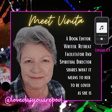
Rooted in Ignatian Spirituality, Tam Lontok is a trained and certified international spiritual director, lifestyle photographer, Sisters of Notre Dame Associate, and is completing her last year as an Anam Cara Apprentice at the Sacred Art of Living with an emphasis on the Art of Spiritual Eldering.

Tam was Jesuit-educated in Los Angeles at Loyola Marymount University for her undergraduate and graduate studies. She writes regularly and serves on retreats with Christus Ministries, an outreach ministry for young adults and families to develop a prayer life, a discerning heart, and a collaborative way of serving and growing in their faith. Tam resides in Los Angeles, CA, with her husband, Greg, and daughter, Ollie.

You can find more about her Spiritual Direction at sd.tamlontok.com and more about her photograph at tamlontok.com.

You can also follow her on Instagram @sd.tamlonto or  @tlontok

------

If this episode hits home and you feel you have your own story to share, email Gretchen at lovedasyouarepod@gmail.com.

Follow along and contribute to the conversation @lovedasyouarepod on Instagram.

Find more from Gretchen Crowder @gdcrowder as well as at gretchencrowder.com.
Recommended
Transcript

Gretchen's Busy Fall and New Semester

00:00:00
Speaker
Hello, everyone, and welcome back to Loved As You Are, an Ignatian podcast with me, Gretchen Crowder. I don't know about you, but I have been busy so far this fall. I've been getting myself situated into a new semester of ministry, teaching, and taking classes myself as well. I decided in early August to go back to school once again and enrolled in Loyola Chicago's graduate certificate in spiritual direction. The courses are all online, so like every time I record with guests,
00:00:30
Speaker
I'm also setting up twice a week in my closet to learn from some wonderful professors and some incredible fellow students about spiritual direction and human interactions. It has been life-giving so far, but now that I have my feet underneath me again, I'm excited to be back here with you sharing another one of my wonderful conversations.

Introducing Tam Lontocke

00:00:49
Speaker
This week, I bring you my conversation with Tam Lontocke, who was introduced to me by one of my previous guests, Jen Coyto.
00:00:57
Speaker
We met for the first time in this conversation. Rooted in Ignatian spirituality, Tam Lontoc is a trained and certified international spiritual director, lifestyle photographer, sisters of Notre Dame associate, and is completing her last year as an Anamkara apprentice at the Sacred Art of Living.
00:01:16
Speaker
with an emphasis on the art of spiritual eldering. Tam was Jesuit educated in Los Angeles at Loyola Marymount University for her undergraduate and graduate studies. She writes regularly and serves on retreats with Christus Ministries, an outreach ministry for young adults and families to develop a prayer life, a discerning heart, and a collaborative way of serving and growing in their faith.
00:01:42
Speaker
Tam resides in Los Angeles, California with her husband, Greg, and her daughter, Ollie. This was such an incredible conversation and it explored new avenues on the topic of being loved as we are. I know you're going to enjoy it as much as I did. So, here we go.

Tam's Photography Journey

00:02:28
Speaker
Welcome to the podcast, Tam. It's so great to have you here. I just introduced you to my listeners, telling them that, in fact, we've never met before this moment, that one of my previous guests, Jen, connected us. So this is the first time that we're having a conversation. So I'm really excited to talk to you and get to know you tonight. So once again, welcome to the podcast. Thank you so much, Gretchen. I'm looking forward to connecting with you right now.
00:02:52
Speaker
Yeah. And I know that this podcast episode is not about this, but I want to mention just how beautiful your pictures are. I went on your photography website and was like looking around and on your Instagram and they're just so amazing. Like it's such a wonderful thing when you have that gift of being a photographer. I know as a parent, I always want to have that gift when I'm taking pictures of my kids and stuff, but you truly do. And so I want to make sure to mention that upfront and if that makes sure my listeners check that out as well, because that's
00:03:21
Speaker
one side of your vocational life. How did you get into photography? Honestly, it started off as a hobby and I started shooting and I was captivated by it. And with photography and spiritual direction for me, it's allowing myself to have the best seat in the house of people's lives. And that's why I do it, witnessing these milestones. And it became a business after that.
00:03:48
Speaker
Yeah. And it's amazing when you can capture like the real moment that's going on and not just like some posed picture about what's actually happening. So that's really awesome. Thank you.

Spiritual Direction and Anamkara

00:03:59
Speaker
But the other side of your working life, your vocational life is as a spiritual director and a Namkara apprentice. If I said that correctly, can you tell our listeners a little bit about those two things?
00:04:11
Speaker
So Anamkara, it's with the sacred art of living. It goes hand in hand with spiritual direction and it's accompanying others through all facets of life. And with my Anamkara program, I'm at the end of it right now, the final year, and I'm focusing on the art of spiritual elderly so that I can walk with others from hopefully the beginning to the end. And also it's for myself too.
00:04:38
Speaker
Yeah. Just in week two of a spiritual direction program, and I'm noticing that every assignment, everything that I read, it's as much about learning how to do it for other people as it is about learning how to come in a closer relationship with God for yourself as well. And how long have you been doing spiritual direction?
00:04:59
Speaker
I've been accompanying others for a while through retreats, but I didn't start the program until 2017. And I started accompanying others one-on-ones since then. And yes, I'm still continuing now and growing and learning for myself along the way while walking with others too.
00:05:18
Speaker
Yeah, it's such a wonderful and like hidden thing of the church, of all sorts of churches that there's this thing called spiritual direction where people can accompany you in your spiritual life. I know I wasn't aware of it until I started learning about Ignatian spirituality. And I just think as much as we can tell people that it's a thing that exists and there are people there to journey with you in your spirituality, the better it is.
00:05:41
Speaker
Yes. And it's not only life-giving. It's life-giving for me, just seeing how God works in people's lives and reminds me how God is present in my life as well. Yeah. And of course we come to know ourselves better every time we hear another person's story and are able to get to know another person's perspective. Yes. And then sometimes it's the same invitation for me where, yes, I still need to work on that myself.
00:06:10
Speaker
Well, and that's the best part, because if you're a spiritual director who assumes they have all the answers, then I don't think anyone would want to work with you, right? I'm definitely on the journey. And that's why it's a company, right? It's being on the journey together.

God and Love Interconnection

00:06:27
Speaker
So I usually start the podcast and I've kind of asked all my guests this at the beginning, who is God to you and how did you come to that understanding? For me, when I think of who God is to me, it mirrors a similar question of what is love to me.
00:06:44
Speaker
How have I been transformed into love? How am I connected to everything that is? Or how am I in communion with the key people in my life, those around me in this world? And it reminds me of how I perceive love, elusive yet undeniably present, shaping my experiences and interaction.
00:07:03
Speaker
And like a good friend, God is a comforting presence that fills me with a sense of guidance, compassion, and purpose while taking me into a deeper realm of personal inner growth and interconnectedness, shaping my becoming. And just as an artist sculpts clay, God molds me and chisels away the rough edges to reveal who I am called to be.
00:07:28
Speaker
within and be of loving service to my family, friends, and community and the wider world that brings meaning to my existence and draws me closer to the heart of what it means to be alive, connected, and loved.
00:07:43
Speaker
Yeah, you said in your introduction that your relationship with God and even the way that you interact with your faith as a spiritual direction staff are influenced both by the Eastern and Western traditions. How do you see that informing your idea of who God is, the various influences that you have?
00:08:02
Speaker
Well, especially with the sacred art of living in the Anam Kara program, it's an interfaith community. So I walk along with Catholics and other religions as well, and I've realized while accompanying others, it's just meeting people where they're at, where they are in life, and it's asking the question, how am I growing in greater hope, love, and faith? Whatever that looks like and where the person is at.
00:08:29
Speaker
So yeah, I love, I love how you say you equate God with the word love because I think that's really a universal understanding of God. If we really think about it deep down inside, like what is our deepest connection with God? And so when you connect with other faiths, um, I think you can, you can have that point of connect with them that, that we all have this understanding of, of God is love. And we can start there together and figure out what else is in common.
00:08:57
Speaker
So when I first learned of this real connection of God as love, but also that God loves me, it was really through Ignatian spirituality. And you are also familiar with Ignatian spirituality. How did you first come to know Ignatian spirituality and what does it mean in your life?
00:09:13
Speaker
I first encountered Ignatius Spirituality during my undergrad years at Loyola Merriment University through Father Tree Din, S.J., who I also now serve with within Christus Ministries. And he was the chaplain of the Bell service organization I was a part of. And I appreciate how he talked about faith in a relatable, personal, but also gentle way, especially coming from a public school setting where I had to be mindful of how I would speak about my faith.
00:09:43
Speaker
And Ignatian spirituality intrigued me as a way of approaching faith, life, and personal growth that aligns to my most authentic self. And it taught me how spirituality can be woven into everyday activities, relationships, and decisions. And one of the aspects of Ignatian spirituality that resonated with me most is the emphasis on
00:10:09
Speaker
discernment and how the approach has helped me navigate some complex life choices and allowing me to make decisions with greater peace and clarity. Another notable facet of Ignatian spirituality is the emphasis on finding God in all things. And this concept encourages a mindset of being rooted in gratitude and awareness and recognizing how God can be with us in the most
00:10:38
Speaker
joyful and challenging moments as well. Yeah, I bet you see that every time you have the opportunity to photograph
00:10:47
Speaker
any sort of event in someone's life to see that opportunity of God showing up there through your pictures. I don't want to put words in your mouth, but I assume that that's a connection for you.

Capturing Real Moments in Life

00:10:58
Speaker
Yes, especially with my photography work. Well, in my portfolio, it's a wide range from family shoots to weddings, engagements, maternity, but also lifestyle.
00:11:10
Speaker
And I also document funerals too. I remember having such a hard time shooting funerals until I saw the beauty of it, of a celebration of life. And it kind of shifted my lens in that perspective.
00:11:25
Speaker
Yeah, I've been to a lot of funerals in my life and I never think, is there a photographer here? Is there someone that is capturing this moment for the family? It's very interesting for you to bring that up and for me to think, wow, that probably is something that people have present, but it's nothing that as a person sitting in the audience, you think about as a part of the celebration of the end of life as well as all the other celebration moments in your life.
00:11:55
Speaker
I'm grateful to be able to do that kind of work. It's just so intimate as well. And being with the person, sometimes I feel even with weddings, I end up being like a bride to me. I have to have contact with a bride too. So it's a joy.
00:12:15
Speaker
Yeah, it's, I don't know if I could do it, I would find it uniquely stressful to try and see how could I find the right photographs to capture this bride's moment or this first birthday moment in the way that another person wants me to, as opposed to just the way that I see as a beautiful capturing, you know.
00:12:36
Speaker
But I like the reminder that just as beautiful as a wedding is or as a first birthday is or as a baptism is, so is a funeral. So is that opportunity to say goodbye and that opportunity to really highlight someone's life. So that's incredible that you have that as one of your offerings in photography. Thank you. Is there a particular moment or story you can point to in your life where this understanding of being loved as you are became real for

Tam's Refugee Journey and LMU Aspirations

00:13:04
Speaker
you?
00:13:04
Speaker
I think it's a bunch of vignettes that makes up a whole story. And it's usually done through the kindness and generosity of others. And if I even had to go back to my earliest years where Father Joe Devlin, he baptized me in a refugee camp in Thailand.
00:13:28
Speaker
and his support to help my parents discern their choices of moving to America and waiting patiently for 11 months to have a chance to live in America and also being sponsored by a group of high school students too with John Reynolds and Peggy Olson leading them, getting my family just adjusted to living life in America when I was only six months old and taking us in under their wing, meaning
00:13:57
Speaker
They found us an apartment, got my parents a job, how to speak English, and connecting us with the community. They became pillars of support. And throughout my life, I can always recall on my mentors along the way, my spiritual small group faith family, as well as serving on Christus Ministries as well and on retreats. And all these people,
00:14:26
Speaker
in my life have helped me grow and allow me to see God in action. You said you went to Loyola Marymount. Did you live in California your whole life from the first time that y'all immigrated here or have y'all moved around?
00:14:42
Speaker
We were in Michigan first with the family and with our sponsors and then we moved to California where I actually grew up in the Mar Vista Gardens projects in Culver City because my parents wanted to save money and support our relatives back home and
00:15:00
Speaker
Those years were especially tough since I remember in the 90s with the riots and shootings I would pray and plead to God every night just for our safety and to get out of there and
00:15:15
Speaker
I remember dreaming of attending to LMU. I was only 10 years old and we would go to the beach every Monday and see the LMU sign across. And I would say to my parents, I'm gonna go there one day. It was close enough, but I can, but I also saw it as a refuge. And I remember my high school counselor discouraging me to go because of finances, if I can even afford it.
00:15:41
Speaker
a good friend, Nadia, she just said, you know what, just apply their scholarships and grants. And I did, and it turned out to be one of the most life-changing decisions. I met my husband, my mentor, and dear friends who helped me grow. Yeah, one thing, and I didn't go to a Jesuit university, but I've been working at a Jesuit school for 17 years. And one thing I have learned to love about Jesuit schools is that they really want to help you
00:16:10
Speaker
If you want to go, then they're going to figure out a way to make sure that you can go. And so it looks like you found the right university, especially, and connected to the Society of Jesus, which is something that been connected with ever since. I'm so grateful when I look back at the story and how much the Jesuits have been influenced in my life since my baptism to LMU, all part of my resurrection story.
00:16:40
Speaker
When you receive that kind of love, you can't help but respond in gratitude. And it reminds me of how global the Society of Jesus is that they're interacting with people all over the world. And then those connections are connecting people from country to country too, which is so great.
00:16:57
Speaker
Because sometimes when you're here, you're just thinking, oh, well, I know these Jesuits, or I've interacted with some people who work for the Society of Jesus around the United States. But really, it's a global society and all the lay people that work for it as well. We extend everywhere.
00:17:12
Speaker
What do you do in terms of helping yourself? Well, first of all, I'm not sure I asked you this question yet. You came on a podcast called Loved As You Are, an Ignatian podcast. What kind of attracted you to that title? What inspired you to say, yeah, I would like to talk about that, or I really connect with that idea?

Self-Compassion for Parents

00:17:33
Speaker
For me, I guess it goes back to a few years I wrote a research paper in my spiritual direction program and it's about the different attachment theories and how it could influence our relationship with God and faith. And what I realized while walking and accompanying others too is the lack of self-compassion that we all
00:18:00
Speaker
need so that we can realize our belovedness and journeying with others. I find it where people are so quick to offer and extend kindness to others.
00:18:17
Speaker
but yet when it comes to themselves, they can be their harshest critics at times. And I noticed this, especially in an Ignatian discernment, where when I would ask them, hey, if you can bring in a friend that resembles you, and that friend comes up to you and asks you for advice, how would you respond? And they are so generous in that response. And can you imagine that being all said to you? And it's that reminder to be kind and
00:18:45
Speaker
gentle with ourselves. And that's why when you said loved as you are, it spoke to me where I think it's all inherent in being human. Yeah. And even as people like you and me who work with other people in retreats and in spiritual direction and in writing about these concepts, it's hard for all of us to remember
00:19:09
Speaker
this truth. I think part of the reason why I love interviewing people and talking about this is as a constant reminder to myself like no, no, no, you said that this is the theme of your podcast. You said this is true. Remember it when you're
00:19:21
Speaker
being so mad at yourself for not being somewhere on time or for your kids not getting up the house in time and your house being a mess and all of these things that God's still loving you as you are, so. Yes, I think of one, when I was a mom for the very first time, one advice from a girlfriend that I had that I still think of to this day when she said, when I can offer self-compassion to myself, I can learn how to,
00:19:50
Speaker
be an example of self-compassion for my kids. How are they going to learn self-compassion if they don't learn it from me? So I'm always reminding myself there's a mirror watching me, but it's hard. But some days I'm not gentle as I would like to be. Yeah. Yeah. I find I have to apologize to my boys often. You just saw mom have an adult tantrum in the car. This is why this happened and I know it's not right. And they're like, yeah, sometimes you just need to calm down. I was like, I know.
00:20:21
Speaker
So, yeah, I always think because I have three boys, I always wonder, and I will only have three boys, but I always wonder what would I say to a mini me, like another girl, if I had had a girl, like, and she saw some, because I think some of my times my boys kind of just ignore that or they're resilient to it. But I know that if it were, if I were raising myself, I would be very aware of everything that I said to myself.
00:20:49
Speaker
And I don't know how I would would approach that and I don't know if you have a girl boys or Yes, I have a daughter. Yes. She's seven years old and yes, it's yes It's been fun, it's been joyous and and it's it's a reminder and
00:21:08
Speaker
constantly where, hey, how am I speaking to myself? What is she seeing? What is she emulating? And to be aware, I know for me, I tend to be hard on myself. And when my daughter, when she draws a picture she doesn't like, I'm like, oh no. Like, it's okay. She's like, no, mom, if you had drawn this, you would not think it was okay.
00:21:35
Speaker
How do you help yourself remember this concept of being loved as you are? I know that you try through your spiritual direction practice to help others remember that, but how do you help yourself, particularly when you're trying to remind yourself, oh, I have a little one listening.

Daily Practices and Connection with God

00:21:50
Speaker
How do you try to remind yourself or what are some of the tools maybe
00:21:53
Speaker
that you've learned from Ignatian spirituality that help you do that. For me, one of the sustainable practice that I have incorporated for almost 15 years now is the awareness exam in the evening. And I now share it with my husband and daughter too. And it's nothing grandiose in terms of time. It's usually five minutes.
00:22:14
Speaker
And our heads are on our pillows already. And we go over the questions. When did I see God? What am I grateful for today? And when did I fall short? And will we have more time or not as restless? We also explore the following questions. When did I feel loved or not loved today? When did I feel a sense of belonging or not belonging? And when was I closest to my most authentic self or not my most genuine self today?
00:22:42
Speaker
And the following day, I usually have just probably five minutes in the morning to write down in my awareness exam journal to reflect on what I shared the night before and also to listen deeper as well. As far as midday practices, I usually pause and it's sort of like a spiritual discipline of learning how to let go in the middle of the day.
00:23:07
Speaker
and just breathe and ask God to be with me. And one thing I incorporated lately was playing a new instrumental piece in the piano for five to ten minutes as a way to disconnect and connect with my heart more so that I can be more in tune and kind of suspend my thoughts and just be with God at that moment. So
00:23:30
Speaker
Yeah. Other than that, it's reading books too in the evening and running. Running is also a source of contemplation for me too. Yeah. It's amazing how sometimes we think that running or exercise is this additional thing that we may or may not have time for. But when we think of it as another way of prayer, another way of encountering God, then suddenly it's like, well, maybe we can make time for that because it kind of does both things, right? Yeah.
00:23:57
Speaker
In the awareness exam and you mentioned identifying those times of feeling like you belonged and those times when you felt like you didn't belong. Is there anything that you say or do or talk about when you're thinking about like either you're thinking about your own moments where you didn't belong or someone in your family shares, oh, this is a moment where I felt like I didn't belong. How do you process that? Or do you just identify it as something to offer to God?
00:24:26
Speaker
So I usually ask those additional questions after the when did I fall short question because sometimes my daughter just I didn't do anything. And sometimes for us, it's just I could have been more patient today, I could have been more kind to myself, but she'll just graze over it and say I was fine today. So then I would ask her these questions of when did you feel that you belonged or not belonged or included and
00:24:53
Speaker
And somehow that question opens her up more and she shares a little more and I just sort of just hold space for that time, allowing her to talk and share and then let her know that I'm here with you and we offer it to God. Yeah, I think what a great tool if I had had these when I was a child to like
00:25:17
Speaker
give words to those moments of not belonging, right? And say them out loud to someone else. But I think as children, we mainly just held those in and moved on and tried to figure out like what was the next way to fit in, you know? And so it's such a great, great practice to not only to reflect, of course, with the examine, but to really identify those moments where you felt left out and then give those to God as a, I'm just letting you know that this is how I felt
00:25:44
Speaker
And I love that you don't try to solve the non-belonging or solve the left out. It's just holding space for the reality of it because we all have those moments, right? I also love how self-confident your daughter seems to be with, oh, I had a great day. I did nothing wrong. There's some good in that as well as other things.
00:26:09
Speaker
Is there anything, so I assume these are also ways in which you help those you direct to understand their belovedness too.
00:26:21
Speaker
Yes. And it's interesting when you mentioned about how would you talk to your seven or six year old self. And sometimes when I'm accompanying others, it's doing a guided meditation, imagining talking to your seven or six year old self. And how would you respond at that moment? And it's so beautiful, especially for me just to listen and witness the gentleness and compassion that they extend to themselves and
00:26:50
Speaker
and how God does all the work. To be honest with you, I'm just sitting there and being open to whatever God presents.
00:27:00
Speaker
nervousness or intimidation to say, Oh yeah, I can direct another person in their spiritual life. But really it's just, you're the gateway between God talking to another person when maybe they can't hear everything that God has to say, or they don't know how to ask God more in depth questions to be able to understand what God's trying to say to them. So yeah, I think it's,
00:27:25
Speaker
I think people probably have a lot of questions when it comes to spiritual direction if they've never tried it before. Maybe this conversation is answering some of those. I like the idea. I think you said it on your website, but there's an idea of spiritual direction, but there's also the idea of spiritual companionship, so being on the journey with others.
00:27:46
Speaker
And how does spiritual direction differ or go hand in hand with the other practice that you're studying right now?

Spiritual Eldering and Intergenerational Wisdom

00:27:54
Speaker
Well, it's similar in the aspect where it's accompanying others, but also in this process that I'm going through, it's also learning how to work with people at end of life.
00:28:10
Speaker
in breath work, in coma therapy, but also asking questions as we age too. And I think it's beneficial for me. The class is called From Aging to Saging as well, and hopefully I'll- Yeah, I hope to sage one day. But I'll honor where I'm at. But it's the Art of Spiritual Eldering, and it's learning how to, John Philip Newell, he said it beautifully where he said, how can I walk more beautifully on this earth?
00:28:39
Speaker
or gracefully and the secret art of living, it's a community within a wide range of ages and experiences and just learning from their wisdom and hopefully with God along my side guiding me towards wherever God is. And I think that's so beautiful because when we
00:29:00
Speaker
get into our 40s and 50s, you know, we try so many ways to not appear like we're in our 40s or 50s, or not to like embrace the fact that that's where we are in life. So it's beautiful to think of this practice of saying, where I am is exactly where God wants me to be. And there's some real meaning and beauty in it. And there's still so much more that God has to do within me. And I have to do with the world.
00:29:25
Speaker
And so I just think that's wonderful. I know that my 40s have been the best decade of my life in terms of like, I know who I am and I know what I am doing, but I also am aware that parts of you start to break down once you hit 40.
00:29:43
Speaker
To be able to embrace those and see those as beautiful is such a great thing. So I'm glad that there's a practice for not just the end of life, but all the stages leading up to it. Yes. And how there's so much more to look forward to. And with the different
00:30:03
Speaker
ages to what I find beneficial is learning the wisdom between each decade and how in ancient history, how the elders were always a source of wisdom for those that are younger and how those types of communities can form too. And what would that look like in today's? Yeah, because it's especially in the United States, I think we are so busy and we're so plugged into so many things that we don't
00:30:32
Speaker
tend to take enough time with our elders to say, what do you have to teach us? It's more like, well, they didn't have any of the things that we have now. And so they don't understand where we're at now. So reconnecting with the knowledge that people have and in those conversations that are so vital that we don't always make time for.
00:30:59
Speaker
Is there anything in particular that you feel is challenging in 2023, you know, in this decade and this time to having people understand that they are loved as they are?
00:31:15
Speaker
I mentioned how one of the most heartbreaking obstacles is in recognizing our belovedness is our lack of self-compassion and also generational legacies that I've learned through my research where we can cast shadows over our self-worth and caring pain that was not initially ours to begin with too. But what I found hopeful through my research was that
00:31:43
Speaker
there is healing potential in all. And just as wounds can be handed down, so can resilience and strength. And I found that no matter where you begin, there's always hope. And it's recognizing
00:32:00
Speaker
the mentors, the love that extended along the way, and nurturing seeds of self-compassion that have been dormant for so long. And it requires gentleness and acknowledging that our worth is not defined by the scars we carry.
00:32:19
Speaker
and also in creating space and time for reflection is important as well. It might seem like a rebellion for this day and age of constant connectivity, but in those quiet moments we can untangle the threads and sift through our emotional inheritance with God and choose parts that we want to carry forward and also release

Healing Generational Wounds

00:32:45
Speaker
gently what does it need to come along? One of the things that I know Ignatian spirituality has taught me, both through the spiritual exercises and also through the discernment process, is that there's a real beauty in identifying that baggage that you carry, those things that inevitably just by being a human being, you carry from the sins of the past or things that have happened in your family or in your community.
00:33:14
Speaker
We tend to just kind of either ignore those or let those rule everything that we do. And there's a happy medium in Ignatian spirituality where you identify and kind of process and reflect on and walk through those things with God. And then like you said, you take what you're supposed to take with you and you let go.
00:33:33
Speaker
of the things that you need to let go of. I know that there's more every year that I think, you know, I dive into Ignatian spirituality. I'm like, wow, I still haven't let that go. I still gotta work on that a little bit more, but there's so much that, yeah, it just, it gives you the space, especially when you understand that God loves you as you are. Those things that you carry, those burdens that you carry aren't obstructing that love, right? And, and that makes it kind of easier to
00:34:02
Speaker
let some of those things go and take other things forward. Yes, I agree with you.
00:34:11
Speaker
It reminds me of when you were just bringing it up right now, how my constant invitation is learning how to trust.

Trust and Vulnerability with God

00:34:20
Speaker
And trust, I might have thought that I dealt with it before, but it just comes in different forms through the decades where, oh, I thought, okay, I'm going deeper into this.
00:34:32
Speaker
There's an interesting and one of my I'm taking two classes a semester and one of my classes every week we have to identify like just a simple human interaction that probably went wrong but like something that happened in our week break it down but at some point we're supposed to like there's a whole process at one step we're supposed to recall.
00:34:51
Speaker
something from childhood. And it doesn't have to be related to that moment. It's just something you just bring up some whatever comes to mind from childhood. And I was like, I'm not looking forward to like, I know that I'm going to learn like some things I need to let go and I need to, you know, I'm still like self conscious. And that thing that person said to me in second grade, that's just going to come like boiling to the surface. But on the other hand, those kind of reflective processes are really like even when we get to those
00:35:19
Speaker
minute occurrences that really did impact either how we view ourself or how we view other people. It's just so important to bring those to the surface and in a way that makes sense to helping them figure out more who we are and who God's calling us to be.
00:35:42
Speaker
And I find it beautiful, especially where it reminds me of how God knows me so much, that he loves me so much, that he wants to heal this part of my life for me. It's like, who knows me that intimately? Yeah, and that, you know, as much as I hope to forget it until, you know, it has a purpose that God's just going to bring it up and say, no, no, you got to think about this thing again.
00:36:10
Speaker
And of course, I'm sharing after the fact after. I mean, I think maybe that's one of the things that's intimidating about Ignatian spirituality when you really start getting into it. It's like, oh, wait, you want me to reflect on my day every day with God. But then I'm going to see those parts of myself that weren't my best. But I'm also going to have to identify those parts of myself that I don't like, but God still loves. And I'm going to have to figure out how to love them as much as God does.
00:36:40
Speaker
So that process of reflection can be really intimidating. It's a lot easier to say, I'll just say a rosary like every day, but it's harder to say, now I'm going to look at myself really, really closely and have God look at myself too. And I'm going to figure out how to make this relationship better. And I love it where it's like a good friendship where
00:37:05
Speaker
If we're just talking about, like you mentioned, the rosary and just go over the surface topics, our relationship can't deepen. But if God wants to get close to me and if I reveal myself in this way,
00:37:19
Speaker
as with any other relationship in our lives, when we kind of let go of the curtains and just allow ourselves to be deaf girls from that. And we're able to be stronger. Yeah. And I feel like I should say for my listeners who have a devotion to the Rosary, the church, the Catholic churches of both hands. And so, you know, the Rosary is important too. Yes, of course, of course. The Rosary is important too. Yes, yes.
00:37:45
Speaker
But I think sometimes that I can use that as an excuse of if I just say this wrote prayer, if I just like pause when my school is praying for a couple of minutes, then I can check the box that I've done what I'm supposed to do with my relationship with God. It's a lot harder to say
00:38:04
Speaker
I got to actually tell God what's going on, even though God already knows, and then try and dissect that and have that conversation, and to know that that's going to be an ongoing conversation as well.
00:38:18
Speaker
And there's something to it where God knows, but when it comes out of our mouth, it makes it more real too. Kind of like a parent knows, like I know when my son needs to say something to me, but until he says it, then it's just not, that relationship isn't there. If I'm guessing that you're doing this, that's not the same as you having that conversation. Yeah. Yeah.

Conclusion and Gratitude

00:38:42
Speaker
Well, Tan, this has been so wonderful having this conversation with you. And I don't often get to meet someone for the first time and having a podcast conversation. So that's great. I'm so glad this is a way to get introduced to you and for you to introduce yourself to our listeners. I know they can find you in two different places. Can you tell us once again where those websites are, what those websites are?
00:39:04
Speaker
Of course, spiritual companionship is through sd.tanlontov.com and my photography is just tanlontov.com. I'm on Instagram as well, so it's sd.
00:39:20
Speaker
Tam Lawn Talk and it's also T Lawn Talk. I do find that Instagram is both the best place for photography as well as anything spiritual in terms of conversation and some of the other ones that can get heated fast and harder to have a spiritual conversation. Yeah, I hope this is not the last time we have a conversation about Ignatian spirituality or being loved as you are, but thank you so much for coming on the podcast today.
00:39:48
Speaker
Thank you Gretchen for your time and yes, and sharing of yourself too.
00:40:11
Speaker
I hope you enjoyed this conversation with Tam. I especially loved learning about her incorporation of Western and Eastern religion and culture into her spirituality. I was drawn to the story of her parents' journey to America and the way that the Jesuits have been a part of her life since her baptism, spanning continents as well as decades of her experience. Do you think you or someone you know has a story about being loved as you are that would fit with this podcast?
00:40:38
Speaker
If so, please reach out to me and let me know by emailing me at loved as you are pod at gmail.com. You can find out more about Tam by checking out the website she mentioned and following her on Instagram. Links to all are in the show notes. I have another exciting guest coming your way next week, but for now, remember to be who you are because that's exactly who God wants you to be.