Introduction and Podcast Support
00:00:00
Speaker
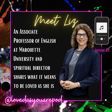
Hello and welcome back to Loved As You Are, an Ignatian podcast with me, Gretchen Crowder. I am so glad you are here. I hope you are all enjoying this hot July weather. I'm trying to get my boys to enjoy a mix of indoor and outdoor activities to keep them entertained and me functioning until fall finally hits. I love seeing how many people are tuning in and the five star ratings some have left.
00:00:23
Speaker
Thank you to each of you who have hit the subscribe button or left a review. If you haven't yet, I hope you do. Reviews and subscribers help other people find the show.
Guest Introduction: Daniel Dion
00:00:34
Speaker
Today I'm excited to share my conversation with an old friend, Daniel Dion. Daniel and I first met when we worked together at Ignatian Education before he moved to Tennessee a couple years ago. Daniel has 15 years of experience in teaching and administration in Catholic high schools and universities. He has taught all levels of high school and undergraduate theology and religious studies.
00:00:54
Speaker
He has done research in postmodern philosophy and theological anthropology. He currently teaches theology at a Catholic high school in Nashville, where he also coordinates the community service program. Outside of teaching, he obsesses over Star Wars and Marvel movies with his friends and has been known to be a guest on a few podcasts related to those topics every now and then. I have to admit,
00:01:15
Speaker
I would have been lost in a conversation about Star Wars or Marvel movies. But I also knew that Daniel loves talking about spirituality and theology, too. So I invited him on the pod to have a conversation about being loved as you are, all the blessings and the challenges. I'm sure you won't want to miss a minute. So.
00:02:06
Speaker
Well, welcome, Daniel, to the podcast. I just introduced you to my listeners and let them know that we work together for a while in ministry and other things at a Jesuit school. But also while we work together, we really like to have conversations about theology and Ignatian spirituality. And so that's why I invited you to be a guest on this podcast so that we could have one of those conversations on the theme of being loved as you are. So welcome. I'm so glad you're here.
00:02:34
Speaker
Thanks for having me Gretchen. I was really excited to see that you started this project. And so far, I've really enjoyed hearing your thoughts and meeting some of your guests who are far flung. I mean, it's kind of amazing. I didn't think about all the connections that you've made with your writing and other things. So I think that's a really cool thing to kind of bring that web together. So thank you for having me.
00:02:57
Speaker
Yeah, and I'm excited that you are in Tennessee, which adds another state to my listeners, another person in another state. I'm getting all over the United States to show people that this really is a concept that a lot of people believe in and a lot of people want to talk about. So I usually start most of these conversations with the question that a lot of people remark is a pretty big
Theological Perspective: God as Mystery and Love
00:03:20
Speaker
question. Who is God to you? And how did you come to that understanding?
00:03:24
Speaker
Sure. So I'm assuming you've shared some of my background with our listeners. So I apologize if I repeat some of that. But I'm a theologian by training and a teacher by vocation. And I'm also a recovering academic, meaning I was an academic for a period of time. And I left that life through struggle.
00:03:44
Speaker
and came to know God through all of that. Really, for me, God is mystery with a capital M. I really believe sometimes, you know, contrary to my actions and my feelings, that God is love, that agape,
00:04:00
Speaker
self gift, unconditional love, that kind of holds us all the time everywhere, you know, and as I as I talk about it and say it out loud, even to my students or to friends, it can sound somewhat parochial and ordinary or mundane. It's like, Oh, yeah, that's literally just what the church teaches. And my job, you know, here or to my students,
00:04:24
Speaker
What I'm trying to kind of unpack this is really to connect that concept, which can sound very simplistic to their experiences. And for me, that's really palpable in many experiences that I've had. You know, I'm in my 40s now. I'm not saying I have rock solid faith, but
00:04:44
Speaker
you know, these are certain foundational things for me that that are going away. It's just how I operate. I remember one of my professors in college said he was kind of channeling Mother Teresa or Dorothy Day, these brilliant Catholic writers, the idea of living as if
00:04:59
Speaker
God is this way. Not to doubt anything, but just living in a way, and it probably comes from medieval concepts too, but living in a way that your life doesn't make sense if this wasn't real. So if you look at the life of Mother Teresa by the standards of our world either today or in the past, it doesn't make any sense. Why would anyone do that at all? But if you enter into that idea of God as love, then it starts to make sense. So my long-winded way of saying,
00:05:28
Speaker
particularly with Mother Teresa, because she spent so many years of her life not feeling close to God, so she had to live as if this were true, even if she didn't always feel the truth of it from an encounter with God on a daily basis. She had to remember encounters she'd had in the past, and she had to go forth in faith and hope that one day she would be able to see that that truth she believed her whole life was real and was waiting for her.
00:05:58
Speaker
You have the dryness of the desert. I remember when those journals were released either in college or right after college, so my theology classes were still really present to mind and one of them that really connected with that.
00:06:14
Speaker
was the great mystical doctor of the church, John of the Cross, who spent a big chunk of his writings on a poem that he wrote called The Dark Knight of the Soul, where he kind of unpacks the kind of spiritual purifications that we go through in the mystical contemplation of God as we live into God more
Mother Teresa's Spiritual Journey
00:06:35
Speaker
and more. And he talks about the dryness
00:06:38
Speaker
that we can feel as a purification where we are released from our attachments to even our spiritual graces. Like the feelings of the good feelings we get from our spiritual grace is actually a sign of possibly getting closer to God. And so hearing that about Mother Teresa really shocked. It was shocking, but also kind of tracked with some of the things. And it doesn't mean it feels good, you know? It's like
00:07:07
Speaker
Thanks. We have to look forward to. Well, it really showed that she was at one with maybe even how Christ felt during his time in the garden and during his time on the way to the cross, that sense of disconnection and suffering. She was able to feel more of that, but it doesn't make it easier for us in, in terms of believing that God is love and that God wants the best for us. And that God is always looking at us and smiling at us when we know that we also have to suffer as well, which is.
00:07:36
Speaker
hard to wrap our minds around sometimes. So you said you were a recovering academic. Is there a way in which the way you learned about God through academia is different from your lived experience outside of it, outside of maybe college academia because you're still in the high school world? It's more connected to my own personal vocation and what I'm capable of. I don't see a discontinuity.
00:08:03
Speaker
in my experience from the times when I was 16 and 17 and really, that's where I kind of locate my first real palpable mystical experience of God where I was conscious of it. You know, I can reach back even farther where I can point to things where I can say God is present, but that's memory, whereas I can vividly remember naming God in my experiences in certain times when I was a teenager.
00:08:31
Speaker
Even though that broke through my life at various times and really kind of profound ways related to my own shortcomings or challenging experiences I've had in life, in my personal life or my professional life, I didn't see it as discontinuity. So no, I guess to your question, I don't think there was a disconnect.
00:08:49
Speaker
I say recovering academic because I was in a PhD program. I have a master's degree. I was publishing. I was trying to get into the university life of a Catholic theologian. But it was all bound up in my personal life.
00:09:07
Speaker
and struggles that I was having which how could it not be because that's what life is and I abandoned it and that was a good thing but you know people who either are academics or who can share this kind of experience would probably understand what what I'm saying about being a recovering academic like I'll never abandon my my theological life you know the more the traditional path of like being a university professor or publishing that's not that's not where God has called me to be
00:09:35
Speaker
Yeah, so I believe that there's so much fruit in academic life and university theology. Some of my, you know, good friends and acquaintances from that past life, I still keep in touch with and I believe, you know, deeply in the work
Transition from Academia to High School Teaching
00:09:49
Speaker
that they do. It's just not something that I was...
00:09:51
Speaker
I would say I was incapable of it. I realized that it just wasn't something that I could muster on a regular basis. The life that was chosen for me as a high school teacher, as a husband, as a son-in-law, a servant, all those kinds of things is really no less challenging, but it's where I belong.
00:10:11
Speaker
Well, and I think that really lends itself to how those of us that are steeped in Ignatian spirituality really focus a lot on discernment. And a discernment is something that is lifelong and that we start off in one path that we've discerned to be the correct one for ourselves. But if we're continuing in prayer and conversation with God, that path will have many offshoots and may turn into something else that we didn't expect, but ends up being even more fruitful than the first one that we thought we needed to be on.
00:10:38
Speaker
Yeah, absolutely. I'm not in a Jesuit context anymore. I work at a diocesan school, which is actually the first time I've worked at a diocesan school. And it's interesting. It's different than working at a postulate of a religious order. It's not a limiting factor, that fact, but it is different. But I miss the language. When I came to work at that school, it was like coming home because the language in which I was formed. And it was sad for me to leave because it was so grounding.
00:11:08
Speaker
I can compare that experience of leaving to when I left college. I've talked to a lot of people who, you know, had a very profound experience in their Catholic university with sacramental life and their spiritual life and service. And then when they left and went into the real world, really were unmoored in their ability to find that community. And however that translates, you know, for some people it was making an adjustment, for other people it was creating that community, you know, almost like a mission, which I think is really the Jesuit
Impact of Jesuit Education and Ignatian Spirituality
00:11:38
Speaker
thing is like, go forth, you know, set the world aflame. But I felt like that again, that kind of unmooring when I left y'all and I had to really find my way again. And where I ended up, I've been really, really fortunate to be able to set roots down with those same principles that I cherish so deeply about Jesuit spirituality.
00:11:59
Speaker
Yeah, it's so interesting that the things that we learn about Ignatian spirituality really are universal. You know, I've interviewed people who know about Ignatian spirituality and who don't, who are Catholic and non-Catholic. And some of these concepts that Ignatius had were really human concepts, right? And really universal to so many people's different religious experiences. You first learned Ignatian spirituality. Was it when you were an undergraduate at Boston College? When were you first introduced to it? How did it become a big part of you and who you were?
00:12:29
Speaker
That's interesting. I don't think anyone's ever directly asked me that question, Gretchen. So I think implicitly it was introduced to me by a religion teacher I had in high school who had been trained in seminary at Boston College in Weston when he was younger. He ended up not going to the priesthood, but that was his kind of formation. So I think implicitly it was there. And then because of that teacher and other life choice, I chose Boston College to go to and it was there pretty much from the beginning.
00:12:57
Speaker
without me knowing it. For those students who are receptive to it, it is there from the very beginning. So I took a couple of theology classes my freshman year that were taught not by a Jesuit, but we used to joke that this professor, they messed up his paperwork, he was supposed to be a Jesuit. It was Father Michael Hines, rest in peace. He passed away the last year, the year before. I think if we're gonna be really formal about it,
00:13:24
Speaker
I was fortunate enough to take a class called Ignatian Spirituality, my sophomore year of college, and it was with a brilliant, amazing Jesuit named Howard Gray. That was a class where we read Ignatius' autobiography. We read the Exercises and the Constitutions. We read the Brothers Karamazov, which was the
00:13:48
Speaker
the kind of literary cipher to unpack religious experience in the context of a human life in that fiction. But it was also in a couple of retreats that were offered as a student. And I don't remember if they were like, this is Ignatian spirituality, but it was absolutely Ignatian spirituality. So it was there. You know, it was funny, like I met some of my really good friends from freshman year on
00:14:14
Speaker
had gone to Jesuit high schools. And so they were already kind of like, they had a leg up in my mind. And I was always really envious of them, that they had had that experience. I felt like, oh, I wish I had had that as a young person. But yeah, that was my first kind of implicit exposure. And then I was really intentional by my sophomore year of college to take theology classes. And so that was
Catholic Social Teaching and Human Dignity
00:14:38
Speaker
How does your understanding through all the study that you've done of theology but also Ignatian spirituality help you understand this idea of God loving us as we are and that we're supposed to love each other as we are? Are there things that you can pinpoint? Because I think sometimes when we bring up this idea of being loved as we are no matter what,
00:15:01
Speaker
People say, but wait because we are also sinners, but wait because we also mess up, but wait because some people do evil things to other people. So like, what about those instances? Or I don't remember hearing about that with what I've studied. I always want to bring up those points in our faith where it is there, it is present. You know, there are things and evidence we can point to that says, no, this is the teaching, this is what we believe.
00:15:27
Speaker
Yeah, absolutely. So Genesis 1, we're made in the image of God and nothing can remove that. That's how we are made. And I don't mean in a biological sense, I mean in a metaphysical sense. My mind goes to a couple places. And so I've kind of given you the theoretical or the philosophical groundwork, which I think is
00:15:47
Speaker
is really quite simple. If you look at Catholic social teaching, the kind of root rounding of Catholic social teaching is the dignity of the human person. Every human being is made in God's image. Every human being is a child of God. It's on my mind too, because that's pretty much what I teach at my current school now is Catholic social teaching. There are these examples that the author gives in the book we read.
00:16:10
Speaker
He gives three examples, people in a refugee camp, people who are living with AIDS or HIV, someone on death row. We talk about like, why does he use these examples? He can say anybody, because these are often people who for whom society are cast aside or forgotten, you know, either because we hate them, you know, people who are on death row, committed terrible acts, and it's decided so these aren't innocent people, you know,
00:16:36
Speaker
or people who literally have no country, they're refugees, they're outside of the boundaries of international order, or people with HIV-AIDS who, well, the stigma isn't as profound as it was, I think, when you and I were younger, but the mentality of the sick person who will harm me, that I need to stay away from them, and also the idea of they kind of deserve it, like the modern-day leper idea of a goddess punishing them kind of thing. All of these people
00:17:05
Speaker
these examples of human beings that have dignity stress especially the least among us like that's that that's that that idea so i go to catholic social teaching i go to genesis one of the idea that popped into my head when you said it which i think is much more easy to connect with these abstract things is on it. Father boils homeboy industries.
00:17:25
Speaker
I know you've read the book, but if your listeners aren't familiar with it, there's a Jesuit named Greg Boyle who started an organization in California, Los Angeles, working with gangs and recovering gang members, basically. And these are individuals who have done horrible things, who have very, very hard lives, and who, as he narrates in his books, Tattoos on the Heart, which I recommend everybody read if they're interested in this question of loved as you are, the problem
00:17:55
Speaker
that Father Boyle sees is that these individuals whose he's ministering to
00:18:02
Speaker
have been told their entire lives that they don't matter, that they are worthless, that they are not loved. And that's the hardest message to get through. And to get that message through is profoundly transformative for these individuals. That's what I came back to because I feel like it roots this idea of the dignity of a human person in a real life. I think that the witness of Father Boyle's experiences
00:18:26
Speaker
Really root that idea of the dignity of a human person in lives that are far far from my own and what what i find so profound is that for the christian who's committed to the christian thing it really puts in front of my face that it's not me bringing christ to others it's.
00:18:46
Speaker
Christ is here. I'm seeing Christ in a sense for the first time in these individuals. That's what he's showing to me like Christ is here and we just need to see Him. And that to me is that profound experience of seeing this idea of being loved as you are. That's what God is trying to show us and if we could just see it.
00:19:08
Speaker
Yeah, I mean, there's a couple things I really like that Greg Boyle says in that book. One is, I think he's quoting someone else though, but when he asks us to behold the God who's beholding us and smiling and the fact that God has no room for any disappointment in us.
Genesis 1 and Core Goodness of Humanity
00:19:24
Speaker
And then there's another quote where he says that we're
00:19:27
Speaker
It's supposed to make our circle that we have, which our community is, the people we interact with. We're supposed to make that wider and wider and wider until it's a circle that fits in everybody. That is really, I think, where most of us struggle because we get comfortable in the people that we interact with on a daily basis and we're busy and we have our families and we have our communities and we have our job.
00:19:48
Speaker
And then to look beyond those circles that we are always in and see that there are other human beings with stories that are so real and so powerful and so much an important part of our human story that we really can't understand that we are loved as we are and that others are loved as we are without getting to know people at the core of who they are.
00:20:09
Speaker
I also like that you mentioned Genesis 1 because I always think of the fact that on each day God saw what God created and it was good. And then, you know, we go back and we say, well, people sin and Adam and Eve and all of these other myths of how human beings became not good. But when God created the world and everything in it, the first thing God said was,
00:20:31
Speaker
it was good. I saw it and it was good. And so if we think of the core that at our core, we are good and create it in God's image and move from that, instead of moving from wherever we are in the sinful lives that we lead or the things that are going on, if we can return to that goodness, maybe we can start to see each other as beloved sons and daughters of God.
00:20:56
Speaker
So in Catholic social teaching, the main tenet that we always talk about is the dignity of the human being. And so I think some of the examples that you talked about remind ourselves that every human being has dignity. Every person that we encounter, whether we have a good interaction with them or not, we have to go back again to that core, core goodness that everyone has.
00:21:19
Speaker
Are there any examples in your own life where you were able to internalize this message of being loved as you are beyond the theology, beyond what you've learned in the classroom, ways where you really saw that God did see you as beloved and good?
Personal Stories of God's Love and Grace
00:21:37
Speaker
Yes, and the examples that I always reach for are a bit personal, but they're always linked with intense experiences of freedom.
00:21:47
Speaker
Of course, I have many experiences that are mundane of me feeling that I am loved as I am. It's one of the profound blessings of Ignatian spirituality to help me recognize that and to always fill my cup as I've heard drawing from the well, if you will. The experiences that jump to mind are the intense
00:22:11
Speaker
kind of personal experiences. And without going into too much detail, there's a time in my life when the burdens were great. Call it sin, call it whatever you want. But it really was my own self getting in my own way and really preventing me from doing really important things that I needed to do. And through a kind of soft intervention from someone that I trusted, I experienced that grace
00:22:35
Speaker
of God releasing me of those burdens. And so even though it might sound weird, I associate that graced experience of remembering that I am loved as I am with a profound experience of freedom to be able to really choose what I need to. Before that experience, I had the choices to do the things I needed to do, and I was always choosing the wrong thing. And so at this moment, it was really profound for me because I really felt the gravity and the openness to be able to look
00:23:05
Speaker
You have the choice now and you're not burdened by these past things. I'm giving you the freedom to make the right choice. And it was because I didn't believe in myself and I didn't trust myself and I didn't trust the people around me. And so I was able to make the right choice and reconcile and reestablish and go the way I think God really wanted me to go beyond just shedding sin and burden and stuff. And so that experience
00:23:30
Speaker
is one where I really felt a combination of released from my burdens for enough of a time. Because it's not like they went away, right? Like it was just like for enough of a time to be able to
00:23:42
Speaker
see clearly and make a life-affirming choice. You talked about discernment. It's the same thing where it was a profound moment and it was clear. It was born from that recognition of God working in my life. Those kinds of experiences don't happen all that often, which is probably a good thing. It means I'm not mired in burdens and stuff. I do think there have been a few key times in my life where more are popping in my head. They're too personal to get into, but it's just like where I felt like
00:24:13
Speaker
Oh, I thought I wanted this. But I'm not now I'm not so sure. And there's this like opening of my mind of my spirit where I'm just like, Oh, I can kind of see more than just my kind of narrow view.
00:24:28
Speaker
and call it a mystical experience or call it a God moment where I can really be open. It's funny, I've experienced those maybe not as intensely, but on retreats and on immersion trips. I feel like when you get away from yourself, it's actually easier because it's easier to put the things that probably don't matter as much aside, or you can get some distance from your daily woes and concerns to be able to reflect again.
00:24:57
Speaker
opens up enough space in yourself to, to forgot to get it. So that's where I, that's where my mind goes. Yeah. When I think about what you just said in the first week of the spiritual exercises of St. Ignatius, you are concentrating on trying to understand this idea of yourself as a loved center. And so often we can concentrate on that center part, the fact that we are
00:25:20
Speaker
broken, that we've made mistakes, that maybe we said something yesterday that we regret and we just can't get over it. And we stop thinking about the loved part. But always in that first week, Ignatius says, the love part comes first, right? We are loved first. And yes, we are sinners, but we are loved even throughout all of the mistakes that we made. We're loved, not despite of them, but just at the same time, like that love of God never stops.
00:25:48
Speaker
for us. And so I think for the most part, the thing that gets in the way of us understanding our own belovedness is ourself, right? And then that's the same thing that gets in the way of us understanding the belovedness of others is our own like, misconceptions, our own black and white thinking, whatever it is that gets in the way of seeing another person as being loved no matter what. Yeah, I do think that so the kind of anthropology that that that we're talking about here,
00:26:16
Speaker
is different. So I work in Tennessee, which is the heart of the Bible Belt.
Theological Perspectives: Catholicism vs. Evangelical Beliefs
00:26:23
Speaker
And I actually work at a school, even though it's a Catholic school, it's actually about half non Catholic students, which is really unique. It's a kind of a unicorn situation. And it's almost it's kind of it's written into the charter of the school is weird to say. So a lot of our students are Christian.
00:26:42
Speaker
but they're Baptist evangelical. And so it's funny when we're having conversations in class where, you know, we'll be using the same language and even on some level, the same logic, but there's some profound assumptions that are fundamentally different, that reveal kind of profound differences in our perspectives. From my experience, you know, the presumption that at the root of the human being is the love of God,
00:27:08
Speaker
or at the root of the human being is irredeemable sinner, right? Like there's nothing good about this. Is a stark difference? I don't want to cast stones, but
00:27:20
Speaker
that's had some really, that presumption of the bad person who is irredeemable can have some really profoundly negative effects on people. I don't want to say I'm disagreeing with you, Gretchen, but I think in your experience and in my experience, certainly my experience, I've gotten in my own way, but I do think that there are spiritualities or religious authorities or frameworks that
00:27:44
Speaker
are also barriers for people to accept. So I know people who, they wanted to love themselves, but because everything outside of them were telling them not, that they couldn't. And it was through sweat and pain and loss that they were able to release themselves from that so that they could accept who they are, because they were told by their families and their churches and their religious leaders that they were not good.
00:28:14
Speaker
and that they were evil, that there was nothing good in them. And that is a religious perspective out there that's really, really palpable and strong. And I actually first experienced it in a Catholic religious revival retreat. Luckily, it was also kind of blended in with some good, grounded Franciscan spirituality, but it was also woven in with some pretty hardcore blood atonement spirituality that really had me convinced that I was
00:28:43
Speaker
worthless. Luckily, I was able to shed that, thank the Jesuits, I guess. It's a real thing and I think that it's a real thing for people. Personally, less so for me. Yeah. I'm really glad you said that because I think sometimes when I'm looking at it from a 42-year-old perspective, I think about all of those messaging from the outside that I've had to combat
Internal Struggles and External Influences on Belovedness
00:29:08
Speaker
And now thinking of messaging from the inside that I'm working on. So I think it's a both and situation, right? Like we both get in our own way, but we also have these things on the outside that get in our way of understanding ourselves as beloved. And both things, you know, need work. Both things need conversation and story and understanding and reminders so that we can eventually internalize that no, no, God is telling us we're loved as we are.
00:29:35
Speaker
even if that's not the message that we've heard or that our inside is telling ourselves, if that makes sense. But no, I'm glad you said that because I do think that's why I asked you in the beginning, in your study of theology and philosophy, Ignatian spirituality, what are the touchstones that say that this is true because people will often quote things that say the opposite.
00:29:59
Speaker
Yeah. I mean, there's a whole tradition of Christian thought that's gaining ground. And it has purchase in Catholic circles also. And so it is an alternative. It has an internal logic that's powerful. I always come back to St. Arrhenius, like the glory of God is a human being fully alive. It speaks to the profound humanism at the heart of the Christian thing.
00:30:30
Speaker
because God became human, you know? It can't be that bad, right, if God chose to become one of us. And so, yeah, I agree with you. Yeah, and it's also that understanding that several of my other guests have mentioned of this idea of the God that suffers with us, that yes, we as human beings suffer, but if we think of that as completely a punishment
00:30:53
Speaker
because of who we are and that human beings are bad, that pushes us into one way of thinking. Or if we think about the idea that God became man and suffered with us and went through everything that we
00:31:06
Speaker
go through, there's a completely different way of looking at it, that that love was so profound that God journeyed with us along the way and in the most horrible of circumstances. So I think that brings us to another question that I like to ask a lot of my guests, and that is, is there anything that you think makes it particularly challenging? And maybe we already answered this in some way, but challenging for people to understand and internalize their belovedness in today's time.
00:31:34
Speaker
I think that I would answer that question depending on which generation we're talking about. So if we're talking about people of our generation, you and I, or my parents, how I think how I would kind of think about it is different. You know, thinking about the Christian thing, how I would talk to someone about it who's in their forties or their fifties or their sixties.
00:31:57
Speaker
is going to be different than how I talk to someone in their teens or their 20s. And some of that is just my own limitation and ability to relate, but also in the experiences that people have.
Teaching Faith Across Generations and Social Media's Impact
00:32:09
Speaker
It's funny, I can almost sense who in my classes of teenagers, right? So I primarily teach seniors, but also some underclassmen, sophomores or juniors. I can almost sense who has either had some profound
00:32:27
Speaker
loss in their life or experience in their own personal selves, a profound disconnect. They're either LGBTQ or have some other personal struggle that they're going through, like a severe health crisis or something that I'm able to, as their teacher relating this God of Jesus to them, that it connects in ways better. I had a student who lost his father last year and he was just
00:32:54
Speaker
And maybe it was unique to him, but I have to imagine that there's a kind of more life lived in terms of his suffering that other children, right, haven't gone through yet. And I'm not saying that they need that in order to understand God, but there are depths to this idea of being loved as you are, that gain purchase as you go through life, you know, as you experience things, right? And, you know, the experience of loss
00:33:21
Speaker
or of profound suffering or rejection because of your identity are things like that. But in general, to your question about what barriers are there, I think that the challenges of our devices and social media are a blessing and a curse. And we're still kind of researching and learning the effect that those technologies have on children's brains. And I don't know
00:33:49
Speaker
how well we're going to be able to kind of respond to that before they're older and making decisions. And so for me, it's becoming more and more helping young people step back and reflect on their experience and recognize where they experience love in their lives.
00:34:08
Speaker
And if they can connect that with something that resembles the supernatural, and I don't mean like, you know, angels and demons. I mean, that go beyond the mere boundaries of mundane experience, like where you really.
00:34:21
Speaker
And it's really, I'm just trying to get kids to recognize what some might call a spiritual or religious experience where you felt beyond yourself, where you felt that experience of transcendence, where you felt that experience of connectedness or a moral imperative. You felt the pains of conscience and you felt like, no, no, I have to do this. And I think those are all universal human experiences, ones that young people experience because in the course of a semester or even two or three years,
00:34:50
Speaker
It's really hard to persuade anyone of anything. You can teach them a bunch of stuff, but the things that I really hope that they take away are things that germinate over time and that they can look back on and say, that connects with what I'm experiencing of this idea. And at the very least, they'll walk away with this idea of, this is what this faith is talking about.
00:35:12
Speaker
And maybe it becomes real for them. Yeah, I think one of the things Ignatian spirituality teaches that we've mentioned several times is this idea of discernment and conversation between you and God. And so with all the noise that surrounds us, it's hard to figure out
00:35:28
Speaker
what you personally think or what you personally believe, but also to be able to figure out what is a loving response and what is a loving action, because you have so many examples being thrown at you all the time. And so this idea that one of the challenges is being able to return to the quiet, return to the discernment, return to the conversation with God, and let that be the loudest voice you hear, the voice of God, as opposed to
00:35:55
Speaker
letting all these other voices be louder or let the voice of love be the loudest voice you hear when you have all these other ones coming in. I know that I struggle with that all the time because I'll be scrolling through whatever social media app I'm using at the time and I will be just taking in what people are saying on something and be like, yeah,
00:36:14
Speaker
Yeah, I am angry about that or yeah, that is really wrong. I get led in one direction and then I start clicking on other things and I get led in another direction and I don't take the time to really think about what is actually going on. What is it that I believe and am I acting in love in response to this situation? Yeah, that's really hard. It's hard as an adult to do. I'm sure it's hard to do or maybe
00:36:40
Speaker
kids do it better because they've had it their whole lives. I don't know, we haven't. And so we're still figuring it out ourselves. Well, thank you Daniel so much for this conversation.
Conclusion and Future Discussions
00:36:49
Speaker
I enjoyed talking with you today about this idea of being loved as you are and reconnecting all the way from Texas to Tennessee. And I hope that we have the opportunity to have this conversation again. I want to thank you for your time. So thank you so much for having this conversation with me today.
00:37:05
Speaker
You're welcome, Gretchen. It was great to be on here and I love hearing all your guests and your different thoughts and stuff. So good luck and keep on with the podcast. Thank you for having me. Yeah. Thank you so much.
00:37:38
Speaker
I hope you enjoyed my conversation with Daniel as much as I did. I loved engaging with him about Catholic social teaching, as well as the mixed messages about the inherent goodness of human beings that impact how we see our belovedness. These conversations are bringing me such life, and I can't wait to share even more of them with you. I think you'll notice I'm trying to get a variety of perspectives and experiences on this podcast, including both Catholic and non-Catholic, Ignatian and other forms of spiritual practice as well.
00:38:03
Speaker
If you think you or someone you know has a story to share on this podcast, please email me at loved as you are pod at gmail.com. If you like this podcast, subscribe and leave a review. I'd love to have your feedback and be able to continue to move this podcast in a direction that is valuable for you. You also can follow everything related to this podcast at loved as you are pod on Instagram and Gretchen Crowder dot com slash loved as you are podcast links to both are on the show notes. Thank you for joining me today. And until next time, remember to be who you are.
00:38:33
Speaker
Because that's exactly who God wants you to be.